– Hannah Rosas: For over a hundred years, Latino-owned businesses have had massive growth throughout the United States.
[gentle music] Latino immigrants arrived in the U.S. for better opportunities.
Some of the first Latino-owned businesses served these communities and fulfilled their needs.
Many of these businesses did more than sell things.
They became cornerstones of the community.
The cornerstones were the foundation for the massive growth in successful Latina-owned businesses today, like Forward Roofing in Beloit.
– Araceli Delgado: But it wasn't always a massive growth.
In the 1920s, Latino business owners, for the most part, had not advanced economically in the U.S.
In the 1920s, U.S. laws after World War I restricted immigration from Europe.
This resulted in an increase in migration from Mexico.
The U.S. had to pull in workers from Mexico because they still had a need for low-cost labor that couldn't be fulfilled from Europe.
Later, during the Great Depression, work slowed down and workers weren't needed as much.
Then, during World War II, the demand for workers increased again as workers were shipped off to fight.
Because of this, the U.S. established the Bracero Program.
This allowed millions of Mexicans workers to come into the U.S. legally to fill the worker shortage.
All of this provided the chance for Latinos to establish communities around the country, including Wisconsin.
These communities offered the opportunity for some of the first Latino-owned businesses.
These businesses served the needs of the people.
Some provided comforts from back home that they couldn't find here, like ingredients and food from their home country.
Others provided services like barber shops, pharmacies, cinemas, and hotels.
One example of early entrepreneurs is Arturo Morales.
He was recruited by Pfister and Vogel to work in their tannery.
He saved and borrowed enough to open the first Mexican grocery store in Milwaukee in 1925.
This tradition continued in the 1950s with Jos Cardenas's Mexican grocery store in Milwaukee.
By the 1970s and '80s, Latino commerce grew dramatically and became the fastest-growing sector of the U.S. small business community.
These grocery stores allowed Mexicans to build wealth within their communities.
And not just for the business owners, but for their workers as well.
Many of these businesses did more than sell things.
They became cornerstones of the community.
People would go there to buy things, but also meet people, catch up with friends, and hear the latest gossip.
– Hannah: Grocery stores are just one example of the types of Latino-owned businesses.
In 1972, there were 81,000 Mexican-owned businesses in the U.S. By 2002, there were 1.6 million.
And today, there are 5 million Latino-owned businesses in the United States.
Today, the number-one type of Latino-owned business is construction.
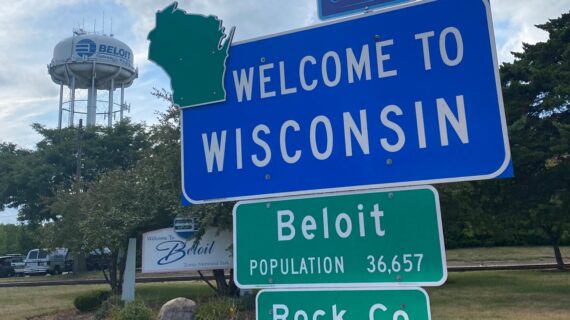
Companies like Forward Roofing of Beloit, Wisconsin are a continuation of a long history of Latino-owned businesses.
– Jessica Barrentios: We're very, a lot of minorities.
We have African Americans, we have Caucasians, we have Latinos.
We are a mix of everything.
Our teams are bilingual, so that's, you know, that's pretty awesome.
Our crews that do work on the roof, they are also bilingual.
And then, we have an office team here that is bilingual.
So, for the future of our business, I see it being a great way for the Latino youth to learn and be more involved in the industry rather than just the labor side of things.
- A hundred years ago, some of the first Latino immigrants were brought to the U.S. as low-cost workers.
This led to the first Latino-owned businesses, starting with small shops serving the immigrant communities.
And today, there are over 5 million Latino-owned businesses in the U.S. Their perseverance is an inspiration to our generation.
[gentle music]


 Passport




















Follow Us