

 Passport






Poultry, Porcine and Pasta
10/16/17 | 26m 46s | Rating: NR
Spring has arrived on the farm! Inga is off to get some new baby chicks in far northern Wisconsin and check out Gloucestershire Old Spots piglets across the border in Minnesota. Then it’s back to the farm to prepare a spring nettles pesto pasta.


Copy and Paste the Following Code to Embed this Video:
Poultry, Porcine and Pasta
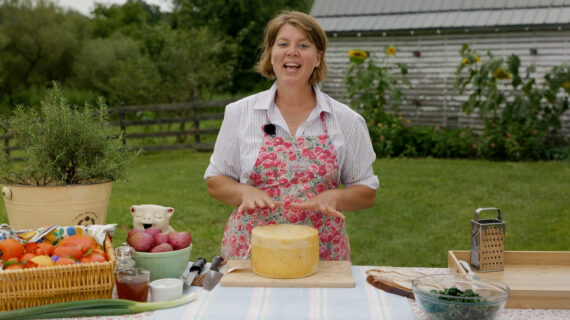
(upbeat music) Hi there, welcome to the farm. Spring is always a busy time of the year, and this year it's no exception. Once I finish tilling in my cover crop, I'm headed out to gather some baby chicks way up north in Wisconsin. On the way home, I'll stop to get another addition to the farm, some Old Spot piglets. When I get back, I'm gonna make a beautiful dinner for my farmer friends. Gather with us around the farm table. I'm your host, Inga Witscher. Good morning, girls. I'm Inga, and I love everything about farming. Midwestern farms are a bounty of good food... made by good people. I love being able to travel, to search out good ingredients. Cooking is all about what's seasonal, what's fresh. Every day can be filled with good food, good friends, and a beautiful herd of cows. Welcome to the farm. Good girl. Around the Farm Table is funded in part by Kwik Trip, big on fresh, and proud to support Wisconsin's farmers, Wisconsin Farmers Union, united to grow family agriculture, American Provenance, Heartland Credit Union, and Friends of Wisconsin Public Television. (upbeat music) Cover crops serve a few different purposes. Number one, I'm tilling that crop in to provide nutrients and build my soil. The second thing they do is block out any sunlight to any weeds, so it's a weed suppressant, and third is, it's erosion control, by having that cover crop instead of just plain soil when it rains, that rain's not taking away my soil and sending it down to the neighbor's house. So, today I'm really... I'm prepping for this fall. I'll probably add even another cover crop, maybe something like buckwheat this summer, to help keep the weeds at bay until I'm ready to plant my garlic. Now, this is something you can do at home, too. It doesn't have to be done at a large scale. I always do it in my home garden, too. I tell you what, I'm going to finish up here roto-tilling, and then why don't you meet me in Florence, Wisconsin to pick up those baby chicks. I'm here in Florence, Wisconsin in the beautiful Northwoods, and wouldn't you know it, there's a small chicken hatchery nestled right here in the forest, and I'm planning on picking up a few baby chicks for my flock. Let's go meet 'em. Hi there, we spoke on the phone, I'm Inga. Hi, Inga, I'm Charmaine Conroy. Nice to meet you, Charmaine, and who is this beautiful creature? This is Mr. Chubbers, he's a Jubilee Orpington. He's huge. - He's one of the breed that we offer here. They lay a very light brown large egg. He is gorgeous. - Thank you! Well, I came up here, I want to get some baby chicks. I'm looking for a couple of different, new varieties to add to the farm, but first I want to know how did you end up in the far northern Wisconsin raising these beautiful chickens? My husband and I, we had four small children that are all grown now, but when we moved up here, we just decided that we wanted to raise our children more like how we were raised and have plenty of room to run and, you know, do everything fresh, gardens, chickens. We would vacation up to this area and we just loved it, and we decided to build a little cabin, and before the cabin was even finished, we just decided let's just move. We decided to build a big house and try and do everything more natural, so we do honey bees and maple syrup, and, of course, chickens. And then it developed into this business of selling chickens. We wanted to provide a service that other people could live like we live. So, we started with a box of chickens, and then we got another box of chickens, and we just decided try and breed some, and see if we could sell 'em, and so we created a website and it just kind of went from there. And, we offer 17 different varieties in different colors of chickens that lay green eggs, blue eggs, chocolate-colored eggs, so all different colored eggs. I love the different colored eggs. That, for me, is just, I love them. I love having a bowl on my kitchen table, you know. Right, it's always exciting to have different colored eggs, especially with children. - Oh, sure, sure. You have a lot of different colored eggs, egg layers, that one might not be able to find at their local co-op or in their towns. Yes. Is that something that you wanted to really push? We just wanted to be able to provide other people with a very colorful basket full of eggs, and people that, if they wanted to raise their chickens and even sell some of their chicken eggs, that there would be variety in there, and all of the chickens are just beautiful, all the different colors and the different breeds, and they all get along really well, so you can actually get a variety of all the different chickens and have beautiful eggs. Now, you ship all over the place, right? All across the United States. We can also ship to Puerto Rico. We can ship hatching eggs to Alaska and Hawaii. Wow, I love it that you can have a business that's so remote, or it's not close to a big city, but yet you can ship all over, that's wonderful. - All over the place, yep. And, how do you ship the chickens? They hatch on Monday nights, and all chickens go into a chicken box on Tuesday morning. They're leaning off of their yolk sac for three days, so that keeps them going. And we also put GroGel in the box to keep them hydrated throughout their ship. And, then when they arrive at the folks' house, I always just dip mine in some, make sure their beaks touch the water, what do you suggest? We contact the customer before we ship to set up a ship date, and then, we provide them with a tracking number, and they should have their brooder ready at 99 degrees and have fresh water and baby chick starter-grower for them available. Oh, wonderful. Now, you're a member of the National Poultry Improvement, right? Yes. - Just explain to us what that means. That means that the Wisconsin Agricultural Department comes and inspects my farm every year, and all of the birds that are on our property are tested for pullorum and typhoid, and they are clean. We do have a National Poultry Improvement Plan number, and we provide the customers with information so they can take their birds to 4-H or poultry shows, and so that they know that their birds came from a tested flock. I think that's something important for people when they're buying their baby chicks to ask the person they're buying 'em from, to ask the hatchery, "What are you testing for?" Because you don't wanna bring chicks back into your own flock or just-- That could be contaminated. - That could be contaminated. - Yes. It's just kind of an issue, and it's nice to know that there's places here in Wisconsin that provide us with a safe, clean environment to be able to purchase our baby chicks. - Yes. Well, wonderful, I am looking for just a few baby chicks. It's been a while since I've raised baby chicks. I had wonderful chickens, but, unfortunately, they had an incident with an eagle, so I'm looking to replace a few here. - Oh no, yes. So, I'd love to take a look at some of 'em. Wonderful. - Well, great! Well, I'm gonna go pick out my baby chicks, and then I have a little treat for us. On our way home, we're gonna stop by St. Croix Rod and look at all the beautiful fishing rods and maybe even take one home. (upbeat music) Hello there! Well, hi, I'm Ken. Hi, Ken, I'm Inga. I wanted to stop over here, 'cause I've been fishing a lot more, and I think it's time for me to scale up to a better fishing pole, and you guys have a great reputation out there for great fishing poles. Best rods on Earth. I'm sure we have what you want. Well, super, can you show me around a little bit? Sure. - And, fit me up with one? Ken, one of these looks like it might work for me, I love the color. That's the Avid Pearl, and I'm sure it attracted your eye. It's a great rod. It's built on the Avid chassis, which has been a popular rod for years and years. Very sensitive, used by many, many anglers because it is able to tell when a fish is there. They get those light bites, but this one is special because of the fuchsia color, but also the Avid Pearl inlay... -
Inga
That's pretty. -
Ken
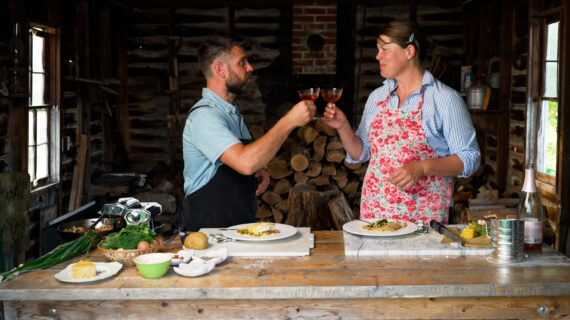
...down in the handle. Yeah, that's really pretty. Tell me a little bit about how these are made, 'cause I know this is a really handcrafted, smaller company. It's made by people. Yes, there is some machinery, but that rod probably went through 32 different sets of hands. That's amazing, wonderful. We start out with graphite, lay it out, cut out pattern pieces, roll it on a mandrel, cure it, paint it and put on the components, out to a dealer, in the water, on the water, catching fish. And, you gotta offer tours, right? - We offer tours. I'm sure a lotta people love to see the process of how these are crafted. And, it is a fascinating process. I've found that women who come with their husbands just to be another name on the roster and make minimum tell me after we've done part of the tour that it was fascinating. For one thing, about 70% of our workforce are women. That's amazing, I love it. You have another woman that's gonna buy a rod from you guys, so thank you so much. But, on one condition, that I get to go try it out first. You're on. - Okay. Hi there! - Hi. Ken said there was a couple of handsome guys down here that would take me out fishing. That must be you. Well, that Ken's quite a talker there, but that would be myself, Jeff Schluter. And Rich Belanger. - Hi, guys, nice to meet you. - Nice meetin' you, Inga. Now, you're one of the owners. I am one of the owners, it's a family business. And, I've got two brothers and a sister involved in the business, so yeah. I love family businesses. My brother and I are thinking about getting a farm together, but I don't know if that would be the best family business to get into right now. Well, you hear all the horror stories of families that are in business together and don't get along. Well, we're one of the bright stories where we really get along well and respect each other, and it's fun to be able to work with my brothers and sister, along with a great team that we have. - That's good. Now, how long have you guys been located in Wisconsin? We've been in Park Falls since 1954. Company started in 1948 in Minneapolis and moved to Park Falls in '54 and are thankfully been here ever since and have no plans of movin'. That's great. The one thing I think is incredible about these rods here is they're almost like an heirloom or like a Wisconsin sort of souvenir. They're really made here, from the people who live here. I love that, and I love these gems. Well, that's very kind for you to say, and it is true. St. Croix Rods are heirloom quality. They're meant to be passed on from generation to generation. You know, they have to be taken care of like anything else, but we do get a lot of comments from people around the country when they say, "Oh, Park Falls, St. Croix Rods. "That's where St. Croix's located." And, it sure makes us feel very proud. And, it's not just you're selling locally. You're selling nationally. Well, we sell nationally and internationally. As a matter of fact, up until about three years ago, our second largest country of sales was Russia. Wow. That's dropped off a little bit for economic reasons, strong dollar, et cetera, but Russia's still a strong country for us, Canada, France, Italy, Lithuania, those are some of our top export destinations. That's really exciting, that's really exciting. Well, I'm hoping that you're gonna give me a little tutorial on how to use these great rods, and hopefully we'll catch some fish. Absolutely, it looks like you have a nice Avid Pearl there so we're gonna go out and we're gonna try to put you on some smallmouth. And we're gonna fish what's called wacky style, so, it's a lot of fun. That sounds like my life. Wacky style. All right, let's get going. (upbeat music) Don't try to overshoot it. Just let the rod do the work, and just go through the motion. And, you want that rod to load up and then, basically, propel your bait out. Okay. There you go, nice! Why don't I play hooky for a little bit longer, and then we can head on down to Minnesota to Afton, where we're gonna pick out some little piggies at Little Foot Farm. I'm in here in Afton, Minnesota at Little Foot Farm. I'm hoping to find out more about the Old Spot pig and maybe even pick up some piglets. Let's go find Karen. Nice to see you. Thanks for coming out today. Yeah. Springtime is that time of the year when I gather my baby chicks, my piglets, and get my seed started, and I wanted to come here and find out about the Gloucestershire. Can you say it? I can. Gloucestershire Old Spot. I just call 'em Old Spot, 'cause that just too big of a word. That's just fine. - They're an English breed, is that right? Correct, yep. We have a herd in the United States now that came over in 1998, but they are an English orchard pig. By orchard pig, what does that mean? They typically used to be used to clean up orchard drops in the fall, and that's usually the time people were harvesting their pigs for themselves, and so that was kind of one of the things that they became known for. But, there's a lot more to them than just that. But, that is, when you look at, sort of, these giant floppy ears that they have, those ears are really designed to protect their eyes when they're foraging, not just in orchards but in other rougher terrain. Sure. I love it that, in the old days, that's what pigs did is the, you know, they had a purpose in those orchards. 'Cause if you leave those old apples on the ground, it can really spread disease, and what a great way to clean it up and then turn those into bacon, too. Right, we actually graze some of our pigs in our orchard as well, and they do a fantastic job. They also till the soil as well, 'cause they have these giant noses that operate as shovels. But, they do a fantastic job of cleaning up the drops. When we talk about these guys being a heritage breed, can you explain to us what heritage breed means? Heritage breed really means that it's an unimproved purebred animal. So, this pig right here looks the same and functions essentially the same as it did a hundred years ago. Which means all of the wonderful qualities that they have, their great mothering instincts. They're docile, as you can see. They have a large fat cap on 'em, so that they can withstand temperatures, cold temperatures here in Minnesota, and they just have a maternal instinct that allows them to farrow and have their piglets in sort of a more free setting. So, that's sort of an "unimproved" component to them. They have fantastic meat flavor, but in a more conventional system now that most pigs are raised in, they would not do well, because of some of the same characteristics that make them fabulous for our small farm make it sort of really difficult for them to farrow in a concrete, confined setting. Sure, well this is where I'd rather be is out here on this fresh air and green pasture. And, they're wonderful. - They're friendly. (laughs) - They are friendly. They like rubber boots, so you wanna be careful. Don't chomp me. (laughs) Oh my goodness, very friendly. I just can't believe how-- I mean I'm always a little-- I'm always aware when I'm around farm animals. Which is a smart thing to be, really. Certainly for a mother who's got piglets running around. Yeah, I've been chased so many times at this point in my life. One of the reasons that we chose this pig, originally, was because of this type of "Labrador." They're like Labradors, really more than they are like terriers. They don't have a high-strung nature to them. And, so they're manageable for our family and just wonderful to have around on the farm. I've been seeing a lot more of these heritage breeds on small farms, and it's something that interests me on my small farm, because I wanna be able to put them on a grass and have that more pronounced pork flavor, I think. And, it's exciting now, you go into a farm to table restaurant, and you see, on the menu, the breed of the pig. Right, we're very fortunate. These pigs are extremely good at providing what charcuterie chefs want, which is that high fat content. And, are they part of your market? So it is, so Red Table Meats, Mike Phillips who started that a number of years ago. He really favors heritage breed pigs like this that are lard hogs. We raise them to have a very firm fat cap, and that's what makes that fantastic salumi and salami that they make, so. It must be nice to have a relationship to be able to kind of work together and know you've got a market to send your pig to, and he knows he's gonna get a consistent product. Yep, it's been very helpful, certainly for us in sort of helping with the breed preservation component, but also putting Gloucestershire Old Spots sort of in people's minds. Like, oh yeah, there-- Just to give an alternative, I think is important. I think it's interesting when we, from the time we're kids, if we think of a pig, we think of a pink pig, and there's so many different breeds, and we should be exploring all the different breeds and especially these beauties here that are just sweethearts. Right, really, and all heritage breeds have a specific, unique quality to them that people might wanna choose. You know, we chose these pigs for a number of reasons. Some others might want Red Wattles or Large Blacks or Mulefoots or Mangalitsas. There's a whole variety of pigs that have just something a little bit different about them that makes them good for that particular person or that particular market. Lovely, lovely. Well, when these guys are a little bit older, I'd love to purchase some from you. So, maybe when they're a few more weeks old. They need about seven more weeks before we'll let them off the farm. Okay, well, when that time comes, I'd love to have you over for a little lunch or something, you can bring 'em over and drop 'em off, if you don't mind. Terrific. - In the meantime, I'd love to try some bacon. Absolutely, we can do that for you. Okay, I'll leave you here. I'll just head up to the house and help myself and let you get back to work. All right. - Thank you. - Thanks for coming today. Why don't y'all meet me back in the kitchen, and we'll cook up a delicious dinner for our farmer friends. (upbeat music) Springtime in Wisconsin means that the farmers are out planting their crops, and here it's no exception. I noticed my neighbors out this morning, busy, busy, busy. So, I decided I'm gonna be making them a nice, simple spring pasta using ingredients from my garden, like chives, some nettles, a few early tomatoes, blanched asparagus, and then the pork that I picked up at Little Foot Farm. The first thing I'm gonna do is blanch the nettles. By blanching the nettles, it's gonna take the sting out of 'em so that they're edible. And, always pick your nettles from the top of the plant, 'cause they're more tender. As the season goes on, the nettle plant will become more fibrous, so you really want to take advantage of nettle season during this early spring. Once the nettles are blanched, you're gonna want to wring 'em out in a towel to get as much moisture as you can. I've been serving these guys nettles for the last four springs I'd say. I think they're finally starting to like it, or else they're just tired of complaining about it. I love nettles myself. Nettle soup, nettle anything, it's my favorite wild plant. Keep your morels, your wild asparagus, give me nettles all day long. And, then I'm gonna use four cloves of garlic, 'cause I really like that garlic flavor. And, garlic's another-- It's good for you. All right, so, mince up your garlic. You can do this in a mortar and pestle if you have one, but I just don't wanna work that hard today. Okay, now in goes the blanched nettles. But, I suppose there's probably maybe a half cup or a little bit more. Those can go in, and now the sting's gone, so you can touch 'em with your hands. All right. Okay, and we'll give those a toss. Let me see how it's lookin' here. Oh, it looks good, it looks just like a basil pesto. Scrape down the sides. All right, that looks great. Then, we can put some Parmesan cheese or any other hard cheese that you like. I'm gonna use a lot. And a squeeze of lemon. A little touch of salt and pepper. Now, we can give that a swirl. I love having a food processor, it just makes life simple. And, then we'll drizzle in some olive oil. Use a real high-quality olive oil for this kind of a recipe, any of those pestos and things. It's nice to use good olive oil. Oh, that is a beautiful pesto. My neighbors call this burning weed where I call it nettles, but I grew up out west, so maybe it's a Midwestern thing that they call it burning weed. And, they don't love it every time I make them eat nettles, but I think I just won't tell them there's nettles in this. We'll let 'em enjoy it that way. And, there we go. And that's how easy it is to make nettle pesto. Now, I'm gonna get this stuff cleaned up, and then we'll start making the other ingredients for the pasta. Now, for the pasta, the first thing I wanna do is render down this beautiful bacon. Oh, this looks so good. I love using this heritage breed. It really, in a way, it connects me to my grandparents and my great-grandparents before me, and I love seeing these beautiful baby chicks and this beautiful heritage fishing company that's making these great fishing poles that I'm gonna have for a lifetime to come, and then ending my day at this farm that's saving this breed of hog is just, well, it's incredible to me. I'm so glad that I get to have these experiences. Karen said that the Old Spots are known for the amount of fat that they have, and I'm seeing it right now in this pan, but it's beautiful and fat is flavor, so I'm just gonna leave it in. And, if it makes you scared, just take a little bit of it out. And, again, this is one of those recipes where you just use what you have on hand. It's nice and simple. I had a lot of fresh asparagus, so I'm throwing some in. Get that warmed up. And coat the asparagus with all that great bacon flavor. And, I can turn my heat off. Ah, it smells so good. There's nothing like frying bacon. I made some fresh pasta, and I cooked some up ahead of time, so that the pasta can kind of dry out a little bit and collect all those great flavors. I've got some extra here, but I'll make that for my honey tonight for his dinner. Now, I'm just gonna add in my pasta a little bit at a time and get it coated. And, I'm using an angel hair. Okay, now we're ready for the pesto. It's looking a lot like spring in this pasta dish here, and I love the addition of a nice nettle pesto. Then, we'll just give this a stir to incorporate it. If you need to add a little bit more fat to get it all incorporated, put a little bit of olive oil in there. And, I'm not worried about these guys getting too much fat in their diets. They're gonna work it off by the end of the day, for sure. And, this does look like it could be enhanced with a little bit of olive oil. Pop some in. I like to cook with my instinct instead of a recipe. You taste as you go along. You mix, you stir, you add what you have on hand, and it turns out delicious. And now, to finish the dish, I'm just gonna add a few tomatoes, some early tomatoes that I've got growin'. And, they, a little splash of color makes it look pretty. And, okay, next we're gonna just zest a little lemon over top. And, then a little sprinkling of chives. And, finish it off with plenty of Wisconsin cheese. Now, it's time to call the guys in from the field for their delicious lunch. Planting season, everyone is as busy as bees. Homemade pasta with stinging nettle pesto, a tasty spring tonic. Crusty bread with delicious Jersey butter. So, so good. Grate a bit of Wisconsin cheese. Spring has sprung with a toast to all the wonderful Wisconsin farmers. Well, I hope this has inspired you to cook for you busy neighbors in springtime. And, I hope you'll gather with us next time. -
All
Around the farm table! I'm your host, Inga Witscher. Cheers guys. Around the Farm Table is funded in part by Kwik Trip, big on fresh, and proud to support Wisconsin's farmers, Wisconsin Farmers Union, united to grow family agriculture, American Provenance, Heartland Credit Union, and Friends of Wisconsin Public Television.
Search Episodes
Related Stories from PBS Wisconsin's Blog


Donate to sign up. Activate and sign in to Passport. It's that easy to help PBS Wisconsin serve your community through media that educates, inspires, and entertains.
Make your membership gift today
Only for new users: Activate Passport using your code or email address
Already a member?
Look up my account
Need some help? Go to FAQ or visit PBS Passport Help
Need help accessing PBS Wisconsin anywhere?

Online Access | Platform & Device Access | Cable or Satellite Access | Over-The-Air Access
Visit Access Guide
Need help accessing PBS Wisconsin anywhere?
Visit Our
Live TV Access Guide
Online AccessPlatform & Device Access
Cable or Satellite Access
Over-The-Air Access
Visit Access Guide




Follow Us