

 Passport



More Cheese, Please
10/26/17 | 26m 46s | Rating: NR
What does it take to start your own cheese-making business? Inga is on a mission to find out, with stops at Darlington Dairy Supply and Saxon Creamery. Then it is up to Door County to visit a new cheese cave. Once she’s gathered what she needs, it’s time to head back to the farm to feed some hungry 4-H kids a cheesy snack.


Copy and Paste the Following Code to Embed this Video:
More Cheese, Please
(soft jingle) (bright uplifting tune) Hey there! Welcome to the farm! Wisconsin is known for it's cheese, and my father and I plan on making cheese right here on the farm. But first, we need to learn a little bit more about it. So, I'm going to Darlington Dairy Supply to learn about Cheese Vats, and then it's off to Saxon Creamery to learn about how they do grass fed cheese at their place. And then, a final trip to Door County Cheese to see the aging rooms. And then it's back to the farm to feed up a cheesy, cheesy lunch to the 4-H kids. Gather with us, Around the Farm Table. I'm your host Inga Witscher. Good morning girls! I'm Inga and I love everything about farming. Midwestern farms are a bounty of good food made by good people. I love being able to travel, to search out good ingredients. Cooking is all about what's seasonal, what's fresh. Everyday can be filled with good food, good friends, and a beautiful herd of cows. Welcome to the farm! Good girl. -
Narrator
Around the Farm Table is funded in part by Kwik Trip, big on fresh, and proud to support Wisconsin's farmers, Wisconsin Farmers Unit, united to grow family agriculture, American Provenance, Heartland Credit Union, and Friends of Wisconsin Public Television. (upbeat tune) I've invited Dale out to the farm to talk to us a little more about 4-H since the 4-H kids will be visiting the farm. Dale, for those that don't know what a 4-H is, what is it exactly? 4-H is, stands for head, heart, hands and health, things that we develop in young people throughout their lifespan. You know 4-H is positive youth development program for children ages 5-18, and we have young people in every single county around the state of Wisconsin where they learn life skills, they learn things that are related to the projects that they might be engaged in, they learn in small groups in communities with others that have similar kinds of interests. That's great, I grew up a 4-H kid myself, and my brothers and I would take cows to the fair all the time. I got to do cooking demonstrations there, and it really, I didn't know it at the time, but it really helped me in my career now as a dairy farmer and also as a cooking enthusiast. Absolutely, that's one of the things we find with young people in 4-H, is that it's not just the skills they learn and the projects they take, but it's really the life skills they learn that are really relevant to the rest of their lives. I was surprised when I talked to my nephews this year about their 4-H projects which are-- They're doing archery and photography and things that I never thought about when I was their age doing and it's really a diverse program. It is, absolutely. One of the things about shooting sports is, it's one of the most rapidly growing programs that we offer. And in recent years with the Hunger Games, movies that have come out, girls in particular have really demonstrated a huge interest in archery and learning about that sport. What a great program for kids. - It is. What do you see as, kind of being those core elements of 4-H, the learning. It's really a place for kids to gather, too, and not just farm kids, right? Absolutely, we talk about some essential elements
in 4-H youth development
belonging, independence, generosity and independence. And, belonging is really something fundamental to all of us and children everywhere. They're gonna be involved where they feel like they do belong. Young people also do community service in 4-H, so, expressing generosity to others. And it's really one of the things that really leads young people that are in 4-H to become involved in communities later in their lives, being involved on school boards and other public organizations. And then mastery is what happens in all the projects. Really learning and exploring and developing mastering things that they're interested in. - Well that's fantastic. Well Dale, thank you so much for stopping by today. - Thank you, Inga. Well, I tell you what, I'm gonna get her back in the barn, and then why don't you meet me down in Darlington, Wisconsin to learn more about cheese vats. (uplifting happy music) Hello, Ted, right? - Hey. Hey, I'm Inga. - Whoop, sorry. Oh that's okay. (giggles) Hey! My friend Virgel said to stop in, I was gonna be coming through town to learn more about vats and trying to put a creamery together, and trying to get a little bit more knowledge. And this is kind of an original idea. What do you call this? This is a cheese on wheels. - Cheese on Wheels, I love that. Why did you want to do Cheese on Wheels? Well, a lotta interested in people like you, that wanted to start cheese plants, and there's a lot of thinking to do
when you try start out
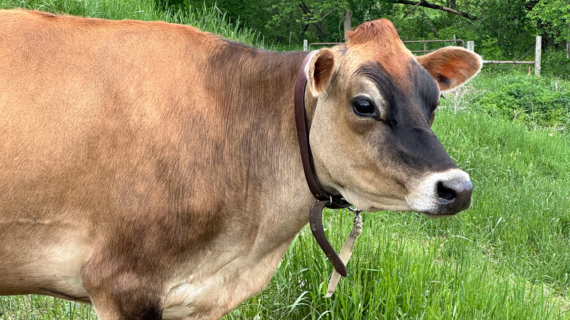
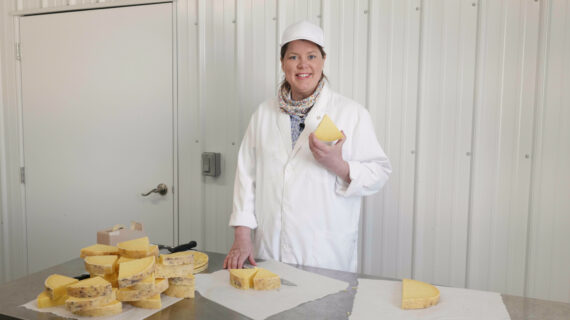
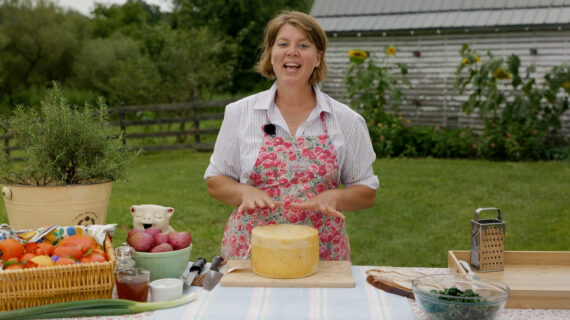
floors, walls, ceilings, lighting. There's so many rules. There's rules and regulations all over, so we just simplified it. We can build this in our plant, and it makes it a little less expensive, to a point. So, and easier. - Sure. Well, this might be an option for me. I'm just trying to research the best option because I wanna be as successful as I can. But I also want to look at some other options, some other vats, do you have a store nearby? Sure yeah, we can run out to the shop, no problem. Okay, wonderful. (happy beats) Oh, so this is one of your pasteurizers, right? Yeah, this is our human grade batch pasteurizer. So you guys have a whole diversity of products here, right? We do cheese plants all the way, on the farm, small, up to plants that run a million pounds a day. That's amazing. And what's this behind you? That's one of our wine fermentation tanks. Oh cool! You guys have your hands in everything. We also do brew systems, for beer, all the way from the kettle house all the way up to the brite tanks. Now tell me, I'm a multi-generational farmer, and you're a multi-generational farm equipment person, tell me a little bit about the history of this place. Well, grandpa came to the United States in 1914, they got married, lived in cheese plants, had five kids born in cheese plants, which dad was one, so he grew up in the cheese industry. He made cheese, went to the service came back, and started Darlington Dairy Supply, and then eventually, I started working here, my brothers and I. I got my cheese maker's license also. I think it's great that you guys are a family of cheese makers, because making these cheese vats and this equipment you really understand what it's like to be on the other end of it. Right, it does make a difference if you understand how it works and why you have to do it. And then you can also experiment with things. You guys are this wonderful-- I would like to say small company here in Wisconsin, but you ship products all over the world. Yeah, we do. We've got stuff in China. We've got equipment in Japan. We've got stuff in Russia, South America, Central America, the Caribbean Islands, the United States, Mexico. Well, when you give me the tour of the factory, I saw a little cheese vat that I'd like to bring home to my house someday. And since I'm in Wisconsin, would you come down-- Oh yeah, I already put your name on it. (giggles) Good, good, good. Well, keep it here for me. I'll be back for it soon. - Cool. Well thank you, Ted. Have a great rest of the day! (upbeat music) I'm here in Cleveland, Wisconsin, at Saxon Creamery. It's important to me before I start this new cheese endeavor, that I really research it and find people who've already been successful doing it, and learn from them. And that's why I'm here today. So let's go find Lisa, and see if I can't learn a thing or two. Hey, Lisa! - Hey Thanks for meeting with me today. I'm glad you could come, Inga. Well I hope I'm suited up correctly, I know that's a big thing for you guys. It is, absolutely. We're a safe-quality, foods-certified facility. And it's very important we don't cross contaminate farm with food. So tell me a little about Saxon Creamery, when it all started and how it started. - Well sure, sure. Ten years ago, this was an idea that was hatched, from the boys at the farm. They wanted to add value to their milk, and they always wanted to make a value product that people would enjoy, with their milk, so they decided to start a European-inspired cheese factory - I love it. That's one of the reasons that I want to do cheese, too, is having that value-added product, it's important. Because the price of milk, you're never know what it's gonna be from year to year. And so I think it's a wise decision to be made. Absolutely, and it ages. So it's something that can just keep getting better with age and having more and more value. (giggles) So tell me, just explain what kind of cheese are you guys making today? Today we're making our Pastures Cheddar. Actually with this product, we're able to make cheese curds, so we have that, we're gonna be selling that today, fresh. You gotta have fresh cheese curds. Gotta have fresh cheese curds. Squeaky ones. Warm from the vat. We're also putting in our hoops, and we'll age that at least 12 months so we'll have a nice English cheddar. That sounds delicious. And by pressing the cheese, it's knitting together, but it's also just getting out extra moisture, too. It is, exactly. Whey, although it is a great byproduct, in cheese it's not so much. We really want to extract as much whey as we can, because whey inside of cheese can make it spoil. So, that's what we're doing, right here. We're pushing out any excess whey. And, as you mentioned, we want to get those curds to knit so that the wheel is real solid. Nice. And then will you wrap this? That's a second process. We'll actually take these cheese out of the hoops, and we'll put a bandage around the side, so that the curd stays together, and once that cheese is dry, then we'll remove it and paint it, and put it in our aging. Can you explain the processes of what you're doing? Sure, absolutely, I've had to do a lot of learning myself. We get the milk in from the farm, fresh daily. We put it through a pasteurization process. We'll add cultures, and the cultures will add flavor. And then we'll add rennet, which will coagulate the milk and make it firmer, and they'll cut it into curds, take off the whey, and then we make cheese with it. Wonderful, it's pretty much the same process as I think my dad and I are gonna do, so it's nice to see it on a bigger scale, though. Ours is mini. (giggles) - Absolutely. Well, this is great seeing how you do things here. I'm getting a little hot and humid from being in the cheese making room. Can we go cool off and see how the cheese is aged? Absolutely, let's go to the aging room. - Okay. (upbeat rhythm) Inga, this is one of our open-air aging rooms here at Saxon Creamery. This is where our cheese gets its character from. Oh nice! I love it. Tell me a little bit about what your process is for aging. Okay, so all of our cheese are put on wood boards, that are specially manufactured for us. This is the way they used to do it for many, many centuries. It acts as a sponge. It pulls out the extra moisture in the cheese. - Oh okay. In this in particular, what we do every day, is we flip our cheese. Well, on this wheel here, this is our Big Ed's Gouda. We also stamp each one of our wheels to signify the day we made it, what kind of cheese it is, what vat, and what year we made it. This way we can track our cheese to every customer, to where it is in the factory. We can track our cheese throughout the whole year. We know who we sell it to. If it's a particularly great batch, we wanna make sure we can go back to that make sheet and duplicate it. Yeah. That's nice. And what are you painting it with? This is a special paint that we have imported in from the Netherlands. It allows the cheese to breath, for moisture release, and for integrity of the wheel. I love it, and different colors for difference cheeses? Yes, absolutely. We tried to make sure that people could tell what cheese it was by the color it is. So we have yellow, we have clear, and we have brown. Oh wonderful. Well, thank you again for taking your time with me today. I'm gonna go find out the other end of the business, which is the cows, I love seeing cows. So I'm gonna go visit the farm. - Awesome. (upbeat tune) Karl, these are some beautiful looking cows out here. They're in great condition. Well thank you, Inga, welcome to Saxon Homestead Farm, and we do have a beautiful herd of cattle. They are, and they're a little cross-bred going on here. What's the genetics of this crew? We have a Holstein-based herd, that we've cross-bred with Jerseys for the last 20 years, so you get this sort of pizza pie mix of black and white cows and the cross-breeding is absolutely a great thing to do for cattle. They're a little bit smaller. They have black-colored feet, black lamina on their feet. Makes them sturdier. They're absolutely a little bit better grazers. They have higher, better fat and protein. Okay. And, they're thriftier cattle all around when you cross-breed. -You guys are making your own cheese. Is the pasture-- Does it play an important role in the cheese making process for you? The pasture plays an incredibly important role when we're making cheese. There's nothing nicer than to see cattle on pasture. Oh yeah. And, the cattle will represent, or their milk is absolutely better because of grass. The gorgeous thing about pasturing, is that as the seasons change, the grass change, the weather changes, and the cattle's milk changes. So if you have a great cheese maker like we do at Saxon Creamery, then he can use the milk and the different milk from the different seasons to vary that cheese just a little bit. So, we have absolutely seasonally-based grass-fed, or grass-based cheeses as a result of the pasture. I tell ya, it's inspiring seeing you guys do this on this level, too. This is a lot of cows on pasture. (giggles) It is, it is, that pasture system is environmentally really a safe system. It does the world good. It holds the soil in place. It's really good for the health of the cattle, the health of the soil-- Also you know, birds and the bees too. I mean, it's a great food source for-- Yeah, absolutely, and it does. The pasture birds, the bobolinks, the swallows, the kingbirds, all follow the cows and love pasture for their own homes, so it's a great system. It's nice to meet a fellow grazer. I tell you what, I'm gonna go help Karl get started milking. Why don't you meet me at Door County and we'll discover another creamery. (happy tune) I've made it up to Door County. The cherry blossoms are in bloom and the sun is shining. And now it's time to make the last stop on this trip, to Door County Artisan Cheese, where we're gonna learn from Mike about aging cheese in a cave. Let's head over. (happy country music) Hi Mike, thanks for meeting with me today. - Oh hi, Inga. I tell you what, I've been on a little bit of a cheese expedition. I'm researching, I want to put a small creamery at my dairy farm. And so I started out with looking at some cheese vats, spent some time on some farms, and now I'm here with you, a master cheese maker. I'm so excited about it. I want to talk to you about aging. But first, can you explain what a master cheese maker is. Yeah, Master Cheesemaker program was started in Wisconsin for Wisconsin cheese makers about 20 years ago. And it details the specific individual cheese that that cheese maker has a special skill in. So, I decided that, when I had my other job opportunity, I was making Blue Cheese to get certified in making blue bane cheeses, so it was just fitting for me to do that as I came along in my career and I'd been in the cheese business my whole entire life, so-- Oh, that's wonderful. Well for me, I love my cows, that's why I want to make cheeses, to be able to keep my cows on the farm and be able to afford to do that. My father is more of the cheese maker. But that diet of the cows is so important to me, and also to my father, when it comes to making that cheese. With you, how does that figure into your program. Well I think diet, and general nutrition, is so important for the cow; if you don't have good milk, you're not gonna make good cheese. - Yeah. So, we selected a company called Red Barn Farms that actually procures milk from small farms, small herds, like 25 cows or less. Every cow is certified AHA, American Humane Association, a certification for animal husbandry, so the cows are given a lot of time to free range and go out in pasture. And we've probably got the best milk that anyone could procure. Well, I don't know. My cows give some pretty good milk, too. (giggles) I'll have to have you send some to me. Yeah. Absolutely. When I first started making cheese years and years ago, we had a cave similar to this one, and my job was to turn the cheeses over and rub the molds. Why is it important for you to be aging in a cave? I think the important thing with us, because of the amount of different cheeses that we're gonna produce, we develop three caves under our cheese making facility and each one has the ability to create a separate environment. Some cheeses require higher humidity, lower temperature, some lower humidity, higher temperatures. But we have the ability to change that out. So when I make all these different cheeses, we'll be able to select a cave that is going to be appropriate for the right kind of aging for the cheese. And it's beautiful down here, too. Yeah, yeah we're very proud. We put a lot of effort in this. And the whole facility is for the enjoyment of all the people that come up to Door County and visit us. But, it's also very, very functional. Sure. - It's serves a real good purpose for us. And what cheese do you have here with you today? This cheese is actually called a Valmy. It's one of the first original cheeses that we're creating here. This cheese is dedicated to the Belgian community in northeastern Wisconsin. - Oh. There's a lot of Belgian immigrants that moved up into Green Bay area and up into the Door. So, I felt that it was fitting that we make a cheese that would be dedicated to them, in honor of them. So it's going to be a soft, medium-soft cheese with wash-rind on it, and I can't really tell you much more than that. - (laughter) The wash is going to be a little bit of a secret, but it'll be ready in about two months. Well, I look forward to coming back and tasting it. Well I hope that you do. I gotta get back to the farm and start cooking, but thank you for showing me this. Thanks for stopping by. - Yeah! (upbeat tune) I'm excited to have the 4-H kids out to the farm today. I really enjoy having kids to the farm, to be able to show them the horses, the cows. Talk about the pigs and just let them run around and be kids. And at the end of the day, I'm gonna be serving them a little Wisconsin macaroni and cheese. I thought previously about doing a fondue, but I thought, that could get a little bit messy, and maybe that's not the right thing to be serving on a hot summer day. So I'm gonna do a nice little Wisconsin macaroni and cheese, and the star ingredient here is gonna be that Saxon Cheese. And if you'll notice, they're cows are all pasturing. It was amazing to see 500 cows out on pasture. I've never seen that many cows out all at once. But you can tell that the cows are pastured, because the color of the cheese is a little bit darker. It has that buttery, sort of yellow, color. And that's because the cows are out eating pasture. When the cows eating that diverse pasture, it just adds a different color to the cheese. So look for that, if that's something that's concerning to you. So I've already got some grated up. And I'm gonna grate up a little bit more. And this cheese is just really buttery. The flavor and the texture just lovely. And I find when working with cheese, it's better to do it when it's at room temperature. The flavors are a little bit more developed then, and it's easier to grate it. Look at that cheese, it's so creamy. I like to use a couple of different varieties of cheeses when I'm making macaroni and cheese. Okay, now we're gonna start with our simple white sauce. That's the base for the sauce for this recipe. We're gonna add a couple tablespoons of butter, right to the pan. And get this melting. These sauces are nice to learn. They're kind of the basic sauces to know how to do, the classic, sort of French, sauces. And then you can kind of build a meal around that. Now that the butter's melted, I'm gonna add a few tablespoons of flour, just a little bit at a time, and you want to whisk that in. So I'm just going to continue to add that flour. And I'm kind of cooking off that flour taste of it. And this is my family's little secret. We do a little bit of dried mustard. Incorporate that in. And now you're just gonna add milk, a little bit at a time. 2-1/2 cups of milk that we're adding. Whoa! Hot potato! (sizzling) Now I turn up the heat a little bit. I just want to kind of bring it to a simmer before I turn it off and add the cheese. When I was a kid growing up, my parents used to make everything homemade, and me and my brothers just thought that was crazy that we had to live in a household where they had to make their own bread, and macaroni and cheese was one of the things they'd make homemade too. The first time I went to go visit a friend and they had boxed macaroni and cheese, my mind was blown. I thought... (stutter) being abused at home, with this homemade macaroni and cheese, and you guys get this box and just put it in boiling water and it all comes together, that's just so amazing. But now that I'm older, I realize that my parents loved us very much, and wanted to feed us really good food. Now that the sauce has come to a simmer, I'm just going to turn it off and take it right off the heat. And slowly add in the cheese. Macaroni and cheese is a simple dish, but when you're using good ingredients, like we all should be when we can, it elevates the dish. So simple things can be really great to cook as long as you're using really great ingredients to go in there. And that's why I wanted to use this great cheese. But also, I really enjoy being able to support these local farms who are doing amazing things. And one way to do that, is by incorporating their ingredients into what you're cooking. Next I'm gonna add the pasta. And this is about half a box of elbow pasta that I've already cooked. Now I'll give this a swirl. And then add a little broccoli. My family tradition is also to add a little bit of broccoli into your mac and cheese. Sprinkle that in. Okay, that's mixed in good. I didn't want to have to have plates and silverware for this group of kids today. So I wanted everything to be handheld. So, I'm actually going to cook the macaroni and cheese in muffin tins so they can just pick it up, eat it, run around, and have good fun. So, let's fill these up. Whoops. Alrighty, looking good. I like this kind of finger food, especially with kids. I think they like it too. It's more fun to eat. Okay, and the next little thing that my dad likes to do, is add a little bit of potato chips for a crunch on top of the mac and cheese, here. Brings me back to my childhood, I grew up on this very recipe. All right, so that's done and the kids are arriving. So I'm gonna pop these in the oven, and let's go out and meet the 4-H kids. (happy country music) Yummy finger foods. Cucumber spears and carrot sticks with creamy ranch dressing. Sneak a little broccoli into that mac and cheese, and bake it in a muffin tin for easy, peasy eating. Oatmeal cookies and an ice cold glass of moo, a 4-H classic. Well I hope this has inspired you to bring some 4-H kids out to your farm and serve them some macaroni. And I hope you'll gather with us next time -
Everyone
when you try start out
Around the Farm Table! I'm your host, Inga Witscher. Good job guys, now you can eat your cookies. -
Narrator
when you try start out
Around the Farm Table
is funded in part by
Kwik Trip, big on fresh, and proud to support Wisconsin's farmers, Wisconsin Farmers Union, united to grow family agriculture, American Provenance, Heartland Credit Union, and Friends of Wisconsin Public Television.
Search Episodes
Related Stories from PBS Wisconsin's Blog


Donate to sign up. Activate and sign in to Passport. It's that easy to help PBS Wisconsin serve your community through media that educates, inspires, and entertains.
Make your membership gift today
Only for new users: Activate Passport using your code or email address
Already a member?
Look up my account
Need some help? Go to FAQ or visit PBS Passport Help
Need help accessing PBS Wisconsin anywhere?

Online Access | Platform & Device Access | Cable or Satellite Access | Over-The-Air Access
Visit Access Guide
Need help accessing PBS Wisconsin anywhere?
Visit Our
Live TV Access Guide
Online AccessPlatform & Device Access
Cable or Satellite Access
Over-The-Air Access
Visit Access Guide




Follow Us