

 Passport






Bachelorette Lunch
10/11/17 | 26m 46s | Rating: TV-G
Inga prepares a bachelorette lunch for cousin CeCe at the beautiful and historic Ten Chimneys estate. Lowline Angus beef is served along with a chance encounter at the garden of Inga’s TV idol.


Copy and Paste the Following Code to Embed this Video:
Bachelorette Lunch
folk music
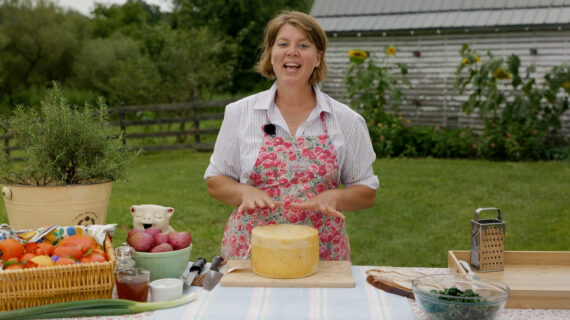
Welcome to the farm. It's time to celebrate my cousin CeCe. She's getting married next week. So I thought it might be fun to take a little time out of the day to have a delicious lunch with her over at Ten Chimneys. I'll be stopping off for some Lowline Angus beef, and then a quick trip to Melinda Myers to see what's growing in her garden. Gather with us Around the Farm Table. I'm your host, Inga Witscher. Good morning, girls! I'm Inga, and I love everything about farming. Midwestern farms are a bounty of good food made by good people. I love being able to travel, to search out good ingredients. Cooking is all about what's seasonal, what's fresh. Every day can be filled with good food, good friends, and a beautiful herd of cows. Welcome to the farm.
in affectionate voice
Good girl! Around the Farm Table is funded in part by Kwik Trip, big on fresh and proud to support Wisconsin's farmers, Wisconsin Farmers Union, united to grow family agriculture, American Provenance, Heartland Credit Union, and Friends of Wisconsin Public Television.
folk music
I have a few things to finish up on the farm here. I'm curing my garlic, so after you harvest your garlic, you wanna hang it so it can cure. The perfect place to do that is an old barn like this one here. That way the garlic stays with the sunlight, it's got some nice air movement, and it's staying dry. The garlic is gonna hang and cure for about two weeks, and then it'll be ready. What's gonna happen in that process is that the skin around the garlic is gonna get nice and papery. But that's gonna ensure that the cloves stay nice and juicy. Once you've eaten garlic that you've grown yourself, I don't think you're ever gonna go back to store-bought. It's so delicious having fresh garlic grown right on your farm. Once the garlic has cured, you can just kinda clean it up, get a little bit of the dirt off, so it looks beautiful. I'm gonna finish here cleaning my garlic, and then I'm gonna get changed and we'll head out to our first stop.
folk music
I'm in Genesee Depot at Ten Chimneys. I'm hosting a little luncheon here for my cousin CeCe, and there she is.
Inga and CeCe in unison
Hey, little lady! Good to see you. - Good to see you, too. I know you're getting married in a week, and I wanted to have a little day where you can just kinda relax. - How nice of you. And I have Alfred Lunt's cookbook here. I thought you could sit by the pool, pick out a dessert ingredient-- 'cause I'm not gonna let you relax all day-- you're in charge of dessert. But I'm gonna go meet up with Randy and find out more about Ten Chimneys, and then gather some ingredients for our luncheon. Alright, sounds good. Okay, enjoy, relax. - Great, see you soon.
folk music
Hey, Randy, look what I found on the way up here. These are beautiful chickens. Yeah, it's great chickens and I think she likes you. I hope so, well she's cozy.
both laugh
This must be a dual-purpose breed. They're heavy. Yeah, it is. It's a white rock chicken, known for both eating, as well as laying eggs. Don't tell her that.
both laugh
Well, hey, it's so great to be here at Ten Chimneys, and it's part agriculture, part theater. Can you tell us a little bit more about what all happens here? Sure, so Ten Chimneys is the estate of Alfred Lunt and Lynn Fontanne. The primary development was between the 20s to the 40s, and the heyday being more in the 30s through the 60s. And they were like famous theater folks. Famous theater people. They were the premier theater actors from the 20s through the 60s, and everybody came out here. So, Sir Laurence Olivier, Katharine Hepburn, Helen Hayes, Vivien Leigh, Carol Channing, everyone. So it was really wonderful, yeah. Well, who wouldn't wanna come out here, it's so peaceful. Absolutely. We're standing in front of the cutting garden. This is Lynn's cutting garden. But if you look around the estate, you have an opportunity to see the cottage, the pool house, the pool's one of the first in-ground pools in the state of Wisconsin. But Alfred designed all this. This was his creation. He wanted to be a gentleman's farmer, and he had an image in terms of what it should be. And that's what he continued to create. And so, as with a stage, it is basically set, and that's how it remains. Gosh, I wish this would be my farm, I would just love it. Well, I have to tell you, it is incredible. Working here is like feeding all my passions. I love theater, I'm an architectural historian, a preservationist, and so I just walk throughout just for the inspirations. Absolutely, well if you ever wanna put cows on here, I've got eight I can bring over any time.
both laugh
I don't know if I wanna tend to eight cows, so... I'll come with them, is what I mean. I could live here. - Great, great.
both laugh
And you're doing vegetables and things like that too? We reinvigorated Alfred's vegetable garden. And basically, all the food that we grow here at Ten Chimneys we bring to the food pantries in Milwaukee and Waukesha County. And when I pull up with the food, it's just amazing because in some of these communities, they don't have fresh produce. There's just no access to it. There's no access to fresh produce. Here, we have the beautiful, big, purple eggplants, and some food that they've never even seen before. But they're so excited about it, and it's interesting because everyone else knows Ten Chimneys about being dedicated to American theater, they know nothing about the theater aspect, they just know us as the people that bring the food. And it's really wonderful. And the eggs, you know, the chickens, funny story about that. The chickens, the eggs are brown that they lay. So we brought them to the pantry the first time, and they saw the brown eggs, and it was close to Easter, and they said, "Well, they're not gonna keep 'til Easter."
both laugh
That's great. Well, one thing I think maybe I read about this place is that during the Depression, they would give food out to neighbors and things like that. Yeah, Alfred was very, very generous, and they would give food to the people within the community. And so that's why we continue that whole effort in giving food to the food pantries. That's incredible. - It's really nice. And now, what's the theater aspect out here? The one program that we have that is truly there for the theater greats, is the Lunt-Fontanne Fellowship Program,
which is
we bring in the ten top theater actors from around the country that are selected by the artistic directors from our theater partners throughout the country. And then, they come here under the tutelage of a master teacher. In the past, we've had Alan Alda, David Hyde Pierce, Lynn Redgrave, Olympia Dukakis, Phylicia Rashad, Jason Alexander, and this year, we have Alfred Molina. That's amazing. It's a great program, great actors that come to be inspired, but also to learn more of their craft. And then, in addition to that, we have our "art of living" series, that really focuses on the art of living. In today's world, we just move right through things, not really enjoying and savoring what's so great about living, as the Lunts lived the great life here. And so we have our wine pairing, where we bring in the former sommelier from The French Laundry-- Amazing. - Which is the best restaurant. But in addition to that, we have table setting, and even the art of saying "Thank you." Because, if you think about it, many people have even gotten away from truly saying "Thank you." Well thank you for letting me be here today, and I'm so excited to have my cousin join me for a little lunch on this beautiful estate. Well let's head out and grab some ingredients so we can cook up a nice last bachelorette lunch with my cousin CeCe.
folk music
which is
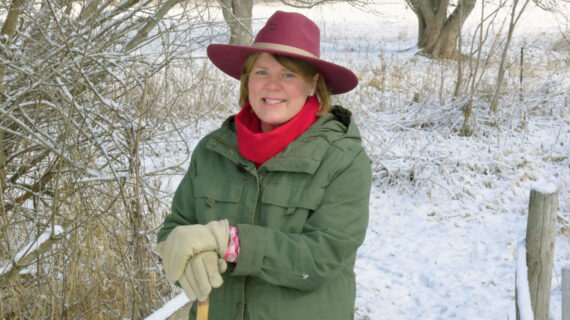
Since I'm in the area, I wanted to stop by and say hi to my gardening idol, Melinda Myers. She's a former TV host, an author, and a speaker, and I can't wait to see what's growing in her garden.
folk music
which is
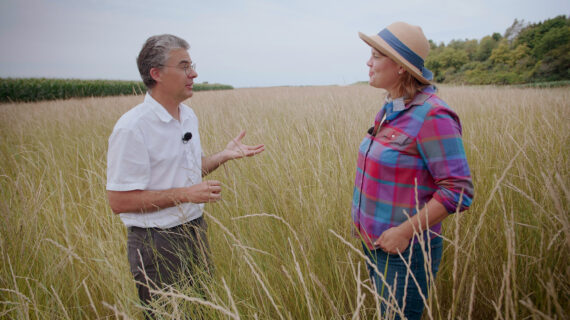
Hello! - Hi! It's so lovely to be here. I've been a fan of yours for so long. Well, thank you, it's mutual. It's nice to see what's going on here. Well this is my little oasis. And I love container gardens, even though I have a lot of space. It's a great way to bring your garden to the back door. And this is my grilling garden. Chives for the potatoes. We've got some Mexican tarragon, some dill for the fish, and lavender, of course. That's such a great idea. So it's convenient and easy and part of the fun entertainment. Nice, what's going on here? This is climbing spinach or Malabar spinach, not a true spinach, but a buttery, nutty spinach flavor that tolerates the heat and it's beautiful too. I've always wanted to grow that, but I've always been a little bit shy to grow it. I don't know why. It looks gorgeous. It's easy. And what is this? This looks beautiful. This is my plant-a-bar cocktail garden, so whether you wanna put alcohol or not, all the ingredients, lemon grass, we've got some stevia to sweeten things, basil, great for lemonade and some other cocktails. Mint, of course, for your mojitos. This is so neat, this is why-- just why I've always wanted to visit you, cause I love the little projects that you're doing, and it's always inspiring. Well, the project I really wanna show you is something brand new for me called "hugelkultur garden" and it's out in my big garden. I'd love to check it out. - Excellent, let's go.
folk music
which is
We've been having a ton of rain where I'm at this year. You guys as well? Oh, us too, it's unbelievable. Well, hopefully it clears up today. You bet, I was hoping at least we'd have a little dry spell for your visit. It looks like the sun's coming out.
folk music
which is
Melinda, can you just pronounce that? How do you say this gardening technique? I pronounce it hoogle-culture, but I stand to be corrected if someone has a better pronunciation of the word. And hugel means hill or mound, so hill or mound culture. Okay. And this started in Eastern Europe, Germany. They kind of looked at the natural woodlands, and how things decompose, and said, "That's a great idea to grow our plants that way." So this is kind of an ancient method. It is, you know, when you think about the woods, and you think about a tree falls down, starts to decompose, microorganisms release all the nutrients, and branches fall on top, and we've got the leaf litter, and then we start seeing wildflowers growing, tree seedlings, and they thought, "Wow, if we mimic this, we could grow our crops." So, flowers and vegetables, whatever you want. And soil is kind of-- We need good soil to do anything. You bet, and as a gardener, so often I meet people they'll go, "Oh, look at my cool plant I bought, look at this." And very few people go, "Look at my soil, it's wonderful." But you're right, if you want beautiful, healthy plants, fewer pests, you're gonna build your soil. So what's the technique here? You've dug your ditch. And I did a trench method. You could either do it on the soil surface, but I have sandy soil, very windy location, so I didn't wanna elevate my garden too high. But if I had clay soil, like I had in the city, I'd probably do it on the soil surface. Digging a hole like this would be a lot of work. And if the wind wasn't an issue, or if I wanted a raised bed, you know, to make it easier to tend my garden. So I dug a trench, gathered logs from the woods, things that have fallen down, branches. I did pruning-- I pruned my raspberries this winter, and I knew I was gonna do the hugelkultur so I set them aside. So instead of grinding them up, or taking them to the recycle center, I used them in the hugelkultur garden. You're using them to build the soil, I love it. Exactly, and then I fill in those voids with more carbon-rich materials. The leaves, shredded leaves, and we always have leaves, right? So it's a good way to instead of sending them, again, to the recycling center, to put them here. And then I added green debris, and for me, I used some kitchen scraps, you can see some of them sticking out, but I also do worm composting. So I used worm castings, these have been screened. And that provides a lot of the green, or the nitrogen-rich materials. So if I didn't have worm castings, I have cow manure, on my farm, so I could use that instead. Exactly, so cow and poultry manure, aged manure works great. That would be your next layer. Then we top it with compost. Now, I use a compost-based potting mix. And I always start with fresh potting mix every year. So I throw these pots in a corner, let them either compost or decompose. So I had a lot of this. That was my next layer, on top of my green material. And then I topped it with my topsoil mixed with garden blends. So I have a topsoil with two kinds of compost, my lovely sandy soil, one to one scoops, and I put six inch layer on top. So, what's the benefits for folks to be doing this? Obviously, you're improving the soil. Is it easier to plant in this style of garden? You know, especially 'cause your soil will be so much better than the heavy clay, for me it's holding moisture, 'cause I have sandy soil, so it plants easy, but I have to water often. Raising the bed, I've seen some hugelkultur gardens that are this high. That's where I need it so I don't have get down. Exactly, that vertical garden, from the ground up, exactly. And then, you get such good soil that you're gonna have fewer pest problems, your plants will produce better. You can either plant immediately, and that's what I did with my garden behind you, or you can wait and let things settle. And what's kind of the maintenance on this? Do you have to worry about it year to year? You know, one of the benefits is this is a long-term improvement. So the logs are gonna decompose over years, and the branches the same, so we can plant, and the green and the brown, just like a compost or lasagna garden, are workable right away. And over time, we're gonna continue to feed the soil. So you manage it like you would another garden. Now mulching after completion is a way to help hold the soil when we have torrential downfalls. Like we have been all summer. Yes, exactly, and so that's a great way to hold the soil in place, and then it conserves moisture, it helps suppress weeds. So next year, whatever hasn't decomposed, I'll just pull it aside, plant my new plants, and I'll be good to go. So it's a time-saver too. You're not having to go through and till up the whole garden. Exactly, so it's kind of an investment up front. It's a lot of work up front, but it gives you years of benefits. Yeah, and I love this style because we can all find this, we don't have to go out and purchase anything fancy to do a garden like this. You bet! And, if your neighbor is taking down a tree, as long as there's no insect problem that they need to destroy the wood, that's a great way to repurpose. They usually don't want to haul it away. You can put it to work in your garden. One thing I've loved about visiting you here is to see all your different experiments. I love your cocktail herb garden. I have to do that at my house. I just love it. And the tea herb garden, I love those ideas. And it's just so creative, and it's really inspiring. I learn a lot from other gardeners, and things I find. And that's what this place is about, is trying new things. And a cocktail garden is a great way to end a day of gardening. Well hopefully one day I'll be able to come back and have that cocktail with you. I think that's a good idea. Great.
folk music
which is
I'm here in southwest Wisconsin. I'm gonna be meeting up with my friend Deanne to learn a little bit more about her Lowline Angus. Let's go find her.
folk music
which is
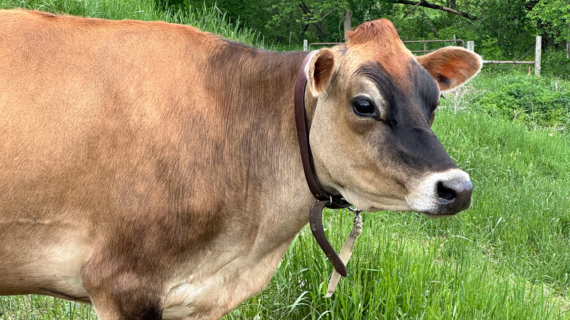
Oh hello, Deanne, how are you? - Hi Inga, how are you? Oh, and who's this? This is Prudence, or we call her Prudie. Oh, my goodness. She's one of our Lowline Angus that we raise on our farm. Tell me a little bit about the Lowline breed. Well, the Lowline breed was developed in Australia. And as you can see, they're Angus, but they're actually smaller than a regular Angus. It's a nice size. Oh, here you go. I got some treats for you. We can just let her go for a while. She'll be fine in the yard, yes. Yeah, it feels like a very sustainable breed. Yeah, I would say that that's true, and that's been our experience, that they're... With this particular breed, they're small, they're docile, they're easy to raise, and they're also very efficient on grass. So they can be raised in a smaller area, and I think that's something that appeals to people as well. And you have a registered herd, right? Right, and what that means is that we have to submit blood samples into the American Lowline Registry, to confirm that our animals can be traced genetically back to the original herd in Australia. So that's kind of cool, too. - It's very unique. Now and one thing that I like to tell people, or at least let them know about is that, sometimes when they see small animals, or hear about miniature animals, they assume that they're dwarfs, and these really are not dwarfs. They're just the smaller sized Angus. And they, actually, because of how the herd was developed, they were contained, there really is no dwarf gene in them. That's sometimes interesting, as well. They're basically pure Angus, but they've just been developed to be the smaller animal. Right, it started back in Australia in the 20s, and they started with Angus from Scotland, Canada, and America, and developed a herd. We've had people comment, that when they see our animals, and if they're familiar with the Angus breed, they'll say, "Oh, those remind me of what Angus looked like in the 1950s and 60s." Yeah, or I know my father told me when he was in England, he said the Angus there, they're a lot smaller than the ones we have here. Yeah, it probably makes sense from the standpoint, again, going back to the efficiency, and how much grass it takes to raise them. You're able to raise them in a smaller area then, because they don't need as much grass. So they might be a nice choice for maybe that hobby farmer, or somebody who wants to have a few cows roaming in their pastures and eating up that grass. It sounds like it's a nice breed for that. Yes, and especially again, going back to the characteristics I said before, you know, they're docile, you can work with them easily. But I've gotta get going. I'd love to take some beef with me, to taste it and see what the flavor's like. Oh, fabulous, we'll get you the meat, and then I also would love your feedback from your guests 'cause I think they're gonna love it. But since we're done here, do you wanna go sit on our bluff and look at the view of the river, and maybe have a cold drink? I would love to, let's go. - Okay, sounds great.
folk music
which is
Well thanks for taking part of your day to show me your herd. Your ladies are lovely. I'm gonna soak in the views for just a little bit longer. Then why don't you meet me up at Ten Chimneys and we'll get dinner on the table.
folk music
which is
CeCe and I get the opportunity to cook in Alfred Lunt's kitchen, right here at Ten Chimneys. Is this amazing? It's pretty great. It's beautiful. Would you love to have a kitchen like this? It would be a dream come true to have a kitchen like this. Well one thing we decided to do is to pay homage to him with this lunch with some recipes of his in one of the cookbooks that was created with his recipes. And I chose to do an Alfred-style pot roast, using the Lowline Angus. Did you pick something? Keeping it classic with crme brulee. Oh, of course. That sounds delicious. So, we're gonna start with some of the Lowline Angus. I really enjoy cooking with those, sort of that, I always call it "the working part of the beef," that tougher meat, because my favorite thing to do with beef is to braise it down for a long time, and just impart some different flavors into it. One reason I like it is 'cause I can set it on the stove and go out and milk cows, or weed the garden, and not have to worry about making something last minute. And a lot of these recipes are better the day after, too, when you're cooking like this. So I'm just gonna take this beautiful meat, and just cut it into cubes, probably about one inch pieces, I'd say. CeCe, do you wanna dice me two onions? Yeah, sure, of course. - Thank you. Oh, I'm excited to have a little nice lunch later. I know, me too, you're always, you're so good to me, whenever I come and visit you. Well, we need to get you a nice meal before you head off to get married. Alright, so now I'm just gonna add this beef right into the sizzling pot here. So what I'm gonna do now is just let that beef brown in the pot. You don't wanna overcrowd the beef, so you know, if you have too much, do it in a couple of batches, or if your pot's not big enough, 'cause then it doesn't get that... It steams instead of caramelizing. Caramelizing, yeah, and what we're looking for is those brown bits, so I'm just gonna let the beef do its thing over here, give it a stir, and when it's done and nice and brown, I'll take that out and then add in my onions. Alright, this is looking really good, and it's getting nice and brown. What did you call it, on the bottom of the pan there? Fond, so it's like all that yummy bits of meat. Brown, and flavor. - And yeah, all that stuff. Yeah, exactly what it is. Hmm, I've always just called it the brown bits at the bottom. Well, yeah, you know, same thing. Well let me get this out of the pan and then we'll get the onions in. I'm gonna set this beef to the side and let's add the onions, thanks for chopping them. And now the kitchen is gonna start to smell amazing. The onions are looking good, now we're gonna add our liquids, throw a little bit of brandy in the pot here. And then I'll let that alcohol cook down and bring up those flavors also, some de-caramelizing, or de-glazing the pan, and letting those flavors all kind of come together. We're building our flavors. Alright, now it's time for the beef broth. Add the beef back into that. So we've got that brandy in there, that's gonna be nice, that beef broth that's gonna add that nice beefy feel, and then also we're gonna add some red wine, to have just a little bit of mix of flavors. And red wine and beef is just perfect. Yeah, it rounds it out a little bit. Then I'll do about a half a bottle, I suppose. Okay, now I'm just gonna add a little bit of molasses, which I think is gonna give it a nice fun flavor. That's gonna sit on the stove and it's gonna simmer for about two hours, depending. We wanna get that beef nice and tender. And while that's simmering away, and marrying the flavors together, you're gonna make a little crme brulee. Yeah. - Okay.
folk music
which is
So CeCe's making Alfred Lunt's crme brulee. And this is something I've always been intimidated by, is making crme brulee, 'cause you see it at all of the fancy restaurants and all over the place. I wouldn't be intimidated by it, it's very few ingredients, it's just timing. So we've got four cups of cream heating up on the stove, and we're just gonna separate some eggs, we need six eggs separated. They're beautiful. - Yeah, aren't they gorgeous? And again, and I say it all the time, when you're cooking with farm-fresh eggs, you get that amazing sunset yellow yolk, and that's how you know you have some good eggs. Alright, let me get these out of the way. What's next? So, we're gonna add the sugar to the egg yolks, and the vanilla bean paste that I really like, you can use regular vanilla extract, it doesn't matter. That looks beautiful, CeCe. - Thanks. So if you wanna bring that over here. Now, I'm not gonna scramble the eggs, am I? No, I'm gonna keep going. We're just gonna slowly add it in, so we're bringing the eggs up to temperature. Okay, and that's the last of the cream there, okay. This is really a simple recipe. Super simple recipe. Okay, so next, we're gonna strain that to get any little egg bits out of there. That's what I'm always worried about is scrambling the egg when I'm making these kind of recipes. And if you get a little bit of curdle on your egg, don't worry about it. You're gonna strain it anyway, and you'll strain all the little bits right out of it. If somebody was gonna make me homemade crme brulee, I don't even think that I would care if there was a little bit of scrambled in there. I'd just be so excited. Looks beautiful. When you cook at home, when you're baking, 'cause you're a pastry chef, is it important to you, the ingredients that you're using? Oh, I think so. I definitely think so. Like, I try to use the best butters. 'Cause it makes a difference in the recipe. Oh, it absolutely does. It really does. Alright, what's next? We're going to fill the ramekins with our mixture, and then we're gonna put boiling water from a teapot around the sides of it. Bain-marie, or a water bath. It kind of helps the cooking so it doesn't get scorched on the sides, and it kind of cooks evenly the entire time, so you get a nice even custard. I'll move these off to the side for you real quick, if you wanna pour that water in. Perfect. - Nice. Into the oven it goes, 325 for about 40 minutes or so. Alrighty! Well, CeCe and I are gonna get the final touches on our lunch here, get the dishes done, and then we'll meet you outside for a little cousin luncheon.
folk music
which is
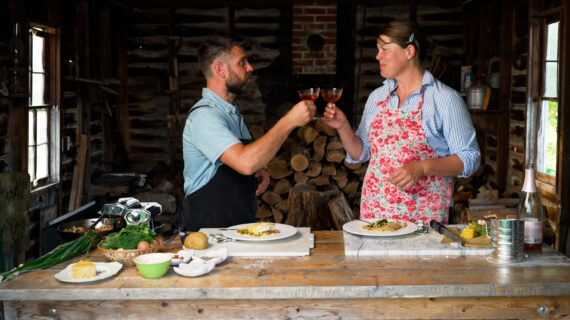
The perfect place to celebrate a cousin's lunch on the patio of Ten Chimneys. Alfred Lunt's flavorful beef pot roast. Crusty bread, and an elegant simple salad of butter lettuce and radishes, dressed with a tasty vinaigrette. A sweet ending of lusciousness, Alfred's crme brulee. Toast CeCe's wedding with a glass of Wisconsin ros. Well CeCe, I hope you've enjoyed your luxurious day here at Ten Chimneys. I have, thanks. Congratulations on your upcoming nuptials. I hope you've had fun here as well, and I hope you'll gather with us next time
Both
which is
Around the Farm Table. I'm your host, Inga Witscher. Cheers. - Cheers. Thank you.
folk music
which is
Around the Farm Table is funded in part by Kwik Trip, big on fresh and proud to support Wisconsin's farmers, Wisconsin Farmers Union, united to grow family agriculture, American Provenance, Heartland Credit Union, and Friends of Wisconsin Public Television.
Search Episodes
Related Stories from PBS Wisconsin's Blog


Donate to sign up. Activate and sign in to Passport. It's that easy to help PBS Wisconsin serve your community through media that educates, inspires, and entertains.
Make your membership gift today
Only for new users: Activate Passport using your code or email address
Already a member?
Look up my account
Need some help? Go to FAQ or visit PBS Passport Help
Need help accessing PBS Wisconsin anywhere?

Online Access | Platform & Device Access | Cable or Satellite Access | Over-The-Air Access
Visit Access Guide
Need help accessing PBS Wisconsin anywhere?
Visit Our
Live TV Access Guide
Online AccessPlatform & Device Access
Cable or Satellite Access
Over-The-Air Access
Visit Access Guide




Follow Us