

 Passport






Kubb Tailgating Party
11/10/14 | 26m 25s | Rating: TV-G
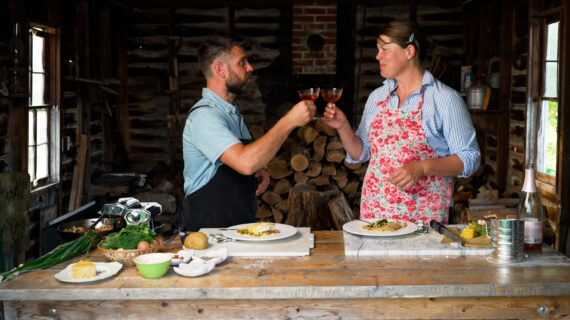
The Viking game Kubb has taken Wisconsin by storm. Inga and Joe invite some Kubbers to the farm for a tailgate party. Inga heads off for hazelnuts at New Forest Farm to make veggie burgers. She then stops by Valkyrie Brewing Company in Dallas, Wisconsin for Viking beer.


Copy and Paste the Following Code to Embed this Video:
Kubb Tailgating Party
>> Funding for Around the Farm Table is provided in part by Wisconsin Farmers Union, a member driven organization for family farmers, rural communities and all people. Wisconsin Farmers Union, united to grow family agriculture. Information at WisconsinFarmersUnion.com.
birds chirping
cow lowing
truck honks
truck honks
>> Hi there. Welcome to the farm. I've got a fun day planned today. I was invited to go to a kubb party, but I couldn't make it because I had to milk. So I invited the kubb party here to the farm. We're going to do kind of a fun tailgating theme. For the veggie burgers I'm going to be picking up some hazel nuts at New Forest Farm in Viola. Then it's off to Valkyrie Brewing in Dallas for some good old fashioned Viking beer. Gather with us, Around the Farm Table. I'm your host, Inga Witscher. >>
All
Gather with us, Around the Farm Table. >> A few years ago, I moved up to Wisconsin. I started an organic dairy farm at St. Isidore's Mead. That's when I discovered the abundance of Midwestern local food and small-scale farmers growing everything from Green Zebra tomatoes to pasture pork. I'm taking a break from the cows, hittin' the road and seein' if I can't satisfy my epicurious appetite. >> I'm washing out my old bulk tank here. This is a Ice Bank bulk tank from 1952 and it's still goin' strong, just like my parents. It was the year they were born. I love it, I love these vintage-style farm equipment. Then never give up, they never break. They just keep goin' and goin' and goin'. Every other day when I'm shipping milk I have to wash the milk tank. The milk truck driver comes every other day to pick up our milk. On bigger dairies they would clean the bulk tanks with a whole different system. So you just kind of plug in this great little system into your bulk tank and it does the work for you. Here we have to do the work ourselves, but it's okay. It only takes a few minutes. This way we can make sure that everything gets very clean. We're going to head out to the pasture when I get this sprayed out. We're going to meet Aaron and Eric who are kubb experts. I know you're probably wondering, what is kubb? What is this? So we're going to go out there and talk to them in little bit and find out just what it is.
distant conversation
All
--a little bit of attention. Thank you guys for coming out. >> No problem. >> It's a pleasure. >> What is this? >> This is the -- king. This is the kings of the National Kubb Championship. Every team that wins the US championship, they get their name on here. Aaron here, he's got his name on here. >> Nice! I'm kind of new to the game of kubb. My husband's a big kubb player, but I'm not. So tell me a little bit about the-- What is it? >> Well, it's throwing blocks at other blocks. Call it Viking chess, that's one other way to call it. >> How did you come to start playing kubb? >> My wife and I lived in Sweden for a year back in 2005/2006. We just started introducing people to kubb as we met people. Aaron was one of the first people we introduced kubb to. That's how I learned about the game. It just kind of quickly has grown. >> And now you guys know everybody. >> I don't know about everybody. But a lot of people do know kubb so that's a great feeling. >> So Eau Claire is really that hub of kubb here in the United States. >> The kubb capitol of North America. >> That's awesome. >> Every year we host the championship with different events. Kubbnation magazine is out of Eau Claire, and we've got national champs from Eau Claire. It's in the schools, it's everywhere. >> I don't know if people still do high-fives. I think they do the fist things. But I always do high-fives. Good job, guys. >> Yeah, yeah. >> What is it about the game that really brings you guys back to it every day? >> I play with my dad, with my son, so it's a game that kind of goes all ages. I play with my daughter. All skill levels. People who are new, when they see or hear or have that feeling of knocking something down, there's this hunger to do it again. There's really a lot to offer in that game the can start out seeming really simple. >> Yeah. Are there any sort of basic rules to kubb? >> The game is set up where the field, or the pitch, is eight meters by five meters. There's five kubbs on one side and five on the other. And the king, he sits in the middle. Pretty much the whole object of the game is to take the wooden batons here, and you have to throw them underarm and they can't go sideways at all, and you're trying to knock over the kubbs on your opponent's side that are eight meters away. The kubb that you knock over, they get thrown back into play later in the game, so the game goes back and forth, back and forth. And the king, he stands in the middle. He's like the eight ball. If you knock him over during the game, you lose. But once you eliminate all the kubbs of your opponent's side, then you can try to take down the king. He's the easiest one to knock over, but I think it's the toughest shot in kubb. It's tough, yeah. >> Because it psychs you out. >> Oh, big time. >> Yeah, yeah. >> So I know that for us here, we always play kubb just wherever on the farm. Well, I usually watch Joe playing kubb by himself and I sit there pouting a little bit. But we can play it in the pasture, we can play it on the concrete. It's kind of one of those games you can just take anywhere. >> You play it on beach, you play it on the street, backyard. You don't even need pieces sometimes. If you really need to play, I mean, you can-- These are pieces of wood. It really is a game that can go anywhere, anytime. >> We play it in the winter. Some people around here ask, oh, you can play that in the summer? Because it's fun to play all the time. >> Well, guys, I'm going to be off to Valkyrie Brewery to get some beer, because I just want to be able to rehydrate you guys with a little bit of good Wisconsin beer. >> We love Valkyrie. >> The beer of Vikings. >> The beer of Vikings. Then I'm going to be gathering some nuts for some veggie burgers. If you guys wouldn't mind keeping track of the farm. If I'm not back in time you guys are in charge of milking cows. >> We got everything. >> We can handle it. >> All right, I'll see guys in a few hours. >> Thank you so much. I appreciate it. >> Awesome. Thanks for coming out. >> Thank you. >> So this is such an exciting moment for me, that I get to taste beer with the makers of the beer. I think in the state of Wisconsin that probably happens quite a bit because we have so many microbrews here, but you guys were really the first microbrewer in Wisconsin. >> Yup, well, in western Wisconsin, I think. Here, we were the first ones in so it was an experience. We came into Dallas and they were going, a micro-what?
laughter
All
You know. >> So tell me a little bit about the beer-making process. >> Well, it starts out with malt, malted barley usually, sometimes a little bit of malted wheat. Then we mill that, grind it, and then steep it in hot water. We use the enzymes in the barley to convert the starches into sugar. >> Okay. >> Then we extract the sugars out of that, and boil that, add in other spices and herbs into that, typically hops, at least hops, into it. Then pitch yeast into it and ferment it. >> Nice. It seems like a lot of these processes are similar to cheesemaking. I'm saying that because I've been making cheese forever. You add certain ingredients at certain times, wait for the temperature to come to a certain time. It's a lot of waiting while you're working. >> Brewing is like that, yeah. There's a lot of waiting involved. >> Is it like cheese, where each batch is a little bit different? >> Yes. In a small brewery you get to notice that because we rarely brew the same beer back to back. >> Okay. >> Okay? Every batch is different slightly. And it varies both because of the ingredients are varying. You're using an agriculture product so makeup of the agricultural products change things. And depending on what time of year it is, because this building has great temperature swings in it. It's different in the winter than in the summer. >> I love that. >> The big boys do the same thing except they have so much of the same beer that they blend the tanks to maintain a particular consistency. >> I think it's more fun if it doesn't have that same consistency. >> Yeah, that's the artisanal part of it. >> Yeah. >> You know, everything ought to be a little bit different. >> It would be wonderful if in every small town like Dallas, Wisconsin there was the local brewer, the local cheesemaker, the local butcher. Wouldn't that be amazing if we could get back to that way of life? >> Back there, yeah. Absolutely. I think we're going to go back that direction. The pendulum is swinging back towards small. >> I hope so. Well, I'm going to get out of your hair before the tours start today. I know you guys are busy. But I'm hoping to take some beer home for-- I'm having some folks over to my farm to play kubb. Are young guys familiar with that? >> Yeah! >> You have to know kubb if you're doing Viking beer, right? Well, thanks, guys. This has been just fantastic. I can't wait share your beer with the friends I'm having to the party. If you guys are around, come on down, hang out with us. >> Oh, we'll be there. >> Okay, super. >> Here's your beer. >> Have a good afternoon. >> You too, bye! >> Bye.
oinking
All
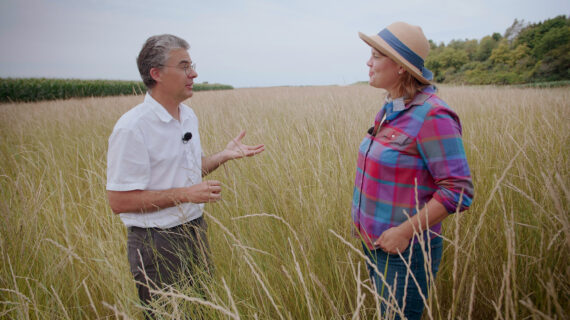
>> Hi there. You must by Mark. >> Hey there. >> Hi, I'm Inga Witscher. >> Hi, I'm Mark Shepard. Pleased to meet you. >> Nice to meet you. I think what your doing at your farm is just amazing. It's been so inspiring to me. My husband and I just have a 30 acre farm. We've been farming there for about seven years. And everybody said, you should till up your pastures and replant, and this is what you should plant. I think I heard Joel -- or something say, if it grows in the ditches, that's what you should be growing on your farm. Because you don't have to-- And that's what I did and it was like, oh, well, that's great. Number one, I didn't have any money to do anything, so it worked out just having the pasture there. >> In the ditches the brush that's growing up are hazelnuts, wild plum, wild roses, raspberries, grapes, gooseberries, probably some wild apples thrown in here and there. So why not design a system just like the brush on the side of the road, and the brush on the side of the road, they try to mow it and they try to herbicide it every single year. It keeps coming back and coming back and coming back. That's sustainable agriculture. >> Yeah. >> The three-dimensional system I'm going to show you, I think it is ten different crops in the same space, and it all started as a simple ally cropping system where we were growing annual produce in as ally and a row of chestnut trees. It started that simply. And it has, over 20 years, evolved into what it is now. Why don't we go take a look at it. >> Okay. >> Hey you guys, where are you?
whistles
buzzing lips sound
All
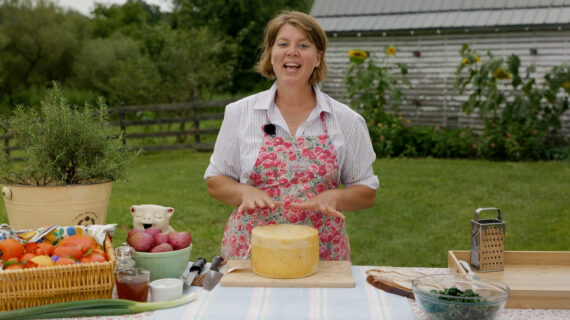
>> Mark, standing here and looking at this pasture that the pigs are in, I would have thought that it would have been churned up and torn up. You know how pigs can get. >> Part of why it's not so torn up is the breed. These are a mix of Tamworth mostly in their genetics. Tamworths really don't tear up pastures all that much. Part of that also has to do with the fact that they're extremely well fed. We're coming into hazelnut season. They'll get all the hazelnut processing waste. They'll get the pressings from elderberries, the pressings from grapes, the pressings from apples. And then they finish, finish on chestnuts. That's their final finishing. >> Mark, what is kind of the nutrition of some of these crops, because in my dream world I'd be able to grow enough perennial crops to feed my cows so I could cut down my $20,000 feed bill. >> Right, right. The hazelnut is more nutritionally similar to a soybean and it's three times the oil. Chestnuts are more similar to corn. Actually, their most similar to brown rice. So it's more like a grain that grows on a tree. >> Okay. >> It's a complete human diet. We lack nothing if we eat only these plants except, believe it on not, salt. Salt is naturally deficient in this diet, and I think that's probably why humans have such a craving for salt. In a natural environment, eating the foods that are around us, we are deficient in salt. >> Interesting. >> So you'd still want to have your mineral blocks out in your pasture for your cows. >> So permaculture is basically just paying attention to what's happening on the land and allowing those things to happen. >> In a certain sense. The subtle distinction between permaculture and restoration agriculture, which is more of what I practice, is restoration agriculture is ecosystem mimicry. If you're living in central Canada, there's going to be different species that will thrive there all by themselves than if you're down in Louisiana. >> Okay. >> Permaculture will make somewhat artificial assemblages of useful plants and plant them, whereas I'm imitating natural plant communities. >> I've seen a lot of photos of your farm during years where we've had drought all over Wisconsin, and it seems like you're always green here. >> Right. >> How are you holding so much water in your soil? >> Plants can grow without all kinds of different minerals. They can grow in deficient soil on all different sorts of things. The one thing they can't live without is water. Our hands together are like a ridge and valley system. Here's this main ridge with hills and saddles, and the main valley going down the middle. So what we do is, starting up here at these points, these are called key points, we make a tiny depression in the ground and then we make little diversion terraces that now draw the water slightly down hill but toward the ridge. And so the whole entire property becomes these reverse herringbones. When the water now pours on my hand, if it tries to concentrate in this little valley, it gets pulled out to the ridge. >> Wow. >> So it ends up being thee big zigzagies all across the land. >> I see what a lot of folks when putting in annual crops like corn or beans or something, they seem to be taking out all the trees along their hedgerows. Maybe they're worried about the shade or something. But it seems like in our pastures anyway, if we have a little bit of shade things grow a little bit better. Do you notice that too? >> Actually, yeah. The University of Missouri-Columbia, School of Agroforestry has done extensive research on agroforestry systems, and a partial shade actually increases yields. Annual plants are plants that you plant the seed in the springtime and you harvest in the fall, three or four months of growth and then it's dead, it dies. In order to get a annual plant established you have to destroy the ecosystem that was there, a forest or a prairie. You have to disturb the soil, either with tillage or with herbicide in order to get your plants to grow. So you have to kill nature in order to get agriculture to happen. Establishment costs actually, for establishing a farm like this, would be less than starting a dairy would be. >> Okay. But what it doesn't have is the immediate cash flow that a dairy does have. Unless you use some of the agroforestry techniques, which is how we first got established. >> What's the agroforesty techniques? >> The ones that we used the most, the primary one was ally-cropping where we would grow our ally crop with, say, corn or beans. I've actually grown corn and beans here in the early years. You have your regular crop established and then you plant a row of trees spaced fairly wide apart so we can still get in there with the equipment. In the early years your trees are small, their not yielding anything anyway, so your cash flow is coming from your annual crops, your corn or your beans. >> Okay. >> Then as the woody plants mature, like these hazels, then you don't need as much of your ally crop. You can continue to close in the rows, close in the rows, until you're 90% to 100% perennial crops. >> Okay. My cows love to eat leaves of trees. They just reach their heads out as far as they can absolutely go, like a giraffe or something. They just love it. What is that about? It's their natural-- >> They're natural browsers and grazers, and we use that behavior as a tool. We're using them as a management tool. We're not doing cattle as our enterprise, or pigs as our enterprise. They're management tools, so how we can manage the system with low labor and low equipment costs. We'll turn the animals into an area and they'll browse. Very few branches down low. Apples, very few branches down low, because the cows go in and they tear all the branches off. Most people would look at that and say, oh, my goodness, the animals are damaging the trees! All the trees in our part of Wisconsin here, in the savanna biome, are accustomed to abusive grazing and browsing by wild animals and to fire. You can cut these trees down and they sprout right back and will continue to produce. Well, thank you Inga, for coming to New Forest Farm. Here's a parting gift of some hazelnuts in a Shepard's Hard Cider box. >> Nice. I would have taken the hard cider, Mark, but these are going to be perfect for the veggie burgers I'm making. >> Good, enjoy. >> Great. Well, anytime you're up in Osseo, please stop by my farm. >> I'll do that. >> Have a great day! >> Well, let's get started cooking here before everybody shows up. I love veggie burgers. You know, I grew up partially vegetarian. My father was vegetarian, my mother cooked vegetarian a lot. So veggie burgers were always something we'd incorporate in. It thought this would be a nice to be able to share with people and use these wonderful Midwestern ingredients. To start with we're going to take an onion and just saute it up in a pan. Let's see here, whoup! I'd better add my oil first. I'm just going to use sunflower oil because I'm just going to be frying the patties again. I like that you can use sunflower oil for higher heat. Okay. With the onions you want to sweat them. We're not going to saute these up until they're all the way cooked. We're just going to sweat these onions to get that flavor out. This is going to be part of our mixture. Those onions are going to take about five minutes or so to just get nice and soft, and then I can add the garlic right to there. Salt and pepper we're going to add right to here. A little bit of Tamari, and let's stir that around just a bit here. Then I'm just going to add a little bit of thyme for the herbs here. It's just something that I had in the garden so I thought it would go nicely. But you could even add other things like cumin or, I don't know, ginger, rosemary. Just have fun with it. Then just give that a good stir and just incorporate it nicely. That's lookin' good. Okay, we're ready to take that off. Not a lot of cooking for the preparation in this recipe. Whoa. I love cooking in these cast iron skillets, but I always forget how heavy they are, number one, and how the handles are hot too. Yikes! In we go. Okay. Boy, I've got to start doing some more lifting. I'm getting a little bit weak. I'm going to set that back on the heat because I'm going to use that pan again in a second. Now I'm going to add the nuts that are going to create this burger. I just took a cup of those hazelnuts and ran them through my food processor, and got them so they're-- They're not all the way processed. There's still a few chunks in there which taste good. I'll add that right to my bowl here. I had some wild rice left over from dinner last night, and wild rice is so Midwestern and it's a wonderful addition to these burgers. At least I hope so. I haven't tried it yet, but I think it'll be delicious. So we'll add a little bit of cooked wild rice and some cheese. I just use a cheddar cheese. Oh, that's lookin' good. And some bread crumbs. You should just make your own bread crumbs. It's so easy to make bread crumbs, so everybody should practice making bread crumbs. Okay, now let me crack an egg. Okay, let's get this all mixed together. Let's see-- It's looking like I might need one more egg to bind this all together with. Let me go grab that.
hen clucks
All
Thank you Mrs. Hensly. Let me wash my hands off. Okay, clean hands. Let's make the patties. Actually, I'm going to mix this up a little bit more with my hands just to get everything incorporated. I'm going to fry these today, but I also saw that you can put them in the oven and bake them. That's a good idea, because sometimes with veggie burgers they fall apart really easy. That's always one of the things that I always struggle with. But hopefully these will be able to be okay. I hope. Let's all cross our fingers. Okay, I kind of like making food like this where you kind of got to get dirty and use your hands a lot. Okay, I'm going to add a lot of oil back to the pan so it doesn't stick here. Let's all just think really good thoughts so these hold together. I'm going to do one at a time. Okay, and you want the pan to be hot so that it sears the bottom. That's going to help that burger stay together better.
sizzling
All
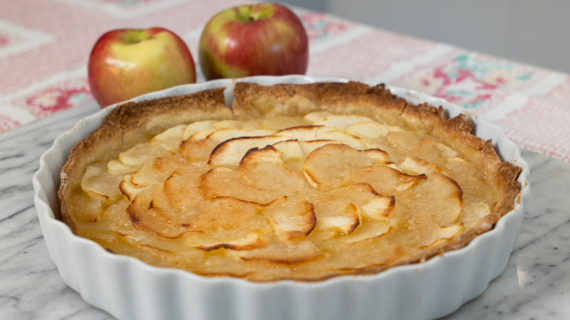
These are lookin' good. Well, they held together. That's a good start. Okay, well, they look like they're turning out pretty well. I'm just going to finish up here and then I'll meet you at the party after I put the trimmings on these beautiful Wisconsin hazelnut burgers. Serve your hazelnut burgers with crusty buns and all your favorite fixin's. Deviled eggs and pickled vegetables are great at any kind of a shindig. Make sure to have root beer on hand for the younger set. Wild apple tarts with cinnamon scented whipped cream are a perfect ending for this party. When you can't be at the party, bring the party to you. And gather with us next time >>
Together
Around the Farm Table. >> Funding for Around the Farm Table is provided in part by Wisconsin Farmers Union, a member driven organization for family farmers, rural communities and all people. Wisconsin Farmers Union, united to grow family agriculture. Information at WisconsinFarmersUnion.com.
Search Episodes
Related Stories from PBS Wisconsin's Blog

Donate to sign up. Activate and sign in to Passport. It's that easy to help PBS Wisconsin serve your community through media that educates, inspires, and entertains.
Make your membership gift today
Only for new users: Activate Passport using your code or email address
Already a member?
Look up my account
Need some help? Go to FAQ or visit PBS Passport Help
Need help accessing PBS Wisconsin anywhere?

Online Access | Platform & Device Access | Cable or Satellite Access | Over-The-Air Access
Visit Access Guide
Need help accessing PBS Wisconsin anywhere?
Visit Our
Live TV Access Guide
Online AccessPlatform & Device Access
Cable or Satellite Access
Over-The-Air Access
Visit Access Guide




Follow Us