

 Passport





A Corey Ruiz street memorial expresses outrage, solidarity
In the wake of a police officer shooting and killing Corey Ruiz, activists in Madison gather around a makeshift memorial to offer condolences, seek accountability and help others who are down and out.
By Murv Seymour | Here & Now
July 31, 2026 • South Central Region


Activists gather at a Corey Ruiz memorial to offer condolences and seek accountability.
“We are going to scream his name! Justice for?” a man called into a megaphone.
“Corey!” chanted a group of protestors in response.
For more than a week and counting, echoes of anger and frustration continue to ring out in and around tMadison’s east-side neighborhood where Corey Ruiz was shot and killed during a scuffle with four police officers on July 22.
“This is not a time to be uncouth — this is a time to come together and be neighbors,” declared a protestor.
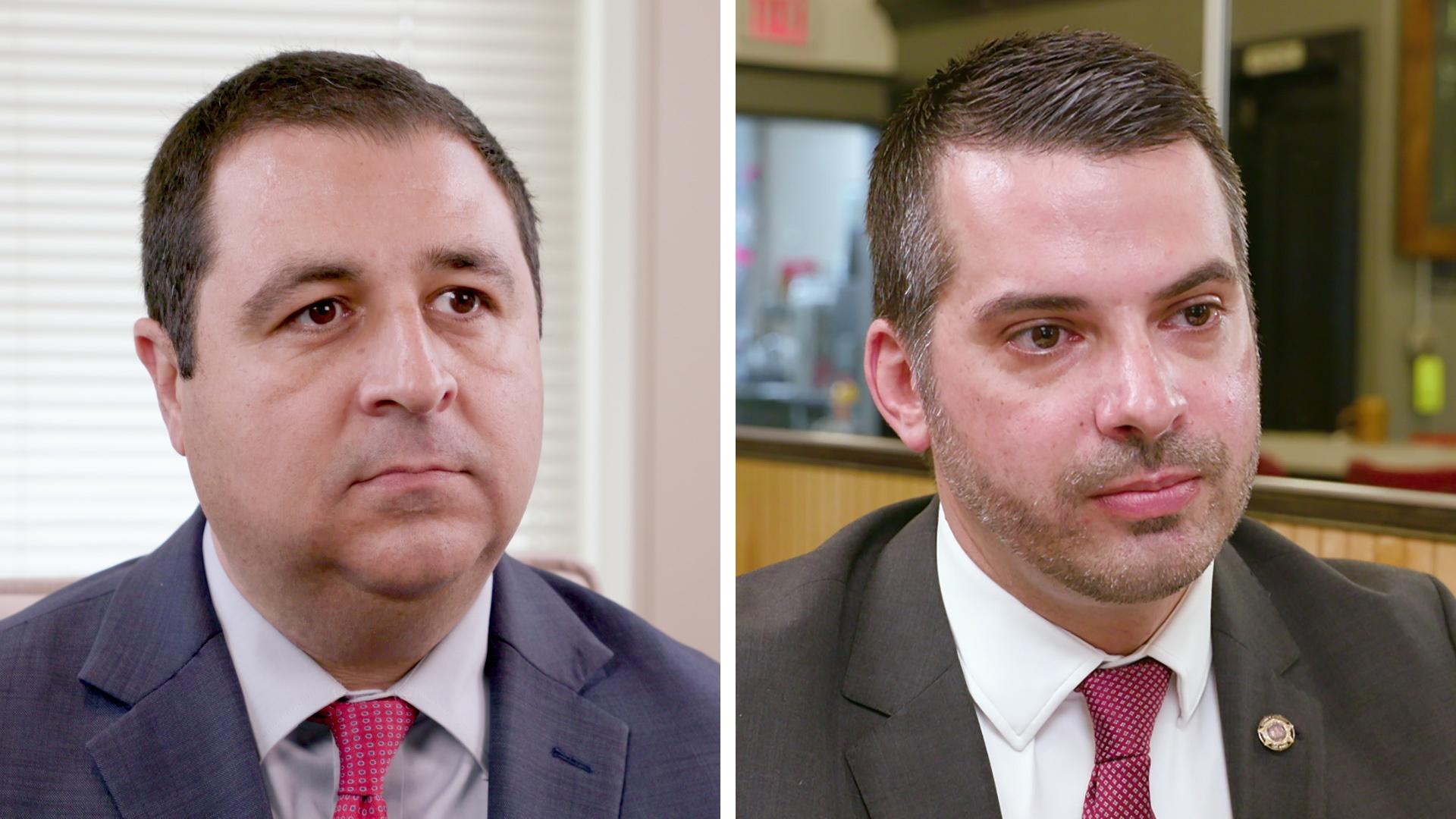
The high-profile shooting is in the early phases of being investigated by the Wisconsin Department of Justice, overseen by Attorney General Josh Kaul.
“It started as just someone came and painted on the road, and flowers and candles were placed there, and then it eventually started to grow.,” said Lorien Carter about helping organize a street memorial to Ruiz .
A 12-foot-tall traveling monument represents outrage and solidarity against police brutality. First set up in Minneapolis after George Floyd was murdered by a city police officer, the raised fist was placed in the center of the intersection of Williamson and Baldwin streets. It’s the very spot where Corey Ruiz’s deadly encounter with police was caught on cell phone video, sparking national attention, outrage and the nation’s most-known civil rights attorney, Benjamin Crump, to come to Madison to represent his family.
“I love this city and I love these people and this is, this is awful,” said Natalie Love Church when visiting the memorial.
She lit candles while others brought cards and placed flowers. Most everyone takes a moment to pause and process what’s happening at the site.
Love Church said she came to pay her respects and to demand accountability.
“Justice looks like there’s a system that’s in place — a justice system in place — and this was not it,” she said. “Accountability needs to be taken, and justice for this poor person. I don’t care if he was guilty as hell, I don’t care. This was not justice at all.”
What started out as a memorial has morphed into a movement to help those who are a lot like Corey Ruiz: unhoused, and in need of mental health and social services support.
Jazzman Brown, a volunteer helping out at the Ruiz memorial, said that at last count as July ended, nearly 50 tents had been provided, allowing some to camp out on the streets. It’s a temporary fix to a complex housing problem, a touch of comfort and hope to a community that needs it now more than ever.
“We all know that he was homeless and that he had his struggles. And how could we not — in the place where he was killed, in the neighborhood where homelessness is so high — help those that were in the exact same situation he was,” Brown said. “So we’ve built a space for everyone.”
One of the lead organizers of the space, Carter says if there’s one thing the memorial represents, it’s hope.
“This is affecting all of us. This is something that’s in your backyard,” she said. “And proximity to whiteness doesn’t equal immunity. We’ve seen it in real time now. And so I think that the country — it has to acknowledge that there is a race problem.”
Carter and others want the police officer to be charged with murder, which will ultimately be the decision of the Dane County District Attorney’s Office once the state Department of Justice’s Division of Criminal Investigation completes its work.
“Please stop telling us to heal when you keep reopening the same wounds,” she said.
The police shooting of Ruiz opened old wounds for Carter and others. Just over 10 years earlier, and just a few blocks from here, a Madison police officer shot and killed Lorien’s unarmed nephew Tony Robinson, a case in which no charges were filed.
“Yeah, but I have a right to be here just like you do, man,” said Mike Weber to others at the memorial.
“But you have a right to peacefully protest somewhere else, though — this space is not for that,” replied another protester.
The sense of peace was briefly interrupted over Weber’s right to support the Madison Police Department. He said he also wants accountability.
“I’m not judging him one way or the other. When the results of the investigation come in, I might change my, I don’t know, but I want to see people be cool until that happens,” Weber said.
“What do we want? Justice! When do we want it? Now!” chanted protestors in a rally in front of the Wisconsin State Capitol.
On July 29, protestors once again marched to the Capitol building, taking their battle to the heart of Madison, where they continued to interrupt daily routines with a loud and clear message.
“This is about how Black people have been treated by this country and by this state,” said one protestor.
At the Corey Ruiz memorial, this small section of the community worked to get back to normal, but what’s normal and just how long it takes to get there is anybody’s guess.




Follow Us