

 Passport






Ploughman's Lunch
11/02/17 | 26m 47s | Rating: NR
Inga makes a ploughman’s lunch for a world champion sheepherder, picks up some heritage wheat in Mount Pleasant, learns how to grow herbs near Amery and visits Wisconsin’s very own Jung Seed in Randolph.


Copy and Paste the Following Code to Embed this Video:
Ploughman's Lunch
(light-hearted music) Welcome to Nippersink Hall. I'm here today to find out how to move sheep with sheepdogs. In exchange for the knowledge, I'm gonna be making a ploughman's lunch for Gordon and I. For the ingredients, I'm heading up to Amery, Wisconsin, for some herbal tea.
And then a little stop off at Jung Seed. And then it's off to Anarchy Acres for some heritage flour. Gather with us Around the Farm Table. I'm your host, Inga Witscher.
Good morning, girls. I'm Inga, and I love everything about farming. Midwestern farms are a bounty of good food, made by good people. I love being able to travel, to search out good ingredients.
Cooking is all about what's seasonal, what's fresh. Every day can be filled with good food, good friends, and a beautiful herd of cows. Welcome to the farm. Good girl.
-
Announcer
Around the Farm Table is funded in part by Kwik Trip, big on fresh and proud to support Wisconsin's farmers, Wisconsin Farmers Union, united to grow family agriculture, American Provenance, Heartland Credit Union, and Friends of Wisconsin Public Television. (light-hearted music) Gordon, it's so lovely to be out here today, with the sheep, and the beautiful dog. This is Storm, right? - That's Storm.
And he's kind of a champion sheepdog. Yeah, he's done very well. He's won quite a few trials, and he was Reserve Champion last year in the US. That's amazing.
I love it that even though I'm petting him, he's got his eye on-- He's not gonna stop working. Well, they don't stop working. That's their job, and that's what they're bred for. They must take a lot of pride in it, too.
Does he see himself as kind of the leader of the pack, Or, is that your job? - That's my job. You're supposed to be the leader of the pack of your dogs. And, like he works for me, but it's keeping him happy at his work as well.
And how often do you have to work with him, to keep him-- Does he just learn everything he needs to know and now he's ready to go, or do you have to kind of maintain that training? Once they're trained, all you ever do is polish things up. Okay. - That's all you ever do.
They're only ever trained once. - Okay. You can't train twice. - And that's what you do here is you train dogs for other people, too.
Yes, I help people and teach people how to work their dogs and how to make them better. A lot of people can work their dogs, but trying to get them to be better to compete at a higher level. -
Inga
Sure. And I didn't know this about the United States. Whenever I think of sheepdog trials or even sheep themselves, I think of the U.K. and I was able to walk through sheep farm after sheep farm when I was in England.
But, this is a thing here in the United States? Yes, it's a big thing all over the world now. U.K. is probably where it started.
-
Inga
Uh-huh. As the number of sheep, but it has grew and grew and grew until people called it a sport. It's trial, but there's thousands of people does it now. Wow and what happens at the trial?
Is it you're judging the dog? What is being judged? You're judging how the dog handles the sheep. -
Inga
Uh-huh. - On lines. The first thing he has to do is outrun, left the sheep towards he, fetch them round he, drive, back, shed or pen. It can be the other way.
You have a time limit and it's done within that time, but it's not a race inside that time. You can use down to the last seconds, if you want. That's about how good can you get your lines, how nice the dog walks the sheep. And it's up to the judge to take the points off after that.
Interesting, and how did you end up in Wisconsin? I moved to Missouri almost two years ago. I was there for six months then I moved up here. It's nicer up here.
To the most beautiful place on Earth, right? It's very pretty, it's very pretty. And the winters? You're okay with the winters?
So far. So far. - (Inga laughing) People say it can get bad, but last year was fine. Hopefully this year is going to be fine, too.
Hopefully, hopefully. Luck of the Irish. (laughing) Right. When you have this dog like Storm, is he a part of your family?
Is he like any other dog sitting on the couch with you watching TV, or do you have to treat him a little bit differently because he's a working dog? No, Storm's never been in the house in his life. He stays in his kennel, but he's my pet. He's my partner.
And like I wouldn't allow anything to happen to him. But, he's treated as a dog. So, he has a job to do and that's the way he's treated, but he's not treated badly. But, essentially he is an employee.
Yes, he's a working machine. - Yeah. They're not a dog to be played with. I would get a dog if I didn't have to play with it and it didn't have to come in my house and get dog hair all over the place.
(laughs) But, that's what they're bred for. When we lived in Virginia-- and my brother still lives there-- we had a sheep herd and he always had Border Collies and he would work with the sheep and we'd bring the cows in to be milked with like that. Is there something about the Border Collie that makes them perfect for this job? They're the best dog at reading sheep.
They're the best dog at doing the work because it's naturally there. They're naturally herding dogs. They naturally go round and fetch the sheep to their master. So, you wouldn't want to get like a Shih Tzu or something out here herding sheep?
No. - (laughing) No, not my style. Is there any other breeds of dog that do well with this kind of work? The Australian Shepherd dog, but...
I see them on cow farms. - They don't do the same job. All our dogs are-- They're called drovers, so they are used for tight pen work. -
Inga
Okay. Like driving on the road years ago, where they had to drive stock from home to market. They were drovers as they call them, but they're still nothing to touch the Border Collie, because he can do all jobs. They're a very nice dog.
What would you tell somebody who wants to get into training dogs for this kind of work? Is it all about the patience? Well, the first thing, if somebody wants to get into this job of herding sheep, they need to go and get themselves a very well-bred pup. -
Inga
Uh-huh. And they also need, when the pup starts working, is to go to somebody that can tell them the proper way to get it trained, how to train it and the person helps them and the young pup to grow up together in their training. Yeah, because you only get one shot. You only get one shot at it.
That's my advice. It's amazing to me watching you around here, how you can control Storm with just a whistle. Is that how he's trained or is there other aspects of it? He starts out on voice commands.
The whistles come second and the whistles are used for distance. The dog can hear you at a greater distance. And a dog will easily hear his whistles at least a half a mile away. -
Inga
Wow. It's not a problem to him. (whistling commands) I imagine that you and Storm have to have a certain amount of bonding because you're working together and having to trust each other and communicate without words. I call it, "The leader of the pack." You must be the leader of the pack to your dog.
If you're not the leader of the pack, you're nothing to him. You're just a person. But when you really lead him, he gets closer to you and he will do more for you. You can ask any questions you like of him.
That's amazing. Well, you're a world champion and I would love to go out with the sheep and see how a world champion does this. Okay. C'mon.
C'mon, (light-hearted music) It's a treat to be up here at Red Clover Herbal Apothecary Farm. I've always used herbs only in culinary sense in the pestos and things that I make, but I'm excited to meet with Nancy here today and find out what you do here on the beautiful farm, Nancy. Hi, Inga, I'm glad you're here. - Thank you.
We're growing over 50, 60 different kinds of medicinal and culinary herbs and we harvest them. We'll make teas. We'll dry-- Some of the dried herbs we'll turn into oils that will later get beeswax added to them and we'll make salves. We tincture.
And then we take them to the farmer's market. We provide seasonal CSA herbal shares. So, let me ask about that because when I think about CSA's I think about vegetables; you're getting a box once a week. How does it work with the herbs?
Well, you don't get a box every week because you don't need a box every week, so it's seasonal. We have a spring CSA share. We have a summer one, and then we combine a fall/winter one. And we work with what's going on with the body that time of year.
So, say in the fall and winter it would be more respiratory; protecting you from colds, flus, viruses. Stuff like that. -
Inga
Sure. So, what are you getting in the box then? Is it tea and medicine? Yes, so in the winter when you get elderberry syrup, you get a sore throat spray.
Some winter wellness tincture. Some cold season tea, maybe a warm cold congestion balm that you can rub on your chest. What a great idea. - Thank you.
So, tell me one thing as a farmer, I'm sure you're always thinking about your soils. Right, right. -
Inga
and how to enhance that. Do you have to worry about fertility with herbs? Absolutely, I didn't think I did when I first started out because in the wild they're just growing wonderful; you don't do anything to them, but there's dead plants around them building the soil all of the time. So, we really do have to pay attention to that.
We grow cover crops of oats and red clover. We lay down comfrey leaves which add a lot of nutrients to the soil. Sometimes we'll make a nettle tea. Oh.
-
Nancy
Strong nettle tea. And then after that ferments for a while, we'll spray that around the plants, but we have to continually be conscious about building the soil, because the plants take a lot out in the soil. And that's really where the health of the plants come from. That's right, you need healthy soil for healthy plants for healthy people.
Is it important when you're thinking about planting to have a diversity of herbs not just for the business side of it, but for the health of the plants? Yes, they help each other. We try to do as much companion planting as possible. Like our yarrow and our mint, we plant side by side because they know no boundaries; they'll take over.
So, if you put them together they keep each other in check. We plant our chamomile next to plants that have a lot of essential oils, like lavender, lemon balm and that enhances the essential oils of them. Some plants will help deter bugs off of other plants. So, we do think of that.
This is really exciting. I would love to see some more of the farm. Really specifically, I'd love to see some of your cover crops because that's what I'm thinking in my mind right now for my farm. Let's head down to garden three.
We've got some oats growing down there. I can give you a hand with this. So, Nancy what's the purpose of these oats? These oats serve three purposes; probably more than that.
One of the main reasons is because it enhances the soil. It helps build healthy soil. But, we also use them medicinally in our teas and tinctures. See the seed on the top here?
It's called milky oat seed. Milk doesn't come out yet, but in a week from now, when you squeeze this, milk is going to pop out. That's the time to harvest this. It's the best plant medicine we have in the Western World for restoring the nervous system.
No kidding. - Frazzled, burnt out, anxiety. It's just like food. You can have it every day.
And what we do, we will cut the plants. We'll take a bunch like this. We'll cut it with a scissor, and then we'll bring it in the house and we strip off these seeds. You can see, I'll strip a bunch off and we'll fill a jar full of these seeds and then we'll pour organic alcohol over it and they'll bathe in that for several months and that pulls some medicinal parts out.
Nancy, it's so exciting being able to learn about how the cover crops have a lot more purpose than just building the soil or seeing that we can have healthy lives from healthy plants. I wanted to offer something healthy, rejuvenating for a nice non-alcoholic drink. Can you kind of help me pick out some stuff for some tea? -
Nancy
Absolutely, let's go up to the drying room... - Okay!... and see what we have up there. (light-hearted music) Nancy, I'm excited to gather up some of these herbs.
What do you think would be visually appealing and also taste delicious for this hot summer day we're having? Let's see. How well visually I'm going to going to the Calendula right away. -
Inga
Yeah. We can mix it with some chamomile. They go very nice together. -
Inga
Okay. And that's a nice calming herb. -
Nancy
Nice calming and tasting, if you don't over-steep it. And then I would add some red clover and some lemon balm, which is really tasty and really cooling; it'll be a nice combination. I decided to make a pit stop in Randolph, Wisconsin, to visit Jung Seed Company. I'm sure at one point or another, all of us have had a Jung Seed catalog show up in our mailbox and I wanted to find a little bit more out about the family and of the history of Jung Seed.
I know that one of the family members, Nathan, is out in the daylily field, so let's go catch up with him. Nathan, so nice to meet you. - Nice having you here. It's incredible to be out here.
You know, I've been getting the Jung's catalog forever, since I was a little girl and now I feel like I'm standing on the front cover of it being out here in the daylilies. Thank you for coming. It's a great company that you guys have here and one thing I love about learning more about Wisconsin and traveling around Wisconsin is learning about these amazing Wisconsin companies. Can you tell me a little bit about how it started?
Sure, my great grandfather started the company back in 1907. It all started when he was a young boy with his family of ten siblings working in the garden. His job was to collect the seeds from the garden; to save for the next year. He started collecting a few extra seeds and saving some to sell them around town and that kind of got him started into the horticulture business and from there he went on to business school.
Came back, put a printing press in his parent's kitchen. Punched a hole in the wall for the gasoline engine on the outside and got going from there. First catalog... - And that's where-- Yeah, he would print out his catalogs.
The first catalog was printed in his parent's kitchen. It started out with 400 catalogs that first year in 1907 and has grown from there. Now, we have three million catalogs that we send out in the spring.
We have two editions of the catalog
a spring edition and a fall edition. And we send out three million catalogs in the spring and three quarters of a million catalogs in the fall. And now you're growing a lot of the stock that you sell right here in Wisconsin, is that right? Yeah, that's correct.
We grow about 50 to 60 percent of the plants that we sell right here on our farms. We have about 250 acres of farms on three different spots here in the Randolph area. That's a lot of flowers. - It's a lot of flowers.
When they're in bloom, it's a pretty sight. We've got fields of daylilies, fields of peonies, fields of iris. Well, I'd love to take a look at these daylilies. There's some really beautiful varieties.
Sure, let's take a walk. - Okay. How did you get involved in the family business? When I was quite young, around four or five years old, I used to come to our greenhouses and propagate geraniums with my grandfather.
I was always very close with my grandpa and he kind of took me wherever he went any time I wasn't in school and he was willing to bring me along. We'd either work at the greenhouses or we'd go to the garden centers and he'd be helping customers, answering questions and I'd be in the back wrapping up plants for the customers who'd came in to buy them on that particular day and as soon as eighth grade was over, I started working here. Worked summers all through high school and college and as soon as I graduated college, I came back and I've been working here full-time for over ten years now. I love hearing stories like that.
I have a similar experience growing up with my grandfather feeding calves and baling hay and really kind of seeing-- I think we see things through their eyes and their passion and it's easy to kind of fall in love with what they're doing and want to do it ourselves. Very true. (light-hearted music) We're here in Mount Pleasant, Wisconsin, at Anarchy Acres where rural meets residential and here Charlie is growing different varieties of heritage wheat. Let's go meet him and find out why he's so passionate about it.
Hey, Charlie. How are you doing? - Inga, how are you? Good.
Nice to see you. - Thanks for coming out. This is looking really nice out here. I would agree and I'm so happy to be standing here.
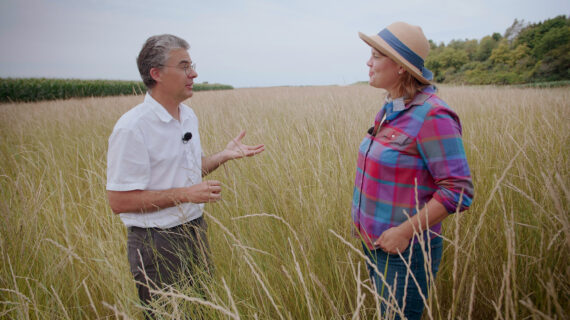
This is a five acre field of Turkey Red wheat. I planted it last September. - Wow. And I'm very anxious to harvest it; that will be in a matter of days.
Well, hopefully it dries out enough around here and you can get in here and harvest it. I don't know if it's ever going to dry this year, but if it does, I will be here to harvest it. How many acres did you start out with? I know that this is kind of a passion of yours to grow these.
Would you call them heritage varieties of wheat? Heritage varieties of Wisconsin. Wisconsin wheat. My particular interest is in the wheat that grew in Wisconsin 100 years ago and 200 years ago.
So, that's my focus. And yes, I started out a lot smaller. My first plot was probably ten by ten. It's gone up a little bit every year.
That's exciting. Why was it important for you to start growing your own wheat? This is a very ambitious thing to do. Yeah, it is.
I started as a baker, a home baker, and got really passionate about it and I got a pile of books. The first thing that came was grinding. I started hand grinding on a stone mill; my own flour probably back in the 1990's. I had access to grains from my uncle's farm and got a taste for that.
Then I discovered a cookbook that told me that I wasn't a real baker if I wasn't also growing my own grain. So, this book advised that I start growing in my backyard and once I had backyard big enough-- I live on a four acre homestead now-- I could start growing it and that was maybe in 2005. I love it that you didn't let the fact that you didn't have 150 acres, stop you. That you're doing it on what you have.
I think that's important for people to realize, that they can do something on the property that they have. Yeah. Inga, it's more extreme and I can prove it because I have a friend in Hawaii who's growing wheat on the side of a mountain in Hawaii and it's from seed that I grew here in Wisconsin. Now, why do you think farmers moved away from these varieties that you're trying to save?
There's several things
practicality, productivity. The marketplace is brutal these days. That extra bushel or two per acre means a lot. -
Inga
There's several things
Yeah. And over time, there's definitely a demand for productivity and this field is not as productive, okay? We're taking care of the soil, we're doing a lot of good things, but we're not getting 100 bushels for the acre out of this field. But, the flavor is different.
We're getting flavor and maybe better nutrition and knowing what I know about the 20 varieties of wheat that were reported being grown in Wisconsin 100 years ago, I think some of them probably got thrown out for random reasons and I want to grow them all out, taste them all and see if something was left behind that I think should be back here in the year 2020 or whenever it's grown up by. Tell me why you think it's important to save these varieties? Seed represents everyone that's ever grown that seed and if you don't believe how important it is, I can tell you a story because I have Turkey Red in my test plot that I grew out from a sample of Turkey Red seed that came from the USDA seed bank in Idaho. The seed that I got was preserved by some Russian scientists in the 1920's at the Vavilov Institute in St.
Petersburg and they preserved it in St. Petersburg during the Siege of Leningrad against the Nazi onslaught. -
Inga
There's several things
That's crazy. - Okay, the Vavilov Institute is the biggest seed bank in the world. They had tons of food there during the deadliest siege in human history. Those scientists chose to starve rather than eat the seed, including the seed that's growing in my backyard.
- That's amazing. Inga, would you die for that? I don't know if I would? And I've proved this because I emailed the folks at the Vavilov Institute in St.
Petersburg. Something like 15 of their botanists actually died protecting this pile of seed during World War Two at the Siege of Leningrad, rather than eat it. It really makes it so much more important now after hearing that story and that's incredible. Food matters, seed matters.
It's meaningful to me. It's beautiful to me and I wish it were to more people. Well, Charlie, that is fantastic. I would love to take some of your flour to make a beautiful loaf of bread...
I'd love to give you some....to celebrate this beautiful seed. All right. - Thank you. - Thanks, Inga.
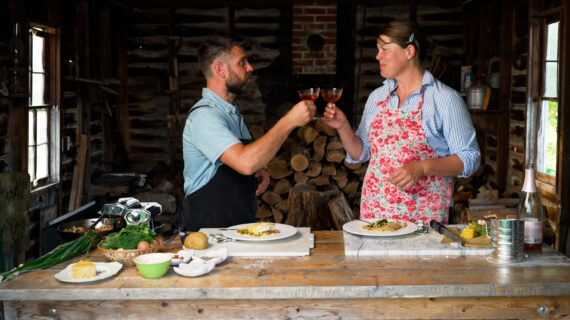
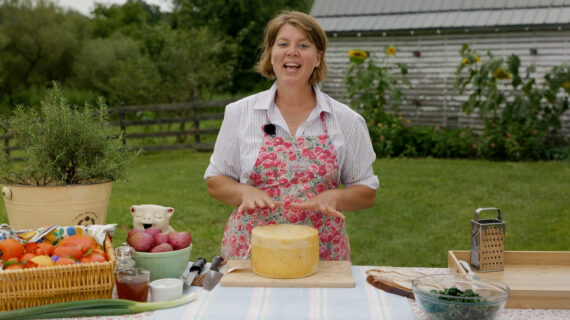
I wanted to bring a ploughman's lunch with me to celebrate with Gordon here in the pasture and have a nice little picnic. Ploughman's lunch is something that my father and I often have in the Summertime when it's nice out; after we've got the morning chores done. It's a nice simple meal and it's delicious. It's probably one of my favorite meals to have and it's really simple.
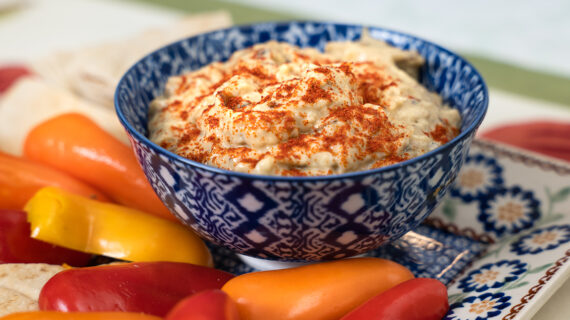
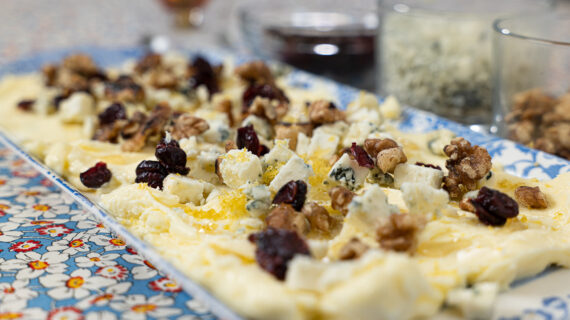
It's just basically bread, some cheese, some chutney, nice homemade butter and a little bit of pickles. You can add some meat, if you like. My dad's a vegetarian, so we always just have the veggie version of the ploughman's lunch. So, I've already made up a loaf with me.
I knew I wasn't going to have an oven out here in the pasture, so I made up a loaf ahead of time. But, I have three cups of Anarchy Acres wheat in my pan already and it's really wonderful to be able to work with this flour. These seeds that are ancient, that are now continued to be grown here in Wisconsin and we get to make bread with it. So, to the flour I'm going to add a quarter teaspoon of yeast.
And then some salt. Again, this is one of my favorite bread recipes. My dad makes this a lot and he'll bring me out a little bit of bread every once in a while when he's making it. It's so easy.
So, don't blink; don't get out of your chair. You've got to sit right here and see how easy this is and it's going to go quick. Then, I have some warm water here; it's 105 degrees. I need warm water to be able to activate the yeast.
I need one and a half cups of water. Okay, I'm just going to give the yeast and the salt a little bit of a stir and incorporate that in. And then, I'm just going to add my water right to it. So, it's really simple.
It's yeast, salt, flour, water. And then stir this. And you want to stir it until it gets a little bit shaggy. It's going to be sticky and icky, but it's going to turn out to be a delicious bread.
I'm going to get in here with my hands a little bit to help form this. I know a lot of folks like to make sourdough with starters and they're delicious, but I like to make it easy and a little bit more simple. So, now the dough's looking a little shaggy, but it's come together and this is what you want it to look like. Now, you're going to oil your clean bowl, put this dough inside of it, cover it with plastic wrap and let that sit for 12 hours.
After 12 hours, you take it out of the bowl, flop it on your countertop, put a little bit of plastic on top and let that rise again for two hours. After two hours, you want to put your oven on to 475. A half an hour before you put your bread in, put your cast-iron skillet in that oven to get nice and hot and the pop your bread in. Put the top on, bake it for 30 minutes and then remove the lid and then bake it again for 15 minutes to get a nice crust on it.
So, that's your super simple bread recipe for today. I'm going to set this off to the side, and what we use at home is this little bowl here with the ridges, so we can get the ridges on the bread, like so. It looks like artisan bread. And this one is a little bit flat, so I probably let this rise for too long.
You let it rise for too long, the yeast breaks down and it doesn't rise as much. But that's okay. It's still going to taste great. I'm going to cut this bread open.
And it's got a nice crust on it. And this is the perfect bread for a ploughman's lunch. Well, I've got my bread baked. I've got the tea steeping; the pickles are set.
I've got a little chutney and some cheese and some fresh butter and I think we're ready for a ploughman's picnic lunch. Crusty kettle bread slathered with creamy Wisconsin butter. Pickles and chutney add a tangy twist to this ploughman's lunch. Aged Cheddar is a must, nutty and mellow.
Piping hot herbal tea. A perfect pick-me-up. Well, I hope this has inspired you to have a ploughman's picnic out in the pasture and I hope you'll gather with us next time, Around the Farm Table. I'm your host, Inga Witscher.
-
Announcer
There's several things
Around the Farm Table is funded in part by Kwik Trip, big on fresh, and proud to support Wisconsin's farmers, Wisconsin Farmers Union, united to grow family agriculture, American Provenance, Heartland Credit Union, and Friends of Wisconsin Public Television.
Search Episodes
Related Stories from PBS Wisconsin's Blog


Donate to sign up. Activate and sign in to Passport. It's that easy to help PBS Wisconsin serve your community through media that educates, inspires, and entertains.
Make your membership gift today
Only for new users: Activate Passport using your code or email address
Already a member?
Look up my account
Need some help? Go to FAQ or visit PBS Passport Help
Need help accessing PBS Wisconsin anywhere?

Online Access | Platform & Device Access | Cable or Satellite Access | Over-The-Air Access
Visit Access Guide
Need help accessing PBS Wisconsin anywhere?
Visit Our
Live TV Access Guide
Online AccessPlatform & Device Access
Cable or Satellite Access
Over-The-Air Access
Visit Access Guide




Follow Us