

 Passport






Garlic: The Stinking Rose
10/03/17 | 26m 46s | Rating: NR
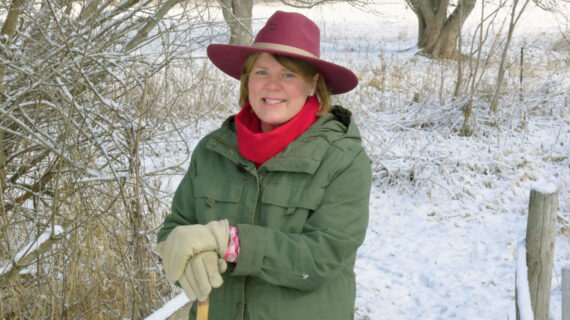
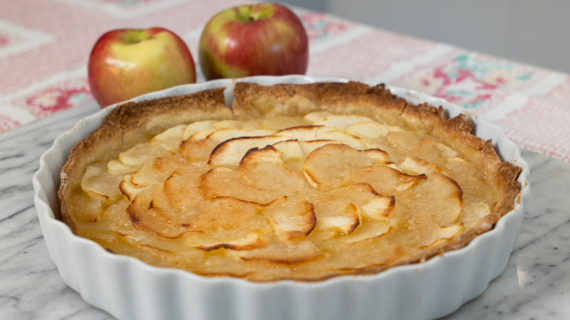
It is fall harvest time and Inga prepares a “thank you” meal for the farm friends that helped her undertake a new adventure with garlic. Scottish Highland beef and an apple turnover are served.


Copy and Paste the Following Code to Embed this Video:
Garlic: The Stinking Rose
Hi there, welcome to the farm. I want to see what I can do here on my 30 acres of land to make it a little bit more profitable and keep on farming. To start, I'm re-imagining my land with a quarter acre of garlic. We're also gonna head up to Colfax, Wisconsin, for a closer look at Scottish Highlanders.
And unique cover crops for grazing. Then it's down for garlic seed in Trempealeau and since we'll be in the area, I thought we'd stop by Ecker's Apple Orchard to pick up some apples. Gather with us Around the Farm Table. I'm your host, Inga Witscher.
Good morning, girls. I'm Inga and I love everything about farming. Midwestern farms are a bounty of good food made by good people. I love being able to travel to search out good ingredients.
Cooking is all about what's seasonal, what's fresh. Every day can be filled with good food, good friends, and a beautiful herd of cows. Welcome to the farm. Good girl.
Around the Farm Table is funded in part by Kwik Trip, big on fresh and proud to support Wisconsin's farmers, Wisconsin Farmers Union, united to grow family agriculture, American Provenance, Heartland Credit Union, and Friends of Wisconsin Public Television. Garlic is not only one of my favorite ingredients, it's something I've been wanting to grow here at the farm for years. When I decided to transition this field from cow pasture into a garlic field, the first thing we did was start liming the soil and tilling everything up. And then I hauled up loads and loads of compost.
Garlic, like most things, likes really good soil and fertile soil, so it was important to have that compost added into the soil. The next thing we did is I had my neighbor come through and shape up the beds with a bed shaper. It gives us a nice, loamy bed to plant that garlic in. Garlic doesn't like wet feet, so wanted to bring it up from the ground so it doesn't have to sit in wet in case we have a ton of rain in the coming year.
The first thing you do when you plant your garlic is separate the cloves from the bulb. And that's time-consuming and hard. Once you have the clove separated, you plant your garlic about 10 inches apart from each other in your beds, then you want to put it in six inches deep. I've got my piece of tape on my planter here.
So I'm gonna go in to six inches. And then I simply just plug that right into the ground, getting a good soil-to-seed contact, and cover that up. And later on, when the guys get here, we'll get everything mulched and the rest of the garlic planted. But in the meantime, let's go find some ingredients for supper.
Scottish Highlanders bray and moo
Hey, Chad, how are you doing? Hey, how's it going? Good, this is a nice-looking group of Scottish Highlanders. Thank you.
What is the characteristics of the Scottish Highlander? Some of the characteristics are that you can see their hair and their horns. -
Inga
They're adorable cows. -
Chad
Also they're known for their temperament. They're a fairly docile breed. They do well on pastures. I haven't been in a group of beef cows a whole lot that just kind of come around and want to say hi.
Yep, they'll just kind of watch you and just do their thing and continue grazing. How's the meat? The meat tends to be very tender because they are a slower growing breed. And they are also lower in cholesterol than other breeds.
Oh really? - Of cattle. Why is that? The main reason that they're lower in cholesterol is because of their long hair.
They don't need all the back fat. Oh, right. So they're just more naturally low in fat. That's great, I love that.
How many cows do you have here? Right now, we're right around 30. Okay, that's a good number. How many acres are you grazing?
Currently right now, I have 40 acres that I'm grazing rotationally, so I'm setting up fence every two to three days and moving them to new grass. That's how I always did things at the farm. I think it's a wonderful way to raise animals, especially cows. They're designed to turn grass into milk and meat and it's a nice way to fertilize your pastures and get the cows on and off.
Yeah, that's one of the main reasons. Very low maintenance, and since both my wife and I work off the farm, it saves a lot of time. Have you done anything here to improve the pastures? Yes, right now we're working on trying out cover crops as a tool to use to rotation into reseeding the pastures.
What sorts of things have you been trying out so far? This last summer, we did a warm season mix with sorghum, Sudan grass, and millets, and we also threw in some turnips and clover, as well. Did the cows, do they eat the turnips? They actually do.
They'll eat the leaves off first and sometimes they'll actually pull the turnip out of the ground. They don't tend to eat the actual bulb of the turnip but what happens is the turnip will decay and go right back into the ground. Wonderful, I'd love to see some of the cover crops. That's something that's interested me for a long time, so I'd love to have a look, if you don't mind.
Yep, this way. It's neat to actually be out here, seeing the diversity of what you're planting here. I read so much about these cover crops and just the different species you have out here. It's neat to be able to see it up front.
What all do you have in here? Yep, what we planted here is a warm season cover crop, which things that we planted were sorghum, Sudan grass, there's some sunflowers, cow peas, Japanese millet, pearl millet, and we also added in for diversity, a few cool seasons, mainly clover and turnips. I think one thing that happens in the summertime, in the heat of the summer, the grass stops growing, so it's nice to have a crop like this to be able to put those cows through. Yeah, that filled a little niche for us this summer when things got a little drier.
The grasses started to-- The cool seasons didn't grow as good and this warm season cover crop was over my head. So it provided a lot of tonnage for the cattle. Is conservation something important for you? Because that's what you do in your outside of the farm job, right?
Yeah, that's right. Farming is not my full time job. I actually work off the farm for a local land conservation office through the county. That's wonderful.
I love the breed of the Scottish Highlander. Obviously, they're just so cute. I think they look perfect in the pasture. But I would like to try out some of the beef and see how the flavor is.
Yes, we actually have a few packages of tenderloin for you to utilize in a recipe. That's fantastic. Thank you so much. I'm here in Trempealeau, Wisconsin, at Ecker's Apple Orchard.
I thought that apples would be the perfect accompaniment to this fall meal. Let's go out in the orchard and find Sarah and find out just what she does here. Well hello, Sarah. - Hello, Inga.
How are you doing today? - Excellent, how about yourself? Good, what a beautiful day to be picking apples. It's lovely.
Sarah, tell me a little bit about your farm here, your orchard. I'm excited because this has been in your family for quite a while, right? Yes, my sister Jessica and I are fourth generation apple farmers and my dad lived just a few miles away and he knew it was the place to be. And he really hung onto it.
That's amazing. What a great experience for you to be able to come home and continue on your family tradition of growing apples. I love it. We really love it too.
What kinds of things do you have to worry about as far as the weather is concerned? I bet that's something that's on your mind all the time. Yes, so frost in the spring is our first fear of the year and we actually purchased a frost fan. We lost them in 2012 and this frost fan this year saved 75,000 pounds of fruit.
Wow. What does the frost fan do? It's actually positioned a little bit positive and it's like a helicopter in place. So it pulls warm air down from the inversion layer and 25 degrees, you lose everything.
28 degrees, you have almost a full crop. Wow. So we had 24 on the farm in one part, away from the fan, and then a full crop beneath that fan. Wow, so it really is an important tool to have here on the farm.
Yes, and we could use about six more but we're gonna save our pennies for one more. That's good. What do you have to do? I've got a few apple trees at my house.
Nothing like this, and they don't look quite as good as these do here. What do you have to do in the fall to put them to bed? We will go through and mow everything very closely. Mowing your weeds down, rodents don't like to cross bare ground and if a rodent girdles right around the tree trunk, it can die.
There's no way for that xylem and phloem to move anymore and your tree does not make it. So mowing cuts down on your rodent pressure but it also chops up leaf litter, and leaf is where some of your fungus is. If you can just chop that up, you have much less inoculum for the spring. Being in the orchard, this is pretty hands on and it's just you and your sister that are running the place here?
So in peak season, we can have about 40 employees between pickers, pie ladies, caramel apple crew, and then, all of our retail staff. Then we drop down to about four employees in the off season, when we're pruning. Wow, okay. Pie, that's the place to come for pies, right?
It is the place to come for pies. It's been a lifelong tradition here. My grandmother made pies with her friends and then as she got older, my mom picked it up and now there's still a crew of 10 ladies three times a week, assembling fresh pie and freezing it, then my mom bakes fresh every day. That's amazing.
I like that too, as I'm starting to kind of reimagine my farm into something new, I'm thinking about, what can I grow to put into a product, because I think it's nice to be able to have that outlet, maybe, for your apples that aren't as beautiful as some other ones. Do you ever have a problem kind of explaining to people about the apples and how they don't all have to look the same shape and the same size and that kind of thing? Yes, and we do, we offer a discount on those apples. If people are willing to accept a little bit of blemish or a cosmetic challenge-- But they taste the same.
They taste the same. Sometimes it's debatable that they may even taste better, that they're a little bit sweeter. They might even be healthier for you because they already had a little battle of their own so they have a higher antioxidant content. There's a little push to eat ugly apples.
I'd love to take a look inside, see some of the pies, and get some apples for supper tonight. Come on in. So Sarah, this is the sorting area. What are you sorting for?
What are you looking for when you're sorting? We're looking for, number one, is our best quality fruit, so there will be no imperfections on it. Number two is an apple that will have a mark or a bruise, but it's still just cosmetic damage, nothing is wrong internally with the apple. Tastes the same, yeah.
The machine here is sorting by size so that I have a little bit of help with my caramel apple size, my school apple size, and then our extra fancy size. So you're selling to schools too. We do, we work with the farm to school program and sometimes 100 boxes a week. That's fantastic.
Wonderful, I'm gonna collect my apples for my dinner this afternoon and I'll let you get back to work. But thank you so much for showing me around. I noticed on the way down here there's a little squash and pumpkin stand next door. Why don't we go have a look and see what we can find?
Hi there. - Hi. I'm Inga. - I'm Ryan.
Nice to meet you, Ryan. - Nice to meet you as well. I was on my way up to get some garlic and I couldn't help but notice all these beautiful pumpkins from the road. Is this just a roadside pumpkin stand?
It is. It's been here since the '50s, my dad and brothers had it. Well you've got the perfect location. We're literally right on the road.
There's no better real estate. Right, with all the traffic, it works good. Do you do mainly the squash and the pumpkins? We raise vegetables of all sorts.
There's 16 varieties of squash and about 50 varieties altogether of everything. Would you have any great advice for me if I decided next year, I want to put in some pumpkins? Is there anything you've learned over the years that you wish you would have known from the beginning? Just not to get too big right away.
You gotta experiment. A lot of little things to learn. I tell you what, I'm gonna have a look around here and get some fall decor. Why don't you meet me up at Tamarack Garlic, where we're gonna find out how they plant their garlic.
garlic skin crinkling
Well, hello, guys. - Hi, Inga. How are you doing today? - Doing well.
Good, I came down to pick up more garlic. I've got some in the ground but I still need some more. Okay, great. Since I'm here, how did two teachers become garlic farmers?
It started three, four years ago. My father in law sent me a text message. He said, "Research garlic farming." What, what's this about? We got thinking about it, researching it, and pitched the idea to Jason, and we both thought we had the time, the resources, and it looked like a high value crop that can earn a little bit of money on the side.
I'm kind of in that same situation right now where I'm trying to reinvent my farm and kind of do different crops. Garlic is something I've wanted to do for years, so I'm glad I'm doing it. And I'm glad I have the resource available here, which is you guys, who are growing seed stock. Because it's important to be able to buy your garlic seed locally, right?
What are the benefits? It's one of the things we try to look for when we first bought seed. We tried to buy it from somewhere nearby or a climate that was similar to yours. Helps the seed acclimate a little bit more quickly.
It can acclimate but it'll take a little bit more time if it's not a similar climate to yours. Sure, okay. I tell you guys, the other night I started cooking with the garlic, I hadn't been doing anything with it because I thought I'd better save it, then I said, I want to see what it tastes like. The flavor is amazing.
It really is, it's like anything you're growing in your backyard, whether it's a tomato or anything else, the flavor was there, it was pronounced, and it was delicious and mellow and now I'm just thinking I need to come down here and just buy a bunch of garlic just to keep at my house because it's really, it really makes a difference. It really doesn't compare to what you find in the grocery store. The flavor of a hard nut garlic like this compared to a soft nut garlic from somewhere else in the world, there's just no comparison. What are you guys doing here?
This is a little bit more than how I planted. I didn't have any soaking tubs. What are these soaking in? We have a tub full of vodka with our garlic.
We use the vodka for sterilization treatment. If there was any disease floating around airborne, or if there were any bugs in the garlic seed, swimming in vodka for 15 minutes kills just about anything. So this is just an insurance policy. Yep, that's right.
Insurance policy. In our other tub, we have a 511 fish fertilizer concentrate that we buy, dilute it with water. Great nutritional value added to our crop. Really helps the roots get a jump start here in the fall.
You're doing a great job. The flavor is great. We're back at the farm. I asked my neighbors to come up and help me finish with planting the rest of the garlic, and we've got that done.
So the last thing we have to do before winter is mulch the garlic with about four to six inches of straw. So Tom, let's get it done. Okay, I'm gonna let these guys finish up with the mulch, and why don't you meet me down at the kitchen, and we'll make some supper? Folks will ask me all the time how to be successful at farming, and the one thing that I've found to be successful at farming is living in this neighborhood with my amazing neighbors.
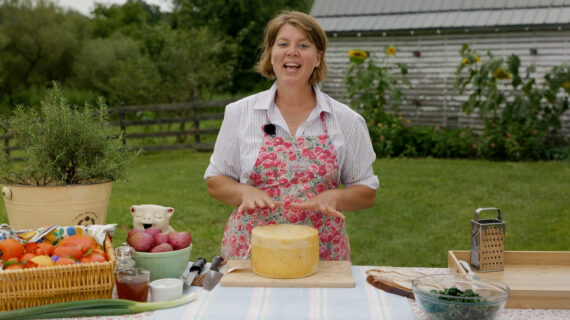
I'm so grateful that they came over to help me get the garlic mulched and they always are there to offer a helping hand, so I wanted to make them a beautiful supper to say thank you and to celebrate the fall season and these beautiful apples and this great grass fed beef. And I definitely have to make a dessert, because they all have sweet tooths, so I'm going to start off with making an apple turnover. I've got a cup and a half of flour and a half a cup of cake flour. When you're making pie crust, it's always a good idea to have everything really, really cold.
So I would even pop your flour in the freezer for a few minutes to get that chilled out. We'll put a little bit of sugar in here. Pinch of salt. Then it's one and a half sticks of butter.
I cut them up into small pieces and then I popped these in the freezer because like I said, you want everything nice and chilled. That's gonna really help the crust. When it bakes, if it's nice and chilled, the butter will kind of slowly release, and that's what gives it that flaky texture. So add that right to there.
And then I have some shortening too. So you can do this in your Cuisinart if you want to, but I like to do it the old-fashioned way, the way my grandmother always did it. I think she'd be proud that I'm still carrying on her traditions. This is where you have to use your hands a little bit too.
One thing I loved about growing up and cooking with my family, whether it was with my grandparents or with my parents, is that they always let us get hands on with the ingredients. We always got to get our hands in there and start kneading the dough. And it was special, and it's a nice way to connect kids to eating and to food and to cooking is by letting them get in there and get their hands dirty. The dough has come together, so I'm gonna add a little bit of flour to my surface.
That shortening in there really helps bring everything together. That's gonna also add another flavor of flakiness. Okay, that looks prefect. I'm gonna chill this down for about half an hour in the fridge, and I'm gonna scrub up my apples and get ready to make the filling.
This is a really simple apple recipe, but when you have really tasty, delicious apples, it's fine to have a simple recipe to go with them. That way, that apple flavor can really shine. I'm going to use about four to five apples for this turnover recipe. You just want to cut them in quarters.
There's really nothing quite like being in an apple orchard on a beautiful fall day. What a great way to spend time with friends and family. I think everyone should be getting out to apple orchards this time of the year and gathering apples. Maybe I'll start making it one of my new favorite traditions in the fall, and I'll start taking my nephews out.
Now I want to cut the apples thin and try to keep them all the same size, as uniform as possible, so that it all cooks correctly and evenly. Okay, all the apples can go into a bowl. Look at that, I got it in one try. Now it's time to season our apples.
So what we're gonna do, take a lemon and squeeze it over the apples. This helps the apples not to brown before they start baking. And it's a nice little tang that acid brings out a lot of the flavor in the apples. I think I'm gonna use the whole lemon.
And I'm a big zester, as you may know, so I'm gonna zest the lemon peel right into here. Okay, and I'm gonna season this very simply with some sugar and some cinnamon. Just a little bit of each. And mix that up.
My hands are very clean, so I can use my hands. And coat all the apples as evenly as you can. Mm, the cinnamon smells so good. It's a perfect spice for fall.
Okay, if you've got the time, you want to let this sit for about half an hour so those flavors can macerate and come together. I'm gonna set this to the side, get some dishes done, and we'll start rolling out our dough. On a lightly floured surface, you're gonna put that dough own. We're gonna roll this out into a big old rectangle.
Keep working that dough, keeping it together. Always keep it moving so it doesn't stick to the bottom. Okay, once the dough is rolled out and looking good, then you can pile up your apples. I might have cut too many apples for this dough.
We'll see. I think I did do too many apples, so I'll put those in the fridge and I can snack on them later. Okay, now let's hope that the dough comes off. And it is.
It's a lucky day for me. We just fold that-- Oops, right on over. That's okay. That's okay.
Now there's a place for the steam to come out, see? The glass is always half full. I want to crimp the sides here to make sure that dough sticks to the dough below it. Okay, and then we'll do an egg wash on top.
And if you have the time again, you can pop this back in the fridge to set a little bit more, let that dough rest. And it's gonna help it become more and more flaky. Looking good, then on top of that, I'm gonna add a little bit of sanding sugar. All right, I'm gonna pop this in the oven and then we'll get started on supper.
When you have great beef, you don't have to do too much to it. What I did was add a little salt and a little pepper and then throw it into a hot skillet for a minute or two on each side to brown it, then pop it in the oven for about 10 minutes to finish. The last thing I'm gonna make is a little topping for the steaks. It's a compound butter, and you can have fun with compound butters by adding different flavors, different herbs, but today I wanted to do a blue cheese, garlic, and rosemary compound butter.
I love all those flavors and I think they all work well with red meat. So I've got a stick of butter here and I'm gonna chop up some rosemary. I just love rosemary. Rosemary is one of my favorite herbs.
You know, they say it helps with your memory. So if you eat a little bit of rosemary every day, hopefully you'll have a really good memory. In it goes with the butter. When you're cooking with fresh garlic, it's a whole different experience, and you'll find that you don't have to use as many cloves as you would if that garlic, say, had been sitting around for a few months.
Mince these up fine, and I'm just gonna use two cloves here. Mm, the smell is just so wonderful. I like cooking because then when I'm chopping up the garlic and the rosemary and people come in the house, it just hits them and it just sets the tone for a good meal. Gonna pop this right in here, and then the last thing is gonna be some crumbles of blue cheese.
Oh, lovely. I almost want it to be a little overpowering. I love strong flavors. Then we're gonna just mash that all together.
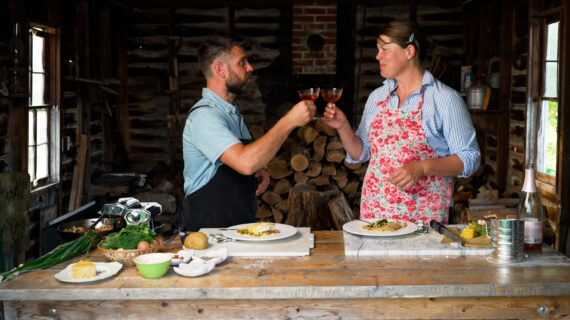
And I'm gonna let that sit in the fridge for a few minutes to cool off and then I'm gonna serve the guys a lovely local supper. A thank you supper for the garlic crew. Garlic rosemary compound butter and Highlander beef, the perfect pairing. Snap peas, simple and delicious.
Boiled potatoes are the perfect way to round out this meal. Apple turnover with a dollop of Wisconsin ice cream. I hope this has inspired you to feed your neighbors a hearty supper, and I hope you'll gather with us next time, -
All
Around the Farm Table. I'm your host, Inga Witscher. Good job, guys. Around the Farm Table is funded in part by Kwik Trip, big on fresh and proud to support Wisconsin's farmers, Wisconsin Farmers Union, united to grow family agriculture, American Provenance, Heartland Credit Union, and Friends of Wisconsin Public Television.
Search Episodes
Related Stories from PBS Wisconsin's Blog


Donate to sign up. Activate and sign in to Passport. It's that easy to help PBS Wisconsin serve your community through media that educates, inspires, and entertains.
Make your membership gift today
Only for new users: Activate Passport using your code or email address
Already a member?
Look up my account
Need some help? Go to FAQ or visit PBS Passport Help
Need help accessing PBS Wisconsin anywhere?

Online Access | Platform & Device Access | Cable or Satellite Access | Over-The-Air Access
Visit Access Guide
Need help accessing PBS Wisconsin anywhere?
Visit Our
Live TV Access Guide
Online AccessPlatform & Device Access
Cable or Satellite Access
Over-The-Air Access
Visit Access Guide




Follow Us