

 Passport





Shooting Breakfast
09/30/15 | 26m 48s | Rating: TV-G
Inga invites friends to her version of a 'Downton Abbey Shooting Breakfast'. She visits Turnip Rock Farm to pick up cheese, bacon and kale. And then learns about fish farming at Eat my Fish near Menomonee. She makes a British kedgeree and braised greens.


Copy and Paste the Following Code to Embed this Video:
Shooting Breakfast
Pull.
gunfire
-Welcome to the farm! I have a new hobby, which is shooting guns. Now, not because I really necessarily want to hunt anything, or anything like that. Mostly because I saw an episode of Downton Abbey where they all dressed up in their tweed and they went out shooting, and I just thought that was fantastic.
So, I've got a group of folks coming over to the farm later, and we're going to do a little shooting. And then I'm going to put out a spread of a traditional English breakfast. For the ingredients, I'm heading up to Turnip Rock Farm in Clear Lake, Wisconsin, and then it's over to Eat My Fish Bull Frog Farm in Menomonie, Wisconsin. But first, Craig and I have some farming to do.
Gather with us Around the Farm Table. I'm your host Inga Witscher. Gather with us Around the Farm Table! A few years ago, I moved up to Wisconsin.
I started an organic dairy farm at St. Isidore's Mead. That's when I discovered the abundance of Midwestern local food and small scale farmers growing everything from green zebra tomatoes to pasture pork. I'm taking a break from the cows hitting the road, and seeing if I can't satisfy my epicurious appetite.
That's great.
frying pan sizzles
This is amazing. Funding for Around the Farm Table is provided in part by Wisconsin Farmers Union, a member-driven organization for family farmers, rural communities, and all people. Wisconsin Farmers Union, united to grow family agriculture. Information at WisconsinFarmersUnion.com.
With additional support from these community members and Friends of Wisconsin Public Television. So, once a month, we do milk testing here at the farm, and what we want to accomplish by doing that is find out what the somatic cell counts are for each of the cows. How much milk they're giving. And then, we can keep a record of that for our own selves so we can just find out if our cows are improving or if they need a little bit more intervention to give more milk, or be a better fit for the farm.
So, we start out... We're just going to milk this cow, Cecilia, here, and we're going to find out if she's giving more milk than she did last month and if her cell counts went down, which I hope it has. So, now that the cow is milked, now we're going to take the sample. So, with bucket milkers, this is different than how a lot of people test milk because a lot of people don't milk in buckets.
But what I do is I have to mix that milk up so I can make sure that I get a true sample. So, I go eight times in one direction stirring that milk, and then eight times in the other direction, stirring that milk. And then, I also take the dipper and just mix it up. That way, it's getting that true sample of everything here.
And, Taliah, this cow is named Cecilia. So, why don't we-- I'll give you that. And then, we'll take it over and weigh how much she did. Okay, so the next process in sampling milk is to find out how much milk that cow is giving.
And it looks like Cecilia did 31 pounds. So, that's 62 pounds a day that Cecilia's giving milk. So, Taliah, what are those other-- Why am I testing milk? I'm doing it because my dad did it, and because I've been doing it, but what is the history of milk testing?
Sure. Milk testing actually started in the early 1900s, and it's a lot different from what we see today. So, at that point, the milk tester would come to the farmer's farm unannounced, just show up randomly so there was no cheating involved, and then he would have dinner with the family, and then he would milk cows and test the milk that night. In the morning, he would wake up with the family again, eat breakfast with them, and test cows in the morning.
Then, he would take those milk samples and all those data he collected on what the cows had eaten and other information he got from that farmer, and would actually perform the tests in his own home. The only thing we could get at that point was milk pounds and butterfat. So, we've come a long way. Yeah, because now, you can even test for pregnancy in the milk, can't you?
- Absolutely. Now, we're actually looking at somatic cell, butterfat, and protein, which are the major production components, but we can also test for milk pregnancy, even looking for early fresh cow symptoms like ketosis. That is so interesting. I love seeing how technology has evolved or farming has evolved with technology, and how much of a difference these things can make on my farm.
Absolutely... It's really helpful for culling decisions, and for your breeding decisions. So you can also identify the best cow in the herd and the genetics that you want to keep moving in your herd. Well, good.
I'm going to get this dumped, and we'll start on some others. Sounds great. Well, I'm going to finish up testing cows here, and then I'm going to get changed and take y'all up to Turnip Rock Farm in Clear Lake, Wisconsin, to gather up some ingredients for our shooting breakfast. Well, we're at Turnip Rock Farm.
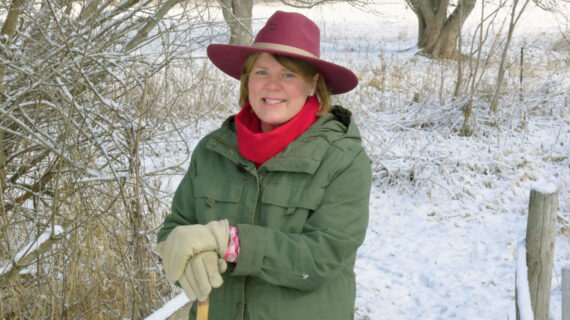
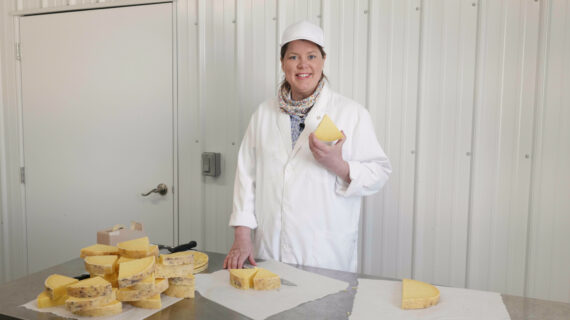
I haven't had a chance to visit my friends, Josh and Rama, up at this new farm yet, and I'm excited because Rama recently put a creamery in here, and she's doing all sorts of amazing cheeses. So, let's find out what's going on. Hello, Rama. - Hi, Inga.
How are you doing? I'm doing well. How are you? Good, nice to see you!
- Nice to see you, too. I've been waiting to come visit you guys at your new farm. It's just so fun! I love what you're doing.
- Thank you. Now you're a full time cheesemaker? - Yes. And how long has it been?
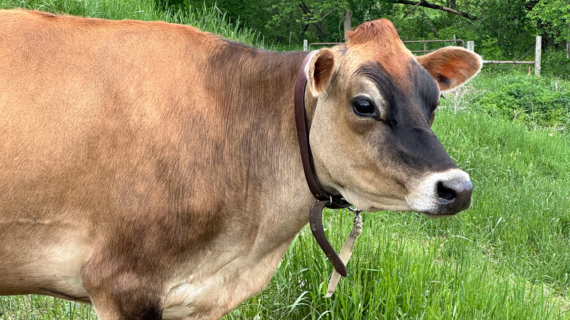
We just started milking in the spring. So, I've just been officially making cheese this spring. That's great. So, you're utilizing all the milk from your Jerseys right into these cheeses?
That's right. Ah, delicious. And you're experimenting with a few different kinds of cheese? Yeah.
- What kind are you doing? We're doing some fresh cheeses. So we're doing a feta, ricotta, a quark. And we are doing aged cheeses.
And they're mostly originals, but based off of traditional recipes. Now, when you do the fresh cheeses, do you have to pasteurize that milk? Yeah, we do. - You do, okay.
Well, I'm hoping to take some. I'm having some friends over. We're doing a little breakfast. It's sort of British-inspired because, you know, I love everything British.
So I wanted to do-- I'm hoping to get some cheeses. - Okay. And the second you said, "Ricotta," I thought, "You know, I can do a really great dessert with ricotta." Just like a whipped ricotta. - Oh, yeah.
Maybe I can grab some of that? How are you marketing your cheese? Well, we're marketing mainly through our CSA. We have a 250-member CSA, and so we do a cheese share.
So some of our members have ordered cheese, and they get cheese in their CSA box. What a great idea. Do you guys still do farmer's markets and things, too? Yeah, and we do a farmer's market.
And we're looking for a little wholesale, maybe, but that's a new area for us. Yeah. That's great. I love the idea of putting it in the CSA box because, also, how many CSAs can really offer that?
Yeah. - That's amazing. Yeah, and we're trying to have all aspects of the farm working together, and I think that we can offer a full diet CSA this way. And the cows provide fertility for the vegetables and the whey is an on-farm food source for the pigs, so it's a really nice circle that way.
It makes sense. Yeah... well, good. Well, I saw Josh was out in the field, and I was hoping to get a few other things for this little luncheon, so, I tell you what, I'm going to go talk to him a little.
Then, I'll swing back through for the cheese. That sounds great... we'll see you later then. Thanks.
- Bye. Hi, Josh, how are you doing? Oh, good, Inga. How are you?
Good... Nice to see you. - You, too. I stopped in the creamery...
I saw Rama. I love what you guys are doing with all the cheeses. Yeah, it's a lot of fun. - It's just dynamite.
So now you're offering a full, what is it called? A "full diet CSA": is that right? Yeah, all diet CSA. Yeah, we also offer meat and eggs.
So, what types of meat? We do pork, beef, and chicken. Oh, wow! A one stop shop.
Yeah, anything you want.
Inga laughs
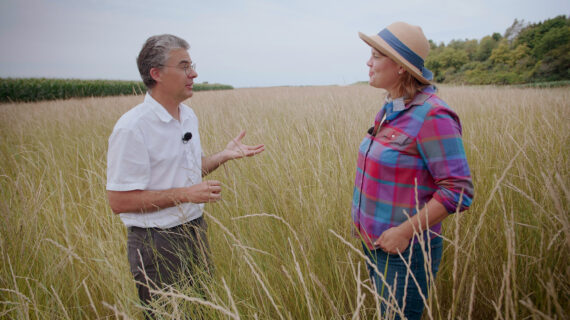
So, how many acres are you guys farming all together here? Our whole farm is 80 and we have about 10 in vegetables, and then, the rest is pasture or hay. I'm doing this, like, little breakfast thing, and I'm wondering if I can get maybe some greens from you. Maybe just cook those down with a little bit of that bacon and serve it on the side?
Absolutely... there's plenty of them to go around. Alrighty. What is this?
Is this a dinosaur kale? Yeah, this is dino kale or lacinato kale. Okay... I like this.
I like it, but I think I like all different kinds of kale. This kale is pretty nice for even just a raw salad if you want to massage it. Like an olive oil, or something? - Yeah.
Tell you what, I'm going to need some bacon to go along with this stuff. Well, the pigs look great. Yeah, they're growing fast. Well, now that I've got these amazing ingredients, I'm going to put these in the cooler and head out to Herby's Fish Farm in Menomonie and get some trout.
So, I'll see you guys there. Thanks, guys. Good to see you. Thank you.
Hi, Sadie. Good to see you. Bye. I wanted to stop down here because I think the smoked trout is going to go perfect in the recipe I'm making today, but also because I wanted to talk to Herby a little bit more about adding value to agriculture.
He's kind of a great guy to know when you have questions about value-added agriculture. So, let's head on down there, and we'll see David and Herby.
water trickling briskly
Hi, David. - Hey. How are you doing? Pretty good.
How are you? Really well. What are you doing today? I'm sorting some of the fish out.
I'm moving the biggest fish from this tank up to the next tank. They've graduated. How do you decide what is big enough? I've got this special sorting box here so I can adjust the slots.
- Oh. The smaller fish will swim right through, and the big fish will net over to the next tank. What's the process of this whole thing? We start from egg.
We buy fertilized eggs. Hatch them out in some hatching jars. It takes about two years to raise them up to market size, where you've seen them. Wow, that's amazing.
For some reason with fish, I thought it was like 30 days and you're eating it. Yeah, these trout grow about a half inch a month. We've got 48-degree water. They're pretty efficient at putting their food into meat, though.
We've got five tanks in the barn here. There's about six months between each hatch. We hatch in spring and fall. There's a few more tanks and ponds outside we raise them in, too.
When do you take the fish outside? Well, when we stock the pond and the fishing pond, they're about a half pound or so, and they just keep growing until they get caught out there.
Inga laughs
Do you ever have to worry about any predators outside? Like any sort of birds swooping down and eating the fish? Yeah, our main predator is probably great blue herons. Really?
My little border collie, Nellie, that's her main job down here is to chase away the bad birds. But we raise a few fish for the wildlife. Well, I suppose that's just part of nature. Well, I saw Herby down by the pond, so I'm going to go say, "Hi!" to him.
I'll circle back around because I want to take some trout home for some people I have coming over. Well, I'll see you in a little bit. All right. Thanks.
Hi, Herby. - Hey, hello, Ms. Inga. How are you doing today?
Good. - Good. With this kind of weather, good for fishing? Yeah.
Yeah, it can be. Okay, I'll pull her in so you can get a try out here. So, how many years have you guys been here for? The land was purchased in '79.
- Uh-huh. And the adventure was conceived in March of '87. Oh, wow. It took seven years to get a fish.
Wow. But it was, for sure, a working class endeavor. Mm-hmm. See this button here?
- Yep. You hold that down until it locks the line. Okay. You're going to bring it back.
And then let her have it. Then when it's about 10 o'clock, you let go. Okay. - Okay?
Alrighty. Just, I hope-- I'm always worried that I'm going to take something back into the water with me, you know? Beautiful! - Oh, there we go.
There might be a fish there. - You never know. That's not where I was looking.
Inga laughs
-It'll work. Next time. - Yeah. Oh, hey, something's going on.
Uh-oh. So, Herby, how did you get the idea of doing a fish farm like this? I just love this idea. At a friends house looking at a topographical map and this property that we owned is sitting-- This long, sandy field is eight feet above the two rivers, the Red Cedar and Chippewa.
With a thousand acres of wetlands, that's a wonderful resource for the farm is the hidden water table. I love how you're just kind of using what you have. I love that. I think it's inspiring.
Adapting to your resource rather than fighting it your whole farming career is important. That's the whole Wendell Berry thing? Yeah, why don't I go catch the fish inside because I'm not good at this. We can do that, too.
I love all the signs that you have. I think it's just so fun. Yeah, Come on in. Wow, this is fantastic.
- All right. This is great. - Glad you like it. Herby, this is so exciting to be here and see all these different products.
I've been thinking a lot about how to add value to my own farm in the last couple months 'cause I think it's really important, especially as a smaller scale farm to have the diversity of products. Yeah, it's fun and it's creative. Well, we kind of make it for the general public. If you want some color and zing, we have our Hobo Fish Spice there to give it color and zing.
And so you kind of make it so it fits who you're selling it. So people can come here. They can fish right off the shore. There's music here.
This is like a one stop shop for just a great time. Yeah, to me, value-added is serving them a trout meal and putting a beer next to it. It goes that far.
laughing
Well, Herby, the reason I stopped by is I'm making a Midwest kedgeree, which is like a rice dish. With some, traditionally they call for smoked haddock, but I thought, when in Wisconsin... That's right. Where else do you go for fish, right?
I thought about getting some of the nice smoked trout and just flaking it in there. That's a very good idea. - All right. Can I pick some up here, or should I go by Just Local Food?
You can buy it here, you can go buy it at one of our stores, like Just Local... or Menomonie Food Co-Op. Well, I really appreciate you taking the time with me today. And next time you're in Osseo, come on by, and I'll put some cheese out and we'll milk some cows.
- Okay, okay. Well then, you can eat my fish, and I'll drink your milk.
laughing
I'll see you later. - All right, sounds good. Hey, Inga. Hey, Lyle...how are you doing?
Good... how are you? - Really good. I've been out around the countryside getting ingredients for a brunch that I'm putting on,
and it occurred to me
I better start thinking less about feeding people, more about feeding my cows. So I thought maybe this year, I would try some baleage with the cows. You should. They'll love it.
You think? - I know they will. It's going to make them give tons and tons of milk? - Oodles.
So, tell me, what's the difference between baleage and just dry hay? You know, moisture content. Baleage you put up wetter. Not as wet as silage, but it's definitely wetter.
Between 45, 55 is probably about ideal. Okay. The nice thing about it is if you can't get it dry for dry hay, you can also have the option of wrapping it. A year like this where we've had rain every single week, it's hard to get that.
For example, these bales, I was going to make dry hay, but they were talking rain coming, and I just decided to wrap them up and makes great feed. Uh-huh, good. So, you just basically make baled hay, and then, you're putting it up wetter but then you're wrapping it, and that's going to seal in the moisture? Right.
Do I have to worry about feeding this hay out at a certain time? Does it spoil easier than baled hay? Yeah, in the summer, you have to feed it out fairly quick. I'd say within a couple, three days probably.
So, that's always been a concern of mine with baleage is with the number of cows I'm milking now especially, I'm like, "Oh, are they going to be able to eat it down fast enough?" But these are nice size. What are these? These are about four by four. And I make them that size just because with the equipment I have, that's about the max that I can handle being wet.
They're a lot heavier than dry hay, dry bales. But, also, it works good for "feed to milk" quicker, too. So, how's farming been going for you? I know you had a farm accident when you were a kid, and it hasn't stopped you.
You're just making lemonade. It is what it is. It's going good. I guess when you love something so much, you can't let anything stop you.
- Right. So, what are some of the challenges for you on the farm? Walking and standing a lot, I guess, can be a bit of a challenge, but doing a lot of hooking up and unhooking. So, Lyle, tell me how that program AgrAbility has helped you here on your farm?
They basically work with people with disabilities. They come out and do a farm assessment. And basically ask the same questions that you did, like, "What's hard for you?" I could get a part-time job there. Right.
There you go. They try to determine where you're having difficulties and if there's areas where they can help out. That's great. I think it's wonderful that there's people out there to help with different situations in farming because I really do think it's people that are farming, they're not doing it just as a job or something like that.
They're doing it because their entire soul needs to be on the land and be farming. Right, it's a disease. Once you have it, you can't get rid of it. Show me how you wrap these bales.
I've never seen it done before. Okay, I can do that. I was getting ready to wrap one. All right.
- All right. All right. Well, I'm excited. I'll let you know what the cows think.
I think they'll love it. Hopefully, I'll be back for more. Sounds good. - Good...
I'll see you later. All right. See you later, Inga. So I know before, I said I was going to make a traditional English breakfast, but I got these wonderful collard greens and I couldn't help but pair those with the bacon and do a nice braised greens with the kale and the collard.
So I'm going to start out getting the vegetables all ready for this. So, I got to get some good hunks of bacon here. This bacon looks terrific. And just chop it into pieces.
This is going to be the fat I'm going to use to cook everything down with.
sizzling
and it occurred to me
Pop this in my pan here. And I just want to render the fat down in the bacon to give me a nice, good surface to get everything else going in. Okay. And while that renders down, I'm just going to slice up a couple cloves of garlic.
I've got these really big garlic cloves, so I think I'm going to probably do one. Break this off. So, with your garlic, you just want to slice it so it's not totally overpowering. We're going to use half of an onion.
Keep the other half for the kedgeree that we're going to make next. Sometimes, I save my onion skins and my garlic and any kind of bits and pieces of celery or carrots and throw it in a plastic bag and stick it in the freezer. When the plastic bag is full, I make stock. I learned that from watching Martha Stewart.
Cut your onion in half here, and just do some thin slices.
slice-tap, slice-tap
and it occurred to me
Add your onion to the bacon, but you want to wait a little bit before you add your garlic because the garlic is only going to take about 45 seconds to cook. Now I can add the garlic right to the pan and give it a good stir. It smells really good. While that cooks down for a second, I'm just going to cut up the greens.
slice-tap, slice-tap
and it occurred to me
Now I've got to deglaze my pan with the chicken stock here, just to get all those nice brown bits from the bacon and the onions up, and just scrape all those bits right off the bottom of the pan. Now, once I got a little bit of the broth in there, I'm going to add some of my sugar. I like to use brown sugar. And it's about two heaping soup spoon fulls.
And then now you can just add the rest of the broth and some of that vinegar here. About a half cup of vinegar, I suppose. Stir that all in. I'm going to put a little salt and pepper in here before I do anything else.
And then, I'm just going to add all the greens. And it looks like you're going to have a massive amount of greens, but they're just going to cook down so nicely. I'm going to put this all on the back burner and just turn it around every once in awhile. I put it on medium heat, and I should take about a half hour, I suppose, maybe a little bit longer to cook all down.
And then, next, we're going to make some kedgeree. So kedgeree is sort of a great way to use leftovers. And it's a British dish. Ad it uses smoked fish, leftover rice, hard-boiled eggs.
It's a hardy and unusual thing to have for breakfast here in the United States, but I think it's delicious and I think you should try it. There's tons of butter in this recipe, so it just is delicious and rich. First thing I'm going to do is I'm going to put about four tablespoons of butter over medium-high heat here. Let that cook down.
Get the butter cooking down, and then, I'm going to have-- Remember that other half of the onion? I just sliced it nice and thin. I'll add that to the butter, and let that cook for a few minutes.
sizzling
and it occurred to me
Once you onions are nice and soft, then add your rice. And just use whatever leftover rice you have. When you're cooking your rice, it's a good idea to cook it in vegetable broth or chicken broth. It just gives it a little bit more flavor.
I'm just going to put all of it in. So now I'm going to put in a little bit of curry powder. It smells good. Mm.
I can already tell I'm going to need more butter. As that butter melts, I'm going to add some cream. You could use whole milk, too, if you wanted to. I like cream.
Oh, it just looks gorgeous. It's really a stick-to-your-ribs kind of a meal. Once that wonderful butter and the cream are all incorporated, now you can add your flaked fish. Just add that whole thing right to the pan, and we're just going to heat up everything now.
Now I'll just add a little salt and pepper.
shake, shake
and it occurred to me
Looks delicious. I think it's kind of a fun thing to serve your guests, too. So, I'm going to put this on my casserole dish. I'm going to have Craig bring everything up later.
So, this will keep it nice and warm. To the top of this, we're going to add some boiled eggs. And I'm just going to cut mine in quarters. Right on top there.
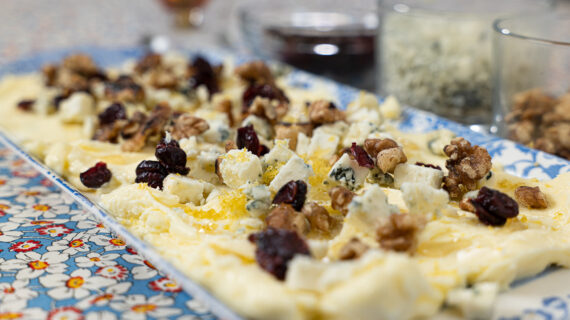
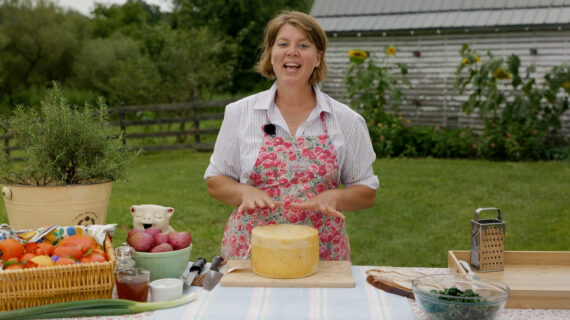
And then, I'm going to garnish that with some fresh cilantro. Okay, it looks great. I'm going to set this in the oven to keep it warm, and then, I'm going to get dessert made. For dessert, I thought I'd take Rama's beautiful whole milk ricotta and whip it up a little bit with a little bit of sugar and vanilla and lemon zest, and that is going to be dessert.
It's really a delicious dessert. So I'm just going to add my ricotta right to here. Look at how beautiful the color is. And this is what happens when your cows are eating beautiful grass during the grazing season is you get these lovely yellow colors.
Oh, oops. To this, I'm going to add whatever is left of my vanilla. And you really only need a little bit. And then, a little bit of powdered sugar.
shake, shake, shake
and it occurred to me
Some nice lemon zest to bring out those wonderful flavors.
scrape, scrape, scrape
and it occurred to me
And then, just take a fork and mix it all together. If you have some fresh berries, it would be perfect with something like this. And I might check when I'm out in the woods, and maybe I can get there before the bears did and get us some fresh berries. So, it's as simple as that.
It really is. And it tastes delicious. Taste test it every once in a while and make sure that you have enough sweetness or that, you're not getting it too sweet. Well, I'll just go ahead and put these in some single serving little dishes, and then have Craig bring the rest of the picnic up, and I'll meet you guys up at the shootin' range.
Pull.
gunfire
and it occurred to me
Good job. Pull.
gunfire
and it occurred to me
Oh, good job, Mary Jane. Pull.
gunfire
and it occurred to me
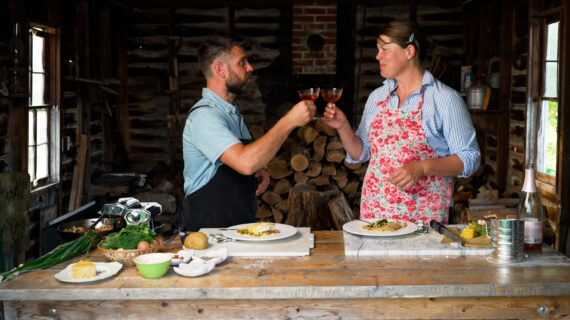
Dust off the old hunting cabin. It's the perfect place to have a shooting breakfast with your friends. Toast with a crisp, white, fruity wine. Kale and collards braised with bacon, one of my longtime favorites.
British kedgeree and a slice of cottage-style bacon. It's a classic for this hardy shooting breakfast. Wander into the woods and pick some fresh wild berries to top off this tasty ricotta dessert. Well, I hope this has inspired you to think outside of the box the next time that you have a shooting breakfast.
And I hope you'll gather with us next time Around the Farm Table. I'm your host, Inga Witscher. Funding for Around the Farm Table is provided in part by Wisconsin Farmers Union, a member-driven organization for family farmers, rural communities, and all people. Wisconsin Farmers Union, united to grow family agriculture.
Information at WisconsinFarmersUnion.com. With additional support from these community members and Friends of Wisconsin Public Television.
Search Episodes
Related Stories from PBS Wisconsin's Blog


Donate to sign up. Activate and sign in to Passport. It's that easy to help PBS Wisconsin serve your community through media that educates, inspires, and entertains.
Make your membership gift today
Only for new users: Activate Passport using your code or email address
Already a member?
Look up my account
Need some help? Go to FAQ or visit PBS Passport Help
Need help accessing PBS Wisconsin anywhere?

Online Access | Platform & Device Access | Cable or Satellite Access | Over-The-Air Access
Visit Access Guide
Need help accessing PBS Wisconsin anywhere?
Visit Our
Live TV Access Guide
Online AccessPlatform & Device Access
Cable or Satellite Access
Over-The-Air Access
Visit Access Guide




Follow Us