

 Passport




PBS Wisconsin reporters share their 2025 highlights
"Here & Now" journalists point to coverage of politics, policies, people and issues that have shaped communities around Wisconsin over their past 12 months of reporting.
By Kristian Knutsen | Here & Now
December 26, 2025


(Credit: PBS Wisconsin)
The connections between international affairs and national issues to daily life at the state and local levels shaped the news landscape across Wisconsin in 2025. Over the course of the year, PBS Wisconsin’s Here & Now presented hundreds of reports and interviews that explored complicated matters of public policy and political differences. Here’s a look at 15 of these stories reported by Here & Now through the year that stood out to the journalists who covered them.
March 4: Why does Wisconsin have spring elections?
Political campaigns and elections are not limited to summer and autumn in Wisconsin, where most years boast a late-winter and early-spring season for candidates and casting ballots. In fact, there are spring elections every year for local offices, but in most years there are also statewide races for Wisconsin Supreme Court seats, which have become high-profile, closely fought and expensive affairs. This report by Steven Potter looks back at the origins of this timing.
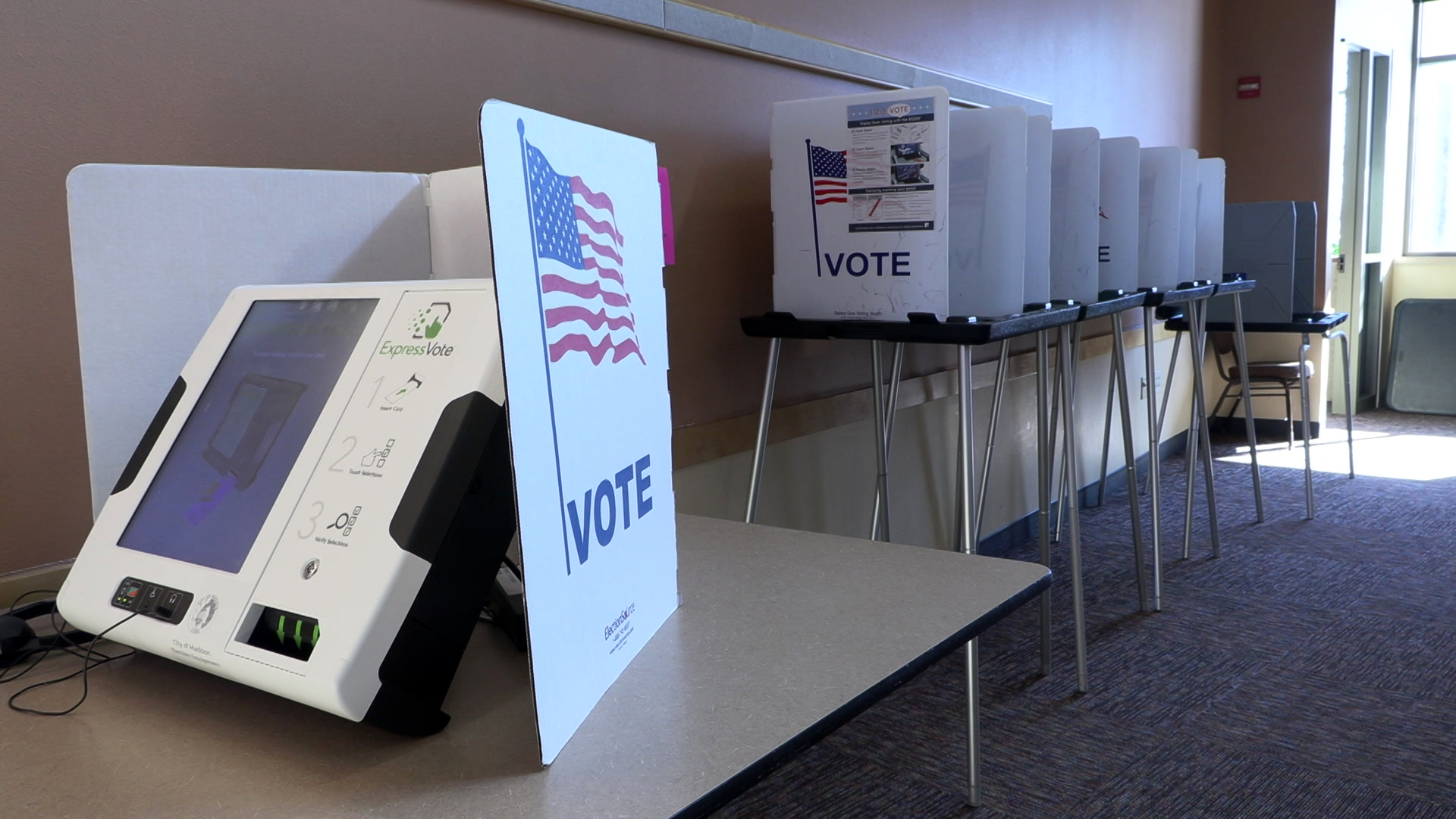
Voting booths stand ready at a polling place inside a polling place at Warner Park Community Recreation Center on Feb. 18, 2025, Madison. (Credit: PBS Wisconsin)
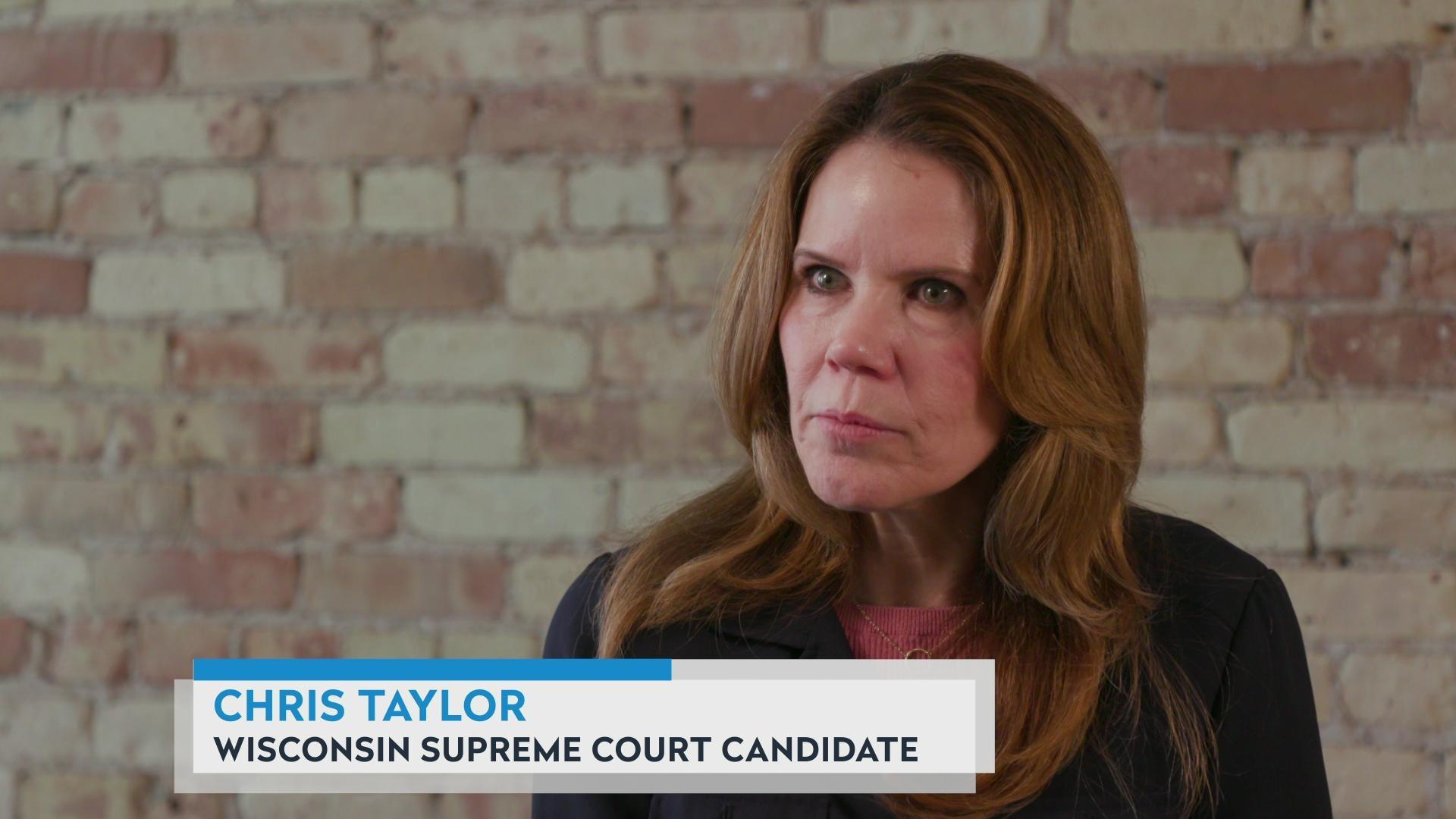
March 6: How attack ads in elections for judges can affect sentencing
In the years when there are races for the Wisconsin Supreme Court, the airwaves and streaming platforms are inundated with campaign ads for — and just as often against — this nonpartisan office with people who portray themselves as above politics. The attack ads that have become a hallmark of these campaigns usually raise issues related to crime and criminals, often focusing on particular instances of sentencing. Zac Schultz examines how this political reality impacts the way judges approach their jobs in this report.
March 13: Fears rise among trans people under political persecution
An increasing focus on transgender issues in the 2024 election cycle became a matter of official federal government policy with the start of President Donald Trump’s second term and a series of executive orders. This report by Jane McCauley shares fears and hopes of transgender people and advocates in Wisconsin as they weigh their own safety and the future of their communities.
March 27: Why a Racine referendum reflects Wisconsin school money woes
Spring elections in Wisconsin often focus on education at the local level with local school board races, and increasingly in recent years with district funding referendums. One community with a question on the ballot in 2025 was Racine — the state’s fifth largest school district — where $190 million in funding was before voters. Aditi Debnath looked at the particular budget elements at issue in this report.
May 1: A Milwaukee gun violence survivor embraces firearms training
Gun violence is an issue for Milwaukee as a whole, but it’s likewise a personal matter for residents who seek to shield their loved ones from its threat. Murv Seymour shares the experiences of a family and the efforts of the city in this report, which was accompanied by a podcast presented in a trio of parts: one, two and three. “The story documents what one mother is willing to do to protect her son and her community,” Seymour said.
June 6: Wisconsin Native languages shift from silence to celebration
Wisconsin is home to at least six different Indigenous languages that have suffered declines in their number of speakers following many decades of suppression but are now being revitalized. Reporting in collaboration with ICT, Erica Ayisi shares stories of young people and educators who are working to sustain and celebrate their cultures. “It’s an interesting and important story that shows some of the original languages of Wisconsin and that they are still alive and spoken all over the state,” Ayisi said.
July 10: Why two Wisconsin parents want to reform pharmacy benefits
Navigating the labyrinth of how patients get access to and pay for prescription drugs is the focus of a five-part investigative series by Marisa Wojcik titled “Rx Uncovered.” The first report details the price paid by one Wisconsin family owing to their insurance coverage for prescriptions, and the series continues with these reports: “What happens when patients cannot afford ‘specialty’ drugs,” “Why more local pharmacies are struggling to stay in business,” “How copay accumulators affect patient access to medications” and “Why complex health benefits are a focus of patient advocates.”
Aug. 7: Tech industry job tremors and AI boom propel changes at Wisconsin’s colleges
Promotion of, questions about and discourse over the prospects, implications and impacts of artificial intelligence tools was omnipresent over the course of 2025. For students in college and looking ahead to entering the workforce, questions on how AI will affect their work and careers is inescapable. This report by Elijah Pines explores impacts on curriculum and job prospects for students at UW campuses.

A sign marks an entrance to the Computer Sciences and Statistics Building on the UW-Madison campus on July 9, 2025. The university’s School of Computer, Data & Information Sciences is scheduled to move into a new building named Morgridge Hall for the fall 2025 semester. (Credit: Elijah Pines / PBS Wisconsin)
Aug. 14: Milwaukee Public Schools confronts dangerous lead problem
The issue of lead paint contamination in the Milwaukee school system is many decades in the making. Testing by the city led to a series of buildings being shut down early in 2025, and as a new school year was set to begin, local officials and parents of children in the district considered the scale and severity of the problem. This report by Steven Potter the fallout from the closures and the costs of cleanup.
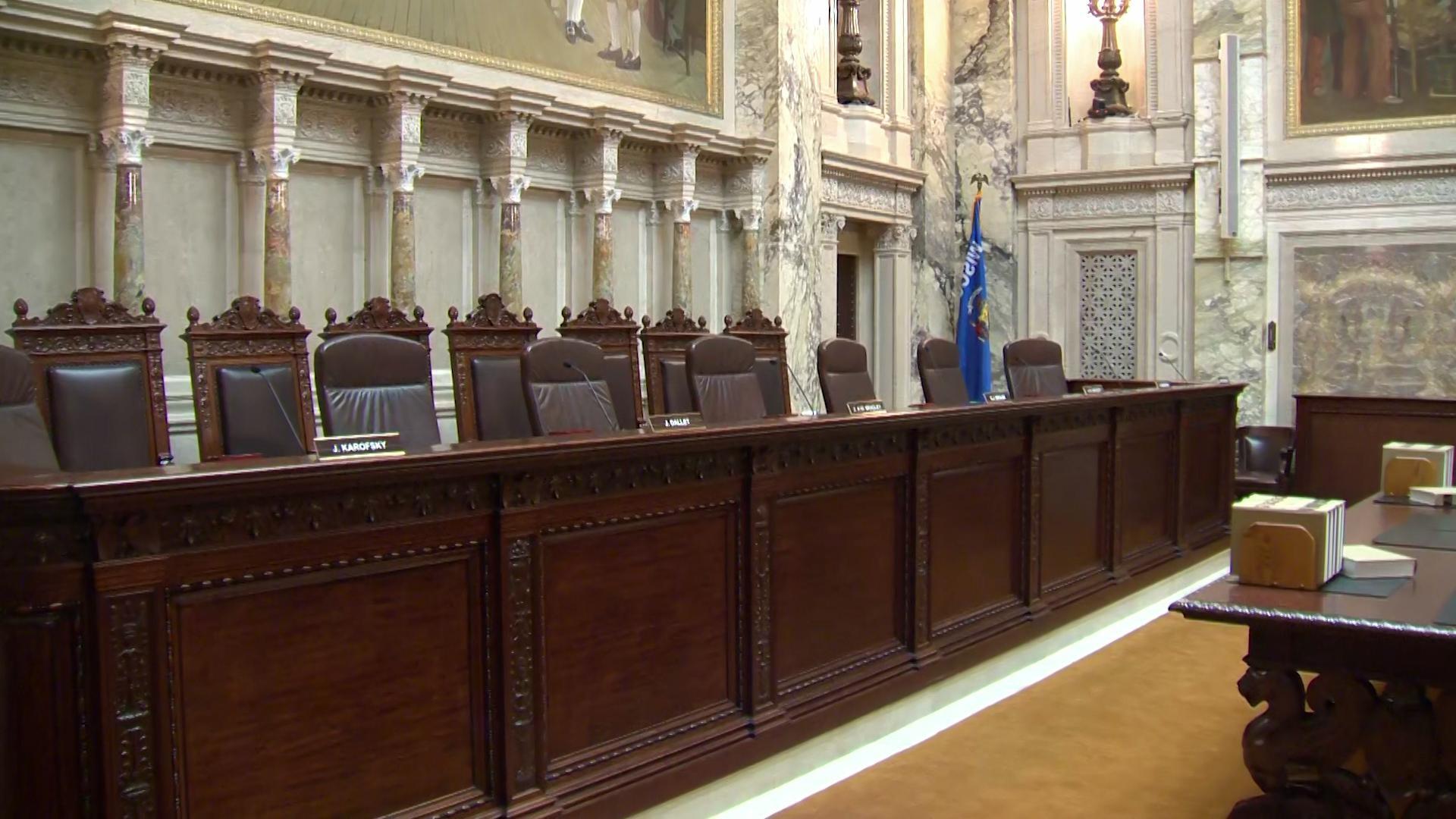
Aug. 28: Evers, Republicans and the fight over state government power
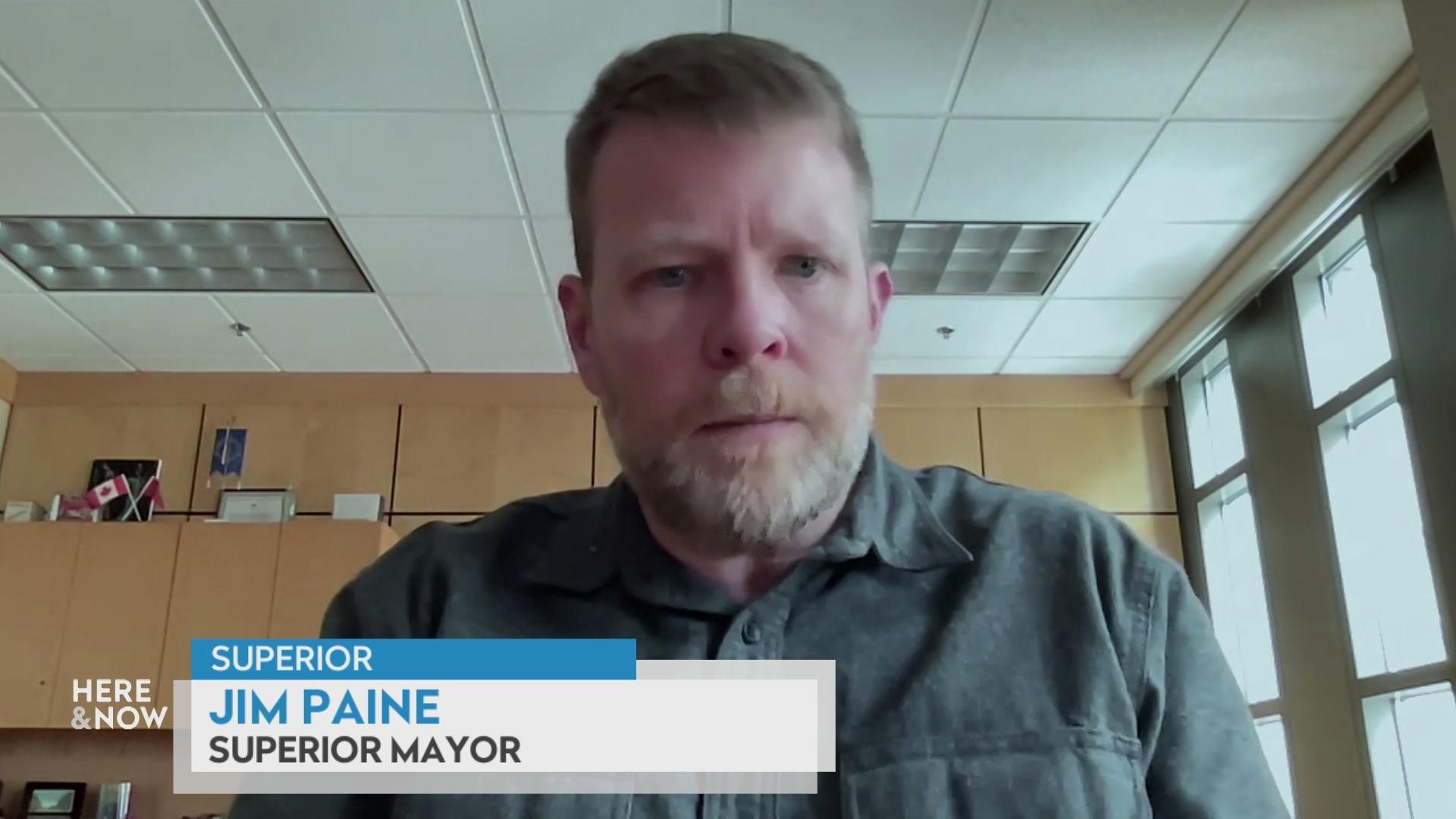
The shift in control of the Wisconsin Supreme Court proved to be decisive in the power struggle between the Republican-controlled state Legislature and Democratic Gov. Evers. A particular issue was the respective authorities of legislative committees and governor’s office to set regulations, as explored in this report by Zac Schultz. “It sounds like a dry topic, but these rules carry the weight of law, and viewers should know how these changes will impact their lives on a daily basis,” Schultz said.
Oct. 2: Tariffs, trade war and woes for Wisconsin’s soybean farmers
Tariffs imposed by the Trump administration and ensuing retaliatory trade war actions between the United States and China are making for uncertain market conditions, particularly for agricultural products. This report by Zac Schultz examines the business prospects for soybean farmers in Wisconsin as harvests boom and prices plummet, leaving them with difficult decisions about where and for how much this crop can be sold.
Oct. 3: John Rosenow on dairy workers and immigration enforcement
Along with more uncertainty over market conditions, Wisconsin farmers are also grappling with how the Trump administration’s immigration enforcement practices are affecting the agricultural workforce, particularly in the state’s signature dairy industry. In this Here & Now interview, Frederica Freyberg talks with John Rosenow, a dairy farmer in western Wisconsin, about the immigration status of dairy workers.
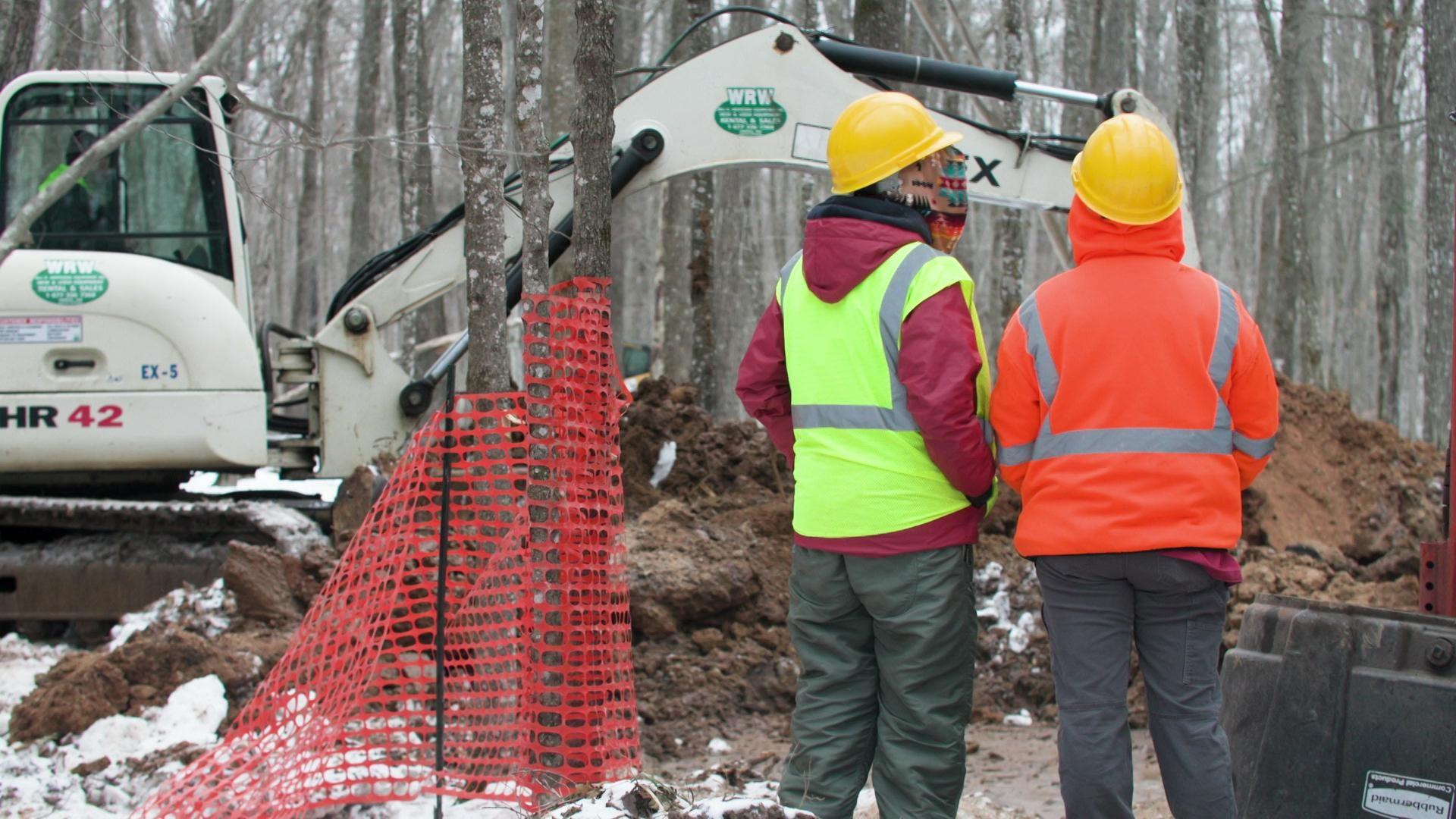
Oct. 24: The northern Wisconsin town of Stella demands action on PFAS
PFAS chemical contamination in Wisconsin’s waters transcends size and location, with communities both large and small, urban and rural alike facing the challenge of what to do about this pollution. The experiences and perspectives of residents in the North Woods town of Stella is the focus of this report by Murv Seymour, one example of how this widespread problem plays out at the local level
Nov. 13: Why Catholic sisters sold land back to the Lac du Flambeau
“Land Back” is a term that describes a growing movement among Indigenous nations to recover lands lost over the course of centuries. A report by Erica Ayisi, in collaboration with ICT, looks at a sale from the Franciscan Sisters of Perpetual Adoration to the Lac du Flambeau Band of Lake Superior Chippewa Indians. This particular transfer stands out because it marks the first “land back” action by a Catholic order of sisters to repent for its role in the historical abuses of Indian boarding schools.
Dec. 11: How farmers at risk for suicide can find mental health help
“Living in today’s on-demand and delivered-to-your-door world, it’s easy to forget the farmer,” said Steven Potter, who looked into the growing rate of suicide in rural areas. This report likewise examined what family members and communities are doing to offer more mental health support to those who need it given the unpredictable nature of farming and uncertainties of agriculture as a business.





Follow Us