

 Passport






This video is no longer available.
Country Music: Live at the Ryman Concert
09/03/19 | 1h 54m 41s | Rating: TV-PG
Join celebrated musicians for Country Music: Live at the Ryman , A Concert Celebrating the Film by Ken Burns. Hosted by Burns and featuring performances and appearances by Dierks Bentley, Rosanne Cash, Rhiannon Giddens, Vince Gill, Kathy Mattea, Marty Stuart, Dwight Yoakam and more.


Copy and Paste the Following Code to Embed this Video:
Country Music: Live at the Ryman Concert
(bright country music) -
Announcer
From the mother church of country music in Nashville, Tennessee, join Ken Burns for an unforgettable concert and celebration of the history of country music. Performances by Dierks Bentley, Rosanne Cash, Rodney Crowell, Larry Gatlin, Rhiannon Giddens, Vince Gill, Kathy Mattea, Ketch Secor, Ricky Skaggs, Riders in the Sky, Marty Stuart, Asleep at the Wheel, Holly Williams, and Dwight Yoakam. Country music live at the Ryman, a concert celebrating the film by Ken Burns. (audience applauding) (audience applauding) Thank You. Good evening. We have gathered here in the beautiful and historic Ryman Auditorium, the mother church of country music to celebrate the rich history and remarkable legacy of a uniquely American art form. In making our documentary series for PBS, we learned that country music has never been one style of music. It has always been a mixture of many styles, springing from many roots and sprouting many new branches to create a complicated chorus of American voices joining together to tell a complicated American story, one song at a time. Tonight we are thrilled to share with you a few of those stories and some of those songs, performed by some of the supremely talented musicians we were honored to work with as we made our film. It's going to be a fun evening. (audience applauding) -
Narrator
Country music rose from the bottom up, from the songs Americans sang to themselves in farm fields and railroad yards to ease them through their labors. And songs they sang to each other on the porches and in the parlors of their homes when the day's work was done. It came from the fiddle tunes they danced to on Saturday nights to let off steam. And from the hymns they chanted in church on Sunday mornings. It filtered out of secluded hollows deep in the mountains and from smokey saloons on the edge of town. From the barrios along the southern border and from the wide open spaces of the western range. Oh I'm thinking tonight about you Most of all, its roots sprang from the need of Americans, especially those who felt left out and looked down upon, to tell their stories. There's something about the lyrics to me that just separate it from everything else. Songs that you go, that happened to me yesterday or that happened to me last week or I'm going through that heartbreak right now, you know. Well, to me it's soul music. It's probably the white man's soul music and it comes from the heart. I believe that you can go look and find a country song to fit any mood you're in any song that will help you feel better. Sometime it might make you cry, but you feel better. You can find that song, that's what I believe. Lovin', cheatin', hurtin', fightin', drinkin', pickup trucks and mother. You also have that hand in there, death, murder, mayhem, suicide, you know, songs that are real. I think it's just simple ways of telling stories, experiencing and expressing feelings. You can dance to it, you can cry to it, you can make love to it, you can play it at a funeral. It just really has something in it for everybody. And people relate to it. It's about those things that we believe in but we can't see, like dreams and songs and souls. They're hanging around here, different songwriters reach up and get 'em. Country music comes from right in here. This heart and soul that we all have. It's great music that really hits us because we're all human. -
Narrator
Country music, the songwriter Harlon Howard said, is three chords and the truth. Truth telling, which country music at its best is truth telling, even when it's a big fat lie. It's what American folk music has come to be called when it followed the path of the fiddle and the banjo. All of American music comes from the same place, it's just sort of where it ends up. And country music is one of the destinations. (audience applauding) The fiddle came from Europe, the banjo came from Africa. And when they met here in America, they started a chain reaction that has reverberated through our music ever since. To help us begin tonight's journey as we follow the path of the fiddle and the banjo, please welcome Rhiannon Giddens and Ketch Secor. (audience applauding) (bright banjo and fiddle music) I've done all I can do To try and get along with you But still you're not satisfied Oh, Ruby, Ruby Honey, are you mad at your man I'll shovel in the shade I'll shovel with a spade I'll take you into brown's gold mine Oh, Ruby, Ruby Honey, are you mad at your man I've done all I can do To try to get along with you But still you're not satisfied Oh, Ruby Ruby Honey, are you mad at your man If you don't believe I'm right Just follow me tonight I'll take you to my shanty so cold Oh, Ruby (audience applauding) Ruby Honey, are you mad at your man Honey, are you mad at your man Honey, are you mad at your man Honey, are you mad at your man Honey, are you mad at your man Honey, are you mad at your man Honey, are you mad at your man Honey, are you mad at your man (audience applauding) You know, it was called hillbilly music at first. In 1927, it was being recorded and broadcast on the still new medium of radio. That summer, the history of country music took a dramatic turn when a pioneering music entrepreneur named Ralph Peer arrived in Bristol, Tennessee to record more than two dozen performing acts. One of them came from nearby Mason Springs, Virginia. A.P. Sara and Maybelle Carter would go on to be known as the first family of country music and leave behind some of the music's best known and best loved songs. A few days after the Carters, a former railroad brakeman from Meridian, Mississippi showed up in Peers' makeshift studio. His name was Jimmie Rodgers and his songs drew from the music he had learned from the railroads' African-American road crews to which he always added a distinctive yodel that became his trademark. If the Carter family represented the Sunday morning side of country music, songs about mother and home and church, Jimmie Rodgers most definitely represented the other side of the coin, Saturday night. He was a scamp, a rambler, and though he was already suffering from the tuberculosis that would soon kill him at a young age, the twinkle in his eye and the cheerful exuberance of his songs endeared him to everyone. He would later be hailed as the father of country music. Please welcome back Ketch Secor to sing one of Jimmie Rodgers' songs, He's in the Jailhouse Now. (audience applauding) (lively music) I had a friend named Ramblin' Bob He used to steal, gamble and rob He thought he was the smartest guy around But I found out last Monday That Bob got locked up Sunday They've got him in the jailhouse way down town He's in the jailhouse now He's in the jailhouse now I told him once or twice To quit playin' cards and shooting dice He's in the jailhouse now He played a game called poker He gambled with Dan Yoakum But shooting dice was his greatest game Now he's in the downtown jail No one to go his bail The judge done said that he refused the fine He's in the jailhouse now He's in the jailhouse now I told him once or twice To quit playin' cards and shooting dice He's in the jailhouse now (yodeling) Play that fiddle, man! Let's hear that dobro for Jimmie Rogers! I went out last Tuesday I met a little gal named Susie I told her I was the swellest guy around But she started spending my money Then she started calling me honey We took in every cabaret in town We're in the jailhouse now We're in the jailhouse now I told the judge right to his face We didn't like to see this place We're in the jailhouse now I told him once or twice To quit playing cards and shooting dice We're in the jailhouse now (audience applauding) Mighty fine and a great big Western howdy. By the 1930s, country music was reaching more and more people on the radio barn dances that every station offered like the Grand Ole Opry right here in Nashville every Saturday night. The music was expanding to new parts of the nation, and great new artists were pushing its boundaries in new directions. Out in Oklahoma, the young Gene Autry started out his career as one of the many imitators of Jimmie Rodgers, but when he moved to WLS in Chicago, Autry changed his approach and in doing so he changed the sound and the look of country music. He became a singing cowboy. He moved to Hollywood to star in dozens of movies that showed up in the small theaters across the nation every Saturday afternoon, defeating the bad guys but always with time enough for a song or two. Pretty soon every studio had to have a singing cowboy. To feed America's growing appetite for cowboy songs, a group called the Sons of the Pioneers stepped forward. Their members included gifted songwriters Bob Nolan and Tim Spencer, Hugh and Karl Farr and a singer from Ohio named Leonard Slye who would soon change his name to Roy Rogers. (audience applauding) Yep, our hero. To sing the Sons of the Pioneers classic songs Tumbling Tumbleweeds, I want to invite my saddle pals, my partners, my fellow members of Riders in the Sky onto the stage and here we go. (audience applauding) That's Too Slim, I'm Ranger Doug, Woody Paul, Joey the Cow-Polka King, 41 years. -
All
The cowboy way. (audience applauding) I'm a roaming cowboy Riding all day long Tumbleweeds around me Hear my lonely song Nights underneath a prairie moon (wolf howling) I ride along and sing a tune See them tumbling down Pledging their love to the ground Lonely but free I'll be found Drifting along with the tumbling tumbleweeds Cares of the past are behind Nowhere to go but I'll find Just where the trail will wind Drifting along with the tumbling tumbleweeds I know when night has gone That a new world's born at dawn I'll keep rolling along Deep in my heart is a song Here on the range I belong Drifting along with the tumbling tumbleweeds I know when night has gone That a new world's born at dawn I'll keep rolling along Deep in my heart is a song Here on the range I belong Drifting along with the tumbling tumbleweeds Drifting along With the tumbling tumbleweeds With the tumbling tumbleweeds (audience applauding) At the same time that singing cowboys were filling the silver screen, in Texas and Oklahoma, another new style of music emerged that blended the latest innovation in jazz with the sound of an old fashioned country band. People called it western swing. Its biggest star was Bob Wills. (audience applauding) Western swing is still alive and well. Please welcome Ray Benson and Asleep at the Wheel, doing Bob Wills' biggest hit, San Antonio Rose. All right now, take it away, boys! (bright music) Why those fiddles, Katie and Dennis, fiddle around! Deep within my heart lies a melody A song of old San Antone San Antone Where in dreams I live with a memory Beneath the stars all alone All alone It was there I found beside the Alamo Enchantment strange as the blue up above A moonlit path that only she would know Still hear my broken song of love Moon in all your splendor know only my heart Call back my rose, rose of San Antone Lips so sweet and tender like petals falling apart Speak once again of my love, my own Broken song and empty words I know Still live in my heart all alone For that moonlit path by the Alamo And Rose, my Rose of San Antone Let it ride! Ah, I'm in the mood! All right! Moon in all your splendor know only my heart Call back my rose, rose of San Antone Lips so sweet and tender like petals falling apart Speak once again of my love, my own Broken song and empty words I know Still live in my heart all alone For that moonlit path by the Alamo And Rose, my Rose of San Antone Down that old home stretch, let it ride! (audience applauding) In the 1940s, country music sprouted yet another branch and it happened right here at the Ryman, when Bill Monroe began reconfiguring his string band, The Bluegrass Boys to include fiddler Chubby Wise, bass player Cedric Rainwater, guitarist and singer Lester Flatt and a young former textile worker from Flint Hill, North Carolina, named Earl Scruggs. (audience applauding) His lightning fast three-fingered roll revolutionized banjo playing. Their new sound came to be called bluegrass. As a young boy in Kentucky, Bill Monroe had two musical mentors, Arnold Schultz, a black guitarist and fiddler, but especially Monroe's Uncle Pen. Monroe later wrote a song named for his favorite uncle and then went on to become a mentor of a new generation of bluegrass pickers, Ricky Skaggs, Marty Stewart, and Vince Gill. (audience cheering) Please welcome them right now. Hello! (lively bluegrass music) Yeah! Oh, the people would come from far away To dance all night to the break of day When the caller would holler do-si-do They knew Uncle Pen was ready to go Late in the evening, about sundown High on the hill, an' above the town Uncle Pen played the fiddle, Lord, how it rang You could hear it talk, you could hear it sing Well, he played an old piece They called the Soldier's Joy And one called the Boston Boy Greatest of all was Jennie Lynn To me, that's where the fiddlin' begins Late in the evening, about sundown High on the hill, an' above the town Uncle Pen played the fiddle, Lord, how it rang You could hear it talk, you could hear it sing Yeah, boy! Yeah, man! I'll never forget that mournful day When Uncle Pen was called away He hung up his fiddle and he hung up his bow And he knew it was time for him to go Late in the evening, about sundown High on the hill, an' above the town Uncle Pen played the fiddle, Lord, how it rang You could hear it talk, you could hear it sing Yeah, yeah! Oh, late in the evening, about sundown High on the hill, an' above the town Uncle Pen played the fiddle, Lord, how it rang You could hear it talk, you could hear it sing Yeah! All right! (audience applauding) Thank y'all After World War II, a new electrified sound rose out of bar rooms and dance halls. It was called honky-tonk. There were many stars in the honky-tonk firmament, like Ernest Tubb, Webb Pierce, or Lefty Frizzell. But no one, no one was better than a skinny singer-songwriter from Alabama who rocketed to fame and was gone before he reached the age of 30. Hank Williams. (audience applauding) He could get any crowd dancing with his good time beat, then bring them to tears with his songs of almost inexpressible heartache, written from his own personal torments. Despite his short life, Hank Williams would leave an imperishable mark on American music with songs like "Hey Good Lookin'" or "Your Cheatin' Heart", "Jambalaya" or "I Saw the Light", and many, many more. He earned the nickname they gave him. He was a hillbilly Shakespeare. (audience applauding) He made you think he was singing strictly to you. This guy understands me, he knows the pain I feel, he knows what I've done and what I've experienced. He knows it just as well as I do and this song he's singing, he's singing directly to me. I ever had My mother used to sing me songs at night to make me go to sleep and she was a pretty darn good singer. And later on in life, I learned that those songs that I loved that she was singing to me were songs by Hank Williams, so I was a huge Hank Williams fan before I even knew who Hank was. Hanks Williams had the guts to put into words what we were all thinking and feeling, but were too embarrassed to say. He cut right to the bone. (audience applauding) Please welcome the granddaughter of the hillbilly Shakespeare, a talented singer-songwriter in her own right, Holly Williams. (audience applauding) (soft music) Hear that lonesome whippoorwill Hear that lonesome whippoorwill He sounds too blue to fly That midnight train is whining low That midnight train is whining low I'm so lonesome I could cry Did you ever hear a robin weep Did you ever hear a robin weep When leaves began to die That means he's lost his will to live That means he's lost his will to live I'm so lonesome I could cry I'm so lonesome I could cry Did you ever see a night so long When time goes crawling by That moon just went behind the clouds That moon just went behind the clouds To hide his face and cry To hide his face and cry The silence of a falling star The silence of a falling star Lights up a purple sky And as I wonder where you are And as I wonder where you are I'm so lonesome I could cry I'm so lonesome I could cry I'm so lonesome I could cry I'm so lonesome I could cry (audience applauding) In 1954, two young men began their recording careers in Memphis. Both of them were hoping to become gospel singers to make their mothers proud, but at Sun Records, the legendary producer Sam Philips pointed them in a different direction, towards something that combined the elements of rhythm and blues with country music. It was called rockabilly and it soon started sweeping the nation. One of those young men, Elvis Presley, would go on to become the king of rock and roll. The other was Johnny Cash. (audience applauding) From Dias, Arkansas. He would stay with country music to become one of its greatest artists, but part of his greatness was his voracious interest in all types of American music. He became friends with Bob Dylan and Pete Seeger, performed with Louis Armstrong and Odetta. Cash also used his music and his fame to highlight what he considered the forgotten segments of society, including Native Americans and prison inmates. And perhaps because he idolized Jimmie Rodgers, the singing brakeman, Johnny Cash particularly loved songs about trains. Please welcome Marty Stewart, who was once a member of Cash's band who's equally fascinated with train songs. (audience applauding) Thank you, Dierks, good evening. Thank you very much. First two records that I could ever call my own was a Lester Flatt and Earl Scruggs record and a Johnny Cash record and it worked out really good for me because the only two jobs that I've had in my life as a working musician was with Lester Flatt and Johnny Cash. (audience applauding) And I started my career right there in Lester Flatts' band in 1972, I was 13 years old. And it was a great way to begin. I've said it many times, walking into this building with him was like walking into the Vatican with the Pope, everything was good. (audience laughing) But I stayed there and Lester passed away and the next job I had come my way was with the Johnny Cash band. And I wanted that job, it was the best job in this town or in anybody's town, and he said "Do you play the fiddle?" I went "Aww, yeah, I play the fiddle." (audience laughing) It was the biggest lie because I am the world's worst fiddle player. At the end of the first tour, he sent me my check, sent me a letter that said "Dear son," I called him JR, and said "Glad to have you on the show, you had life and vitality "and youth" and all that stuff. And he said "love JR", and then he said "P.S., do all "fiddles squeak or just yours?" (all laughing) (lively music) So you couldn't get anything by him. But he traditionally closed his concerts with Ervin T. Rouse's famous song about the train called The Orange Blossom Special. (lively music) So I couldn't play it on the fiddle, so I had to find out another way to do it, something like... (fast paced music) Well, look yonder comin' Comin' down that railroad track Look yonder comin' Comin' down that railroad track It's that Orange Blossom Special Bringin' my baby back Talk about your travelin' She's the fastest train on the rail Talk about your travelin' She's the fastest train on the rail Ride that Orange Blossom Special Rolling down that seaboard trail Lord have mercy. Yeah! (audience applauding) I don't know! Going down to Florida And get some sand in my shoes Maybe California And get some sand in my shoes Ride that Orange Blossom Special And lose these New York blues Lose it, boy! That's all I got! (audience applauding) It's all intertwined. Country music, boat music, blues music, rock music. You name it, they're all kind of poetry driven. And I think it's all intertwined. Small packages in show business, Ms. Brenda Lee to sing her new record, Dynamite! (scatting) You're dynamite, you're dynamite Dynamite You're dynamite, dynamite Hey baby when you kiss, it's dynamite Hey baby when you hug and hold me tight I just explode like dynamite Dynamite They categorized me as rockabilly, but I didn't know it was rockabilly, I'm just singing songs that were given to me, singing 'em like I sang. And then all of a sudden I was rock. And then all of a sudden I was pop, then all of a sudden I became country. Just light me up like dynamite When a singer is absolutely passionate about what they do, I don't think you should pigeonhole 'em. Because if you ask us artists, when it's all said and done, it's music, that's all it is. Let's make history tonight The power of one hour of love's delight Just light me up like dynamite Because you're dynamite, you're dynamite (audience applauding) I wrecked my car listening to Brenda Lee one time. It was so good I ran the stop sign and totaled the car and then I got to tell her that story when I finally got to meet her. When she was 11 years old, Brenda Lee did her first big country tour. It included George Jones, Faron Young, the Louvin Brothers, Mel Tillis, and a singer from Virginia with a powerful voice and an equally powerful personality. Her name was Patsy Cline. (audience applauding) She was an enduring inspiration to many women in country music who wanted to speak their minds as well as sing their songs. In the early 1960s, Patsy worked with a great producer Owen Bradely to create records that were a little smoother and with a little less twang. People called it the Nashville sound. For Patsy, it was a song written by a young guy from Abbott, Texas and it would go on to become the number one jukebox tune of all time. -
Narrator
As soon as Patsy Cline felt up to it, Owen Bradley brought her back to his studio to record a new album featuring more of the Nashville sound. The song that produced the album's biggest hit was a slow, soft lament Willie Nelson had written. He had originally entitled the song Stupid, but then changed his mind. He called it Crazy. I was at Tootsie's working my way on to Nashville. Charlie Dick, Patsy's husband was there. He and I would have a beer, I had a demo on Crazy. And I got it on Tootsie's jukebox and played it and he heard it and said "That'd be a great song for Patsy. "Let's go play it for her."
We went over to her house and about 12
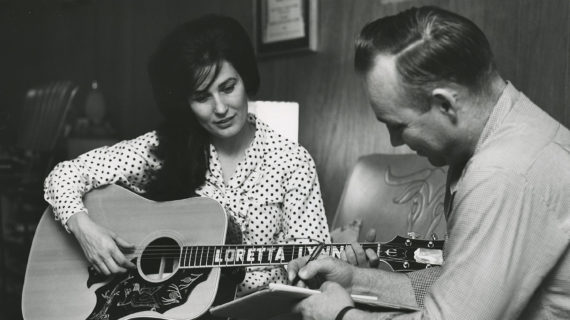
30, 1:00 when we got there, and I wouldn't get out of the car so he went in and Patsy come out and made me get out of the car and come in and listen to the song. I just thought it was a song, you know when you write one you know whether it's good or not great, but I always thought it was a really good song. And I played it for Patsy Cline and she thought it was a great song. (audience applauding) Please welcome back to the stage the amazing Rhiannon Giddens. (audience applauding) ("Crazy") Crazy, I'm crazy for feeling so lonely I'm crazy Crazy for feeling so blue Crazy for feeling so blue I knew you'd love me As long as you wanted And then someday You'd leave me for somebody new You'd leave me for somebody new Worry Why do I let myself worry Wondering What in the world Did I do Crazy for thinking That my love could hold you I'm crazy for trying And crazy for crying And I'm crazy for loving you And I'm crazy for loving you Crazy for thinking That my love could hold you That my love could hold you I'm crazy for trying And crazy for crying And I'm crazy for loving And I'm crazy for loving You (audience applauding) You While the Nashville sound was smoothing out country music's rougher edges, 2000 miles to the west in California's San Joaquin Valley, a different kind of country music unafraid of showing its honky-tonk roots was being played and recorded. It was called the Bakersfield sound. (audience applauding) At its forefront was Buck Owens, whose family had been forced West from Texas during the Dust Bowl. His songs were not meant for easy listening, he said. "I always wanted to sound like a locomotive "coming right through the room." And for a while, his band included a young man who had recently been paroled from prison and whose family had also felt the string of discrimination because people looked down on them as oakies. His name was Merle Haggard, who soon had a solo career of his own. Some of the songs he wrote and performed were classic honky tonk tunes, but he also created songs that plumbed the depth of his reckless younger years, about his time in San Quentin, about growing up poor and about people like his hardworking mother and father. People started calling him the poet of the common man. On my mind The song that captures that part of American history and American country music history by Merle to me is Mama's Hungry Eyes. A canvas covered cabin in a crowded labor camp Stand out in this old memory I revive 'Cause my daddy raised a family there With two hard working hands And tried to fill my mama's hungry eyes In the second verse of that song, he sings about it. Another class of people. Another class of people Kept us somewhere just below. Just below One more reason for my mama's hungry eyes. Hungry eyes He sang that for Buck and Buck's family, the Magus brothers and all those unnamed oakies and arkies and Texans. Hungry eyes Merle Haggard's one of the greatest poets ever in American music, independent of genre. (audience applauding) Tonight we have someone who keeps the spirit of Buck and Merle and the Bakersfield sound alive. Please welcome Dwight Yoakam to sing Merle Haggard's Hungry Eyes and Buck Owens' Streets of Bakersfield! (soft music) A canvas-covered cabin in a crowded labor camp Stand out in this old memory I revived Stand out in this old memory I revived My daddy raised a family there With two hard-working hands And tried to feed my mama's hungry eyes And tried to feed my mama's hungry eyes Daddy dreamed of something better And my mama's faith was strong And us kids were just to young to realize And us kids were just to young to realize That another class of people Put us somewhere far below One more reason for my mama's hungry eyes One more reason for my mama's hungry eyes Mama never had the luxuries she wanted Mama never had the luxuries she wanted But it wasn't 'cause my daddy didn't try But it wasn't 'cause my daddy didn't try She only wanted things she really needed She only wanted things she really needed One more reason for my mama's hungry eyes One more reason for my mama's hungry eyes I remember daddy praying for a better way of life I remember daddy praying for a better way of life But I don't recall a change of any size But I don't recall a change of any size Just a little loss of courage As their age began to show And more sadness in my mama's hungry eyes And more sadness in my mama's hungry eyes Mama never had the luxuries she wanted Mama never had the luxuries she wanted But it wasn't 'cause my daddy didn't try But it wasn't 'cause my daddy didn't try She only wanted things she really needed She only wanted things she really needed One more reason for my mama's hungry eyes One more reason for my mama's hungry eyes Oh, I still recall my mama's hungry eyes Oh, I still recall my mama's hungry eyes (audience applauding) Thank you very much, thank you. Thanks to this great band. Can't do Merle and leave out Buck and with the help of Vince on the Buckacastor back here and Dierks Bentley's gonna come out and do Buck's part for us. We're gonna do one that Buck brought to 'em in 1988, He said "now Dwight, why don't you take this down to Nashville and sing it for 'em'?" And I said "Now Buck, I don't know if we should go sing this down in Nashville." "Now, Dwight, you just come with old Buck," "it'll be all right." And he was correct, it was all right. All right, kick her off. (lively music) I came here in looking for somethin' I couldn't find anywhere else Well, I'm not trying to be nobody Just want a chance to be myself I've spent a thousand miles a-thumbin' Yes, I've worn blisters on my heels Trying to find me something better Here on the streets of Bakersfield You don't know me but you don't like me You say you care less how I feel But how many of you that sit and judge me Ever walked the streets of Bakersfield Spent some time in San Francisco Spent a night there in the can They threw this drunk man in my jail cell I took 15 dollars from that man Left him my watch and my old house keys Don't want folks thinking that I'd steal Then I thanked him as I was leaving And I headed out for Bakersfield You don't know me but you don't like me You say you care less how I feel How many of you that sit and judge me Ever walked the streets of Bakersfield You don't know me but you don't like me You say you care less how I feel How many of you that sit and judge me Ever walked the streets of Bakersfield How many of you that sit and judge me Ever walked the streets of Bakersfield (audience applauding) Thank you all very much, thank you Dierks, Dierks Bentley ladies and gentlemen, and Mr. Vince Gill on that Buckacastor. Sara and Maybelle Carter, Rose Maddox, Kitty Wells, Patsy Cline, Jean Shepard. Country music already had a history of strong women, but in the mid 1960s during a decade of cultural change in America, more of us were stepping forward. (audience applauding) At the front of all of us was a singer songwriter from Butcher Holler, Kentucky. (audience applauding) Loretta Lynn She was and still is feisty and unfiltered. The same year that the National Organization for Women was founded and the year the phrase women liberation was first used, Loretta released Don't Come Home Drinkin' with Lovin' On Your Mind. (audience applauding) It was a statement, but it was also a great song. Loretta didn't consider herself part of any movement, nor did her growing legion of female fans. But they believed that at last, someone was speaking for them. With songs like The Pill which some radio stations refused to play because it was so outspoken, Loretta kept pushing forward. At the same time, she never forgot where she came from. Immortalized in her song, Coal Miner's Daughter. I studied Coal Miner's Daughter like it was a textbook. It's a Rosetta Stone, it goes back to bluegrass and mountain music and country music and modern country. Loretta Lynn is honesty, bluntness, she'll say anything. There's no filter. She reminds me of mama a lot. She's a strong willed woman and is a survivor. But a lot of things have changed since way back then If you write the truth and you're writing a song and you're writing about your life, it's gonna be country. It'll be country. 'Cause you're writing what's happening and that's all a good song is. Except the memories of a coal miner's daughter (audience applauding) To sing Loretta Lynn's Coal Miner's Daughter, please welcome a coal miner's granddaughter from West Virginia, Kathy Mattea! (audience applauding) (lively music) Well, I was born a coal miner's daughter In a cabin, on a hill in Butcher Holler We were poor but we had love That's the one thing that daddy made sure of He shoveled coal to make a poor man's dollar My daddy worked and slaved all night In the Van Lear coal mines All day long in the field a hoin' corn Mommy rocked the babies at night And read the Bible by the coal oil light And ever' thing would start all over come break of morn Daddy loved and raised eight kids on a miner's pay Mommy scrubbed our clothes on a washboard ever' day Why I've seen her fingers bleed To complain, there was no need She'd smile in mommy's understanding way In the summertime we didn't have shoes to wear But in the wintertime we'd all get a brand new pair From a mail order catalog Money raised from selling a hog Daddy always managed to get the money somewhere Yeah, I'm proud to be a coal miner's daughter I remember well, the well where I drew water The work we done was hard At night we'd sleep 'cause we were tired I never thought of ever leaving Butcher Holler Well a lot of things have changed since way back then And it's so good to be back home again Not much left but the floor Nothing lives here anymore Except the memories of a coal miner's daughter (audience applauding) He was a Rhodes scholar with an advanced degree in English literature from Oxford University. He was a captain and a helicopter pilot in the army's airborne rangers who had volunteered for duty in Vietnam but instead he was assigned to be an instructor at West Point. But what Kris Kristofferson really wanted more than anything was to write country songs. So he gave up his military and academic career to take a job in a recording studio here in Nashville as a janitor. Luckily for us, he eventually was able to stop sweeping floors because people began recording the remarkable songs he was writing. Me and Bobby McGee, partially inspired by La Strada, an Italian movie that Kris had seen, Help Me Make It Through the Night and For the Good Times, songs that set new standards in describing relations between a man and a woman. And Sunday Morning Coming Down, which took a different approach to country music's themes of Saturday night and Sunday morning and became a classic. (audience applauding) I'm in the business of selling lyrics, feelings, and emotions. Lyrics, see, I sing lyrics. See, that's what's wrong with a lot of other music. They've got the lyrics, but you don't never hear them. Now watch this. I have seen the morning burning golden On the mountains in the sky Achin' with the feelin' of the freedom of an eagle When she flies Turnin' on the world the way she smiled upon My soul as I lay dying Healin' as the colors in the sunshine And the shadows of her eye Wakin' in the mornin' to the feelin' Of her fingers on my skin Talkin' of tomorrow Now watch this line, Talkin' of tomorrow and the money love and time we had to Could have just said "Talkin' of tomorrow "and the money we had to spend," Talkin' of tomorrow and the money Love and time we had to spend Cause lovin' her was easier than anything I'll ever do again Wasn't that fine lyrics? I didn't write 'em. (audience applauding) Please welcome with Kris Kristofferson's classic song, Sunday Morning Comin' Down, the great, Larry Gatlin. (audience applauding) (soft music) Well I woke up Sunday morning With no way to hold my head that didn't hurt And the beer I had for breakfast wasn't bad So I had one more for dessert Then I fumbled through my closet for my clothes And found my cleanest dirty shirt I washed my face and combed my hair And stumbled down the stairs to meet the day I'd smoked my mind the night before With cigarettes and songs that I'd been pickin' So I lit my first and watched a small boy Cussin' at a can that he was kicking Then I crossed the empty street And caught the Sunday smell Of someone fryin' chicken And it took me back to somethin' I'd lost somehow somewhere along the way I'd lost somehow somewhere along the way On a Sunday morning sidewalk Wishing lord that I was stoned 'Cause there's something in a Sunday That makes a body feel alone And there's nothin' short of dyin' Half as lonesome as the sound Of a sleepin' city sidewalk And Sunday mornin' comin' down In the park I saw a daddy With a laughin' little girl that he was swingin' Then I stopped beside a Sunday school And listened to the choir as they were singin' Then I headed back for home And somewhere far away a lonely bell was ringin' And somewhere far away a lonely bell was ringin' And it echoed through the canyons Like the disappearin' dreams of yesterday On a Sunday morning sidewalk Wishing lord that I was stoned 'Cause there's something in a Sunday Makes a body feel alone And there's nothin' short of dyin' And there's nothin' short of dyin' Half as lonesome as the sound Of a sleepin' city sidewalk And Sunday mornin' Comin' Down (audience applauding) I'm going down to Austin, Texas I'm going down to save my soul -
Narrator
We went over to her house and about 12
While older, traditional artists engaged in a tug of war with the Countrypolitans, Nashville was also attracting a new wave of young singer-songwriters who had their own ideas about the direction of country music. Oh my, mama ain't that Texas cookin' something Oh my, mama it'll stop yo' belly and backbone bumpin' Oh my, mama ain't that Texas cookin good Oh my, mama eat it everyday if I could For them, creating a well-crafted song was more important than writing a hit, though they all dreamed that they might have both, like the hugely successful Kris Kristofferson. And like Kristofferson, many of the new arrivals were from Texas. People ask me and say, "What, what is it about these Texas songwriters?" You know, "What is it?" And I say, "We're the best liars in the world." Texans have always had this independent streak of doing the way they want it, the way they hear it, the way they want to do it. (audience applauding) In the 1970s, defining country music was being debated as never before. But that argument sparked one of its most vibrant eras, making room for new voices and new attitudes. Here in Nashville, some of those new voices could be heard at the Exit/In. But the unofficial gathering place for many of them was the home of Susanna and Guy Clark, where all-night picking parties took place. The artists who showed up included a lot of young Texans including Steve Earle, Rodney Crowell, and the brilliant and equally eccentric Townes Van Zandt. (audience applauding) Most of his albums were not commercially successful, but Townes's songwriting attracted the admiration of many artists like Emmylou Harris, Willie Nelson, and Merle Haggard who recorded his songs and brought them to a wider audience. Especially one song about a bandit in Mexico, who dies young and his friend, who lives to an old age, singing in a bar far north of the border, in Ohio. To sing that song, please welcome Rodney Crowell. (audience applauding) (soft music) Living on the road my friend Was gonna keep you free and clean now you wear Your skin like iron, your breath's as hard as kerosene Your skin like iron, your breath's as hard as kerosene You weren't your mama's only boy But her favorite one it seems She began to cry when you said goodbye And sank into your dreams Pancho was a bandit boys His horse was fast as polished steel He wore his gun outside his pants For all the honest world to feel Pancho met his match you know On the deserts down in Mexico Nobody heard his dying words But that's the way it goes All the federales say They could have had him any day They only let him slip away Out of kindness I suppose Lefty he can't sing the blues All night long like he used to The dust that Pancho bit down south Ended up in Lefty's mouth The day they laid poor Pancho low Lefty split for Ohio The day they laid poor Pancho low Lefty split for Ohio Where he got the bread to go There ain't nobody knows All the federales say They could have had him any day They only let him slip away Out of kindness I suppose The poets tell how Pancho fell Lefty's livin' in a cheap hotel The desert's quiet and Cleveland's cold So the story ends we're told Pancho needs your prayers it's true But save a few for Lefty too He only did what he had to do Now he's growing old All the federales say They could have had him any day They only let him slip away Out of kindness I suppose A few gray federales say They could have had him any day They only let him go so long Out of kindness I suppose (audience applauding) During the 1970s, two other Texans were challenging the status quo in country music. Discouraged by the trajectory of his singing career, Willie Nelson left Nashville and moved to Austin. There he found an emerging music scene that was much more freewheeling and more welcoming to offbeat artists like himself, where long-haired college students and red-neck truck drivers partied together and learned, Willie told us, "that they really didn't hate each other." Meanwhile, his good friend Waylon Jennings stayed in Nashville and began breaking all the rules about how much control an artist had over how a record got made. His song Are You Sure Hank Done It This Way became a rallying cry for the movement Waylon, Willie and others had begun that broadened the definition of country music even more. It was summarized in the title of an album the two of them did together.
Wanted
the Outlaws. (audience applauding) A long time forgotten the dreams that just fell by the way The good life he promised ain't what she's living today -
Jennings
Wanted
Willie! But she never complains -
Narrator
Wanted
The album rose to the top of the country charts, crossed over to the Top Ten on pop charts and, after selling a million copies, became the first certified platinum album in country music history. She's a good hearted woman in love with A good timing man Then it sold a million more. The Jennings-Nelson duet on Good Hearted Woman, which they had written years earlier during a poker game, became a number-one single. My God, that was a song worth singing, wasn't it? I mean you ain't got no songs like that coming out of this hillbilly town now. A Good Hearted Woman? Ain't nobody going to sing nothing that makes that much sense, don't you see? You asked me what about the music. It was truth. And, boy, if there was ever a truer song than that one, I don't know what it is. "A long time forgotten with dreams "that just fell by the way. "And the good life she's living ain't "what she's living today." Ain't that great? -
Narrator
Wanted
"Suddenly, we didn't need Nashville," Jennings recalled, "They needed us." Oh, we thrived on it. We thought it was the best thing that happened to us, "Hey, they're calling us outlaws." (laughing) Everybody who's tried in the creative business, has to have a little outlaw in him. So, I think there's a lot of people out in the audience who have a little outlaw in them, too. So, they were willing to forgive us some of our misgivings, as long as the music was good. (audience applauding) Ladies and gentlemen, here to sing Waylon Jennings' call to arms, Are You Sure Hank Done It This Way, is Dierks Bentley. (audience applauding) (lively music) Lord it's the same old tune, fiddle and guitar Where do we take it from here Rhinestone suits and new shiny cars It's been the same way for years We need a change Somebody told me When I got to Nashville Son, you finally got it made Old Hank made it here And we're all sure that you will But I don't think Hank done it this way Umh, I don't think Hank done it this way Hey 10 years on the road playin' one-night stands Speedin' my young life away Yeah tell me one more time Just so's I'll understand Are you sure old Hank done it this way Yeah, did Hank really do it this way I've seen the world with a five-piece band Looking at the back side of me Singing my songs Some of his now and then But I don't think Hank done 'em this way Yeah I don't think Hank done 'em this way Take it home. (audience applauding) When Brenda Lee and Loretta Lynn arrived in Nashville, Patsy Cline reached out to offer them friendship and sisterly advice about Music City. When I arrived in town, Loretta did the same thing for me. Like women everywhere, we've needed to stick together and be friends. (audience applauding) The day after she became the first member of her family to graduate from high school, Dolly Parton packed a cardboard suitcase, boarded a bus, and came here pursuing her dream. She worked as a waitress and a receptionist and finally landed a job on Porter Wagoner's television show as the so-called girl singer. By the 1970s, she had been in town for nearly a decade, when she started having a string of number-one hits that she had written herself like Joshua, Coat of Many Colors, and Jolene. "I wrote more and more songs," Dolly said, "and dreamed bigger and bigger dreams." It was time for her to move on. But first, she had to figure out how to get Porter Wagoner to agree that she could leave. When I was trying to leave the show, I had told Porter I'd stay five years. It had been five, then it was six, then it was seven. He was just having a real hard time 'cause it was going to mess up his show. We were very bound and tied together in so many emotional ways. And he just would not hear it. And so he was gonna sue me, he was gonna do this he was gonna do that. And so I went home and I thought, he's not gonna listen to me. 'Cause I've said it over and over. And so I thought, do what you do best, just write a song. So I wrote the song, took it back in the next day. And I said, "Porter, sit down. "I've got something I have to sing to you." So I sang it and he was sitting at his desk and he was crying. He said, "That's the best thing you ever wrote. "Okay, you can go, but only if I can produce that record." And he did. And the rest is history. Please welcome Vince Gill, singing the song that Dolly Parton wrote as she said goodbye to Porter and then pushed on to make her own history. (audience applauding) (soft music) If I Should stay I would only be in your way I would only be in your way So I'll go but I know So I'll go but I know I'll think of you Each step of the way And I Will always love you Will always love you I Will always love you Bittersweet memories Bittersweet memories That is all I'm taking with me That is all I'm taking with me So goodbye Please, don't cry 'Cause we both know I'm not what you need And I Will always love you Will always love you I Will always love you Will always love you I hope life treats you kind I hope life treats you kind And I hope you have all you've dreamed of And I hope you have all you've dreamed of I wish you joy Happiness But above all this I wish you love- But above all this I wish you love- And I Will always love you Will always love you I will always love you will always love you I will always love you will always love you I will always love will always love You (audience applauding and cheering) Vince, that was really good. (laughing) In the 1980s and 1990s, country music's popularity rose to new heights. But within the broad embrace of our extended family, the age-old question of what is and what isn't country music only intensified. How could a music, described as three chords and the truth survive the changes of the late 20th century? A number of us found our answer
in an old Southern saying
"Don't Get Above Your Raisin'." In other words, as you move forward, remember where you came from. Don't get too big for your britches. Don't get above your raisin'. Among those who heeded that advice was my good friend, the newest member of the Country Music Hall of Fame, Ricky Skaggs. (audience applauding) I was six years old. I had only been playing the mandolin about a year. And Bill Monroe came to Martha, Kentucky. And that night changed my life. Some neighbors in the hood had started shouting out to Mr. Monroe, "Let little Ricky Skaggs get up there and sing one." He was nice and he kept on doing his show. So, finally, after a couple more "hee-haws" from the audience, why, I think he was ready to put a stop to it, so he invited little Ricky Skaggs to come up on stage. I don't think he really knew how, little Ricky Skaggs was at the time. He took his big F-5 sized mandolin, like this and put the strap around the curl here and put it on me when he found out I played mandolin. And we played a song called "Ruby, Are You Mad at Your Man?". Now that is a six-year old hit, right there. Oh, Ruby Ruby Honey are you mad at your man Oh Ruby Ruby I never knew what she was mad about. You were cute. (laughing) Like so many of us here tonight, Ricky Skaggs never forgot his roots. He's always remembered and honored all the artists who came before us. Please welcome him back on the stage to sing a song he learned from Lester Flatt and Earl Scruggs and all the Foggy Mountain Boys and passed it along to an entirely new generation of people. "Don't Get Above Your Raisin'". Tell it like it is, Ricky. (lively music) Well I got a gal that's sweet to me She just ain't what she used to be Just a little high headed That's plain to see Don't get above your raisin' Stay down to earth with me Now looky here gal don't you high-hat me I ain't forgot what you used to be When you didn't have nothing that was plain to see Don't get above your raisin' Stay down to earth with me Now you don't have to raise your head so high Every time you pass me by 'Cause it don't mean nothing to me you see Don't get above your raisin' Stay down to earth with me Now looky here gal you better be yourself And leave that other stuff on the shelf 'Cause you're a country baby That's plain to see Don't get above your raisin' Stay down on earth with me Alright, Gill! Well I got a gal that's sweet to me She just ain't what she used to be Just a little high headed That's plain to see Don't get above your raisin' Stay down to earth with me All right, play it boys! Well I got a gal that's sweet to me She just ain't what she used to be Just a little high headed That's plain to see Don't get above your raisin' Stay down to earth with me Don't get above your raisin' Lord have mercy! Stay down to earth with me (audience applauding) Thank you, folks. Little Ricky Skaggs. From Appalachia's songs of hardship to rollicking Western Swing. From the Nashville Sound to the Bakersfield Sound. Memphis rockabilly to Austin's outlaws. From church songs to honky tonk, train songs to cowboy ballads, songs about heartbreak and songs about hope, country music has never been constrained and confined into one simple category. Like America itself, it's too big for that. But it all begins with a song. It deals with the most basic, universal human emotions and experiences and turns them into songs. Songs that connect to people's lives. Songs that somehow transcend time. Songs that endure. Three chords and the truth. At its best, and in its wide-armed embrace, country music and its songs can remind us that we're all in this together. (audience applauding) No one, no one understood that better than Johnny Cash, one of the many major stars whose life and career we follow in our PBS documentary series. To us, he embodied so much of the times in which he lived
and the music that he loved
personal struggles and big dreams, failures and redemption, the highs and the lows of a life on the road, and the burning desire to create something that would touch people and maybe last for the ages. -
Narrator
and the music that he loved
As he aged, Johnny Cash had taken to writing poignant letters to his daughters, asking them to forgive him for his many absences. His daughter Rosanne had moved to New York City, and when her father came to town for a concert, he asked her if she'd join him on stage for a song. One he had co-written and recorded back in 1958, I Still Miss Someone. And I was mad at him about something, you know? Some childhood transgression he had committed, Some childhood transgression he had committed, or something I was going through, something he hadn't done. I don't even remember what it was. And I was, very petulantly said, "No, I, I don't think I will." Can you imagine? And he said, "Okay." And he turned and he walked out of the room. And, as he walked out, I looked at his back and I thought And, as he walked out, I looked at his back and I thought of the thousands of times I had seen his back from sitting of the thousands of times I had seen his back from sitting in the wings offstage, and seen his back with the light in the wings offstage, and seen his back with the light coming down on him and his guitar. So, I said, "Dad, I'll do it." So, that night he called me out and we sang I Still Miss Someone together. At my door the leaves are falling A cold wild wind will come And sweethearts walk by together And I still miss someone (soft music) And everything got dissolved, everything got fixed. You know? Just looking at him He worked out all of his problems onstage. That's where he took his best self, that's where he took all of his anguish and fears, and griefs and he worked them out with an audience. That's just who he was. And got purified by the end of the night. So that happened with me that night with him. It just all got fixed. (audience applauding) Please welcome singer-songwriter Rosanne Cash. (audience applauding) (soft music) At my door the leaves are falling At my door the leaves are falling Cold wild winds will come Sweethearts walk by together And I still miss someone I go out on a party I go out on a party And look for a little fun But I find a darkened corner But I find a darkened corner 'Cause I still miss someone Oh, no I never got over those blue eyes Oh, no I never got over those blue eyes I see them everywhere I see them everywhere I miss those arms that held me I miss those arms that held me When all the love was there And I wonder if he's sorry And I wonder if he's sorry For leavin' what we'd begun For leavin' what we'd begun There's someone for me somewhere There's someone for me somewhere And I still miss someone Oh I never got over those blue eyes Oh I never got over those blue eyes I see them everywhere I miss those arms that held me I miss those arms that held me When all the love was there And I wonder if he's sorry And I wonder if he's sorry For leavin' what we'd begun For leavin' what we'd begun There's someone for me somewhere There's someone for me somewhere And I still miss someone I still miss someone I still miss someone (audience applauding) We've followed the path of the fiddle and the banjo for an evening, and like country music itself, it's time to remember our roots, and to join together and circle back to the beginnings. We'll end with a song from the Carter Family. It's one... (audience applauding) It's one of the most enduring songs in country music history. A song that mourns the passing of a loved one, and yet offers up a brighter hope that awaits us and yet offers up a brighter hope that awaits us "by and by." It's a song that brings people together, so let's bring back all of the talented artists from tonight's show and ask them to sing it. And we invite all of you in the audience or watching at home to join in, too. I'd like to ask Connie Smith to get us started. (soft music) I was standing by my window On one cold and cloudy day On one cold and cloudy day When I saw that hearse come rolling When I saw that hearse come rolling For to carry my mother away For to carry my mother away Will the circle Be unbroken By and by, Lord, by and by There's a better Home a-waiting In the sky, Lord, in the sky Well I told that undertaker Undertaker please drive slow For that lady You are hauling Lord, I hate to see her go Will the circle Be unbroken By and by, Lord, by and by There's a better Home a-waiting In the sky, lord, in the sky Oh, I followed close behind her Tried to hold up and be brave But I could not Hide my sorrow When they laid her in the grave Will the circle Be unbroken By and by, lord, by and by There's a better Home a-waiting In the sky, Lord, in the sky I went back home My home was lonesome Missed my mother, she was gone All of my brothers, sisters crying What a home so sad and alone Will the circle Be unbroken By and by, Lord, by and by There's a better Home a-waiting In the sky, Lord, in the sky We sang the songs of childhood Hymns of faith that made us strong Ones that mother Maybelle Taught us hear the angels sing along Taught us hear the angels sing along Will the circle Be unbroken By and by, Lord, by and by There's a better Home a-waiting In the sky, Lord, in the sky Will the circle Be unbroken, be unbroken By and by, Lord, by and by There's a better Home a-waiting In the sky Lord, in the sky (audience applauding and cheering)
Search Episodes
Related Stories from PBS Wisconsin's Blog


Donate to sign up. Activate and sign in to Passport. It's that easy to help PBS Wisconsin serve your community through media that educates, inspires, and entertains.
Make your membership gift today
Only for new users: Activate Passport using your code or email address
Already a member?
Look up my account
Need some help? Go to FAQ or visit PBS Passport Help
Need help accessing PBS Wisconsin anywhere?

Online Access | Platform & Device Access | Cable or Satellite Access | Over-The-Air Access
Visit Access Guide
Need help accessing PBS Wisconsin anywhere?
Visit Our
Live TV Access Guide
Online AccessPlatform & Device Access
Cable or Satellite Access
Over-The-Air Access
Visit Access Guide




Follow Us