

 Passport





Green Bay podcasters dig up long-buried tales in the city's Astor neighborhood
Residents of Green Bay's Astor neighborhood produce a podcast uncovering forgotten — and sometimes spooky — tales tied to its historic homes, hoping to create a sense of wonder and pride while memorializing the community's history and lore.
Wisconsin Watch
December 16, 2025 • Northeast Region


Street signs at the corner of Spring Street and Madison Street in Green Bay's Astor neighborhood mark the location of a National Historic District. (Credit: Miranda Dunlap / Wisconsin Watch)

This story was produced and originally published by Wisconsin Watch, a nonprofit, nonpartisan newsroom.
Inside Skip Heverly’s modified Dutch Colonial home, five people thaw from the near-freezing November evening by a green-tiled fireplace. Between them, a coffee table is littered with loose-leaf newspaper clippings, notepads and snacks.
The group members, all residents of Green Bay’s Astor neighborhood, are preparing to spend the evening trading bits of local lore and hatching ideas that could make for an interesting deep dive.
The neighbors run “Plaster + Patina,” a podcast series that digs up long-buried — and sometimes spooky — tales tied to the historic homes in Astor, one of Green Bay’s oldest neighborhoods. Through the project, they hope to create a shared sense of wonder and community among neighbors while memorializing the area’s history.
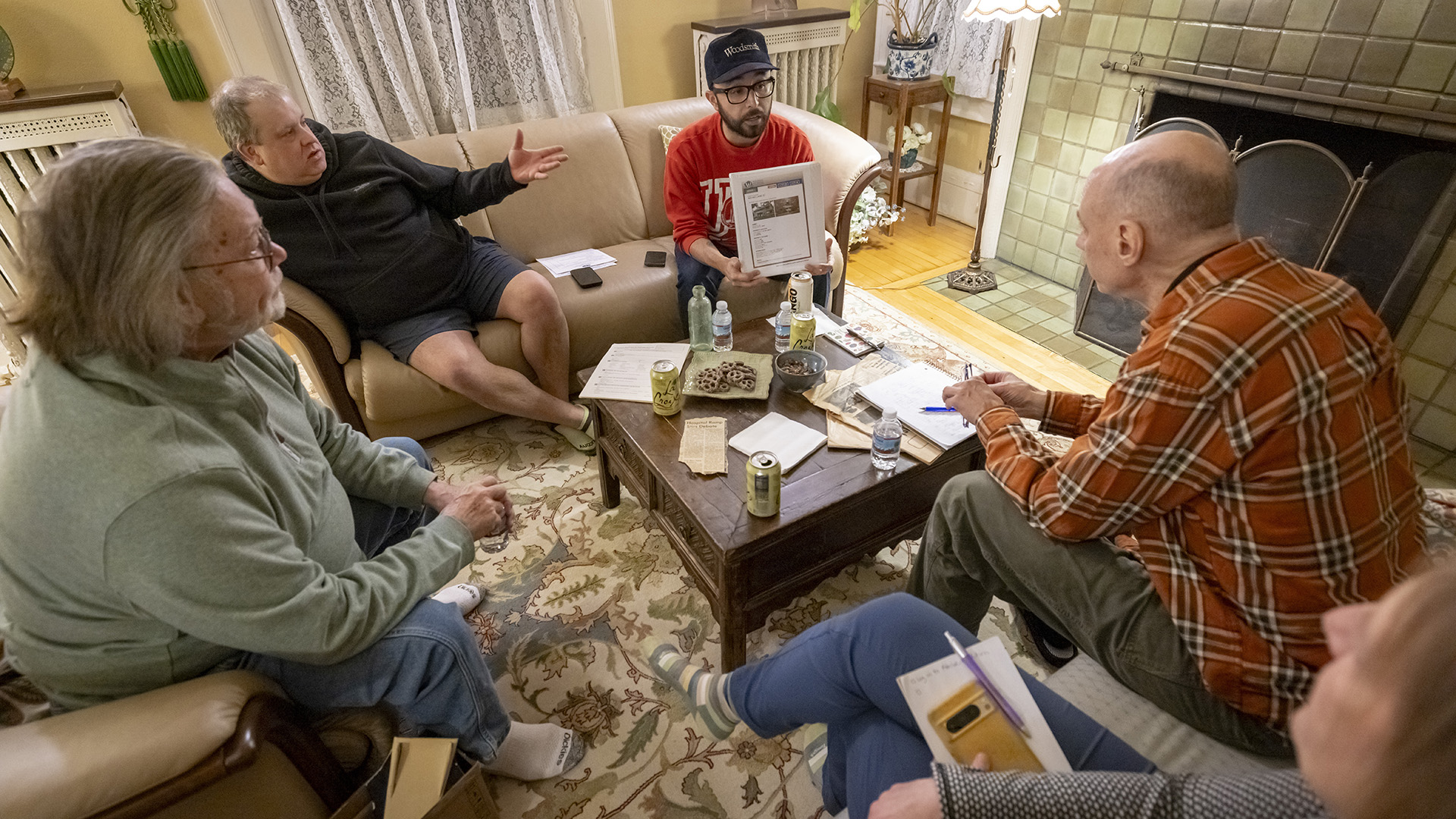
From left, Jim Gucwa, Paul Jacobson, Al Valentin, Skip Heverly and Morgan Fisher discuss ideas for an episode of the “Plaster + Patina” podcast on Nov. 16, 2025, in Green Bay. (Credit: Mike Roemer for Wisconsin Watch)
“Slowly but surely, I think we’re kind of seeing how this is really helping to bring the community together,” said Morgan Fisher, podcast chief editor and treasurer of the Astor Neighborhood Association. Each person on the podcast team is also a volunteer member of the association, which advocates for the area to local government and organizes events.
After debuting in March, the series has inspired excitement around the neighborhood, with residents pitching their own houses to be featured and opening their homes to the team. At the mid-November brainstorm, the group invited longtime local civic leader Jim Gucwa to share stories he’s collected and spark inspiration for a future episode.
The first season of “Plaster + Patina” uncovered a forgotten spring water bottling business; examined architectural changes that speak to larger societal shifts; and told tales of ghosts, among other topics.
Each person has a unique role in the process, from digging through yellowed archives to splicing audio. Several enrolled in nearby community college to learn the skills they use. The project doesn’t currently have sponsors or advertisers to generate revenue, or plans to do so. The team pools resources, leveraging each others’ connections, interests and skills.
-
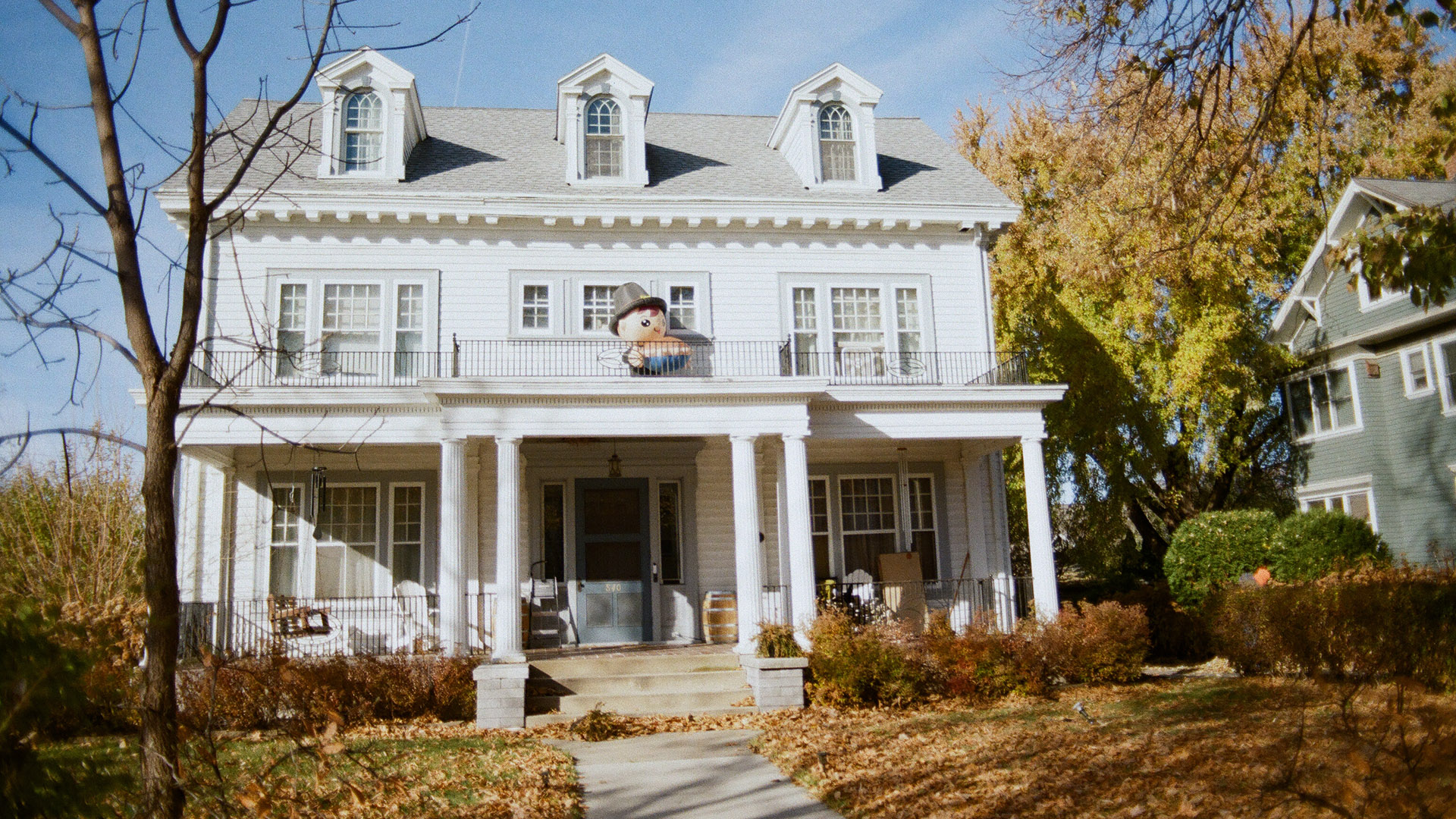
- An autumnal decoration is displayed on the balcony of a home in Green Bay’s Astor neighborhood, where residents run a podcast diving into the lore of the area’s architecture. (Credit: Miranda Dunlap / Wisconsin Watch)
-
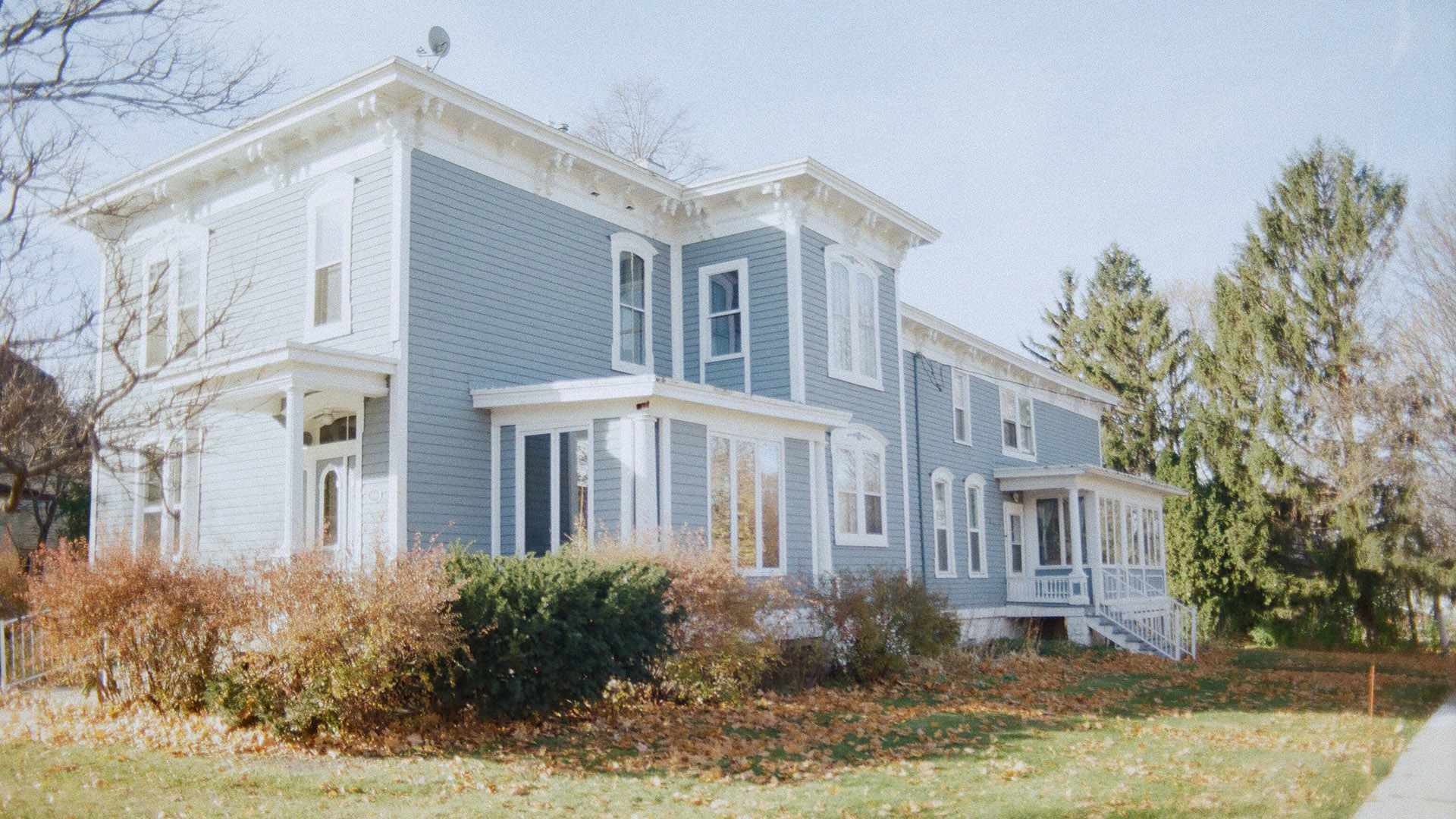
- The “Plaster + Patina” podcast created an episode about how an Italianate home on South Monroe Avenue in Green Bay’s Astor neighborhood is marked by tragedy and connected to prominent city figures. (Credit: Miranda Dunlap / Wisconsin Watch)
“That’s what a neighborhood’s about,” said Paul Jacobson, the podcast’s historian.
Bringing people out of their homes — and into others’
Between the 1830s and 1920s, a high, dry slope running parallel to the Fox River — colloquially known as “The Hill” — was an attractive place for doctors, lawyers and other businessmen to build their homes.
Today, the houses in the affluent neighborhood still reflect the period in which they were constructed. A 1980 historic district designation, championed with Gucwa’s help, preserves the homes’ exteriors from being substantially altered, among other protections.
Astor’s design encourages social connection. Homes with large front porches sit close to the sidewalks lining each street. Parks host an ice rink, a wading pool and a shell where local bands regularly perform.
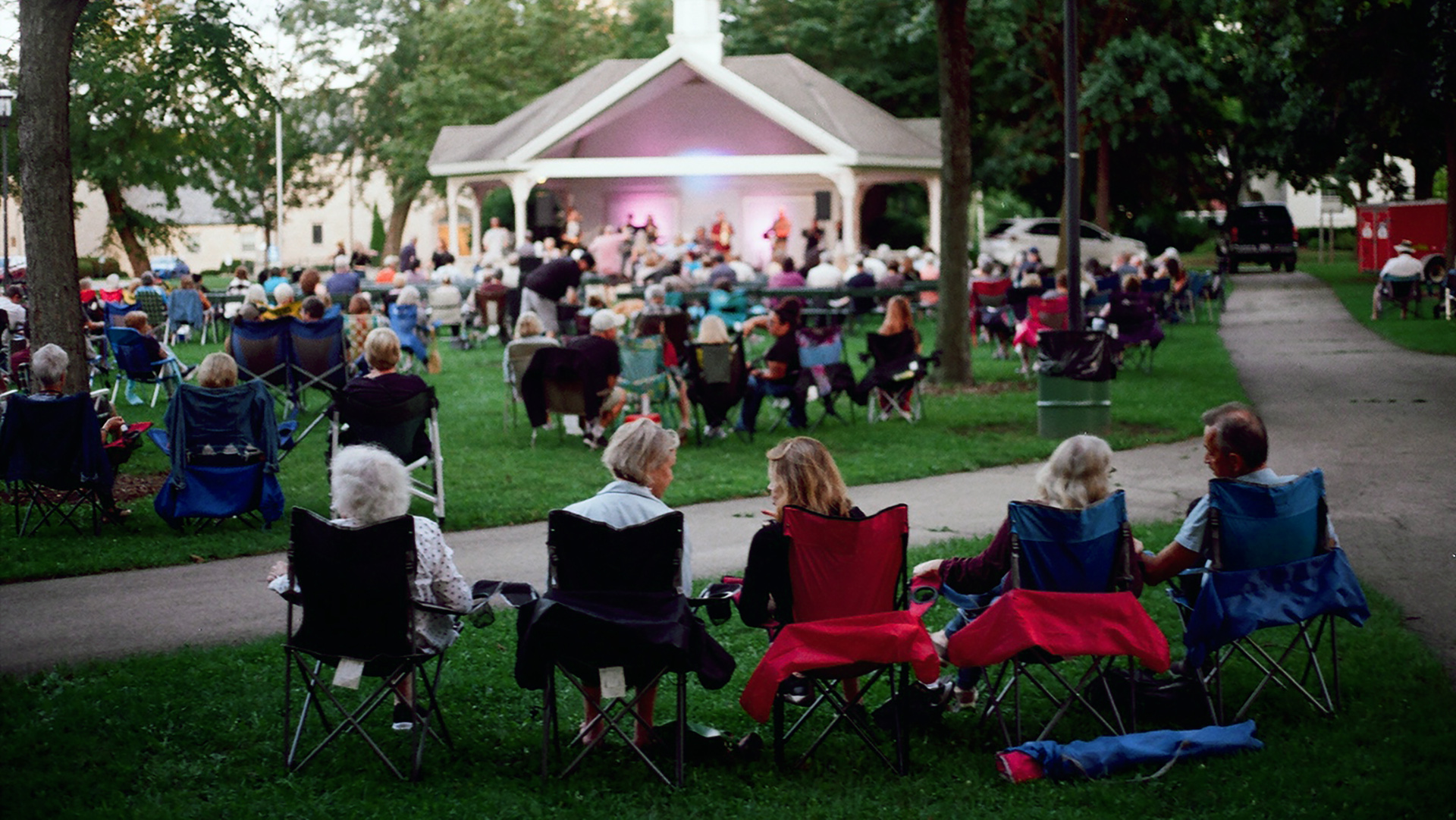
Attendees gather for a free concert at St. James Park in Green Bay’s Astor neighborhood in July 2025. (Credit: Miranda Dunlap / Wisconsin Watch)
Despite this, the area hasn’t been immune to the social isolation that’s swept across the country in recent years.
“People have kind of gone into their (homes),” Fisher said. “They’re not on their porches anymore. They’re not out meeting their neighbors as much.”
When the Astor Neighborhood Association coalesced in 1974, it started as a way to improve the area and combat crime. It now focuses on maintaining a sense of community among residents, Fisher said.
To do that, in the summer of 2024 several neighborhood association members discussed creating something where people could walk around the area, learn the stories behind the architecture they see and feel more connected to its past and present.
“What better way to do that than a podcast?” Jacobson said.
Tales of ghosts, lost springs and … alligators?
At first, the group was nervous about how the endeavor would turn out. But once they started chatting about history and architecture, old stories of folks from the area, “everyone just lit up,” said Heverly, the producer of “Plaster + Patina.”

Paul Jacobson, left, and Al Valentin, right, look through documents as the “Plaster + Patina” podcast team works on ideas for an upcoming episode on Nov. 16, 2025, in Green Bay. (Credit: Mike Roemer for Wisconsin Watch)
The first season focused on homes nestled between Monroe Avenue and the Fox River.
“It’s nice to stay within an area, just to kind of really lay out that area,” host Al Valentin said. “We want to create a visual while you’re listening to it of what the neighborhood looked like at that time.”
Once they choose a home, Jacobson digs up the stories behind it. He dives into a slew of online resources, including newspaper archives, historical atlases and — his favorite — fire insurance maps, which include detailed hand drawings of buildings in the area dating back to the 1880s.

The “Plaster + Patina” podcast team uses Sanborn Fire Insurance Maps to learn more about homes in the Astor neighborhood of Green Bay. (Courtesy: U.S. Library of Congress)
After Jacobson goes “down a rabbit hole,” they zoom out and choose the most interesting event or detail he found. “Otherwise, you could spend five hours on one particular home,” Valentin said.
The team then drafts a rough script, a bullet-point list of topics they want to hit during the show. Finally, they record the episode for free in a studio at Northeast Wisconsin Technical College. They invite homeowners or people connected to the stories to appear as guests for a live interview.
“We kind of shoot from the hip,” Valentin said. “When you hear us converse on the podcast, it’s pretty real, with our knowledge and expertise.”
Lastly, Heverly edits out “ums,” “uhs” and any mistakes made during recording. He learned the skill at NWTC, where he studied audio editing, video editing, social media marketing and how to use Adobe applications.
Since March, the team has created eight episodes.
In one, Jacobson shared the story of a forgotten mineral spring he unearthed when scouring old hand-drawn maps. Residents bottled and sold the water, marketing it as a natural health remedy, he discovered.
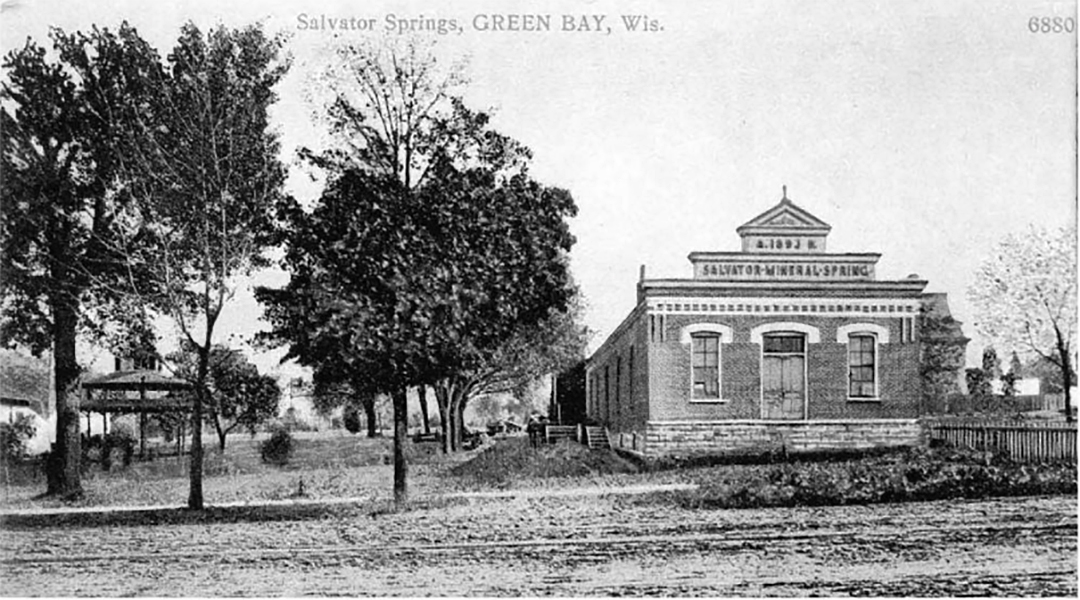
A vintage postcard depicts Salvator Springs in Green Bay. The “Plaster + Patina” podcast featured the mineral spring on its sixth episode. (Source: Plaster + Patina)
In another, they explored how the neighborhood’s first backyard pool signaled the shift of leisure from front porches to more private backyards — and was once home to an alligator.
For a Halloween edition, Valentin interviewed a paranormal investigator who shared supernatural experiences at Astor’s Hazelwood House — including an apparition descending stairs, a baby cradle rocking on its own and echoes of drums played by the Native Americans who first called the area home.
-

- A home on Lawe Street in Green Bay’s Astor neighborhood served as the subject for the sixth “Plaster + Patina” podcast episode. (Credit: Miranda Dunlap / Wisconsin Watch)
-
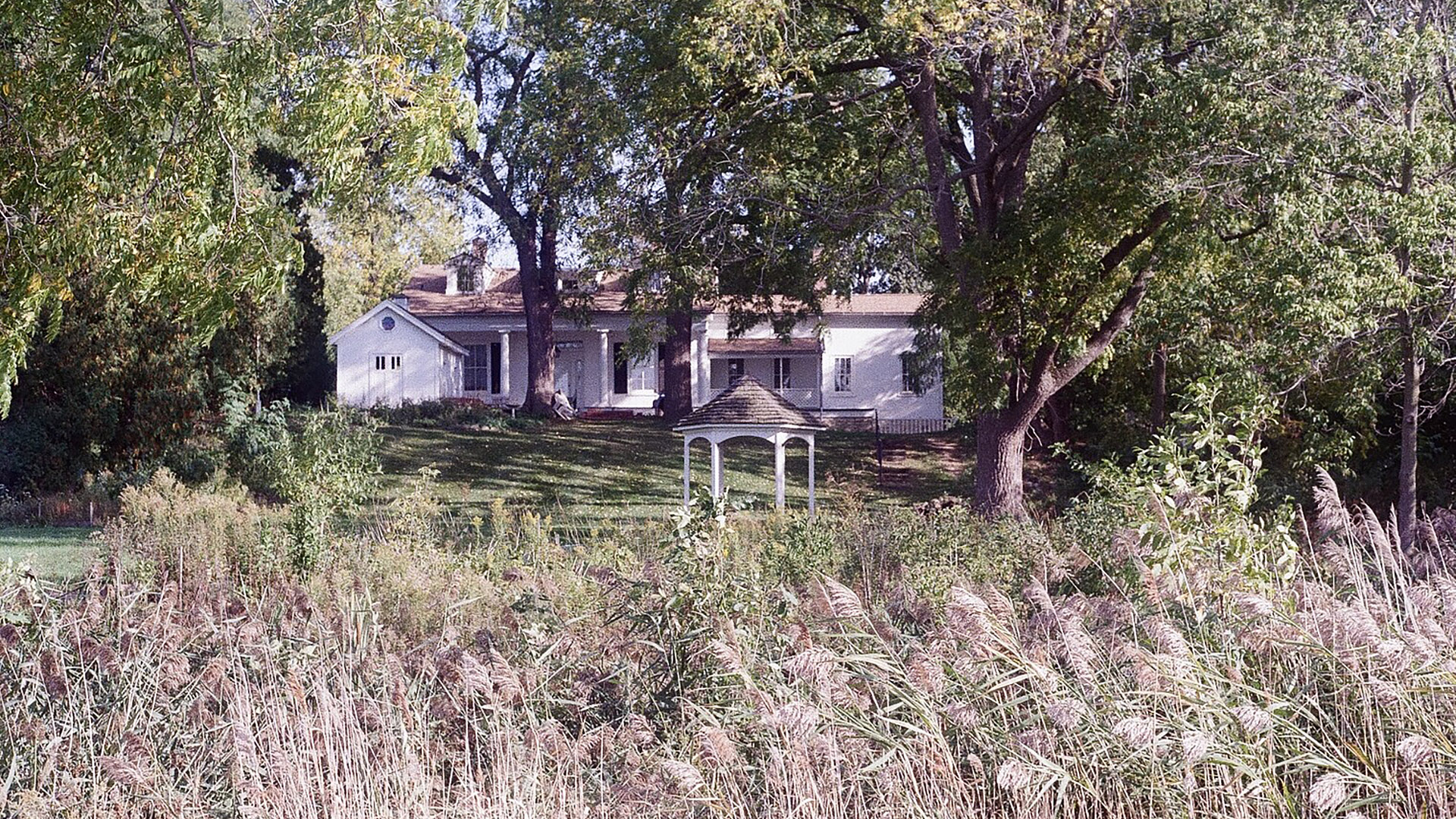
- Green Bay’s historic Hazelwood house, as seen from the Fox River Trail, was featured in a “Plaster + Patina” podcast episode about ghost stories and rumored hauntings. (Credit: Miranda Dunlap / Wisconsin Watch)
Throughout the season, local support for the project has grown.
Lawn signs advertising the show sprouted up in front yards across the neighborhood. People asked for their home to be featured. Residents opened up their homes to the crew, giving them tours to aid the podcast.
“Especially in today’s world, we’re all looking for that connection. We want to be a part of something that’s bigger than ourselves,” marketing and writing director Maddy Szymanski explained in the podcast’s first episode. “When you live in an old neighborhood — or a new neighborhood, really anywhere — you’re a part of something that is bigger than you. You’re a part of a community and you can build that connection.”
The team is currently producing a final episode before moving onto the podcast’s second season. The episodes are available via Apple and Spotify.
Miranda Dunlap reports on pathways to success in northeast Wisconsin, working in partnership with Open Campus.
This story was produced as part of the NEW (Northeast Wisconsin) News Lab, a consortium of six news outlets.






Follow Us