


Chris Taylor on issues for Wisconsin Supreme Court justices
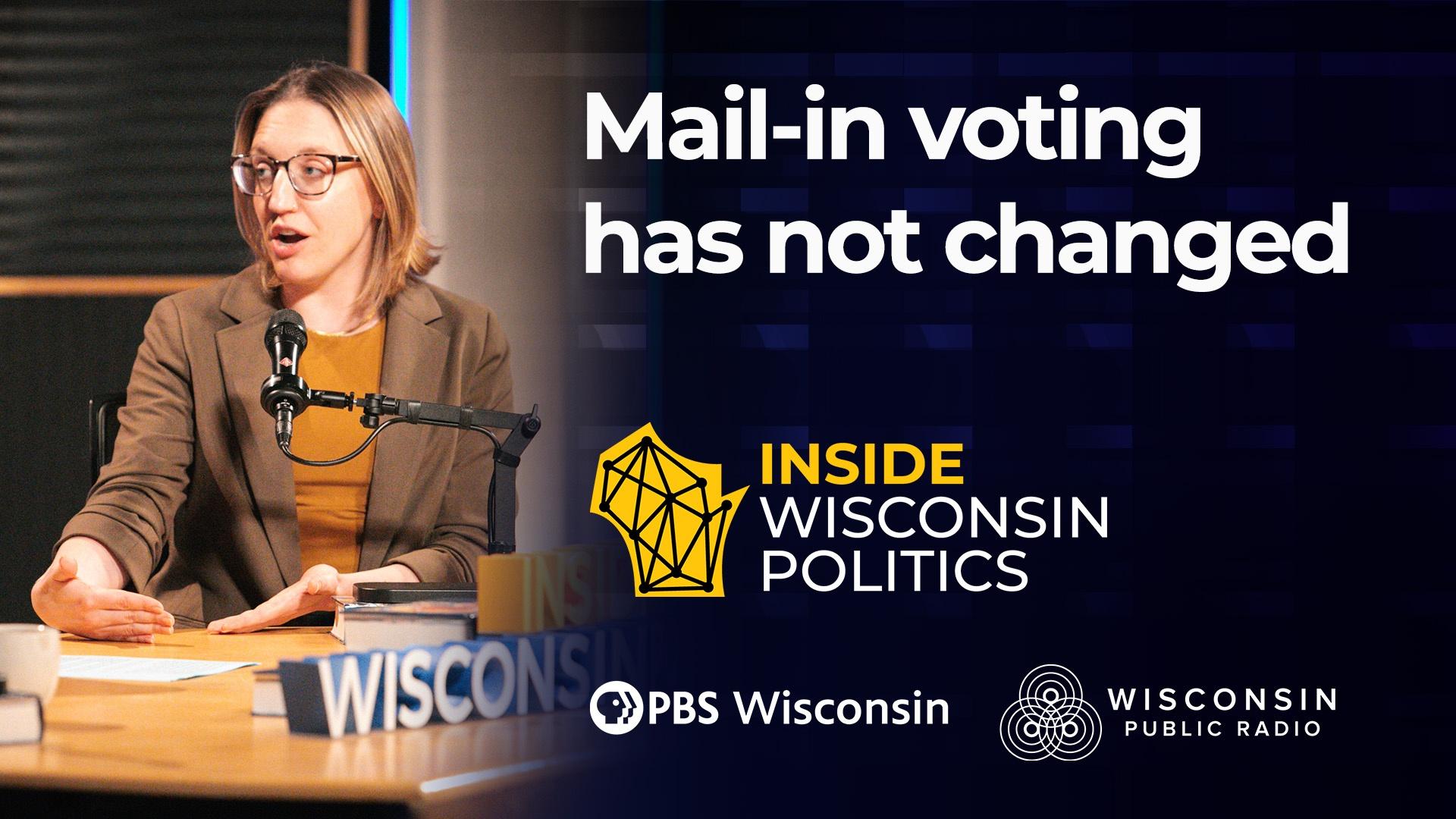
Wisconsin Court of Appeals District IV Judge Chris Taylor, a liberal running for the Wisconsin Supreme Court in 2026, discusses campaign donations, recusal and the roles of precedent and standing.
By Zac Schultz | Here & Now
March 10, 2026
Chris Taylor on campaign donations, recusal and the roles of precedent and standing.
VIDEO TRANSCRIPT
Zac Schultz:
When you look at the amount of money that's coming in in support or opposition, how does that impact the recusal? And is Wisconsin's recusal law strong enough for the Supreme Court?
Chris Taylor:
Well, I support, as Justice Karofsky has indicated, us looking at the issue of recusal and having public hearings so the public can weigh in on the issues of recusal. So, I definitely support that. Recusal I make on a case-by-case basis. Of course, any case that I have presided over, I recuse myself from. And so I was on the circuit court — if one of my cases comes to the Court of Appeals, I recuse myself as a matter of course. Likewise, if I'm lucky enough to get on the state Supreme Court, I would recuse myself from any case that I had presided over. But besides that, I'm instructed by my ethical obligations to look at each case on a case-by-case basis and make sure that I can be fair and impartial, and that's what I do every day.
Zac Schultz:
There've been a lot of recusal requests over the last couple of years, for the redistricting cases, Mike Gableman's disciplinary process. Are recusal requests becoming more political in the sense of trying to send a message, or do you think there's an earnest intent behind those?
Chris Taylor:
I mean, they could be becoming more political. You know, most judges have had a whole legal career before they became judges, and it just would not be realistic to require people to recuse in areas of law that they practiced in or on issues they've worked on in the past. So, that's why it is a case-by-case basis, because we all come to the court with experiences and history in our legal profession. And so I think it is really important to look case by case for the judge to make sure they can be fair and impartial.
Zac Schultz:
Over the last five years, what would you say is one of the most important significant cases the Wisconsin Supreme Court has issued?
Chris Taylor:
Well, I would say the case that struck down the legislative maps was extraordinarily important. The majority on the Wisconsin Supreme Court by one vote found that the legislative maps — that some election experts call the most gerrymandered in 40 years out of any state — they found those maps to be unconstitutional. That led the Legislature to pass new maps that were signed by the governor, and I think that has led to more competitive maps. So, that was an incredibly important decision. I think what that really signals to the people of the state of Wisconsin is their vote should matter. They should have the ability to protect, to vote for and to choose their elected representatives, not the other way around. And that's exactly what George Washington said at the founding of this country.
Zac Schultz:
I want to run through a few cases over the last few years just to get your reaction to some of them. One of the more recent ones, the congressional redistricting lawsuit, Bothfeld v. WEC, creating the three-judge panels. What do you think about the decision to accept that case for congressional districts?
Chris Taylor:
Well, it was filed — the case was filed in the state Supreme Court. The state Supreme Court has to abide by a law that requires when their apportionment or redistricting filed for original jurisdiction, that that be assigned to a three-judge panel. So, there's two cases now in congressional redistricting that are working their way through the judicial system. They're with two different three-judge panels. That's a pending case, which I will not comment on, but that's the process, and we have to let the judicial process play out and let the circuit courts have their trial and make their findings of fact and reach their conclusions.
Zac Schultz:
What about Planned Parenthood v. Urmanski?
Chris Taylor:
Remind me of that one again.
Zac Schultz:
That was overturning 1849.
Chris Taylor:
Oh, that was the 1849, yes. So, I can comment-
Zac Schultz:
And how would you have voted on that?
Chris Taylor:
Sure. And I can comment on that case 'cause it's been decided. If it were still pending, I would not be able to comment on it. So, I agree with the decision that the 1849 law should not be implemented, based on laws that had been passed since then that directly conflict with it. I think that that was the right decision by the majority on the state Supreme Court. Again, it was by one vote. This really contrasts with my opponent. My opponent would've voted to implement an 1849 abortion ban that was passed when I couldn't vote and many people couldn't vote. I think it was really the right decision by our state Supreme Court, and that's a big point of difference between myself and my opponent.
Zac Schultz:
There were a couple of cases under the Evers v. Marklein lawsuits having to do with the separation of powers between the Legislature and the administrative branch, JCRAR for rules oversight, and Knowles Stewardship and the releasing of funds. Would you have agreed with the majority in those cases?
Chris Taylor:
I had concerns when I was in the Legislature that there was no check on the power of the Legislature. And so there were laws being passed that, as an attorney, I really wondered, "Are these even constitutional laws?" The problem is we had a very right-wing majority on the state Supreme Court that refused to hold the Legislature accountable. That's the system my opponent wants to go back to. I as a justice will not be a rubber stamp for any branch of government. But yes, I was not surprised to see that those laws were overturned by our state Supreme Court. There were real separation of powers issues with those laws. Some of those laws really assigned the Joint Finance Committee to approve settlements that the attorney general was making. It made no sense whatsoever. So, yes, I think that those were also the right decisions.
Zac Schultz:
And looking at Trump v. Biden from 2020, seeking to, Trump was trying to invalidate more than 200,000 votes in Dane and Milwaukee county. How would you have voted on that?
Chris Taylor:
I would've rejected that effort. Again, that stands in contrast with my opponent. My opponent has been supported in the past in her Court of Appeals race by the same individuals that led the charge in trying to overturn our 2020 election. I think that was the right decision. That was, again, a one, only a one-vote decision, which is alarming, because if that case had been successful, hundreds of thousands of votes in the state of Wisconsin would've been thrown out. That's alarming to me.
Zac Schultz:
You obviously served in the Legislature as a Democrat. You wouldn't be the first sitting Supreme Court justice who would serve in the assembly. Justice Prosser did that. Brad Schimel was a Republican attorney general when he ran. So, have we turned a corner when it comes to a partisan background in the past for people running for the Supreme Court?
Chris Taylor:
I am so committed to politics not being anywhere near courts. I saw, as I mentioned, when I was in the Legislature, the grave danger of not having an independent state Supreme Court. Our courts must be independent. They cannot be rubber stamps for any political party, any group, any ideology. And I have a six-year record now of being a judge who has meticulously applied the law. I certainly try in every single case to make sure people are heard, to make sure I know exactly what the law is, and I attempt to apply it in the fairest way with total fidelity to that law. So, I think I have shown I understand I'm in a different position. Judges have to be independent. They must give everybody a fair chance to get justice in front of them. That conflicts, again, with my opponent. She has blatantly disregarded precedent — recent precedent — to achieve a political objective, and that was in a case where she ruled that releasing the private voting information of some Wisconsin voters, it was OK, so that some individual's private voting data would've been released to the public. Thankfully, her decision, which directly conflicted with a decision out of my district in the Court of Appeals, was overturned by the Wisconsin Supreme Court. That's not the first time her decisions have been, because she has her thumb on the scale and is applying the law in a way that achieves a particular political outcome. You can look at my cases — I've written a lot of cases, I've said a lot in the circuit court — you're not going to see that. You will never see that blatant political influence come into my decisions. I am totally committed to the constitution and to people's rights, and making sure people get a fair chance in our judiciary.
Zac Schultz:
We talked earlier about the fundraising needed to win this race, but what about get out the vote? What kind of ground game is necessary, and especially with the partisan ground game coming in the fall? Is this a trial run? Is there room for people who are already excited to thinking about the fall to be participating in a race this spring?
Chris Taylor:
In my opinion, I want everyone who cares about justice and our democracy and fairness to join my campaign for justice. This campaign is about everyone in the state who cares about having a strong court to protect them and a strong court to protect our state. So, this is a broad campaign. I am going to all corners of this state. I'm most excited about these incredible Wisconsinites that I get to meet every single day. I'm totally inspired by how people participate in government in our state. We should be so proud of that. And I think we're going to have a big turnout. I hope so, because this, my campaign, is about them, and I will be a justice for the people of this state. I really do hope that people are very inspired to turn out, because they can make a huge difference in their government.
Zac Schultz:
That brings up a recent Supreme Court election of Brian Hagedorn, where, similar to Maria Lazar, he was written off by some people, saying he hadn't raised enough money, he doesn't have a chance, but it was the ground game at the end that brought it over when people thought the race was already in the pocket for his opponent. Is that something that you're going to try and hammer home to your supporters?
Chris Taylor:
Oh, I won't rest until April 8, the day after this election. I take nothing for granted. This is going to be a hard, competitive race. I will need every vote that I can get. I need all the help that I can get from the people, the state of Wisconsin. So, I invite them all to please join me in making sure our government's about them, not the powerful special interests, not the out-of-state billionaires. My campaign is about them and the kind of court they deserve, and the kind of justice they deserve on the state Supreme Court.
Passport


Follow Us