

 Passport




Ames, Iowa
04/30/26 | 26m 47s | Rating: NR
Ames, Iowa, sits amid vast cornfields, and Iowa State University gives it outsized heft and ambition. Beyond engineering, sports and public art, the campus is home to the impressive Reiman Gardens. And the compact, walkable downtown Ames is one of the most charming in the Midwest.


Copy and Paste the Following Code to Embed this Video:
Ames, Iowa
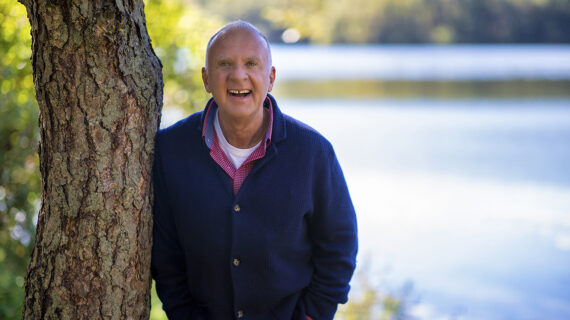
– John McGivern: In this oasis in the middle of the cornfields, there is a university and a beautiful downtown.
[bright music] - Announcer: Thanks to our underwriters.
- There's no place like Oconomowoc.
Explore, play, shop, stay!
Visit Oconomowoc!
– Announcer: Together, doing good for 130 years.
Horicon Bank: It's the natural choice for community banking.
- My father taught me that to make great bakery, you have to do it the right way.
O&H Danish Bakery, where kringle traditions begin.
- Support for this program provided by Plum Media.
Elevating conferences and meetings with smooth, stress-free production.
– Announcer: Financial support has been provided by our friends at Greenfire, a construction management company, the Friends of PBS Wisconsin, and the Friends of Main Streets.
– Announcer 2: Have you listened to our podcasts?
John, Emmy, and the producers talk about what happened behind the scenes and share their favorite things about each community.
Main Streets continues on your favorite podcast platform.
'Cause these are our Main Streets Somethin' 'bout a hometown speaks to me There's nowhere else I'd rather be The heart and soul of community's right here On these Main Streets - I am in Ames, Iowa, which is home to Iowa State University.
The population of Ames is just about 66,000 people, and half of that population are students.
Ames is in the middle of Iowa.
It's on Interstate 35.
It's north of the state capital, Des Moines.
Do you have trouble keeping the two big schools straight?
Okay, Ames is home to Iowa State, and the University of Iowa is in Iowa City.
This is Ames.
I have a question.
– Emmy Fink: I have an answer.
- Why is there a city called Ames here?
- Well, the simple answer is that the land is flat.
- Huh?
- Right.
So, the railroad needed to build a stop in this area.
– John: Yeah.
– Emmy: It's easy to build if you have flat land.
So, the town grew because of the trains.
- But people know Ames because of Iowa State University.
- Oh, you mean Iowa Agricultural College and Model Farm?
- Wha?
- Do you know that's the OG, the original name of the college?
And they would study the science behind the farming.
– John: You know, when I think of Iowa State, I think of agriculture, I think of engineering, and I think of science.
- Especially science.
During World War II-- You, of course, know this-- There was a program, a top-secret program called the Manhattan Project.
- Sure.
- Basically, U.S.
was trying to develop the first atomic bomb.
They were using purified uranium that was produced right here in Ames.
– John: Okay.
– Emmy: It's now a research and technology hub.
There are scientists and students from over 100 countries doing phenomenal things right here in this city.
- Well, I think it's time we meet some of the-- What do they call people who live in Ames, do you know?
- Maybe, like, Amesians.
- How about just people who live in Ames?
- How about Ames people?
– John: Ames people.
– Emmy: Let's go find some Ames people.
– John: We should do that.
Hi, Tin-Shi.
– Tin-Shi Tam: Hi, John.
– John: How are you?
- I'm great.
- We are standing in front of what?
- This is the beloved campanile and the carillon at Iowa State.
- And been here how long?
Do we know?
– Tin-Shi: It was erected in 1897.
Watch your head when you go in.
– John: And who has been playing it for the past few years?
- Okay, I'm the fifth carillonneur.
- Oh, you are?
- Yeah.
- In the history?
- In the history, yes.
– John: When did you start playing?
- 1994.
– John: 1994.
[bells ring] Can they hear that when you're doing that?
They can?
– Tin-Shi: This is a public instrument.
Would you like to play the big bells so I can start?
– John: Oh, sure.
[bell rings] I did that.
[bells ring] [chiming bell music] Was piano your first instrument?
– Tin-Shi: Yes.
– John: It was.
- And then, I also start to learn how to play the organ.
– John: Oh, you did, okay.
- Yeah, yeah.
So, in a way, that the organ skill helped me is hands and feet coordination.
– John: Right.
– Tin-Shi: And then, the piano skills helps me is the percussion.
[chiming bell music continues] The smallest bell here is only nine pounds, the bell.
And then, the biggest bells we have is 5,484 pounds.
- So, you need-- - Little bit more energy.
Actually, I'm sweating right now.
But... [both laugh] - John: If you're on vacation, does somebody-- Does somebody take your place?
- Any, I would say students, actually can take class and learn how to play.
– John: They can?
- Yeah, so, we all have a crop of next generation.
[bells chime] - John: Really nice.
Yeah, yeah, really nice.
This has been a treat.
– Tin-Shi: Thank you.
– John: Thank you, thank you.
– Tin-Shi: Wonderful, wonderful for doing it.
- Inside the Iowa State Union, you'll find The Maintenance Shop.
But don't bring your dorm lamp here to get fixed because it hasn't been a repair shop in over 50 years.
It was transformed into a live music venue.
Over the years, you know who's been on the stage?
Smashing Pumpkins, Twenty One Pilots, The Lumineers, Muddy Waters.
The stained-glass windows, in case you're wondering, they're real.
They came out of a local church.
Now, this is called The M Shop.
And during the week, kids actually come here to study, so we gotta keep it down.
Shh.
– John: We're at Reiman Gardens.
This is Jim Stewart, a volunteer.
How are you, sir?
– Jim Stewart: Good.
- On any given day, what are you usually doing?
- A lot of weeding, planting.
Any projects they come up with.
– John: Do we know how many gardens?
– Jim: 26 different spaces in 17 acres.
– John: And a lot of work.
17 acres is a good garden.
- Yeah.
- Yeah.
Community wise, what does this garden mean to Ames, Iowa?
- I would like to think it means a lot.
– John: It's a destination spot, isn't it?
– Jim: It is.
People come to Iowa State from all over the world, and then they come here.
– John: Well, there you have it.
Look who's here.
– Jim: That's Elwood, the world's largest concrete gnome.
– John: Oh, he sure-- He's big, isn't he?
– Jim: He is big.
A lot of people come in just to get their picture with him.
– John: Hey, you guys, come on out.
Somebody want to get a picture?
It's the annual John McGivern bus tour.
And you're on the tour.
- You look the same as last year.
[all laugh] - There we go.
– Group: Hey!
– John: Nathan, is it time to release?
– Nathan Brockman: It is time to release.
These butterflies are out of our lab over there, and they're ready to come into the butterfly wing.
Grab the butterflies carefully, and then move them out onto a flower.
Right away, they get something to eat, and then they're happy.
– John: Can I try that?
– Nathan: Yeah.
And then onto a flower there.
Perfect.
– John: There we go.
– Nathan: And so, each day, we release 30 to 50.
– John: Do they all get along?
- They have a hard time fighting 'cause a butterfly fight looks like this.
There's no claws, there's no fangs.
- Yeah.
So, we walked in here from the lobby, and the temperature changed completely.
It's much warmer here.
– Nathan: Yep.
80 degrees, 80% humidity all year round.
– John: That's what you have to have.
– Nathan: So, you can have a tropical vacation in Iowa without leaving Ames.
– John: It's nice.
Full of butterflies.
– Nathan: Full of butterflies.
- If you're a student at Iowa State walking through the union, watch out, because there is one thing you should never do.
Otherwise, you will flunk your next test.
What is it you should never do here at the union?
[playful music] - Everyone knows that if you wanna ace your exam, you do not walk on the zodiac sign.
It's been a part of the building since the building was built back in 1929.
And somewhere along the way, somebody must have failed their exam because the bad luck started that very first year.
But that's just silly superstition.
I am definitely not afraid of it.
Except I wanna keep my grades intact.
I really think this semester is gonna be great and I'm not gonna mess it up.
– John: We are downtown in Ames, Iowa, on Main Street at the sweetest-looking bakery in the world.
It is called Piece & Freedom Bakery.
– Shalika Khindurangala: So, it's me, my mother and Hanna, and I can tell you that not in our wildest dream we would be opening a bakery.
I think we're the quickest people you've ever met 'cause we signed the lease in November.
We come up with everything in December and we opened in January.
– John: Your background is Ukrainian?
And is there a large Ukrainian population here?
- Unfortunately increased due to the war and everyone came because of that, which, you know, it's nice to have a community.
It's not a nice reason why we have this community here.
– John: Terrible.
– Hanna Petrova: They are coming and say, "Oh, my gosh, you have honey cake, "you have Napoleon, I miss that, I want to try it.
It is like at home," yes.
– John: Yes.
So, the Kyiv cake, you knew this growing up?
Did every family make one?
[Hanna laughs] And is the recipe mostly the same?
- Every family bought one.
- Oh, they all bought one.
- And then if you say, "I made my own Kyiv cake," people would be like, "You are crazy!"
It's light meringue layers with cashews and hazelnuts and buttercream made out of condensed milk.
- There's a crunch that I wasn't-- - The meringue.
- It's so good.
How did this happen?
How did you get together?
How did the bakery happen?
- My mom and I were at the farmer's market for two years.
And then I met Hanna.
And then we saw that we worked together really well.
It was actually a funny story.
It was right across the street, our booth.
We saw that this place said "For lease."
That's it.
- Magic.
- That's it.
– John: What do we have here?
– Hanna: Cheese boat.
Also our best seller from savory.
- Cheese boat?
- It is a cheese boat.
– John: Completely.
– Hanna: Yeah, what you see, what you get.
[all laugh] - Shalika: Yeah, we sell over 200 of them in a weekend.
- Mmm, it's so much better than pizza.
- Yeah!
– Hanna: And on the very bottom, you see pyrizhky.
Pyrizhky is fluffy dough with any filling that you want to put inside.
It could be sweet or savory.
– Shalika: You just put whatever your mother or grandmother has in the house.
That's what they put in the pyrizhky.
"We picked some cherries from a cherry tree."
Cherry pyrizhky!
"We have some chickens that we killed."
Chicken pyrizhky!
– John: Can you talk about Ames as now your home?
- I think I found what I really like to do.
So, I'm feeling really good in this place.
And I really like Ames.
I really like that it is more student city.
– Shalika: When the semester starts, our marching band starts practicing and the drummers start beating the drums.
So, if you hear the drums, you're like, "It's coming, it's coming.
Have you heard the drums?"
[Hanna laughs] - John: It's gorgeous.
Thank you so much for allowing us in your house.
- Choo choo!
All aboard the Dinky!
Do you know that back in the day, Ames had its own steam train?
It was called the Dinky.
And it's how you would get from downtown to campus, about two miles.
It took ten round trips every single day.
And it wasn't until cars came on the scene that the poor Dinky got retired.
The best way to get around town now, the CyRide.
That's their bus.
I learned that all right here at the Ames History Museum.
And you know what happens when you go to history museums?
You get smarter.
[upbeat music] - We're at The Recipe.
This is Patrick.
– Patrick Bergstrom: Good morning, good, how are you?
So nice to see you.
We teach people how to cook.
We believe that, you know, food is the ultimate love language.
– Emmy: How do you make this so fun for people?
'Cause every review, I've read how entertaining you are.
– Patrick: We want it to be 51% entertainment, 49% educational.
Because if we don't make it fun, then it becomes intimidating and unapproachable.
And the whole thing we're trying to do is to make all food approachable for everybody.
We're gonna make a chef out of you yet.
It'll be just fine.
- Or not, Patrick.
– Patrick: Or not.
We're gonna make some pasta.
You each get an egg.
You each get a cup of flour.
- And now we crack the egg?
– Patrick: Always on a flat surface, because that'll help prevent shells.
– Emmy: Not on the corner?
– Patrick: Never on a corner.
Nope, never.
Always a flat surface.
- I've always done a corner!
– John: Do I need more flour?
– Patrick: Yes.
And then you wanna try to keep it together.
Just like I tell myself every morning.
- We try every day.
- Drop that in.
- Don't put my finger in.
- Well, it won't pull your finger in, so no safety concerns there.
- Do your thing, baby.
– Patrick: We have a couple retail shops on Main Street.
I believe that you should, you know, participate in the community that you want to see.
And so, my wife and I bought a shop from a woman that had been running it for 35, almost 40 years.
- Was it a kitchen shop?
- It was.
It was Cooks' Emporium here in Main Street in Ames.
I knew I wanted to buy Cooks'.
I knew I wanted to keep it going because I'd been shopping there since I was five years old.
And we have our fettuccine cutter here.
– Emmy: Oh!
We're ready to eat.
– Andy Barnard: Let's say you wanted to get more, like, advanced and do maybe like a tortellini.
This is called a bicycle.
You guys wanna pick up a square.
– John: Here we go.
– Andy: I'm gonna turn that square into a triangle.
Going to seal those edges.
- Which is just a pinch, yes?
- Yep, yep, it's just a pinch.
And then I'm always bringing the bottom of the triangle around my finger.
[John exclaims] It's tricky.
- Yours is pretty.
– Andy: Those look great for first ones.
– Emmy: Yours is great.
Use his.
- What the-- What in God's name is that, Emmy?
– Emmy: This is-- I want to throw these things in water.
Cook them.
Get this butter sauce I'm hearing of.
- Thank you, chef.
There we are.
Now, we're ready to eat.
- And it tastes the best because we made it.
– Emmy: This is the pretty one.
No, don't you dare.
[both laugh] - To the chefs.
- To the chefs, and to the chefs in us.
- Yes.
- And for us trying new things.
- This is great.
Thanks, you guys.
– Patrick: Yeah, thanks, enjoy.
– Emmy: Thank you so much.
- Well, this was a very interesting shopping experience.
Let me show you what I picked up, okay?
HP Sauce, Marmite, orange marmalade.
Where am I, Ames or London?
Okay, I am at the Ames British Foods & Gifts store.
There was a guy, Marcus, he came from across the pond to go to school, and he missed all of his English goodies.
So, he opened up this shop.
So, when you come shopping in this shop, just remember that chips are called crisps, cookies are called biscuits, and haggis-- Haggis should be left on the shelf.
[cheers and applause] Ames is quite the sports town with huge crowds cheering on their D-1 Cyclones.
But my question is, why are they called the Cyclones?
- In 1895, Iowa State football defeated Northwestern 36-0.
The very next day in the Chicago Tribune, the headline read, "Struck by a cyclone.
It comes from Iowa and devastates Evanston town," and the name stuck: The Cyclones.
Except the Iowa State mascot is this guy.
A bird.
A cardinal, in fact.
Now, his name is Cy.
It's short for Cyclone.
But you got the cyclone, you got the bird.
You know, he's really cute, so we're just not gonna overthink it.
You go, Cy!
[gentle acoustic music] - John: We're on the campus of Iowa State.
Public art.
– Allison Sheridan: Public art.
– John: It's important here.
- We have the largest public art collection of any college or university in the nation, which means we have 2,700 works of art scattered all over campus.
– John: The newest piece in the garden.
- This is Hive Mind by Beth Lipman.
It's actually a hay bale.
The round hay baler was invented here at Iowa State.
- So, every piece of glass in this piece... - Represents an innovation at Iowa State.
– John: Oh, nice.
- My favorite is the Rice Krispie Treat, which was invented here at Iowa State.
- Are you sure?
- I am sure.
[both laugh] What are you standing in front of?
[laughs] - This did not come with the building.
– Allison: This is the second-oldest standing building.
So, 1890 for Morrill Hall.
When they decided to gut it, they had to add on this stairwell.
And so, we put a very contemporary work of art by Albert Paley called Transformation.
– John: A mural.
– Allison: A Grant Wood mural.
– John: It's so great that it's here.
- We actually have this mural and then one going up the stairs.
So, two mural cycles by Grant Wood.
- Christian Petersen, a name to be known here.
– Allison: He had a career in the East Coast and then he came to the Midwest.
So, we have 12 works of art that he sculpted during his tenure here.
This is actually not one of them.
This one was brought in in 2012.
- We had to hunt it down.
- Oh, you did?
– Allison: Iconic fountain.
– John: Everyone knows this fountain.
– Allison: Everyone knows this fountain.
This is by Christian Petersen.
And it is a representation of four Native American maidens, Meskwaki maidens.
– John: And there's been change to the fountain?
- There's been change to the fountain.
Eventual kind of decay.
after it being many, many, many Iowa winters.
We actually had to have it recarved.
And so, it is a replica of the fountain, but you'll see actually a lot more detail in the maiden sculptures.
And it's flanked by the Memorial Union, which is really important to student life, as well as the campanile, which is the other icon of campus.
And so, they kind of look at each other and reflect back those kind of memories of nostalgia at Iowa State.
– John: There are buildings on campus that date back to the 1890s.
This, obviously, is not one of those.
This modern marvel is called the Student Innovation Center.
So, any student with any major can make their way into that building and explore anything from virtual reality to culinary arts.
So, when I was in college, we had clubs.
We had the glee club, we had the drama club, we had the chess club.
Well, clubs meet here as well, like the Cardinal Space Mining Club.
Yes, I said space mining.
Students in their free time are building robots to dig up lunar soil.
You know, we're a long way from the glee club.
[upbeat music] As we drove up, we looked at your logo, and the crew were like, "We know that logo," Danfoss.
– Sarah Dvorak: Yeah, any large piece of equipment that you would see, whether it's in a field or on a street in construction, they're gonna have some sort of hydraulic system integrated into that.
We're making the pumps and the motors that go into those systems to power that hydraulic system.
- And what do these machines end up doing?
– Sarah: So, whether it's an excavator to be moving rock or to just doing work on a farm field, construction equipment, it could be doing anything that requires a lot of heavy lifting and heavy movement.
- A test track?
- The test track.
That is where we get to bring customers in and allow them to take our equipment, use our technology, and go out and do it in real life working conditions.
– Eric Jacobson: All right.
- Oh, it's kind of quiet.
Who would know?
- Well, yeah.
- It's good.
– Eric: This has our entire pumps, motors, everything you'll see inside that we produce here in Ames, as well as software solution.
– John: This thing can move too.
- Yeah.
So, top speed on these type of machines in production is 35 miles an hour.
So, we're controlling a 280 horsepower engine, all with just the tip of my finger.
As cool as it is to go fast... - John: Yeah.
- ...it's even more cool to make sure it always stops.
[Eric laughs] - John: Oh, sure.
- I saw you had ahold of the grab handle, so I made sure of that.
- How many people from this area work in this company here?
– Sarah: So, we have 900 people within the Ames campus.
– John: It means a lot to this community.
– Sarah: It does mean a lot to the community.
We are one of the largest employers here in Ames.
It's really good for our company to be so close to Iowa State and the engineering talent that they have.
– Eric: So, if I'm a farmer out in the field and I get into some spicy conditions like this, I don't want this thing getting stuck.
Right now, the electronic control system is automatically adjusted to make sure my tires don't slip and spin.
And it'll automatically control that so that you don't get stuck on the hill.
So, we can do also some cool stuff where we can now put it in the four-wheel steer.
And so, now the front and rear tires will steer.
– John: Oh, wow.
– Eric: So, we can turn this thing on a dime.
- So, you guys, this is Eric.
He was nice enough, but he wouldn't let me drive.
[Eric laughs] What the...?
Thanks for your help.
– Eric: Yep, thanks for coming.
- Sometimes when you walk into a wine bar, you can feel a little overwhelmed, right?
I know I've felt that way 'cause there's so many options.
Welcome to Della Viti.
Yes, it's self-service wine.
So, you walk up to the bartender.
They help you with this card.
You load money onto this card, then you put the card into the machine.
You grab your glass.
This is so much fun.
You can read about all the different flavors and you can get a small pour, a large pour.
This one is the classic table ros with red fruit and spice flavors.
Sounds lovely.
Mm, let's give it a smell.
Delicious.
You can try this, then you can come back.
You can keep reloading your card.
Self-service wine.
It's genius!
I'll be back.
– John: We're at Dog-Eared bookstore.
It's a neighborhood bookstore on Main Street.
You all work here?
– Bailey: Yeah.
I love that!
We got the whole crew.
– Amanda Lepper: Almost everyone on staff is reading, like, four-plus books a month, I mean, like, at minimum.
Some people on staff are reading over 200 a year.
– John: Mariah is one of those, I'm gonna tell you.
- She is.
- We talked.
[laughter] We chatted before we came up here and I was like, "I'm completely intimidated."
– Amanda: Yeah.
- I'm kind of like this-- [laughter] We have to talk about book clubs.
Because that really is what brought us here.
- So, what are we up to, Mariah?
– Mariah: 14.
- So, we have 14.
- 14.
– Amanda: We have romance, we have horror.
We have fantasy, we have romantasy.
If you didn't know about this subgenre for-- - Romantasy?
- Romance and fantasy.
- We have-- - I lived that life for a year.
- Good.
- When I lived on the East Coast.
- It is-- [laughter] A mystery thriller book club, birding book club.
– Bailey: And then, on Monday, Jess and I have Chunky Classics.
And so, I'm reading The Count of Monte Cristo, which is fantastic, and I need to read 400 pages of that.
- Book clubs are also shaped by the people who are in them.
We have a book club regular.
Her name is Doris, and Doris hates horror.
I will not pick horror for translated book club because our rule is "No horror for Doris."
- No horror for Doris?
- She-- That's-- That's her OG privilege.
- Yeah.
So, it's a way of connecting with our community and our loyal customers.
– John: You know, what I read and what is appealing to me is like, people are like, "Are you a 23-year-old college girl?"
- That's one of the most fun things is when people come in and we get to, like, find that puzzle piece that fits.
– John: Yeah.
Where is your world when it comes to, like, e-readers and all of that?
It's like, is the book-- Where's the future of the book?
– Amanda: So, we had this kind of, like, spike that we saw in e-books, but they've kind of, like, fallen back a little bit.
So, e-books are not killing the printed book.
- Audiobooks, I can't, I just can't.
- Some people's brains don't work that way.
And the big point of debate is at what speed do you listen to your audiobooks?
- Oh.
- Because I could not pay attention to audiobooks until I listened at two times speed.
- You scare me.
- I know, it is pretty scary.
- Rachel listens faster than I do.
– Rachel: I'm at 2.2 to 2.5.
- Are you?
- Yeah.
– Jessica: There's a plug for graphic novels, because everybody does read differently.
They learn differently.
– John: Yeah.
– Jessica: And graphic novels are still a good reading option.
– Amanda: We really try to emphasize with parents, like, to not really judge what their kids love, because as long as they're having fun doing it, then they're developing the habit.
We still meet kids every single day that are just, like, so excited about books.
– John: This was so fun.
Thanks so much for spending this time with us.
Anyone who's ever been to Ames will tell you that you have to go to Hickory Park.
And I thought, "Oh, to the park for a picnic."
It turns out the Hickory Park is a restaurant.
And you know what they're known for?
They're known for barbecue.
As a matter of fact, they go through 20,000 pounds of meat a week.
You know what else they're known for?
Ice cream.
These are all ice cream specialties.
So, now, the only problem is that I'm not sure what to have for my entree or what to have for my dessert.
I do know that you don't have to worry if you come in with a big party, 'cause they can accommodate up to 450 people.
Yeah, I love coming to this park.
[upbeat music] - Hi, Emmy.
- Hi.
- Wow, you certainly doubled down on the Cyclone thing.
- I know, have you noticed even the shoes match?
– John: No, I noticed that.
– Emmy: I just love this town.
- What are you doing?
What are you up to?
- I'm going to the game.
How about you?
- Well, I'm staying downtown.
to find a bench to finish my book.
- Oh, you're so cute.
Let's go, Cyclones, let's go!
There's nowhere else I'd rather be The heart and soul of community's right here - Okay, his name is Cy.
"S"-- Oh, "C."
[laughter] - Come on, monkey boy.
- Book, Instagram-- Oh.
– John: What?
[laughter] And that's a-- [laughs] [laughs] - And if you wanna ace your exams, you do not walk on this-- Oh, no.
- So, it's a wrap, right?
– Lois: There you go.
[laughter] - Announcer: Thanks to our underwriters.
- There's no place like Oconomowoc.
Explore, play, shop, stay!
Visit Oconomowoc!
– Announcer: Together, doing good for 130 years.
Horicon Bank: It's the natural choice for community banking.
- My father taught me that to make great bakery, you have to do it the right way.
O&H Danish Bakery, where kringle traditions begin.
- Support for this program provided by Plum Media.
Elevating conferences and meetings with smooth, stress-free production.
– Announcer: Financial support has been provided by our friends at Greenfire, a construction management company, the Friends of PBS Wisconsin, and the Friends of Main Streets.
– Announcer 2: Have you listened to our podcasts?
John, Emmy, and the producers talk about what happened behind the scenes and share their favorite things about each community.
Main Streets continues on your favorite podcast platform.
– Camera Operator: Play time.
- [laughs] How did I get into this?
– Lois: It's like you never saw a camera before.
- How did I get into this?
Search Episodes
Related Stories from PBS Wisconsin's Blog



Donate to sign up. Activate and sign in to Passport. It's that easy to help PBS Wisconsin serve your community through media that educates, inspires, and entertains.
Make your membership gift today
Only for new users: Activate Passport using your code or email address
Already a member?
Look up my account
Need some help? Go to FAQ or visit PBS Passport Help
Need help accessing PBS Wisconsin anywhere?

Online Access | Platform & Device Access | Cable or Satellite Access | Over-The-Air Access
Visit Access Guide
Need help accessing PBS Wisconsin anywhere?
Visit Our
Live TV Access Guide
Online AccessPlatform & Device Access
Cable or Satellite Access
Over-The-Air Access
Visit Access Guide




Follow Us