








PBS Wisconsin Passport
Watch this video with
PBS Wisconsin Passport
Become a member of PBS Wisconsin, support your local community, and get extended access to PBS shows, films, and specials, like this one.
Rags to Riches
04/14/26 | 52m 9s | Rating: NR
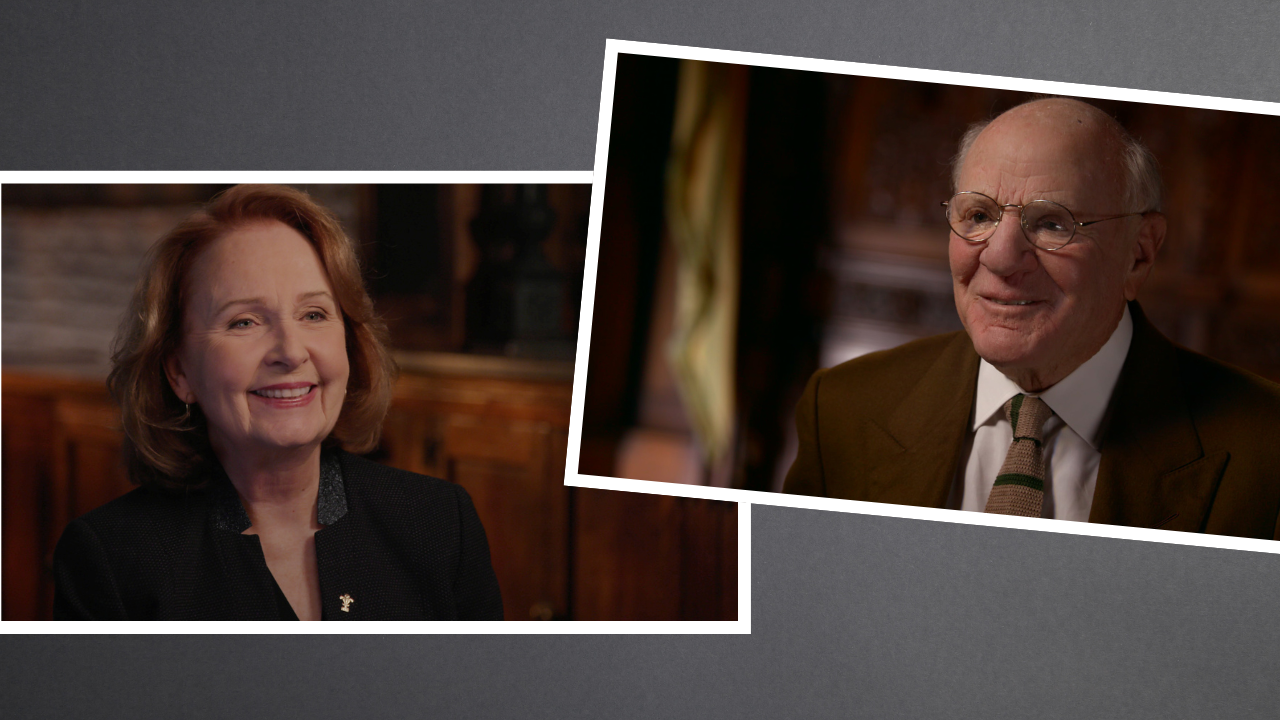
Henry Louis Gates, Jr. maps the family trees of actor Kate Burton and media mogul Barry Diller—two people who grew up in comfort, thanks to ancestors who did not. Moving from shtetls to coal mines to orphanages, Gates and his guests learn stories of extraordinary sacrifice and explore a profound question: what do we inherit from people whose lives were unimaginably more challenging than our own?


Copy and Paste the Following Code to Embed this Video:
Rags to Riches
GATES: I'm Henry Louis Gates, Jr.
Welcome to "Finding Your Roots."
In this episode, we'll meet actor Kate Burton and media mogul Barry Diller, two people whose families left them in the dark about their family trees.
BURTON: For some reason, nobody talked about it, which is interesting.
GATES: Mm-hmm.
BURTON: Like, why wouldn't they talk about it?
DILLER: It's just strange that this late in my life, I would learn something so central to my mother's life.
GATES: Yeah.
DILLER: Shocking.
GATES: To uncover their roots, we've used every tool available.
Genealogists comb through paper trails stretching back hundreds of years.
BURTON: Oh, my God, I'm amazed.
GATES: While DNA experts utilize the latest advances in genetic analysis to reveal secrets that have lain hidden for generations.
DILLER: What?
I've known nothing of any of this.
GATES: And we've compiled it all into a Book of Life, a record of all of our discoveries.
BURTON: That's so thrilling.
DILLER: Do I get to have this?
GATES: This is yours.
DILLER: What a gift.
GATES: And a window into the hidden past.
BURTON: Oh, my goodness.
So they came to the United States.
That is incredible, I'd never known that.
DILLER: If everybody actually told the truthful stories, how different it would be.
GATES: My two guests were both raised in families that reinvented themselves, leaving their roots behind.
In this episode, they're going to recover what was lost along the way, hearing stories about women and men who overcame enormous odds to lay the groundwork for their success.
♪ (theme music playing) ♪ ♪ ♪ (book closes).
♪ ♪ GATES: Kate Burton is living proof that your genes are only part of your destiny.
The child of two actors, Kate is following in her parents' footsteps, but carving her own path, because she knows how challenging living in the limelight can be.
Kate's parents, Sybil Williams and Richard Burton, both grew up in coal mining towns in Wales.
They married young, and by the time Kate was born, her father was an international star.
He'd soon fall in love with another star, Elizabeth Taylor, forcing Kate to watch her parents' marriage collapse in a very public way.
Yet Kate not only endured the chaos, she emerged the wiser for it, with admiration for her father's genius and compassion for his complexity.
BURTON: He was wonderful, loving.
He was an alcoholic.
GATES: Mm-hmm.
BURTON: And dealt with that throughout his life.
You know he would be okay for a while, but there you know, you go through the sobriety, and then there's like dark, you know tough time getting through, it can be really, really tough getting through that.
And I have to say, to be honest, my stepmother also had issues that were slightly different.
GATES: Mm-hmm.
BURTON: My stepdad also had issues.
So I was dealing with it wherever I went.
My mother did not.
She was the one who did not have those issues.
But I got to understand at a very early age about alcoholism to a certain degree, but what I really understood at a very early age was that your parents can break up, and you can be okay.
GATES: Kate, of course, would be more than just okay.
After attending a United Nations high school in New York City, she went on to Brown University and became the first person in her family to graduate college.
She then turned her focus to acting, with a cool head and a clear plan, even in the face of her father's objections.
BURTON: My dad was not thrilled.
Very not happy about it.
And he said, "You've gone to college.
You're the only one.
You're the first one to go to college all the way through."
And I went, "I know, I know."
And I said, "But, Dad, I promise you.
First, I'm going to apply to drama school, and if I don't get in, that's it."
GATES: Right.
BURTON: "I'll say forget it.
I'm not like one of these crazy people who's going to walk around with no, no skills."
GATES: Right.
BURTON: So I applied to three in the United States, one in the UK.
I got into two in the United States, one in the UK.
And he, he was confused as to why I was choosing to stay in the United States.
GATES: Mm-hmm.
BURTON: He said, "Why aren't you going to the UK?
How will you, how will you know how to speak?"
And I was like, "Are you kidding?"
I said, "Dad, listen to me, I'm American."
"Like, have you not noticed?
I'm from New York."
But then, you know, and then it was Yale.
GATES: Yeah.
BURTON: So I said, "It's Yale."
And he was like, "Okay."
But he did say to me, "If after a semester or something you feel like you want to change, can you just transfer to the law school?"
I'm like, "Dad, I don't have the qualifications to get into Yale Law School."
GATES: Kate would never need to try the law.
She was cast in a Broadway play before she even finished at Yale, and she hasn't looked back.
Over the past four decades, she's built a remarkable career, appearing in dozens of plays and over 100 films and television shows, including memorable turns on "Grey's Anatomy" and "Scandal".
But just as importantly, Kate has been able to do what she loves in the way she wants to do it, avoiding the turmoil that marked her youth.
BURTON: I always think how lucky I am.
GATES: Mm-hmm.
BURTON: Growing up with Dad and Elizabeth as my two of my four parents, um, I saw huge fame very, very close up.
GATES: Mm-hmm.
BURTON: And I've never aspired, never wanted that to be my life.
And it hasn't been.
And so I feel extremely blessed that I've gotten to play these incredible roles.
GATES: Mm-hmm.
BURTON: But it's a combination of luck, skill, being in the right place at the right time.
And I was very blessed because I was find, I was having opportunity.
GATES: Mm-hmm.
BURTON: And I was able to fulfill the requirements to get the part.
And getting the part, as my friend Jane Kaczmarek says, is a miracle.
I mean, every time you do, it's a miracle.
GATES: My second guest is Barry Diller, one of the most influential figures in the history of American entertainment.
Barry famously worked his way up the Hollywood ladder, starting with a job in the mail room of the William Morris talent agency.
But his story is a bit more complicated than that.
Raised in Beverly Hills, the child of a real estate developer, Barry was always intrigued by show business.
But growing up, he showed no inclination for a job of any kind.
DILLER: I hated school.
I very rarely went to high school.
GATES: Mm-hmm.
DILLER: And it was presumed, actually, that I would never work.
GATES: Mm-hmm.
DILLER: And there was no pressure from my parents.
They couldn't have cared less.
GATES: Mm.
DILLER: So, for a year after high school, I did nothing.
GATES: Mm-hmm.
DILLER: Just hibernated around.
But I had this thing of, well, entertainment, but where?
What?
What can I do?
I'm 19 years old.
Who's going to pay attention to me?
And I'd heard about the William Morris Agency mail room.
And so one of my best friends' father was Danny Thomas.
GATES: Mm.
DILLER: Who, at that time, was the probably biggest television personality in entertainment.
GATES: We watched "The Danny Thomas Show" every week.
DILLER: Yeah, he was incredibly successful.
And he was kind of a bit like a father to me.
GATES: Mm-hmm.
DILLER: So I called him.
He was performing in Las Vegas, and I said, "I need your help."
He said, "What can I do for you, my son?"
And I said, "I want to go to William Morris' mail room."
And he said, "Oh, that's easy.
Can I go back to my massage now?"
(laughing).
And the next day I was there.
GATES: The mail room ignited something inside Barry, an ambition that fueled an unprecedented rise.
Within a decade, Barry had left William Morris for ABC, where he'd end up as vice president of prime time television.
He then set his sights on feature films, and in 1974, when he was just 32 years old, he took over Paramount, one of Hollywood's most prestigious studios.
At first, it seemed like he was in over his head.
DILLER: No one from television had come into the movie business at that time.
I mean, movie people basically peed on people in television.
They were so snotty towards television.
And I was very clearly a television person.
So the first couple of years were really, really tough.
GATES: What was the uh, the turning point, when you knew you were going to be successful?
DILLER: Well, we started developing movies rather than buying packages and listening to other people.
We used our own instincts, and I got confidence in that development process.
Nevertheless, during that period, we were also releasing one dog movie after the other.
But then we produced a movie called "Looking for Mr.
Goodbar."
GATES: Oh, yeah.
DILLER: Which was based on a book, the first book I bought when I got to Paramount.
And it was a good, solid success.
GATES: Mm-hmm.
DILLER: And then right after that came "Saturday Night Fever."
GATES: Yeah.
DILLER: And right after that came "Grease."
GATES: Mm-hmm.
DILLER: Literally this bonanza of successes... GATES: Mm-hmm.
DILLER: ...one after the other... GATES: Mm-hmm.
DILLER: ...out of this development process.
GATES: Mm-hmm.
DILLER: So I knew it was good, but thought it would never come to fruition, at least for me, because they'd throw me out before then.
But luckily, they didn't.
GATES: Paramount would reap the rewards of that decision.
Under Barry's leadership, the studio enjoyed a sustained period of phenomenal success.
And Barry, who would eventually go on to build a corporate empire of his own, became an icon, much to the surprise of those who'd watched him grow up.
GATES: What did your parents think?
(laughing).
DILLER: You mean as I became successful?
GATES: Yes.
DILLER: I think it was like... a space alien.
I think they, I think they thought, "How in God's name did this happen?"
There was no show, sign.
You could point to nothing that would have predicted this.
But they were very happy for me, for sure.
I mean it was just like, it was both happiness and wonderment.
How did, how did this happen?
GATES: While my guests may seem different on the surface, actually, they have a great deal in common.
Both grew up in comfort, thanks to ancestors who did not.
And both came to me hoping to explore the stories about those ancestors.
I started with Kate Burton and with her father, Richard, with whom she shares much more than a profession.
BURTON: I think I have a lot of my father's brio.
GATES: Uh-huh.
BURTON: And I think I definitely have some of his, you know, sort of grittiness that I think sort of came quite naturally to him.
But I had a very different childhood.
GATES: Mm-hmm.
BURTON: He was duking it out from the age of a very young age, and I, I was allowed to, to become an adult in a more holistic way.
GATES: As we began to research her father's childhood, it was easy to see what Kate meant.
Richard suffered a great deal from a very young age.
His mother died before he was even two years old, and he was raised largely by one of his older sisters because his father, a coal miner, was struggling mightily to make ends meet.
What's it like to see that, to think of your grandfather doing that for a living?
BURTON: I think the um, the reality of what it was to be a coal miner is mind-bending.
GATES: Mm-hmm.
BURTON: I mean, it was such a brutal job.
GATES: Mm.
BURTON: My mother spoke more about the experience of growing up in a coal mining community and what, you know just things like they took their baths.
They came home covered in soot... GATES: Mm-hmm.
BURTON: ...and they were immediately went to take a bath.
Their clothes were taken off them, left outside to soak.
I mean there was such a, the mother, the wives and mothers were, they had a routine.
That was the only way, because they couldn't come into the house... GATES: Mm-hmm.
BURTON: ...with their work clothes on.
GATES: Mm-mm.
BURTON: But it is, I've never seen these.
I've seen pictures of coal miners, but I've never seen these.
I mean, that is really... GATES: Coal had been the dominant industry in Wales since the mid-1800s, and Kate's grandfather was not her first ancestor to work in the mines.
Her great-grandfather, Thomas Jenkins, was mining by the time he was 13 years old.
And tragically, the job would leave him in terrible straits.
BURTON: Thomas Jenkins, age 47, profession, coal miner, cause of death, fracture of spine with displacement three years.
GATES: Mm.
BURTON: Three years?
GATES: Yeah, that he suffered three years.
BURTON: Oh, God.
GATES: Did you have any idea that your great-grandfather had died... BURTON: No.
GATES: ...so young?
BURTON: No.
So young.
GATES: And he was injured in the mine, and then suffered three years from the injury.
BURTON: Oh, God.
How awful.
Wow, that's incredible.
GATES: This is like a page out of a Dickens novel.
BURTON: Yeah, well, it is.
GATES: You know?
BURTON: It is, completely.
GATES: This story was about to take a twist that Dickens himself might have enjoyed.
Records show that Kate's great-grandfather was born in Pontrhydyfen, a village in South Wales, and that he was one of at least nine children, many of whom would end up in the mines.
But when we focused on two of his siblings, a pair of brothers named John and David, we found ourselves in a most unexpected place.
BURTON: "The receipt whereof is hereby acknowledged of all the following described tracts, parcels, and lots lying and being situated in the original town of Roslyn, county of Kititas..." GATES: Kititas.
BURTON: Kititas.
GATES: Uh-huh.
BURTON: "...and Territory of Washington."
GATES: Territory of Washington.
You have any idea what's going on there?
BURTON: No.
GATES: This is a deed of sale between your great-granduncles, John and David Jenkins... BURTON: Right.
GATES: ...in Washington Territory in the United States of America.
BURTON: Oh, my God.
Oh, my goodness.
That's incredible.
GATES: Have you... BURTON: Wow.
GATES: ...ever heard anything about that?
BURTON: No, I never have.
That's mind-bending.
GATES: We don't know when John and David left for the United States.
Their immigration records have been lost.
But we do know that by 1887, the two had settled in Roslyn, Washington, about 80 miles east of Seattle.
And they almost certainly came to America seeking a better life for themselves.
BURTON: Yeah, yeah.
GATES: And let's see what they did when they got here.
BURTON: Okay.
GATES: Would you please turn the page?
BURTON: Okay.
This is a newspaper article published in the "East Washingtonian," June 2nd, 1888, about a month and a half after the deed we just showed you.
Would you please read the transcribed section in that white box?
BURTON: "Roslyn is growing wonderfully.
The grass is green, weather fine, and flowers blooming.
There are 2,000 inhabitants, two churches, two schools.
The Northern Pacific Coal Company have on their payroll 650 men.
The mining company is opening a new mine above the town, which will require a large number of additional hands."
Oh my gosh.
GATES: Roslyn... BURTON: Just can't stay away.
They can't stay away.
GATES: And John and David worked in the mines.
BURTON: Oh my good, well, that's what they knew how to do.
GATES: That's a long way to go to stay in the mines.
BURTON: Yeah.
That's amazing, wow.
GATES: Kate's relatives may have been working a familiar job, but there was a significant difference.
In Roslyn, miners made about $18 per week.
Back in Wales, they made the equivalent of about $4 for the same labor.
BURTON: Wow, that's amazing.
I mean, there you go.
That's why the... GATES: There you go.
BURTON: ...America, why people moved here.
GATES: Can you imagine hearing that you could make $18 a week instead of $4?
BOTH: $4.
BURTON: Four dollars.
GATES: You're like, "I think I'm out of here."
BURTON: Yeah, I think, "I got to go."
GATES: Yeah.
BURTON: That's amazing, that's amazing.
GATES: Even though John and David were doing better in their new home, they still faced immense challenges.
In 1888, Roslyn burned to the ground, and the brothers likely lost everything they owned.
John disappears from the paper trail just a few years later, but David pressed on and prospered.
BURTON: "David M. Jenkins, head of household, age 56, citizenship naturalized, occupation farmer, ownership of home, owns farm.
Rachel, wife, age 52, Olive, daughter, age 18, Helena, daughter, age 15, Celia, daughter, age 22."
GATES: There's David and his family in 1910.
David owned his own farm.
BURTON: Wow.
GATES: And he was a naturalized US citizen just 20 years after he arrived from Wales.
BURTON: Mm.
GATES: He owned a farm.
BURTON: Mm, got out of the mine.
GATES: How does it feel to see that?
BURTON: That's great.
I mean, it's great because he probably did something that was going to extend his, he was going to have a better life.
He was going to extend his life, is not doing that... GATES: Yeah.
BURTON: ...terrible, terrible work.
GATES: As it turns out, David was not the only member of his family to take a chance on America.
By 1880, his sister Cecilia was raising her family in Pennsylvania, and his brother William, who was working as a miner in Wales when he was 11 years old, had crossed the Atlantic and was living with his family in Illinois.
BURTON: Oh my goodness.
GATES: What do you think your father would've made of all this?
BURTON: I think it would have made him so happy to think that they got out of the life of you are born, you hit the age of 11, you start working in the coal mines.
GATES: Right.
BURTON: I think he would have been very happy that that mold had been broken, that that pattern had been broken, which is, let's face it, what he did.
GATES: Sure.
BURTON: He broke the pattern, and so I think he would've been, he would've been very gratified by that.
GATES: Does learning all this change the way you see yourself or help you understand yourself better, more fully?
BURTON: Yes, I've always had an adventurous spirit.
GATES: Right.
BURTON: And it is amazing to think that, you know, about my parents and how adventurous they were, how adventurous Dad was, and you know, that that spirit comes from your heritage.
GATES: Much like Kate Burton, Barry Diller was about to see that he has a stronger connection to his father's roots than he'd ever imagined.
And this discovery would be particularly surprising because Barry told me that he and his father had very little in common, especially when it came to work.
DILLER: Somebody asked me, "What work did he actually do?"
He was in the building business and related things, and they said, "No, no, what did he do?"
And I said, "Screw if I know."
He went to the office maybe three, four hours a day.
GATES: Mm.
DILLER: I know he had a desk.
(laughs).
He never really talked about it.
I mean, I knew what business world they were in, and I knew some of the things, but he, he, he was not ambitious.
GATES: While his father may have lacked ambition, moving back just one generation, we came to a man who most decidedly did not.
Barry's grandfather, Bernard Diller, was an entrepreneur, very much in Barry's own mold.
Yet Bernard died before Barry was born, and little of his story had been passed down.
So we set out to reconstruct it, starting with an advertisement that was placed in a San Francisco newspaper in 1935.
DILLER: Oh my God.
I love that.
GATES: Your grandfather opened an all-kosher store called Diller's Market, and there it is.
Have you ever seen a picture of it before?
DILLER: Of course not.
GATES: And it was truly a family business.
Did your father ever talk much about his time working for his father?
DILLER: Yes, this is what I do know.
He worked in his father's store and hated every second of it.
GATES: Mm-hmm.
DILLER: Because it was, I gather from him, really hard work.
GATES: Mm-hmm.
DILLER: And that explains why he never really wanted to work again.
(laughs).
GATES: As we pored over the records that Barry's grandfather left behind, we discovered that Bernard did much more than run a market.
He was also deeply involved in the life of his adopted hometown.
DILLER: "Bernard Diller rose to business success through his own efforts.
He came to San Francisco in 1903, establishing a market in the Orthodox community of the city.
From then, he won not only their patronage but their affection and esteem, being lionized by many as virtually the mayor of San Francisco's Orthodox Section.
A member and director of a variety of Jewish organizations, he was constantly sought out for counsel and benefactions."
Wow.
I did know that he was a very respected person in his community.
GATES: Mm-hmm.
DILLER: Uh, and, but that's really all I know.
This is impressive.
GATES: It was.
DILLER: Wow, this connects me to my roots.
GATES: Barry wondered how his grandfather had ended up in San Francisco in the first place.
The answer seems to be that he was searching for opportunity, relentlessly.
Bernard arrived in California in 1903 after having tried his hand in Beaumont, Texas.
But his journey began in an even more remote place.
The passenger list of the ship that brought Bernard to America indicates that his original name was Berel Diller and that his previous residence was a town called Staryi Sambir.
It's located in what was then the Austro-Hungarian Empire, and is now Ukraine.
And on the left, you could see photos of Staryi Sambir.
Have you ever heard any family stories about this place?
DILLER: Are you crazy?
No.
Well, we're going to take you to Staryi Sambir.
Turn the page.
This is a page from a Polish journal called "Law and Administration Review."
This entry is dated January 9th, 1897.
Would you please read that transcribed section?
DILLER: How did this, how'd you frigging find this?
"The Imperial and Royal Regional Court of Sambir.
This commercial court announces that a commercial company by the name of Berel Diller and Chaim Gartner was entered in the Commercial Registrar for the enterprise of leasing an American water mill.
The general members of the company are Berel Diller, owner of real estate and merchant in Staryi Sambir, as well as Chaim Gartner, owner of real estate and merchant in Pianowica."
GATES: That's right.
DILLER: So they were, they were merchants.
GATES: Yes.
Your grandfather was extremely ambitious and hardworking, willing to roll the dice.
DILLER: Hmm.
GATES: Sound familiar?
DILLER: Yeah.
GATES: What do you think Berel would've made of you?
DILLER: Oh, beyond his, I could imagine, imagination.
GATES: Mm-hmm.
DILLER: I would think.
GATES: Yeah.
He would've been proud.
DILLER: I think he might've been.
GATES: And he would say, "Takes after me."
(laughter).
We had one more detail to share with Barry.
Records from in and around Staryi Sambir document a series of marriages among his relatives.
They allowed us to map his paternal roots in the region back two more generations, and to identify four of his great-great-grandparents by name.
They were all likely born sometime over 200 years ago in the early 1800s.
DILLER: Huh.
GATES: Did you ever imagine... DILLER: I never.
GATES: ...when you walked through that door... DILLER: Are you kidding?
GATES: We went back to... DILLER: That's such, I mean, it's just how you could do this is just... Oof.
GATES: You have extraordinarily deep roots in this one particular part of the world.
Is that a grounding feeling?
DILLER: Well, it's revelatory to such an extent that I can't even grasp it.
GATES: Mm-hmm.
DILLER: I mean, roots to me has been a word I've only understood definitionally.
To think I actually have roots... GATES: Mm-hmm.
DILLER: It's an emotional thing.
GATES: We'd already seen how Kate Burton's father, Richard, escaped the Dickensian world that had entrapped his ancestors.
Now turning to Kate's mother, Sybil, we found ourselves back in that same world.
Just like Richard, Sybil was born in South Wales, the daughter of a coal miner.
And she, too, lost her mother at a young age and was raised, in part, by an older sister.
Sybil also seems to have shared her husband's talent for reinvention.
Most notably, when her marriage dissolved, she moved to New York City, joined together with friends to open a nightclub, and started over.
BURTON: My mother had a discotheque.
As one's mom, you know, and oh, and by the way, was always an incredible mom.
GATES: Uh-huh.
BURTON: And when she was at this club, she, there was a house band called The Wild Ones.
And she started to date the lead singer.
GATES: Huh.
BURTON: And the band had come over to my house, and I'd met them, and they were great, you know, whatever, and I was you know, jus, you know a very friendly kid.
And then she said to me one day, "I have met somebody that I want to marry."
I was eight years old.
And I said, "Who is it?"
Thinking, "Oh, no."
Like, "What is she going to say?
Some terrible person."
And she said, "Jordan."
GATES: Mm.
BURTON: And I went, "Jordan?"
"From the group?"
And she said, "Yes."
And I went, "Great."
GATES: Jordan would become a beloved stepfather to Kate and help cement her mother's place in America.
But in uprooting her family, Sybil had put an ocean between herself and her homeland, and Kate came to me knowing little about her mother's roots.
We set out to change that and soon found ourselves in the archives of Cilgerran, the village where Sybil's father was born and where his family lived for generations.
BURTON: "Marriage solemnized at the parish church in the parish of Cilgerran, June 20th, 1844, between David Rees, profession, slater."
GATES: Mm-hmm.
BURTON: "His father's name, John Rees, profession, slater.
And Sarah Williams, her father's name, David Williams, profession, laborer."
GATES: That's your great-great-grandparents' marriage record.
BURTON: Wow.
GATES: It tells us the names of their fathers, who were therefore your third great-grandfathers.
Your great-great-great grandfathers.
BURTON: Right.
GATES: What's it like to see that?
BURTON: Amazing, it's extraordinary.
I just I can't believe it.
Yeah, no, I, I knew that Cilgerran was a part of the further back part of... GATES: Uh-huh.
BURTON: ...Mom's family.
GATES: Right.
BURTON: And that's in the west of Wales, I believe.
Yeah.
GATES: Do you know what a slater does?
BURTON: Putting, is it getting slate from the slate mine?
GATES: Yeah.
BURTON: Yeah.
GATES: Or the quarry.
BURTON: Yeah, the quarry.
GATES: Cutting stone.
BURTON: Yeah, cutting stone.
GATES: Huge industry in Wales at that time.
BURTON: Yeah.
GATES: Sounds better than coal mining.
BURTON: It does sound better, I think you're outside.
GATES: Yeah.
BURTON: Yeah.
GATES: Yeah.
(laughing).
Working in a quarry was undoubtedly healthier than coal mining, and it seems that for a time, Kate's mother's ancestors fared much better than her father's.
The 1855 census for Cilgerran shows her great-great-grandparents, David and Sarah Rees, living with their three children on High Street, an address that appears to have been rather picturesque.
You could see photos of the same street on the left, taken about 55 years later.
BURTON: Mm.
GATES: But there likely was not much difference.
BURTON: I bet there wasn't.
Yeah.
GATES: What's it like to see that?
BURTON: Oh.
GATES: To imagine your ancestors' lives there?
BURTON: Amazing, it's so wonderful.
GATES: Mm.
BURTON: And all the ladies with their little aprons.
I can't believe it.
Oh, my God.
That's amazing.
GATES: Regrettably, David and Sarah's good fortune wouldn't last.
Quarry work was physically demanding, and as David aged, it seems he was no longer up to it.
In 1891, when he was 70 years old, the census lists him as a general laborer.
And seven years later, we found him and Sarah in the town of Cardigan in truly dire circumstances.
BURTON: "Date of the order of admission, June 8th, 1898."
GATES: In 1898, David and Sarah were admitted into the Cardigan Union Workhouse.
BURTON: Wow.
GATES: David was 77, and Sarah was 75.
BURTON: Wow.
GATES: And that's the workhouse over on the left.
BURTON: Oh, my God.
My God.
GATES: Mm.
BURTON: Talk about Dickens.
GATES: Yeah.
BURTON: Wow.
GATES: That means they were likely destitute.
BURTON: Oh, my goodness.
GATES: Mm.
BURTON: Ugh.
That's incredible.
GATES: And you've heard of a workhouse before?
BURTON: Yes, from Dickens.
GATES: Yeah, yeah, me too.
BURTON: From Charles Dickens.
Wow.
GATES: The workhouse system was introduced to Great Britain in the 1830s.
By the time Kate's ancestors arrived at Cardigan, it had evolved to offer a cold bargain.
People who entered were given food and shelter in exchange for physically demanding labor.
Men broke stones for roads, chopped wood, and ground corn.
Women did the laundry and the cooking.
BURTON: Mm.
That's really... GATES: According to scholars with whom we consulted, since they went in together, they probably could not survive outside on their own.
BURTON: Mm.
Yeah, yeah.
Oh, God.
GATES: So let's see what... BURTON: That's real bad.
GATES: ...happened in the workhouse.
BURTON: Okay.
GATES: This is another record from the workhouse.
BURTON: Oh, my God.
GATES: It's dated July 1st, 1898, less than a month after your ancestors were admitted.
Would you please read that transcribed section?
BURTON: Mm.
"Discharge book.
Date, July 1st, 1898.
Name, Sarah Rees.
How discharged, sent to asylum."
GATES: Mm.
BURTON: Oh, gosh.
I never knew about this, and I don't think Mom did either.
GATES: According to this record, Sarah was transferred from the workhouse to what we now call a psychiatric hospital.
We believe she may have been suffering from dementia, but we can't be certain.
All we know is that her condition did not improve.
BURTON: Wow.
GATES: Would you please read the transcribed section?
BURTON: "When and where died, 9th December, 1898, lunatic asylum, Carmarthen.
Sarah Rees, 75 years.
Cause of death, chronic cerebral atrophy of some years."
GATES: Mm.
BURTON: Oh, so for yeah, so yeah, later that year.
GATES: Yep, chronic cerebral atrophy causes the brain to shrink faster... BURTON: Mm.
GATES: ...than what's typical with aging.
BURTON: Mm.
GATES: And it's a symptom of stroke or... BURTON: Oh.
GATES: ...traumatic brain injury and dementia.
BURTON: Yeah, and of course, they didn't have, they knew so little.
GATES: Yeah.
BURTON: You know, they don't know how to treat anything.
That's incredible.
GATES: When Sarah was sent to the asylum, her husband, David, remained behind in the workhouse, without any family to care for him.
His death certificate indicates that he died just three years later at the age of 81.
BURTON: That's just so heartbreaking.
GATES: Mm.
BURTON: It is really heartbreaking to read.
Yeah.
GATES: What do you think your mom would've made of all of this?
BURTON: I think it would have, I think it would have been hard for her to hear.
GATES: Oh, yeah.
BURTON: I mean, I do think the one thing that I can say about both my parents is that they really experienced people stepping up when, when loss happened.
GATES: Mm-hmm.
BURTON: There was always, in, in, in those, you know, for both their communities and their families, their, their unit families, that people stepped up.
GATES: Mm-hmm.
BURTON: Whereas clearly in this situation, that did not happen.
GATES: No.
BURTON: And I think it would've been hard for my mom to hear this.
GATES: Mm.
BURTON: But my mother also had a magnificent ability to compartmentalize.
And I mean that in the best way.
GATES: Yeah.
BURTON: You know she was able to focus forward.
She was always about moving forward.
She did talk about the past.
She did talk about her childhood, which she considered to be, with all the loss, a very happy childhood.
GATES: Mm.
BURTON: She considered... she loved her community.
She adored, you know, the stories she told, always about her growing-up years, always had great humor and love, and how... GATES: Well, let me ask you about that, because someone else would've been marked and damaged, and "Life cheated me."
BURTON: Yeah.
GATES: "My mother was taken away at 10."
BURTON: Mm.
GATES: What is... BURTON: She did not have that attitude.
GATES: Yeah.
BURTON: She did not.
She never did.
She always had, you know, truly, the, and this was her, her great friend, who's a beautiful actress, Millie Perkins, always used to send the most wonderful cards, and one of them, and Mom had it framed, said, "Bloom where you're planted."
And I remember that was the first time I'd ever heard that, and that was Mom's attitude.
GATES: Mm-hmm.
BURTON: She had a capability to bloom where she was planted.
GATES: Turning back to Barry Diller, we shifted from his father's family to his mother's, and confronted a mystery.
Barry told me that his mother struggled with migraine headaches and repressed emotions, and Barry thought he knew why.
During her childhood, she had spent several years at an orphanage following the death of her father, Barry's grandfather, a man named Harry Addison.
But that's where the mystery began.
Barry had been told that Harry died in a streetcar accident.
Yet newspapers from the time tell a different story.
DILLER: "Harry Addison, age 32, Boston Elevated conductor, committed suicide late this afternoon at his home by shooting himself.
Addison was employed by the street railway company for nearly five years, and he had been away sick for a fortnight, and his fellow employees believe his sickness had made him despondent."
Pfft, well, I'm shocked.
I don't know what I am, but that my mother never discussed this, and I presume, although we don't know, maybe she didn't know.
She was only three.
GATES: She was only three.
DILLER: But suicide in my family, would've never dreamt it.
GATES: We don't know what drove Barry's grandfather to take his own life, but it's easy to understand why it was kept a secret, especially given what happened next.
Harry's death left his wife, Dora, in an extremely vulnerable position.
With three young children to raise, including an infant, she soon moved from Massachusetts to San Francisco, and there, according to Barry's relatives, Dora did something unimaginable.
She put her children in an orphanage so that she could marry a wealthy man.
It sounded like one of Grimm's Fairy Tales, but like some family stories, it did contain an element of truth.
DILLER: "Pacific Hebrew Orphan Asylum."
Oh my God.
Date of admission, December 12th, 1914.
GATES: Mm-hmm.
DILLER: A few months later.
GATES: A few months later.
He died September 18th, and this is a few months later.
DILLER: Where is this?
GATES: It's San Francisco.
DILLER: So she goes to San Francisco and immediately puts her children in.
GATES: In under three months, your mother lost her father, was moved all the way across the country, 3,000 miles, and was admitted to an orphanage under the care of total strangers.
Now, think about that trauma.
DILLER: Geez.
Yeah.
GATES: Horrible.
I mean, poor kid.
DILLER: That she even survived, I mean, yeah, okay.
GATES: Yeah.
DILLER: Migraines, for sure.
GATES: Yeah, did your mom ever talk about... DILLER: She never talked ever, once, ever, about her years in the orphanage.
GATES: Mm.
DILLER: Ever.
Ever.
GATES: Barry's mother may not have discussed it, but she spent over a decade in the orphanage.
And combing through its archives, we were able to give Barry a glimpse of those crucial years in her life.
What's it like to see that?
DILLER: I can only conjure up what abandonment must've been like.
GATES: Mm-hmm.
DILLER: And even if these were... I see this picture, it looks... So it's not the picture I had in mind of what the orphanage looked like.
I had in mind... GATES: Right.
DILLER: ...some prison... GATES: Yeah.
DILLER: ...with an ogre at the top.
GATES: Mm-hmm.
DILLER: But I, I, I can't, I don't know... GATES: Mm.
DILLER: ...what she must... I know it, I know in some respects, it severely damaged her.
GATES: Mm-hmm.
DILLER: That, I know.
GATES: Mm.
DILLER: I don't know anything more than that.
GATES: Trying to add to Barry's knowledge, we soon noticed something surprising.
Records at the orphanage didn't match what Barry had been told about his grandmother, Dora.
Instead, they show that Dora did not initially put all three of her children in the orphanage.
She kept the infant at home with her.
What's more, it seems that Dora did not marry a wealthy man.
Quite the contrary.
DILLER: Dora Addison, maiden name Falk.
Address of guardian or parent, unknown.
Unable to support except herself and infant.
GATES: And then above, unable to support... DILLER: Yes, it says McAllister Street.
GATES: But it's struck out.
DILLER: Why?
GATES: In 1914, when your mother was in the orphanage, her mother was also living in San Francisco, and this record gives us a clue about what she was going through.
Can you read for me again the remarks in the document?
What does it say?
DILLER: Unable to support except herself and infant.
GATES: So you see, she wasn't married to this other guy.
According to the orphanage, Dora was struggling financially, desperately, and she was only able to take care of herself and that infant, your 11-month-old Uncle Irving.
DILLER: Hmm, is all I got to say.
And... wait, why are they crossed out?
GATES: Because she was moving from place to place.
She was transient.
She was so poor that she was bouncing around residences in San Francisco.
DILLER: Hmm.
GATES: That changes the picture quite a lot, doesn't it?
DILLER: It does, it gives me some sympathy that I never had.
GATES: Mm.
DILLER: Because I had believed that she was placed at the orphanage because her, her, her mother's new husband of wealth didn't want her.
GATES: Right.
DILLER: But that does not seem to be true.
GATES: That never happened.
DILLER: Okay.
GATES: In fact, quite the opposite.
She was struggling just to feed the little baby.
DILLER: Amazing.
GATES: We don't know how this story became so distorted, but we do know how it ends.
The 1930 census for San Francisco shows Barry's mother, at age 19, living in an apartment with her mother.
So it seems the two were able to reunite, at least for a time, leaving Barry to contemplate an entirely new picture of his mother's childhood.
DILLER: First of all, it ruins a narrative story that I've had for so long... GATES: Right.
DILLER: ...which is such a cracking good, terrible story, that I'm reluctant to give it up.
GATES: Well, because... DILLER: But.
GATES: ...it neatly explained the world.
Everything was compartmentalized, and you could, and it had bad people.
DILLER: It had so much sympathy for my mother's situation.
GATES: Not that being in an orphanage is not sympathetic on its own, but it's completely different than what I thought, what I have, what I believed happened.
It's so starkly different.
GATES: Everything that you believed was wrong.
DILLER: Yeah.
But especially that she did not put my mother in an orphanage while she was grandly living in some penthouse in San Francisco.
GATES: No, far from it.
She might've been cleaning a penthouse in San Francisco, but she was not... DILLER: Ah.
GATES: ...sleeping with the owner of the, the apartment.
DILLER: Wow.
GATES: What do you make... DILLER: Oh ha-ha, what do I make?
I can't.
I can only hear it.
I can't make of it yet.
It's just, listen, you know of the things, I've lived longer than you, but I mean you know of the things that are, you think are truths that turn out to be giant myths.
GATES: Right.
DILLER: And they're just, they've been part of the fabric of my understanding for... GATES: Myths that we ordered our lives by.
DILLER: Yeah.
GATES: What do you think your mother would've made of all of this?
DILLER: Well, we don't know what she knew.
GATES: Right.
DILLER: I think if she didn't know, it would have an incredible impact on her.
If she did know, and I suspect she must have known, if she did know, then it connects to the repression and uh, of her life and why, and it uh, the compartmentalization of her life.
It explains it either way.
GATES: The paper trail had now run out for each of my guests.
BURTON: Oh, my goodness.
GATES: It was time to show them their full family trees.
BURTON: Oh, this is amazing.
DILLER: This is fantastic.
I'm going to be poring over this one.
GATES: And see what DNA could tell us about their deeper roots.
For Kate, her admixture reveals that 98% of her DNA comes from Wales, and when we mapped her ancestral towns, we saw them all clustered in the same place.
BURTON: Oh my God, it's magnificent.
GATES: Your DNA is spread all over South Wales.
BURTON: All over South Wales.
That's it.
That's so fantastic.
How great.
Beautiful.
GATES: We almost never have guests who are so exclusively tied to such a small area.
And it brought Kate's thoughts back to her parents, who kept Wales in their hearts even as they left it behind.
BURTON: My mother and my father both absolutely felt so connected to their homeland.
GATES: Mm.
BURTON: And I do, too.
GATES: Yeah?
BURTON: Yeah, it's beautiful.
GATES: Barry's DNA would reveal a connection of a very different kind.
When we compared his genetic profile to that of others who've been in the series, we found a match, evidence of a distant relative he never knew he had.
Please turn the page and meet your DNA cousin.
DILLER: No.
Sheryl Sandberg?
GATES: Sheryl Sandberg is your DNA cousin.
(laughing).
Barry shares identical segments of DNA on five separate chromosomes with his friend and fellow business leader, Sheryl Sandberg.
DILLER: I can't wait to tell her.
GATES: So if we had an ideal family tree for Sheryl and an ideal family tree for you... DILLER: Somewhere up there.
GATES: ...going back far, somebody would be, at least one person would be the same.
DILLER: Wow, that's great.
That's the end of our journey with Kate Burton and Barry Diller.
Join me next time when we unlock the secrets of the past for new guests on another episode of "Finding Your Roots."
Search Episodes
Related Stories from PBS Wisconsin's Blog


Donate to sign up. Activate and sign in to Passport. It's that easy to help PBS Wisconsin serve your community through media that educates, inspires, and entertains.
Make your membership gift today
Only for new users: Activate Passport using your code or email address
Already a member?
Look up my account
Need some help? Go to FAQ or visit PBS Passport Help
Need help accessing PBS Wisconsin anywhere?

Online Access | Platform & Device Access | Cable or Satellite Access | Over-The-Air Access
Visit Access Guide
Need help accessing PBS Wisconsin anywhere?
Visit Our
Live TV Access Guide
Online AccessPlatform & Device Access
Cable or Satellite Access
Over-The-Air Access
Visit Access Guide




Follow Us