








PBS Wisconsin Passport
Watch this video with
PBS Wisconsin Passport
Become a member of PBS Wisconsin, support your local community, and get extended access to PBS shows, films, and specials, like this one.
We Come from People
10/28/14 | 53m 1s | Rating: TV-PG
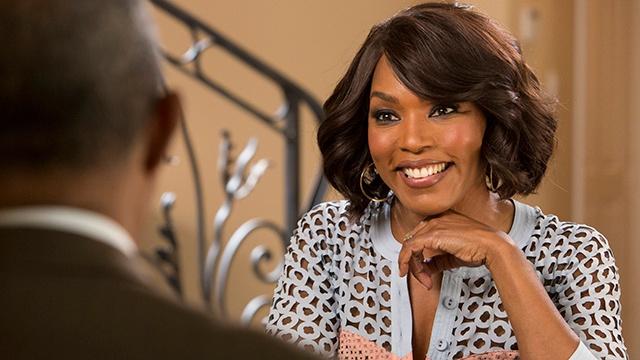
Trace three guests’ roots into the heart of slavery, revealing that there is no singular narrative and challenging preconceptions of an era that shaped our nation’s sense of itself. Nas discovers a web of his slave ancestors' intimate relationship with their slave master; Angela Bassett meets ancestors whose slave family tragedy is rivaled only by a triumphant emancipation story


Copy and Paste the Following Code to Embed this Video:
We Come from People
I'm Henry Louis Gates Jr. Welcome to "Finding Your Roots." In this episode, we'll explore the roots of 3 prominent
African-Americans
hip-hop artist Nas, actor Angela Bassett, and presidential advisor Valerie Jarrett. Each will take a journey that few African-Americans have been able to make, a journey that reveals the names of their enslaved ancestors. To do it, we've used every tool available. Genealogists help piece the past together by tracing the paper trail their ancestors left behind... while geneticists utilize the latest advances in DNA analysis to reveal secrets hundreds of years old. This is yours. And we've compiled everything into a book of life... Thank you. a record of all of our discoveries. They paid $830 for my great great great grandma?
GATES
Those are the white people who owned your great grandfather William Henry. Oh, wow. This is your family clan crest. How could I not know this? Together, Nas, Angela, and Valerie's surprising family stories will challenge what we think we know about an era that profoundly shaped our nation.
ANNOUNCER
Funding for "Finding Your Roots" was provided by...Rappers, I monkey-flip 'em with the funky rhythm I be kickin' Musician inflicting composition of pain... GATES,
VOICE-OVER
Musical artist Nasir bin Olu Dara Jones, better known as Nas, is a pioneering figure in the history of hip-hop. His 1994 debut, "Illmatic," is one of the most celebrated hip-hop albums of all time. Since then, Nas has released 8 consecutive platinum and multi-platinum albums and sold over 25 million records worldwide. Yet he's proud of his deep ties to the place where he grew up, New York City's Queensbridge apartments, the largest public housing project in the United States. In the 1980s, Queensbridge was a Mecca for the burgeoning hip-hop scene, and a place where talented young artists were expressing their frustrations about a system they felt was stacked against them. Nas' life and his art were both shaped here.
NAS
Hip-hop was the raw expression of American youth, and the rhythm of it was like a combination of all music's-- all music's combined into one. It was the music of my soul. GATES,
VOICE-OVER
When Nas was 18 years old, his younger brother Jabari and his close friend William Graham were shot in the projects. His brother survived, but Will did not. Nas is still haunted by that tragedy. This picture right here was maybe a day before he died. Mmm. In my music, I shout him out a lot. Ill Will. Ill Will, right. You know, we were kids, man, and that situation definitely changed some things for sure.
NAS
Peace, Ill Will, now your name's on the throne And we gonna rap it the best that we can... GATES,
VOICE-OVER
After surviving on top of the music industry for over two decades, Nas longs for a deeper connection to his family's past and especially for knowledge about his slave ancestors, whose sacrifices helped pave the way for his success. I mean, I'm cut from their cloth. I'm a part of them, and I feel like they're helping guide me today. Mm-hmm. They're around me.
Indistinct chatter
VOICE-OVER
GATES, Actress Angela Bassett has won fame for her deeply moving portrayals of some of the most
iconic women in African- American history
Tina Turner, Coretta Scott King, Rosa Parks. As a teenager growing up in St. Petersburg, Florida, Angela developed her passion for acting at a local theater, but she also found that her opportunities were limited by her race. Oh, we have a St. Pete little theater. Let me go over there. And they were like, "Well, hello, little brown girl." Ha ha ha! Were they good to you? Did they give you roles? Well, they gave me one part. It was the part of the maid... I was gonna say, was it Beulah? Ha ha ha! It was magic. It was truly magic. So I came back just so excited, and...dove into it as much as I could. GATES,
VOICE-OVER
Angela went on to earn two degrees from Yale, including a Master's degree, at its prestigious School of Drama. Then she went on to join the growing list of African- American actors breaking down barriers in Hollywood. She's achieved a level of success that she never could have imagined back in St. Petersburg, but she's well aware that her ancestors endured seemingly insurmountable challenges. Well, I'd love to know more about my family and my people, but...it's almost overwhelming, you know, to imagine what they could have gone through. At times, I've tried to place myself in that situation. Mm-hmm. How would I have survived? You know, who I might have been. Mm-hmm. GATES, Valerie Jarrett, one of the most influential political figures in the country, is senior advisor to the President of the United States, Barack Obama. She's a crusader for equality and social justice, a passion that was born on the south side of Chicago when activists dreamed of transforming the city's electoral politics in the early 1980s. In 1983, Valerie threw herself into the campaign of Harold Washington, earning a front-row seat to the improbable election of Chicago's first African-American mayor.
JARRETT
I think no one actually believed he could win, and then when he did, everybody's phones were ringing off the hook, and so-- You're like a good luck charm for black guys from Chicago who don't have a prayer, everyone says, of winning, right? GATES,
VOICE-OVER
Valerie continued honing her political skills in Chicago's City Hall. Then, one day, a chance encounter forever changed her future. Someone sent me a resume, and at the top of the resume, it said, "Outstanding Young Woman," and I called her up and asked her if she'd come in for an interview, and she said sure, and her name was Michelle Robinson. And so what was supposed to be a 20-minute interview turned into about an hour-and-a-half conversation. And so I gave her a job offer on the spot at the end of the interview. And so a couple days later, she said, "You know, I've been discussing this with my fiance, "and he's not so much on the idea. "He's not sure it's a good fit. And would you be willing to have dinner with us to talk about it?" So the 3 of us had dinner, and the rest is history. That's great. Yeah. GATES, Valerie's role quickly grew from being Michelle Obama's boss to becoming the family's trusted political advisor and confidante, eventually helping guide Barack Obama into the White House as our nation's first African-American president.
GATES
Do you feel like you're at the edge of history, that you're making history? You know, most days I just think about--ahead. I don't really have a whole lot of time to reflect. You're trying to get through the next 12 hours. Just trying to get through the next 12 hours. You got that right. The future can take care of itself. Exactly, and the future will be better off if I'm thinking about what I have to do ahead of me as opposed to what our legacy might be. GATES,
VOICE-OVER
Like most African-Americans, my 3 guests tonight know very little about their family history in the 19th century, when their ancestors weren't considered equal to white Americans. To trace an African-American family back into slavery is often impossible, but for my 3 guests, I was determined to try. Man, I don't know anything about myself. I want to find out, like, who I am, where I come from. GATES, Nas' music may be synonymous with life in New York's tough inner city, but his family's roots are deeply southern, beginning with his mother.
GATES
Now, tell me about this beautiful lady. That's my mom. Yeah. I never saw this picture. That is Fannie Ann Little, born in Steeles Township in Richmond County, North Carolina, in 1941. Was that a big part of who she was? The country, the southernness, it was there in her cooking and, you know, how she grew up, where she grew up. She'd tell us about it. Your parents separated. Yeah. That was when you were 12. Right. And, you know, Mom was there holding things down, and she was such an amazing woman. You know, just love, love, a lot of love. GATES,
VOICE-OVER
Nas' mother died in 2002 after a long battle with cancer. For as long as Nas can remember, his mother was determined that he and his brother forge deep ties with her ancestral home down in North Carolina. She made a ritual each summer of shipping her boys south, taking them out of the projects, to spend time with her grandparents, Mack and Nannie Little. What do you remember about your grandparents? Tell me, were you close to them? Very close to them. You'd be staying at their house in Carolina, right? Yep. What was that like? Was that culture shock, or was that-- did you look forward to it? Culture shock in its highest form. Heh heh heh! You know what I'm saying? You know, two weeks at Grandma's house, and it felt like a year. Heh heh heh! What was so bad about it? Man, it just felt like we were in a time machine and wound up back on the plantations. Heh heh heh! GATES, But what Nas didn't know is that this small township in North Carolina was home to an entire branch of his family tree, going back 5 generations. When our researchers began to look at the records, we discovered something rather unusual. His mother's family tree is filled with men and women
who married each other and who shared the same last name
Little.
GATES
Now, this is a page from the United States Federal Census from 1940. Cool. Mack Little is my grandfather. Mm-hmm. And Nannie is my grandmother. Yep. Those are your mother's parents. Mack Little, Nannie Little. Little was her maiden name as well as her married name. Did you ever think about that? Yeah. That was cool. Yeah. Now, Nas, this is your grandfather's death certificate. Can you see what it says here for his parents? Walter Little. Mm-hmm. And mother's maiden name is Fannie Little. So, Nas, this is the second generation of Littles marrying people called "Little." GATES,
VOICE-OVER
This turned out to be a distinct pattern in Nas' family. A staggering 5 generations of male and female Littles married spouses also named Little, and almost all of them came from the same town, beginning all the way back in 1824 with the birth of his third great grandfather Calvin Little, who later married a woman named Pocahontas Little. So what do you make of that? It's a popular name at the time. Yeah! Yeah, like everybody's named Little. And whoever was the first Little got around. Heh heh heh! GATES, Of the many documents we used to map this magnificently detailed family tree so deeply into slavery, one contained a detail that we found particularly intriguing. It was a page from the 1910 Federal Census listing Nas' great grandmother Fannie living right next door to a woman also named Fannie, Fannie Little. Color. That's white. White. That's right. Their next-door neighbor is another Fannie Little, but she's a 78-year-old white woman. Now, what do you think? Could this white woman, same name, be related to you? What do you think? Yeah. Heh heh heh! GATES, This peculiar coincidence wasn't all that struck us as odd. As we dug more deeply into her background, we found that the white Fannie Little was more than just a neighbor. She had a father-in-law named Thomas Little who had been a prosperous plantation owner and slave master. We discovered a will that Thomas Little had written in 1857 which confirmed that he had owned many generations of Nas' family, including Calvin Little. "Settlement of Thomas Little estate, 1857." Those are your ancestors, being left in a will, like property, to a white man. Wow. "Frank, Mack, Fanny, and Calvin." This is amazing. That's Calvin, who is your third great grandfather. Yes. Man... That's heavy. GATES, When Thomas Little died, Nas' third great grandfather Calvin was willed to Thomas' son, Benjamin Franklin Little. And his records afforded us a rare glimpse into the daily life of his slaves. Nas, Benjamin Franklin Little was a fantastic record keeper. I've never seen anything like what we're about to show you. "Ledger of cotton picked per slave, October 1854." Your third great grandfather Calvin was about 30 years old in October 1854. These are the pounds of cotton that he was picking every day.
Exhales
VOICE-OVER
Read straight across. 150. The next line looks like 200. Mm-hmm. 78. Mm-hmm. He must have been tired this day. 49. The next day, he's picking up 54. Two days is blank. He probably told them to go screw themselves. Heh heh heh! Wow, so this is day after day. Day after day. What's it feel like to experience this? I mean, it's anger. It's anger, um...amazement. This wasn't that, that long ago. No. You're talking about 150 years. So many of our slave ancestors are just anonymous, and yours are leaping out of these records with their names on them, which is extraordinarily rare. This is insane. GATES, One of the greatest ironies of black genealogy is that to learn the identities of our slave ancestors, we have to turn to the records left behind by their masters, the very people who denied them their humanity. For my next guest, Angela Bassett, a trail of records kept by a plantation owner first led us to the identity of her slave ancestors on her father's line and then to an unimaginable story of loss. While she grew up in Florida, Angela was born in New York, and like Nas, reconnected with her southern roots by visiting her father's family the Bassetts in North Carolina. She assumed that her distant ancestors had been enslaved somewhere in the south, but she knew little else.
GATES
Have a look at this. Find yourself at the bottom. Then go up and see your dad. Dad. There's your grandfather. Now look at his father. William Henry. That's right. His name was William Henry Bassett. So you're looking at your great grandfather on your father's side. Have you ever heard of him? I don't know a lot about him, but I know-- I think I've heard that name, William Henry. Now, according to this death certificate, your great grandfather was born into slavery in Virginia in the year 1846. So he lived to see emancipation. And what did he do with his freedom? Well, he became a preacher. He was a preacher. Yeah, you have deep-- We've got a few of them in the family. Yeah, you have deep--and you're very religious. Yeah. It's like you got the religious gene, the religious chip. We needed it to come through this. We needed to believe in something other than what we saw. It's true. Yeah. GATES,
VOICE-OVER
Trying to trace Angela's family further, we combed through documents related to her great grandfather William Henry Bassett, and we soon uncovered a mystery. On his marriage certificate, William Henry Bassett listed his parents' names, George and Jinney, but the last name he listed was different than his. The marriage license read "Ingram." Where did this name come from? Our researchers found a clue buried in the pages of the 1870 census. What does it say about the person living next door to your great great grandparents George and Jinney? Ingram, Elizabeth, 87 years old, female, white. Elizabeth Ingram. Mm. GATES, Once again, a white neighbor would offer the key to unlocking a deep secret from the past. We discovered that Elizabeth Ingram was the daughter-in-law of a man named James Ingram and that James Ingram owned both of Angela's great great grandparents, George and Jinney. What's more, we learned that upon his death, James Ingram left his slaves to his children. "I, James Ingram, "give and bequeath to my son Alexander Ingram one Negro named George." That's your great great grandfather George. That's who he's talking about. And keep reading.OK. "I give unto my daughter one Negro girl named Jin." And that's his wife. That's Jinney. You are looking at your great great grandparents George and Jinney from 1816. At this time, George could have been about 13, and Jinney would have been 6 years old. Wow! Lord, I'm breathless. OK. Climbing this tree-- beautiful. GATES, George and Jinney had grown up together on the same plantation, and even though the law didn't recognize marriages between slaves, we know that George and Jinney had a child together, a boy named William Henry. Although it's difficult to imagine how people maintained family ties during slavery, we know that somehow they did. The number of Africans who were transported as slaves directly to the United States is about 400,000, but by 1860, the number of slaves had grown to nearly 4 million. Our guests' enslaved ancestors were creating families under the harshest of conditions, despite the constant threat of being separated from each other at the whim of a master. Can you imagine what it must have been like to start a family and have children and still be slaves?
Sigh
VOICE-OVER
Not knowing if they could be sold down the river at any time? Yeah, right. How precarious life could be. Mm-hmm. How families were separated so easily. GATES, Tragically, this is exactly what happened to George and Jinney's son William Henry, Angela's great grandfather. In 1849, William Henry is listed as a 3-year-old in an inventory of slaves on the Ingram plantation. Then he completely disappears. We only found him listed in another record 11 years later, living 20 miles down the road on another plantation. Think about what it would have been like for George and Jinney if their son was sent away to live with another family. Can't help but-- heartbreak or ache for what they-- what they came through, went through. Oh, yeah. Mm-hmm. GATES, The discovery of William Henry's separation from his parents, George and Jinney, on the Ingram plantation also solved the mystery of their different last names. It explains why today Angela bears the last name Bassett rather than Ingram. Can you guess who these people are? Are these the Ingrams? Is this Alexander and-- No. Those are the white Bassetts, the people who owned your great grandfather William Henry. Ooh. That's John Henry Bassett and his wife. Oh. Ohh. Amazing. I'm just looking at their eyes, their expressions. Remember that your great grandfather took their name. You know, his name was Ingram. Right. But he took that name when he was free. Do you think that's voluntary? Oh, yeah, because after he was free, he could have called himself George Washington Madison Jones, you know? But he kept the Bassett name. Uh-huh. GATES, One of the first decisions newly freed slaves made was choosing their legal last names. Angela's great grandfather William Henry chose to keep Bassett, his slave master's name. William Henry Bassett's parents, George and Jinney Ingram, not only kept their slave master's surname, but decided to live near the woman whose family had owned them and had separated them from their son. So it's incredible. Both George and Jinney were connected to the Ingram family for at least another 10 years after the Civil War. Mmm. That's history. That's our history in America. That's our history. You know? Or that's my history. Mm-hmm. You know? GATES, The decisions made by Angela and Nas' slave ancestors were not so unusual. Though we might find it surprising today, the vast majority of the newly freed slaves stayed in the south, living near the plantations of the very people who had enslaved them. Valerie Jarrett's journey into the past would also take us back to the turbulent period before the Civil War, but hers would be a very different story. Valerie's family tree is filled with people who overcame tremendous odds to achieve unbelievable success. Her mother, Dr. Margaret Taylor, was a pioneer of early childhood education, and her father, Dr. James Bowman, was a pathologist and a geneticist, but it's hard to top the legacy of her great grandfather Robert Robinson Taylor, born in Wilmington, North Carolina, in 1868.
GATES
That is your great grandfather. That's Robert Robinson Taylor. That's a wonderful photo. Heh heh heh! My mother and my grandmother both talked about him a lot during my childhood. GATES,
VOICE-OVER
Robert Robinson Taylor has the distinction of being the first black person to graduate from MIT and the first professionally trained black American architect. The legendary Booker T Washington enlisted Taylor to help build the Tuskegee Institute, one of the earliest colleges committed to educating African-Americans after the Civil War. How did Valerie's great grandfather manage to accomplish so much given that his father was a former slave and that he was born in the south just 3 years after the Civil War ended? Could you please turn the page? Yes. You know who that man is? I have no idea who that is. Who is that? Well, my dear, you are looking at Robert Robinson Taylor's father, your great great grandfather, Henry Taylor. Oh, my goodness. And Henry was born a slave in Cumberland County, North Carolina, in 1823. How did a black man born during slavery have the wherewithal and the resources to send his son to MIT? So let's try to answer this question. The suspense is killing me. Ha ha ha! GATES, We discovered a clue in a letter that Robert wrote describing his father's ancestry. In the letter, Robert claimed that his father's father was a man named Angus Taylor. When we searched for Angus Taylor in the census records, we discovered that Angus Taylor was a white man and he owned a small farm in North Carolina with 7 slaves. Now, this is part of the federal census taken in Bladen County, North Carolina, in the year 1850, and it's the slave schedule. Could you please read the highlighted section? It says, "Name of slave owner, Angus Taylor." Remember, Henry was born in 1823. So we're looking for a slave who was either about 26 or 27. Can you see someone who fits that description? "26-year-old male, black." That is Henry Taylor. Oh, my goodness. Mm. Oh, my goodness. Now, according to the letter, Henry Taylor believed that Angus Taylor was not just his owner, he was also his father. Amazing. Amazing. Amazing. Yeah! GATES, I wanted to find out more about the relationship between Valerie's great great grandfather and this man, whom he said was his father. Though quite common, it's usually impossible to prove these claims, since white slave owners rarely acknowledged their black children, but we began to search for clues. Then we found an intriguing passage that Booker T. Washington wrote about Robert's father, Henry Taylor. "Henry Taylor was nominally a slave, but he was early given liberty to do about as he pleased." Given liberty to do about as he pleased. Part slave, effectively free. Hmm. The thing that suggests a degree of affection, if I can go there, is that Angus treated this slave so liberally. Yeah, like he wasn't a slave. Why don't you think he freed him? That's something I puzzled about. He never freed him. He let him be free, but he still owned him. That's very interesting. I mean, it sounds paradoxical to us, but the only logic that we've been able to tease out is that somehow this was a way to protect-- Safer. Mm-hmm. Let's hope that was the case. It's still hard to wrap your head around it. Very hard. GATES, One of the cruelest ironies of trying to live as a freed black person in a slave state was the ever-present risk of illegal re-enslavement. Whatever Angus Taylor's motivation for granting Henry this unusual semi-free status, there's no question that it gave him a major advantage when he was finally free. Well, this is a portion of the federal census of 1870. It says, "Henry Taylor, age 45, male, mulatto, "Occupation: House Carpenter, Value of real estate $5,000." $5,000. That was a fortune. Fortune, which could explain how your family rose so quickly. Pretty cool. Very cool. Very cool! Well, only in America. Yeah, only in America. Yeah. Both good and bad. GATES, It's almost impossible for us even to imagine what the slaves were thinking and feeling as they suffered through their lives in bondage, but when we recover stories like those of Nas, Angela, and Valerie's ancestors, we get as close to possible to experiencing their tragedies and their triumphs. Nas had already been introduced to his third great grandfather Calvin Little and learned that he'd been owned by Thomas Little and then by his son, Benjamin Franklin Little. Now we wanted to tell Nas about Calvin's wife, his third great grandmother, a woman named Pocahontas Little. But digging deeper into Benjamin Franklin Little's meticulous plantation records, we discovered how he'd come to own Pocahontas in the first place. "Bill of sale, March 27, 1859."
GATES
This is the bill of sale for your third great grandmother. A receipt for a human being. Whew! "Received of Benjamin Franklin Little, $830, "being in full for the purchase of a Negro slave named Pocahontas." They paid $830 for my great great great grandma? I got more than that in my pocket right now. Now, Nas, when Pocahontas was purchased by Benjamin Franklin Little, she was about 14 or 15 years old. Wow. 15 years old. Mmm. Wow. See, this is painful now. This is like--To see that is like--That hurts. Yeah. Let's see what else we can find. Now, that-- Uh-oh. Uh-oh, we starting to put faces to names? Heh heh heh! That is the Carlisle plantation in Richmond, and that is Benjamin Franklin Little. Take a look at that guy. That is the white man who owned your ancestors. This is the face my ancestors looked at every day? Every day. The eyes they looked at. The man they feared, the man they had to please for 6 of your third great grandparents, Nas. Now I'm looking into their world. Now I can see where they walked, what they saw. Unfortunately, the house burned down in 1963, and today it's nothing but a forest, but, Nas, we asked-- You were gonna say something. I'm sorry. Nah, I'm just thinking about buying that land. Oh, good. Ha ha ha! I was hoping you'd say that. Heh heh heh! GATES,
VOICE-OVER
In 1865, Calvin and Pocahontas walked off the Carlisle plantation and began their new lives. Through court records, we discovered one way that they chose to use their newfound freedom. "The following persons wish to be recognized as man and wife, "and state that they have been living together as such before they were freed." That is Calvin and Pocahontas', in effect, their marriage license. That's amazing. As soon as they could, your third great grandparents stood up to affirm their marriage in the eyes of the law. I find this very moving. They probably-- I'm sure they-- Oh, man, it's like a movie, thinking about their relationship during the time of slavery. Mm-hmm. In school, you read about slaves. We read about slaves in American history, but when you read about it back then, you think about it like it's these other people. You don't realize that you're here because of them. Absolutely. I'm wearing gold. They had to wear chains. I'm wearing a gold chain. It means we changed those chains of pain into chains of freedom. Mm-hmm. I'm feeling good today because of Calvin and Pocahontas. That's beautiful, man. GATES, Finding records of an enslaved ancestor can be a bittersweet experience. These documents illuminate an unthinkably painful existence, but occasionally they also reveal unexpected glimmers of hope. Angela Bassett had already met ancestors on her father's side who formed a union and gave birth to a child during slavery, only to have that baby, William Henry, sold away. But on her mother's side, she would encounter a different kind of story, a story of redemption. You recognize that photo. Aw, yeah! That's my mama. Betty Jane Gilbert was born August 3, 1935, in St. Petersburg, Florida. GATES, Angela fondly remembers annual trips with her mother to visit her great grandfather Slater Samuel Stokes. Slater, born on April 1 in 1893 down in Quitman, Georgia, was a preacher, and he made an indelible impression on Angela. How close were you with Papa Stokes? Oh, very close, very close. I remember going to his church and seeing him preach, and he had a white handkerchief on his shoulder, and he'd talk about with your troubles, and you take it to the Lord. And then he took the white handkerchief off, and in a flourish, just threw it on the altar. And he'd say, "And you leave it there." And as a kid, it was just so dramatic. He had a theatrical air. Yes, he did. Ha ha ha! GATES, We followed Slater Samuel Stokes' family tree back to his own grandparents, Henry and Emily Stokes, both born into slavery in the 1820s in Georgia. To learn more about their lives, we needed to find the name of their owner. So, using their last name Stokes, we began our search. Only one white Stokes was living in the area during that time. Well, that narrows it down. That narrows it down. There's no doubt. And that's this man here. "Name
of slave owner
J.W. Stokes." That's right. J.W. Stokes owned almost 3 dozen slaves. That's a pretty big, rich number, isn't it? Mm-hmm. Yep. "Number
of slave houses
6." What does that mean, cabins or something? Yeah, cabins. Right. For 35 people? That's 6 per. Ohh. It's terrible. I mean, I've been able to visit slave cabins and to be able to go into those very tight quarters. That's why I said, "35 in 6--" Oh, yeah. No running water. Yeah, right. GATES,
VOICE-OVER
We found out that Henry and Emily lived on the Stokes plantation in Georgia for most of their lives, including through the Civil War, the crucial period that would determine their fate. And if there were any doubt of their master's feelings about emancipation, we found out that he was the very first man in his county to volunteer for the Confederate Army. But the Civil War would ultimately bring Henry and Emily their freedom. And we uncovered a document that tells us what Henry Stokes did almost immediately after he was freed. "I, Henry Stokes, colored, "do solemnly swear "in the presence of Almighty God "that I am a citizen of the state of Georgia." Henry Stokes, who was born into slavery, made his mark, and he registered to vote in the state of Georgia on June 25, 1867.
Exhales
VOICE-OVER
That's beautiful. That's--ohh. That feels so, so good. Can you imagine what it must have felt like for a slave... Mm-hmm. to be able to take this oath of citizenship and declare the right to vote? Very proud. Must have felt so proud. And then to cast his--put his "X" down. Yes. Yeah. It is astounding to see people who were considered 3/5 of a human being... Mm-hmm. to find them and know they were 5/5, one whole human being. That's a beautiful way to put it. GATES, We had revealed facts to Angela about her ancestor's life from his enslavement into the Reconstruction era, a time of enormous promise for the newly freed slaves. With the right to vote, the notion of shaping your own future no longer felt like the proverbial dream deferred. Valerie Jarrett's next family story begins in this hopeful period. We'd introduced her to her illustrious ancestor Robert Robinson Taylor, the architect who so masterfully designed much of Tuskegee University. Now we discovered that Robert had married into a family known as the Rochons, and when we traced this branch of Valerie's tree,
we discovered another formidable character in her lineage
Valerie's maternal great great grandfather, a man named Victor Rochon. This is a clipping from a Louisiana newspaper called "The Colfax Chronicle," published in 1888. Can you find your great great grandfather's name there? It says, "St. Martin, V. Rochon, Rep." Your great great grandfather Victor Rochon was elected to the Louisiana State House of Representatives in 1888. Amazing. GATES,
VOICE-OVER
Victor Rochon was one of the first black men elected to the Louisiana State House of Representatives during Reconstruction, first in 1872 and then again in 1888. But as disgruntled whites sought to reassert their supremacy, these black legislators faced a Herculean task. On the floor of the Louisiana State House, Valerie's great great grandfather rose to the occasion, facing down a hostile white audience to argue against the injustice of the Separate Car Act of 1890, the opening shot in the legal war to establish the doctrine of separate but equal as the law of the land. Wow. How could I not know this? Hmm. How does that make you feel? Very proud. Very, very proud. Now it makes sense. Mmm. What makes sense? Well, that I'm doing what I'm doing. Mm-hmm. GATES, Trying to learn more about Victor,
we found something surprising back in the 1850 census
A 7-year-old Victor Rochon listed by name. Now, remember, slaves are not identified by name in the federal census until after the Civil War. So you know what this means about your family? Well, they're free. It means they're free. Amazing. GATES,
VOICE-OVER
Valerie's great great grandfather Victor was part of a minority of black people who were free before the Civil War. We were astonished to discover generation after generation of free people of color on the Rochon family tree, going back a full century before the Civil War, dating even before the American Revolution. We found Valerie's sixth great grandmother, Marianne Rochon, a free woman of color living with her 6 children in early 1800s Louisiana. It's amazing. Your roots go back-- Pretty far. Pretty far in America. Yeah. And free. I'm speechless, and I'm never speechless. Ha ha ha! GATES, I wanted to figure out how the Rochons had become free in 18th-century Louisiana in the first place. How had they avoided the fate of almost 30,000 black people doomed to attend indigo and tobacco plantations in the bayou's sweltering heat? Now, I want you to look at this. This is a map of colonial Mobile. Do you recognize any of the names listed on there? I sure do see Rochon right here on the map. That's the Rochon plantation. Hmm. GATES, Documents revealed that Marianne Rochon had previously been enslaved on the Rochon plantation in Mobile, Alabama. Marianne's slave master was Pierre Rochon, a prosperous plantation owner and a descendant of a French family that had helped settle what is now Mobile, Alabama. Would you please turn the page? I mean, only if you're interested. I can barely wait. Are you kidding me? Now get ready for this. This is a document belonging to Pierre Rochon. "March 20, 1770. "Pierre Rochon, being moved by a paternal affection "for 6 mulatto children, "grants said children their freedom, "and after my decease, "their mother Marianne, aged about 26 years to be free." That's pretty amazing. Marianne was Pierre's mistress and also his slave, and your sixth great grandparents, Pierre and Marianne, had 6 children together. Now, of course, masters often had children with their slaves, but this relationship was unusual in that Pierre Rochon, your sixth great grandfather, set his enslaved children free legally. Where'd you find it? Not in the secret-- state secrets. What are you talking about? You at the White House. I can't be telling you. Ha ha ha! That's amazing. He did what Thomas Jefferson had an extraordinarily difficult time doing. Yes. He freed his 6-- He manned up. He manned up. So what do you think of Pierre Rochon? He clearly cared deeply about her and the children. GATES, A year later, Pierre died. We found Marianne and her children living in Louisiana. What would you ask Marianne Rochon? How she felt the moment he told her she would be free, not just as his lover, but as a mother of 6 children who she knew would have a very different life as a result of his act. A different life forever. A different life forever. GATES, Through the paper trail, we had traced the lineages of our guests back through 300 years of American history. Now advances in genetic genealogy allow us to look even more deeply into the past. My guests agreed to take DNA tests that would reveal a part
of their ancestry once inaccessible to African-Americans
the origins of their African ancestors. OK, so 77.7 Sub-Saharan Africa.
GATES
That's right. OK. Oh, but from where? 32% Nigeria. 15% Benin. 9% Cameroon/Congo. 8% Mali. Yep. 6% Southeastern Bantu. 4% Ivory Coast/Ghana. 2% Senegal. And 1% South Central Hunter-Gatherers. So you have a Pan-African genome, but particularly heavy in what is now today's Nigeria. That's neat. That's very neat to be able to see that. GATES,
VOICE-OVER
A test of Nas' autosomal DNA successfully answered the question he most yearned to know. Now, look at the Sub-Saharan Africa down there. 82%! 82%. That's right. And...about half of your African DNA comes from Nigeria and Benin. That's the best. These are answers to questions that I always wanted to know. GATES, To find out more about Nas' non-African DNA, we analyzed his Y DNA, a genetic signature that a man inherits from his father. Unexpectedly, this connected him not only to Europe, but to a very particular northern clan. You, my friend, are descended from the Vikings. Good, man. It's crazy. Wow. Would you ever have imagined in your wildest dreams that you have genetic ties to the Vikings? Never. Never, ever, ever. That's crazy, man. They were wild. They were just, like, just imagine this huge ship coming out the mist, and these dudes with swords. That was a wild bunch. Yeah. That's cool. GATES, It shouldn't have surprised us, given what we'd discovered already about Valerie's family tree, that her genetic ancestral composition turned out to be almost half European and 46% Sub-Saharan African. But what did surprise us was that remaining 5%.
JARRETT
That's interesting. 5% Asian/Native American. Well, you and every other Negro I know claim to have Native American ancestry. But we really do. But you really do. Valerie Bowman Jarrett, this is your family tree. Oh, my gosh. Should I open it? Yes, please. Oh, my goodness gracious. Look at that. Did you have any idea that your family tree could be so complex? No, I did not, not in my wildest dreams. You embody the paradox of American democracy. The Rochon family is free back to the 18th century. The Taylor family is slaves back to the 18th century. That's great. Africans, Scottish, French, and Native American. Yeah. It's interesting to contemplate that this could just exist simultaneously in your genome, as it were, on your family tree. I'm very proud of the diversity of my history. I think in a sense that's what this country is all about. We are a nation of immigrants. Mm-hmm. We come from all over. GATES,
VOICE-OVER
This is the end of our journey. Angela, Nas, and Valerie each left with a much deeper understanding of how their ancestors had confronted and endured the brutalities of slavery. Join me next time when we unlock the secrets of the past for 3 new guests on another episode of "Finding Your Roots."
ANNOUNCER
Next time on "Finding Your Roots," Carole King, Tony Kushner, and Alan Dershowitz. That's ridiculous! We all went through our childhoods feeling proud that we were Jews. When I would say, "Grandma, the Brooklyn Dodgers won!" She would say, "Yeah, but was it good or bad for the Jews?" "Finding Your Roots." Funding for "Finding Your Ro This season of "Finding Your Roots" is available on a 3-DVD-disc set for 39.99. The season one companion book is also available for $30. TO order, call 1-800-336-1917. To share your family stories, watch full episodes, and find out more, visit pbs.org.
Search Episodes
Related Stories from PBS Wisconsin's Blog

Donate to sign up. Activate and sign in to Passport. It's that easy to help PBS Wisconsin serve your community through media that educates, inspires, and entertains.
Make your membership gift today
Only for new users: Activate Passport using your code or email address
Already a member?
Look up my account
Need some help? Go to FAQ or visit PBS Passport Help
Need help accessing PBS Wisconsin anywhere?

Online Access | Platform & Device Access | Cable or Satellite Access | Over-The-Air Access
Visit Access Guide
Need help accessing PBS Wisconsin anywhere?
Visit Our
Live TV Access Guide
Online AccessPlatform & Device Access
Cable or Satellite Access
Over-The-Air Access
Visit Access Guide




Follow Us