







PBS Wisconsin Passport
Watch this video with
PBS Wisconsin Passport
Become a member of PBS Wisconsin, support your local community, and get extended access to PBS shows, films, and specials, like this one.
The Pioneers
02/23/16 | 52m 41s | Rating: TV-PG
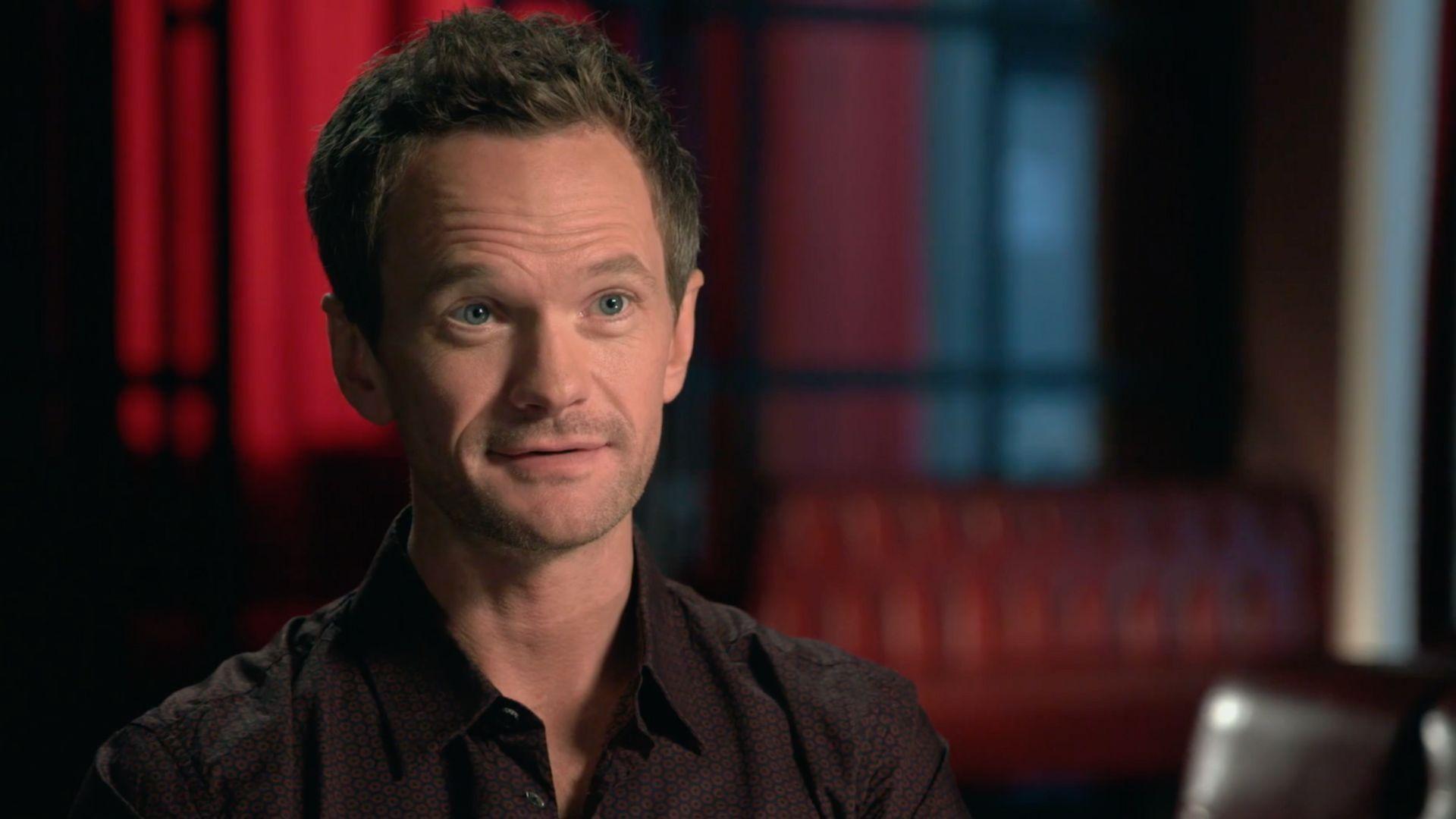
Discover how Neil Patrick Harris, Gloria Steinem and Sandra Cisneros are connected to pioneers who broke new ground and paved the way for their modern day descendants to continue shaping our culture.


Copy and Paste the Following Code to Embed this Video:
The Pioneers
I'm Henry Louis Gates, Jr. Welcome to "Finding Your Roots." In this episode, we trace the family stories of actor Neil Patrick Harris, author Sandra Cisneros, and activist Gloria Steinem, 3 people who unknowingly are following in the footsteps of their pioneering ancestors, taking risks and challenging the status quo. The puzzler, mystery solver in me is very intrigued to know what that adventure must have been like. Because I'd like to think I've come from Indiana Jones blood.
The person who I would like to meet right now is my own mother. Hmm. We shared so much more than we knew. And she would love this.
There's something that Mexican women have, this
Speaks Spanish
this rage, you know. First you get hurt, and think, "Oh, I don't belong here." Then you start thinking, "Well, why don't I belong here?"
Henry
To unearth their family stories, we've used every tool available. Genealogists have stitched together the past using the paper trail their ancestors left behind, while the latest advances in DNA science reveal secrets hundreds of years old. And we've compiled everything into a book of life, a record of all of our discoveries. That it's called "The Book of Life" is incredible.
Right? Heart be still, I'm just so excited. I'm gonna take a picture of it so I can tweet it later. Ha ha!
Good! Got it. Neil, Sandra, and Gloria have all made bold choices in their lives, choices that have had a profound impact on the American cultural landscape. Tonight, they're learn that they're not the first in their families to have blazed a trail.
Crowd cheering
Henry
Neil Patrick Harris is one of the most versatile actors I have met. He broke into Hollywood as a teenager, and he's been honing his craft ever since, in movies, television, even on Broadway. Despite his many years in show business, he remains genuinely enthusiastic about his work.
Neil
I've gotten to do a lot of crazy, weird, unique things. I love working, and I love the process of doing it, whether it's live theater or TV shows movies or directing or hosting. It helps to have a good perspective on why you're working, what you're working on, and what the purpose is for it.
Henry
Neil credits his love of acting to his parents, Ronald Harris and Sheila Scott, who introduced him to musical theater as a child.
Neil
They were just wonderfully musical. Mom played the flute, dad played the guitar, and so they encouraged us to follow our passions, and one of my passions was performing, and so that dad always had different records of different Broadway shows. Did you have a favorite Broadway show? I loved "Annie." Mm-hmm.
I got all my friends with brooms to lip-synch "It's a Hard Knock Life." Ha ha!
Henry
Landing his first major TV role at the age of 16, Neil played the child doctor "Doogie Howser, M.D." He's since earned a star on the Hollywood Walk of Fame for his many film and TV performances. Most notably his role on the long-running, Emmy-award winning series "How I Met Your Mother." While portraying the girl-crazy lothario on that show, Neil made a dramatic decision.
Neil
I was playing a super-straight Barney Stinson horn dog dude. Meanwhile, I'd been dating David for 3 or 4 years. Everyone knew him, but it still felt uncomfortable to go to public events with him and not walk together past cameras. It just didn't feel transparent or complete.
Henry
Neil was one of the first openly gay actors on prime time television. In 2010, he made "Time" magazine's list of the 100 most influential people. And since that time has become a visible face of the gay rights movement.
Neil
I feel like there are people whose jobs are advocacy and who do it well. Mmm. But what I'm able to do is try and stand as tall and as proud as I can and live by my own example, so I try to be a good father to my kids, I try to be a good husband to my husband, and hopefully that will come back.
Henry
My second guest, Gloria Steinem, needs no introduction. She's a feminist icon, and she's been a hero of mine for as long as I can remember. Gloria has transformed the role of women in American society, so I'm surprised to learn that changing America wasn't her first ambition. Yeah.
Aha! Did you ever want to be a professional dancer? Oh, yes, desperately, desperately. Really?
I had great dreams of being a Rockette. Just think, the history of American feminism changed completely. No, Emma Goldman had it right. If there's no dancing at the revolution, I'm not coming.
Ha ha! Ha ha! Though she didn't make it as a dancer, Gloria has been a public figure virtually her entire adult life. She first gained prominence as a journalist when she went undercover as a Playboy bunny to investigate the real lives of the women inhabiting that role in Hugh Hefner's bourgeoning empire.
Gloria
At this point, I was just barley beginning to get serious assignments, which was not so easy for female journalists, so I said, "Ok, I'll just write about the auditions." And part of the exam to get the job was an internal gynecological exam, You can't make this stuff up. And even now, I'm 80 years old, people still introduce me as an ex-bunny.
Henry
Gloria would become one of the founders of "Ms." magazine, and soon her feminist activism brought her international notoriety. But her beginnings were modest. Born in Toledo, Ohio, on March 25, 1934, to Leo Steinem and Ruth Nuneviller, Gloria, the youngest of two girls, has fond memories of a nomadic childhood traveling the country with her father, a salesman. My father was a gypsy.
He had two great points of pride
he never had a job and he never wore a hat. Huh. Ha! And he always used to say, "You know, if I don't know what will happen tomorrow, it might be wonderful.
Huh. How did you keep a sense of rootedness? It was a sense of connectedness to the earth, but not a particular place. Mm-hmm.
And I lived out of cardboard boxes and suitcases until I was past 50. But with the help of my friends, who staged a kind of intervention... Ha ha! Ha ha!
I unpacked, and I made a home that I'm happy to come home to now. And it's practically an orgasmic experience, you know. Sure.
Woman speaking Spanish
Henry
Like Gloria Steinem, celebrated novelist Sandra Cisneros is a self-proclaimed daddy's girl, whose adventurous childhood helped to shape her imagination and the woman she is today. The only girl in a family of 7, Sandra was born on December 20, 1954, in Chicago, Illinois, to Elvira Cordero and Alfredo Cisneros. Your father would often say that he had 6 sons and a writer. I was my father's favorite.
And I think I came out of my father's head. I think he invented me. What was it like to be the only girl? Having all these brothers and mom, who was really strong and down to earth, created a kind of inner critical voice that I still can't get rid of.
Very judgmental, made me try harder. Sandra is a literary innovator, known for a writing style that draws on her own life but mixes fact with fiction. Her celebrated novel, "The House on Mango Street," has been translated into 17 languages and earned her the prestigious MacArthur Foundation Genius Award. When did you know you were meant to be a writer?
I think writers are writers even before they know how to hold a pencil. When I was a very young child, I was already a writer, and once I could figure out who I was, I would write something that to me was a brick, you know, I was throwing a brick and saying, "This is what I know that you can't know." In their own way, Neil, Gloria, and Sandra are each pioneers, and each has made contributions that extend well beyond their respective fields. But while tracing their roots, I was surprised to discover that they're not the first people in their families to have forged ahead despite the odds. Neil Patrick Harris comes from an extraordinary line of trailblazers.
His father's family migrated from Oklahoma in 1926 to settle Hobbs, New Mexico, an oil town that even today looks like the wild west. Neil, this is a photograph taken outside of Hobbs, New Mexico, in the early 20th century. That's where your ancestors lived. Wow.
Look pretty desolate? Yeah. It's amazing, the wagons and the horses. When your family arrived there, they lived out of their truck.
No kidding? In Hobbs? In Hobbs. Wow.
And when we looked more deeply into the Harris family's history, we found an astonishing story. Neil is the direct descendant of a man named William Farrar, who was born in England in 1583 and who was among the first Europeans to settle in colonial Virginia. Neil, this is what's known as a muster, and that's similar to a census record. "The muster of the inhabitants "taken the 21st of January, 1624.
William Farrar arrived on the "Neptune" in 1618." You know what that means? The "Neptune" must be a boat. Yes. Your ancestor, William Farrar, sailed to the colony of Virginia two years before the "Mayflower." Wow.
Wow. Bound for Virginia, the "Neptune" sailed from England in 1618, but the journey turned out to be a nightmare. Storms blew the ship off course, and its passengers were ravaged by disease. Dozens died at sea.
Yet Neil's ancestor survived, making him one of the earliest British settlers in Virginia. But we soon discovered that the voyage was only the beginning of his ordeal. This was on the frontier of the Virginia colony. I'm talking about no roads and just trees.
Wow. And Native Americans. "They fell to work all at once everywhere, "knocking the English unawares on the head, "some with their tomahawks, "other with the hoes and axes of the English themselves, "shooting at those who escaped, "sparing neither age nor sex, "but destroying man, woman, and child "according to their cruel way of leaving none behind to bear resentment." Wow. Good times.
It was called the Indian Massacre of March 22, 1622. Amazing. 4 years after William arrived in Virginia, Powhatan warriors attacked the colony hoping to stop British expansion into their lands. The Powhatan torched homes, assaulted livestock, and killed as many Europeans as they could.
When it was over, nearly 350 of Virginia's roughly 1,200 settlers were dead. William was living on the fringe of the colony at the time. 10 people were murdered on this farm. But once again, miraculously, he defied the odds.
William escaped to the fortified plantation of his neighbor Samuel Jordan, and there his story took another dramatic turn. This is a court document reflecting an argument that took place before the Virginia council on June 14, 1623, a year after William escaped the massacre. "Whereas Mr. Grevill Pooly, minister, "hath given forth speech that Mr.
Farrar and Mrs. Jordan--" ha ha-- "lived scandalously together. " Ha ha! Uh-oh.
Now it's getting good. So what do you think is happening here? He seems to be having some sordid affair with a Mrs. Jordan.
Well, after the massacre, Samuel Jordan died, leaving a young, attractive, and widowed Cecily Jordan... Cecily Jordan. very much available in the colony. That's awesome.
It turns out this was no laughing matter for Neil's ancestor. William Farrar's attempt to marry Cecily Jordan was contested by a minister named Grevill Pooly. Grevill Pooly claimed that Cecily had been promised to him. So the minister took Cecily to court.
It sounds absurd, but it became a groundbreaking case. It's actually the first breach of promise suit brought in the Virginia colony, and thus the first in American history. William himself served as Cecily's attorney. His agility with the law effectively laid the foundation for the creation of Neil's family tree.
William Farrar, then aged 42, and Cecily Jordan, only 25... Nice. were married in the year 1625. So Cecily, Neil, is your direct ancestor.
Wow. Your ancestor not only won the first breach of promise suit in America, but also his client's hand in marriage. Amazing. You ever think about making a feature film, there you go.
Got some fodder. Yeah, you got murder, mayhem, adultery, breach of promise. And that's just only one-- one person. Your roots go so deeply in early American history.
It's amazing to know that even before the "Mayflower" happened that they traveled there. Like Neil, Gloria Steinem found stories of courageous ancestors on both branches of her family tree. But the fracture nature of her upbringing concealed the names of these ancestors and their stories from Gloria. Gloria's father, Leo Steinem, left her mother when Gloria was only 10 years old, so she knew very little about his family.
And before she could learn more, tragedy struck. It says, "Leo Steinem admitted to this hospital, "condition critical. Advise calling surgical ward." Where did that... come from?
Who was that to? To you. Oh. My father had had an accident on a freeway in Orange County in California.
And he ultimately died from those injuries. What was the impact of his death on you? It--it was huge because I wasn't there, because I wasn't with him. And so I was and am haunted by what he knew or did not know, and I just regret so much that I wasn't there.
Yeah, it's said. Could you please turn the page? I wish I could turn the page on this. I'll never turn the page on it.
I know. It's sad. Recognize those people? Not really, I don't.
Well, those are your paternal grandparents, your grandfather Joseph Steinem and your grandmother Pauline. Pauline Perlmutter, right. What memories do you have of your grandmother? I have sense memories of her, but I wish I had known her as a grownup.
I mean, I was a small child when she died. If Gloria had known her grandmother Pauline as an adult, she would have discovered a woman in some ways remarkably similar to herself, a resolutely independent thinker. But Pauline's beginnings were quite different from Gloria's. Pauline was born in 1864 in Russia into an orthodox Jewish family.
When she was a girl, her family moved to Germany, where Pauline met and married Gloria's paternal grandfather Joseph Steinem. Records tell us that Pauline and Joseph came to America as newlyweds sometime around 1884. And that for decades afterwards they returned to Germany often to visit family. Then Adolf Hitler rose to power.
Do you know anything about the family left behind in Germany? I was told that during the lead up to the war and the war... my grandmother, by then a widow, was using what was not a lot of money left to her to ransom Jews out of Germany, and I don't know exactly whether they were relatives or not relatives, but I always heard that. As it turns out, Gloria's grandmother had a brother, Baruch Perlmutter.
City records indicate that he was a 64-year-old doctor living in Munich in 1935 with his wife, Louise. In that year, German laws stripped them and all other Jewish residents of their rights as citizens. Their lives grew more perilous by the day. Gloria, this is an article that appeared in the "New York Times" on November 11, 1938.
"So far as can be gathered, "every Jewish-owned shop in town "was completely or partly wrecked. "An orthodox synagogue was set on fire "early this morning. "It was reduced to a shell "and the Jewish school adjoining it was completely burned." Was that kristallnacht? That's kristallnacht...
the night of broken glass. And that of course is the infamous two-day anti-Semitic riot that swept all across Germany. Your grandmother, Pauline, must have been sick with worry about the fate of her brother. Can you imagine?
No. Could you please turn the page? Take a look a that document. Can you tell me what it says?
"November 10, 1938. Name, Barouch Perlmutter." Gloria, unfortunately, this document is from Dachau. And this-- this is names of people entering? Mm-hmm.
I never knew that, never knew that. Never. Well, miraculously Baruch was released two weeks later,
but there was one condition
that he promise to leave Germany and never come back.
Henry
Despite the order to leave Germany, Baruch and Louise didn't fully realize the gravity of the situation. Like many older Jewish professionals at the time, they chose to remain in their homeland. That was a terrible mistake. In 1942, they were arrested and deported to Theresienstadt, a concentration camp in Czechoslovakia.
The Nazis referred to this camp as a spa town where Jews could retire. Mmm. Mmm. And then we found this document in the archives for Theresienstadt, and it's dated May 7, 1943.
"Death record. Dr. Perlmutter, Baruch, disease abscesses glut. So...he died there.
He died there. Your great-uncle Baruch developed an abscess on his gluteus maximus. Mmm. And it may have been the result of a beating.
It almost certainly went untreated. And that infection killed him. Mmm. And as a doctor, I mean, he must have been hyper aware of how curable everything should have been.
Mmm. Yeah, right. Incredible. Somehow I thought that either by escape or by my grandmother's...
payments that her family had got out. No. No. When we looked more closely for evidence to support what Gloria had been told about her grandmother's efforts, we discovered a transatlantic passenger list that demonstrated the triumph of hope over despair.
Gloria, this is a passenger list for a ship called the S.S. "Franconia." It landed in New York on September 16, 1938. Can you tell me whose name you see on the left. Nikolaus Perlmutter.
Have you ever heard of Karl Nikolaus Perlmutter? No. Nikolaus is your first cousin once removed, your great-uncle Baruch's son. No, never heard of him at all.
See the name of the person who gave Nikolaus a home after he entered the United States. "Pauline--" It says Steiner here, but it's Steinem. Nikolaus listed his aunt, your grandmother Pauline, as a person who he was living with. So there is some truth to those stories.
It's incredible. As if liberating her relatives from Nazi Germany wasn't enough, Pauline Perlmutter left an even larger legacy that her granddaughter would unknowingly extend. We learned that Pauline was a pioneering feminist. Records reveal that she was the first woman elected to office in Toledo, Ohio, and that she was also an outspoken advocate for women's suffrage long before her famous granddaughter was even born.
"The opening gun of the campaign "for a provision for women's suffrage "in the new Ohio Constitution was fired. "Mrs. Pauline Steinem said "that the present constitution of the state "placed women in the same class as criminals and the insane." Ha ha! What's it like to read such a bold statement by your grandmother?
I mean, look at this. 1911. I think it's great. I really didn't know that.
You know how people only tell you about... your relatives in the way that's approved at the moment? Mm-hmm. They didn't tell me about her, the rebellious part of her life.
What are the odds that a grandmother who is pioneering this suffrage movement would have a granddaughter who is a pioneer in the feminist movement and the later not know about the former? Yeah. I think the odds of succession are pretty good, but the odds of suppression are working against it. Mm-hmm.
I think we are proud of our relatives in the way that society is proud of them. Mm-hmm. And to be a rebel was not necessarily a good thing. Sandra Cisneros has built her inspiring career around the stories, both autobiographical and fictional, of herself and her ancestors.
But we were surprised to learn that Sandra wasn't the first person on her family tree to weave elaborate fictions. Now who's that handsome man? That's my daddy. Alfred Cisneros Del Moral.
Now he was born August 24, 1924, in Oaxaca, Mexico. How are you like your father? He was a great storyteller. He liked to give people a story.
Hmm. My father told so many stories we didn't know what to believe. We discovered that Sandra's father, Alfredo Cisneros, told one story that was especially inventive, and he told it to the United States military. In 1945, Alfredo joined the army and was ultimately stationed in South Korea.
But when he enlisted, he claimed to have been born in the United States, which was false. Alfredo was born in Mexico and wasn't even an American citizen at the time, and we soon learned that that wasn't all he concealed from the military. Sandra, I want you to read this very carefully. This is called a correction of record that we found in your father's military file.
Oh. Uh-oh. Could you please turn the page? Here comes the guillotine.
"Notification of change in War Department records "from Rodolfo Ismael Regalado to Alfredo Cisneros Del Moral." Who is this Rodolfo? I don't understand. Your father joined the army under a fake name. What?
Ha ha! What a storyteller! Ha ha! His alias was Rodolfo Ismael Regalado.
Yeah. And that's what he went by when he enlisted. Ah! Wow!
You know, that's so good I couldn't even make that up. Ha ha! You inherited the fiction gene from somebody. Do you think that he invented this identity whole cloth?
No, I think that the name is too good. Ha ha! I think there's a real person here. Sandra's storytelling instincts are spot on.
We discovered the real Rodolfo Regalado. He was a Mexican-American born in Texas in 1926. By 1946, he was in San Quentin prison serving time for assault. Sandra's father used his name to join the military.
But the relationship between the two men remains a mystery. In fact, we were unable to determine if they ever even met. Why did Sandra's father do this? We don't know.
But this story left Sandra with much to ponder about her father's journey to America and the meaning of his assumed name. One of the things that's interesting is his name is Regalado, which means, "A gift that's given." Regalado. Give it away. Gift it away.
So the story is a gift that's given. Mm-hmm. We discovered that Sandra's father was not the first Cisneros to try his luck in the United States. Sandra's grandfather, Enrique Cisneros, was a young military cadet in 1910.
He was studying to be an artillery officer and may well have risen much higher, but the Mexican Revolution put an end to his career. You've been quoted as saying that your grandfather, Enrique, survived, "The Mexican Revolution with a pension and a limp." Yeah. What stories have you heard about Enrique serving in the Mexican Revolution? I don't have stories about his service, but I know that my grandfather was...
speaks Spanish
Henry
. He was a gentleman and raised to be a gentleman. Like many of his peers, Enrique fled Mexico in the wake of the revolution and found his fortunes much diminished. We discovered him on the crew manifest for an American cargo ship in November 1919.
He was listed as a coal passer on the S.S. "William McKinney." He was responsible for bringing coal from the ship's bunkers to its furnaces and then removing the ashes. Shoveling coal. Exactly.
Now we're talking about a man who didn't pick up his plate and never entered the kitchen, and here he is doing this kind of labor. That's right. Wow. So he came to the United States, and it wasn't an improvement; it was a step all the way to the bottom rung.
You got it. And he said, "I'm outta here." That's right. Sandra's grandfather was the first Cisneros to live in the United States. Frustrated by his experience, however, he returned to Mexico in the early 1920s.
Two decades would pass before his son, Alfredo, moved the family back to America for good. But in the intervening years, the Cisneros family was dispersed and many of their stories were lost. Piecing them back together, we discovered a remarkable character on Sandra's paternal line, her great-grandfather, Jorge Enrique, Cisneros. Sandra, this is the title page of a one-act play published in Mexico.
Would you please read the transcribed section. "Children's Theater, The Punishment of Pride, one-act play by Enrique Cisneros." Did you know that your great-grandfather was a playwright? No! I just heard he played the piano.
Ha ha! Ha ha! Take a look at these newspaper articles. "Tomorrow night at the Hidalgo Theater "a dramatic company that will be led by the leading Mexican actor, Mr.
Jorge Enrique Cisneros." "The leading Mexican actor." Wow. You know, everybody bragged that he was the piano player and composer, but they forgot to add actor. Actor and playwright. Like his great-granddaughter, Enrique was shaping young minds through his words.
We turned up further evidence showing him to be a very colorful and sometimes troubled man.
Speaks Spanish
Henry
"Poor young man, "a young piano teacher named Enrique Cisneros has been sent to the madhouse of St. Epolito."
Speaks Spanish
Henry
Poor... Poor him? Yeah. Well, we found something else.
Another article from "El Tiempo." Would you please read the transcribed section? "This Thursday night there will be a function benefiting "the Mexican actor Enrique Cisneros in the theater on Corcello Street." He was out, acting in plays again. He was an artist an a sensitive soul. He bounced back.
He'd experienced crises, but he kept on moving. Mmm. No one tells you those stories. No, they don't.
Beautiful story. Very moving. It is moving. And it's more amazing than anything I could make up.
Every family has untold stories buried in the fog of the past, even important tales of redemption, like Sandra's great-grandfather's story. And rebels, like Gloria's grandmother, have often over time been overlooked. Once considered shameful or insignificant, these recovered stories can for a new generation be seen as a source of inspiration and pride. One experience her mother had in college proved to be quite a surprise to Gloria Steinem.
You wrote that your mother's struggle with mental illness was what first convinced you that women lacked both social and political equality. How so? Because of the way society was organized, she had to give up everything she loved. Her friends, her job, her future.
Mm-hmm. My mother ended up having a, what was then termed a nervous breakdown. Mm-hmm. I just thought her spirit was broken.
Yeah, that's sad. Born on August 15, 1898, in Toledo, Ohio, Gloria's mother, Ruth Nuneviller, attended the university there. While working on the student newspaper, "The Teaser," she not only met Gloria's father, but she also played a groundbreaking role. What's that?
You've miraculously somehow found "The Teaser." That's the school paper of the University of Toledo. I didn't know my mother was editor-in-chief. Mmm. Oh, that's fascinating.
She was the first female editor-in-chief. That is totally amazing. Thank you so much. I didn't know that.
I didn't know that. She never told me that. Perhaps humility kept Ruth from telling her journalist daughter about her own role in the vanguard of her college newspaper. A look at the 1850 census for Pennsylvania told us there was more that Gloria's mother had left unsaid.
Can you read who's listed there? John Nuneviller, Henrietta, Theodore, all Nunevillers. Don't recognize those names? Theodore sounds familiar.
Well, Theodore Nuneviller is your great-grandfather. That's incredible. Born in Philadelphia in 1838, Gloria's great-grandfather Theodore Nuneviller, would settle with his wife Ellen in Clyde, Ohio, a railroad town on the outskirts of Toledo. He would serve there, both as a policeman and as a marshal, before his life took a tragic turn.
Gloria, this is an application that was filed with the United States Pension Office on February 19, 1902. "Cottage G, state soldier's home." So he was living in a soldier's home, invalid pension. "Claimant Theodore Nuneviller "approved for disease of the heart "and for scurvy resulting in varicose veins and ulcers. "Disease of the head and eyes and for imbecility due to chronic brain disease." What do you suppose that means?
To answer that question, we began with the one clue we had about Gloria's great-grandfather. As a pensioner in a soldier's home, we thought he might have been a war veteran, so we worked backwards from there and discovered an incredible story buried deep in the National Archives. Can you tell me what it says at the top? It says, "Enlistments at New York in 1861." And whose name do you see listed there?
Theodore Nuneviller. When the Civil War broke out, your great-grandfather traveled all the way to New York and enlisted in the United States Navy. In the navy? That's amazing.
I thought it was a land war. Ha ha! And a naval war as well. And he wanted to be in the navy.
That's fascinating. I never, never heard that. You know, my mother was interested in genealogy and she used to go to the, uh, where the records are kept in Washington, but she was only interested in finding the thieves and the interesting bad people, you know, so I never learned about this. Well, we found this at the National Archives, that place your mother went searching for thieves and rogues on your family tree.
The naval file of Gloria's great-grandfather showed that he was anything but a rogue. After he enlisted as a seaman, he was assigned to the USS "Sante," a frigate which, during the Civil War, sailed to the Gulf of Mexico as part of the Union blockade designed to keep the Confederacy from exporting goods and importing weapons. In November of 1861, a detachment from the "Sante" improvised an attack on the Confederate vessel "The Royal Yacht," taking prisoners and setting the ship they captured on fire. While we can't be sure if Gloria's great-grandfather took part in the capture, he would have shared in the victory.
A few days after the attack, the commander in chief of the navy in the Gulf of Mexico issued a statement that was read on the deck of every ship in the squadron, and it praised the men of the "Sante" for their "brilliant success," including your ancestor. Amazing. When you were studying the Civil War, it never occurred to you that "I have an ancestor who played a role." No, no, not at all. A deeper look into the naval records of Gloria's great-grandfather uncovered a letter that helps to explain his declining health in the soldier's home.
This is a letter written by Flag Officer D.G. Farragut. He commanded the fleet the "Sante" was part of. "If the Sante has not already gone north, "I will send her home immediately "as I hear that the scurvy is raging to a frightful degree on board of her." The men on your great-grandfather's ship were suffering from scurvy.
It's incredible. Scurvy is a disease caused by vitamin C deficiency. Brought on by a lack of fruit and vegetables, its symptoms include spotty skin, bleeding gums, and partial paralysis. Before refrigeration, scurvy frequently inflicted sailors during long voyages on the open sea.
If left untreated, it could be fatal. Gloria, we found this document in the Ohio state archives. It's dated March 7, 1905. "Certificate of death.
"Name, Theodore Nuneviller. Cause of death, nitral insufficiency." Your great-grandfather, in fact, did develop scurvy while he was at sea and over time the effects became progressively more severe. And ultimately caused your great-grandfather to lose his sight and suffer severe brain damage. No, I had no idea.
So scurvy can do that? Yes. Can damage the brain? Yes, it can.
In a way, your great-grandfather was an activist himself. I mean, after all, he volunteered. He gave his life for the Union. What's that mean to you?
Does it-- I mean, to go into battle to free people is certainly honorable and necessary, but I'm not sure that the ends justify those means. Yeah. What I'm about to say is maybe not rational, ok. You know how people now say the greatest generation, about people who were in World War II?
I think the greatest generation will be the generation that doesn't go to war. Mmm. Like Gloria, Sandra Cisneros finds it difficult to see any positive benefit from warfare. Her mother's family was broken apart in the early 20th century when the Mexican Revolution devolved into a multi-sided civil war, pitting peasants against landowners, turning much of the country into a battlefield and ultimately claiming almost one million lives.
Sandra
I really don't know very much about my mom's side of the family because of the Mexican Civil War. So much was left behind, so much was lost.
Henry
Born in a small town in central Mexico, Sandra's maternal grandparents, Jose Elioterio Cordero and Maria Felipe Anguillano, abruptly fled when war began to consume their homeland. Their dramatic story was narrated in a "Los Angeles Times" article from May, 1915.
Sandra
"Fifty thousand Mexicans fighting fierce battle. "Tremendous struggle now going on at Leon "in line 15 miles long. Losses of both sides so great they cannot be computed. Yeah.
Yes, 1915 was a difficult year in the Mexican Revolution. I don't mean the soldiers carried off the women for entertainment in the evenings, but they picked up the men and conscripted them, So they were just grabbing and saying, you know, "You either fight or we burn down your house" and, you know, like that.
Henrys
Jose and Felipe were among the nearly one million Mexicans who fled north during the revolution. They left Mexico in 1915, eventually arriving in Chicago sometime in the mid-1920s, joining a bourgeoning Mexican-American community. Sandra's mother was born there. It had taken almost a decade and a journey of almost 2,000 miles before the family finally could settle down.
Sandra knew little about her grandparents' lives during these years. She had heard stories about their journey, but possessed few concrete details, so we set out to reconstruct their saga for her. That's your grandfather's World War I draft registration card. Wow.
It's dated September 12, 1918. And this card gave us some valuable information about your grandparents' lives. "Place of employment, 3 RFD Rocky Ford, Cordera, Colorado." It's a rural address. Yeah, rural free delivery.
Yeah. Their mail was delivered to a roadside box on a rural highway, not to a house. A house. Now that's a photo of Mexican immigrant workers in Rocky Ford, Colorado.
Wow. That's most likely how your grandparents lived, in a tent near the farm where they worked. Now, no one's gonna tell me that my grandmother was not a brave woman, having to wash and cook and live in a house like that. Mm-hmm.
Oh, my! And with a baby! Ooh! Can you imagine?
Now, did they own this land or did they just work it? Because this says-- No, they were just working this land. Someone told me that they grew watermelons. Yeah.
But they didn't grow it then for themselves. It was for some other farmer. That's right, yeah. Because they were agricultural workers.
Wow.
Henry
The seasonal migration of agricultural workers made it difficult for us to know exactly where Sandra's ancestors wound up next. For a while, it seemed that we had lost their trail. But we picked up the trail again in the 1940 census for Cook County, Illinois, taken when Sandra's mother, Elvira, was just 10 years old. This one record is a virtual roadmap of her family's epic journey across two countries.
Sandra
"Cordero, Joseph, head of family, "born in Mexico. "Felipe, wife, born in Mexico. "Joe, Jr., son, 24 years old, born in Arizona. Lupe, daughter..."
Henry
By following the birthplaces, Sandra's mother and her 8 siblings, from oldest to youngest, we can chart the Cordero family's path from their village in Mexico all the way to Chicago.
Sandra
"...born in Illinois. Ephraim, son, 3 years old, born in Illinois." Here are these people that don't seem to belong and just dropped into Chicago the way so many immigrants come in. Mm-hmm. I always thought it was just the railroad lines that brought my grandfather north.
I didn't realize he was also a migrant worker.
Henry
Ancestors who fled violence or persecution, like Sandra's and Gloria's, often left little documentation behind. By contrast, families who stayed rooted can sometimes be so well documented that we have trouble finding enough room on a scroll for all of their ancestors names, as we did with Neil Patrick Harris. Take a look at this. If you keep following that line, we go all the way back to your 12th great-grandfather Hans Steull, and Hans was born sometime between 1530, man, and 1535.
Whoa. Hans Steull is Neil's 12th great-grandfather on his father's side. Thanks to meticulous record keeping by the Protestant Church, we were able to determine that Hans was born in 16th-century Germany. He married a woman named Gertrude.
Sometimes called Trude, her story is unprecedented in our series. Now get ready for this. Uh-oh. Please turn the page.
I smell a commercial break. Ha ha! Ha ha! This is a page from a court case.
It includes the testimony of 5 witnesses. Here's what the first 3 said about your 12th great-grandmother. "Declared under sworn oath, "Trude was seen coming from Klofeld "and had brought rumors there. "Trude wanted to do the same to the calf "as she had done to the little piglets, "which now will no longer eat grass.
"That she laid her two calves in a hole which she had set ablaze." Do you have any idea what they are accusing your ancestor Gertrude of? Um, making some delicious meal? Ha ha! It sounds like a Hawaiian-- a delicious Hawaiian meal.
Your 12th great-grandmother was on trial for her life for witchcraft. Really? Yes. That's awesome.
That's why I like magic. Ha ha! Now I get it. You ever heard this story?
How would I have heard this story? The trial began in October 1588 in Klofeld, Germany, more than 100 before the Salem witch trials in colonial New England. Neil's 12th great-grandmother, Gertrude Steull, was one of 3 women facing execution for the practice of witchcraft. The court case lasted two years, resulting in nearly 200 pages of testimony.
And its outcome was shocking. "Already in 1590, "Gertrude, the wife of Hans Steull, in Klofeld, "who came from Alken, was burned on the stake as a witch." Wow. She is supposed to have bewitched the pigs and cows of her neighbors so that they died. "The cattle had foam on their necks, "one cow lost her hooves, and the pigs had breathed like a bellows." Did you ever in your wildest dreams think that you descended from a witch?
Ha ha! I love the magic stuff. I think that's fantastic. I wonder what the actual story of that is.
If it was an angry neighbor that was upset that animals were dying randomly from... Hoof and Mouth Disease. Hoof and Mouth Disease. Those are all the symptoms of Hoof and Mouth Disease.
Yep, but blamed it on the neighbor. Today what we call Hoof and Mouth Disease is commonly recognized as a highly contagious disease that infects animals like cattle and pigs. But when Neil's 12th great-grandmother stood trial in the 16th century, illnesses like it wiped out livestock for reasons that no one understood. For all we know, Gertrude may have been killing sick animals to prevent an epidemic from spreading only to be blame for practicing witchcraft.
In 10 year of tracing genealogies, we never had a witch on anyone's family tree. Well, I feel like she wasn't really a witch and that there was a miscommunication and this angry man whose animals are going, blamed it on her, but I would like to think that she really was a witch... Ha ha! and she had magical powers.
We lost one for the cause, but--but the witchcraft lives on. While I might not have been able to provide Neil with a real witch as an ancestor,
I had another gift for him
His remarkable family tree, with ancestors dating back before Charlemagne, founder of the Holy Roman Empire, born around the year 742. This is your family tree. Wow! Could you please unravel it?
Indeed. I feel like trumpets should blow. Wow! This is the family tree of Neil Patrick Harris.
Oh, my God. Look at that. Wow. That's unbelievable.
I mean, you have enough that you could just give some other guests some family stories. You know, it's like you could start rent an ancestor. Crazy. I'm so glad this family was so sexually active.
Ha! Yeah, they proliferated. It all comes down to here. Proliferation is good.
Henry
Gloria's family tree was just as surprising to her. It stretched all the way back to colonial Pennsylvania, more than 5 decades before the American Revolution. Your ancestor was in the United States, Gloria, by 1770. You have deep roots.
It's long before the American Revolution. Mm-hmm. That is really a shock. I really thought that we were maybe second or third generation, and that's it, Gosh, I hope he was behaving.
Ha ha! Ha ha! Would you please turn the page? While Sandra's paper trail ties her to 18th-century Spain, only DNA could identify the ancestral ties that interest her the most.
I know we have those indigenous roots on my mother's side, but we didn't know what tribe we belonged to. We were just kind of lost. I'm hoping that you'll tell us what tribe.
Man
It's like an...
Henry
To satisfy Sandra's yearning to know her tribal origins, we administered a brand-new test developed by Stanford University geneticist Dr. Carlos Bustamante. The results show that Sandra's indigenous ancestry is roughly 45%, and nearly 4% of that is Mayan. Really?
Yes. That is so cool. You're one of the first people whose DNA was ever analyzed with this new test. That's thrilling.
Did you have any idea that you would Mayan ancestry? Well, only in my imagination. Ha ha! Well, you actually do.
Wow! I have that DNA in me, and it's what allowed me to be an old soul when I was child. I feel all these ancestors are inside me and have been guiding me all along. It keeps people alive and it honors their story.
You know, they become part of history, and if you don't have your history, then someone else will write it for you. All of my guests have made history in their own right. But now that they've been introduced to the lives of their history-making ancestors, Gloria, Neil, and Sandra have a fuller understanding of the family traditions that they unwittingly have been carrying on. Join me next time when we reveal the secrets of the past with 3 new guests on the next episode of "Finding Your Roots."
Announcer
To learn about "Finding Your Roots," visit PBS.org/FindingYourRoots and join the conversation on Twitter at #FindingYourRoots. "Finding Your Roots" Season 3 is available on DVD. To order, visit shopPBS.org or call 1-800-PLAY-PBS. "Finding Your Roots" Season 3 is also available for download in iTunes.
Search Episodes
Related Stories from PBS Wisconsin's Blog

Donate to sign up. Activate and sign in to Passport. It's that easy to help PBS Wisconsin serve your community through media that educates, inspires, and entertains.
Make your membership gift today
Only for new users: Activate Passport using your code or email address
Already a member?
Look up my account
Need some help? Go to FAQ or visit PBS Passport Help
Need help accessing PBS Wisconsin anywhere?

Online Access | Platform & Device Access | Cable or Satellite Access | Over-The-Air Access
Visit Access Guide
Need help accessing PBS Wisconsin anywhere?
Visit Our
Live TV Access Guide
Online AccessPlatform & Device Access
Cable or Satellite Access
Over-The-Air Access
Visit Access Guide




Follow Us