








PBS Wisconsin Passport
Watch this video with
PBS Wisconsin Passport
Become a member of PBS Wisconsin, support your local community, and get extended access to PBS shows, films, and specials, like this one.
The Melting Pot
10/21/14 | 52m 40s | Rating: TV-PG
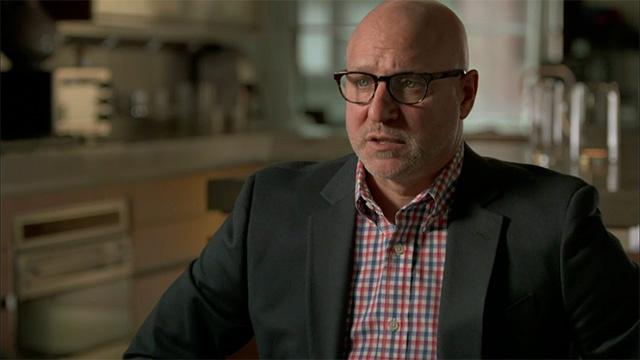
Three celebrity chefs who cook the food of their ancestors discover family members who have shaped their lives — and America’s cuisine. Tom Colicchio of “Top Chef” learns of the hardships his family endured, Ming Tsai, finds that his roots can be traced back more than 2,000 years, yielding a large family tree and Aaron Sanchez relearns his family’s treasured and diverse Mexican roots.


Copy and Paste the Following Code to Embed this Video:
The Melting Pot
I'm Henry Louis Gates, Jr. Welcome to "Finding Your Roots." In this episode, we'll explore the family trees
of 3 of America's most celebrated chefs
Aar_n Snchez, Ming Tsai, and Tom Colicchio-- 3 men who've won fame by cooking the dishes of their ancestors.
WOMAN
Well, thank you so much for being here.
AARON
I want to cook 50% as good as my mom and 50% as good as my grandmother, and then I'm doing something right.
MING
The gathering at the dining table-- that was our epicenter.
TOM
Christmas came, and, you know, there may have been ham, but there was a lasagna first.
GATES
It's a story of how America's food has been shaped by its immigrants, a story of recipes passed from generation to generation.
MING
I was just fascinated by the combination of fire and steam and smoke and the noise and the smell. That--that was my music.
GATES
A story that brings our guests face-to-face with family they never knew they had. To tell it, we've used every tool available. Genealogists help map out our guests' ancestors, tracing the paper trail that they left behind... while geneticists have drawn on the latest advances in DNA analysis to reveal secrets hundreds of years old... This, my friend, is your... and we've compiled everything into a book of life, a record of all of our discoveries.
TOM
Oh, my God. Look at all these Italians. This is amazing.
MING
He's in the lineage. That is a shock. I don't know how you got this.
AARON
Is that Rafa? That's unbelievable. I can't--I can't even believe that.
GATES
The ancestors of Tom Colicchio, Ming Tsai, and Aar_n Snchez show us how food can bring us together, bridging cultures and generations. Maybe that's why they call America "the melting pot."
I actually started coming here ANNOUNCER
Funding for "Finding Your Roots" was provided by... to shop for restaurants, and I would come in literally--this was 25 years ago-- I would take my truck and drive it into the market. Really? Park next to the--you try that now, they'll throw you out, you'll get arrested.
GATES
Tom Colicchio is a culinary superstar. He owns more than a dozen award-winning restaurants across the country. But he's just as comfortable at his local farmer's market as he is on the set of his hit show, "Top Chef." He's a man who simply adores food, and he'll happily talk for hours about how he first fell in love with it in the kitchen of his large Italian family. I mean, food was a way of life in your family. It was. You know, we had to be home every night at the table. Dinner, it was 7 days a week. Sunday was when we had macaroni. No, it wasn't pasta, it was macaroni. And gravy. The gravy was tomato sauce. It was wonderful. Tom grew up in Elizabeth, New Jersey, surrounded by aunts, uncles, and grandparents-- all Italians, all sharing recipes. He remembers entire meals from his childhood as if they were served yesterday.
TOM
We would do crabs. Now, our crab feast in the summer was really special 'cause we would take the crabs and put them in marinara sauce. Oh. That was sometimes a 4-hour meal 'cause we would just sit there and pick crabs. Everybody had a method of doing it. Some people actually picked and ate, and some people picked and put them aside and then eat at the end, and the people who had the pile at the end, you'd try to steal from them. Ha ha ha! In fact, I didn't realize that you can eat crab another way.
GATES
Tom started working in restaurants when he was 14 years old, and he's never stopped. I would start on all these dishes. Today, he oversees a food empire, cooking dishes of extraordinary complexity. But he's still drawn to the simple recipes of his immigrant ancestors.
TOM
You know, I think, if you talk to most chefs, no matter how fancy their food is, it's not what they want to eat. Mm-hmm. We want to eat, you know, peasant food. It's what we like... Right. because we all realize that's where it started.
Macaroni a great meal on Sunday at 3
00. That's it. That's where it all starts.
GATES
Like Tom, Ming Tsai is devoted to his family's traditions. He grew up in Dayton, Ohio, where his father worked as an engineer. Both his parents were Chinese immigrants, and Dayton was a long way from home. But they kept in touch with their roots in their kitchen. Were there many other Chinese-Americans in Dayton, Ohio? You know, there were very few. Our family joke was when we had the 2 or 3 Chinese families over to our house, we were Chinatown. Ha ha ha! And always surrounded by food, right? All we did was cook and eat, and while we're eating dinner, we're talking about what are we eating next and who's going to do the shopping, who's going to buy this, who's going to do the prep. My whole life has really been based around food, period. All right. So, on this part of the wok, we have some oil. We'll add some garlic and ginger. Today, Ming is one of the most popular chefs on television. I visited him on the set of his signature show, "Simply Ming," where he's been celebrating Chinese food for 11 seasons. So there. Can you imagine we used to do 2,000 of these? Watching him work was pure joy. All right. Here we go. He told me he's been cooking for as long as he can remember. You know, the first thing was my mom, 6 years old. I went into the kitchen, and I just wanted to learn how to make a Duncan Hines cake.
And she helped me
eggs, oil, boom, mix, cake. And I was just fascinated... Yeah. and I just thought this was amazing. And whenever I walked home, I would run to the kitchen first. "What's for dinner?" Ha ha! You know, it wasn't "What's on TV?" or blah, blah, blah, just "What's for dinner?"
GATES
My third guest is Aar_n Snchez. He's an award-winning chef and a Food Network luminary, host of the hit show "Heat Seekers," and a recurring judge on "Chopped." And like Ming Tsai and Tom Colicchio, Aar_n is absolutely passionate about his family's food.
AARON
I'm still cooking my grandmother's recipes that she grew up eating--I'm still cooking those recipes to this day at my restaurants, you know, and, like, I'll do different empanadas, I'll do different moles, I'll do ceviches. So it's a culinary memory. It is. And it's a way of paying respect to your legacy and to where you're from.
GATES
Growing up in a Mexican-American family in El Paso, Texas, Aar_n was introduced to cooking by his mother, Zarela Martinez, who ran a catering business as a way to make money after her marriage collapsed. For Aar_n, learning his way around the kitchen was part of learning to survive.
AARON
My parents got divorced when we were at a very young age. Mm-hmm. And we would go back and forth. My dad would have me on the weekends, I'd be with my mom during the week, and we lived really tough. My mom had no money, you know, and we were just--we were really struggling.
GATES
Their struggles were solved when Zarela made a dramatic decision. She packed her family in a van and moved to New York City, where she opened a Mexican restaurant. Over time, her restaurant would become the vanguard of Mexican cuisine in Manhattan. It would ultimately bring her stability and lead her son to his career. So, then, when you were growing up, there was never anything like, "Only girls are supposed to cook"? Oh, no, not in my house. No. Ha ha! You know, and there's just this philosophy out there, this train of thought that says women cook to nurture you, like your mom does, and men are the artists. Aha. Really? Yeah, and I never agree with that. I mean, if you said that in my house, you'd get smacked. I was going to say, "What'd your mom say about that?" You have to understand, my mom was the dad, my mom was the mom. She was the breadwinner, she was everything in our house. That's another reason that we respected our industry and the cooking world so much, 'cause it provided for us, it sustained us, and we never got in this to be famous or to be, you know, recognized for those things. It was more about taking care of the fam. America's tastes have been shaped by our immigrants. All over the country, you can find Chinese, Mexican, and Italian restaurants. You might think of them as the Holy Trinity of American cuisine. Tom, Ming, and Aar_n each come from families that recently immigrated to the United States, and each treasures the dishes of their ancestors. But I was shocked to learn that for all three, crucial details about those ancestors had been lost on the journey to America, so I wanted to help find them. My mother and my father. Look at that. I started with Aar_n Sanchez. Oh, who's that?
ZARELA
That's my mom. But these are her siblings.
GATES
Aar_n has a powerful sense of his Mexican heritage. Mm-hmm. My mother, my father. It flows from his mother, Zarela Martinez, who taught him about his family's roots as she taught him family recipes. So that's Hilario. By the way, this is delicious. Well, you still have this to taste.
Muffled
GATES
Good. It's yummy. In her home today, Zarela still makes the dishes that Aar_n grew up with. And the tradition is... But the story of those dishes started 2,000 miles away on a cattle ranch in Sonora, Mexico, where Zarela grew up, a ranch that has an almost mythical stature in family lore.
ZARELA
My dad painted, so he did that painting of the ranch. Wow! That covers that whole property. That's great. Tell me about the ranch. What was it like? Oh, it was heaven. It's an integral part of who I am and my being and my soul and everything else. I was made for that ranch, you know? I just--I loved it.
AARON
It was really the place that I think forged this strong woman that is my mom. She speaks so highly of it, from all the cowboys to the food to the riding of the horses to my grandmother making fresh cheeses. It was the place.
GATES
This is the ranch in Sonora, Mexico, where Zarela was raised. It lies less than 200 miles from the American border. This is cattle country, and it has provided Mexico's beef for centuries. Many of the dishes that Aar_n's family brought to America were first cooked here. But Aar_n had no idea how hard one of his ancestors had fought to get this ranch. In fact, the ranch might not exist at all were it not for the efforts of one man-- Aar_n's great-great grandfather, Rafael Gabilondo. Now, you recognize that person? Is that Rafa? Yeah, that's right. That's your great- great-grandfather. Oh, Papi Rafael. Uh-huh. Look at that 'stache. Heh heh! Like, that's how you rocked it back in the day. You got no respect if you were clean-shaven. Ha ha! He looks pretty cool. Yeah, yeah. Rafael was born into a prominent family, and by the time he was a young man, he'd become one of the wealthiest cattle owners in northern Mexico. But his fortunes unraveled in a flash.
Men shouting
Gunfire
GATES
In 1910, Mexico exploded into a revolution, a bloody, all-out war that would ultimately claim nearly a million lives. Its causes were complex, but one of the issues that fueled the revolt was land ownership. For more than 30 years, Mexico had been ruled by a dictator, Porfirio Diaz, whose government worked to concentrate power and wealth in the hands of a few. Laws made it almost impossible for Mexican peasants to own their own farms. Then, in November of 1910, a group of rebels rose up, calling for widespread social change, starting with land reform.
Gunfire
GATES
The country was torn apart, and Aar_n's ancestor feared for his life, so he abandoned the ranch, all of his cattle, and virtually everything he owned to make a run for the U.S. border. That's how Aar_n's family first arrived in this country, with almost nothing, part of a massive wave of refugees. More than 890,000 Mexicans fled north to the United States to avoid the revolution. Wow. Did you know that? I did not know that, and I didn't know that many people were affected by it. So you didn't know that your family originally came because of the revolution? No, but I can imagine why, you know. They were probably frowned upon. "Look at you guys. "You guys are living high on the hog, and we're over here fighting for this country and--" You're the enemy, right, 'cause you're rich. And imagine how that must have made you feel, as a Mexican national... Mm-hmm. to have, in essence, your countrymen trampling over your land and disrespecting what you have. Oh, man. You know, that must have been really hard for a person to have dealt with. Sure. It would drive me crazy. Yeah. I mean, you felt like your country let you down. Rafael Gabilondo entered Texas a fugitive from his own people, and even as his family began to assimilate in their new country, he remained focused on his homeland. He had left an enormous herd of cattle behind in Mexico, and he was determined to get it back. After 4 years of near-constant effort, he succeeded, and we found a remarkable newspaper article from 1913 that told us exactly how he did it.
AARON
"Rafael Gabilondo has received permission "from the Secretary of Treasury to cross 2,000 head of cattle from the ranches of the Gabilondo brothers." Isn't that cool? Wow! So he got a chance to get his stuff back. At the height of the Mexican Revolution, while armies were destroying his property, your ancestor somehow managed to persuade the United States government to allow him to bring 2,000 head of cattle from that ranch into the United States. He must have been a badass dude. Oh, no, he probably had what you call nowadays "game." Yeah, total game. You know?
GATES
Rafael made the most of his cattle. In 1931, almost two decades after fleeing his homeland, he had finally saved up enough money to buy a new ranch in Mexico, the ranch where his descendants would live for generations to come.
AARON
That is awesome. Think of the courage he must have had, you know? Well, he lost it and got it back. Mm-hmm. It really makes me feel proud. Mmm.
GATES
Like Aar_n, Tom Colicchio grew up savoring the food of his ancestors, but knew very little about the actual lives of those ancestors. Tom, did you ever hear any stories about what life was like for your grandparents back in Italy? Never. Never. I got to tell you, I have not heard a single story about how they grew up. Um, never heard it. Tom told me that he knew that his grandfather Felix was born in the small town of Vallata, Italy, but he had no idea how or when Felix came to America.
Sea gulls crying
GATES
Our search took us to Ellis Island, where so many Italians entered this country. Here we found our first clue-- a ship's manifest from 1901. It documented the arrival of Felix's father, Francescantonio Colicchio, or, as he was sometimes called, Francesco. "Francesco Colicchio, 20 years old, "a laborer arriving in New York from Vallata with $27." 27 bucks. $27. But this record also raised a very large question. Tom, there's a mystery here. Now, remember, his son-- your grandfather Felix-- was born in Vallata in 1903. OK. Ha ha! And he is landing in New York in 1901. Yeah. So how is this possible? If the father left Vallata in June of 1901, how could his son have been born there two years later, in 1903? Any theories? Scandal in the Colicchio household. Oh. Was Felix an illegitimate child? Did you ever hear any stories about this? None. When we tried to understand this, we discovered something surprising. Records showed that Tom's great-grandfather Francescantonio immigrated to America in 1901, but then, at some point, he returned to Italy, where he fathered Tom's grandfather Felix, and then he returned to the United States a second time in 1906.
Ship's horn blows
GATES
We don't think of immigrants as going back and forth between Europe and America, but it turns out Francescantonio's behavior was not all that unusual. In the early 20th century, more than half of the Italians who came to America made repeat trips across the Atlantic, earning money in the United States to bring it home to Italy. Some made dozens of crossings, living apart from their families for years at a time. Historians called them "birds of passage." It's a sweet term for what must have been a hard and lonely experience. This is not a part of the immigration story that most of us are aware of. Right. Can you imagine what their experience was like, being separated from their loved ones for years at a time? No, I couldn't imagine being away from my children for 7 years right now. And that's a tough passage back then, too. Oh, yeah, and they were in steerage. Yeah, I don't think they were up on the top. Francescantonio and his countrymen weren't on top in the United States, either. In the early 20th century, Italians were near the very bottom of American society. They were mostly confined to crowded cities, where they did menial labor and were widely despised for their Catholicism, their social customs, even their dark skin. One of the reasons that Tom knows so little about his family history is that Italian-Americans for generations chose not to speak about that painful past. Their stories, even about their homeland, were lost in their silence. What does it suggest to you about his life back in Italy? I mean, he wanted to go back. Well, he wanted to go back, but he had to take care of his family, so I'm assuming that they weren't able to make a living there, and he was doing it here and saving up what he could and going back. And, you know, it's a big sacrifice. I mean, no one wants the sacrifice to leave your family... Mm-hmm. but then to continually go back-- and also, at this point, he was-- let's just go back a little bit--he was 35, so he was getting up in age, too. Yeah, absolutely. Back then, 35 was, you know, probably equivalent to, you know, 50 now. Mm-hmm. And so it was just getting tougher and tougher. Tom had no idea just how tough things were about to get for his great-grandfather. In 1911, Francescantonio returned to Vallata yet again, his third trip across the Atlantic, but this time, his homeland was on the brink of chaos. In July of 1914, Europe was engulfed by the First World War. Tom's great-grandfather was pressed into the Italian Army and soon found himself in one of the war's great stalemates. For 3 years, the Italians struggled to take a tiny stretch of Macedonia from Germany and its allies. 15% of Francescantonio's fellow Italians were killed or wounded. Many more were taken prisoner, and although he survived, Francescantonio returned to an Italy that was economically ravaged, an Italy that would soon descend into fascism and then the chaos of World War II. But Tom's great-grandfather endured, and in 1947, he made one final trip across the Atlantic. This time, he brought his family with him. It says Colicchio, Francescantonio, 69 years old, and Maria Domenica, 69, so they were 69 when they actually came for the last time. That fourth immigration document. Ah. Since his first trip to the United States-- let's recapitulate-- remember, that was in 1901. Francescantonio had returned to Italy at least 3 times, fought in the First World War, fathered two children, and lived through World War II. I mean, my God. Yeah. That's a lot of history, man. Francescantonio, I think, is the key because at a certain point, he could have stayed there. I know. And that would have been it. There wouldn't have been a Colicchio family in the States, and so this guy right here is the key. Four trips. Yeah. Four trips. Wow. Like Tom and Aar_n, Ming Tsai's original immigrant ancestors endured remarkable hardships on their journey to America. But unlike my other guests, Ming knew these ancestors well. They moved to Ohio at the end of their lives and helped inspire Ming's love of food. What do you remember about your grandparents?
MING
Ah, they were the best. They lived in Dayton, Ohio, in an apartment a mile and a half from our house. Every Friday night was dinner at the grandparents', which I just loved because both were great cooks. Ye Ye, my grandfather, grew everything. I mean, he'd go, "Look at this cucumber, look at these chili peppers. He made his own sambal, the... the spicy condiment? Yeah. So he would take garlic and his own chilies and make it. They would do their own noodles, their own wonton wrappers. Mmm. And so every Friday, we'd go. You know, I'm 10, 11, 12, 13. I was so into the food.
GATES
Ming's grandparents cooked the traditional food of their homeland, but they rarely spoke of their experiences back in China, perhaps because those experiences had been so traumatic. In 1937, when Ming's grandfather was 38 years old, the Japanese invaded China, part of a conflict that would soon expand into World War II. Within months, Japanese forces entered Beijing, where Ming's grandfather was comptroller at Yenching University. Ye Ye had been at the university for more than a decade, serving in many different roles, even designing sidewalks for the school. As the Japanese drew near, most of the university's employees fled, but a handful remained behind, including Ming's grandfather. Why do you think he stayed? You know, I think that defined him. It was--Yenching was his home. He really--I mean, he was the comptroller, but he already did so much to the university and the last thing he wanted to see is everything he did destroyed. Mmm. And--but he was that-- I mean, he was so strong in the mind that he probably really-- it was he thought he could take care of the Japanese himself somehow. This confidence was noble, but misplaced. Ming's grandfather Ye Ye was arrested and thrown into a prison camp, where he was repeatedly tortured and soon contracted typhus. Ye Ye barely survived, but when the war ended, he regained his strength and returned to his beloved university to resume his duties. Then he faced a new threat. This is from the "Chicago Tribune," April 8, 1947. "A typical example of Communist-inspired propaganda was on the bulletin board of Yenching University." Almost as soon as the Japanese were defeated, China erupted into a civil war between Communists and what were known as Nationalists. The Nationalists were supported by the United States, and their ranks were filled with China's emerging middle class. The Communists were backed by the Soviet Union and promised to liberate China's enormous numbers of impoverished peasants. The conflict between the two groups had been evolving since the early 20th century. Now, war consumed the entire country, a war that was ultimately won by the Communists. In the wake of their victory, China's new leader, Mao Zedong, moved to consolidate his power. He authorized the execution of anyone with ties to the Nationalists. Landowners, businessmen, and intellectuals were killed in droves. This kind of violence would mark Communist rule in China for the rest of Mao's life. It would culminate in the infamous Cultural Revolution, which claimed tens of millions of victims, and it placed Ming's grandfather, a prominent intellectual, in terrible danger. Fortunately, he saw it coming.
MING
They knew early on, when these rumors started coming, that they would be targeted, my grandfather. And my grandfather fled immediately.
He knew. GATES
Mm-hmm. A lot of his friends that stayed were killed... Mm-hmm. just because they were "threats" to the government, and he absolutely would have been killed.
Crowd cheering
People don't realize this simple fact
more people were killed in the Cultural Revolution than the Holocaust. Mm-hmm. Both are horrific. Obviously, the way the Holocaust was done was even more horrific, with the gas chambers, whatnot, but more millions were killed over a longer period of time. The reasons are equally stupid; one because you're Jewish, one because you're a thinker. I mean, both are just horrific.
Crowd cheering
GATES
Ming's grandfather spent 3 years running from the Communists, fleeing from Beijing to Shanghai to Guangzhou, then to Macao, until he finally reached Nationalist-controlled Taiwan in 1951. He was lucky just to be alive. But freedom came at a cost. He and his wife had left behind almost everything they owned, so they had to rebuild their lives from scratch, first in Taiwan, and then in the United States. Ming's grandfather would be forever marked by the experience.
MING
Ye Ye was so frugal and cheap. Well, he lived through a few wars, right? He was imprisoned in Japan, and so, on the hottest Dayton, Ohio summer days, you're in 95%, 100% humidity, Nai Nai, my grandma, would call my dad and says in Chinese, you know, "He turned out the air conditioning again." Ha ha! Right? 'Cause he wanted to save money. Yeah, of course. So then Dad would have to drive there, like, "Ye Ye, you cannot turn this off" and try to explain engineering-wise that it costs more energy to turn it on and off. That's true. He'd be like, "Yeah, yeah," as soon as he leaves, turn it back off. Ha ha ha! It was just--and they had plenty of money. They're not rich, but they had plenty of money for electricity, but it was just-- it was the mindset.
GATES
Each of my guests had now seen their family's immigrant roots revealed and heard stories of challenges faced and overcome by their first ancestors to arrive in this country. Now I wanted to take them back further in time, back to the most distant ancestors we could name. For Tom Colicchio, this meant going to a tiny mountain town in southern Italy-- Vallata. This is where most of Tom's ancestors come from. And he knows almost nothing about them. Those are your great-grandparents-- Gaetano Marino and Raffaela Donata Schiavina. Schiavina. You ever heard of these people? No.
bell ringing
GATES
Using church and town records, we were able to trace his family back 6 generations in Vallata.
TOM
This is a register of deaths in Vallata in 1814. We have Salvatore Colicchio, who was born in Vallata in 1744. 1744, man! That is before the American Revolution. That's amazing.
GATES
Tom wanted to know why his family ever left Vallata. It looked idyllic. But our research suggested that the town, while beautiful to behold, was a very difficult place to live, buffeted for centuries by poverty and violence. Things reached a head in the 1860s when, with the population struggling to feed itself, the Italian government levied a harsh wave of new taxes. The rule of law in Vallata simply broke down. Groups of bandits known as brigands began to roam the countryside. Some even robbed City Hall. Local newspapers were filled with articles telling the citizens "Arm yourself."
TOM
"Sons of Abel! Charged "with defending your territory, "the
best defense is yourselves
"take up arms! And if you don't find "yourselves with any, buy some... "at the first sight of the brigands, ring your bells like crazy..." "Ring your bells like crazy"! Man, they must have been living in terror. Yeah.
ringing
best defense is yourselves
Now, I wonder if your family would have joined the community defense against these bandits. What do you think? I would imagine so. Ha ha! You guys seem pretty close-knit. I think that if you had to take up arms, my family would probably take up arms.
GATES
Some of Tom's ancestors may very well have fought the bandits. We can't tell for certain. We do know, however, that one member of Tom's family took a different route. Tom's third great-uncle, a man named Vito Marino, was arrested as a bandit and brought to trial before his fellow townspeople.
TOM
So let me understand this. So he was arrested for-- Being a bandit. For being a bandit. Yeah. Vito Marino, the brigand, is your great-great-grand uncle.
both chuckle
TOM
OK. Ha ha! Well, we wanted to see how Vito fared after he was caught and stood trial. Could you please turn the page? Whoa! Could you read the transcript? He didn't do so well. Hmm. "The bandits were condemned to death..." in the killing "by a firing squad outside of the Church of St. Vito." Tom, unfortunately, your great-great-grand uncle Vito was executed. For being a thief. He was killed by a firing squad in front of the church, in front of that church right there. The church. Wow. Huh. This is amazing. Hmm. The more we researched, the more we realized that Tom's family in Vallata faced extraordinary challenges for generation after generation. "Avellino, Italy, June 7th, 1910. "Earthquake kills scores. "An earthquake wrought havoc throughout the province of Avellino in Campania." The earthquake demolished most of Vallata. Hundreds were killed. Much of the town lived outdoors for several months. At the same time, the population was swelling and farmland was eroding. So poverty was widespread. Did you ever hear of the stories of these hardships that drove your family to migrate? No. I never heard stories about a hard life back in Italy. Again, they never spoke about it. It was almost--And maybe that was it. Maybe because it was so difficult, they decided that they didn't want to repeat that history. Too painful. They wanted to leave it behind. Yeah.
GATES
Like Tom, Aar_n Snchez wanted to know more about his deep roots. We'd already introduced him to his great-great grandfather, Rafael Gabilondo, the man who first brought his family to the United States from Mexico. The next step on our journey was Rafael's father, a man named Hilario Gabilondo. Hilario is Aar_n's third great-grandfather. And he's a legendary figure in the Snchez family. In 1857, Hilario was a commander in the Mexican army, stationed in Sonora, near the border between the United States and Mexico. It was a dangerous time. Groups of Americans called filibusters were routinely crossing into Sonora to claim Mexican land as their own. The situation reached a crisis point in April of 1857, when an army of filibusters seized the Mexican town of Caborca. Aar_n knew that Hilario had been involved in the battle that followed, but he wanted to know exactly how. We found the letter written on the third day of the fight that told the tale.
AARON
"With the help of the angels, "the filibusters will receive an exemplary "punishment. "The victory will be ours because my heart tells me so." And can you see who signed that letter? Hilario Gabilondo... That's your boy, man. Yeah. That is unbelievable. Ha ha! That is so cool. Wow! Your third great-grandfather, Hilario, is essentially saying, "The cavalry's on the way. Mm-hmm. "And it's me!" Exactly!
GATES
After 6 days of fighting around this small church, Hilario and his men forced the Americans to surrender. Your ancestor won. Mm-hmm. His men swayed the battle. They surrounded and captured all the Americans. I don't know about you, but when I was growing up, Mexicans never beat the gringos. Yeah, yeah! Exactly! It's true. All they did was lose. Maybe this and the Alamo are the only two examples of that, you know. In the aftermath of his victory, Hilario was ordered to execute the American prisoners. He carried out his orders with ruthless precision, sparing only the youngest filibuster, a 16-year-old boy. Now, the leader of the Americans, Henry Crabb, was found dead, riddled with more than 100 bullets. Wow. So they used him for target practice. Yup. His head was completely severed and preserved in mescal. Wow.
both chuckle
GATES
That's cold, boy. Yeah! The bodies of the other Americans were left in the desert to be eaten by birds. Mm-hmm. Why do you think your ancestor did this? The Americans would have done the same to the people of Caborca. So I think he did this to teach everybody a lesson. The Mexicans must have been really resentful towards Americans and what they were probably telling people Mexico was like-- that it was overrun with people that had no scruples and no morals, all that. You know, and they were thinking to themselves, "We were fine down here before you guys tried to take our land." So I can't tell you I feel sorry for these gentlemen, these filibusters. I mean, when you try to take something by force, this is what happens. If you don't succeed, you got to pay the piper. Do you know what I'm saying? And the rubber met the road, as they say.
both chuckle
GATES
In Mexico, Aar_n's ancestor is still celebrated as a hero, the man who saved the entire Sonora region from American imperialism. But as we researched Hilario's life, we found something that took Aar_n completely by surprise. His great-grandfather, the hero of Mexican independence, was not born in Mexico. This is the baptismal record... OK. from Bilbao, Spain, in 1822. Can you imagine? Look at that thing, handwritten. Unbelievable. And that is the record of the baptism of your ancestor. This means that your third great-grandfather, Hilario Gabilondo, was born, Aar_n, in Bilbao, in the Basque region of Spain. That is insane!
chuckles
GATES
That's insane. Aar_n wanted to know how Hilario got to Mexico. It turns out, like Tom Colicchio's Italian ancestors, Hilario was fleeing a country in turmoil.
gunshots, men shouting
GATES
In 1833, when Hilario was just 11 years old, the Spanish king, Ferdinand VII, died. And the country descended into Civil War, one of the bloodiest conflicts in all of Spanish history. And Aar_n's ancestor found himself at its epicenter. That's a painting of your ancestor's hometown under siege. Wow! Over a thousand people died in that battle alone at a time when Bilbao's population was less than 10,000. That means 10% of the population was wiped out in this one battle. So you think that might have had something to do with why he split? Yeah. And, also, that just, you know, conflict is in the blood. And, you know... and I think it's undeniable. War seems to follow your family. Yeah, yeah, yeah. Ha ha! To escape the war in Spain, Hilario fled to Mexico, thereby launching Aar_n's Mexican family. But he left deep roots behind. We were able to trace Aar_n's Spanish family back 4 generations to the early 1700s, revealing that this Mexican chef has a far more complex background than he'd ever imagined. Wow!
Gates chuckling
GATES
That's the real deal, man. This shows that the earliest ancestor we could find on your mother's side of your family tree was Martin Andres Gabilondo. What's it say? "Sixth great-grandfather." Martin was born on March 31, 1713, in Spain. That's unbelievable. In your family history in your mind, you all started in Mexico. Exactly. Yeah. But they had to come from someplace else. It's true. It's true. So you have deep roots in Spain, deep roots in Basque country. I think a trip is in order. Man, this is your roots. Yeah. This is like... you can do your Alex Haley but back to Bilbao. Yeah. Absolutely. Absolutely. So when people ask you now, when your son says, "Daddy, where are we from," what are you gonna say? We're Mexican Americans by way of Basque country, Spain. There you go. There you go. Unbelievable. We've been able to take Ming Tsai back to China, with his paternal grandparents, who fled the Communist revolution. To go back further in time, we turn to a very rare document. When Ming's grandfather left China, there was one object he took with him, a book tracing the family's genealogy back to the year 891 AD. It's a treasure in the Tsai family, but unfortunately for Ming, the book is simply oral history set down by his ancestors. There's been no way to know if it's true... until now. We sent researchers to China to try to confirm the Tsai genealogy. It was a long shot. The Communists had ordered that all genealogical records be destroyed in an effort to break down family structures. This was, in fact, a fundamental part of the Cultural Revolution. But in some cases, stone-carved tablets, known as steles, have survived. Before Communism, the Chinese landscape was dotted with hundreds of thousands of these steles. In Ming's hometown, only one remains standing. Our researcher kept asking around. And someone told her that of all of the family shrines that had existed before the Cultural Revolution, there was only one that remains standing. Can you imagine that? I mean, of all these thousands... It's crazy. Just one. Could you please turn the page? Can you read the transcribed name taken from the stele? Tsai Ying. You know who Tsai Ying is? That's the same last name. Tsai Ying is your 36th great-grandfather. You're kidding me. The one shrine that survived is your family shrine. Come on. That's it, baby. I just got goose bumps. Wow! That's crazy. That's unbelievable. That is unbelievable. The stele confirmed Ming's family history to the letter. It documented his ancestry back to 891 AD and beyond. That is your family stele that miraculously survived. And what's the odds, Ming? I am just--I'm so proud. That's amazing. But for Ming, the biggest surprise was yet to come. His family stele led our researcher to records in the Shanghai library, records that allowed us to construct a Tsai family tree that stretched back more than 90 generations. Oh, my God. It was the largest family tree that we've ever constructed. And it connected Ming to a legendary figure in Chinese history, Huang Di, one of China's first 5 emperors, often cited in folklore as the father of the Chinese language. Huang Di is in the lineage. Huang Di... who lived around the 27th century BC. Good God. Amazing. Wow! I am practically speechless, which is rare. This is--this is life changing. It blew our minds. Ha ha! It's just--it's just incredible. That's unbelievable, right? The record skips several generations. So precise genealogy is impossible here. But Huang Di is roughly Ming's 116th great-grandfather and just one of the hundreds of new ancestors that we were able to name for him. It's just so fascinating to see and to learn that--I mean, again, I was always proud to be Chinese. I knew I had good family history of 34 generations. To triple that basically and go back to Huang Di-- you know, one of the original 5 emperors-- is just mind blowing. But it's so--has already set in motion in my head, what did he eat? What did they all eat? How did they eat? That's almost like an immediate new quest... Mm-hmm. because there was definitely food tied in to every one of those Tsais. Though there were no emperors in Tom Colicchio's family, when we laid out his tree, he was every bit as excited as Ming. This combines everything that we've learned about your family tree. Wow. That's amazing. Look at all these Italians.
both chuckle
GATES
How's it feel to see a document of your family like that--names and events brought back from the dead? It's really moving. A couple things I have to do. I have to book a flight to Vallata very soon. That's right. Absolutely. Because I cook, I need to unearth dishes and food from this region and understand it more. Because maybe that will unlock a key as to what I do and why I do it. All right. Look at all these ancestors. Think about who you met. If you could cook dinner for one person... Oh, wow. who would it be? And what would you cook? That's a great question. God. Um...
exhales
GATES
You know, I'm gonna tell you, just because, you know, he made the trip back and forth... Francescantonio. Uh-huh. I want to cook for him. And I want to cook for him what they were getting in first-class on that boat and not what he was getting in steerage. That's what I want to do. A big porterhouse steak, I guess... Whatever was going on on the upper decks, that's what he deserves. That's cool. Yeah. I like that. Once we reached the end of the paper trail for all 3 of our guests, it was time to see what DNA analysis could tell us about their more distant past. Genetic genealogy allows us to look back thousands of years and discover our origins. For Tom and Ming, our tests echoed what we'd already learned and happily confirmed their cherished family roots. But Aar_n Snchez was a different matter. He had something he wanted to know... a question that only DNA could answer. The paper trail had taken his family back to the early 1700s in Spain and Mexico. But there were no records regarding his deeper roots. He knew that Mexico was a place where Spanish colonists, Native Americans, and African slaves had mixed for centuries in a violent history that ultimately produced profoundly diverse people. And Aar_n told me that he was especially eager to learn how that history played out in his own heritage. I was hoping to know if there was any indigenous blood in my family. Native American. Native American. That's something that calls to me a lot, and I want to see if it's actually true. Aar_n guessed that he might be as much as 1/4 Native American. And it turned out he was a very good guesser. Can you read those percentages? Hey, hey! I was...I was close. Look at that! Yeah! I'm 66.4 European... 24.6 Native American. Yup. Yeah! I'm 66.4 European... Can you imagine? Wow! That's a lot. It's a lot. There you go. We don't know what tribe, but we know that 24.6% Native American translates to the equivalent of having one grandparent who was fully Native American. Really? So that's how you would break it down? That's how you break it down. Wow! So you have--1/4 of your genome is Native American. That's cool! Aar_n not only had a large amount That's cool! of Native American ancestry, he also had a significant amount of African ancestry. So you're 2/3 European, 1/3 Native American. And you got some brother in there, man. 3.7% is a lot. Mm! Yeah! That's unbelievable! It's unbelievable. Did you ever think you were a brother, brother? No. I didn't. But, you know, for me, this is very interesting because now I'll be able to speak so much more confidently about who I am as a person knowing where I'm from. Mm-hmm. You know, now... there's not any guessing game anymore. Now I can speak very concretely with a lot of pride about my ancestry... my lineage. Mm-hmm. And it's very interesting because now as I hear their stories, I can understand where elements of my personality come from now, you know? And that's another real insightful part of this exercise. You mean that macho warrior part? That macho warrior part, you know... Well, Aar_n Andr\s Snchez, thanks for allowing us to introduce you to your ancestors. Thank you. I appreciate it, my brother. Thank you. Thank you very much, Doctor. A real pleasure. GATES,
VOICE-OVER
That's the end of my journey into the family stories of Aar_n, Ming, and Tom. But at its core, this is a journey that will never really end. New immigrants, like my guests' ancestors, come to America every day, bringing new recipes and new ideas, helping to broaden our sense of who we are as a people, writing our country's history as they make their own. It's been a privilege to tell just a few of their stories. Please join me again to hear more next time on "Finding Your Roots."
ANNOUNCER
Next time on "Finding Your Roots"... on a 3-DVD disc set for $39.99. The Season One companion book is also available for $30. To order, call 1-800-336-1917. To share your family stories, watch full episodes and find out more.
Search Episodes
Related Stories from PBS Wisconsin's Blog


Donate to sign up. Activate and sign in to Passport. It's that easy to help PBS Wisconsin serve your community through media that educates, inspires, and entertains.
Make your membership gift today
Only for new users: Activate Passport using your code or email address
Already a member?
Look up my account
Need some help? Go to FAQ or visit PBS Passport Help
Need help accessing PBS Wisconsin anywhere?

Online Access | Platform & Device Access | Cable or Satellite Access | Over-The-Air Access
Visit Access Guide
Need help accessing PBS Wisconsin anywhere?
Visit Our
Live TV Access Guide
Online AccessPlatform & Device Access
Cable or Satellite Access
Over-The-Air Access
Visit Access Guide




Follow Us