








PBS Wisconsin Passport
Watch this video with
PBS Wisconsin Passport
Become a member of PBS Wisconsin, support your local community, and get extended access to PBS shows, films, and specials, like this one.
The Irish Factor
01/12/16 | 52m 40s | Rating: TV-PG
Explore the shared Irish ancestry of three powerful social commentators of our times, Bill Maher, Soledad O'Brien, and Bill O'Reilly, in "The Irish Factor," episode two of Finding Your Roots: Season Three.


Copy and Paste the Following Code to Embed this Video:
The Irish Factor
I'm Henry Louis Gates Jr. Welcome to "Finding Your Roots." In this episode, we'll explore the ancestors of political commentator Bill O'Reilly, comedian Bill Maher, and journalist Soledad O'Brien. All 3 share a fundamental bond. They are the descendants of Irish immigrants.
O'Reilly
The Ireland experience was all depravation, was almost expected that life was gonna be hard. We come from people who were the survivors who wanted something better, whatever it takes.
O'Brien
America is this amazing opportunity of beginnings. When you come to this nation, you have a chance.
Gates
The ancestors of my 3 guests made the most of that chance, but their stories were lost over time. To unearth them, we've used every tool available. Genealogists stitched together the past using the paper trail left behind while geneticists used the latest advances in DNA analysis to reveal secrets hundreds of years old... This is yourOh, gosh. "Book of Life."Ha ha ha! Gates,
voice-over
and we've compiled everything into a "Book of Life," a visual record of all our discoveries.
O'Reilly
That's unbelievable...
Gates
Ha ha ha! and that's just fate.
Maher
Amazing, and why didn't my father ever tell me this? I am stunned that you can take the family back this far. I mean, it's amazing. It's incredible. Bill O'Reilly, Bill Maher, and Soledad O'Brien all knew they had Irish roots, but now they'll finally learn the stories of the ancestors who made their lives possible, and they'll discover that their family bonds run deeper than they ever could have imagined. Gates,
voice-over
Roughly one out of every 10 Americans claims Irish descent. Their traditions are ingrained in our national culture, but Irish heritage wasn't always celebrated in this country. Most Irish immigrants came to America with nothing, and for generations, they struggled for social acceptance and economic stability.
O'Reilly
After the initial launch, we heard little about the program. Gates,
voice-over
Bill O'Reilly's ancestors were among them....whichhe does admit... Gates, Bill's Fox News talk show "The O'Reilly Factor" is one of the highest-rated news shows in the history of cable TV with an average of 3 million viewers per night. His direct, fiery approach shaped a riveting, new brand of television, but he says that from the very beginning, "The O'Reilly Factor" was simply meant to be an expression of who he is.
O'Reilly
I wanted to design a show that's going to show off my talents--being obnoxious, uh, being outrageous, uh, being pointed in my view of life. And the rest,as they say-- History. Sure. Mm-hmm. That being said, a lot of people do despise me, and I'm always curious to see what they don't like.
Gates
Like most people I know, my own political views were shaped by my parents, so I was surprised to learn that Bill O'Reilly didn't grow up in a house filled with die-hard Republicans. My mother was a Democrat. Uh, my father was a Republican, but not heavy-duty. Did your family argue about politics? Not so much. I remember them kidding each other, uh, on the, uh, Kennedy-Nixon race, uh, that they were canceling each other out. Ha ha ha! Bill's argumentative style was molded on the streets of his hometown-- Levittown, Long Island, a middle-class suburb that overflowed with the children of Irish-American families as well as Italians, Poles, and Eastern European Jews. It was on Levittown's streets that Bill developed his talent for verbal jousting.
O'Reilly
There were just packs of kids everywhere, and we had to really use our, uh, verbal skills to rank each other out, and I was good at it.
Gates
Bill didn't know it at the time, but Levittown was only open to white residents. In fact, Bill told me that he didn't talk to a black person until he was a teenager. Nevertheless, whenever Bill's peers in Levittown made racist remarks, he used his natural debating skills to silence them.
O'Reilly
I idolized Willie Mays. We all love Willie, so when people in Levittown would use the n-word to say disparaging things about blacks, I would go, "What color is Willie?" Mm-hmm. and that would shut them up.
Gates
Although Levittown nurtured the talents that put Bill on the path to fame, he credits his success primarily to his Irish heritage. You once said, "The reason I've succeeded is because I'm Irish." I believe that, you know? I--I think that I was, uh, given gifts by God, but the way they came to me was through my ancestors, Ha ha!my bloodline, you know, blarney, you know. I could talk. Mm-hmm. I think I have a--a dash of courage, that I don't fear the establishment, and I think that's all been handed down to me by what has happened in the past.
Cheering and applause
Gates
Gates,
voice-over
Comedian Bill Maher comes from the opposite side of the political spectrum, but, like Bill O'Reilly, he's as opinionated as they come. A study out of Duke University came out this week that said-- get this--9% of Americans have both anger issues and a gun.
Laughter
voice-over
Yeah. They're called cops.
Laughter and applause
Gates
"Real Time with Bill Maher" has been on the air for 13 seasons, and Bill's become a fixture of our political discourse, but when we was a fresh-faced comedian working the stand-up clubs of New York City, his brand of humor didn't always go over so well.
Maher
Even whenI was young, I wanted to talk about world affairs and politics and what was going on, and, of course, this didn't really work when you're 23 because the audience looks at you like, "You don't have-- "you don't havethe gravitas to be talking about the election," and they were right.
Gates
Bill's interest in politics was shaped at a young age by his father William Maher. William was a radio newsman, and his passion for current event filled the Maher home, but William Maher influenced his son in an even more important way.
Maher
My father was a very good living-room comedian. That's where I got that desire to make people laugh. I think there's just something in you that clicks and goes, "Hmm, that makes you popular. "People like you when you do that. That's a good feeling." You'll findwith comedians, it very often takes a generation to gestate the comedic gene. It could come-- The father isvery often funny around the house, and the next generation, they take it to the professional level. That's so the casewith me, so, I mean, I'm really his product.
Gates
William Maher comes from a long line of Irish Roman Catholics, and when Bill was growing up, he grudgingly took his place alongside his dad in the pews of his neighborhood church, but today he's one of America's most outspoken atheists. The Catholic Church particularly seems to irk you. Well, becauseI was brought up in the Catholic Church and they scared me and traumati-- traumatized me and-- and I don't feelthey gave me any morality, either, you know? So this is payback. It's pa--ha ha!Ha ha ha! Even though Bill often pokes fun at his family's religious beliefs, he remains proud of his Irish ancestry and is eager to learn more about his roots back in Ireland. I traveled in Ireland, uh, in 1999, and I can't remember what the town was, but there was one town where everything was Maher--Mm-hmm. you know, the Maher Pharmacy and the Maher this and the Maher that. What's it like to see that? They're like someone who's in the fog and they're over there and I can't reach them, Mm-hmm. you know? I'm Soledad O'Brien, and I'm in Times Square to see how well... Gates,
voice-over
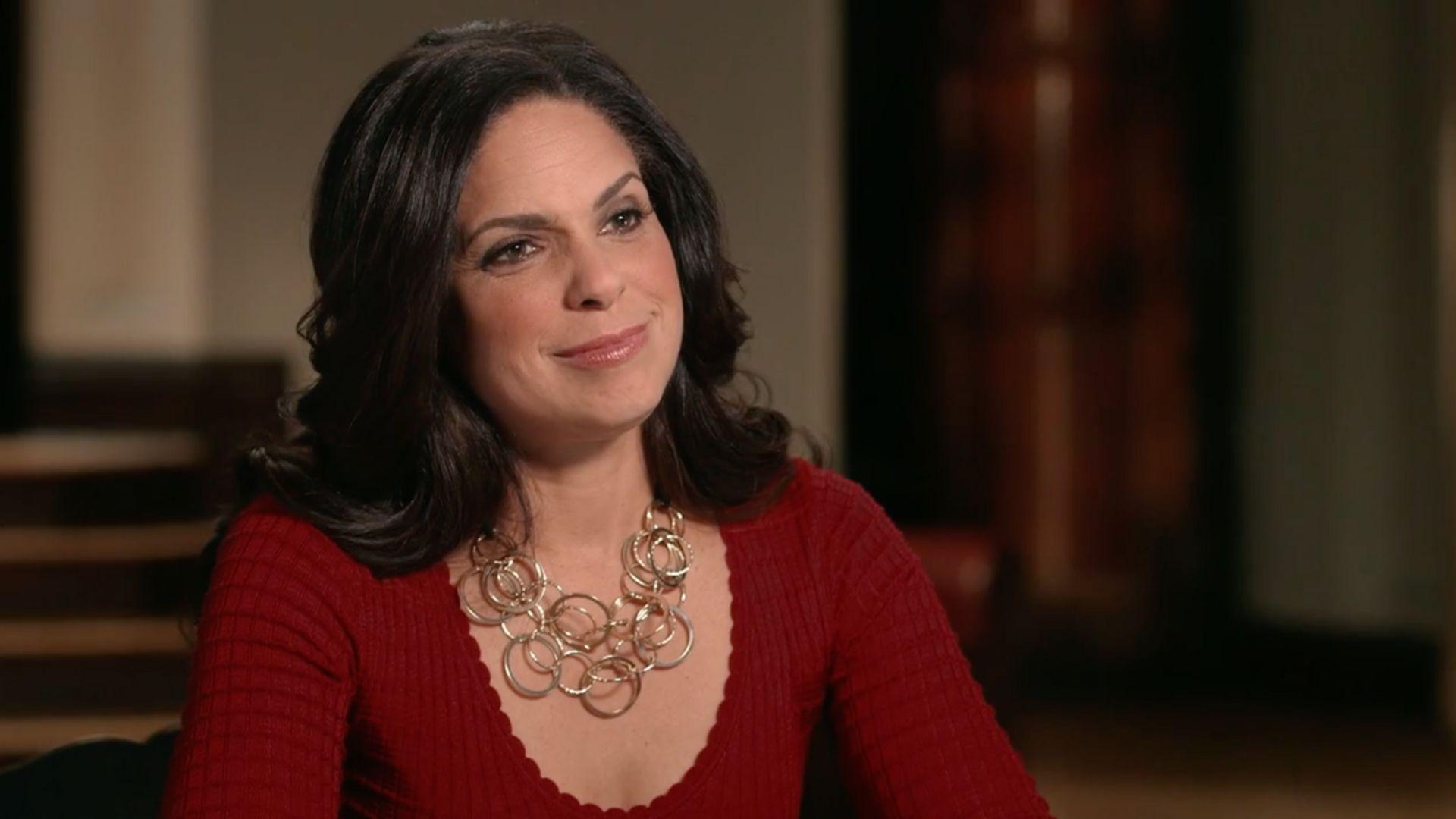
My third guest is Soledad O'Brien, one of America's best-known journalists. Soledad's been a CNN anchor and correspondent acclaimed for her coverage of the Haitian earthquake and Hurricane Katrina as well as for producing thoughtful documentaries on race. And how about, then, we keep Obama here?
Woman
We're keepingthe first Obama. Yeah. That stays.OK. Gates,
voice-over
Watching those documentaries, I learned about her mother's Afro-Cuban roots, but there's another side to her heritage that I didn't know. Soledad's father is an Australian of Irish descent. She told me that when she was growing up in Smithtown, a predominantly white town on Long Island, her mixed-race heritage made it difficult to fit in.
O'Brien
You'd have these moments where it would be--suddenly become very clear to you that you really didn't belong here. Like--like how?Uh, oh, gosh, you know, I remember there was a boy who I had a very big crush on, Mm-hmm.and I remember his mom took me aside and said, "I want you to understand Adam will never date a girl like you." Oh! "He will never date a girl like you. You should know that," Oh, God. and I just remember feeling like, "I cannot wait to get out of this town."
Gates
Soledad credits her parents with giving her the strength to overcome discrimination, but her ambiguous physical features and her light-brown color routinely force her to explain her ethnic identity. When people say,"What are you?" in one word, what do you say? If I'm feeling snitty, I say, "I'm an American. Mm-hmm. Mm-hmm.What are you?" Um, it's very exhausting to constantly feel like you have to explain yourself Mm-hmm.to somebody, and often, that back and forth is, like, "You're confusing to me in the 10 boxes I have. Mm-hmm."You don't fit into one of my 10 boxes." Mm-hmm. I now think of that as their problem, and certainly not my problem. So what boxdo you check for the United Statescensus? I check everything. Just to screwthe system. A little bit. Yeah. I like that.Ha ha! Soledad is largely cut off from her Irish roots. When her father emigrated from Australia to America, he left behind the family's old stories about Soledad's Irish ancestors.
O'Brien
I think my dad very intentionally did not want us to hearken back to our roots. Mm-hmm. It was just, like, "You are Americans now, "and this is the life that we're helping you build, "and it's a different life, "so, you know, who your relatives are "is interesting, but you don't need it to move forward." But have youwanted to know about yourfamily tree? Oh, absolutely. There's tons I'd like to know about my dad's side. Bill O'Reilly, Bill Maher, and Soledad O'Brien all have deep roots in Ireland, but, like so many of us, they know very little about the lives of their ancestors, so we set out to uncover their lost Irish heritage. I would think so. In Martha's Vineyard, I spent two months... Gates,
voice-over
I started with Bill O'Reilly. Bill told me that he was raised on what he sees as classic Irish values-- hard work, more hard work, and no complaining.
O'Reilly
I never heard a lot of whining from either side of the family, no "woe is me" business. They were happy to be here in America, even if it was tough here and breaks didn't go their way.
Gates
To find the source of these values, we began to work our way up Bill's family tree. We started with his paternal grandfather John O'Reilly III. John was a New York City policeman at a time when half of the force was Irish, and he regaled Bill with stories about his tough beat on the Brooklyn waterfront...
O'Reilly
He had an aura that he was a no-nonsense guy.
Gates
Mm-hmm. He was in charge. My grandfather was in charge... Ha ha ha! and that made an impression on me. I'll bet. I remember him saying, "We kept our neighborhood safe"... Mm-hmm. and they did it whichever way they did it... Mm-hmm. and that was the implication. but while John O'Reilly's stories of his life as a policeman captured Bill's imagination, he knew very little about his grandfather's earlier years. One of the few things he did know was that his grandfather had served in World War I. Did you everhear any stories about his experiences in World War I? I knew he was there, but did I get specifics about the combat? No, Mm-hmm. so I really don't know what he did in the war, but I regret not asking him. We wanted to answer the questions that Bill never got to ask his grandfather, so we dug into the records at the National Archives, and we found the military file for John O'Reilly. This is an Armyservice card for World War I.Hmm. "Organization served-- Company "A," 307th Infantry. Rank--Corporal." Your grandfather served in the 307th Infantry from April 6, 1918, until April 28, 1919. I did not know that. Interesting. The 307th was part of the Melting Pot Division, which was largely composed of the children of New York City's immigrants-- Jews, Italians, and, of course, the Irish-- but the 307th Infantry did more than reflect the patriotism of the children of America's recent arrivals. Deep in the National Archives, we found a letter written by one of the infantry's colonels. It revealed that Bill's grandfather took part in one of the most pivotal battles of the entire war.
O'Reilly
"No greater test could have been put "to soldiers than an attack through the wilderness "of the Argonne. "Day after day with one short rest, "exposed to mud, rain, and cold, "the officers and men, exhausted by exertion and exposure, attacked a bitter enemy." Your grandfather fought in the Battle of Argonne, one of the most famous battles in history. Amazing.
Gates
On September 26, 1918, after almost 4 years of fighting along a static front, the Allies attempted to break through the German trenches in Western Europe. Bill's grandfather was part of an American Army of more than one million men who spearheaded the attack. For nearly 7 weeks, the men fought savagely across the wasteland of swamps and forests. In the end, the offensive was successful, forcing the Germans to surrender. The war was over, but victory had come at an enormous price. The Americans had suffered almost 120,000 casualties, including more than 26,000 deaths.
O'Reilly
You know, it's sobering to know the scope and the violence that he had to experience. You then understand that he had to take that back with him. Mm-hmm. I mean, that's a lot of experience on a human being, and of course it shaped the way my father was raised and the way I was raised subsequently. Yeah. I think we're all connected to what happened.
Gates
As Bill O'Reilly's grandfather was risking his life on the battlefields of World War I, Bill Maher's Irish-American grandfather was fighting a different kind of struggle. Bill's grandfather William Maher I died before Bill was born, and he only knew the most basic details about his grandfather's life.
Maher
I knowhe had a brogue. I mean, he reallywas Irish. Did your father ever tell you any stories about him? He told me that he was a union captain... Mm-hmm. that he ran the Boatsmen's Union, Mm-hmm. and I still have-- I treasure it-- a pair of binoculars that were my grandfather's that he must haveused on the boat. I mean,they look like the antiquethat they are.
Gates
To uncover the story of William's life, we started with the only clue we had-- that William had run the Boatsmen's Union. We soon learned that in William's day, the union for New York's boatsmen was called Masters, Mates, and Pilots, and in their archives, we found the key document. Now, Bill, Wow. this is an official, handwritten directory of people working at the New York City Harbor in 1917. "Masters Matesand Pilots Official Directory,1917." Ah, "President-- William A. Maher." Had you ever heard of Masters, Mates, and Pilots? No. No. My father never talked about that. Masters, Mates, and Pilots represented workers who ferried goods and commuters across New York City's harbor. They were a crucial part of the city's economy, but they worked long hours for very low wages. As head of the union, Bill's grandfather decided to act. On January 9, 1919, a general strike was called, bringing the harbor to a standstill.
Maher
"Thousands of Commuters Held in City by Harbor Strike. Commuters Come to City in Motorboats."
Gates
Your grandfather was at the center of one of the biggest strikes in the history of the New York City Harbor. Rabble-rouser.Yeah. I'm sorry that gene, uh, died out in your family line. Ha!Ha ha ha! 16,000 workers went on strike. New York City shut down, and it was so serious, the President of the United States Woodrow Wilson was asked to intervene. Oh, my gosh. Even though the federal government was pressuring Bill's grandfather to call off the strike, William held firm until he was promised that the workers' demands would be heard by the National Labor Board.
Maher
"The striking marine workers in New York Harbor "have returned to work and submit their cause absolutely "to the National War Labor Board. "Our only demands are for a living wage "and an 8-hour day,both of which "have been proclaimed by you "to bethe inherent right of every workerin the nation." Captain William Maher." Hmm. Wow. That was your grandfather addressing the President of the United States. That's awesome. He had some chutzpah. He really did, and why didn't my father ever tell me this?
Gates
Through weeks of tense negotiations, Bill's grandfather continued to make a stand. In the end, he was able to secure concessions for his workers. In an era when labor unions had barely gained a foothold in America, it was a huge victory. Workers got the 8-hour day that they wanted, Awesome.so he was successful. Wow.Mm-hmm. I--I mean,I had no idea, and it's mind-blowing because I do see kind of whereI come from. Yeah. I mean, it's--it's a pretty straight line. Unlike my other guests', Soledad O'Brien's Irish ancestors didn't immigrate directly to America. Her great-grandparents had moved to Australia in the 1800s, and her family didn't come to the United States until her father migrated in the 1950s, but even though the O'Briens had spent generations in Australia, they remained firmly attached to their Irish roots.
O'Brien
One of my aunts was very aggressive about keeping the family tree to the point where she had a massive picture of the family tree, like, drawn out on her wall in her house, Mm-hmm. and it says at the very top, "Brian Boru," and I believe he was a king... Oh, of course.Ha ha ha! which would make me a princess, Yeah.Irish princess of-- of King Brian Boru in the year 1000. Now, every Irishperson thinks they're descendedfrom Brian Boru. Yes, and my family history is no different.
Gates
Unfortunately, our researchers determined that Soledad's connection to Brian Boru was just a family myth, but what is true is that when her Irish ancestors came to Australia, they started a flour-milling company called Defiance Flour. Generation later when Soledad was growing up, Defiance Flour was still the family business.
O'Brien
My dad talked a lot about wanting to leave Australia so that we wouldn't get a job at Defiance Mill. Mm. They wanted him to be a chemical engineer and work in the mill, which was the family business, Of course. and his dream was not that, and so-- He said, "I want to be an engineer in America." Exactly. Ha ha!
Gates
Though Soledad knew all about her father's desire to avoid the family mill, she had no idea how her Irish ancestors had managed to build such a successful business, and as we started looking into their story, we discovered that the road to success was anything but easy. Soledad's great-grandparents Patrick O'Brien and Ellen Fitzgerald arrived in Australia in the 1870s. They were part of a small group of Irish immigrants that settled in the rural Australian town of Toowoomba, and public records show that they did not arrive with the means to build a business. This is your great-grandparents Ellen and Patrick's marriage certificate from February 12, 1884, in Toowoomba. This is great. So he is a laborer, and she, Ellen Fitzgerald, is a servant, Servant. and they list her as spinster. Mm-hmm,meaning single. Mm-hmm, so 24, you're a spinster? That's harsh. Yeah. Ha ha ha! God. Isn't it interestingto see how your great-grandparents came from such humble beginnings? It is. Yeah. When the O'Briens settled in Toowoomba, they started a grocery but soon noticed a better opportunity. Local wheat farmers were unhappy with the prices being offered by the flour mills in nearby Brisbane. The O'Briens decided to use their savings and start their own mill, aptly named Defiance Flour. They offered the farmers a better deal and quickly began to prosper. By the time Soledad's great-grandfather died in 1906, he was one of Toowoomba's most prominent residents... "Mr. O'Brien took a keen interest in church affairs "and in political matters wielded a recognized influence. "The funeral was one of the largest "and most representative corteges ever witnessed in Toowoomba." Your great-grandfather was a great man, really a brilliant man, and that obituary, uh, is adoring.Hmm. Wow. I had no idea. but the death of Soledad's great-grandfather Patrick would place his wife and their 10 children in dire straits and threatened the very existence of the family's company. Although he left Soledad's great-grandmother his entire estate, it contained very little cash. To keep the business going and to support their children, Ellen desperately needed a loan, but getting a loan would not be easy. The bank wouldn't advance her a loan because she was a woman... She's a woman. and a widowwith 10 children and she was too much, much too much, of a financial risk, so your great-grandmother Ellen O'Brien quickly found herself facing bankruptcy. Can you imagine? You loseyour husband and you're aboutto lose the mill. And you have 10 kids. In a last-ditch effort to save her family, Ellen turned to the wheat farmers, whom she and her late husband had supported over the years, and asked them for help. Thanks to their small, hand-shake loans, Ellen was able to put together enough money to keep the business afloat, and these farmers would not regret their decision. Ellen O'Brien's obituary revealed that she did more than just keep Defiance Flour going.
O'Brien
"The most remarkable personality "in the business world of Toowoomba "was probably Mrs. O'Brien. "Being a director and the biggest shareholder "of no fewer than 3 of Toowoomba's "leading businesses is a big achievement "for a woman when one considers "that 40 years ago, she was practically penniless, "but her foresight, her energy, "and her perseverance were mainly responsible for the wonderful result."
Gates
Well, guess what. Under her husband'sownership, Mm-hmm? in 1901, the mill made 10,000.Mm-hmm. Under her,21 years later, it made 150,000.Wow. Now, that'skicking butt. I was pretty well-aware that they were successful in business. I just didn't realize that it dated back so far. I wanted to take Soledad's family tree back even further and find out how her great-grandparents ended up in Australia in the first place. I knew that we had our work cut out for us. The vast majority of Ireland's records were lost in the early 20th century. By and large, all the remain are church and county records, but to find an ancestor in these records, you need to know the name of the county where they lived. Thankfully, when we took a closer look at the Australian marriage record for Soledad's great-grandparents Ellen and Patrick, it not only revealed the names of the counties in Ireland that they had come from. It also allowed us to take Soledad's family tree back another full generation. Soledad, you're looking at another section of Ellen and Patrick's marriage certificate. "Patrick O'Brien. Birthplace--Miltown, "County Clare, Ireland. Parents--Anthony O'Brien and Mary Kinane," and, "Ellen Fitzgerald. Birthplace--Bantry, "County Cork, Ireland. Parents--Michael Fitzgerald and Hannah Sullivan." They are your great-great-grandparents. Wow. This is great. Once we knew that Soledad's Irish ancestors lived in County Cork and County Clare, we could turn to the records there and try to figure out how and why they ended up in Australia. Unfortunately, when it came to County Cork, we hit a dead end, but in County Clare, we got lucky. This is a pagefrom something called the Griffith's Valuation Books from the year 1855,which determine the amount of tax each tenant had to pay. Mm-hmm. Can you see the name of the occupier here? Anthony O'Brien, leasing a house and land at Doonsallagh East in the amount of 53 acres. That is your great-great-grandfather. That's amazing. Like the vast majority of Ireland's people in the middle of the 19th century, Anthony O'Brien was a tenant farmer beholden to a British landlord who charged him taxes to work the land. This system kept the Irish in poverty for generations, and the O'Brien family's prospects must have seemed quite dim... but there was a way out. Posters in Irish town squares advertised free passage to Australia and the chance to own land there. Anthony's son Patrick decided to take the risk. In 1875, Patrick O'Brien sailed to the new frontier town of Toowoomba.
O'Brien
That's pretty amazing that he's able to start a new life in Australia. It really makes me think of how my parents-- as modern-day, uh, immigrants to America-- thought of America as this new land where anything could be possible and that they would create a new beginning and we would be able to write our own history, our own lives.
Gates
We had traced Soledad's family tree all the way to Ireland. Now I wanted to help Bill O'Reilly extend his family tree. Our research revealed that on his mother's side, Bill actually has deep roots in America. Among his maternal ancestors are a slave owner and two patriots that fought in the American Revolution, but since Bill identifies primarily with his Irish heritage, we set out to uncover his ancestors in Ireland. Bill had heard that his great-grandfather John had come from County Cavan, and with that clue, we were able to find a document that revealed Bill's ancestral hometown.
O'Reilly
"Births registered in the counties of Cavan and West Meath." Mm-hmm."Name--John. "Name of father-- John Reilly. "Name of mother--Rose Reilly. "Date and place of birth-- 23rd of April, 1868, Clonouse." That's yourbirth certificate, man, of yourgreat-grandfather John O'Reilly,Mm-hmm. and thoseare his parents, your great-great-grandparents. It's amazing. It really is an amazing piece of detective work to go over way back there.
Gates
When Bill's ancestors were growing up in the 1830s, Clonouse was a small village made up of hard-working potato farmers, but their lives would soon be swept up in one of the greatest tragedies in human history. In 1845, Ireland's potato crop began to fail. Potatoes were the main form of sustenance for the people. What came next was one of the worst famines the world has ever known. Approximately one million people are believed to have died of starvation or disease. We found a firsthand account that described in harrowing detail what the famine did to the residents of Bill's ancestral home.
O'Reilly
"The scene was heart rending in the extreme. "Women might be seen worn to skeletons "with the clammy dew of death on their emaciated brows. "Some ill of fever at the time were taken from their bed of sickness and laid by a ditch."
Gates
"And laidby a ditch. Wow. The famine lasted for 5 years, but its impact was felt for decades. Bill's ancestral county was one of the hardest hit. Its population dropped by almost 30%. At the age of 16, Bill's great-grandfather John O'Reilly and his twin brother left everything they knew to start a new life in America. Your great-grandfather John and his brother came by themselves, these two guys--16, never off the island, in the steerage. Right. I think it would probably be the fear of the unknown rather than the deprivation of the present that would have been the toughest because showing up in a brand-new world with, really, nothing, I mean, that's pretty daunting. Bill's great-grandfather John was among millions of Irish immigrants in the late 19th century who faced this daunting challenge, a challenge that would involve far more than the shock of the unknown. America didn't greet these new immigrants with open arms. Although they were white, the Irish were viewed as inferior. Most were pushed to the margins of American society. Over time, many of the jobs that they took as policemen, bartenders, longshoremen, firemen, and housekeepers would be seen by some as stereotypically Irish. We wanted to see how Bill's great-grandfather John fared in his new homeland, so we kept following the paper trail. The New York City census revealed that John settled in the Brooklyn neighborhood of Sunset Park, a working-class Irish enclave, and that he quickly established himself in one of the familiar Irish trades.
O'Reilly
"John O'Reilly-- Salesman, Liquors." Mm-hmm. That's your great-grandfather. John O'Reilly worked at a saloon when he cameto New York, and he saved enough money to buy his own drinking establishment. He owned a saloon. And, uh, that's the place where people come for relief. I always use that word in the Irish. They need relief, Mm-hmm. couple of pints here and there, but it's the camaraderie they find, and, uh, the relief from the hard work that they had to do every single day. Part of the, uh, process of my life has been the fact that I am the only one to break out of the middle class in my whole family tree. I'm gonna have to think about that. Yep. I'm gonna have to process that, um, because I don't want my bloodline to change. No. I want to keep it where it is because I'm very proud of it.
Gates
Bill Maher was also eager to learn about the lives of his Irish immigrant ancestors. We'd uncovered the story of Bill's grandfather William, a union president who had gone toe to toe with the federal government, but tracing Bill's roots back to Ireland was going to be a challenge. Unlike Bill O'Reilly, he had no idea what part of Ireland his ancestors came from, and, unfortunately, when it came to the Maher line, we hit a dead end, but when we started following Bill's father's maternal line, we found a document that revealed the identity of some of Bill's original immigrant ancestors. This is a population census record from New York City in 1855. Wow. Would you please read the transcribed section? "Dennis Greany--27 years old. "Place of birth--Ireland. Mary Greany--24. Wife. Born in Ireland." So, Bill, there are your great-great-grandparents Mary Greany and her husband Dennis. You ever hear of them? No, absolutely not. According to this census, Bill's great-great-grandparents left Ireland before 1850 while the aftershocks of the potato famine were still ravaging the country. Identifying these immigrant ancestors was an important first step, but to find Bill's ancestral hometown, we were going to need more clues, so we continued to comb through archive after archive. To our surprise, a New York bank record from 1855 pointed the way back across the Atlantic. This is a bank record from the Emigrant Bank. Wow. It shows a list of people who had made deposits in the month of March 1855. "Denis Greany.Blacksmith. Native ofthe Parish of--" ah, ha ha!--"Kilorry, County Kerry,Ireland." There we go.County Kerry. That's whereI come from. The Parish of Kilorry in the County Kerry. We could now send our researchers to Kilorry to find our more about the lives of Bill's ancestors, but there was just one problem. There was no Parish of Kilorry in County Kerry... "Kilorry" must have been mistranscribed by the bank teller. Sure. They were like, "Whatever. I'm busy." You know, "Kilorry. You Irish with your crazy names." So we were devastated. It seemed like this was another dead end. Hmm.
Muttering
Gates
Gates,
voice-over
but we weren't about to give up. Our researchers in Ireland expanded their search, and they discovered a town in county Kerry with a similar name. Buried deep in their church archives, we made a very exciting discovery. This is a church record from the Village of Killury, K-I-double L-U-R-Y, Killury. which is part of the Parish of Causeway in County Kerry. It's written in Latin. It's from the year 1818. Would you please read the translated section? "Denis Greany baptized on 7th of September 1818 to father Denis and mother Margaret Kenny. This is a baptismal document from Ireland with your second great- grandfather's name on it. Amazing,just amazing. Look at that.Unbelievable. I wish I knew what they were like and what they thought, what they dreamed about. Well, I'm gonnago there-- Oh, you should. I'll tell you that-- You should. now that I knowwhere it is. The church is there. You could go visit the church. Well, let's notgo crazy, Skip. Ha ha ha! Listen. I'll tell you, thank God for the church. Often, this is the only sign that a human being passed through, is the fact that they were baptized and they got married and die. Right,Sometimes that's it. and if you think this is gonna turn me on religion, you'll be sorelydisappointed, sir. Ha ha ha! We have now introduced all 3 of our guests to their Irish immigrant ancestors, but as we researched Soledad O'Brien's roots further, we discovered something surprising. Soledad's father Edward O'Brien grew up in Australia in a family whose ancestry extended primarily to Ireland, but Edward's mother's line was an exception. Her roots led to Scotland to a man named William Hunter Wightman. William arrived in Australia in the 1830s, and his story is quite remarkable. Ah. This is a ship manifest for passengers traveling on the Waterloofrom Scotland to New South Wales. "List of Male Convicts by the Ship Waterloo." Ha ha ha! Your great-great-grandfather William Hunter Wightman was a convict. Mm.
Sighs
voice-over
Ha ha! My parents would be so ashamed. Ha ha ha! Ha ha! They would be so disappointed.
Gates
The British Crown founded Australia as a penal colony in 1788. Soledad's ancestor William was one of over 150,000 convicts who were shipped off to this island prison. We wanted to find out what crime had caused him to be expelled from his native Scotland, so we dug into the Scottish National Archives. This is a page from your great-great-grandfather's trial proceedingsin Edinburgh. "William Hunter Wightman-- present, prisoner-- "indicted and accused of the crime of theft by housebreaking." "Theft byhousebreaking." He was a burglar. He was a burglar.Nice. Nice. You know, people complain about today that everything can be found online and you can never clear your name. Here's this poor guy, 1832. Yeah, and your family thought that was buried. Ha ha ha! Ha ha ha! But this wasn't William's first conviction. William had been arrested twice before for petty theft. We wondered why Soledad's great-great-grandfather had turned to a life of crime. Our research revealed that William was born in Edinburgh in 1805 to Lillius and John Wightman, Soledad's third great-grandparents, and court documents showed that Lillius was intimately involved in her son's career... Now, Soledad,this is a page from a prison register from March 30-- I think we found the bad leg of the family here. Oh, my gosh. Oh, my goodness. "James McDonald, 12 years of age-- "theft from a shop window. "Charles Cussar, 14 years of age--ditto. "Duncan McArthur, 14 years of age--ditto. "Lillius Wightman--" that would be my great-great-great- grandmother-- Mm-hmm. "41 years of age and in receipt of said theft," so she was handling stolen goods. Ha ha ha! I think it might be a bit more complicated than that she was handling stolen good. She was, or she was leading a ring of, uh, 12-year-old and 14-year-old boys who were knocking over shops... Mm-hmm. in Edinburgh, Scotland. Yeah. Ha ha ha! You know, I really thought that on my dad's side of the family... Mm-hmm. like, that was a long legacy of businesspeople who ran things well. Mm-hmm. I didn't realize on the Wightman side-- which, by the way, nobody talks about and now I know why because they also ran things, like scams and, uh--and rings of little, teenage thieves. Gates,
voice-over
but the story of Soledad's third great-grandmother Lillius and her son William turned out to be a lot more complicated than it originally appeared.
O'Brien
"On February 10, 1818, John Wightman died of a decline, age 39," so her husband died at age 39. Yeah. The deathof her husband the breadwinnerwas probably what pushed Lilliusand William into the lifeof petty larceny. That's really sad. They were stealingto survive. I think it really does bring to life a time when there were no opportunities, certainly, for women, certainly for widows. Widows with children, um, didn't have a lot of options. It really must have been just terrible. Oh, terrible. That's sad. Hmm.
Gates
We had traced all 3 of my guests' family trees back to 19th-century Ireland. Now I wanted to see what DNA could tell us about their more distant Irish roots. I was particularly interested to see these results since I carry DNA widely believed to be inherited from an Irishman. I found this out when I took what's called a Y-DNA test. A Y-DNA test analyzes a man's Y chromosome, which contains a specific genetic signature that's passed down from father to son going back thousands of years. Geneticists call this signature a haplogroup. By determining my haplogroup, I was hoping to learn something about the identity of my great-great-grandfather. For generations, he's been a mystery on our family tree. We knew that he was white, but that's the only thing we've been able to find out. According to the DNA results, my haplogroup was R1b-M222, which appears most frequently in men whose roots trace back to Ireland. That means that my great-great-grandfather was almost certainly Irish. When we got the DNA results from my guests, we learned that one of them carries the same haplogroup. Now, Bill, your paternal haplogroup is R1b-M triple 2, and you know another person who also has this signature. Ha! Uh... It's me. What? My great-great- grandfather is Irish, and you and I have the same DNA signature. I'm the brother from another mother. Yeah. Ha ha ha! Pleasure to welcomeyou to the family. Ha ha! Thank you. Ha ha ha! This genetic signature which I share with Bill Maher means that we can both trace our lineage back to a common ancestor-- a legendary figure in Irish history named Niall of the Nine Hostages. He was a warrior king who was believed to have ruled Ireland during the fifth century. Geneticists estimate that he has some 3 million male descendants living today. Bill O'Reilly is also one of them. Scientists believeyou inherited your DNA--youready for this?-- Mm-hmm. from a king, and his name was Niall of the Nine Hostages. Wow. His name "of the Nine Hostages" comes from the belief that he wielded and consolidated his power by taking hostages from his rivals' families. But he was misunderstood. Man, he was, indeed. Ha ha ha!Ha ha ha! That all makes perfect sense. Really?Yeah. See, I consider myself a warrior. Mm-hmm. That confrontational "let's get things done" and "let's settle it" Mm-hmm? is really a big part of me. But genetic analysis revealed that Bill O'Reilly wasn't just related to an ancient warrior king. We took Bill's DNA results and compared them to the results of the other guests who've been in the series, and we discovered one with whom Bill shares an identical segment of DNA. That means that the two of them have a common ancestor who likely lived some time in the past 500 years. You're not gonna say it's Michael Moore, right? No, not Michael Moore, I promise you. Oh, jeez. Ha ha ha! You're gonna have to put him on 24-hour, uh, medical watch. This ruins his career. This destroys him. You and Bill Maherare DNA cousins, and that means that you share an exact ancestor somewhere on bothyour family trees. Isn't thatfascinating? It is, and it just tells you what a great place America is because we're about as opposite as you can possibly get. DNA makes for strange bedfellows. That's for sure. I couldn't wait to tell Bill Maher about his long-lost cousin. You are cousins with one of our guests. Hmm. Would you like to find out? I'd love to. Would you please turn the page? Mm, O'Reilly. Did you really have to put a picture in there? I have this beautiful book, and it ends with a picture of Bill O'Reilly? Ha ha ha! And we couldn't have made this up. We would've if we could've, but you and Bill-- Bill O'Reilly are d-- Mm-hmm.Ha ha ha! Let's go backto the beginning. You and Bill O'Reilly share an identical stretch of DNA, and that means that you're distant cousins and your ancestors were almost certainly clansmen. Ha ha!Certainly his. Ha ha ha! I wanted to see if we could find any of Soledad O'Brien's long-lost Irish cousins, so we also compared her DNA results to the results of all my previous guests, and we found a match. Ha ha ha! That's funny Yeah. because he does so many segments on my diversity all the time. Discrimination is over. I mean, just look at CNN. They--they employ on-air talent from all ethnicities and backgrounds, and that's just Soledad O'Brien. It would drive my mother crazy. She didn't realize that he was kidding, Oh, OK.and so she's like, "Who is this guy who's mocking you?" Ha ha! Stephen's super Irish, super, and that is how you're related. That's hilarious. He's our cousin, Mommy. Ha ha!Ha ha ha!
Celtic music playing
Gates
Gates,
voice-over
The ancestors of Bill O'Reilly, Bill Maher, and Soledad O'Brien all embody the Irish-American story. They suffered deprivation. They risked everything, and they worked themselves to the bone, all to create a better life for their descendants, but, of course, this isn't just the Irish story. It's the American story. Maher, I think one reason America is so dynamic is that we all come from people who werethe survivors who wantedsomething better and had the gumption and the get up and go and whatever it takes, Mm-hmm. and that is America.
Applause
Woman
Whoo! Join me next time, when we unlock the secrets of the past for 3 new guests on another episode of "Finding Your Roots."
Announcer
To learn about "Finding Your Roots," visit PBS.org/FindingYourRoots and join the conversation on Twitter at #FindingYourRoots. "Finding Your Roots" Season 3 is availableon DVD. To order, visitshopPBS.org or call1-800-PLAY-PBS. "Finding Your Roots"Season 3 is also available for download in iTunes.
Search Episodes
Related Stories from PBS Wisconsin's Blog

Donate to sign up. Activate and sign in to Passport. It's that easy to help PBS Wisconsin serve your community through media that educates, inspires, and entertains.
Make your membership gift today
Only for new users: Activate Passport using your code or email address
Already a member?
Look up my account
Need some help? Go to FAQ or visit PBS Passport Help
Need help accessing PBS Wisconsin anywhere?

Online Access | Platform & Device Access | Cable or Satellite Access | Over-The-Air Access
Visit Access Guide
Need help accessing PBS Wisconsin anywhere?
Visit Our
Live TV Access Guide
Online AccessPlatform & Device Access
Cable or Satellite Access
Over-The-Air Access
Visit Access Guide




Follow Us