








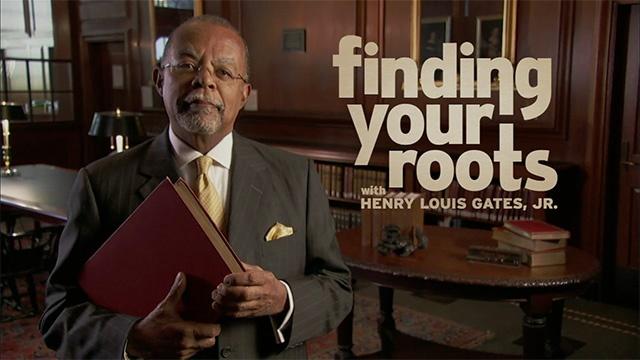
PBS Wisconsin Passport
Watch this video with
PBS Wisconsin Passport
Become a member of PBS Wisconsin, support your local community, and get extended access to PBS shows, films, and specials, like this one.
Decoding Our Past Through DNA
11/25/14 | 52m 20s | Rating: TV-PG
Deval Patrick is the first African-American governor of Massachusetts and Jessica Alba is an actress who proudly embraces her Mexican-American heritage. But cutting-edge DNA analysis reveals that the family trees contain a far more diverse range of cultures and races. DNA is used to delve deeper into the families of other guests in the series, including Valerie Jarrett and Henry Louis Gates Jr.


Copy and Paste the Following Code to Embed this Video:
Decoding Our Past Through DNA
I'm Henry Louis Gates Jr. Welcome to "Finding Your Roots." In a country as diverse as ours, it's little wonder that we're fascinated by race and identity. In this episode, I want to see how cutting-edge genetic analysis can help answer the question "What makes us who we are?" Is it the color of our skin? Is it where our ancestors came from? Or, is it our personal experiences? Ah...look at that! We're going to look for answers to that question in the genetic branches of my own family tree, as well as in the genetic branches of the many people I've interviewed for this series.
MAN
You're molded by your family, and especially your mom and dad. It all starts with DNA. Each generation influences the next generation. Each person in your life influences you. In the end, your heredity trumps all nurture. I behave, I think the way I do because of many, many factors. My ancestors are one of them. For me, it's clearly my DNA.
GATES
I'm also going to trace the roots of two guests, actor Jessica Alba and Massachusetts Governor Deval Patrick, to help us understand how DNA makes us who we are. My mom used to always call me a mutt, just kind of like a mix of everything, and it's all confusing. Wow.
PATRICK
It's about America. We have spent so much of our history trying to harden what turns out to be quite blurred lines. By decoding our DNA and revealing the diversity that's hidden in the branches of our family trees, we'll discover just how blurred the lines that divide us truly are.
I teach African and African-American studies at Harvard. ANNOUNCER
Funding for "Fin To anyone who even glances at my face, I'm obviously a Black man. And I've proudly identified as such my entire life. But several years ago, when I took a DNA test, I discovered that my genes told a much more complicated story. Slightly more than half of my ancestors over the last 500 years weren't Black at all. They came from Europe. That startling bit of information is one of the reasons that I started making this program, traveling the country to interview people about their own roots. I'm always fascinated to learn how each guest describes his or her own identity. In fact, it's the very first question I ask them. I'm proud to be an Indian. I am Chinese-American. I'm a Black woman. I like being Black. I am British, and I'm proud to be British. I'm as Greek as it gets. Ha ha ha! Jessica Alba is the star of blockbusters like "The Fantastic Four" and the "Sin City" series. And they, like, lived in there... Her offscreen identity, however, is much more complex. She's always believed that her father's roots led back to Spain through Mexico and her mother's roots somewhere in Europe. But when I asked her "Who are your people?" her answer was simple. I, for sure, identify more with Mexican-American.
GATES
Though Jessica views herself first and foremost as a Mexican-American, our DNA analysis shows that her ancestry is actually far more diverse than she could ever imagine. You are, as you can see there, 33.5% British, 5.1% French-German, 3.9% Scandinavian, 17.3% Iberian-- That's the Spanish colonial element-- Oh, wow. and 1.4% Italian. And when you walked in here, you knew that your family had said that you were French, of French descent. My mom did, but I thought she was just trying to be fancy.
Both laughing
GATES
You have one of the most diverse ancestral breakdowns that we've ever seen in this series. In Jessica's case, family history trumped genetics. Jessica and her father, Mark Alba, showed me photos of the tightly knit Mexican immigrant community in Claremont, California, where she was raised. Tell me about this. Oh, my dad. My dad actually was a very good singer. My dad ended up being a classical guitarist. That's... Jessica's powerful connection to her Mexican roots was forged here, surrounded by her father's family. She told me that one family story in particular cemented this bond. It starts with her great-grandfather, a man named Daniel Martinez. Daniel was born in Mexico and moved to Los Angeles, where he managed to save enough money to open his own meat market. But in the 1920s, Daniel lost his business. The family was forced to work as migrant farmers, entering a world in which their ethnic identity was used to vilify them.
ALBA
My grandfather said that there were water fountains and bathrooms and, you know, basically anything that was open to the public it was segregated. There were Mexican schools and schools for White kids. And my grandmother-- half of her siblings were fair-skinned and had light eyes and light hair-- blonde hair and red hair. So, they got to go to the White schools, and then the darker-skinned siblings had to go to the Mexican schools.
GATES
Jessica has heard painful stories all her life about the prejudice her family experienced, but she had no idea how determined her great-grandfather Daniel was to fight back. He didn't want his darker-skinned children to start life at a disadvantage. So, Daniel banded together with other Mexican-American families to open a school of their own. It's a school in Claremont, a Mexican school in Claremont. Yes, that's right. You ever heard of this school? No. Well, your family played a key role in the creation of that school. Really? Yeah. That's so cool. Around 1927, your great-grandfather Daniel and some other Arbol Verde community members founded the East Barrio school. Oh, I didn't know that. They practiced reading and writing Spanish, and they even studied Mexican history. Oh, wow. So, they didn't lose touch with their roots. Do you think that your great-grandfather founding the El Barrio school was a way of fighting back against the back-of- the-bus treatment that he was receiving? Absolutely, yeah. And I think, also, wanting to still...instill pride in the children about who they are and where they came from and not feel shame, which is what you feel, I'm sure, when you're treated that way. This is a nice office. You never been in here? My next guest, Massachusetts Governor Deval Patrick, has also been profoundly shaped by his ancestors' racial identity. He defied the status quo of Massachusetts politics when he became the state's first African-American governor.
PATRICK
I never really doubted that people were ready for a Black governor, but the pundits doubted it and the pollsters doubted it, and they doubted me, of course. So, I felt like a lot of things were affirmed.
GATES
For Deval, this historic election was the culmination of a life spent learning how to succeed as an ambitious and talented Black man in a predominantly White world. Deval Laurdine Patrick was born on July 31, 1956, on Chicago's south side. His mother Emily was a homemaker, and his father Pat was a saxophonist, who used music to embrace his African roots.
Playing jazz music
GATES
Pat Patrick was a master of free jazz. He performed with some of the most accomplished jazz musicians of the day, from Thelonious Monk to Sun Ra.
PATRICK
They were way out on the edge in terms of what they were trying to do with that music at the time. Mm-hmm. He saw his art both in musical terms and in cultural terms. He was a Black nationalist early, very militant.
GATES
But to Deval, Pat's roots remain shrouded in mystery, his father almost a stranger. And that's because Pat Patrick walked out on the family when Deval was just 4 years old. I remember the fight the day they split. And I remember my father stalking out and my chasing him down the street, while he was walking away and asking where he was going, and I was 4. And I remember, in his anger, he-- you know, he kept telling me to "Go home, go home," and I kept coming. In his anger, he turned around and he hit me. And I fell, and I remember the burning... of my palms on the concrete. And I remember looking up and watching him walk away from that position. And that I will never forget. Oh, that's horrible. Yeah. I miss my dad. I miss having a dad. I missed what I thought having a dad was like. My mother was worried about raising a Black teenage boy on the south side of Chicago in that time. It was an increasingly dangerous time, a more violent time. The gangs were organizing and starting to pay attention to younger kids and recruiting. But Deval was recruited by a different group. In middle school, he earned a scholarship to attend
one of America's most prestigious private schools
Milton Academy in Massachusetts. Well, it was like landing on a different planet. That's what it was. I mean, you can see from the picture in the "Milton Bulletin," I hadn't quite figured it out. I mean, the whole language of the place was foreign to me. Mm-hmm.
GATES
Deval soon figured out how to thrive in the elite circles of Milton. But he also had to figure out what an education at an elite White prep school meant for his Black identity. By then, my father and I--we had reconnected. He was in New York, deeply, deeply disapproving of my going to Milton Academy. Why did your father disapprove? Well, I think he felt--I know he felt-- He said that it was gonna turn me White. It was gonna make me lose touch with my heritage and ultimately break my heart. It's a very interesting experience, and, at the time, one where there was a real risk of having your heart broken, because you were straddling these two worlds. And sometimes the price of admission to one was denying the other, if you know what I mean. Oh, absolutely. Negotiating the politics of identity is not as simple as Black or White. For every guest in the series, DNA analysis reveals the patchwork of ancestral regions they carry within their genomes. And learning the complexity of their genetic makeup almost always takes my guests by surprise. You got some brother in there, man. 3.7% is a lot. That's unbelievable! That's unbelievable. So, what is this Asian? That was a shock. Huh...Asian.
WOMAN
Oh, I am a little Asian! Yes. 6% Asian. I mean, that's incredible. I don't think we've ever had a White person with 6% Asian. Really? Hmm.
MAN
Oh, wow. Middle Eastern. 10.8% Northern European,.1% Iberian. The fact that I have strong connections on some level to Asians and Native Americans is a great thing to think about. Thank God for that little bit of yellow and that little bit of turquoise and gold color, because just for the DNA alone, you need diversity. We know that. We know that. If only the world would learn that. Ha ha!
GATES
So, if DNA reveals that our ancestry is so mixed, why do people feel so strongly about embracing just one identity? Why does American society insist on labeling its citizens as belonging to a single race? I went to visit the pioneering geneticist Dr. David Altshuler He's one of the scientists responsible for the 1000 Genomes Project, the landmark study of genetic variation around the world. Why do you think race matters so much to people? I do believe that human beings are intrinsically kind of tribal. You know, I think that that's probably constructed in some way in our evolutionary past that we did better if we banded together than if we were on our own. It's this deep, underlying desire to be part of a group. And for some people, that focus is race. How does the work that you've done inform how you think about the debate about the nature of race? Race is a social, historical concept... grew out of the 19th century, had to do with social hierarchies, had to do with explanations for why some people were at a very different experience than others and could impose that on others. It turns out that what we call "race" today, is actually a relatively new concept. David explained that it wasn't until the 1800s that scientists began to use skin color and other traits to classify human beings into the so-called "Three Great Races": Caucasians, Negroids, and Mongoloids. Employing the limited scientific methods of the day, they ranked people in a strict racial hierarchy, and they began defining race as an immutable and all-determining trait, something you're born with that will never change. So, what does the latest DNA science have to say about this conception of race? In my case, learning about the diversity of my genetic makeup sent me on a quest to find out the source of my European genes. Despite the fact that over half of my ancestors over the last half millennium were White, I've never been able to identify any one of them by name. That's why I'm in California to meet with CeCe Moore, a genetic genealogist, a new field in ancestry tracing. So, I've been looking at your DNA results. OK. You've been tested at all 3 of the companies that offer autosomal DNA testing for genealogical purposes. And in those databases, there's at least 1.1 million people. So, there's a lot of opportunity to find things. So, what I did is I went through the list of people who share DNA with you, and that implies that you have a common ancestor somewhere in your family trees.
BOTH
They could be anywhere. Anywhere on this tree. Mm-hmm. Anywhere in their tree and anywhere in yours. So, what I look for are commonalities.
GATES
CeCe noticed that one family kept popping up in my list of genetic cousins, a family called the Mayles. And I started looking at your DNA matches who had Mayle occurring in their family trees. This is Beverly White. She's one of your top matches. So, she shares more DNA with you than almost anyone else on your list. So, in her case, we were able to trace this particular line back to Wilmore Mayle, and he was born in 1755. This is another of your top DNA matches. His name is Keith Johnson, and his direct paternal line is actually a Mayle line, and it goes back to, again, Wilmore Mayle-- The same guy! born 1755. Wow! Well, these are just 2 of many. Lots of your DNA matches have family trees that include Wilmore Mayle. So, that tells me he's very likely one of your ancestors as well. And he was a White man. He sure was. Our DNA could only be inherited from our ancestors. So, this White man, Wilmore Mayle, has to be a direct ancestor on one of the lines of my family tree. This--this unknown white man... This is the first time that I've been able to identify any of my White ancestors by name. But as we've discovered in this series, being descended from a White ancestor is not that uncommon among African-Americans. Your great-granddaddy was a White man. I knew it was somewhere in there. I knew it was in there somewhere, so, you know, it's what it is, you know. What do you think the relationship between your third great-grandparents was, the slave owner and his slave, Charity? It was not consensual, I would guess. John Harrison, White man, is your third great-grandfather. Yeah. How does that make you feel? It's strange, you know. You feel half and half, because I'm sure she was raped. It wasn't like she willingly had sex with him and had these children. You share DNA with these people. You are, in fact, related to the family that owned your great- great-great-grandfather. It makes me sick to think about men raping women. And a slave has no rights. So, there's no other way to describe it. It was so common for White men to impregnate Black slaves, that today, the average African-American is actually about 1/4 European. I wanted to see what DNA would tell us about the color of Deval Patrick's genetic roots. Can you read your percentages there? Look at that. 58.9% Sub-Saharan African, 38.9% European, 1.2%... It turns out that Deval, who had to learn to navigate his way through the White establishment, descends from a group of ancestors, more than 1/3 of whom were White people. Could DNA help us learn about these ancestors on the other side of the color line? We ran a test that looked at Deval's y-DNA. This chromosome is handed down virtually unchanged from father to son, going back thousands of years. So, let's see what we found! Could you please turn the page? This is where they came from in Africa, brother! Come on! Ha ha ha! Ireland and England? Ha ha ha! Belgium and the Netherlands? Come on! You're holding out on me here. All of your y-DNA matches trace back to Europe. Wow. This means that your original Patrick ancestor was a White man. Hmm. It turns out that this is just one of Deval's family lines that lead back to Europe. As we look closer at his family tree, we found another story that shows that race relations were sometimes more complicated than we might expect. That story starts with Deval's great-great-great-grandmother on his mother's side, a Black woman named Emily Wintersmith, who was born into slavery but lived to see freedom. We discovered a land deed from 1868, just 3 years following the Civil War. It shows that Emily's former owner, a man named Dr. Harvey Slaughter, sold her a small farm for almost no money.
PATRICK
It says, "I have this day bargained and sold "and by these presents convey by general warranty "to Horace Wintersmith and his mother Emily Wintersmith, "persons of color, "a certain piece or parcel of ground within the present town boundary of Elizabethtown." Wow. The land described in this deed would give Emily and Horace both security and autonomy. So, why would Harvey Slaughter-- why would Dr. Harvey Slaughter do something like this for your ancestors? Did he sell his other slaves land? Was there a family connection here that... Well, it's what we wondered.
GATES
I asked CeCe if we could use DNA to help solve this mystery.
MOORE
We asked Deval to take what's called an autosomal DNA test. So, we're using autosomal DNA, which you inherit from all of your great-grandparents and their ancestors. And there's about 1.1 million people in the databases who've already taken this type of test. Once we got his results back, we compared his results against all of those other people's results. And what did we find? Well, we received a list of people who shared a significant amount of DNA with Deval. And I looked through their family trees, and one of the top matches that he had was to a woman who was descended from Captain George Gray. Well, Captain George Gray is the brother of Margaret Gray, who was Harvey Slaughter's mother. Oh, my God. Right there. So, Emily's master was the father of her children. Yes, I would certainly say so. So, this is very convincing evidence that, Deval Patrick, you descend from Dr. Harvey Slaughter. Gracious. You descend from the slave owner of Emily, your third great-grandmother.
Exhales
MOORE
There's a story there. Now, you know, there are all these stories what the master did, but in your case, we know. Well, it makes me feel--it takes my breath away. Um...it also... You know, it's not entirely consistent with the... cruelty part that-- was it Dr. Slaughter? Yeah. Dr. Slaughter. would then convey land to my great-great... Grandmother. Yeah. Grandmother. And his son. Yes. For life. Yeah, it defies what we were taught in school or the stereotypes of this relationship. Right, right. So, it sounds like they had an enormously complicated relationship. Yes, as humans do. Yeah. It's amazing. You know, we have spent so much of our history trying to harden what turns out to be quite blurred lines among and between people, and probably the sooner we acknowledge how blurred they are and how common our humanity is, the better off we will be.
GATES
So, how should we think about our identities when stories like this show that our ancestry is far more varied than most of us could ever imagine? I went back to Harvard geneticist and physician Dr. David Altshuler to see what his work could tell us about how our genetic heritage blurs our understanding of the American color line. How much genetic overlap is there between what we call the different races? Genetic studies have now made it possible to go in and actually sequence every letter of the DNA of lots of people. You take any 2 people's genomes--one from me and one from you-- and compare them. They're 99.9% identical. So, 99.9% of the letters are the same. And then of the 1 in 1,000 or so that differ, 90% or more are shared all over the world. There's actually something magnificent about the idea of having thousands and millions of ancestors such a short time ago and that you have thousands and millions, and everyone else has thousands and millions, and many of them were the same people. It's almost like a web. That's amazing. It's amazing. When you look at data on populations, and you find the connections between people who think they're unrelated, you realize that we really are all a family. In my own case, DNA testing had revealed that one branch of my family tree leads to a White man named Wilmore Mayle, but who was he, and what was his relationship to my Black female ancestor? Did he love her? Did he own her? Or did he exploit her? I tracked down a descendant of Wilmore Mayle. Her name is Alexandra Finley. Now, we might not look like it, but our DNA says that she and I are cousins. Alexandra has become so fascinated by our shared ancestor, Wilmore Mayle, that she's taken on the role of family historian. Wilmore was born in 1755 in England. Here's a record of his baptism. Hmm. "St. James the Apostle Church, Dover, Kent, England." That's what I'm talkin' about. "Wilmore Mayle, son of William and Mary." And then sometime in the 1760s, Wilmore and his parents migrated to the colonies. This baptismal record from an English church in 1755 leaves no doubt that Wilmore was White. Alexandra scoured the paper trail for clues about Wilmore's life in the New World. Alexandra found out that Wilmore migrated to Virginia, worked as a farmer, and then bought a slave named Nancy. Then Alexandra made a most remarkable discovery. "Record of Emancipation. "May 6, 1826. "Be it known to all, to whom it may concern, "that I, Wilmore Mayle, of the county of Hampshire and Commonwealth of Virginia, "do by these presents liberate, emancipate, and forever set free "my Negro woman Nancy "on the condition that she remain with me during my natural life in the quality of my wife." That's amazing! I'd never seen a document like this. It was illegal in Virginia for a White man to marry a Black woman. But that's exactly what Wilmore Mayle so publicly was announcing that he and Nancy intended to do. Alexandra searched for any records that could explain what life was like for this mixed-race couple, Wilmore and Nancy, in slave-era Virginia with its strict racial hierarchy. She discovered a clue buried in the 1840 census entry for Wilmore Mayle. He's listed as Colored. Yes, and that's a very interesting thing. After he began this relationship with Nancy, his racial status actually changed. And due to his relationship with her, he starts being listed as free-colored as well. Hmm. So, they'd make the brother Black. Alexandra found out that Wilmore was moved back and forth across the color line by government officials, appearing in documents sometimes as a White man sometimes listed as a Black man, and sometimes as a mulatto. To maintain the status quo, Wilmore's race was in the eye of the beholder. That's where Jessica gets it. DNA analysis had already revealed that Jessica Alba's genome was a patchwork of geographic ancestry, but she knows almost nothing about her deep Mexican roots.
ALBA
The Mexican-American side of my family-- there's so many different races that come together, even to make that up, you know. Are some native? Are some from Spain or Germany? I don't know.
GATES
Today, almost 2/3 of all Mexicans identify as Mestizo, or mixed. It's a genetic legacy of the country's colonial history. When the Spanish invaded Mexico in the 1500s, they fathered children with Native Americans and with their African slaves. Jessica told me that she had always heard that her paternal line, the Alba line, led to a Spanish man who fathered a child with a Native American woman. To see if that was true, we ran a y-DNA analysis on her father, Mark Alba. All the Albas did not come from Europe. They're native. They're Native Americans. Ohh! That's fantastic. That means that your direct paternal ancestors have been in the New World for centuries. They did not come from the Conquistadors. You, on your father's line, are definitely descended from Native Americans. My grandfather looks native. Yeah, well, there's good reason. It seems like almost every guest in our series has heard a rumor about a Native American ancestor on their own family tree.
KING
OK, we keep hearing we have Seminole Indian. Seminole Indian? In our blood. And my mother has always thought she is, so it's very interesting. That's kind of been very important to my mother's identity, I think. I hope I have some Native American, though. Everybody does.
COOPER
I remember some family story that we were part Choctaw. Really? Yeah. I'm know. I'm very Choctaw, yes. The distinctive Choctaw nose. I think my grandmother on my father's side had some Indian in her. High cheekbones, and, you know, just very poised. And I look at one of my half-sisters, the complexion of her skin definitely had some Black and Indian. I think that there had to be a connection there. Indian--when you look at my grandmother and a lot of our family. There's a strong Native American look. High cheekbones, straight black hair, that kind of thing? Yeah.
GATES
But the DNA results often tell another story. Basically, you have no Native American ancestors. Interesting. Zero-- Zero. Native American ancestry. Wow. Can't get any tribal benefits.
KING
100%?! Ha ha! That is boring. Oh, no! Zero. That sucks.
GATES
But once in a while, these rumors turn out to be true.
COOPER
1.3% East Asian, Native American. It's Native American. That's amazing. So, where did these Native American ancestors come from? When we look at your fascinating 21st chromosome, which is where you have that Native American DNA... It's Chile. We see that you have a very strong match with the person who has all 4 grandparents from Chile. Wow. So, I'm part Chilean. Yeah. Yes!
GATES
In the case of Valerie Jarrett, we had traced her mother's side back to her seventh great-grandmother, a woman named Henrica Colon. We found Henrica's baptismal record, and it contained a crucial clue about Henrica's mother's race. "November 27, 1698. "Henrica, one month old. "Father, Jean La Violette Colon. Mother, Catherine..." Exipakinoa.
BOTH
Exipakinoa. Exipakinoa. Exipakinoa. Exipakinoa. What's that sound like? Native American. Valerie, the Kaskaskia were one of the Algonquian-speaking Native American tribes of the Illinois River Basin. Well, we always thought we had some Native American. Well, you and every other Negro I know claim to have Native American ancestry-- But we really do! But you really do. You're the only Negro who really... got a Native American princess. I am mixed. I'm good and mixed, aren't I?
GATES
For Jessica Alba, I wanted to see what more we could learn about her Native American ancestors. Where did they come from? Until recently, this used to be almost impossible to answer. But at Stanford University, Dr. Carlos Bustamante is using DNA to reclaim these lost Native American roots. How does the state of genetic research into Native Americans compare with the state of research among other population groups? Well, you know, I would say it's incredibly underrepresented. Most of what we know about the genetic base of complex traits comes from studying populations of European descent. We've developed so much in terms of the resources for Europeans that we can pinpoint with high accuracy, particularly for individuals that have ancestry from a given country. Dr. Bustamante and his team set out to level the DNA playing field. They compiled the largest Mexican genetic database ever assembled. We studied people from 20 different indigenous groups in Mexico. 20? 20. We've built a very detailed map of Native American ancestry in Mexico. And what we found is that the native Mexican groups could be distinguished genetically very clearly. We can clearly cluster the Seri from the Tarahumara from the Zapotec from different Mayan groups. So, what can I tell Jessica Alba about where her paternal ancestors derived in Mexico? So, when we look at Mr. Alba's DNA, what we found is that about 50% of his genome is of Native American ancestry. Mm-hmm. And we can further, now, break that down. So, here are northern native Mexicans. Here are individuals from the Mayan peninsula. So, he's a bit of a smorgasbord of Native Amer-- Well, it's consistent with somebody who's ancestry comes from many generations of Mexican ancestry. So, he is descendant from a long line of Mexican ancestry that may date back to the initial foundings of Mexico. That's exciting.
ALBA
2% Seri, 12% northern Mexico, and 25.5% southern Mexico. And this percentage includes Mayan ancestry. Dr. Bustamante discovered that your father is 3.7% Mayan. Wow. Yeah! That's cool. Cool, and we've never seen this before. That's amazing.
GATES
These results made us curious. What other genetic ancestries might be buried in Jessica's Mestizo roots? We looked closer at her DNA and discovered a secret heritage that Jessica had never heard about. We noticed something else really interesting. Your father also has a small amount of Jewish ancestry. 0.7% His Italian DNA is 0.6%. and Middle Eastern, North African DNA, 0.8% A result like yours and your father's suggests a history of hidden Sephardic Jewish ancestry. Wow. You ever think you had Jewish ancestry? No. That's really cool. I wanted to see if we could figure out how this Jewish ancestor ended up in Jessica's family tree. CeCe noticed something significant about Jessica's father's mitochondrial DNA. This is the genetic fingerprint that each of us inherits from our mother, who inherited it from her mother in an unbroken process. Jessica's father's mother's line leads back to Jessica's fourth great-grandmother, a woman named Carmen Carrillo. who was born in Mexico in 1820. And we found other people in the DNA database who also matched Carmen's mitochondrial signature. All of these people who have this subclave from Spain, Italy, Germany, Poland, and Ukraine, all said they had Sephardic Jewish ancestry-- No kidding! on their maternal line. Wow, so, that's pretty convincing evidence. We were able to confirm that those hints of Sephardic Jewish ancestry were real. So, that means that Carmen Carrillo was either of Sephardic Jewish ancestry or her maternal line was. Carmen's family was part of a fascinating history. In late 15th-century Spain,
Jewish people were given a terrible choice
convert to Roman Catholicism, face execution, or leave the country. Even some who converted fled to colonial Mexico, where they found refuge on the frontier of the Spanish Empire and practiced their true faith in secret, earning them the name Crypto-Jews. Jessica's ancestors were among those who fled. The DNA tells us so. Jessica's genome also reveals how she's related to other Jewish people.
GATES
We always look at all the guests in this series to see who your cousin is, if you have any genetic cousins, and you do have one. Who? Turn the page. That is your genetic cousin. You are related to Alan Dershowitz, one of the most brilliant lawyers in the whole world. Wow. Bet you never guessed that, man! No! Ha ha! This is your cousin. Wow. I'm a great fan of hers. Is she Jewish? Well, if she wasn't before, she is now. Right, right. Shared genetic mutations among Eastern European Jewish people reflect their unique history. Their ancestors, first in the Middle East and then in Europe, were isolated from outside groups and had a strong tradition of marrying within their religion. These high intermarriage rates led to unique genetic patterns. I want you to turn the page, and you can meet your cousin. I'm terrified. Oh, my God! Carole King. Carole King. Ah! Well, that makes me happy. Oh, my God! Seriously? You and Tony Kushner are cousins. You're killing me! You have significant Jewish ancestry. So, basically, I'm a Jewish girl in a Black body. Ha ha ha! And 2% European Jewish. You're Ashkenazi Jewish. Huh. Well, that's interesting. Isn't that wild? How much percent do you have to have to tell people you're Jewish? Theoretically, you're a Jew if your mother is Jewish. In practice, here's the way it works. If your mother is Jewish and you've done something terrible, they say, "Oh, he's only half-Jewish." If your father is Jewish and you've done something great, they say, "Oh, he's half-Jewish!" In the case of Deval Patrick, despite the fact that he's clearly an African-American, the only genetic lines we've been able to trace across the Atlantic all led straight to Europe. So, we turned to his direct maternal line, which, for the overwhelming majority of all African-Americans leads straight back to Africa. Deval's maternal grandmother was a light-skinned woman named Sally Mae Embers. She was born in 1902 and grew up in Jim Crow Kentucky.
PATRICK
They would often go to a diner or something like that, and she would go in first and order the food. And once it was placed, she'd beckon the rest of the family in. And at this one place when the family came in and sat down-- the food was on the table-- the owner came up and said, "I'm sorry, you can't eat here. You'll have to eat in the kitchen." And her response was, "We don't eat in the kitchen in our own home." And they got up and left the food on the table and walked out. Oh, man, that's great. Yeah, she was tough.
GATES
We'd already found that Deval's father's father's genetic line led to the British Isles. So we analyzed Deval's mitochondrial DNA, which he inherited from Sally Mae, to see if this line does, in fact, lead back to Africa. Does that look like Darfur to you? No, it doesn't. I see Ireland. I see the UK. I see Norway. What you are looking at is your direct maternal line genetically. And it's not African at all. It's European. Wow. Is this surprising? Of course! Of course. My grandmother, I think, thought of herself as a Black woman. She sang like a Black woman in church. She talked about White people in her own line, but not in this way. We know what we think we know based on what we were told. And, um... She might not even have known this. That's true. Yeah. That's true. That means that the second Black person ever elected as governor in this country has direct maternal and paternal lines that lead directly to Europe and not to Africa. In addition, Deval's Admixture reveals that over 1/3 of his ancestors were also European. It used to be almost impossible to learn anything about that 2/3 of his genetic lines that lead to Africa. But now a new test can measure the percentages of genetic ancestors who come from different parts of Sub-Saharan Africa. The largest amount of your African ancestry comes from Nigeria. Nigeria. 15% This is awesome. The largest amount is from... the Ivory Coast in Ghana. That's fine. Those are very pretty people. Southeastern Bantu 8%, Benin/Togo 5%, Ivory Coast/Ghana 4%. 8% The Cameroons/Congo, 6% Ivory Coast/Ghana. Ah, 15% Benin. Oh, great artistry there. Great art. 36% of your African Admixture comes from Nigeria. Yes! I knew it. And then the Congo 9% and Angola 8%. Wow. OK, so I am African-American, aren't I? So, now you can name the actual places for the first time when someone says, "Where are you from in Africa?" Now I know. Blows your mind. It really does. It really does. I wanted to see if this DNA analysis could finally help Deval Patrick discover where his roots lead in Africa. Let's see. The largest amount, as you can see, is from Nigeria, 30%, and then Southeastern Bantu is Angola-- Congo Angola--at 11%. The Ivory Coast and Ghana 10%, Senegal 3%, Benin and Togo 3%. Well, it's amazing you can peel it quite this way. Isn't that astonishing? It's incredible. Thank God you got to the African continent. I thought we were gonna be stuck in Europe. Ha ha ha! DNA analysis had finally allowed us to trace Deval Patrick's roots back across the Atlantic to Africa. My search for my own roots has taken me back home to West Virginia. It was in these beautiful rolling hills that my ancestor Wilmore Mayle freed his slave Nancy, raised their 6 children, and then was moved back and forth across the color line, appearing in documents sometimes as a White man, sometimes as a Black man, and sometimes as a mulatto. I went back to Alexandra Finley, my new cousin and the family historian to see how Wilmore and Nancy and, of course, their mixed children, navigated their way through the racial hierarchy of the slaveholding south. So, it turns out that Wilmore Mayle and Nancy were not the only mixed-race families on the Virginia frontier. So, these families start intermarrying, and you can see a lot of lines crossing in these family trees. And eventually, the descendants of Wilmore Mayle and some of these other families start settling around Philippi in an area called Chestnut Ridge. And over the 19th century, the community starts to become more isolated. And these are all mixed-race people. Yes. Yeah. So, here's a map pointing to Philippi and Chestnut Ridge. This is Philippi, West Virginia, about 80 miles from Piedmont where I grew up. So close, yet so very far away. I'd never heard of Chestnut Ridge before. Today, you can still find traces of its original community. The Mayle family cemetery, where my ancestors are buried... the church and school where they prayed and studied. When's the first time you came up here? I met up with Rhonda Tabler. She's another Mayle descendant, which means that she, too, is my cousin. I had no idea that there was a community of mixed-race people, mulattos, really. Yeah, and it's been here-- Yeah, and it's been here-- for hundreds of years. And all descended from this White man and his Black wife. Why do you think our ancestors moved here? I mean, this is isolated now, let alone 100, 200 years ago. I believe our family actually segregated themselves. Yeah. Interesting. I mean... White people didn't live on the Ridge. So, they found safety, protection by being isolated. These are all mixed-race families. Yes. This was like mulatto heaven. Yes. That's true. Yeah. Chestnut Ridge isn't the type of place you read about in most history books. It was a refuge built by my ancestors so they could avoid the degradation of bondage in Jim Crow in a community of their own, where everyone was both Black and White and neither.
People speaking indistinctly
GATES
Chestnut Ridge was so important to the Mayle family that even though many descendants have moved away, every year they come from as far away as California for a reunion they call Heritage Day. Nice to meet you. These are my descendants through Wilmore Mayle. So, he was my sixth great-grandfather through my dad's line. This would be my great-grandmother Martha Jane Dooley Mayle. She's a granddaughter of Wilmore and Priscilla. This is our... The only reason I've been able to connect with this remarkable branch of my family tree is because of clues buried deep in my genome-- clues that are proving that America's color line has always been much blurrier than any of us ever imagined. And I want you to know how much it means to me personally. First of all, to meet new family members. And I think that our family just shows the great unity and diversity of the human community. The inextricable interconnections of people Black and White and Native American in America from the beginning. And we are the descendants of people who made those choices, and in the case of Wilmore Mayle who had the courage of his conviction. So, you know, all I can say is, "Wherever you are Wilmore Mayle, you're a bad dude, man. And I hope Nancy's with you and thank you for bringing us together." So, thank you all. Thank you, really. Being here with my new extended family has brought me one step closer to some of my White ancestors. Though I still don't know exactly how Wilmore Mayle fits into my family tree, he's extended its branches beyond my wildest imaginings. And with each discovery of our DNA cousins, I continue to be amazed by just how connected all members of the human family truly are. I've always been an egalitarian and believed in the human family, and now I feel much more connected to the human family. It's affirming to me.
JARRETT
It clarifies for me, in a very personal way, that I have as rich and as strong a heritage in this country as anybody. That feels really good. People spend too much time worrying about the purity of blood and less time worrying about the experience of life. DNA shows there never was purity of blood. There's never purity of blood. Just as the United States is so proudly mongrel in its DNA, in its very core, then to participate in that is thrilling. It's like we're a beautiful mixture-- American blood through and through. Like, you can't get more American than Native American, European, and African mixed. It's cool that I get to walk now for the rest of my life knowing where I came from. And when I visit different countries, I have a sense of really feeling the history in a different way. To think that my ancestors probably walked those streets. I want to give you a gift. Thank you. Would you open that? Sure. Using genealogy, the traditional paper trail and DNA, we were, my brother, able to construct your whole family tree. Look at that! What a beautiful gift. I can't wait to study this. Think of the amount of distance traveled in every sense. You know, the miles traveled, the cultures traveled... It makes you feel small and big at the same time. You know. Humble, but also... very connected. That's a beautiful thing. That's the end of our journey. Join us next time for another episode of "Finding Your Roots." This season of "Finding Your Roots"
is available ANNOUNCER
Funding for "Finding on a 3-DVD disc set for $39.99. The Season One companion book is also available for $30. To order, call 1-800-336-1917. To share your family stories, watch full episodes and find out more. Visit PBS.org.
Search Episodes
Related Stories from PBS Wisconsin's Blog

Donate to sign up. Activate and sign in to Passport. It's that easy to help PBS Wisconsin serve your community through media that educates, inspires, and entertains.
Make your membership gift today
Only for new users: Activate Passport using your code or email address
Already a member?
Look up my account
Need some help? Go to FAQ or visit PBS Passport Help
Need help accessing PBS Wisconsin anywhere?

Online Access | Platform & Device Access | Cable or Satellite Access | Over-The-Air Access
Visit Access Guide
Need help accessing PBS Wisconsin anywhere?
Visit Our
Live TV Access Guide
Online AccessPlatform & Device Access
Cable or Satellite Access
Over-The-Air Access
Visit Access Guide




Follow Us