light instrumental music
upbeat music
♪ ♪ This is the final boarding call for flight 569 to New York JFK and Paris. Will passengers Wilson, Kirschbaum, and Williams please report immediately to gate 69B? This is the final boarding call for flight 569 to New York JFK and Paris.
solemn music
♪ ♪ Thank you. ♪ ♪
electronic beep
Thank you. ♪ ♪ Enjoy your flight. ♪ ♪
lively music
♪ ♪ Hi, welcome to Director's Cut. I'm Pete Schwaba, and that was a clip from Pilot Error, a film about a reporter who loses a friend in a plane crash and risks her career while investigating the story. We're joined today by a special guest who will be along a little later and also the film's writer and producer Roger Rapoport, who is no less special, trust me. Roger, welcome to Director's Cut.
Thanks for having us. - It's great to have you here. Okay, so in that clip we saw, that tease we saw, Nicola, the main character, is afraid to fly, and she launches this investigation into this missing plane, which, I think, is kind of a neat twist, but before we talk about anything, I am in awe of the amount of research you did for this film. I mean, your knowledge of the aviation industry and just talking with you before--before the show today-- explain your process researching an overwhelming project like this.
Well, this plane, which disappeared in June of 2009-- the story's inspired by a true event. An Air France flight that was going from Rio to Paris, uh, became the basis of this feature film. And I probably talked to well over 250 aviation experts at every level, including the people who found the plane eventually, the real--the real plane that inspired the story, so I had a chance to interview basically everybody connected with this flight, including families of people who were on the plane and families of the pilots who flew the plane. So--and this is all before you wrote this script, during the script writing or...
Right, I wrote a book called Angle of Attack, and the book was the basis-- became the basis of the film, correct. Okay. So, okay, you're an independent film producer. We had another film of yours on the show a few years ago called Waterwalk, which is a great movie.
You take on-- Wa terwalk is a small film, and you were resourceful during that, but this--you know, if you say to an indie producer, "I want you to make a movie about a plane crash," you think immediately big budget. What made you think you could do this and execute it properly? Well, one of the advantages that we had is, we had a terrific production team. For example, we did all the post in Hollywood, but we did all the shooting here, basically in Michigan and in Wisconsin, and the movie is actually set in Milwaukee, and we had a great crew.
We had terrific actors-- Richard Riehle, who's gonna be joining us shortly, and Deborah Staples, who's one of the key actors, and, of course, Kate Thomsen who plays the lead role. So on the technical side, we were very well-positioned, meaning that this is the perfect place to make an indie film. And also the aviation community really-- they gave us airplanes; they gave us simulators, which are basically impossible to get because they're running 24/7, but so many people felt this story was so important to bring to the public that we got a lot of in-kind support, which we could not have done the film with, and much of it came right here in Wisconsin. For example, our chief technical expert lives right here in Madison, Bob Hesselbein, who's a retired Delta captain and an accident investigator who helped us stay on the straight and narrow on all these tough technical questions that the film explores.
And are they at any risk in talking about that stuff with the aviation community or is... We've had a lot of people who helped us anonymously, and that's still the case. I'm still writing about it now, and, yes, we get anonymous information. As of today, we're doing an anonymous survey of pilots about one of the key safety issues that this movie addresses.
You know, Pete, there have been three of these accidents, too, since the moment-- the film was shot. Uh, 506 people have died in these high-altitude aerodynamic stalls, and I'm very happy to say that our government, through the FAA, has realized through their own analysis of the story that you're about to show tonight that every pilot in the world has been trained wrong for these high-altitude stalls and every simulator in the world is programmed wrong, and they're correcting that problem right now as we speak. Well, let's see another clip from Pilot Error.
computer trills
Hi. - What happened? Martin was waiting for you at the hotel. I'm sorry.
I made a special dinner. I know. I'm really sorry. I'm a total flake.
-
scoffs
You're not a flake. I'm a terrible person.
door closes
I think Martin's back. Ugh. Let me apologize. I'm here.
- Martin? So glad you are okay. No one at the hotel knew anything. Oh...
I'm sorry. I almost made it this time. Really. Well, if you're not coming to Paris, I'm gonna go to Buenos Aires.
What? Oh, just a friend's wedding I wasn't going to make this weekend. Martin has a bunch of free Air Paris miles burning a hole in his wallet. Buenos Aires.
She has a weakness for Latin lovers. Ha, Martin, she already has one. I'm hardly Latin. -
chuckles
Travel is the secret to a successful marriage. It's like that old song. How can I miss you if you won't go away?
chuckles
I will make it soon. I promise. The champagne is free on Air Paris. Even in coach.
Hey, my kind of airline. So what are you guys gonna do without me to take care of and spoil? I can think of a few things. -
laughs
Au revoir! So talk about-- like, with Waterwalk, you produced and wrote; with Pilot Error, you produced and wrote. Do you have any desire to direct? Or what's that like, handing your story and your work over to someone you hope makes it better and not worse?
Is it hard to trust a director? Well, actually, Joe Anderson, who directed this film and co-wrote the script, came in not only with ideas about how to direct the film but also with a lot of acting talent, who you'll see in the film tonight. Some of the actors, uh, we picked together. Deborah Staples is an actress who's well-known to your audience here for her work at APT-- American Players Theatre-- and Milwaukee Rep.
- Sure. And the advantage of not directing a film is that it allows you to basically do all the technical work, so a lot of the actors had a lot of technical questions of their own, as Richard will explain, and so because I had a lot of factual information, I was able to help them work through a lot of these scenes, 'cause we didn't want it to be too complicated for the audience to understand, 'cause it is a fairly-- fairly tough subject. Yeah, absolutely. So let's talk about your locations too.
I want you to talk a little bit about your connections you have to Wisconsin with this film. You touched on that a bit, but elaborate a little more on that 'cause you do quite a bit here. - Right. We shot very heavily in the Milwaukee area, uh, of course, the airport and all over Milwaukee, which is the setting of the film, and unlike a lot of films that are shot here, we actually made it a Milwaukee film, a Wisconsin film, which we're very proud of.
And Tom Boldt, who's one of our key producers on the film, executive producer on the film, lives in Appleton. We had, uh-- Chris Johnson, who teaches right here at UW Madison, was another technical advisor, so we had help at a lot of different levels, as I mentioned, a lot of in-kind support as well, and then on the-- the exhibition side, of course, we've had tremendous support from the film community here. And why is that? 'Cause you live in Michigan.
Wouldn't it be easier just to shoot-- are Wisconsin and Michigan that much different? I'm glad you shot here in Wisconsin 'cause I live here, but what would that-- would that have mattered? Well, yes, and we also got a film production services tax credit for both of our films. - Okay.
The arts commission and Travel Wisconsin were very, very helpful. Marcus Theatres has helped us. We showed our-- you know, we showed the film at the Oshkosh AirVenture show 45 times up there, so that's a--just a tremendous amount of support from the aviation community here at every--every level, and much of it came right here in Madison and in Milwaukee. Is this story personal at all to you?
Are you a pilot, or have you lost someone during a crash, or what made you-- what drew you to this subject? Well, my dad worked in the aviation world for his entire career, and parts that his company, Alcoa, makes are on every plane, basically every commercial plane in the sky, so, yes, and also I know some of the families of people that were lost on the plane, so obviously I have a very strong connection to that, as well as the families of the pilots. And in my book and, of course, in the film, I think a lot of that passion is shared by the actors, and Richard will talk a little bit about that today. I do have a journalism background, and there's a lot about how these accidents are covered in the media.
You know, there's not a lot of aviation coverage beyond the actual accidents themselves. Right. - So, like, Malaysia Air has kind of slipped off the radar, even though that plane is still missing. It doesn't get the attention I think it deserves, because it is a big industry that moves 3 1/2 billion people a year.
Definitely. Yeah. And it's pretty important to all of us. We depend on it.
- Yeah. Well, let's see another clip from Pilot Error.
phone rings
Hello? Nicola, it's Martin. I'm sorry. There's been a terrible accident.
I just got off the phone with Air Paris. Helene's plane is missing.
solemn music
She was flying back from Buenos Aires, and... they were over the Atlantic. ♪ ♪
sobs
My God. Is she gone? ♪ ♪ We have reports coming in this hour from French aviation officials that an Air Paris jetliner has gone missing over the Atlantic Ocean. Air Paris Flight 399...
They told me to-- to prepare for the worst....Earlier this morning. There is no word yet on the fate of the 212 passengers and crew aboard the plane. But the reports on TV are saying the plane is missing, and they don't know if it was a terrorist or plane malfunction. We just have to wait.
Yes. -
breathes deeply
I promise you I will be there on Thursday. I can be there on Thursday. I promise you. Well, that's very kind of you, but...
why don't you just wait until they find the plane? My God... She called me from the airport before they left, and... now she's gone.
I love you. Merci. We're joined now by a special guest and one of the film's actors, the prolific Richard Riehle. Richard, welcome to Director's Cut.
Thanks, Pete. - Great to have you here. Wisconsin born and bred? Absolutely.
- Yeah. So you truly are one of the hardest-working actors there is. I mean, your IMDB page-- you need, like, five IMDB pages. Um, Office Space, Ca sino-- you've done some big films.
You've also done a lot of indie films. Talk about the difference in that. What attracted you to this project? Million-dollar offer aside, I'm sure, but...
Absolutely. - Yeah. Well, it-- there was a point when I was in New York, and I was--I was doing a series at the time called Grounded for Life, and, uh, they decided they didn't need me anymore, which is fine, and so I-- I talked to my agents, and I said, "Look, when I go to the theater, "I like to see movies that are independent films "because they have a special resonance. "The--the directors and writers and everything-- "they're passion projects; they're something they've spent "a lot of time and a lot of effort doing, and I'd like to do some of them." And at first, they were-- they were a little hesitant, but then they were able to get me auditions for, um, uh...
Ken Park by Larry Clark, Palindromes by Todd Solondz, and Mysterious Skin by Gregg Araki, and I ended up doing all of them, and it-- and it sort of gave me street cred in terms of independent films. And I really enjoyed it. You get a chance to do roles that you wouldn't necessarily get a chance to do otherwise, and you're working with people that are-- that are putting all their heart and soul into it, and that was the thing with Roger. I was in Milwaukee when he was putting together River, uh, Walk, and I--I had read this-- I had read the book, and so I was interested in being a part of it, and it was--it was a terrific experience, and so when he came to me with Pilot Error, I said, "This is a great script," and, of course, the role of the editor was really a plum piece to do.
Yeah, right. You and I met a few months ago for the first time. We were both actors in a movie, Aquarians... Yes.
- That we're both looking forward to seeing. - Absolutely. Talk about the differences a little bit about theater and film acting, 'cause you have a heavy theater background, don't you? Right, I spent about 20-some years doing regional theater, then I went to New York for ten years.
And I thought-- I would have been very happy spending my whole career doing theater. I really enjoyed it. Um, in the end, it's not any different. You're still creating the character in the same way.
Uh, you know, there's a couple of technical differences, but they really don't change. I think many theater actors probably become good film and TV actors because they go through the same process that they would in theater, and you see it a lot with the-- with the British actors, that they're all-- they're working in London, and they're jumping back and forth among film and TV and theater all the time, and they really--they really bring some extra element to it, I think, yeah. - Yeah, agreed. Let's see another clip from Pilot Error.
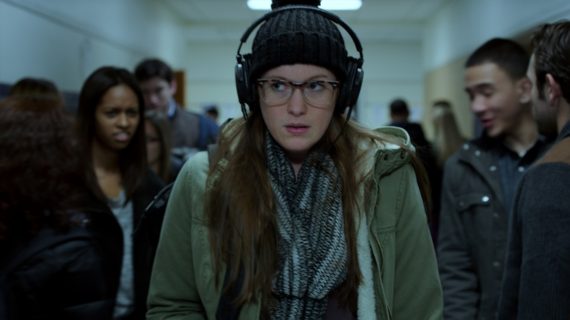
I can't sign this. All of our reporters have the right to freelance. Blogging a story that you refuse to publish is certainly not a conflict of interest. It is when you use our resources for non-company business and neglect your work here.
That's not what's happening. - Really? Well, your fracking piece is nearly three weeks behind, if it exists at all, and we've been promoting it for almost a month. ♪ ♪ Oh.
Great lead. When can you finish up? You finish it. -
laughs
Nicola, why don't you go home and think about it, and then maybe in the morning-- In the morning, I'm gonna be home... happily working on my blog. I can't work here anymore. Nicola!
Thanks, Roy. Nicola! - Hey, Larry. You should go home.
It's late. Nicola. - Good night. ♪ ♪ I don't think she had to ruin a perfectly good laptop.
That seemed over the top. I pulled it back out afterwards. Yeah, right. - That'd be my laptop, actually.
Um, you guys mentioned that you're collaborating on a project, and, Roger, you said you liked that actors got involved with writing sometimes because you felt a lot of actors make good writers. Explain that a little bit, if you would. Well, actually, most actors are very good writers, and-- but most of them prefer to be on stage. They really don't want to be on the page, to speak of.
So I have a new script I'm working on, and Richard actually flew in today from LA, and he gave me these notes, which you can see, and this is what I mean-- their detailed analysis. But that's what makes them great actors is, they understand how to create characters' point of view. I see milk, eggs, apple-- - Right. I think that's his grocery list.
laughter
Wow. That's pretty impressive. But Richard was tremendously helpful on this script, and he went through it many times, coming up with-- this is before we started shooting, and Richard really enjoys doing that from the outside in. Right.
- Like... I was gonna say, there's a writer that I work with in LA who was one of the writers and executive producers on Grounded for Life, and he asks-- he brings me his scripts and asks me to read them 'cause he knows I read them out loud and play all the characters. - Nice. And so you sometimes get a sense of something that works better hearing it like that than-- you know, than just reading it over and over again on the page.
Right, and it's true, when you-- I find when I proofread things, if I don't read it out loud, I miss--my brain works the same as when I was typing, so if I made an error, I gloss over the error. That's interesting you just said that. So let's talk--let's keep on writing for a second. In the age of social media and technology, it's so easy for writers to get things across.
Like, you got scenes there where she's listening to messages from her mom, where we're also learning about her character; she's Skyping. Was that a conscious decision when you were writing the script? Well, as a reporter myself, a lot of the journey that she went through were things that happened to me when I was trying to uncover the story, 'cause as you can imagine, they couldn't find the plane for 22 months, so there was a long period of time where everybody's speculating and so on, and then when they did find it, it took another year and a half to figure out what went wrong, so there were a lot of false starts and editors that didn't really want to publish stories. That happened to me, and in one case, a book editor--there's a scene in here where she has a big battle with her book editor-- that scene, that actually happened to me, so there were a lot of journalistic twists and turns that really reflected my own journey, to bring this story to a book and get it published, and the whole newspaper thing-- the character that he presents--and you can talk a little bit about this-- is reflective of an industry, correct?
Yeah. - I'm fascinated by, like-- You sound like you've been in show business your whole adult life, as have I. I've never really had a real job. I'm always amazed when I meet someone who's like, "Well, I used to be a reporter so I'm actually bringing something to this." Right.
- Life experience. Do you find, as an actor, is it harder when you haven't had an experience, bringing something to a role or-- if you're a good enough actor, you get around that, but what do you do for that-- Well, I-- again, having done so much theater, I always did a lot of research on the character, and if something took place in period or in a certain work environment, I would try and research that, but I didn't-- the first play I did was as a senior in college. Um, I really--I did a lot of other things in between. I was number three man in the wastewater and sewage disposal plant.
I--I unloaded railroad ties and processed them, you know? So I think I have a lot of strange background that I can pull from, yeah. - Right. Yeah.
Well, let's see another clip from Pilot Error.
dramatic music
♪ ♪
machine whirs
I know you're a little afraid of flying. You look like you're a little nervous, but keep in mind we're still on the ground. We're just in a simulator here. - Okay.
♪ ♪ ♪ ♪ ♪ ♪ ♪ ♪
machine whirs
electronic beeping
indistinct male voice over computer
♪ ♪ -
over computer
Pull up. Pull up.
alarms blaring and beeping
♪ ♪
alarm blaring
Whoa.
gasps
So... I'm assuming that meant... That was the crash. I'm now not only afraid to fly; I'm afraid to go into a flight simulator.
So, Roger, talk a little bit-- you have a book you're in the process of working on. Talk a little bit about that. - That's correct. So we'd been updating the book because there'd been-- this accident has revolutionized flight training in every way possible, and the book, which is coming out now, basically updates the story of all the things-- all the important lessons that have been learned by this, and by the way, the captain of that simulator, Bill Rhodes, is a real simulator training pilot, and they gave us that simulator as a gift, which was an incredibly generous--Kalitta Air, a freight carrier, gave us that simulator, so it was extraordinary.
Parked in your driveway now. - Yeah, exactly.
laughter
Richard, we get a lot of directors on the show obviously, and sometimes I'll ask them, what would they tell people who want to direct; what would you tell actors who want to act? High schoolers, colleges. What would be your-- having the career you've had, what would you tell them? Generally it's like-- you tell any improv person, you always answer anything by saying, "Yes." Right.
Right. - And then, "Yes, and..." And I think that's the thing with actors. You have to say "yes" and then go commit entirely to it. And keep doing it until they kick you out or you get tired of butting your head against the wall.
'Cause I tell people that too. If you have-- you know, like, keep--pursue your dreams. You can always change if you're 25 and you realize you stink, but it's persistence, really, isn't it? I mean, yeah.
Yeah, we used to say, "You got to outlive your competition." There you go. Um, that's fantastic. So any--you guys want to talk about your new project together a little? You want to get a little plug in for that?
You want to say anything-- - Yes, so this is about some of what's been going on with bystander awareness in terms of preventing some of these unfortunate events that have been happening lately, most recently in Orlando, and that's a film that's gonna come out next year. Richard and I have been working on... Oh, wow. - With some of the same people that are in this film, and it's sort of a-- a timely project.
I would say so. Unfortunately a little too timely. Yeah. Well, your projects are getting more deep every time you're picking these crazy--that's-- I applaud you.
That's really impressive. Well, we're gonna, again, be working here in Wisconsin, 'cause this is the perfect place to be making independent films. - You heard it here. This is the perfect place for independent films.
Bring back the incentives. Let's do it, huh? - Absolutely. I totally agree.
I'd love to make another film in this state, and I applaud you guys for doing so and being here today. It's fantastic. Thanks for being here. Thanks.
Thank you. - Thanks. And thank you for watching Director's Cut. For more information on Pilot Error, please go to wpt.org and click on Director's Cut.
While you're there, send us an email or find out how to submit a film. You'll also find extended interviews with both Roger and Richard, as well as clips from aviation experts. Also, don't forget to like WPT on Facebook or follow us on Twitter. I'm Pete Schwaba, and to quote the great Lloyd Bridges, looks like I picked the wrong week to quit sniffing glue.
Thanks for joining us. We'll see you next time on Director's Cut.
upbeat music
♪ ♪ ♪ ♪ I'm talking about details. You know, analysis. Actual reporting. It's what people expect from us.
Yes, but even if I could give you this assignment and then officially take you off the charter school piece-- I think that a missing plane with 200 people on it sort of trumps an-- It's in France, which is a little hard to get to quickly. If you don't fly.


 Passport
















Follow Us