

 Passport



Nicholas Langholff and Darren Burrows - Driftless Film Fest
05/17/12 | 26m 48s | Rating: TV-G
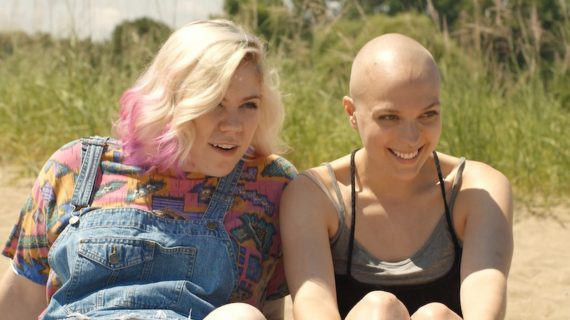
The Driftless Film Festival showcases independent films in beautiful venues in southwestern Wisconsin while enriching the community with face-to-face interaction with the filmmakers. Lovely By Surprise- In this stunning, offbeat film, an aspiring novelist tries to kill off her protagonist with real-world repercussions.


Copy and Paste the Following Code to Embed this Video:
Nicholas Langholff|Nicholas Langholff is a film producer based in Madison, WI. Nicholas has been making movies for the last ten years and now numbers more than 40 films to his credit, 17 as First Assistant Director and 11 as Producer, including El Cartel and the award-winning Madison. His credits also include dozens of national commercials and promotional spots for clients such as Sundance Channel, Nickelodeon, Bravo, Oxygen, and IFC. He has filmed on location in Sudan, Brazil, and Mexico, and spends much of his time working between NY and LA. Langholff now focuses exclusively on developing and producing independent feature films, with a unique expertise in shooting on location in Wisconsin.
Darren Burrows|Darren is best known for his portrayal of budding director Ed Chigliak on the hit series Northern Exposure from 1990-1995. He has also appeared in numerous feature films by directors as diverse as John Waters to Steven Spielberg, and has made several guest appearances on shows such as X-Files and CSI. Darren’s ties to Wisconsin began with the Milwaukee-made Lady in the Box. He has since worked on several projects with Nick Langholff and Madison-based Natural Films. Darren is currently developing Of Angels & Outlaws, a Western to be filmed in new Mexico later this year.
Related Links for this Video:
Nicholas Langholff and Darren Burrows - Driftless Film Fest
Hey, I was writing this thing, and I believe it can be good. Of course. And I just couldn't get over the hugeness of writing a novel. I mean, the enormity of it.
And it didn't feel this way until I got to this hard moment in the book. Now I can't seem to recover from it, and I keep shutting down when I try to write. It's scary. This is not a new problem for writers, of course.
But it passes, and books are written, and life resumes again, right? Only if you write. Sounds so easy. Welcome to Director's Cut.
I'm Charles Monroe-Kane. Today, we're going to talk about the Driftless Film Festival. The festival is held every fall in the Driftless Region of Wisconsin. We are joined today by Nicholas Langholff and Darren Burrows, the founders of the Driftless Film Festival.
Thanks, you guys, for coming in today. Thanks for having us. So real quick, before we get into talking about the films, or some philosophical stuff, what is it? Just give me in a nutshell, what is the Driftless Film Festival?
You know, it's a film festival that happens in some beautiful theaters out in southwestern Wisconsin, which is why we call it, of course, the Driftless Film Festival. We're filmmakers. And I don't know, I spent a lot of time out in that area at American Players Theater, and done a couple movies out there. We wanted to have a film festival for filmmakers and by filmmakers.
I think, you know, a lot of people have the misconception, you know, we've gotten a lot of questions of, why out there? And people seem to forget that no one is born knowing what a good red wine is, or no one is born knowing what art is. It's an acquired taste. It's something you learn.
So we've actually been pleasantly surprised by the voracious appetite for art out there. I'm curious though. Most film festivals that I know of, I like film festivals. I go to film festivals.
They tend to be concentrated. You have a film festival in some city, and there's all these venues. It's really intense. There's that energy to it.
You're not doing it that way. No, not to a degree. Mineral Point kind of plays as sort of where it all began, type of deal for us. Even when we're talking about it.
That's one of the summers. Where it began, really, I was working at American Players Theater, and I lived in Mineral Point. They've got this gorgeous Mineral Point Opera House there. And they were showing, the film society there was showing these great movies.
It just sort of, the film festival, I was spending a lot of time at Sundance, working there. Even before working there, I was a movie lover, you know, just going there and just enjoying the films. I'm like, oh, man, it'd be great to do this in southwestern Wisconsin. So, Mineral Point kind of became the beginning of that.
But I knew that if we were going to make something special, and make something a little bit bigger, I wanted to encompass this whole area, this region. And plus, there's all these great-- The theaters out there. He took a break. You know, we both make films for a living.
He said, I need to take a break, and I've rented this apartment in Mineral Point. I'm going to see all these great little movies in all these great theaters that basically survived the 1980's shoebox remodel. You know, you've got opera houses. Boscobel has a great theater from the 1930s or '40s.
Yeah, and the Al Ringling Theater. Al Ringling. Wouldn't it be great to see our movies here, and for our friends to be able to see movies in places like this? We also didn't want, you know, a lot of the festivals are metropolitan based, you know.
It's in the city and basically you go to see the film. We wanted it to be more of an event, a happening, you know. You know, reaching for the stars, basically, kind of like what Robert Redford did with Sundance, you know. Where a lot of people go there and never see a movie.
It's just the fun of the event. And I think it's an inspiring area. You're talking about people who already live there, and people that go out there for, you know, to get away, and to be inspired. I mean, people go and buy art, whether it's in Mineral Point, or they go to American Players Theater, or they go to Taliesin.
They go to House on the Rock. People are already going out there for a lot of different things, there was just no film festival. So another reason to go out there. Why not?
And there's filmmakers out there, too, which has been some of the fun, to be able to meet some of the other local filmmakers, as well as other friends that are filmmakers from Milwaukee and Madison, and be able to say, hey, come check this out, step inside the theater. We're going to see different clips throughout here. We're going to see one of this film that's just, well it caught me by surprise, which is interesting because it's in the title. Tell me a little bit about it.
We're going to see the opening clip of "Lovely by Surprise," but tell me a little bit about this movie, which is just a gem of a little film. The production designer is a friend of mine, Tim Woodby, who I worked with many years ago. But Nick, you actually worked on this. Well, I was the first assistant director.
But when I talked to Dan about it, the idea of this movie is exactly why I think film festivals are important. It's a movie that you wouldn't have seen. We started the film festival, in our kind of developing year, with this movie, "Lovely by Surprise," which from the moment I read the script, I said this is the most original piece that I think not only have I ever read, certainly that I've ever read and worked on, but even that I've seen in a long time. You know, it's so different, but it's so touching.
It's just a great story. The film still doesn't have a distribution deal, so this is a film you're not gonna-- You might YouTube it, or something like that, you know, but you're not going to see it in the theater. We had a DVD, on Netflix and stuff, and I know that the director, he just sold some territories over in Europe, but it never got its break. It won the Seattle Film Festival, but it didn't get into Sundance.
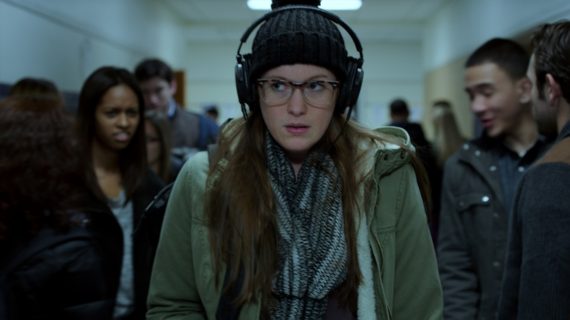
Let's check it out, so people can see a clip from this. Let's see a clip from "Lovely by Surprise." The world they live in is not real. The boat their world. The milk is their sustenance.
It's delivered by truck. They have a radio, and they get certain information from the world. But the information is limited and confusing to them. But it shapes them.
Since they have no way to test the truth of it against something outside. Right. It's a fictional story. But it's-- But their life is connected to us, to this world.
I mean, uh, there's the situation.
chuckles
Their world may not be real, but the connections are real. The radio and the things they hear on it are the things that are happening to us. I'm writing about fictional characters who are affected by real life. So, I have to react to what happens in the present, and write them so that they're true to the world around us.
Everything that happens out here will reach then on that boat in some way, and it'll affect them. It'll change them. In some ways, it has to determine their fate. That's really weird.
Isn't it? I'm just not sure it's a book. I mean, it's ambitious. Who delivers the milk?
I do. That is why Director's Cut supports independent films. It's fantastic. And you guys do, too.
Why are you doing this? Tell us a little bit of your rsum, just for a moment, if you can be not humble for a moment, and then tell us why you're doing this. Well, the best thing is to Google me or go on IMDB, but you know, I'm one of the fortunate ones. I've been doing this since, I got my first job at 21.
I've worked with DePalma, Speilberg, Stephen Frears. I've been on a hit TV show for a long time. And Nick, he does this for a living. He's a filmmaker.
So both of us, for us, the film festival, if it's like if we were a band, getting together in the garage with our buddies and having a jam session, you know? It's a fun time. As I was just, during the break, saying to you, the great thing about independent films is everybody working on them is doing it because they love it and the believe in the project. It's really interesting, even though you see sometimes they miss the mark, it's real interesting to watch people do something that they're invested in and that they love and believe in.
So for us, it's an opportunity to show these films, and to watch them. And because we've been doing it for so long, we know, you know, we know a lot of people. So to get together with our friends and really have that jam session is really wonderful. It's awesome.
And to-- I'm sorry to interrupt. And what do you do when you get together in your garage and jam? You don't just do it by yourself. You invite the neighborhood.
So, that's part of having it out in the driftless area, inviting the neighborhood. You know, come on in, we're going to have some fun. Let's have a jam, and be part of that, you know. And then some guy spontaneously gets up on stage you don't even know and the next thing you know, you're rockin'.
That's right. That's what I mean. This last year, there were two moments that stand out as why I'm glad we're doing it, you know. One of them was, and one is actually directly related to Darren.
There was an episode of Northern Exposure, where Darren is forced to actually start a film festival. I know you remember it. Maurice Minnifield is like, gives him the keys and says, all right, you've got to start this film festival. Nick is one of my greatest fans.
Which, when we'd met, I'd never seen the show, ever. He's the one that forced me to watch Northern Exposure. And we became friends on a movie before that. But there's this one episode, and this year on opening night, we had a movie called "Turkey Ball," a great little independent film out of L.A.
that was making its premiere with us on opening night. The director of the movie is like hey, I can make it, because I'm running the Chicago Marathon, so I can get to the area. I'm like, oh, that'd be awesome. He's like, I have my girlfriend along.
I'm like, okay great. It's a great area, Mineral Point. You'll love it. She'll love it.
He goes the one thing I didn't tell you though, is that she doesn't know Darren, but her dad does, because he directed him on Northern Exposure,  andin fact, her dad directed him for that film festival episode. Oh, yeah. So we had this fun night of like, here are these two people that come from New York and L.A. to the little town of Mineral Point, and here we are.
That was just a nice moment. We had that all over the place, which is cool, with the filmmakers that we don't know yet. Those are the connections, and there they are in southwestern Wisconsin. Do you mind, would it bother you if the film festival just loses money every year, but remains, you guys showing it for your friends?
And conversely, would you mind if it exploded and became this huge thing where people come from all over the world to see it, and the festival becomes what you do? Well, we wouldn't mind if it lost money, but then it wouldn't exist. You can't have supper without food on the table. So you know, to that degree.
But basically, it's just-- The yardstick for success is fun, you know, and if everybody had a good time. It certainly isn't if it makes money. Nobody's making money. It's all volunteer.
Even the people involved on the ground. It's 100% volunteer right now. Yeah, so by that measure, it's already a success. Right.
And to go back to my, you know, analogy, it's, you know, if you're jamming in your garage with your friends, what makes that a success? Well, if people came and they had a good time, then you know, and are talking about it the next day. By that measure, we already had success. And that's it.
Usually, like it's easy for us, especially in Mineral Point, to just hop across to this little bar called Midway, which is a great little, you know, bar in Mineral Point, that we can always hang out. And here we are, you've got a ton of like, here's there like 20 filmmakers just hanging out. It's not necessarily a filmmaker lounge, but it becomes that. It becomes a special moment.
That's the jam that we're talking about. Some of those people, we've never met before. We speak the same language, but there's also friends that are other artists that are just hanging out in town, that hey, do their own thing. I want to show another clip here of "Lovely by Surprise." I want to keep the conversation going.
I just want to get a clip in. And this one, I just want to set up real quickly. The clip, out of context here, is so bizarre and so fascinating, that I actually, when I saw this clip, I think I rewound it twice, just because, oh, my gosh, this is such an awesome moment in film. So let's watch a quick moment of "Lovely by Surprise." This one could have a ring or a compass, or stickers.
I mean, it might be a flashlight, too. I want it to be a compass. Stickers! It's a ring!
I feel mine. Me, too! Mine is flat. Stickers.
I got... A compass! I need that! Hee-hee-hee!
What does it do? It tells you where you are, so you don't get lost.
laughs
Hey, let's take this compass apart and see how it works. No, you'll break it! Let me keep it! I'll-- I'll-- I'll give you the stickers.
Give me the compass. Give me the stickers first. Try to explain that in ten seconds. The opening moment in that scene, where there's the boat in the middle of the field, which you keep coming back to in this movie, absolutely sticks with me as like this intense image of, I don't know what it means for my head, but it's certainly-- You worked on the film, how did you get the boat in the middle of the field?
You didn't just find a boat in the middle of a field? No, the location manager was fine. We tried to find areas where we could actually put this boat and bury it in a cotton field, and actually shoot. When you watch that scene, one thing that comes to me now that I've done a lot of set building, you know, worked on sets, that thing, we shot all those scenes inside and on location.
So, we actually shot the film in Memphis. Then that particular stuff, we shot just over the border in East Arkansas. But yeah, a cotton field, put the boat in there. Actually, it started-- The reason you'll see these shots of where the snow is coming down, these wide shots.
You'll see a little bit of snow. That's because actually we had a roll of film go bad and we had to go back out and shoot later, and it was going to snow, and it's like it'll work. Let it snow! But it was really cold when we were shooting those scenes.
But we'd just be covered in mud, you know. We were out in this field. So, but that's independent filmmaking. That's right.
Yeah, and the director's a genius. He had a vision for what he wanted to do, including torching the boat, if you've seen the movie. That's his idea. After the whole movie, we weren't actually still shooting.
We were actually, it was our wrap party. We kind of brought a few beers out. We got permission and worked with the fire department, and we just lit the boat on fire and burned it in the field. There's a couple images.
Because in his brilliance, he was like, I see it burning up. I don't want to bring it out. I want to just let that. He's a brilliant man.
Oh, my god. I'm afraid that's the kind of director I would be.
laughter
This may seem like a strange question, but when we interview other people who do film festivals, they're very similar to each other in the way they do it. And you're doing everything so different. Again, a reverse for you. What's wrong with that film festival circuit for independent filmmakers?
Not for the festival, but a lot of filmmakers I think are frustrated with the circuit. I don't know if anything's wrong with it, it's just that we've never done it before. So, we're just, with fresh eyes, having been to festivals and having made films, I think maybe we're more process oriented, and not result oriented. Like, you know, this is where we want to arrive at, and this is how we're going to get here, A, B, C, and D, and this is what makes a successful film festival.
And I will say, as a filmmaker who has submitted to festivals with a number of films, and gotten into some and not gotten into some, and then, you know, dealing with the process. I kept that in mind when we were doing this. Again, we're doing something small in a small area. This is meant to be fun, first and foremost.
We want that for the filmmakers, as well. We love that you're not going to sell your film here. That's always my pitch. It's like, love to have the film, you know, like for a movie called "Interrupters" that we got this year, that really hadn't played out here.
It's like, okay, we'd love to get this great movie that started at Sundance. Rob Thomas, from the Cap Times here, had told me, like, in "Square 77," he's like that's one of my favorite movies at Sundance. So I started looking at it, looking at it. And we said to the guys right away, we know we can't sell your movie for you.
We're not going to make a lot of money for you, but we do do a ticket split. You know, we make sure the filmmaker is a little bit, and has a share in it. And if they do their own promotion, they can get something back. And just to make sure, for clarity, it's not that they won't sell their film, but this is a gross process, I think, and so, I think in that sense, it's a build it and they will come.
But for R and Development here, we had only Wisconsin films, because logistically-- For the most part, yeah, it's just making it -- Yeah, then someone could come, and that kind of stuff. And this year, we had people coming out from L.A. So you know. We're going to show another clip, and this one, I want to set up, because I think we did the "Lovely by Surprise," which was fiction, and now, of course, you also feature documentaries.
This is a short clip from the documentary "Grandma Fern," made by a local filmmaker, someone we've had on the show here. We're going to play that, talk a little about that, and we're going to keep the discussion going. So let's see a clip from "Grandma Fern." We named him Bernard, after dad, of course. Bernard Sylvan, because we're involved in the archery.
And the Sylvan Forest had to do with the Robin Hood, you know. He was an archer, so we thought that was pretty romantic. I hadn't lived with family enough to know anything about childbirth, you know. It was really a shock.
I thought I was going to die. In those days, nobody could be with you. The husband was kept out. This nurse would come in, and then she'd go out, see?
She was reading a magazine. I remember it was a McCall's magazine. I said, "Can't you just stay?" Because I'd get so bad, and I'd have to push the buzzer. She was getting mad at me, but I had to have somebody there, you know.
I didn't really understand all what was going on. So she plunked herself down there with her magazine, you know, and I didn't have to ring her. I probably was a nuisance. But if they had explained to me what I was going to go through.
I hadn't lived in a home where there were children born. I was the baby of the family, so I had no idea how it was going to be, you know. In fact, I never even thought of it beforehand. Then we had Yvonne.
We named her after me, Yvonne Fern. Yvonne was a family name on dad's side of the family. Yvonne Fern. Then after Yvonne, we had Sharon.
Then a year later to the day, we had Gail. Same hospital, same room. Then it was 15 months later, we had Gary. So I was pretty busy.
A short clip from "Grandma Fern," by Brent Notbohm. That is an excellent film. Why include a film like that? How do you pick what films to include?
Well, that one, again, comes from friends. So some of the films, Brent is actually one of my best friends. I produced the film, "Madison." He directed, so we did that together. He was on your show for that.
It was a wonderful film. I've met Grandma Fern. One of the things about, and this was a movie that was made some time ago. Grandma Fern, unfortunately, she passed away this year.
And she was living in Spring Green, so it's a little bit-- It's a beautiful film, and it had a special connection to the reason of why it made sense for us to be able to have it at the film festival. That's an excellent reason, because you can. You wanted to. And kind of on that note, when we first started talking about it, we met with the various Chambers of Commerce and the different people involved, and the theater people, our thought was how are we going to get them to give us the theater, you know, for this time period.
And it was exactly the opposite. They said, you don't understand, it's not a monopoly anymore, but we basically have to show what the studios send us. And if they don't, then the movie that's going to, you know, make my rent, "Toy Story 3," or something, they'll hold back on me. But if I can tell them we're having a film festival this weekend, I can't show those movies then, that's all the excuse I need.
You asked a good question before, Charles, about what's wrong with film festivals. I'll say that there are a number of things. Because as a filmmaker, you feel sometimes left out. You feel like you're submitting, you know, you're paying a fee to submit your film.
And you often don't get into those festivals. It becomes sort of a limited amount of slots, and there's thousands of filmmakers. The positive thing is that film festivals are, for most people, they're the theatrical that they're going to get. As filmmakers, I think the first reason you want to make a movie is because you want an audience to see it.
Yeah, right. That's what we always try to remember. That's the one thing. That's exciting about the people that already live in southwestern Wisconsin, but the people that are going out there, it's just a beautiful environment for that.
And for a filmmaker like we've seen again this week, when three or four people that we saw last year, we see people, they want to stick around. We had several filmmakers who actually were supposed to go home. They were like, I'm hanging out to watch other films. It's funny, I run into people all the time, because they see this show, and they don't really want to just say-- Occasionally, it's hey, I love your show.
That's not what they want to do. They don't want to talk about me. They want to talk about a movie they saw, or the passion from a specific interview. They want to tell a story to me.
They want, people want to talk, interact with art, I think. And I think about Hollywood and some of the bigger film festivals, they don't allow that. And I think, just to touch on it, I think filmmakers do also. And due to the nature of the medium, you are kind of divorced from that, you know.
You're not around when people are looking at it. So here, they get to be there with the people, viewing it together, as stage actors get all the time, and theater people get all the time, to be there and then hear what people have to say about it. I think that we also, there's a selection process when you come and talk about the movies and what you do. Obviously, your show is geared toward Wisconsin filmmakers.
Our film festival, it's another opportunity for instance, this last year, we showed "Wrestling for Jesus." I love that movie, by the way. Yeah, and Nathan Clarke is a talented filmmaker and a really beautiful person. And those are the kind of people you like. This is another opportunity.
Now they're going to show their movie in several other communities, where if the film festival didn't exist, most likely that doesn't happen. Right. So that's really kind of another thing that we're eyeing up. But another thing that we keep in touch, keep kind of at a forefront is like, say the Wisconsin Film Festival, which is going to have, you know, tons of movies and really great stuff, so let's see other than the Wisconsin-based films, we're going to grab films that are six months later that didn't play that festival, just to give another opportunity for films that like, hey, for whatever reason, like the "Interrupters" this year didn't play the Wisconsin Film Festival, yet it played Sundance.
Sometimes they have to go to South by Southwest and premiere, so they miss timing. So we want to be able to offer that, too. You can never watch too many movies. No.
We're going to see another clip. This one is "Shadow of the Night," which I really liked as well. We'll show a short clip, then we'll come back with the conversation. Oh, that's excellent.
Another clip from the Driftless Film Festival. So we only have a little time left. Tell me, any advice for the young aspiring filmmakers out there, to be able to make it? I think you learn more from doing one low budget film, or one student film than you will from four years of college.
And you'll discover if that's for you or not. If you're not doing it for the love of it, then find something you do love. Yeah, and I think to a degree, I think you just get involved. You know, you do it.
You find out, whether you're at the beginning and you want to look at Craig's List to see, okay, what are other people trying, or whatever. You know, I moved to New York to start in film. That's where I came up as a PA, climbing to be an AD, and all that kind of stuff. You know, some people can't move to New York.
They're making films here in Madison all the time. You know, you look at Craig's List, you see the list of interns, and you go down and have some fun. Just do it. Thank you very much.
I think that's actually excellent advice. I hope some people follow it. Thank you, and good luck to your film festival. Keep it going, Driftless Film Festival.
I love it. Thanks a lot. Thanks. Thank you very much for joining us today, and thank you for watching Director's Cut.
For more information on the Driftless Film Festival, please
go to our website at
wpt.org. While you're there, click on Director's Cut and send us an email, because we love to hear from you. I'm Charles Monroe-Kane. From everyone here at Director's Cut, thank you for joining us.
Check the gate. So what brings you to the Motor Mile? I ran away from death. Good for you.
At first, I was going to let her kill me. But then, when the truck came, I jumped off the boat and I ran as fast as a rocket! She didn't know I was alive. But when she smashed into me, then she knew.
That all makes sense.
Search Episodes
Related Stories from PBS Wisconsin's Blog

Donate to sign up. Activate and sign in to Passport. It's that easy to help PBS Wisconsin serve your community through media that educates, inspires, and entertains.
Make your membership gift today
Only for new users: Activate Passport using your code or email address
Already a member?
Look up my account
Need some help? Go to FAQ or visit PBS Passport Help
Need help accessing PBS Wisconsin anywhere?

Online Access | Platform & Device Access | Cable or Satellite Access | Over-The-Air Access
Visit Access Guide
Need help accessing PBS Wisconsin anywhere?
Visit Our
Live TV Access Guide
Online AccessPlatform & Device Access
Cable or Satellite Access
Over-The-Air Access
Visit Access Guide




Follow Us