

 Passport







Witness testifies that US efforts to deport Salah Sarsour rely on coerced confessions
A former attorney says Israeli authorities coerced Salah Sarsour, the leader of Wisconsin's largest mosque, into confessing to crimes in the 1980s and '90s, and that the U.S. is wrongfully relying on those convictions in a move to deport him.
Associated Press
August 4, 2026 • Southeast Region


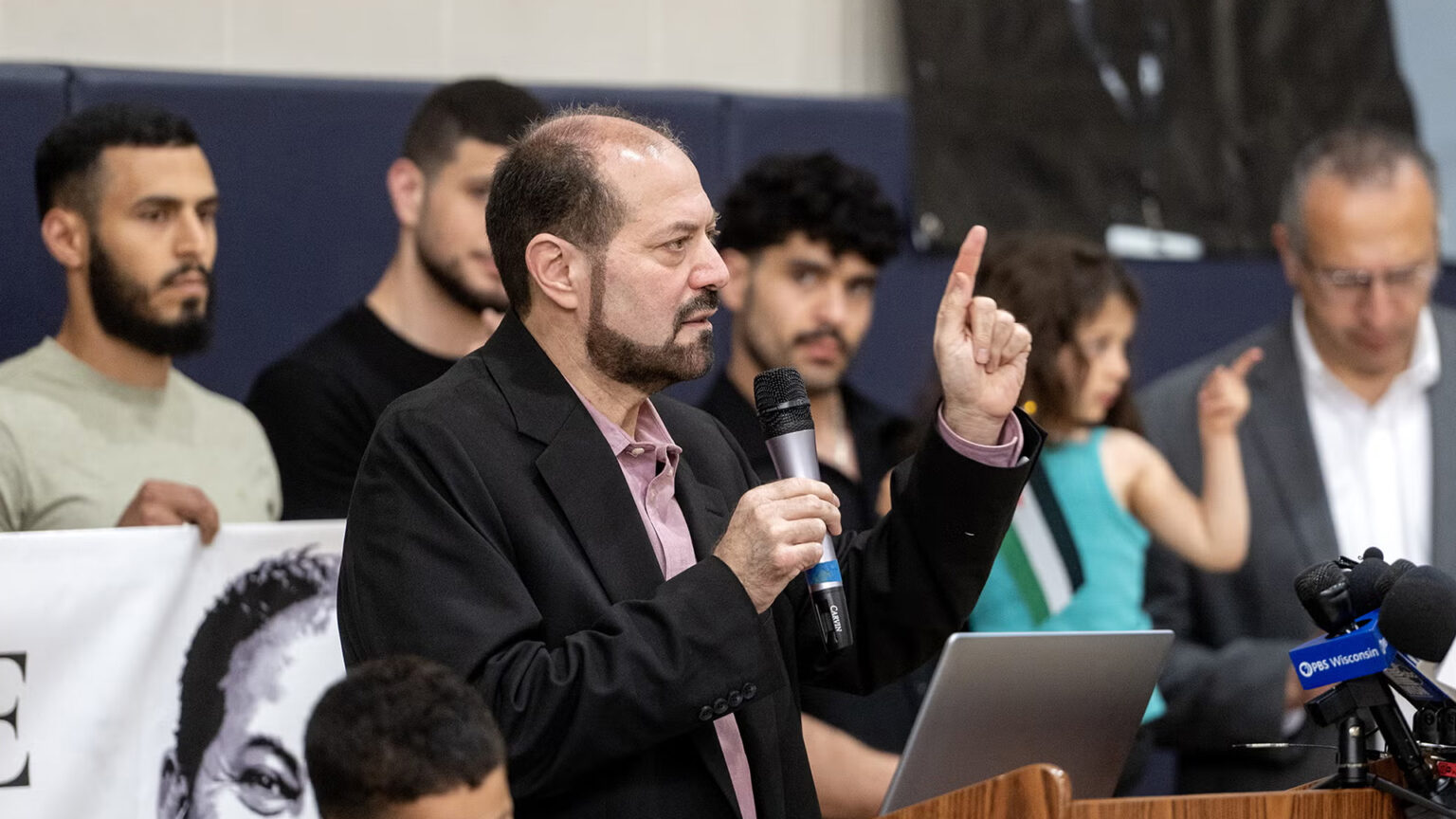
A day after being released from ICE detention in Indiana and surrounded by family and supporters, Salah Sarsour speaks at a press conference on June 19, 2026, at the Islamic Society of Milwaukee. (Credit: Angela Major / WPR)

CHICAGO (AP) — Israeli authorities coerced the leader of Wisconsin’s largest mosque into confessing to crimes but never succeeded in tying him to a terrorist organization, his former attorney testified Aug. 4 in immigration court, where the Palestinian man is fighting a Trump administration effort to deport him.
Salah Sarsour, a legal permanent resident of the United States, was arrested by Immigration and Customs Enforcement officers at his Milwaukee home in late March. A judge released him from ICE detention in June, finding that the government had not sufficiently laid out why it was trying to expel him now after allowing him to live in the U.S. for decades.
The Department of Homeland Security says it wants to deport Sarsour on the grounds that he is a foreign policy threat, based on his convictions in Israel in the 1980s and ’90s. Sarsour, who has no criminal record in the U.S., has said he is being punished for speaking out against Israel.
It was Sarsour’s third appearance in Chicago immigration court since his release from detention. One of his attorneys, Patrick Taurel, presented a witness on Aug. 4 to underscore his argument that the Israeli convictions do not stand up to scrutiny.
Jawad Boulos, who was Sarsour’s lawyer when he was charged in Israel decades ago, testified that Sarsour was tortured in Israeli custody and coerced into making confessions. Boulos also said his former client was convicted of attempting to possess a weapon, but not of any charge tying him to a terrorist organization.
Human rights organizations have released multiple reports alleging Palestinian prisoners are mistreated, tortured and wrongfully detained in Israeli jails.
Boulos told the court Sarsour was tortured and that he accepted a plea deal in the mid-1990s because fighting the charge could lead to a longer sentence behind bars.
On the first day of the hearing, July 22, Salah Sarsour’s brother, Mohammad Sarsour, testified that his brother appeared gaunt and dirty and complained of pain during his detention in Israeli jail.
Sarsour will appear remotely for his next hearing on Sept. 14. Taurel said his client will not testify.
Sarsour is among several people who have been arrested in the U.S. and threatened with deportation after speaking out in favor of Palestinians since the start of the Israel-Hamas war in October 2023.
Mayes-Osterman is a corps member for The Associated Press/Report for America Statehouse News Initiative. Report for America is a nonprofit national service program that places journalists in local newsrooms to report on undercovered issues.





Follow Us