

 Passport





Maria Lazar on issues for Wisconsin Supreme Court justices
Wisconsin Court of Appeals District II Judge Maria Lazar, a conservative running for the Wisconsin Supreme Court in 2026, discusses campaign donations, recusal and the roles of precedent and standing.
By Zac Schultz | Here & Now
March 9, 2026


Maria Lazar on campaign donations, recusal and the roles of precedent and standing.
VIDEO TRANSCRIPT
Zac Schultz:
Do you expect to have the Republican Party of Wisconsin make a donation to your campaign to help along the way?
Maria Lazar:
You know, I anticipate they might. Any party, any group that wants to do so, they can do that. I'm not, I can't — as a judge, we don't ethically ask for money, but if groups are going to do that, I have not said I would not accept.
Zac Schultz:
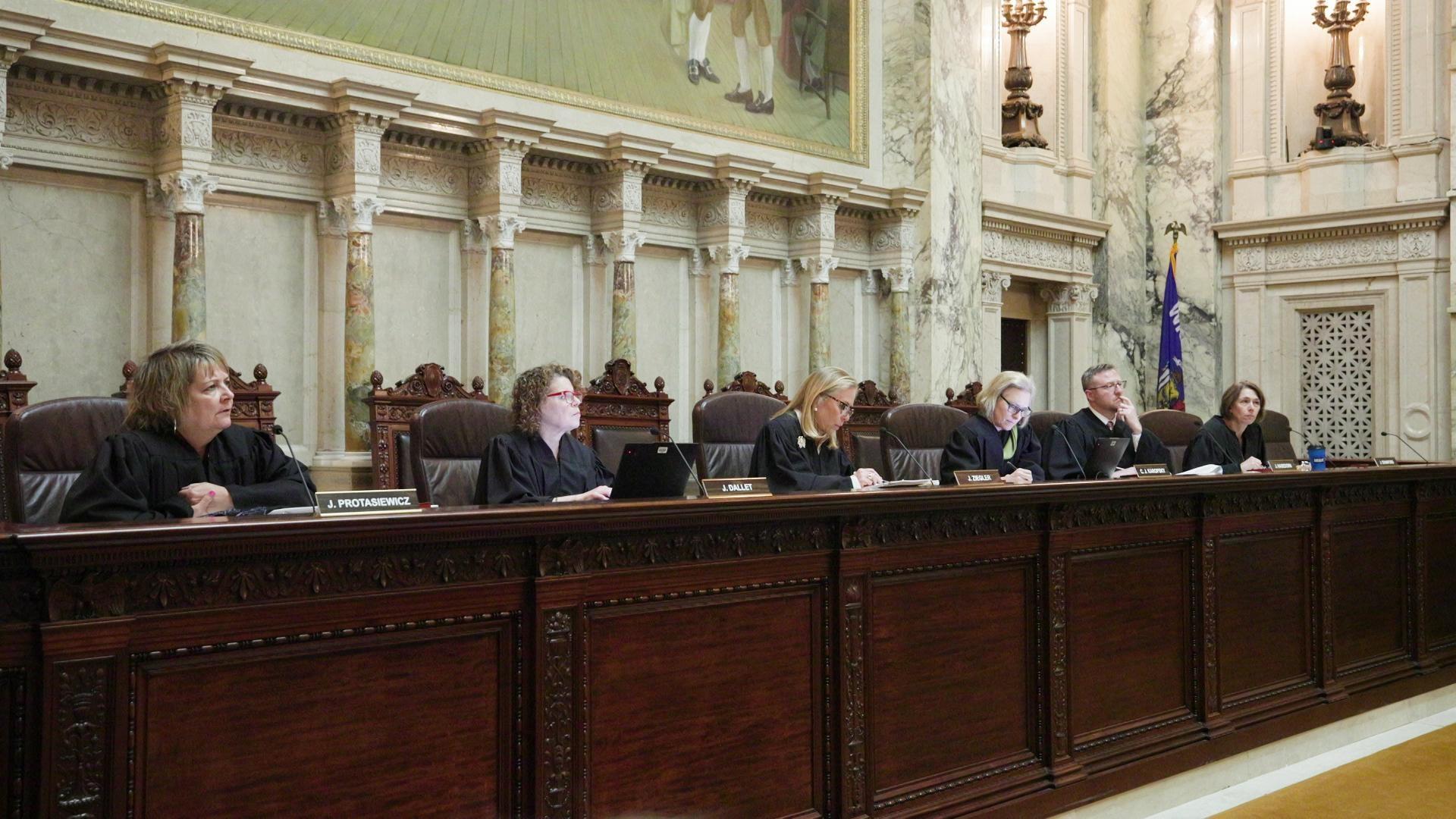
We've seen in past elections, Justice Protasiewicz, for example, received a large amount from the Democratic Party of Wisconsin. She said during that election she would recuse herself from any cases in which the Democratic Party was a plaintiff. Would you do the same? Or how would you, how do you handle fundraising and recusal process?
Maria Lazar:
Well, fundraising and recusals, I am very strict. I follow the rule set by the U.S. Supreme Court as well as by the state of Wisconsin. I have had to look at different circumstances and decide when and how to recuse, and I always look at not only is it objectively but subjectively biased. So, if there's an appearance of impropriety, then I will take a step back.
Zac Schultz:
We've seen, in some more recent examples, former Justice Gableman has asked a number of members of the bench to recuse, and some other cases, it seems like it's being thrown out as a normal course of action. So what should the public take from the Wisconsin Supreme Court's recusal rule when more and more people are asking them to sit out some of these high-profile cases and in some cases they are not, and I guess in Justice Hagedorn's case on the Act 10 case, he did?
Maria Lazar:
Recusal is a very interesting circumstance. It's really internally what a judge believes that they have to do to be not only fair and impartial, but to appear that way. I think maybe people are seeing it more. Recusal happens all the time. I was on the circuit court bench on the Court of Appeals — people always have those issues, and I think they'll continue on the state Supreme Court.
Zac Schultz:
Looking at some of the most recent cases of races over the last decade, the last one that seems to fit this parallel, and tell me if you agree, is Justice Hagedorn's race where it was a little under the radar. Towards the end of the race there were a lot of people that wrote him off as saying there's no way he can win, but it was a big ground game and he ended up winning that race when most people had written him off. Do you see a similarity there?
Maria Lazar:
Well, secretly yes. So, the parallels are there. I think that through my entire career people have underestimated me. It's sort of been a theme that they don't think someone a little shorter, a little softer spoken can be as strong as steel, and I am. In this race, I think that's important too. People think that, you know, it's written off, it's a done deal, and it's not. This is a race where the people in the state of Wisconsin have to take a step back and say, who do we want on this court? Do we want a legislator who is going to tell you in the state what you have to do? Or do we want a judge who has devoted her entire life to representing the law?
Zac Schultz:
A lot of people get focused on the fundraising numbers and the millions of dollars, but how important is get out the vote? And can this be a trial run for people that are going to be doing get out the vote activities all through the summer and into the fall?
Maria Lazar:
I really don't look at what's going on legislatively and what they're going to do. I will say I do look at this as the 250th anniversary of our country, and I'm really excited that this election will be happening in this year, and that when I win, in August I get to have my investiture in the 250th anniversary year. As to get out the vote, I think that everywhere I go, I talk to people — all different groups, people who are on one side or the other, in fact, even people who hate everybody, and I talk to all of those groups — and I get them to the point where they recognize why this race is important, and why I'm going to win.
Zac Schultz:
Most candidates for Supreme Court over the last few years have come strictly from the judiciary. There've been a couple examples of those of partisan backgrounds. Brad Schimel obviously was the attorney general. Justice David Prosser had a history in the Assembly. Your opponent has a history in the Assembly. How much should that factor in when people are looking at whether a judge may politicize something as the ruling?
Maria Lazar:
Well, I think it factors in a lot. I think that David Prosser was in a different generation, a different time where people did come from different avenues, and some from the legal profession or teaching instead of just being a legislator or a lawyer. But I think now we are seeing people that are so partisan, and my opponent was a legislator from Madison. My opponent was appointed by Tony Evers to the circuit court. I've never been a member of a political party. I've never been appointed to any position. I've won all of my seats by running elections, and running and winning my elections. I think it's really important when you look at that and you compare and contrast the two of us, our experience as well as where we come from.
Zac Schultz:
What would you say is one of the most important Supreme Court, Wisconsin Supreme Court decisions over the last five years?
Maria Lazar:
So, the last five years. That's really hard to say. I guess perhaps — well, let's see. So, I know that they've made rulings on issues with respect to mental commitments. I know that those have been very important to people. I know that they just issued an opinion just about a week or two ago about privacy rights and people who have Instagram accounts and things like that. I think those are the cases that the state Supreme Court is doing that are really important, and I don't think that people in the state see them. They look at more of the political cases and the election area cases, but it's those down and important to us standards of law. There is another one about criminal burdens of proof for termination of parental rights cases. Those are the things that I think are really important.
Zac Schultz:
I want to run through some high-profile cases just to get your opinion on how you might have ruled if you'd been on the bench. So most recently, the congressional redistricting lawsuit, Bothfeld v. WEC, creating the three judge panels. What do you think of that decision?
Maria Lazar:
Well, so that's an opinion that could come up in front — I did release something on my website that talks about redistricting and that it's supposed to only happen once every 10-year cycle with the United States Census. So, in that respect, I think that my position is pretty clear. You do this once, you don't get two or three kicks. However, what they're going to do and what they're going to say, I have no position on.
Zac Schultz:
Another case from last year is Planned Parenthood v. Urmanski. It was a 4-3 decision to invalidate Wisconsin's 1849 abortion law. How would you have ruled on that?
Maria Lazar:
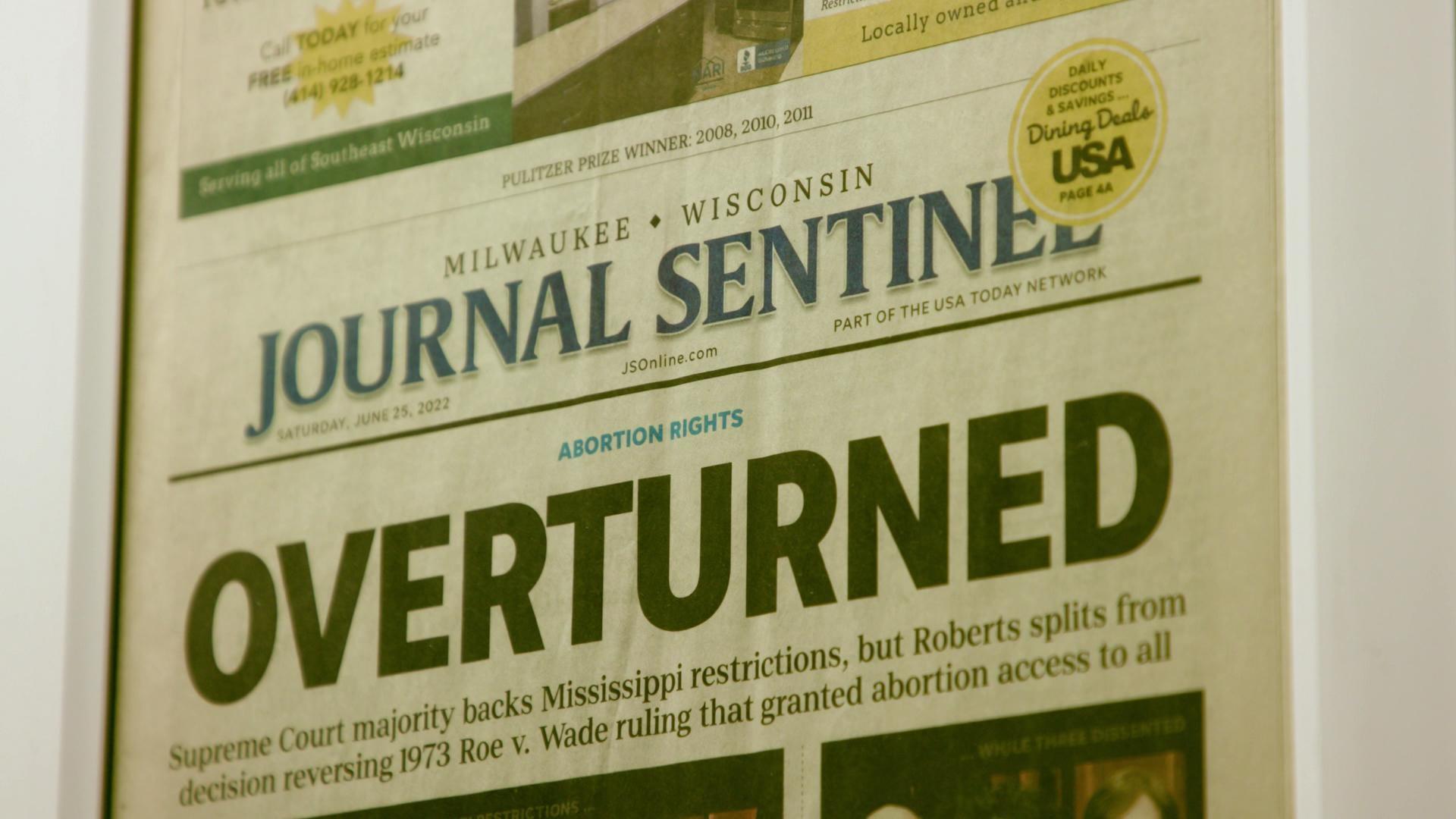
I'm not going to say how I would've ruled, but I will say what I will do moving forward. I have put that in positions. I've released a statement. I've released an op-ed talking about abortion, and indicating that this is a really complicated issue for the woman, and her life is so valuable and important. And I've indicated that, one, I respect the rule as decided by the state Supreme Court. I will only be one of three members in the minority, so I won't be changing that. And two, I think women in this state need clarity, they need certainty. And three, you need to lower the temperature on this issue. This is resolved, as far as I'm concerned, for courts, for the judiciary. The Legislature can do what they want and the people in the state of Wisconsin can do what they want, but the judiciary, it's clear, it's done.
Zac Schultz:
Another series of high-profile decisions comes from Evers v. Marklein and rebalancing some of the power between the executive and the legislative branch. The JCRAR was a 4 to 1, and 2 concurrences. It was kind of a mixed message, but what do you, and that and also the Knowles Stewardship, it was a 6-1 decision. What do you think of those decisions kind of trying to redraw the line or refigure the modern interpretation of that balance of power?
Maria Lazar:
That's a difficult question because I actually had some cases that went up on the same sort of issues. And I think that the separation of powers is so important, and I follow in line with the views of the U.S. Supreme Court Justice Neil Gorsuch and his view on what the separation of powers are and how they fall. I see this court maybe going a little astray from that view. But again, I'm going to be on the minority on this court, so while I'll be writing a dissent or not, I'm not the person who's going to change anything that's happened. I really can't comment further, because I'm sure there'll be more coming up the pipe.
Zac Schultz:
Another case that's going back a few years now is Trump v. Biden from the 2020 election seeking to invalidate more than 200,000 votes from Dane and Milwaukee counties. That was a 4-3 decision on whether they should take the case.
Maria Lazar:
On standing.
Zac Schultz:
On standing, and decide then go forward, not actually how they would've ruled on that — but what was your interpretation of the decision of the court at that time?
Maria Lazar:
Well, standing goes back all the way to the Teghan case as well, and talking about who has standing and taxpayer standing, in this case, it wouldn't have been taxpayer, but voter standing. This is sort of an area that's really deeply in flux with our state Supreme Court. They have issued several opinions that have gone around the edges of it, and so I'm not going to comment any further on where they would go, because I honestly believe that standing is going to come back up in our next term. So, when I'm on this court, I don't want to have someone say, "You said in an interview, so now you can't rule on this case."
Zac Schultz:
As far as whether someone's going to say, "Well, you didn't answer the question — Trump v. Biden, would you have overturned all those votes?" Can you give me a reaction to that?
Maria Lazar:
Well, I have answered the question, but with respect to overturning votes, I strongly believe that every vote should be counted, so every legal valid vote should be counted. So, I wouldn't comment and I don't actually know the parameters of how they were going to try to disenfranchise or not disenfranchise voters, so I really don't have any further thing that I can say about that case.
Video Interviews

Our Partners




PBS Wisconsin is a service of the Wisconsin Educational Communications Board and the University of Wisconsin-Madison. © 2026 All Rights Reserved.
Follow Us