

 Passport





Josh Schoemann on issues in Wisconsin's 2026 governor's race
Washington County Executive Josh Schoemann discusses issues central to the 2026 election for Wisconsin governor, from data centers to education funding and tax policy to housing costs.
By Zac Schultz | Here & Now
January 7, 2026


Josh Schoemann on issues from data centers to education and tax policy to housing.
VIDEO TRANSCRIPT
Zac Schultz:
What's your view on tariffs and [President Donald Trump's] tariff policy?
Josh Schoemann:
Well, I think there's a complete economic reorder happening right now all across the globe. I think President Trump sees tariffs as a lever to be able to guide that reorder in a way that benefits America in the long term, and quite frankly, the Western Hemisphere. You know, I'm willing to be patient, as I've talked to a number of farmers and manufacturers in Washington County and now all across the state to see that play out. But it's waning patience. You know, this economy's been tough. It's particularly hitting people who are making less than six figures, and I'm excited to see the results, but I think they're coming very, very soon.
Zac Schultz:
As governor, there's a good chance that you would have a Republican Legislature behind you. What would you like to see as AB 1, the first bill you can sign into law?
Josh Schoemann:
Well, I think there's a laundry list and that's part of our challenge, but one of the things that I want to see first is things that are focused on affordability, property taxes and income taxes in particular. It's embarrassing to me that our top bracket of income tax is almost double what Illinois' is. I'd like to see it flattened out and then slowly eliminated. And then property taxes: I'd like to see us go from four or five entities on property tax bills down to two or three — the goal of cutting them by 50%. You make a moonshot, and if you hit the stratosphere, you've won.
Zac Schultz:
So there's also a chance that Democrats could hold one of the chambers. What's your history of working across the aisle?
Josh Schoemann:
Yeah, I definitely think there's a chance, but that is why it's important to have the best player on the field for the Republican side to make it most likely that not only do we have the governor's mansion, but we also hold the Senate and the Assembly, in the event we don't. I think this has been one of the things I've been most critical of recently, is the lack of communication between the east wing and the legislative branches both. I mean, look back to the state budget process: The Democrat minority leader is critical of the Democrat governor for not even giving her a seat at the table in the conversation about the budget. You know, Greta Neubauer and I probably don't agree on a whole lot. One thing we do agree on is everybody should have a seat at the table — 90% of things, we probably disagree, but there's probably going to be one or two where I'm like, "Yeah, that makes sense. How do we get to yes?" And there's a laundry list of things that we need to talk to each other on, whether it's funding for schools and the funding reform being broken, funding for a prison system, which has been broken for 50 years, the transportation fund that was raided by Gov. Doyle and needs to get fixed — and, doing it in a way that is effective for people and makes things more affordable. All of those things are things we need to work together on.
Zac Schultz:
The Public Service Commission is looking at a large number of utility rate hikes. Data centers are popping up all across the state. What's your view of data centers and this issue going forward?
Josh Schoemann:
Well, I think we don't know enough, and that's one of the scariest parts about this process. I've got one popping up about 10-15 miles from my house in Port Washington. The transmission lines that are going to come through are about two miles from my house. I know it firsthand from talking to my neighbors — you know, I'm very concerned. It's predominantly power-driven — power distribution and power supply. You know, I grew up middle school and high school in Kewaunee, 10 minutes down the road from the old nuclear power plant that's now being decommissioned. That is the essential energy solution. Why we're not talking about it while right here on the Madison campus? We have the number three school in the country for nuclear engineering — we should be leading the way. I think we need to slow down the conversation about data centers with a goal: create goals for how we become the forefront of AI and data centers in Wisconsin, and the forefront of the energy revolution, which I believe starts with nuclear.
Zac Schultz:
What would you like to see happen with public education? Does it need more funding? Does it need an overhaul?
Josh Schoemann:
Yeah, thanks, that's a great question. I was a school board president in Hartford, and it's near and dear to me. My oldest son graduated from Hartford Union High School. My youngest son is on a special needs scholarship voucher at Kettle Moraine Lutheran High School. So, I'm a huge believer in universal school choice for every parent. But that funding formula for public schools needs to be reformed. It's from the 1970s — it's almost 50 years old at that time. Then,m in the '90s when Gov. Thompson tried to reformulate it — unfortunately unsuccessfully — our student population was growing, imminently growing. Now we're looking at the next 25 years — it's going to be declining precipitously, not to mention the outcomes, which aren't great either. So I think we need to get all the players at the table — school boards, superintendents, parents, homeschoolers, voucher schools — all around the discussion and say, "How do we leverage these dollars best and make it best for outcomes for our kids?" As soon as it becomes about our kids, and not about bureaucracy or institutions or winners and losers — no more zero-sum games — it's got to be about our kids in the future of the state of Wisconsin. It's going to be one of the things I'm laser-like focused on, but it's not going to happen quickly. We've gotten 50 years to get to this point. We're not gonna solve it in 50 days or 50 weeks.
Zac Schultz:
What would you like to see happen with vouchers in the voucher program?
Josh Schoemann:
I certainly think it needs to be expanded, but I don't like the talk about money following the kid. My concern with that is kids become a commodity, and what do we do with commodities? We buy, sell and trade them. I don't think that's the solution. I think there needs to be some kind of baseline funding where all of our schools have some reliability in their funding and sustainability fiscally. And then, everything, I think there needs to be an outcome-based — how are kids doing better? When kids do better, schools do better, whether it's public, private, homeschooling, charter schooling, all of those things, virtual schooling. That's why it's a complicated issue that I think we need to be thoughtful and pragmatic about.
Zac Schultz:
What is the number one tax reform you'd like to see happen?
Josh Schoemann:
The very first thing I'd like to see is property tax reform. It's hard for me to take property taxes and income taxes and separate them. So, I would say they go hand in hand, frankly. I don't think you can separate one from the other. Our grandparents leaving to go down to Florida, Texas, Tennessee, Arizona — we got to stop that bleeding. And our young people leaving 'cause they can't afford to live here or the opportunity at a new job or new business — that too. So I guess in the end, I would say property taxes and income taxes together, that they both have to be solved.
Zac Schultz:
Over the course of the last year, we've seen the Supreme Court eliminate a lot of legislative oversight over the rulemaking process. Would you like to see reforms? Do you think there's a bipartisan solution there?
Josh Schoemann:
I do think there's a bipartisan solution. I actually think there needs to be a constitutional amendment with regard to the governor's veto, with what happened with that 402-year veto. I think that's problematic. I think the legislative branch definitely has an important role and responsibility. I've experienced that firsthand as an executive myself at the county level. I respect it and I would respect it at the state level. There's a lot of work for us to do in that regard, and in the last six-and-a-half years, I think a lot of eroded trust on both sides that needs to be repaired.
Zac Schultz:
You obviously have experience at the county level. What would you like to see happen with funding for local government?
Josh Schoemann:
Well, we made a step with shared revenue. I was proud to be a part of leading that as president of the Executives and Administrators Association with the counties. But it was a step, right? It was a big step, the first in about 40 years, almost my whole life. But it was just a step — we need now one giant leap for mankind. I think that's how you actually solve the property tax issue. I mean, look at all the people coming from Chicago on the east side of our state, Minneapolis on the west and northwest part of our state, that aren't really contributing a heck of a lot when you think about it. Our sales tax is relatively low and we're not capturing nearly enough from those folks. I think it's a huge part of the solution. There's got to, be some reliability in that fiscal model for municipalities. But huge reform opportunity, and I'm proud of the step we took, and now we got to take a much bigger leap.
Zac Schultz:
Right now in northern Wisconsin, there are exploratory drilling projects for potential mines in the future. Do you think that Wisconsin's current mining laws are tough enough, or do you have any changes?
Josh Schoemann:
I think there definitely need to be changes. I mean, look at our flag — mining is our heritage. I think we've gone too far away from it. I think there's plenty of opportunity and probably agreement, frankly, on both sides that there's smart ways to do this. But I do think there's giant opportunity area, particularly in the northern part of the state where they're desperate for jobs. So I think there is opportunity and it's something that I'm excited to work together with the other side.
Zac Schultz:
Have you had any concerns about your own safety in this modern political environment?
Josh Schoemann:
When Charlie was assassinated, that was the first time — you know, I talked to my wife long and hard about this decision to jump into the race, and she's a talker, normally hard to get a word in edgewise, but she took a pause and said, "Well, it can't be worse than Iraq." And that was the moment we decided to get in. When Charlie was assassinated, that was the first time that I had second thoughts, like, "Wow, this is very real." And of course, you know, that goes across the spectrum, whether it was Gov. Shapiro in Pennsylvania or the former Speaker up in Minnesota. It was a scary time. I mean, we've got to bring the temperature down. I think part of the problem with politics in America and politics in Wisconsin is we just don't talk to each other. We talk past each other. We throw social media bombs. There's no conversation. I think we got to get back to talking to one another again. It's why I've gone to all 72 counties and I'm now on my second tour, about halfway through. We're Wisconsinites. We should be talking to each other. Americans first.
Zac Schultz:
What is your plan for increasing affordable housing? Do you think it's regulations, density? What's the solution there?
Josh Schoemann:
Well, it's "Build, Baby, Build." We have choked off the ability for small homes on small lots, building just in general. I think it started back about 50 years ago when we started to tighten up how financing worked for local developers, and we completely choked it off after Dodd-Frank. At the same time, we went from post-World War II about 60 pages of zoning regulation to today, six-and-a-half inches of subdivision codes and comprehensive plans and zoning codes, and the list goes on. Regulation is massively a problem, and then "Not In My Backyard" attitude. I think we've gotta loosen all of that up. I think you look to models like Montana and the "Montana Miracle" where they're now building like crazy. This housing issue is a supply-side problem. It's an old Ronald Reagan-type supply-side economics issue. We have to create the environment where we're making it possible for the opportunity at the American Dream. To me, this is constitutional, this is declarational: life, liberty, and the pursuit of happiness. We have solutions in Washington County that are moving the needle. We've got professors, we've got institutes from across the globe who are calling us and saying, "What are you guys doing? Something different's happening in Washington County." We can scale that up. It'll be a little different statewide, but we could scale that up statewide and make it a solution for everybody. Give everybody a shot at the American Dream in an affordable manner.
Zac Schultz:
In the Department of Corrections, Gov. Evers has a pretty massive overhaul plan. Would you carry that plan forward?
Josh Schoemann:
There's components of it that I like. What I don't like is opening the doors and letting people out. I think we need to get a much tougher-on-crime approach. I think it starts by electing Eric Toney, but I also believe we have to give law enforcement the resources they need, DAs' offices and police departments alike. We've done way too much of that. I'd call it a "slow roll" in the city of Milwaukee in particular on defunding the police. Yeah, they haven't actually cut funding per se, but they've held funding flat. They've held positions open. We need to deploy as many resources as possible to local law enforcement and give them everything they need — from local, state, to federal law enforcement — know that we have their back 110%.
Zac Schultz:
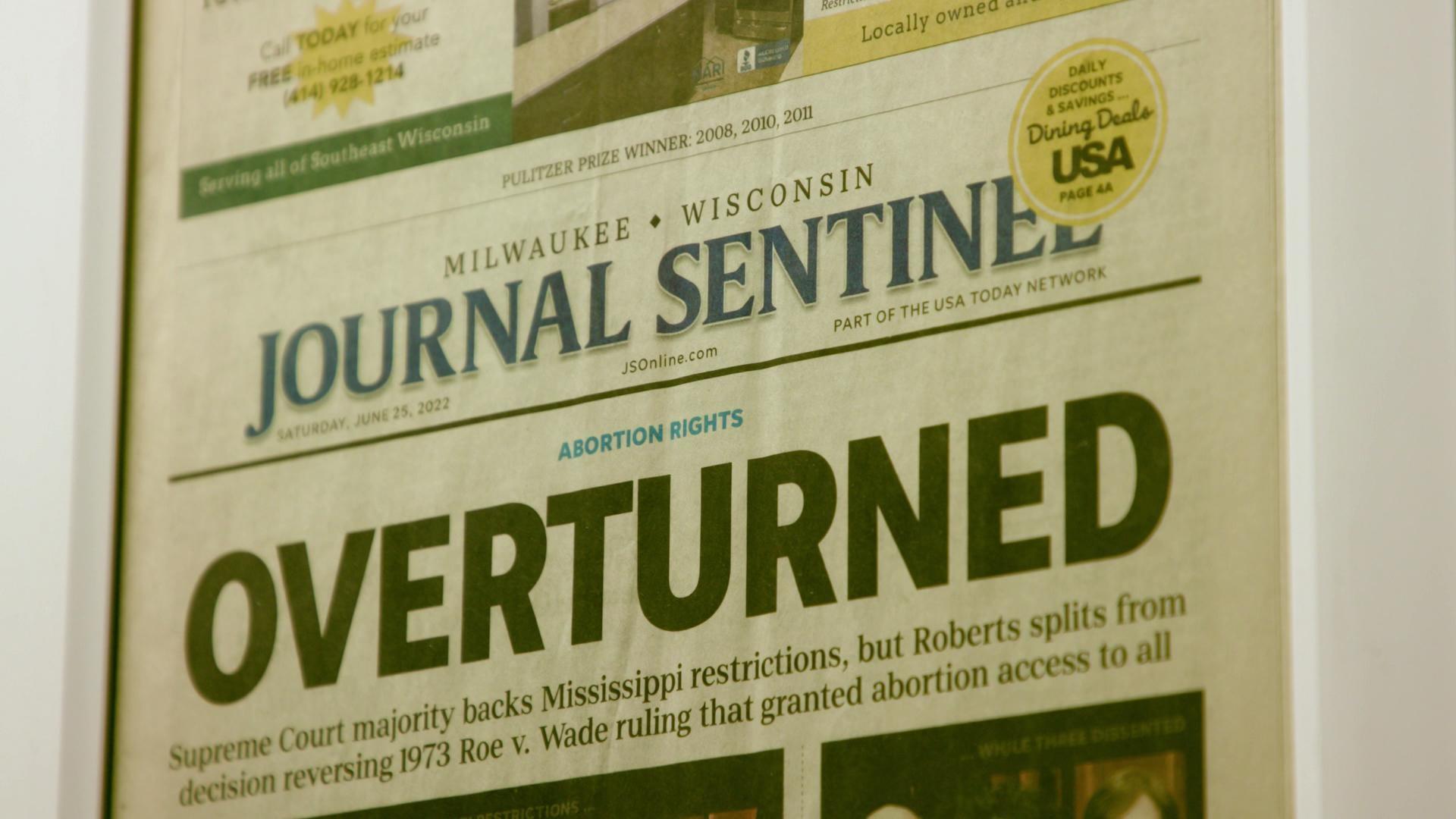
On the topic of abortion, is there any changes you would like to see to state law?
Josh Schoemann:
I think our life culture is what has to change. I think we need to create a culture of life in Wisconsin. You know, now that the state Supreme Court has ruled, the bill that Gov. Walker signed — 20 weeks — I think it's a settled issue both here in the state and at the federal level, in that regard. I think we need to focus on different things like making adoption cheaper than abortion. I think we need to make it such that child support starts at conception rather than waiting until birth. I think we need to give mothers resources all the way through the first year postpartum when need be. I think those types of reforms are what we as conservatives need to focus on so that we prove we're pro-life. This isn't just about anti-abortion.
Video Interviews
Our Partners




PBS Wisconsin is a service of the Wisconsin Educational Communications Board and the University of Wisconsin-Madison. © 2026 All Rights Reserved.
Follow Us