

 Passport





David Crowley on issues in Wisconsin's 2026 governor's race
Milwaukee County Executive David Crowley discusses issues central to the 2026 election for Wisconsin governor, from data centers to education funding and tax policy to housing costs.
By Zac Schultz | Here & Now
January 8, 2026


David Crowley on issues from data centers to education and tax policy to housing.
VIDEO TRANSCRIPT
Zac Schultz:
If elected as governor, you could have a legislative majority and the Democrats behind you. What would your AB 1 be? What do you want, first thing you want to sign?
David Crowley:
Well, the first thing I want to sign is about how do we really tackle this affordability crisis? I would love for us to focus on affordable and attainable housing in every corner of the state of Wisconsin. I would like for us to focus on fully funding our public schools, making sure that there are good paying jobs no matter where they are in our state, and making sure that our young people are ready for the jobs of today and tomorrow. I want Wisconsin to be a healthy community, and not just when it comes down to the physical and mental health, but having a home over, a roof over your head is health. Having access to public transportation is health. Having access to clean water and clean air is health. Those are the things, these aren't partisan issues. It's not a Milwaukee agenda, this is not a Democratic or a Republican agenda. It's something that all Wisconsinites can get behind.
Zac Schultz:
Now, it's also possible that the Republicans still control one or more houses in the Legislature. What's your track record for working across the aisle?
David Crowley:
You know, I spent seven years in the State Capitol, so having worked under both Gov. Evers' administration as well as Gov. Walker's administration, I've had to navigate these political landmines, if you will. And as the county executive of Milwaukee County, I've worked with a Republican-controlled Legislature, not only to benefit Milwaukee, but every community across the state with the passage of Act 12 — continue to work across the aisle, even in this most recent budget where we're going to receive reimbursements for our highway patrol, giving us the ability to invest in our public safety building, in our courtrooms to make sure that we can deliver justice for those who need it, and take care of those who are in our care. And so I'm going to always show up and deliver for those that I represent. I want communities all across the state to know I'm gonna be a governor for everybody, not just one party.
Zac Schultz:
Right now the Public Service Commission is looking at rate increases across the state for rate payers. There's data center proposals all across that could use more energy and land. What's your policy? What would you like to see happen as far as data centers, utility regulations, to make sure that the average rate payer doesn't be paying for this?
David Crowley:
I believe that we should have growth happening here in the state of Wisconsin. This is a great opportunity to look at what this economy looks like in the near future. But that doesn't mean that we have to give up the farm. We also need to make sure that there are environmental protections, they are protecting the environment that is around us, but also protecting those individuals who also live in those communities. This is a opportunity for us to utilize new technology, leverage the legacy industries that we have here locally, when you think about manufacturing and agriculture and water technology and things of that nature, to really make it a community benefit. Bringing in the tech centers and data centers and AIs can be good, but we have to make sure that we have those protections in place, while also making sure that there's community benefits that are going to be tied to this level of development. How do we utilize this for our schools? How do we utilize this to expand broadband? How do we utilize this to expand the access that our entrepreneurs have in every corner of the state of Wisconsin?
Zac Schultz:
You've referenced increased funding for public education. Is that just more money or do you think there needs to be an overhaul on how the money gets spread out to different districts?
David Crowley:
I think in recent years, we've all seen how the state of Wisconsin has really backtracked on this promise, not just to local governments, but also our schools, right? Local units of government, cities, towns, villages, counties aren't getting enough shared revenue to pay for the services that are either mandated by the state, or they know that their residents are cared for every single day. The same goes for our school systems. We used to fund our public schools to the tune of two-thirds, and we no longer do that. And now, not just our teachers but our young people are hurting every single day. I think that we need to actually take a step back. We need to take a step back and look at not just our revenues, but how we're spending money. I think that we should put in place a blue ribbon commission on taxes. This isn't something, this is something that hasn't happened since the mid '80s, but this gives an opportunity for university officials to be at the table, business leaders, government folks, you know, just the public to have a transparent conversation. What's working in other states? What can we bring here to make sure that we have a system of revenue and spending that works for everyone and works to the future?
Zac Schultz:
What would you like to see in terms of vouchers? Obviously they started in Milwaukee. Would you like to continue the expansion? Should they be rolled back?
David Crowley:
I think one, we need to fully fund our public school systems. You cannot get rid of the voucher system unless our schools are in the place to actually educate all of our students in every community across Wisconsin. And that means fully funding our public school systems. But any system that is receiving public dollars should be held to the same standards of our public schools. They need to be transparent, they need to be held accountable, and they need to make sure, again, to be held to the same standards that public schools are held to, no matter what community they're in in Wisconsin.
Zac Schultz:
Over the course of the last year, the Supreme Court has issued a number of decisions that have weakened legislative oversight into the rulemaking process, both the attorney general's office and the legislative direct oversight to agency rules. Would you like to see a bipartisan solution to providing legislative oversight? Or do you think the current system as it is now with agencies not needing any sign off from the legislature is the way to go forward?
David Crowley:
Look, I always say that, you know, bipartisan solutions are good long-term solutions. Because whoever is the governor — Democrat or Republican — it can go back and forth and we always know that the pendulum swings. But if we want to have good policy in place that's going to benefit everybody, those departments, those who are directly impacted by the programs and services, I would like to see a bipartisan effort of our legislators coming together to get it done.
Zac Schultz:
And you referenced this earlier, but talk a little bit about funding for local government. You've been on your end of it. How important is that, and what changes would you like to see or make as governor?
David Crowley:
You know, as the county executive, 80% of our local tax levy is going towards state-mandated services. These are services that most folks may not actually utilize, but those most used amenities like our public parks, like our county zoo, like our county transit system, these are non-mandated services and it really puts those particular services that help to improve the quality of life for individuals who live in or around or just play in Milwaukee County. Those are always on the chopping block. And so we actually need a better course of action. We need a better relationship with the state of Wisconsin for all local municipalities to be able to fund the necessary programs and services that their residents expect, but also rely on every day.
Zac Schultz:
There are a number of exploratory mining sites around the North Woods of Wisconsin, some of which are getting closer to actually requesting permits for a full mine operation. What's your stance on mining in Wisconsin and can it be done safely? Would you sign off on permits as governor?
David Crowley:
Well, it's about working with the local municipalities, working with the groups and the stakeholders that are on the ground and making sure that the work group that we can put together are giving us the best information possible to make the best decisions. That's going to have a huge impact, that can have a huge impact on the environment, as well as a new industry here in the state of Wisconsin. And so, you would have to take that on a case-by-case basis and really working with all the stakeholders to make sure that we're making the best decision possible.
Zac Schultz:
Do you have concerns in this political environment about violence as a candidate running for statewide office?
David Crowley:
I think we've seen a huge uptick in political rhetoric and political violence happening all across this country. And quite frankly, I'm sick and tired of it. It is unfortunate that we're seeing the level of violence just for being able to deliver on behalf of those that we represent every single day. And so, whether you're a Republican, Democrat, we really need to end the political rhetoric and this violent rhetoric that has been out there and really focus on how do we make lives better for those that we represent.
Zac Schultz:
You've referenced affordable housing a couple times. Does that mean fewer regulations, more density? How do you create more affordable housing?
David Crowley:
It's important to understand that there isn't a one-size solution that fits all of the problems that we're facing as a state. What works in Milwaukee may not work in Menasha, may not work in Marinette, may not work in Barron. We have to make sure that we're working with those local organizations, those local units of government to figure out what right size solution works for them. Yes, do we need more affordable housing? Absolutely, we do. We need that for our seniors, for working families, for people with disabilities, but we also need attainable housing as well. And attainable housing is those who have the ability to afford, those who may not qualify for afford affordable housing, but have the means to buy their own home, yet we don't have the housing stock. And so it's about how do we bring online more housing options to help lower the costs for communities all across this state. But again, we have to work with local municipalities to figure out what is the best solutions for them.
Zac Schultz:
Gov. Evers has proposed a corrections plan that would revamp the corrections system in Wisconsin. Do you agree with his plan? Would you carry that vision forward as governor?
David Crowley:
We absolutely need to revisit how we do corrections here in the state of Wisconsin. When I served in the state Legislature years ago, Grover Norquist came to Wisconsin to talk about how we needed to do criminal justice reform. And there's not many times where I can say I agree with Grover Norquist. So, we should be looking at how do we make sure that those less violent offenders aren't just spending as much time in our care, which costs us a lot more money to have them in the prison. What more can we do in making sure that those who absolutely need to be in these facilities, they get the help that they need, we rehabilitate them? But individuals, when it comes down to mental health, prisons should not be the answer for those individuals. We need to make sure that they're getting the resources and the help that they need, but also how do we make sure that we wrap around those other services, support systems around their family and their other networks, to make sure that they don't fall through the cracks again.
Zac Schultz:
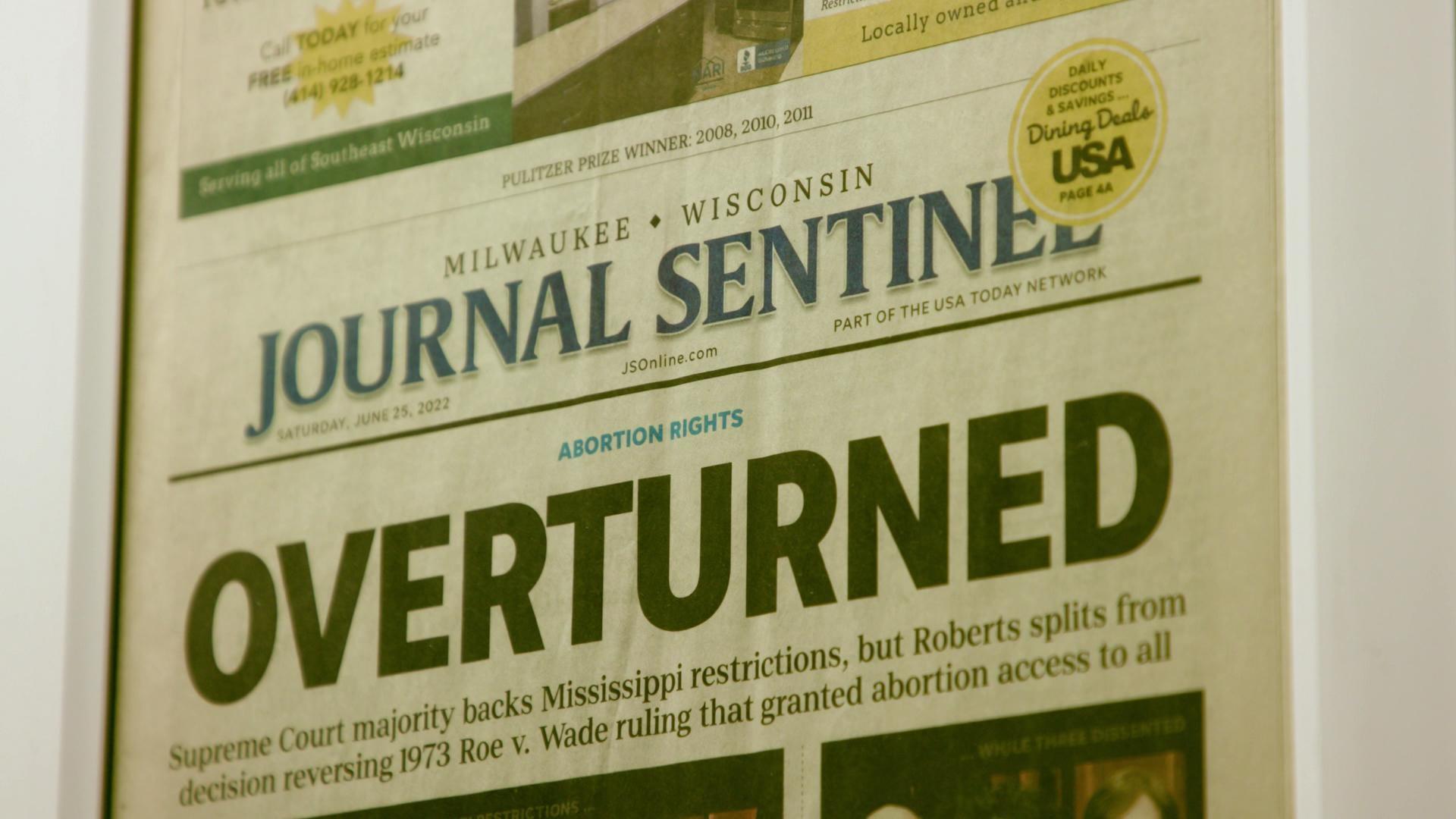
On the topic of abortion, the law of the land in Wisconsin is actually a law passed by Gov. Walker and the Republican Legislature a number of years ago. Would you like to see any changes to Wisconsin's abortion laws?
David Crowley:
Look, I'm a huge champion when it comes down to abortion here in the state of Wisconsin. When I was a state representative in 2017, I co-authored legislation declaring abortion as health care. As a father of three daughters, being a girl dad times three, it's important for me to make sure that they have the same rights that their mother and grandmother had, not less. And so I'm going to always be a champion for women's rights to choose.
Video Interviews
Our Partners




PBS Wisconsin is a service of the Wisconsin Educational Communications Board and the University of Wisconsin-Madison. © 2026 All Rights Reserved.
Follow Us