

 Passport







A legal dispute over Lac du Flambeau tribal fishing restrictions remains unresolved
Following a three-hour hearing, a federal judge did not issue a decision in a lawsuit brought by the state of Wisconsin against fishing restrictions placed by the Lac du Flambeau Band of Lake Superior Chippewa Indians on 19 lakes in tribal lands, and recommended a settlement.
By Erica Ayisi | ICT News
June 3, 2026 • Northern Region


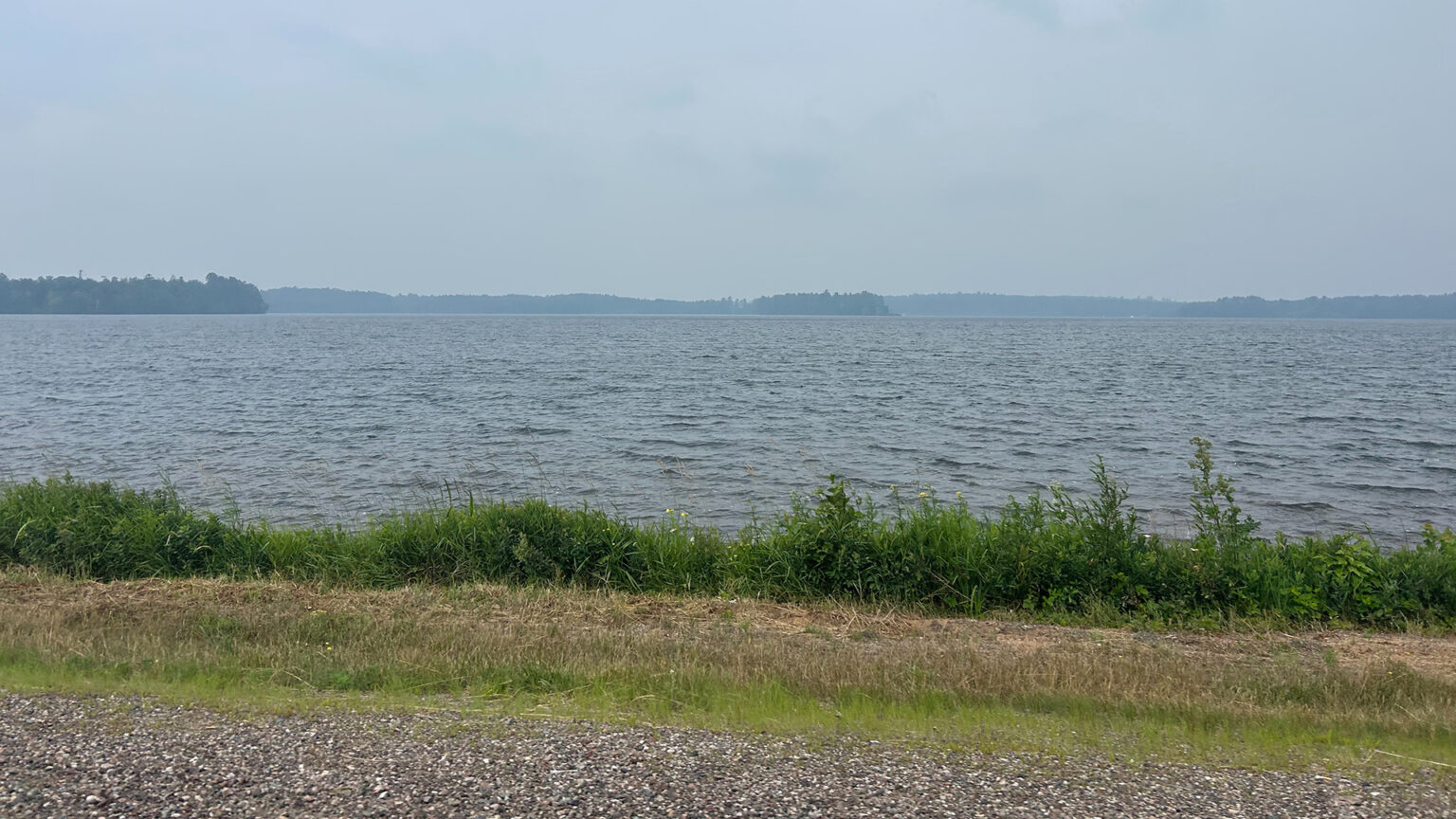
Flambeau Lake on the Lac Du Flambeau Band of Lake Superior Chippewa reservation in northern Wisconsin has previously been subject to fishing regulations by the tribe in an effort to help at-risk muskellunge and walleye populations. (Credit: Amelia Schafer / ICT)

This story was produced and originally published by ICT in collaboration with PBS Wisconsin.
The answer to the question of who can regulate fishing on 19 Wisconsin lakes will have to wait after a federal judge declined to rule May 29 in a case brought by the state against the Lac du Flambeau Band of Ojibwe.
Instead, the judge recommended the two parties collaborate and communicate to find a solution.
The case, which was brought by the state of Wisconsin, hinges on the Lac du Flambeau Band of Lake Superior Chippewa Indians’ decision to bar all non-members from harvesting walleye and muskellunge fish on 19 of its more than 200 lakes. The case, brought by the state of Wisconsin, argues the tribe does not have the authority to bar non-members from fishing.
Presiding Judge William Conley, chief judge of the United States District Court for the Western District of Wisconsin, did not rule on the case on May 29. Conley said he was unable to immediately reach a conclusion after hearing from both parties and recommended the tribe conduct more research on the issue and that the two governments work together.
“Well, I guess we got it into the court system anyway, and maybe we’ll prevail in the future, but it’s all about the protection of our resources back home in Lac du Flambeau,” said tribal President John D. Johnson after the hearing. “What we’re trying to protect for future generations of our children.”
An initial temporary injunction filed on May 1 will allow all fishing to continue on the 19 lakes.
The issue stems from a mid-April resolution passed by the tribe, known in Ojibwe as the Waaswaaganing Anishinaabe, barring non-tribal members from fishing for walleye and muskellunge fish, also known as musky, on 19 of the lakes within its 144 square mile reservation in northern Wisconsin.
Johnson said fishing regulations are not new to the tribe nor are they out of the norm. The tribe typically restricts the harvest of walleye and musky during its traditional spearing season, he said, and does not allow spearing musky during their spawning season.
“And remember, there’s 4,000 band members, not all of them are there at the same time, but we have a lot of people to take care of,” he said.
The state quickly responded by issuing a lawsuit against the Lac du Flambeau Tribe for restricting fishing of at-risk walleye and musky populations to tribal citizens only. The state claims it has jurisdiction over bodies of water within tribal lands in Wisconsin and its case hinges on the Lac du Flambeau Band of Ojibwe not having legal jurisdiction over non-tribal members on its reservation. The state also successfully sought a temporary injunction permitting all fishing to continue on the reservation regardless of the tribal resolution.
The tribe cited a decrease in walleye and musky fish as the basis for its regulations and argued it does, in fact, have jurisdiction over regulating fishing on lakes within the reservation. The tribe said it does not want walleye and musky to be harvested by non-members.
“There’s 260 lakes on the Lac du Flambeau Reservation. If we were to shut down 19, there’s 241 more lakes they can fish,” Johnson said. “And the 19 you can fish also with different species. It’s just the musky and the walleye we’re trying to preserve.”
The court heard from Wisconsin Department of Natural Resources staff specialist Joseph Hennessy who oversees tribal spearfishing and walleye management statewide. Hennessy testified that there is an abundance of musky statewide but confirmed a decrease in the state’s walleye population.
In early May, a tribal spokesperson told ICT the new fishing regulations do not limit or restrict catch-and-release fishing, a practice where an angler immediately releases a fish after it is caught. Instead, the tribe is asking that anglers do not go out of their way to catch and release walleye or musky and that they absolutely do not harvest the fish if caught.
Johnson told ICT and PBS Wisconsin that the tribe is unsure exactly why the fish populations have declined.
“There’s all kinds of issues that we were looking at,” Johnson said. “A lot of it’s climate change, a lot of it’s logging structures, infrastructure, everything that goes on in our territory. We’re here to protect it. That’s just who we are as Native Americans. We have to protect what we have.”
Approximately 50 tribal members drove down from the Lac du Flambeau Reservation to attend the hearing in Madison on May 29. The tribe organized a charter bus from the reservation over 200 miles north of Madison to allow for tribal members to attend.
“We have so many issues going on and they’re not listening,” said Bagwajikwe Madosh, a Lac du Flambeau tribal citizen and elder who traveled to Madison for the hearing. “They’re not listening to how to take care of our world as a whole.”
Madosh said she fears that an increase in large recreational boating and the oils the boats bring have contributed to a decline in the fish populations, this topic was something not discussed at the hearing.
“They’re not understanding that not only are we living on this Earth, we all have to take care of it,” she said. “We don’t need the modern appliances, we don’t need the fast boats, we don’t need all the mechanical things to have a life within the confines of our environment. The environment is the best thing. That we have to really, really worry about nowadays. And I, for one, prefer to have the basics. And the basics is having clean water.”
The May 29 hearing was not the first time that the tribe and state have butted heads in federal court before Conley.
In 2025, Conley ruled against the tribe in a federal lawsuit between the town of Lac du Flambeau and Lac du Flambeau Band. That case hinged on the tribe barring non-members from accessing tribally controlled roads connecting to their homes.
Conley’s decision, issued on August 5, 2025, ruled that property owners have the right to use four roadways that cross tribal lands to access their property following a failed easement negotiation between the tribe and the city of Lac du Flambeau.
The road access decision followed more than a decade of failed negotiations over renewing easements between the tribe, property title companies and the town of Lac du Flambeau. In 2023, tribal council members voted to set up barriers along the roads, sparking the years-long dispute.
During the May 19 hearing, Conley did not verbally set a date for another hearing on the matter.





Follow Us