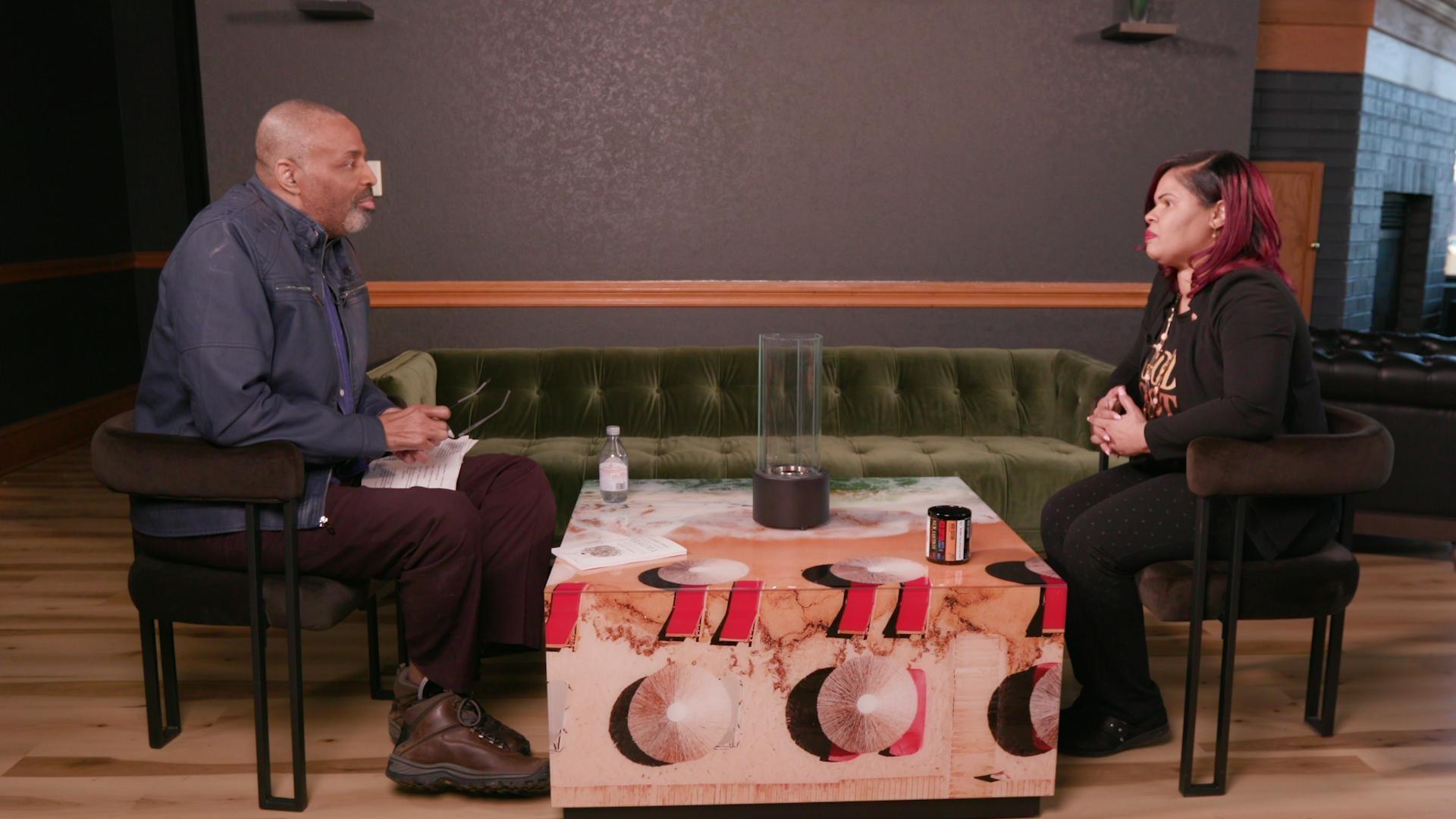
Welcome to the Washington Week extra. I'm Yamiche Alcindor. This term, the Supreme Court announced several significant decisions. In addition to overturning Roe v. Wade, the justices ruled that the Constitution provides erected carry a gun outside of the home. They also made a number of decisions about public schools. They ruled that public school officials, one public school official that they have the right to pray in schools, and that state programs providing money for public school tuition cannot exclude schools that offer religious instruction. And on Thursday they limited the Environmental Protection Agency's power to regulate green gas greenhouse gas emissions. This is a major setback for the Biden administration's efforts to combat climate change. And in a win for President Biden, the Supreme Court upheld his authority to to end the remain in Mexico program joining me tonight to discuss this and more. Pete Williams, correspondent, justice correspondent for NBC News. And, of course, someone who has been covering the Supreme Court and does an amazing job doing it. So I want to just ask you overall. When you look at this term and look at the decisions, how would you categorize? Sort of the mindset of this conservative majority on the Supreme Court. Conservative large in charge Eager to move ahead they you know they don't want to follow the model of Chief Justice John Roberts of taking little incremental steps. These are issues that many of them have thought about in years been frustrated about now they have the votes and they're seizing the moment and moving ahead so It's it's It's. It's not a court of little tiny steps. It's big giant leaps of those big giant leaps one of the one of the decisions that you pointed out because we had to ask you sort of what were the biggest ones to talk about guns. They expanded the the sort of impact of the Second Amendment talk about that case and the implications of what that means, well, so in 2000 and eight, the Supreme Court said, for the first time in American history, what the Second Amendment means because there was always Some question about whether as an individual writer of militia right, the court said individual right to have a gun at home for self defense. The Second Amendment says there's a right to keep and bear arms. So what is the end bear arms part? And that's something that Alito and Thomas have felt very strongly about what they could never get enough votes to move along with it. They were never sure where justice Kennedy would be this term, they decided to move ahead. They said. As you correctly note the first time, they said, Okay, it also provides a right to have a gun outside the home. The issue was a New York law that said, if you want to get a concealed, carry permit, and the only way you can legally carry a gun in New York Is with a concealed carry permit. There's no open carry in New York. You had to show some special need and what the court said is constitutional rights. Don't work that way. You don't have to show a special need to exercise your first Amendment right? Or your Sixth Amendment right to confront your accuser in a trial, and the Second Amendment doesn't work that way, either. Um, I mean, there's so many other cases, I would have a follow up question to that. But there's also the environmental Protection Agency. Um, what happened there? And as we think about sort of President Biden and his push to try to combat climate change, how that could be impacted, right? Well, it'll be impacted a lot. So this is the two sides of what the Supreme Court does The Roe v. Wade and the gun case are interpreting the Constitution. This was interpreting federal statutes. That's the courts. Other mission and what they said is yes, we know that the Clean Air Act gives the EPA the authority to regulate pollution. But what what That means, the court said, is regulating it at individual power plants, one by one that it doesn't give the EPA the authority to say to to push the industry toward cleaner sources, natural gas, solar and wind that that's beyond the language of the statute. You can't read it that way, and this I think really points out the difference between the majority and the dissenters, the dissenter said. Look at the crisis of climate change. That's too cramped to reading. But that's where you see the difference here but but between the originalist sort of sticking to the text, and the liberals saying there are bigger issues than just that. Another big in another case, especially that I watched because I cover politics was the Supreme Court reinstated Republican drawing congressional map in Louisiana that a federal judge had said diluted the power of black voters? What does that mean for redistricting efforts and gerrymandering across this country? Well, as you know, this is the first round of redistricting we've had since the Supreme Court took the heart out of the Voting Rights Act because in the past anytime the state wanted to make any change at all in voting, it had to go to the Justice Department or a three judge panel and get permission. No more. So now we're gonna We have that case. We're going to have two big cases next year to test the what is what's left of the Voting Rights act. When it comes to issues like redistricting, there's a there's a case from Alabama that the court will hear next term. That really looks at whether there's ever any limit at all the partisan gerrymandering. And then there are these cases because there's just so much that happened because of role. We we all sort of focus on road. But there's also religion and prayer in schools interested into those two cases about the schools. And about the coach that wanted to pray on the field. Sort of what do you take away from those two cases put together well, so it's a further lowering of the separation of church and state. The coach case to me was sort of Strange because the decision didn't seem to fit the facts of the case. This was not just a coach just sort of tippy toeing out to the 50 yard line at the end of the game and praying silently. It became a huge spectacle, and that's what the school district was worried about that this would violate the other part of the First Amendment. There's a freedom of religion, but there's also the thing that says you shouldn't establish a religion and the school district were that it was looked like it was endorsing it. The court doesn't seem to worry about that part of the First Amendment anymore when it comes to religion and the other part about the main case that said taxpayer money can go now to religious schools that explicitly teach Religious subjects through religious lens. That was a major step. Wow. I mean, there's just so much, um, I want to ask you about the power and influence of Chief Justice John Roberts. I was I was thinking about it. I was like, is this the Roberts court? Still is this Is he in control? Is it fair to even call it that you think it was the Roberts course. If you looked at the decisions on Friday, he wrote both of them. Both. The decision on the EPA and on the Biden remain in Mexico that Trump remain in Mexico program. He and Justice Kavanaugh were in the majority more than any other justices in in only three cases that they dissent. They were in the majority in 95% of the cases. So he's with the court in the main on these issues like religion and guns, But he was he clearly lost the court on Roe v. Wade because he wanted to just say, Let's just uphold the Mississippi law that would ban abortion after 15 weeks. But let's not go all the way and overturn Roe. He couldn't find anybody to go with him on that, and that sense it's it's not the Roberts court in terms of trying to move things along incrementally and as sort of they're not moving things on incrementally. We're hearing from some Democrats, most notably Adam Schiff, who is talking about expanding the court, he said he was even tweeted about it, saying. That it's time to stand up the court time to unstaffed. It is the way he put it. What's your sense of whether or not there's any sort of political will or just even legal ability to do that? Well, of course, Congress can decide the size of the court. The court is not always been nine. It was 10 at one time It started out much smaller, and it's changed all as as you know, as the country expanded, the more circuits were added. More seats were added to the Supreme Court. But it's been nine since What 18 60 something or 18. I can't remember the year but it's It's been 9 450 years so Congressman can easily change. The Constitution doesn't say how big the Supreme Court has to be. I can't imagine they would do it, though. And now, of course, since we've broken down all those cases, I have to ask you about the news that you have, which is that you are retiring at the end of the month. I want to talk to you just a little bit about your career. When you look back on it. What are the things you're most proud of? Whether the things that you're saying yes, this is this is was my life's work, and I'm happy about it. Well, I have to say of all the things I've covered at the Supreme Court and you understand how this works. Um, I really have enjoyed covering the court because every case you learn something new every every day. You know, That's one of the great things about being a journalist. Every day. You learn it's a learning experience. You learn something new. Something you could say. I didn't know that. And if I can just sort of returned the compliment here. One of the things I've enjoyed most in my 29 years at NBC is coming here to this program. Uh, because you know you you all do such a great job of getting beyond. The 52nd that we get sometimes to explain something that we can go into more detail and it's it's I love it as a viewer, But it's very rewarding as a journalist because you know all this stuff and you want to report it. That's what we do. Ah, so I've enjoyed very much coming here and being part of this program as well. Advice for journalists that are looking at you and saying I want to be the next Pete Williams. Ah, well, let's see. Look, I think the most important thing is to is to start at a small station start at a small newspaper. Learned that reporting has consequences. Cover the mayor and sit next to him next day at the lunch counter and and know the consequences of your reporting and learn to write and please use verbs. Please use verbs is amazing, Um, lasting. I ask you what's next for you. You have obviously have had a great career. And now you get to maybe chill a little Well, I'm going to spend more time in my home state, which is Wyoming. I've got a documentary. I want to work on, uh, about a pioneering mountain climbing guide. It was one of the first mountain climbing guides in America and I would like to do a podcast on the subject of jazz. Clearly I would listen to the you talking about jazz. So I'm definitely looking forward to that, even though that doesn't audience of one so far sound like retirement, but it sounds like a little bit of a chill. So I am so proud and happy to be your colleague at NBC, and to also have have learned so much from me Just by watching you a lot of my friends, journalists, we texted. Oh, my God. You see how smooth Pete is? That's what I want to get, too. So I'm very, very thankful for your work. And thank you so much for coming on. My pleasure. Have to leave it there. Thank you, too, Pete for joining us, and thank you all at home for watching us and and for watching Pete throughout the years. I'm Yamiche Alcindor, goodnight from Washington.


 Passport














Follow Us