

 Passport



Free-Motion Quilting for Beginners - Part 2
12/22/14 | 26m 46s | Rating: TV-G
Create free-motion quilting designs with confidence. Learn how to master all the fundamentals of free-motion quilting. Nancy and guest Molly Hanson show you how to confidently stitch different quilting designs, including stippling variations, swirls, and wood grain.


Copy and Paste the Following Code to Embed this Video:
Free-Motion Quilting for Beginners - Part 2
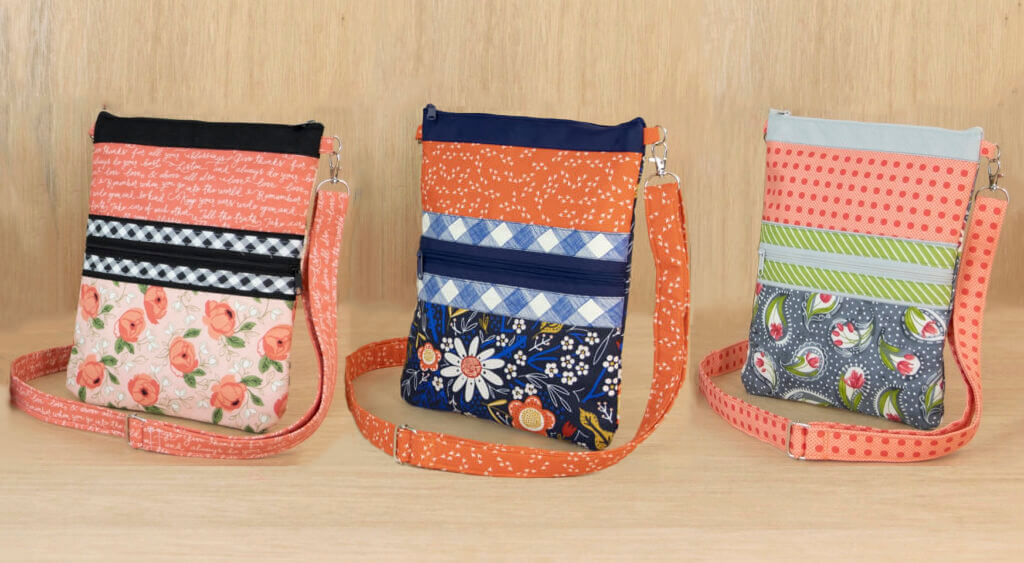
One of my favorite phrases is if you think you can't, you're probably right. Did you ever have that thought when it came to free-motion quilting? Luckily, my guest took the can-do attitude and taught herself this stitching. I'd like to welcome back Molly Hanson to our second program on "Free-Motion Quilting for Beginners." Molly, I like this idea. Thank you so much. I'm so excited to be here and share a little bit more about these different designs and how we can creatively combine them to get a lot of mileage out of designs. And Paisley, I think is the one we're going to start off with today. Paisley is great because it works in triangular shapes which there are so many triangular shapes in quilting. It's going to be a lot of fun and I can't wait to show you them all. "Free-Motion Quilting for Beginners." That's what's next on Sewing with Nancy. Sewing with Nancy TV's longest-airing sewing and quilting program with Nancy Zieman is made possible by Baby Lock, a complete line of sewing, quilting and embroidery machines and sergers. Baby Lock, for the love of sewing. Madeira, specializing in embroidery, quilting and special-effect threads because creativity is never black and white. Koala Studios fine sewing furniture custom-built in America. Clover, making a difference in sewing, quilting, crafting, and needle arts for over 30 years. Amazing Designs and Klass needles. During the first part of this program we showed you some of the basic free-motion quilting ideas. Now we're going to add some more design elements to it. Molly, you designed or you worked with a paisley. Yes, the paisley pattern. It's so great to work in corners because you can start in the triangle and fill in. It's very artistic. Well, thank you. It may look intimidating, but it's really not. It isn't, it isn't. And it's a great shape to get down because it's a building block of so many other quilting designs that teardrop type of shape so it's really a good one to practice. If you weren't with us during the first program you have to do some set up at your sewing machine. You're going to be using the same color thread in the needle as the bobbin a cotton thread. It's important to have the same weight. And then to use a quilting or a darning foot which you'll see Molly demonstrate. Use a new needle with a new project. Use a new needle, that's really critical. And we have kind of a fabric sandwich to sample to work on. That has a top layer, bottom layer, and batting. We have used fusible batting or you could pin together the layers. If you've missed the set up from the first show go to nancyzieman.com click on the videos and you can watch the first program. Now a straight stitch you have on your machine as well as, you've lowered your feed dogs. That's right, I've got my feed dogs lowered and everything's set to a straight stitch. Then I'm ready to go. Now if you don't know how to lower your feed dogs check your owner's manual. Some machines you'll have to cover them. But that's a crucial part. That's right. Let me show you how we start drawing this design. I think it's always good to start on paper. That really does help. I've already done a triangle on my paper so you can kind of get the idea of how this design works so well on triangles. I like to start in a corner and just make a wiggly teardrop shape. Then when you go down from there you can just start adding more. I like to go back over my teardrop one time or my paisley. But you can go even more than once if you want. That's what this looks like right here. It's kind of whatever works. And you just fit them in accordingly. You don't have to make them all the same size. That's totally true. And if you need to get back to the other place you can just travel along the edge and get back over here to make another one. We kind of call this muscle memory. That's right. And the more you practice, the more this becomes like second nature. Then it'll be so much easier to work on when you're stitching it in your fabric. Let me just show you as Molly's getting ready. This is the sample that she made. You can see the great flow that this has. And then one of the first steps that to do is to draw up the bobbin thread. Yeah, let me show you how that looks. What I want to do is use if you have this button here that puts the needle down feature. It puts the needle down once and up. Then if you lift your needle up you can just pull this tail right here and it will pull the bottom bobbin thread up. Then you're all set to not get any birds' nests on the back. That's the last thing you want to see when you've done some beautiful free-motion quilting. I always like to take four or five stitches in place to lock in that stitch. Once you do that you can just get started on your design. Now instead of using a pen you're pushing the fabric or you're moving the fabric like the pen. That's right, that's right. And you just slowly start forming your teardrops. Again, you can vary the size you can add as many little rings around them as you like. Then if you want to go in between them you can just travel down between them. Notice how slowly, evenly Molly's stitching. This is not a race. Yes, that's right. If you move the fabric too quickly your stitches could be too long. Sloppy, you could break thread, shred thread. It's not a race. A lot of people think you have to quilt fast to quilt well. It's not true at all. I like the fact that she uses rather large stitches. It doesn't have to be-- You'll see some projects where they're smaller but you know, you can go big. You can, and it's time-saving. It also makes the texture of the project softer. So depending on what you are using it for sometimes big is really required if you want it to feel nice and soft. It really all affects the drape, how dense your stitches are. Once you get going on this it just builds on itself so fast. It's fun design. It really-- You can change directions. The teardrop gives it a lot of options. As Molly continues to stitch I'm just going to show you some other projects that she worked on. On this bag you can see that the paisley looks kind of like a heart shape where it's an individual paisley or two paisleys per block. On the other side of this sampler we're combining some of the stitches from our first program, the pebble stitch around the paisley. So a very versatile thing once you learn how to do the stitching. Quilting nature-based designs seems to bring a sense of calm. Wood grain is a design that relies on imperfection for its beauty. This is not a design to stress about or fuss over. Small wiggles and bumps give it character and variance in width of the grain adds to the beauty. When Molly showed me this project, you said-- I think this project is great because you can give it to both guys and girls. It works for guys. Because it obviously isn't feminine. It has the plank of a great wood floor. Another thing that this project shows is that it's nice to have a rectangle to work within. Right, it's an edge-to-edge design wood grain is, so you need to have some walls to work from in order to make is work. As we started before, Molly's going to do some sketching. Right. Here you can see that I've already given myself a nice space to work from some walls to work from. That's important. So basically, when your doing wood grain you want to start with a nice, loose, wavy line. And then just go down a little bit and come back over. Then we'll make our first knot in the wood. You make an eye shape but you don't close it all the way. Kind of work your way towards the center like a spiral. Follow yourself back out. Then you can go back down and just trace. You know, this is real relaxed. You can not make this design look bad. It is just one of those ones that is very forgiving and very easy and relaxing to quilt. If you like to doodle you're going to enjoy free-motion quilting. Yes, and the more you doodle the better you'll be at free-motion quilting. Now you kind of have that in your memory in you're muscle memory. Now apply it. Now our brain knows what to do now we're going to put it to work. I'm going to make that first line. Now what we need to mention is that you really need to clean your machine. Definitely. Cleaning our machine is essential. It needs to be well lubricated and clean. I like to clean my machine every two bobbins. Every two bobbins that I change I just dust it out and make sure it doesn't need any oil. Just put a little drop in. I find that that keeps everything running really smoothly for me. And I have to say, I do a lot of free-motion quilting and I've never had to take my first machine I learned on in for servicing. Still, I'm religious about cleaning it and oiling it. I think it really makes everything work a lot better. I just did my first knot, and then I'm just going to keep making lines down below it. You really don't want to put too many knots too close together. Because in real wood grain you don't likely see that. I always like to put a few rows. It is just such a forgiving design. And you know, whether these are close together of far apart you can work in another. Like we mentioned, the beauty is in the imperfection. Exactly, because it's natural. In nature there are a lot of imperfections. If you're close to the side you can even kind of work in a half shape like this. If it doesn't work as a full spiral just keep moving. Really, you know, be relaxed about it and have a nice flow and it'll turn out really nice. As Molly's finishing stitching I'm just going to show you her sample that she made. You can see the great linear look that you have for the natural wood grain free-motion quilting design. Swirls work well in almost any quilting project. Now you'll learn how to manipulate the shape by creating a whole, half or even quarter swirl, or stitch around one to create more layers to fill in space. This design teams well with many other free-motion styles. You have the plan that we're going to show you the design. Molly is going to sketch it out. The project which you just saw. Look at those beautiful swirls. That take a little practice, maybe more than wood grain. Maybe a little bit, but again that muscle memory. Keep sketching it and you'll get it. We mentioned that you can combine all your free-motion quilting designs together. This art quilt features all of Molly's techniques. You just saw the wood grain from the last segment. Here are the swirls. During the first program we did cursive or loop-de-loop. Fun to put together. And stippling even, all around. That's right, the fill-in stippling that goes around the quilts. Great idea. Thank you. Start by doing the sketch. Right. That is the first place to start and the most important step I still say. Sure. Okay, so basically when we're doing swirls we want to start from the outside and work our way in. So I start to create a swirl shape. I like to leave about a half inch between my lines so it gives me plenty of space to work my way back out. Once you work your way back out you've got a nice swirl. You can start to the next one or you can add even more layers and make it even bigger. This is one of those designs you can make bigger and bigger and really fill a lot of space at a time. Then we'd move into our next swirl. You can see with this I've left a little tail on this one. We want to keep filling in this-- Oops. Keep filling in this space and make it nice and round. Then even if you have this strange space right here you could then fill this with a quarter-swirl. That is just made by little 'U' shapes stacked on top of each other. That gives it an interesting texture because it looks like then they're layered on top of each other, which is a lot of fun. So these quarter- and half-swirls can just work their way into any odd shapes that kind of are created in between. Nice, nice. Then, okay, you've done it on paper. Then you take the next step. Yes. Now it's time to try to get that same look on fabric. Again, we're going to put our needle and our thread and pull that bobbin thread up and get that going. Sometimes pulling up that bobbin thread-- It can be a little tricky. And I'm a little far away from any --. Okay, there we go. Okay, good. I like to take five stitches in place and lock that in really good. Once you start making your swirls you just work your way into the middle and slowly back. If you've never done free-motion quilting before the set-up with the foot is so important. That foot glides right above the design. That's right. Otherwise, if it was pressing it down you'd never have the freedom to move the fabric like you need to. This foot's really nice, being circular like this is. Most darning feet are circular in shape. They really help you have a line to follow which is kind of nice. It keeps your mind thinking in circles. Just keep following your swirl around and make more lines around it. You can make it as big or as small as you want. As Molly keeps stitching I'll just show you the practice sample. I wish my practice sample looked this good but it will after I work at it a little bit. Varying the sizes, including some portions half-swirls with the full you can vary it too. Enjoy this process. Our last free-motion quilting technique of the series is print tracking. Just like is sounds, you choose a printed fabric and track, or stitch, along the design. This outline stitching allows you to make the fabric design really stand out while giving you the opportunity to quilt all sorts of new shapes that you may not otherwise try. Molly, you have lots of puppies and dogs at home. I'm a dog lady. So here's one of her dog beds. It's hasn't been used too much. I can tell that. Not yet. The hexagon wouldn't be something that would be easy to get exact when free-motion but using the print-- Yes, you can really get some interesting textures with your quilting by following geometric designs in the fabric instead of just going freehand on top of it. We have a geometric print. Notice, no sketching because the sketch-- It's on the fabric. We're just following the lines, basically. So if I'm doing that, you just look for the edges and just try to carefully follow. Slowly work your way down one side of your hexagon. You want to cross over and do another hexagon like this. If you do it like this, snake back and forth then when you go up you can catch the sides you missed. Sure, and some you may go over twice. Some of the middles you will go over twice. But then you're only doing that middle section twice which really works well. So then you get these really great textures. And as we were saying, there's all these little designs inside the hexagons. If you wanted to practice your pebbles or your Chevrons or anything in this fabric or in any print tracking you can look for what you want to get better at and find a fabric that's got that in it. Just track it. If circles are it, look for polka dots. There are other print options. A floral print is great. Yes, florals really are a fun one because there's so many unique shapes that you can find in florals. In this I found this beautiful floral but they weren't all connected so I had to figure out how to get from one space to the next without breaking the thread. So remember those Chains of Pearls that we learned in the first episode. That's what I used to just connect the way through. It gives an interesting design element which is really fun. If you see on this one, you can't see the stitching as well on the front, but when you flip it over you see how tracking those florals really gives you some unique looks. If you did a solid on one side and a floral on the other you could make something like a placemat that's reversible. Or use just what is the wrong side as the right side. It's more interesting than the print, I think. There you go. There are so many options that you can use for the prints. You might want to show our viewers this one. This has roses and birds and leaves. When we were talking about print tracking we found this fabric. I thought this would really, really work well just like this one did. You've got these spaces between these roses and these birds. You can just follow the outside lines you can get as detailed as you want and connect them by your Chains of Pearls and never have to break your thread. This kind of design is what you want to look for in that. You know, we've shown the easiest as the last technique but we wanted people to give it a try. Molly, this wraps up our sewing segments of this series. It's been a pleasure to get familiar with all of these great ideas. I thank you so much for having me on the show. I hope everybody will try these new techniques out learn a little bit more, and maybe quilt their own quilts. I think we will. Good I hope that you will take these ideas free-motion quilting, whether you've been quilting for a while or haven't done it before and give it a try. It's certainly easy and relaxing to do. I was surprised to learn that quilts can be part of the foundation for a hospital. Not literally but through the making and donating of quilts a humanitarian aid hospital is being built in Tanzania. Please welcome Kate Robbins who is our guest. She heads up the program Comfort Quilts Project which is part of Roads to Life Tanzania. Kate, welcome to Sewing With Nancy. Thank you, Nancy, I'm glad to be here. When I heard about your project making a quilt block, sending it to your organization making a donation and what it does I was so impressed. Give our viewers an overview of Roads to Life Tanzania. Thank you. Roads to Life Tanzania has been doing development work in Tanzania just south of the Serengeti National Park in Tanzania near a village called Nkololo for nearly 50 years. They've done a lot of things built roads, educated kids done other agriculture projects. And now they are building a hospital. We were trying to think of a way to help them do that. We've come up with a project called Comfort Quilts and we're having quilt blocks. Like a block builds a building we're having a quilt block help build this building. We're asking the quilting community to donate a 12" block in any kind of pattern. We just ask, no embellishments. Anything that could be used in a hospital. So it'd be like a 12-1/2" square so it'd a 12" finished block. Right. And those will then be made into quilts that will be used in the hospital. I have a group of volunteers who are going to help put them together. We have one of those with us today. We do, we do. The project started, oh, not quite a year ago and we've had quite a few blocks come in as well as donations. The donations will help us finish building the hospital and equipping it. And the quilts, like I said, will be used by the people who are patients at the hospital. Now sometimes when you're at consumer shows or events you give away a little square of African fabric so that they remember to make a block. Some of those fabrics squares have been incorporated in the blocks. They have, which was kind of a surprise to us but it's real fun to see that. I think the people in Africa when their quilts come back and see some of their fabric they might be surprised. This is a good example of that. These corner squares here in this particular block are from a sample that we did give out at a quilt show just to show the show-goers about African fabrics and the like. It was fun to see how someone used it. Now, in Tanzania the hospital is so needed. Explain the number of beds right now that are in the hospital and why you're building another one. Well, back in 1983 they started with a very small healthcare center kind of a drug store, if you will. Then it went to a maternity ward and then a healthcare facility. The current facility has 32 beds but the daily occupancy is over 50, Nancy. That means two people per bed on most days. Two sick people per bed. Yeah, yeah. As Americans, we don't even like the thought of sharing a room much less a bed with someone. As you can see, the need is very great there. We're hoping this facility will house at least 100 beds as well as it will have a surgical unit which we haven't had in the past. They have a blood lab that they can use for more procedures than they've been able to do. So it will really be a great facility for the people of the area. You have a great quote on your brochure. Why don't you read that to our viewers because it ties in building humanitarian need as well as quilts. Thank you, it does. It's called the Comfort Quilt Project and we say that it is "Binding the fabric of generosity and talent to give relief and comfort to those in need." And that is truly what this project is about. It's comforting to see that-- We have the cute picture of these little kids and one of the quilts that you've donated. Being, obviously, not used in the hospital, but used there. We can use quilts all over the world but this is your little corner of the world that you're working with. Every year you're just going to be sending more quilts to that area. They will most certainly be used and much needed there. It's a big undertaking to equip the hospital. This is just one way that we can tie the people here the very generous quilting community to help those that are really in need in Africa. You're over halfway there of the $9 million project. Congratulations. We're working on it. The Comfort Quilt Project is one part of that fundraising effort and so far we've been pretty successful. We hope that this program might help us bring in more. Well, Kate, thank you for joining us. I'm sure you'll get some quilt blocks and donations from our viewers. We look forward to that. Thank you for the opportunity, Nancy. You're welcome. I hope you've been enjoying this series that we've been working with. We'll be back next time on Sewing with Nancy for some more sewing, quilting and embroidery ideas. If you'd like to re-watch this program or any of the most recent Sewing With Nancy programs you can go to nancyzieman.com. Click on videos, as well as the Nancy's Corner videos and you'll be able to see the programs at you convenience. Join us on Facebook, on our blog on twitter and Pintrest. Thanks for joining me. Bye for now. Molly Hanson has written the "Free-Motion Quilting for Beginners" book that serves as a reference for this two-part series. The book includes the fundamentals of free-motion quilting along with ten practical projects. It's $19.99, plus shipping and handling. To order the book, call 1-800-336-8373
or visit our website at
sewingwithnancy.com/2819. Order Item Number B1248 To pay by check or money order call the number on the screen for details. Visit Nancy's website at nancyzieman.com to see additional episodes, Nancy's blog, and more. Sewing with Nancy TV's longest airing sewing and quilting program with Nancy Zieman has been brought to you by Baby Lock; Madeira Threads; Koala Studios; Clover; Amazing Designs and Klass Needles. Closed captioning funding provided by Pellon. Sewing with Nancy is a co-production of Nancy Zieman Productions and Wisconsin Public Television.
The latest from Nancy's blog
Search Sewing with Nancy Episodes

Donate to sign up. Activate and sign in to Passport. It's that easy to help PBS Wisconsin serve your community through media that educates, inspires, and entertains.
Make your membership gift today
Only for new users: Activate Passport using your code or email address
Already a member?
Look up my account
Need some help? Go to FAQ or visit PBS Passport Help
Need help accessing PBS Wisconsin anywhere?

Online Access | Platform & Device Access | Cable or Satellite Access | Over-The-Air Access
Visit Access Guide
Need help accessing PBS Wisconsin anywhere?
Visit Our
Live TV Access Guide
Online AccessPlatform & Device Access
Cable or Satellite Access
Over-The-Air Access
Visit Access Guide




Follow Us