JUDY WOODRUFF
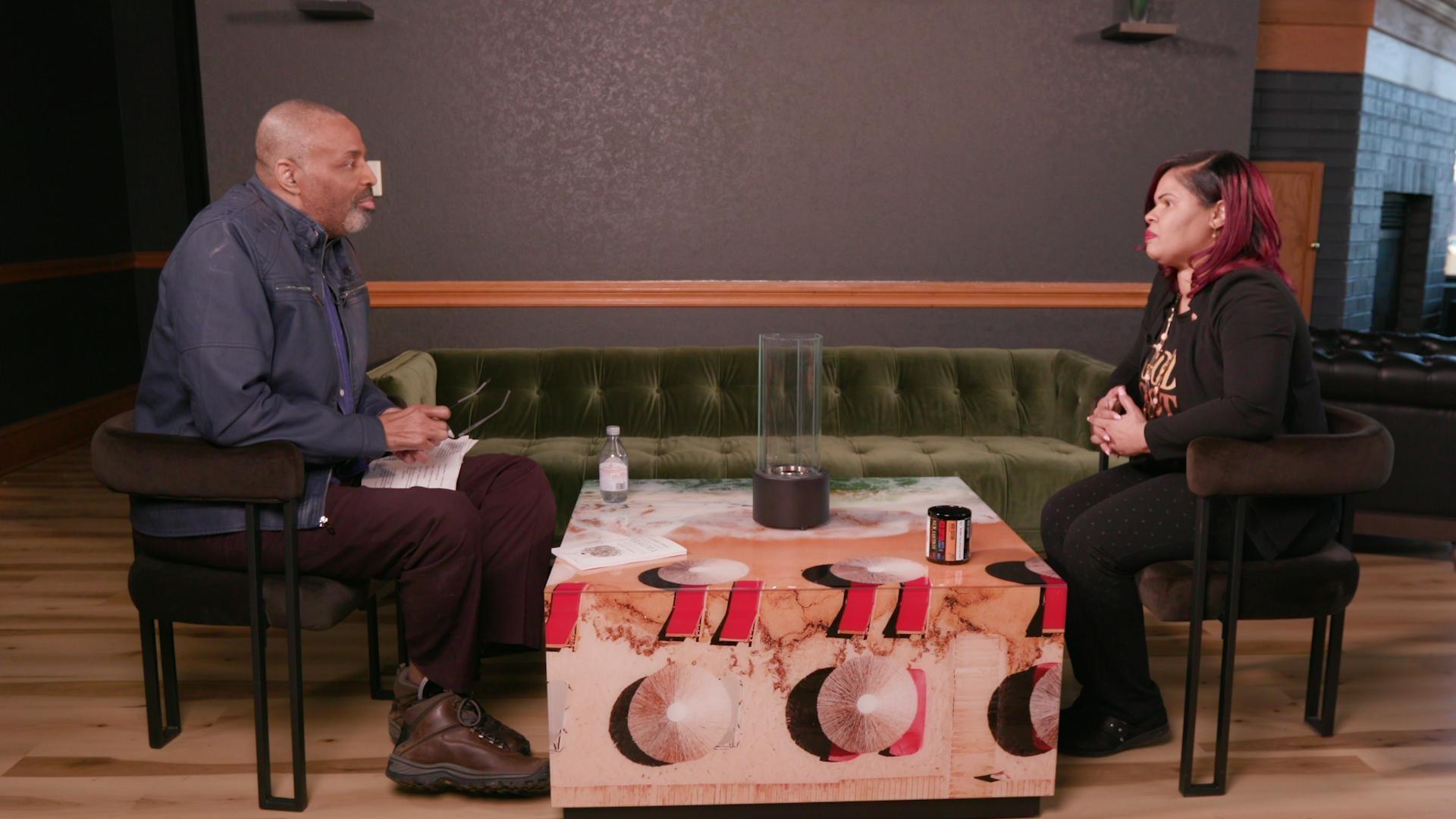
More than a year after being awarded the Nobel Peace Prize, journalist Maria Ressa still faces a series of criminal charges in her native country, the Philippines. She is the founder and CEO of Rappler.com and has spent much time reporting on former President Rodrigo Duterte's regime and the war on drugs. In a new memoir, she shares a personal account of her unrelenting work uncovering the truth and holding power to account. I spoke with her a short time ago about her book, "How
to Stand Up to a Dictator
The Fight for Our Future." Maria Ressa, thank you very much for joining us. And this book is about how to stand up to a dictator, but it's also very much your personal story. You were born and spent 10 years in the Philippines. Then you moved to the United States for another 10 years. How did that dual country coming up, coming of age shape you? MARIA RESSA, CEO,
Rappler
I think in a lot of ways. It created a great kind of setup for being a journalist. When I wasn't here in the U.S., when we landed, I could really barely speak English. So my teachers remembered the year when I was strangely quiet, and they kept teaching me music, which was fantastic. And then, when I was graduating college, somehow, it felt like I wasn't completely American, right? So I thought, let me figure out what being Filipino meant. So, I applied for a Fulbright going the other way. I went back to the Philippines. And it was supposed to be a year, and I just never left the Philippines, never left Southeast Asia. And then, when I came back to America, I realized, oh, my gosh, every time I'm with Americans, I feel more Filipino. When I'm with Filipinos, I feel more American. So, you're kind of part of both, but you're part of neither, which then set up being a reporter for me.
JUDY WOODRUFF
But where -- and where did the courage that you had to summon for what your entire adult life as a journalist in the Philippines working for CNN, where I first met you, where did where did that courage come from?
MARIA RESSA
So, I think one of the things I tried to do early on, when I first was an immigrant kid, the only brown kid in my classroom when I walked in, there lessons I learned from that time period that still reverberating today, through the time I was with CNN. They were about standing up to a bully, because you can replace how to stand up to a dictator with how to stand up to a bully. It's the exact same thing, how to embrace your fear. Like, I realized that it's our own fears that get in our way. And how to embrace your fear? Well, like, this one, I remember was, I didn't know early on what a pajama party was.
It's a great story. MARIA RESSA
So, my classmates invited me to it.
Yes. MARIA RESSA
And I asked my mom, I was like, mom, do -- is that a party? You wear pajamas? And she was like, yes. So,
we show up. And we're rounding -- we're pulling up in front of the House. And it was 4
00 in the afternoon. And all the kids were playing kickball, and they were not wearing pajamas. So...
JUDY WOODRUFF
Such a great story.
MARIA RESSA
Then I got out of the car. And then my classmate came and helped me, right? So, you kind of just -- I learned to confront my fear. I learned to move forward and trust someone will be there. And then I hope, when it's my turn to help someone else, that I will be there.
JUDY WOODRUFF
And you have cemented your reputation. You worked in -- as we said, in journalism in the Philippines for CNN, and then you created, what, a little over a decade ago, this forward-leaning news Web site called Rappler, earning the ire of the president of the Philippines, Rodrigo Duterte, while he was in power. Now he's now out of power.
Yes. JUDY WOODRUFF
But he considered you a threat.
MARIA RESSA
Yes, I don't really know why. I think that meant he just considered accountability journalism a threat. He had attacked three different news groups, the largest newspaper, the largest broadcaster, and then we were the most -- and we were the largest online news site. And we were the third attack, but we didn't buckle because we had no other corporate interests. It was very easy to push up. This is a man who just wanted to make everyone afraid of him. And I think I was -- I was too old. By that time, I had -- I was in my 50s. Being a breaking news war zone correspondent is the best training for that, because you sit there and, regardless of what's happening around, you distill to three bullet points and you say it like it is. And that's kind of the way I dealt with this administration. We kept doing our jobs.
JUDY WOODRUFF
And along the way, you won the Nobel Peace Prize just in the last year or so. And now there's a new president of the Philippines, Ferdinand Marcos Jr., Bongbong.
MARIA RESSA
Yes. Yes.
JUDY WOODRUFF
Are you are - - are you still -- I mean, you're -- there are still warrants out yes for you.
MARIA RESSA
Yes. In order to be here, I have to ask court approvals. Now one has gone all the way to the Supreme Court, the court of last resort. Sometimes, I get approval. Sometimes, I don't. That is also, I think, calculated. And you really don't know how much you value your freedom until you begin to lose it. Now we just were -- it's -- I don't want to read the tea leaves. I want to just keep doing my job. And I think, in general, forget what's happening in the Philippines. To me, what was more damaging, because this is what I demanded an end for in 2016, the impunity not just of Duterte, but also of Mark Zuckerberg and Facebook.
JUDY WOODRUFF
Yes.
MARIA RESSA
That's -- that was something we had no control over in the Philippines. But it enabled the rise of Duterte. It enabled the rise of Marcos.
JUDY WOODRUFF
And that's what I want to ask you about, because now you are virtually on a crusade...
MARIA RESSA
Oh, my gosh.
JUDY WOODRUFF
... to tell the world about what social media is doing to democracy.
MARIA RESSA
It's what I have lived through. And it is both a blessing and a curse to be the target of attacks, of information operations. You're the only one who feels it. Your attack meant -- these exponential attacks are meant to pound you to silence. But the flip side of it is, if you're a reporter, you sit there and you look at the data. And that started something different for us. It was investigative journalism. And it was -- just like what following the terrorists after 9/11, this one is a different type.
JUDY WOODRUFF
Yes.
MARIA RESSA
It's insidious manipulation. And the data proves it. That's what -- I lean on the facts.
JUDY WOODRUFF
Yes.
MARIA RESSA
It's evidence-based. It is bad for us.
JUDY WOODRUFF
Your message to Americans watching this is what? Because we're having our own debate in this country about social media.
MARIA RESSA
Yes.
JUDY WOODRUFF
But you're saying that it's a warning sign, what happened in your country.
MARIA RESSA
Look at what's happened to us because it's coming for you. This is what I said in 2016. When January 6 happened, it was Silicon Valley since coming home to roost. The fact that there is no legislation to prevent this insidious manipulation -- I mean, think about it like this, right? If you have kids, would you tell them to keep lying? You reward the lies. That is what gets the greatest distribution online. It's lies laced with anger and hate, fear, us against them. If you do this all the time, what kinds of societies do we create?
JUDY WOODRUFF
So many important warnings -- stories and warnings, in this book by Maria Ressa, "How
to Stand Up to a Dictator
The Fight for Our Future." It's so good to see you again. Thank you, Maria.
MARIA RESSA
So wonderful to see you, Judy. Thanks for having me.


 Passport



















Follow Us