






PBS Wisconsin Passport
Watch this video with
PBS Wisconsin Passport
Become a member of PBS Wisconsin, support your local community, and get extended access to PBS shows, films, and specials, like this one.
Legacy of Love
01/14/22 | 26m 46s | Rating: TV-G
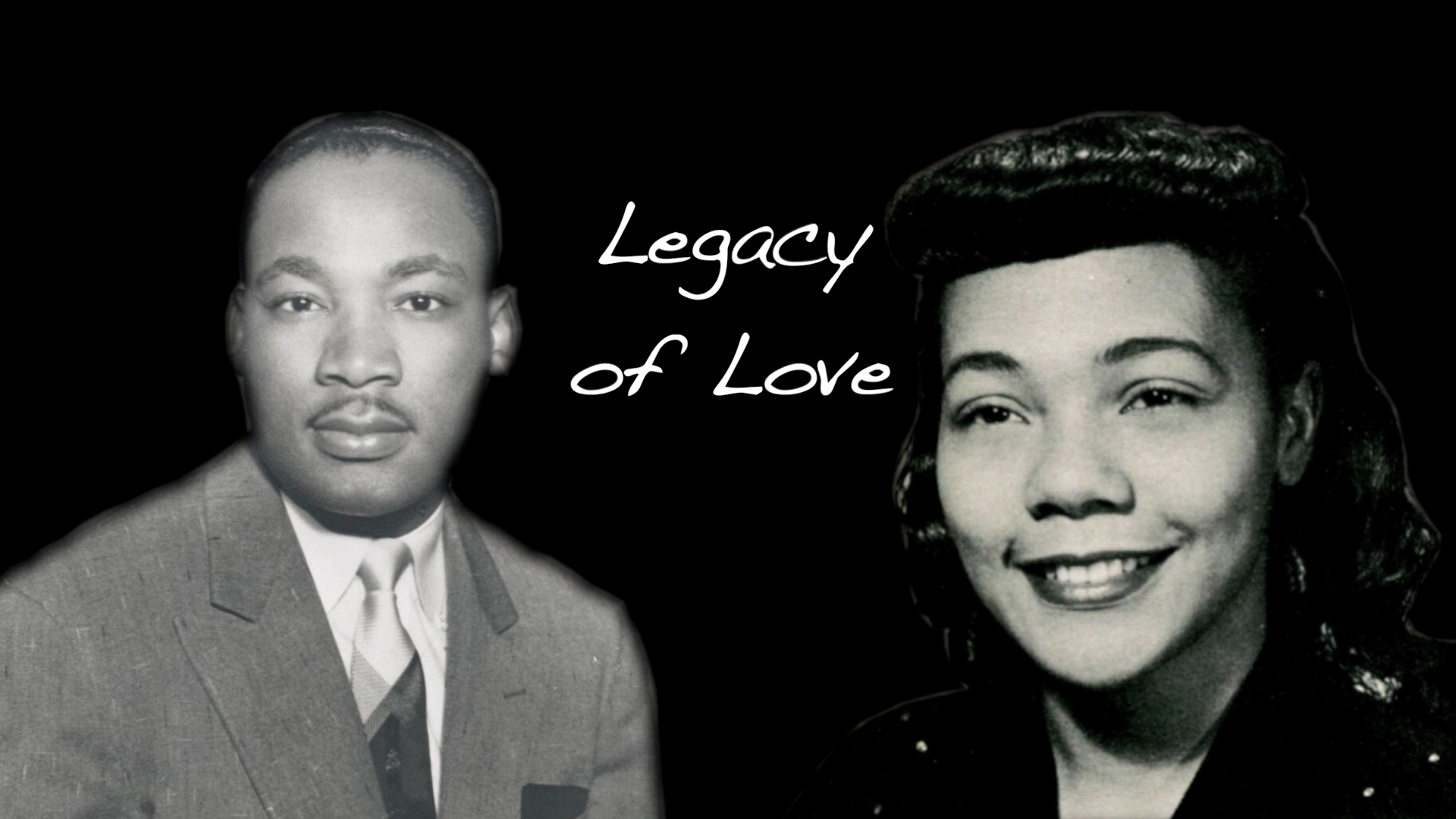
This documentary reveals the romantic relationship between Coretta Scott and Martin Luther King, Jr. when they met as college students and their dreams for a life of activism and family. From the beginning, they were committed to making the country a better place. Legacy of Love uses historical dramatizations, rare historic archival footage, and images of the Kings in their early years.


Copy and Paste the Following Code to Embed this Video:
Legacy of Love
-
Announcer
Before Washington. ♪ Overcome Before "Selma." We have the right to walk to Montgomery if our feet can get us there. (crowd cheering) -
Announcer
Before Montgomery. All along I have supported my husband in this cause. -
Announcer
There was Boston. (soft piano music) For the first time on television, "Legacy of Love" tells the story of how Martin Luther King Jr. and Coretta Scott met, fell in love, and dreamed a new world together in Boston. (bright music) Through exclusive interviews and never before published material, "Legacy of Love" reveals how Boston helped set the stage for the iconic civil rights couple of our time.
(bright music) -
Announcer
Funding for this program was provided in part by King Boston. A privately funded non-profit, creating a living memorial and programs honoring the legacy of Dr. Martin Luther King Jr. and Coretta Scott King.
Founding for this program was provided in part by The Boston Foundation. In everything we do, we seek to broaden participation, foster collaboration, and heal racial, ethnic and community divisions. (soft piano music) 1937, America is still reeling from the Great Depression. In rural Alabama, everybody knows her as a tomboy.
At age 10, she helps out her family by picking cotton. Later, she becomes a high school valedictorian, the leader of the church choir, and one of Antioch College's first wave of African American students. Her excellence in music earns her a scholarship to far away Boston. Meanwhile, in urban Atlanta, a bright well-to-do high school student, son of a famed pastor and a church choir leader, skips two grades.
And at the age of 15, enters historically Black, Morehouse College. He then enrolls in Crozer Theological Seminary in Pennsylvania, already an ordained minister by age 19. (soft piano music) Hello, I'm Liz Walker. Welcome to "Legacy of Love." The story of how Martin and Coretta King, met in Boston and resolved to become partners in life, love, and mission.
(soft piano music) Boston in the 1950's, controversial Mayor James Michael Curley is replaced by Mayor John B. Hynes. The Boston Celtics under Coach Red Auerbach, sign the NBA's first African-American player, Chuck Cooper. A community activist named Melnea Cass is appointed as the only female charter member at Action for Boston Community Development.
Boston's urban renewal plan demolishes parts of Jewish, Italian, and diverse neighborhoods in the South End, the West End, and Scollay Square. And the Reverend Dr. Williams Hunter Hester is pastor at Roxbury's Twelfth Baptist Church. His ministerial staff includes a young man named Michael B.
Haynes. (soft piano music) (car engine roaring) So, Dr. Haynes, it's the fall of 1951, Martin Luther King Jr. is a new graduate student at Boston University.
How does he end up here at Twelfth Baptist Church? At that major junction in his life, his father instructed him on going to Boston to get in contact with Dr. William Hunter Hester. So he became a preaching assistant at Twelfth Baptist and filled in for teaching from time to time.
-
Liz
There is also a unique connection between Boston University School of Theology Dean, Howard Thurman; PhD student, Martin Luther King Jr. and India's renowned proponent of non-violent political resistance, Mahatma Gandhi. One of the best ways to understand the influence of Howard Thurman on Martin Luther King Jr, is to place them within a tradition. A tradition which we sometimes call the black church tradition, but it's far more sophisticated than just church tradition.
They're also part of a movement of individuals who were working with a social gospel, who were seminary educated. -
Liz
Prior to coming to Boston, while still an undergraduate at Crozer Theological Seminary in Pennsylvania, Martin Luther King becomes fascinated by this social gospel movement. There's this idea that develops largely in America, but in other Western European countries that the Bible has a message about social justice, that the Bible has an answer to many of the problems caused by this rapid industrialization, these conflicts that are going on between labor and capital. There was a Christian duty to do justice to those who were poor and unfortunate. And black Americans were fascinated especially black intellectuals by the campaign of Gandhi against the British.
And African-Americans during this period were looking for their own American Gandhi. (soft piano music) -
Liz
The American Civil Rights Movement began long before the 1960s. As Martin and Coretta enter Boston in 1951, Black Boston has already dedicated civil rights activists. Social workers, Otto and Muriel Snowden along with Melnea Cass founded Freedom House in Roxbury in 1949. Elma Lewis opened the Elma Lewis School of Fine Arts in 1950.
Those who would go on to become community leaders in later years, Ruth Batson, Gil Caldwell, Clarence Jeep Jones, Tom Atkins, Mel King, Ed Brooke, Reverend Jim Breeden, and many others were growing up in or already grappling with serious issues of the day, including redlining in housing, school segregation, poverty, lack of job opportunities and economic injustice. Sarah Ann-Shaw, Boston's first female African American TV reporter remembers the growing frustration of Roxbury activists in the 1950s. We wanted change. We wanted change.
We wanted people to have an equal opportunity. We wanted people to get what they had done to make this country what it was. (lively jazz music) Tell me about some of your first impressions of Dr. King.
What kind of preacher was he? He was very dedicated, very distinguished. And I knew for sure that he was going to wear that brown suit the next Sunday. (both laughing) I tell everyone that I didn't like Martin Luther King Jr.
And then they say, "Oh," and then I go the list, I said, well, he was good looking, he could do everything, he could dance, he could sing, he was eloquent, and well groomed, well dressed, and then driving a red car. And I was coming out of the army and I was in dungarees. He had all the pretty girls and I had nothing. So, I didn't like him, but actually I was so proud, I didn't know what to do.
He talked about destiny that stayed with you, that destiny. Well, he kept preaching to us about our destiny, about what to look forward to, but we must work together, keep your shoulder to the wheel. And that kind of talk made you think. -
Liz
Born and raised in Roxbury, Herman Hemingway was the first black man to graduate from Brandeis University. He recalls pledging the Alpha Phi Alpha Fraternity with Martin Luther King. First impression, I'll be very honest with you. He was the shortest person in our group.
So that was the first impression, how short he was. And then that was first impression, but out of his mouth, when he spoke, hey, even at that time, he was a giant. -
Liz
Boston churchgoers loved to hear King preach. His unique oratorical style was in the Southern black Christian tradition. People loved his preaching. Reminded him a lot of folks from down-home.
Although the congregation here was multicultural in terms of its, we had some people from the South, we had others right here from New England, and we also had some people from the islands, Jamaica, so forth and so on, but Dr. King was able to speak to people. She's already done great things. -
Congregation
Amen. -
Liz
Reverend Willie Bodrick is one of today's young ministers at Twelfth Baptist Church. Like Dr. King, he's originally a Southern Baptist preacher from Atlanta who came to Boston to further his education. I'm reminded of a sermon that he did.
I think it was one of the most creative sermons you could do. He pens a letter from Paul to the American Christians. Paul is speaking to Galatia, he's speaking to Thessalonica, he's speaking to these different communities, to the Romans. And he said, now I am speaking to America on issues that were happening right now, civil rights.
Speaking about segregation. Speaking about how people have been dealing with the greed of American greed and speaking about the hyper militarism. And it was such a genius sermon, I think. -
Liz
A great sermon must make rhetorical sense and move people to action. To do that, Martin Luther King combined biblical allegory with political rhetoric, call and response, and rhythmic intonation. 'Cause the arc of the moral universe is long but it bends towards justice. Glory, hallelujah.
Glory, hallelujah. (crowd cheering) Glory, hallelujah. (crowd cheering) Glory hallelujah. (crowd cheering) His truth is marching on.
In the fall of 1951, a woman from a poor part of Alabama arrives in Massachusetts. But how does Coretta Scott, a child of Southern cotton country get to Boston? Coretta has to rely on scholarships. With encouragement from a music teacher at Antioch College, Coretta cobbles together scholarships to Boston's famed New England Conservatory to study classical music.
There's just one problem, money. According to Stanford University's Clay Carson, Coretta winds up. Coming to Boston without any money by the way, she goes through a period where it's not even clear that she's gonna have enough money to pay her tuition. And once she does that, she doesn't have anything left over for food money.
(calm ambient music) -
The Neighbor Lady
The way I heard it, young Coretta was broke and too proud to ask for help. She was on the phone with Bertha Wormley, a good woman who heard about the situation from somebody else. Eventually, Coretta admitted the truth. Bertha was working at Massachusetts State House and Coretta was staying in a rooming house around the corner on Beacon Hill.
They met up and Bertha handed her an envelope. (calm ambient music) Later Coretta opened it. Out of the goodness of her heart, Bertha had given that girl $15. Back in those days, that was a lot of money.
You better believe Coretta thanked the Lord on that day. -
Liz
Coretta Scott comes to Boston with strong religious faith, coupled with a progressive political education from Antioch College in Ohio. Some of her teachers were involved in the Progressive Party Movement. Others were from leftist backgrounds including the Communist Party during the 1930s. She's already defines herself as a pacifist, concerned about issues like banning the nuclear weapons, opposing the Cold War.
-
Liz
In 1951, 22-year-old Martin King begins a PhD program at Boston University School of Theology. By all accounts, he is a serious scholar. He also becomes known as a playboy in Boston's segregated social scene for black college students, but Daddy King, Martin's powerful father, intervenes. He wants his son to find a suitable wife as quickly as possible.
From Atlanta, Daddy King arranges a blind date in Boston with the daughter of a minister from Connecticut. Well, I was in the Boston area in 1951 because I was a freshman at Radcliffe College. I was the only black woman in my class, my freshman class. I think when you look at Martin Luther King when he arrives in Boston in 1951, even compared with my own experience, going to college in the 1960s, I would have envied someone who was able to not have to work to get through college, have a new car that certainly helps on the dating scene where you can have your car.
And what struck me is, he was a very nice young man. He was rather serious, I thought, and he seemed to be committed to the ministry and that was my first impression. -
Liz
The same fall, 24-year-old Coretta Scott enters Boston's New England Conservatory of Music. Her goal is unusual for the time, to have a career as a professional classical singer, like her role model, the legendary Marian Anderson, and perhaps to teach music on the side. Dating and marriage are not on her radar. (soft piano music) -
The Neighbor Lady
In 1951, Coretta's life completely changed. She went from picking cotton in the South to studying classical performance at Boston's New England Conservatory of Music. -
Liz
One day, a friend calls to ask Herman Hemingway for a favor. Would he go on a blind date to escort a young lady from New England Conservatory of Music to a concert? Now, remember at that point particularly, I was 19 years of age, and Coretta at that point was 23. So, you can imagine (chuckling) how I was somewhat reluctant initially not thinking that she wanted an older, more mature person, but nonetheless for my friend, I did that favor and I'll tell you, it was amazing to experience a brilliant lady far more advanced than I was socially and even academically and spiritually for that matter.
-
Liz
What was it like for young Herman to go out with Coretta Scott? Did sparks fly? I think probably she wanted to enjoy the music in the performance that we attended as opposed to any conversation with me, certainly being a younger person. So, she would give you the impression of being an older person, more caring, more maternal, but nonetheless I sensed that this would be a wonderful person for somebody.
(urban upbeat music) Meanwhile, Martin is dating some nice young women, but none of them he feels is suitable for the role of pastor's wife. So, a mutual friend makes a suggestion. Mary Powell, like Martin, a member of Atlanta's black elite, is a classmate of Coretta's at New England Conservatory and also works at Twelfth Baptist Church. She knows that Coretta and Martin are both serious-minded, politically progressive, and have powerful personalities.
But sparks do not fly on Martin and Coretta's first date. (soft piano music) -
The Friend
For their first date in January, Coretta waited in the cold, outside the New England Conservatory. Martin pulled his car up to the curb and greeted her. She noticed how short he was. He didn't have the bearing of a full-grown man.
(soft piano music) Coretta didn't know that Martin's mustache which he usually wore to make him look more mature, had been shaved off while he pledged the Alpha Phi Alpha Fraternity. Their first date ended with a surprise. At a stoplight, Martin turned to Coretta and said she was just the kind of woman he wanted to marry. (soft piano music) The story goes that Martin knows from the beginning that this woman from Alabama is the wife for him.
Coretta, not so much. -
The Friend
What woman wouldn't have been taken aback by a proposal on the first date? Despite Coretta's misgivings, they continue dating, including walks along the seashore; a concert at Symphony Hall; her attending his sermons, and him attending her recitals. A few weeks later, at a party at Martin's apartment, Jewelle Taylor sees that Martin and Coretta are serious. And she was very quiet and sitting very still, but looking around.
And I noticed during the evening, she was often looking at Martin. And I began to think, oh, maybe Martin has also been seeing somebody else (laughing) and I didn't know this. So, I went over to talk to her and found out that she was a music student, a graduate student in music in Boston. She was very attractive.
She had beautiful, I would say caramel-colored skin and long black wavy hair. And I thought, oh, she's very pretty. And she was very soft-spoken and we chatted a few minutes and then I started to talk to other people. But during the evening it was quite clear that she was interested in Martin.
And I thought, oh, I said, this is very good. I think that he's found somebody else and I found somebody else, so now we can just be friends. As Martin and Coretta spend more time together in Boston, it becomes clear that he wants her to play the role of a traditional stay at home pastor's wife, but she wants to find some way to continue her music career while having children. Plus she wants to take a more active role in the intellectual and political aspects of what she sees as their shared mission for social justice.
In the midst of this pre-marriage negotiation, there's also another obstacle. While Martin is still in Atlanta with his father, Daddy King is trying to match him up with the daughters of some of the black leaders in Atlanta. -
Liz
But Martin is now smitten with Coretta and he decides to go against the wishes of his powerful father and try to convince her to marry him. Although she is not from an elite family, she has progressive ideas about the role of wives, and she's given him a book to study that advocates a form of socialism. In the spring of 1952, after an argument about visiting his parents in Atlanta, Martin pens a famous letter trying to convince Coretta to stay with him. So he starts the letter out in terms of this flowery, praise of her and it's kind of the epitome of almost 19th century Victorian romance.
But then he shifts gears. He pledges to Coretta that the gospel that he will preach to the world has to do with a warless world, a better distribution of wealth, a brotherhood that transcends race or color. These political ideas become the glue that hold this relationship together. -
Liz
Less than a year later, in June 1953, Martin and Coretta are married in Alabama. Between 1954 and 1965, Martin and Coretta narrowly escape a bombing of their home and an assassination attempt, earn great honors, complete their degrees at New England Conservatory and Boston University, and become America's first family of civil rights, leading marches, arrests, demonstrations, and other historic events in Alabama, Georgia, New York, and Washington, including winning the Nobel Peace Prize in December of 1964. (soft piano music) In 1965, the Kings' return to Boston for a triumphant address at the Massachusetts Statehouse. A speech at the Patrick T.
Campbell Middle School in Roxbury to protest school segregation and the first large scale civil rights march in the northeast from Roxbury to the Boston Common, attended by some 22,000 people. Coretta Scott and Martin Luther King Jr. each came to Massachusetts with the desire to make America a more just society. After they met, they joined forces in a romantic and political partnership that changed their lives and ultimately changed our world.
But they were brought together and altered forever by their time in Boston. (soft piano music) Well, I think the fact that they lived here has special significance that they met here. Let's own our history, let's own our mistakes, let's own our prejudices and biases. The questions around gentrification and housing-related issues and income disparity, criminal justice related questions, gun violence.
There're real elements that exist here. And it really is gonna be about economic justice, about closing disparities, about talking about race, talking about Dr. King's words and his teachings. To remember the legacy of Dr.
King, of Ms. Coretta Scott King in bringing beauty and inspiration and hope to that struggle. It's about education. It's about civil engagement.
It's about bringing people together to talk across barriers. Or whether it's education, whether it's health care, whether it's transportation, whether it's food deserts, whether it's opioid crisis, whether it's housing, we need to get on top of it and to bring King's vision to a reality and his dream into a reality, we have to get to work. -
Announcer
Funding for this program was provided in part by King Boston. King Boston, keep the dream alive. King Boston is a privately funded non-profit working closely with the City of Boston and The Boston Foundation to create a living memorial and programs honoring the legacy of Dr. Martin Luther King Jr.
and Coretta Scott King and their time and work together in Boston. Funding for this program was provided in part by The Boston Foundation. As Greater Boston's community foundation, The Boston Foundation devotes it's resources to building and sustaining a vital prosperous city and region where justice and opportunity are extended to everyone. In everything we do, we seek to broaden participation, foster collaboration, and heal racial, ethnic, and community divisions.
♪ Ooo, oooo, oooo. ♪ Feel the whisper of the angel ♪ ♪ Feel the warrior inside ♪ When the world is overwhelming ♪ ♪ You're the peace where I can hide ♪ ♪ You're the one with all the answers ♪ ♪ You're the one who knows the way ♪
Search Episodes

Donate to sign up. Activate and sign in to Passport. It's that easy to help PBS Wisconsin serve your community through media that educates, inspires, and entertains.
Make your membership gift today
Only for new users: Activate Passport using your code or email address
Already a member?
Look up my account
Need some help? Go to FAQ or visit PBS Passport Help
Need help accessing PBS Wisconsin anywhere?

Online Access | Platform & Device Access | Cable or Satellite Access | Over-The-Air Access
Visit Access Guide
Need help accessing PBS Wisconsin anywhere?
Visit Our
Live TV Access Guide
Online AccessPlatform & Device Access
Cable or Satellite Access
Over-The-Air Access
Visit Access Guide




Follow Us