








PBS Wisconsin Passport
Watch this video with
PBS Wisconsin Passport
Become a member of PBS Wisconsin, support your local community, and get extended access to PBS shows, films, and specials, like this one.
The Po-Boy Sandwich
04/07/18 | 26m 49s | Rating: TV-G
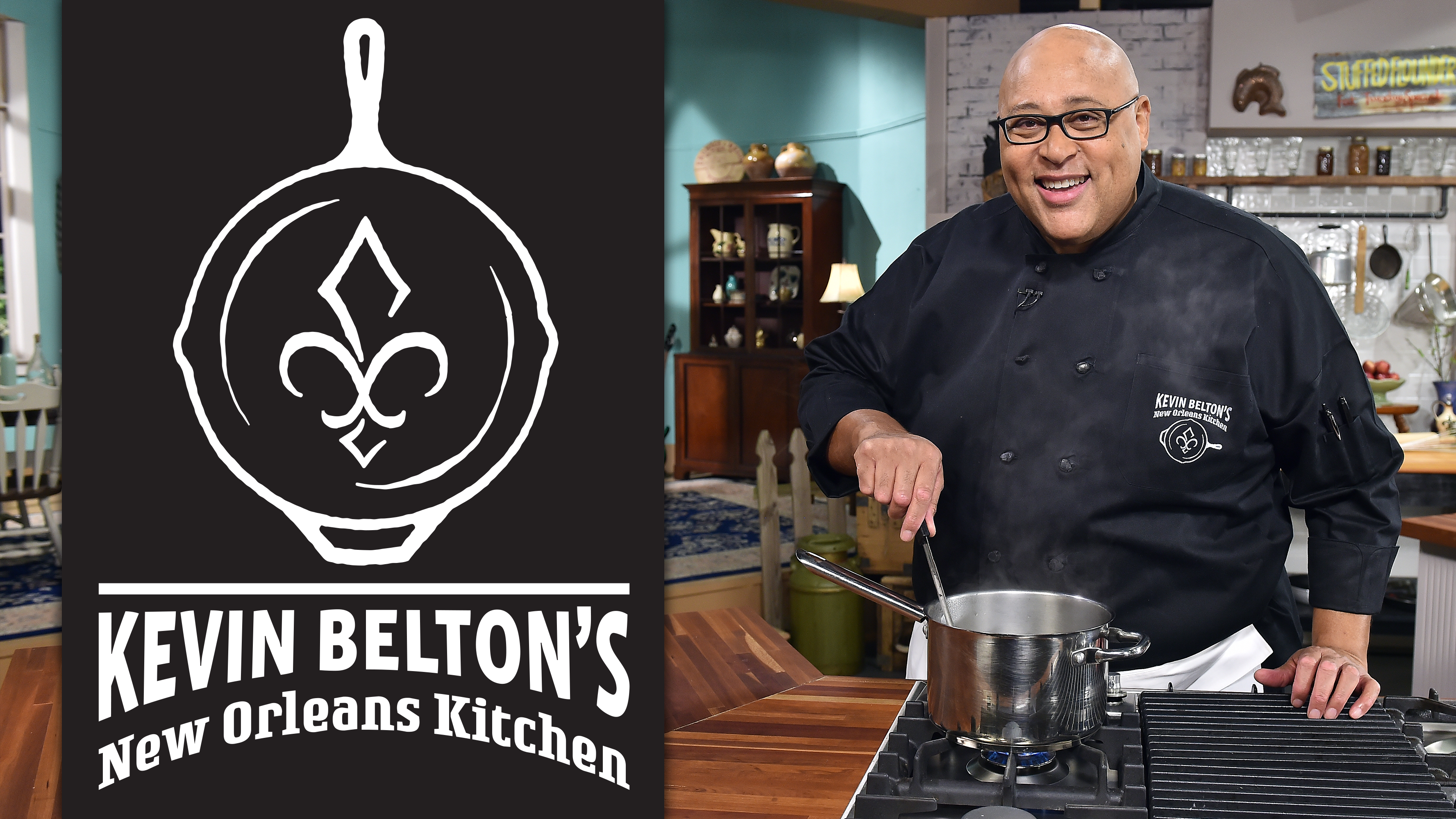
Delve into the diversity of New Orleans flavor with Chef Kevin Belton. During this episode Chef cooks up slow-cooked roast beef po-boy with homemade mayonnaise, fried oyster po-boy with blue cheese and Buffalo sauce, french fry po-boy with gravy.


Copy and Paste the Following Code to Embed this Video:
The Po-Boy Sandwich
-Funding for "Kevin Belton's New Orleans Kitchen" was provided in part by the L.E. Phillips Family Foundation, Inc. and by the St. Tammany Parish Tourist Commission. Located 40 minutes from New Orleans, the Northshore's Tammany Taste features the chefs and farmers, brewers and bakers of St. Tammany Parish's culinary scene. Learn more at louisiananorthshore.com. Additional funding was provided by Welbilt -- bringing innovation to the table. -I'm Kevin Belton, and today in my New Orleans kitchen, we're going to do the signature sandwich of my hometown, the po' boy, and I have three versions for you. We're going to start with a roast beef po' boy, dressed with homemade mayonnaise. We're going to fry up some oysters and put it with bleu cheese and buffalo sauce. And last, a French fry po' boy with gravy. I can't wait to get started.
Smooches
Zing! Whip! Whip! Whip! Sloop!
Gong sounds
Hi, welcome to my New Orleans kitchen. It is another fantastic day here in New Orleans. We're going to start today with slow-cooked roast beef po' boy dressed with homemade mayonnaise. Now many of you have probably heard of a po' boy. Back in the 1920s, the conductors went on strike for the streetcars. One of the bakers went to them and says, "How long a loaf of bread do you need to feed a family of four?" And that's how we got that long loaf of bread known as a po' boy, and I'll show you how the sandwich got its name. But first, let's get our roast beef going. Now, here, take your favorite cut of roast, nice and simple. We're going to put a little salt. We're going to do a little pepper. Now this is a coarse black pepper. Okay, I just kind of get it pressed in. You could do a lot. You could do a little. Remember, meat has two sides to it, and our whole goal with this is we want to slow cook this so this gets nice and tender. Now, if you want to do a little red pepper, you can. Here I have a little fresh garlic that we're just going to spread out. Now I just took this garlic, minced it, chopped it. You could use a powdered garlic if you like, but I always like to use fresh because it's a little better flavor. So let's turn this over, now get our garlic on the other side. Now what we're going to do, we're going to slow roast this because we want this to get nice and tender. The flavor is there and, that way, we can just pull it apart. To our pan, we're going to put in a little root beer. Root beer has a little bit of sugar in it, so this will give us a nice sweetness to it as this slow cooks. Take your roast, place it right in. So now we have our roast in our slow cooker. Let's just turn this on. We're going to cook this real low for 8 to 10 hours because we want it nice and tender. Now, I have some already done. To go with our roast, we're going to make a little homemade mayonnaise, and, you know, it's not as hard as you'd think because what we're going to start with, we're going to start with a little mayonnaise that's already prepared. Now, pick your favorite mayonnaise, whichever one you like, but we're going to add more flavor to it because it can pick up flavor. We're going to do a little lemon juice, which always brightens up the flavor of food. We're going to do a little Creole mustard and, as you can see, that Creole mustard is a ground mustard seed that adds flavor. Any type of mustard that you like can go in. A little hot sauce. You know, in Louisiana and New Orleans, we use a lot of hot sauce. Most of our hot sauces in New Orleans are vinegar-based hot sauces because we want heat, but we also want flavor. So we like to use a vinegar-based hot sauce that has flavor to it. Also, to add a depth of flavor, we're going to do a little Worcestershire. Worcestershire sauce gives things a depth of flavor and, also, it adds a little bit of saltiness to this, and it'll go perfect with the roast. Now, some folks, you know, when they make roast beef, they like to serve it with horseradish. A little horseradish could go in if you like, but we're going to go in, a little Creole seasoning, as much or little as you like. This is something that, if you want, if you're going to be making a lot of po' boys, you could make this ahead of time, put this in the refrigerator and keep it there and, you know, for Kevin and Jonathan, when they were in school, I had this made up, kept it in the fridge, so when I was making their lunch in the mornings, boom. Spread it right on the bread and off they went. Now, look at this loaf of French bread. This is half the loaf. The original was really long, so what we're going to do, we're going to take our bread. I think that's big enough. Let's use that. We are just going to make a little split. Now, some folks like to either lay it open this way, some folks like to cut all the way through and make two sides. So, for this one, we're going to do two sides. We're going to take our mayonnaise and, you know, if you, when you -- I should say -- I shouldn't say, "If you come to New Orleans." When you come to visit us in New Orleans and you have a traditional po' boy, they're going to ask you, "Do you want it dressed?" This has nothing to do with clothing. "Dressed" means mayonnaise, lettuce and tomato and pickle. This is how we dress our sandwiches normally, with a little mayonnaise, lettuce, tomato, and pickles. So is there any particular order? Yes and no. I prefer to go with the tomatoes closest to the bread. We put the tomatoes on, then I like to go next with pickles. Do you like a lot of pickles or do you like a little pickle? Or do you like a little dill? Or a little kosher? Or a little sweet pickle? Or a little bread and butter pick-- You get the point here. You can go with whatever pickle you want. A little shredded lettuce. Just pop that baby and, you know, it kind of falls off. This is why po' boys are so good because they aren't meant to be very neat. Now, as you can see, our roast, I've just shredded it. We can take this roast that is just slow cooked. It has that little sweetness from when we had the root beer and letting it slow cook, see, because this is why we want to cook it long. We want to cook it that 8 to 10 hours so it just gets nice and tender, and you can see how it shreds. Oh, this just looks so good. Our roast is tender. If you want a little extra seasoning, you can put that on. Some folks -- I have a friend, when he eats his roast beef, he takes fresh garlic, slices it really thin, layers it right on top of his roast beef. So let's show you how the two have to come together. We're just going to take them, press them in, make a little cut. Now let's get our plate to plate this up. This roast beef, as you can see, this is not a neat sandwich. That meat falls out. The lettuce hangs over the side. The tomatoes peek out from inside, but I tell you what. It is absolutely fantastic. There we have New Orleans roast beef po' boy. Coming up next, fried oyster po' boy with bleu cheese and Buffalo sauce. Now let's start working on our fried oyster po' boy, with our Buffalo sauce and bleu cheese. So I've taken our oysters. To them, we're going to pour them in a little milk. You know, this just adds a little flavor for us. We just want that oysters to absorb that milk because we're going to make a batter. Now, in our batter, I'm going with flour and, you know, it just depends on how much you need. Here I have about 2 cups of flour. We're going to put in a couple of cups of cornmeal to it and, of course, basically, you know, when you come to New Orleans and you have fried oysters, there's always that little bit of crunch. That crunch comes from the ground cornmeal. That's where we get that crunchy texture from, especially for oysters. It's from the ground cornmeal. So we'll get in the same amount of ground cornmeal into this. Now, flour and cornmeal is not seasoned, so we need to add some seasoning. We're going to do some salt. You know, that's one of the great things about oysters. Oysters just come off of the Louisiana coast where they're sitting just in saltwater, but there's fresh water moving over them, so they have that natural salty flavor, but because this isn't seasoned, that's why we want a little salt in here. We're also going to put in our Creole seasoning, and we don't mind putting a good bit because flour is very bland, very, very bland. So let's just stir this together. Now, heating up is our oil. One of the things about frying is that you have to have the oil hot. Now, often when you fry, you have a dry/wet/dry batter, which makes a nice, thick coating, but, you know, we don't want to take away from the oysters, so here, that's why we're going to do this a wet and dry. Now, a lot of times when you hear about frying, folks like to try to do this ahead of time, but I prefer, personally, when we go from the wet into the dry, once we come out of the dry, we should go directly into the fryer. So let's take our oysters... And I'm just using a slotted spoon to get rid of some of that milk. We'll just toss those right i-- Oh, they look so beautiful. Oh, my. There is nothing like a Louisiana oyster. And let's just take the -- You know what? I have to do this like mom did. We just want to get this nice and coated. We're going to take our oysters, shake off the excess because that can make your oil dirty, and we just want to drop the oysters in. With the oil hot, it sizzles. We don't want to overcook them. We just want those edges to curl. Of course, the larger ones may take a little longer than the smaller ones, but if you notice, when you put something in the oil, have a movement to it. Have it moving, that way you're not dipping your hand straight in. Oh, that's just the sound of goodness there. So now, the reason I like this basket because we can give it a little shake, just to make sure the oysters are separate. They don't stay together. So with that little bit of a shake, look, they're cooking so quick. Our oysters are just about ready. We don't want to overcook them, but we want that outside crispy, but the inside of the oyster nice and moist. So look at that. A nice, golden color. Here, I just have some paper towels. We're going to dump them on the paper towels, just to drain, and now, let's get another batch of oysters going in. You know, I had a dear friend, Mr. Johnny, who had a sandwich shop many years ago in the French Quarter. He told me back in 1950, the guys that worked on the riverfront, where their wives would give them leftover dinner to take for lunch. Well, they didn't want to eat leftovers, so they decided to give their leftovers to the single guys. So, since they didn't have much money to spend for lunch, the husbands would come over and get a foot-long sandwich with a little, thin layer of lunch meat inside it and it only cost them five cents. So that's how our sandwich got to be known as a po' boy because the joke was, "Look, here come all the old po' boys" because, you know, the wives didn't want them spending any money." So our next batch is ready to go in. Just that little bit of time, our oil has reheated. Let's drop in our next batch. Oh, look at that. And, you know, really, this is the trick to frying. Keep things cold before you fry them, as cold as you can, and just make sure that oil is hot. While these last oysters are cooking... let's take care of our sauce right quick. Now, in our sauce, I've melted a little butter and, to this, we're going to add... I had about a 1/2 cup of a butter, and we're going to put in about a 1/2 cup of hot sauce. Use your favorite hot sauce because we just want this to blend together, smooth together. Often, when we have an oyster po' boy, instead of having it dressed with the lettuce and tomatoes, we just put butter on the bread and put a little pickle with it, with a little hot sauce. So this is going to be bringing both of those worlds together, where we're making a nice Buffalo sauce, and we're also going to dress this sandwich with lettuce, tomato, and some other goodies. Now, that's all we want. See how that is smoothed together? It's made a nice, thick sauce. We just want to keep this on the fire, just to come together. Let's get this next batch out. You know, I tell you, when you come to visit us in New Orleans, this is a must-have. Our seafood is so delicious. Now, let's get ready to go ahead and put some other things on our sandwich. We want to finish this off, little bit of green onion, little spring onion, and we want to cut this very fine. Now, some folks like to go ahead and put this in the base of the sauce, where we did the butter and the hot sauce. I like to save it on the side. The reason I like to save it on the side is because, if I have any sauce left over, I can go ahead and put the green onions in right when I'm ready to use it. The other unique thing, with this dish, we're going to also do a little bleu cheese. So we're going to take our bleu cheese. We just want to slice it, and this is, for the most part, going to crumble apart. See how that is just -- just a rough chop for it to crumble. That's all we wanted, some nice bleu cheese crumbles. I know what you're thinking, since you all know me pretty well now. I know you're going, "Okay, when is he going to whip out the bacon?" We could, but we're not going to do this. So you know what? Let's put this oyster po' boy together. Let's get our French bread. Let's get our oysters. Now, let's build our sandwich. So, into our sandwich, we're going to take our lovely oysters, and we're just going to place them right onto the bread. Oh, doesn't that look beautiful? And you notice, I don't have any... You know, earlier, when we did the roast beef po' boy, we had some mayonnaise on the bread, but we're not going to put any on this time. Our bread is plain because we're going to fill it with some goodness. So, over on this side... Oh, look at that. Let's do a little bit of lettuce and tomato. And, if you'd like, this is the side where you could put the bacon on, but now, let's take our sauce. We're going to run the sauce right over the top of these oysters. Oh. You know, sometimes, if you'd like, I'd put this in a bowl, toss our oysters in a bowl, but I like to just drizzle it on the top because, this way, if we just drizzle it on the top, the oysters keep their crispness. So, to finish this off, a little sprinkling of green onion, and let's take our bleu cheese and just crumble our bleu cheese right on the top. So here we have our fried oyster po' boy with Buffalo sauce and bleu cheese crumbles. Coming up next, a French fry po' boy with debris gravy. A New Orleans French fry po' boy. Where did that come from? I don't have a clue, but I tell you what. It is absolutely fantastic. So, to get this started, I've been cooking off some bacon. Now, I've had our bacon kind of crisping up. We're just going to set this on the side, but I've also kept some of the drippings that I rendered earlier from the bacon, so we're going to put this in here because we're going to use this to help make our gravy in just a little bit. Now, a French fry po' boy. I don't know if this was an accident. I don't know if this was on purpose, but you know what? One of my favorite foods is a potato. I will eat a potato any kind of way you do it, so what's going to make this special is that we're going to fry these potatoes twice. I've taken the potatoes, put them in cold water to get them nice and crisp and cold, and now what I've done, I've drained them on paper towels. Our fryer is set to 350 degrees. Now, make sure you get the moisture off of these fries because of the fact that you don't want this to splash. I've cut them in little 4-inch long cubes, and you notice, if you look at the ends, I've left the skin on. The reason I left the skin on is because of the fact that I like that little crunch with the skin. So, take your potatoes. Now, instead of dropping them in, let's put them in the basket first, then we're going to lower them into our oil. You don't want to overcrowd it, but I have enough oil in here to where this is going to be fine. Let's drop those in. Give it a little shake. We're going to fry this off for, roughly, about 2 to 3 minutes. So while that's frying, for this first time, let's work on the gravy right quick. Where did you all go? Oh, there you are. So on our gravy, we've got this skillet nice and hot. We've put in our bacon drippings, and we're going to make a classic roux for this, where we're doing -- instead of using butter and flour, we're going to use the bacon drippings and a little flour. So, in here, we'll put a little more of the bacon drippings, which just, of course, adds flavor, and what's nice with this, how much or how little do we want to make, totally up to you. So we put in about a 1/4 cup of the bacon drippings. We're going to get in about a 1/4 cup of just all-purpose flour, and we just want to stir this, get this incorporated. We don't want to cook this long because this is going to be a nice milk gravy. So now I have a little milk and we're going to start slowly adding our milk a little at a time. We don't want to add too much. All right. Let's go ahead and turn our fire off, or we're going to turn it down some. This is going to be nice and thick because of the gluten in the flour. Okay, while this is doing this, let's check our fries. We're going to drain them onto our paper towels and let them rest. We're going to let this oil get back up to temperature because, for that second frying, they're going to be extra crispy. Our gravy, as you see, has gotten really thick, so let's add a little more milk and, of course, you know, this has no seasoning to it, okay, so we need to put a little of our Creole seasoning in. You know, I remember grandmother, when she used to do this, she used to take that bacon, chop it up, and put it back right into the gravy. You know, this is the base for biscuits and gravy. Instead of making a dark brown gravy, this is a milk gravy, but we just want to heat this up to smooth this together. We need a little salt. It's spicy enough, but we need a little salt because, remember, our potatoes are bland. Here, this gravy... Oh, man, that is really good. So let's just turn this off and let this sit here. So, our gravy is ready for our po' boys. What we want to do now is return our potatoes back to that fryer for a second frying, and this is what's nice. We want to get them crispy. Right now, they're fairly limp, but by putting them in the first time, now we go in a second time. This is going to get them nice and crispy. Probably, the way I like French fries, extra crispy, I want to let this go for at least 4 minutes. Our first batch is ready. Golden brown, nice and crispy, that is exactly what we want. While they're hot, a little bit of salt. Always season, when you fry something, right when it comes out of the fryer. Now, let's cook the rest of our fries. Our second batch of potatoes are ready. They're nice and crispy. They are wonderfully golden brown, and I don't know if you can hear that.
Potatoes clacking
Those potatoes hitting that basket, draining, that means they're crunchy. You hear that little kk, kk, kk, kk? That's what that is. So let's, of course, little bit of salt, now we are ready to dress our po' boy. We're going to take these French fries, just grab them up. There's no pretty way to do this. Put them right down, inside of that po' boy, just like that. I really want to thank the person that came up with this one because this is absolutely fantastic. I mean, I know a lot of people, they don't like carbs. They don't like this and they don't like that, but in New Orleans, this is what it's all about. We're going to take our gravy, put our gravy right down the top. Notice, no lettuce, no tomato, because it didn't need it. You know, a lot of areas, they have different names for this, but in New Orleans, this is the classic New Orleans French fry po' boy. I thank you so much for allowing me to spend time with you. I'm Kevin Belton, and remember, the most important place in the house is sharing your table with your family and friends. So I'll see you next time. -The companion cookbook to "Kevin Belton's New Orleans Kitchen" is available for $24.99 plus $6 shipping and handling. You can also order an hour-long DVD of favorite dishes from the series for $19.95 plus $4 shipping and handling. Both the book and favorites DVD are available for $40.95 plus $7 shipping and handling. To order these items, call 1-866-360-4924 or order online at wyes.org. -You know, I remember the days you used to have to take two pieces of wood, rub it together, and get fire. You know? The first time my cousin, the Hawk, made fire for the very first time, we all burned ourselves. There were no hospitals, but back in those days, we didn't have to eat that pterodactyl raw anymore. This time, we're going to do a little pork sausage. Yes, similar to, like, a breakfast sausage. This is what's going in now. -Start again, please. -I know, I'm coming. We have to take a break because I have to get a plate to put the steaks on once they come out. So stay right there. Don't go nowhere. We're going to be right back, once we get a plate. -For more information about "Kevin Belton's New Orleans Kitchen," visit wyes.org. Funding for "Kevin Belton's New Orleans Kitchen" was provided in part by the L.E. Philips Family Foundation, Inc. and by the St. Tammany Parish Tourist Commission. A short drive from New Orleans, the Northshore offers epicurean experiences, as well as kayaking, cycling, and tours of the Honey Island Swamp. Learn more about the Tammany Taste at lousinananorthshore.com. Additional funding was provided by Welbilt -- bringing innovation to the table.
Search Episodes

Donate to sign up. Activate and sign in to Passport. It's that easy to help PBS Wisconsin serve your community through media that educates, inspires, and entertains.
Make your membership gift today
Only for new users: Activate Passport using your code or email address
Already a member?
Look up my account
Need some help? Go to FAQ or visit PBS Passport Help
Need help accessing PBS Wisconsin anywhere?

Online Access | Platform & Device Access | Cable or Satellite Access | Over-The-Air Access
Visit Access Guide
Need help accessing PBS Wisconsin anywhere?
Visit Our
Live TV Access Guide
Online AccessPlatform & Device Access
Cable or Satellite Access
Over-The-Air Access
Visit Access Guide




Follow Us