

 Passport





Stevens Point, Wisconsin
03/05/26 | 26m 48s | Rating: NR
Stevens Point, Wisconsin is home to familiar favorites like Stevens Point Brewery, the Green Circle Trail, SentryWorld and Father Fats. But there’s more to discover, including Main Grain Bakery, the Food + Farm Exploration Center, Gamber Johnson, Schmeeckle Reserve at UW–Stevens Point and the Hostel Shoppe.


Copy and Paste the Following Code to Embed this Video:
Stevens Point, Wisconsin
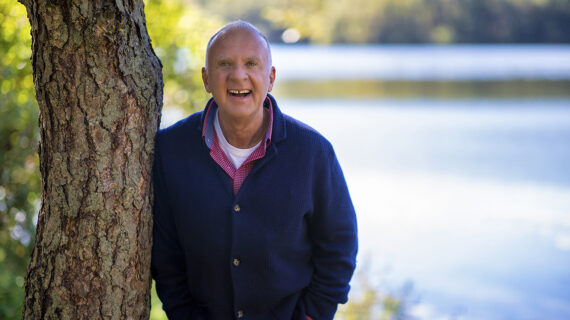
– John McGivern: This city in central Wisconsin is always "on point."
[bright music] - Announcer: Thanks to our underwriters.
- There's no place like Oconomowoc.
Explore, play, shop, stay!
Visit Oconomowoc!
- My father taught me that to make great bakery, you have to do it the right way.
O&H Danish Bakery, where kringle traditions begin.
– Announcer: Together, doing good for 130 years.
Horicon Bank: It's the natural choice for community banking.
- Support for this program provided by Plum Media.
Elevating conferences and meetings with smooth, stress-free production.
– Announcer: Financial support has been provided by our friends at Greenfire, a construction management company, the Friends of PBS Wisconsin, and the Friends of Main Streets.
– Announcer 2: Thank you for watching.
Do you know that it helps us if you engage with this show?
It does!
Go to our website.
You can watch all of our episodes, listen to our podcast, shop on our store, or contact us.
We'd love to hear from you.
'Cause these are our Main Streets Somethin' 'bout a hometown speaks to me There's nowhere else I'd rather be The heart and soul of community's right here On these Main Streets - I am in Stevens Point, Wisconsin.
It's known for quite a few things.
It's known for its university, University of Wisconsin-Stevens Point.
It's known for a brewery that has been operating continuously since 1857.
And it's certainly known for its ideal location.
Stevens Point has a population of 26,000.
It's in the heart of Wisconsin, on the east bank of the Wisconsin River.
And it is 110 miles due north of our state capital, Madison.
– Emmy Fink: You know, even on a rainy day, central Wisconsin is gorgeous.
- Well, I happen to know that this area historically used to be home to the Menominee people.
And they called this place "Point of Land."
- You know, then the logging began.
So, in 1839 is when George Stevens, he was traveling along the Wisconsin River, and he's like, "Man, how do I capitalize on this logging industry?"
Well, he finds a natural point in the river, and he's like, "Yes, that's it.
I'm gonna put a storage facility up."
- Well, did you know, though, to name this city, it was a combination of what the loggers used to call it, which was Stevens Post, and what the Menominee people called it, which is Point of Land.
So, you know, Stevens Point.
– Emmy: I know, I think that's such an awesome combo.
But I did know that.
It's also called the "Gateway to the Pineries."
- Well, did you know that the market square is-- - Oh, yes!
1847 it was established.
This is the longest-running farmers market in the state.
- But did you know that after 1860, 50% of all of the immigrants came from Poland?
Did you know that?
- I did.
- Do you know why they came here?
- Yes, but go ahead.
- Okay, affordable farming land and jobs.
And they really changed the cultural landscape of this city.
– Emmy: Yes, they did.
So, if you knew all of this, why am I here, sir?
- I'll tell you why you're here.
Because I love to have you here.
And we are going to SentryWorld, and you golf and I don't.
That's really why I brought you here.
- Can we find more things that you don't like to do that I can do?
[bright music] - Jason Lewandowski: Gamber-Johnson actually started out in 1954 right here in Stevens Point.
– John: Yeah.
– Jason: We started out as a wooden furniture manufacturer.
This was the old cabinets that housed the turntables.
– John: Wow.
– Jason: But we've always been mounting technology.
And in the 1970s, the company went from the living room to the vehicle, where we were making wooden speaker boxes for vehicles.
And then docking stations for CB radios at that time.
This is a typical application.
If you need to take your tablet and do some work outside the vehicle, you press one button, slide it out.
- Boom.
- When that technology advanced and we started seeing computers being mounted in vehicles, the company just naturally transitioned into providing mounting systems and docking stations for those types of products.
- And what vehicles need your product?
- Any truck that's going down the road that you see a computer in probably has Gamber-Johnson equipment.
– John: Yeah.
- We provide all of the technology, equipment, the console boxes that you see in the vehicle.
We even provide the prisoner partitions and seats for police vehicles.
- Oh, you do?
- So, I don't know, John, if you've ever sat in the back of a police car.
I hope not.
- It's really none of your business, Jason.
- That's right.
- Oh, my God.
- [laughs] But if you have, you've probably seen through a Gamber-Johnson partition.
And this is our equipment that you would see through.
So, all of our products are tested to a high level of vibration and shock and making sure that the computer is held securely in the docking station so it doesn't become a projectile in the vehicle.
- Sure.
- Where you see the direct view, LED displays that are huge throughout a baseball stadium-- - That's you guys.
- That's us, we mount that also.
We work with the biggest technology companies in the world: Samsung, Dell, Panasonic, Getac.
- Nice, sure.
- So, when they come out with new product, we come out with the accessories.
John, rugged, reliable, responsive.
That's our motto.
– John: Yeah.
- We have to be rugged the environments that we provide product to: military, public safety.
Reliable, obviously, it has to work all the time.
And then responsiveness, being the fastest we can in the market to respond to our customer needs.
– John: How many people working here?
– Jason: About 150.
– John: 150?
– Jason: Yep.
– John: How many pieces come out of here a day?
– Jason: Boy, it's thousands.
– John: That's a lot of product.
– Jason: Yeah.
[both laugh] - Emmy: It's a good day when I can visit a brewery.
We are at Stevens Point Brewery, the third-oldest privately owned brewery in the United States.
They brewed their first beer back in 1857.
This is the taproom behind us, that's open year-round.
And the summer beer garden, that's beautiful too.
But just not on a rainy day like today.
Here's a couple things you might not know.
The iconic pointy-head guy, he was a real guy who used to work here.
So, real guy.
But his head, not really that pointy.
Back during Prohibition, when all the other breweries were closing up shop, Point brewery decided to start making soda-- or pop, if that's what you call it.
And they continue to thrive.
Some say their soda is just as tasty as their beer.
One for me, one for you.
You get the soda.
– Alex: All right.
Cheers, Alex.
- Cheers.
– Emmy: Cheers to you, cheers to Point Brewery.
– Alex: Cheers.
– Emmy: Drink up!
– John: Okay, Main Grain Bakery & Eatery.
Mmm.
Sarah Jo, what cookie are you standing in front of?
– Sarah Jo More: Oh, our sugar sprinkle cookie.
– John: Could you bring me one?
- This is $2.50.
– John: [laughs] I love... - Of course, of course.
- Put it on my bill, okay!
[Sarah Jo laughs] Can we talk about how this all started?
– Sarah Jo: Yes.
This used to be, like, an old music venue, and our landlord graciously allowed us to kind of revamp it into a bakery.
So, me and then two other guys started this, kind of put our heads together.
– Michael More: Here's the real story.
In college, she would hold these parties where she would make, like, 20 pies... [Sarah Jo laughs] - John: Really?
- ...and then have a ton of people over, and it was a pie party.
– Sarah Jo: So, I would spend all day baking and cooking, and I would set up these really long tables just in college.
And I would invite everybody over, and I would make them pay, like, 20 bucks a ticket to have dinner at my house.
– John: So great.
– Sarah Jo: It was just, you know, three of us to begin, and now we have a staff of, like, 25.
Pie is where it all started, but we don't really make pies anymore.
– John: No?
- This is kind of like our bread area.
So, at 8:30 every morning, we divide our dough.
We pre-shape and we shape our bread.
So, this all hangs out.
They sleep here overnight.
And then, first thing in the morning, we throw 'em in the oven, so-- - 'Cause they need time to do that, don't they?
– Sarah Jo: Asiago thyme?
– John: No.
Or do they need time from-- - Asiago thyme?
That's an herb.
[laughs] - Oh, I get it.
- Yeah, okay, anyway... - What better be here every day or people are gonna be mad at you?
– Sarah Jo: Our oatmeal cream pies.
We've had that since day one.
– John: Oatmeal cream pie?
– Sarah Jo: I know, it's like, "What is that?"
- Sorry, it was just for the TV.
[laughter] You don't have to air that, but you can.
After COVID, we moved into what is now the eatery, which was kind of available at the time.
– John: What's this?
– Sarah Jo: Rustic white sourdough bread.
We do have a bread slicer.
It's one of our most popular.
Asiago thyme and the rustic white are probably our most popular.
One of our main breads that we use for sandwiches as well.
All right, here's my favorite part.
The lemon table, 'cause it's lemon week.
- Well, how does that work?
[both laugh] - We have our, like, a special every week.
So, our lemon poppy seed muffin is our special.
And then we have a lemon poppy seed dressing on our sandwich.
And then we have lemony items here.
So, every week, we kind of rotate it.
We find all the cute stuff and put it together.
Do you want this to go?
– John: Please.
– Sarah Jo: Okay, great.
Thank you for coming.
- Thank you.
This was really fun.
[Sarah Jo laughs] It really was fun.
- It really was.
Yeah, I had a hoot.
- The light, sandy soil in this area makes it perfect for growing what?
[playful music] - If you think these only grow in Idaho, you are so wrong.
Because potatoes are the number one cash crop in this region.
In fact, Wisconsin is the third-largest producer of potatoes in the entire country.
Look at this.
Stevens Point totally putting the S-P in "spud."
– Dick Pavelski: We started doing tours at the farm.
The first year was four or five tours.
And then it was 15, and then it was 30, and we knew what we wanted to do.
We were having an impact, 'cause more and more people wanted to hear the story.
But we had to move someplace where it wasn't on the farm and actually affected farm operations, so we kind of decided to build a mini farm.
– Alexandria Behrend: This beautiful facility started as a very small idea.
It was gonna be a shed with a couple of exhibits.
– John: A shed?
– Alexandria: A shed.
– John: Hello.
[Alexandria laughs] - Alexandria: And as they were talking to the community and their colleagues in the agriculture world, they said, "We wanna get behind that.
Yes, we need that."
It grew and grew and grew until this $40 million-plus facility.
– John: Because of collaboration.
– Alexandria: Because of collaboration.
– John: Partnerships.
– Alexandria: That's right, yeah.
– John: How long ago did the doors open?
– Alexandria: December 2023.
– John: Why is this important?
- We keep hearing, "I don't know why we need farmers anymore.
We just go to the grocery store for our food."
And for me personally, you know, if you don't understand something and you don't appreciate it, you don't protect it.
- Our education team focus are the field trips.
So, we will have 250 field trips just this year.
- I'd like to do the sweet corn, is that okay?
– Alexandria: Okay, yeah.
We have 60 interactive exhibits... So, this is corn coming right from the field off the truck.
...that people from ages 2 to 92 can be immersed in.
You can ride in a combine and feel what it's like to harvest peas or potatoes or corn.
We have a grocery store area where little ones and big kids alike can work on their math skills.
We have irrigation system, because a lot of people have never been up and close, and so you get to see actually how big it is and how it works.
And then, my favorite part of the entire facility, we actually have four acres of demonstration fields where we get to dig our hands in the dirt and pull up the potatoes, peas, and corn and everything that we plant.
Look at that!
– Dick: You know, we'll have a chef doing a teaching class here, and right in the middle of the class in the summertime, now he can go out and say, "Okay.
Go out and pick your tomatoes and your peas," so they can see how food is produced.
– John: Yeah.
Look at that.
- Look at that.
– John: Thank you.
– Alexandria: Yeah, you're welcome.
Dinner on me tonight.
– John: You're the best.
– Alexandria: I know.
– Dick: You have to make that personal connection.
It's critical to make that personal connection.
- We picked some potatoes in the field, and I wanted to bring them to you in my favorite, final form.
- Guess where these were grown?
Out back.
[Alexandria laughs] Look at this incredible lobby of a building that was built in 1922.
This was the headquarters to Sentry Insurance for 55 years: 1922 to 1977.
It's still part of the Sentry Insurance family, because this is now home to the customer service and operations teams.
From the outside, it looks like they're doing a complete remodel, but what they're doing is they are modernizing some amenities for the employees, and they're maintaining the historic character of this building.
So, this important downtown Stevens Point landmark building-- it's here to stay.
[bright music] - Danny Rainbow: Ready to head out there?
- You're driving?
- I'm driving.
I'll show you around.
– John: Go ahead.
– Danny: Trust me.
[both laugh] This is a very unique property when it comes to golf courses.
It's a parkland-style course.
– John: Which means what?
– Danny: Very green, beautifully maintained, lush grass, white sand bunkers, big trees kind of framing the holes.
– John: Yeah.
– Danny: We have a lot of water on the golf course.
Just meant to feel like a walk or a golf experience in a well-manicured park.
– Emmy: Nice.
– John: Yeah.
– Danny: Just kind of the beauty of it, the maintained nature of it is different than what you see in a lot of golf.
It's still a challenging golf course.
– Emmy: Oh, hi!
[John laughs] I've wanted to play this course for so many years.
– John: Oh, good.
- Can I just say, I'm so glad you don't golf?
- Right.
It's not a club.
– Danny: It's not a club.
– John: This is open to all of us.
– Danny: It's a daily fee.
Yeah, it's always been a daily fee, resort-style course.
1982 is when the golf course opened, and John Jonas was the CEO of Sentry Insurance.
And he decided that he wanted to build a golf course, which was a little bit unheard of for an insurance company to build a golf course, own a golf course.
He specifically wanted the golf course to be a destination course that drew golfers from around the state, around the region, even around the country to come visit little Stevens Point, Wisconsin.
– John: Sure.
– Danny: It's always been ranked as one of the top public golf courses in the state and even in the country.
It's currently the 49-ranked public golf course in the country.
There's no memberships here, so people can come, reserve a tee time, book and play, and stay at our beautiful inn and enjoy the dining at the restaurant.
– John: I was talking with my sister, and she was like, "They have a 20-minute tee time."
I had no idea what she was talking about.
– Danny: So, to have a 20-minute tee time interval when people come here, they really can't believe that.
- There is nothing worse than, "Ah, should we let these guys play through?"
That doesn't happen here.
– Katie Kreuser: Never.
And truly, every day, somebody comes into the pro shop after their round and says, "This was the best round of golf, "because I never saw the group ahead of me, "and I never felt like anyone was waiting for me behind me.
"I just played, and I felt like I had this entire course to myself," which is amazing.
– Danny: When it comes to our hospitality and our golf experience, we put a priority on the experience.
- I love when you don't wanna do-- - We're going to the Snack Shack.
- Danny, can you make sure he gets me a brat?
- Yes.
- I would like onions, mustard, and kraut.
– John: Have fun.
- Nice par.
– Danny: [claps] All right.
– Emmy: I don't think he's gonna bring me that brat.
I don't.
This urban oasis is a collaboration between Nordic Night Sauna and Fields & Flora, which is a working floral garden.
Now, both businesses arrived here on Union Street at this location when it was in need of a lot of work.
And, boy, have they transformed this space.
Here at Nordic Night, it's all about heating and healing through different rounds of heat and cooling.
I've never met a sauna that I didn't like.
Nicole, the owner, says I'm gonna sleep better and my mood's going to improve.
Yay for me!
– John: Let's talk about the connection between the Schmeeckle Reserve and the University of Wisconsin-Stevens Point.
– Jim Buchholz: The Schmeeckle Reserve is a 280-acre natural area that's actually part of the campus of the University of Wisconsin-Stevens Point.
– John: So, we're on campus right now?
– Jim: We're on campus, right.
It makes up over 70% of the main campus area.
Very few other universities that dedicate that much of their main campus area to undeveloped green space.
It's just myself and one other person who are full-time staff.
Everybody else are students.
They're at the front desk, providing information to visitors.
We have a visitor center that's open seven days a week.
We have students that are maintaining about five miles of trails and boardwalks for the public to use.
– John: Are these two buckthorn right here?
– Jim: Yes, they are, yep.
This is glossy buckthorn.
And we have students that are doing ecological restoration projects as well, helping to control invasive species and then plant new native species as well.
It's something we've been battling for at least the past 15 to 20 years.
Hey, look at that, nicely done!
If we didn't do anything, essentially, Schmeeckle would be one species of buckthorn.
So, this is one of our prescribed burn areas.
- And what exactly is that?
– Zach Hoffmann: A prescribed burn is an area where you actually set on fire the area.
And what that does is it releases nutrients back in the ground.
It gets rid of dead vegetation.
And it's all a part of resetting succession, which is how you get more diverse, new plants to kind of come up.
- And this area has been done?
– Zach: Yeah, this side has.
And then, if you look over here to this side-- - John: It's so evident.
– Zach: And it's amazing to see just how much of an impact the fire can actually have.
– Jim: It's kind of neat.
Schmeeckle really represents what the university is about, that idea that learning and engagement shouldn't just happen on campus, but it should happen outside the boundaries of campus too.
And Schmeeckle Reserve is one of those places where people come together.
Faculty and staff and students are learning as part of their university experience, but the public is coming in as well.
We're able to provide programming and special events that help them to learn more about the natural environment around them.
That includes a large amphitheater area.
We have a Shakespeare program that happens with a community theater.
We also have large community events called Candlelight Hike Festivals in fall and in spring.
– John: Yeah.
- So, we estimate we have about 125,000 people that come through the reserve.
And a lot of people are coming here to enjoy the trail system, to enjoy the diversity of habitats and all the wildlife.
Oh, and there's a fawn back here.
– John: Oh, my God.
There's two!
– Zach: There's two of 'em.
– Jim: A lot of people actually come to Schmeeckle just to see the deer.
- You're the star of this episode.
[all laugh] For the last 50 years, April is when the student-run radio station, WWSP 90 FM, plays 54 hours of continuous what?
– Mike Wiza: John, John, I've got this one.
- Okay.
- 54 continuous hours of the world's largest trivia contest.
– John: Trivia!
How does it work?
- 300, 400 teams play.
They gather around the radio.
And there's probably 15,000 players.
- So, you're on a team?
- I am on a team.
I've been playing on the same team for 48 years.
- What's that team called?
- The Franklin Street Burnouts.
- [chuckles] Okay.
- Before I was mayor.
- Before you were mayor.
Have you ever won?
- We have not.
But we've got fourth place is our best finish.
- Is that right?
- We've got a number of top 10 places.
- So, a bridesmaid once?
- Always, yeah.
- Okay, hey, good to see you, Mayor.
Thank you.
- Thanks.
– John: We're at the Hostel Shoppe.
You're thinking, "Hostel?
Is it a youth hostel?"
Why would they call a bike shop a hostel shop?
– Scott Cole: Well, back in 1974, the owners were involved with cross-country skiing, canoeing, cycling, any sports or activities that you did under your own power.
When you get on a recumbent, you always come from the front.
And when I traveled across the country years ago, we stayed at youth hostels, and we traveled by bike across the country.
And the Hostel Shoppe was all about doing activities that you powered.
– John: Okay.
Sure is comfortable.
– Scott: Feels even better once we start moving more.
– John: This is a sizable operation you have here.
– Scott: Yes, we have 22 employees.
– John: Because it's not only selling, it's repairing and-- - Scott: It's selling, repairing.
We are known around the country.
We're a destination shop, and we're huge with adaptive cycling.
– John: Adaptive cycling?
– Scott: Well, when you have physical limitations, you've had a stroke, we can set up our recumbent trikes to work with them so that they can actually go out and ride, whether it's one-handed controls.
Come on, John.
– John: Look at how pretty this is.
– Scott: We get people back doing activities, from stroke survivors to people with MS.
That's the whole reason that we sell bikes, is we want people to be active.
And I want people to have something they can do through their whole lifespan.
And that's what cycling is about.
– John: Do bikes change much over the years?
– Scott: I wouldn't say every year, but disc brakes, electronic shifting, e-assist, there's a lot of changes that have happened.
– John: You have a great trail here that's called the... - Scott: Green Circle Trail.
– John: ...Green Circle Trail.
– Scott: You know, it's grown from 23 miles when it first opened in 1996 to 27 miles.
We've got some new additions coming up here in the future.
I'm on the Green Circle daily.
One thing about the Green Circle Trail, I'm from southern Michigan, near Ann Arbor.
And when I go back to bike, I have to drive someplace to road bike, I have to drive someplace to mountain bike.
Here, I can leave the garage, and I can bike.
It's a blessing to have.
It's a treasure here.
- I just bought one.
This is... - Lois: Is it life-changing?
- This is the best.
– Lois: Is it?
- This was really cool.
- Fun.
- Really fun.
It's a great shop.
Keep up, come on!
– Emmy: Check it out: the WIAA.
All those years of playing high school sports back at Union Grove High School, I had no idea all the work that these guys did to make sure that rules stayed fair and the competition at every school across the state was fair.
So, thank you, WIAA.
– John: We're at Father Fats.
I'm thrilled to be back here.
Let's talk about your history.
– Christian Czerwonka: Yeah.
- Let's talk about where you guys came from before this.
- For sure.
I basically started out at a culinary school, and I ended up working with Chef Emeril Lagasse.
– John: Yeah, you did.
- Worked with him, yeah, it was great.
So, I spent 15 years kind of honing my chef skills under him.
During that time, I met my wonderful wife, Leah.
She was working out in Las Vegas at the same time.
She's actually from Stevens Point.
We met in Las Vegas, working together for Emeril.
Got married, had two kids.
Always dreamed of having a restaurant, and I decided to move back to Stevens Point.
– Leah Czerwonka: For our family, it was really the best thing.
This is such a great community.
And I can't say enough about how grateful I am that we made that decision.
– Christian: As a chef, it's great here.
You know, there's such a huge farming community.
This is some fresh mint right here that we just got from our garden from across the street.
Basically, I can get anything I want on a daily basis that's fresh.
I can walk to the farmers market.
Every day, we take a walk and see what they have.
You know, as the season grows, so does our menu, with the food items that we can get.
As a chef, it's awesome.
You know, I really have everything that I need and that I want.
We opened up Father Fats with a emphasis on small plates.
- Chef's blank Kitchen.
- Then, from there, we decided to do Chef's Kitchen.
So, the whole idea with Chef's blank Kitchen is that we get to put what the concept is in that blank spot.
You know, it's gonna be Asian fusion.
It's gonna be Polynesian, it's gonna be Italian.
- What's the concept today?
Take a look at this.
– Leah: We have a free concert series in town.
So, today is our parkside menu.
– John: And Chef just said, "Why don't you go have a taste, John?"
I think that's what he was thinking, right?
Okay, get out of my way.
- We're doing a little mac and cheese.
We're kind of taking it to another level.
- Oh, my God, this is so good.
- Yeah, change it up, you know, each week and just have a ton of fun.
It's challenging as a chef.
It pushes us, you know, as far as what we're trying to do and what we're all about.
The thing with these concepts, it's different execution processes you know, from the kitchen and from the front of the house.
So, we try to push the limits as far as, you know, kitchen-wise, what we can do and what we're capable of doing without stressing ourselves out too much.
Put that in our bowl here.
– Leah: But it's been fun, it's been really fun.
And we learn, every time we do it, we learn.
- It really is like opening a new restaurant every time we do it, which is, you know, the fun part about it, you know?
- This community adores you.
– Leah: We're so grateful for them.
We're so lucky.
– Christian: Yeah, it's beyond amazing.
So, couldn't ask for any more better support.
- A great art project is happening in Stevens Point.
It's a collaboration between a local artist, Mackenzie Biadasz, and a fabricator, Andy Vollert.
And what they do is they transform light poles.
This one is called "Fish On," "Strumming Along," "For the Birds," "Tooting our Horn."
This is the first, installed in 2021.
It's called "Singin' in the Rain."
I think it's because Gene Kelly used to... Okay, I am making stuff up now.
Gene Kelly never lived here.
What am I talking... [upbeat music] - I really love it here.
I could live here.
- You know what they call people who live here?
- No.
- Pointers.
You be a Pointer Sister.
- We could sing like... I'm so excited - About Stevens Point!
- And I just can't hide it - About Stevens Point!
– Emmy: Yeah, Come on, come on There's nowhere else I'd rather be The heart and soul of community's right here - Rockin'?
Not you!
[laughs] - Well, look at that!
It's the WIAA.
– Lois: You look at it!
[laughter] - Lean to the left, lean to the right!
Stand up, sit down, fight, fight!
And then I go like this.
[laughter] - This side?
Or I can go this side.
– Lois: Yeah!
[laughs] - These are so hard!
- He was a real guy who actually ute... Ute!
I need a beer.
I'm getting thirsty.
- That was a good one.
– Producer: Yeah, that was great.
This is good television!
[laughter] - Announcer: Thanks to our underwriters.
- There's no place like Oconomowoc.
Explore, play, shop, stay.
Visit Oconomowoc!
- My father taught me that to make a great bakery, you have to do it the right way.
O&H Danish Bakery, where Kringle traditions begin.
– Announcer: Together doing good for 130 years.
Horicon Bank: It's the natural choice for community banking.
- Support for this program provided by Plum Media.
Elevating conferences and meetings with smooth, stress-free production.
– Announcer: Financial support has been provided by our friends at Greenfire, a construction management company, the Friends of PBS Wisconsin, and the Friends of Main Streets.
– Announcer 2: Thank you for watching.
Do you know that it helps us if you engage with this show?
It does!
Go to our website.
You can watch all of our episodes, listen to our podcast, shop on our store, or contact us.
We'd love to hear from you.
- Now, I have to be creative walking across the street?
Forget it.
Search Episodes
Related Stories from PBS Wisconsin's Blog

Donate to sign up. Activate and sign in to Passport. It's that easy to help PBS Wisconsin serve your community through media that educates, inspires, and entertains.
Make your membership gift today
Only for new users: Activate Passport using your code or email address
Already a member?
Look up my account
Need some help? Go to FAQ or visit PBS Passport Help
Need help accessing PBS Wisconsin anywhere?

Online Access | Platform & Device Access | Cable or Satellite Access | Over-The-Air Access
Visit Access Guide
Need help accessing PBS Wisconsin anywhere?
Visit Our
Live TV Access Guide
Online AccessPlatform & Device Access
Cable or Satellite Access
Over-The-Air Access
Visit Access Guide




Follow Us