









PBS Wisconsin Passport
Watch this video with
PBS Wisconsin Passport
Become a member of PBS Wisconsin, support your local community, and get extended access to PBS shows, films, and specials, like this one.
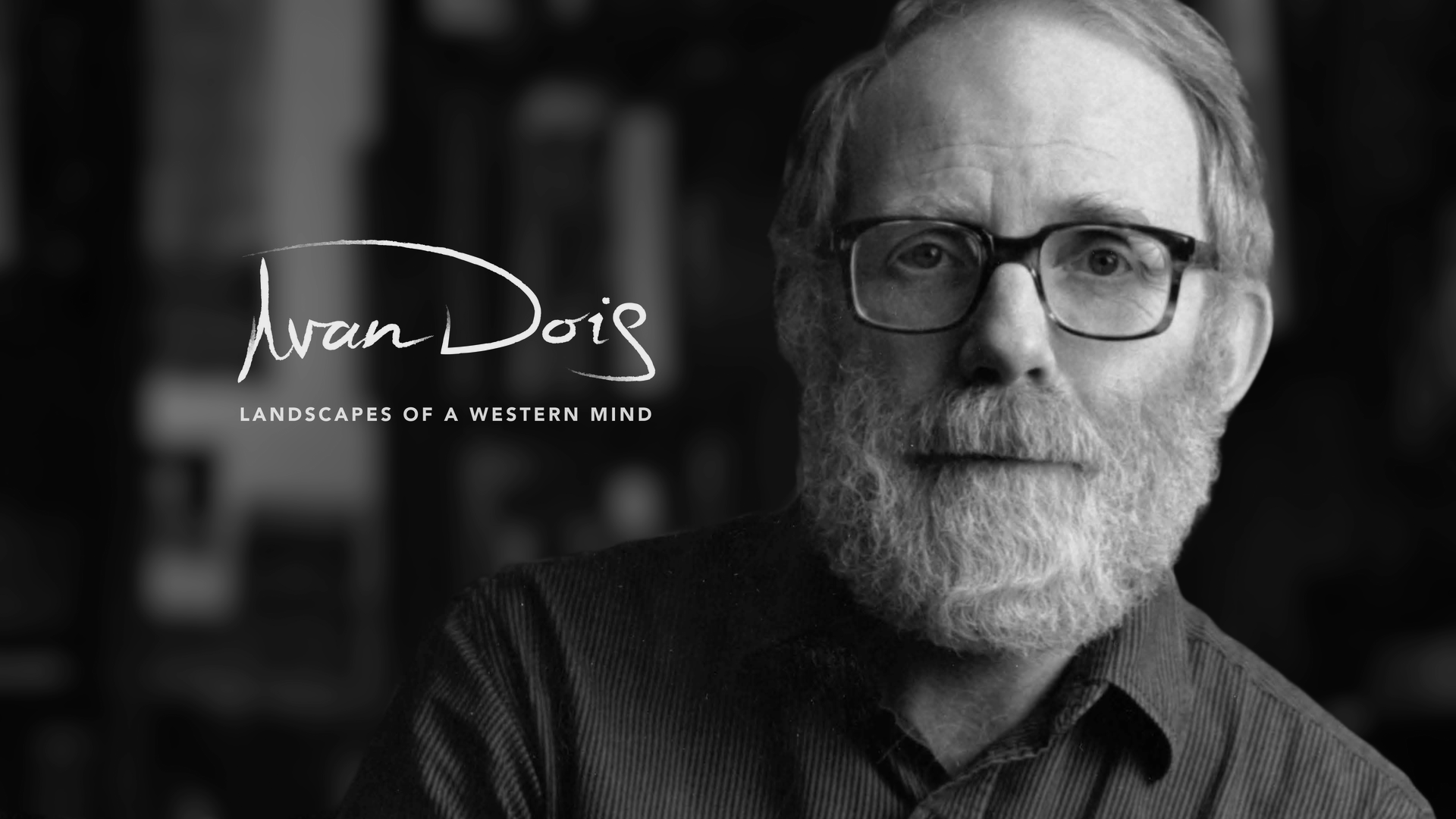
Ivan Doig: Landscapes of a Western Mind
11/01/23 | 56m 46s | Rating: TV-G
Acclaimed author Ivan Doig mined his hardscrabble, rural Montana childhood to create an iconic body of literary work. His captivating and at times heart-breaking narratives embody the harshness and beauty of western life. His poetic portrayals of rugged landscapes and beloved characters make him one of the most celebrated writers of the American West.


Copy and Paste the Following Code to Embed this Video:
Ivan Doig: Landscapes of a Western Mind
- [Narrator] Ivan Doig, a son of sheep herders, born in 1939, rural Montana is today one of the most celebrated literary voices of the American West.
- I saw the house that Doig lived in, it was a tough life.
- Professors responded to him by saying, "Damn, you're good."
- [Narrator] He dedicated himself to language.
- To me, language is the point of all this.
The sound you can get to come up out of the white space there.
- [Narrator] To place.
- He's taken some of the local and made it universal.
- [Narrator] To characters.
- [Ivan] Well, I adore 'em all or I wouldn't write 'em.
- [Narrator] And to his craft.
- Underneath the pros, there's the soul of a poet.
- Nobody's lucky enough to live in a place this small and isolated and have somebody write so eloquently about it.
So he's really given us a legacy.
- [Narrator] Doig was a bestselling writer, a National Book Award nominee.
He's one of the most prolific and influential Montana authors.
And today he's inspiring a new generation of readers.
- [Sarah] When I first picked up this "House of Sky", I was 25 years old.
- [Erik] The first Ivan Doig book that I read "Ride With Me, Mariah Montana".
- I think young people will find reflections of how difficult it is to be in the world.
It's real.
- [Carol] He made the lives of what we might call ordinary people heroic.
- [Narrator] Ivan Doig: Landscapes of a Western Mind was made possible by Vicky York, the Big Sky Film Grant, the Greater Montana Foundation, encouraging communication on issues, trends, and values of importance to Montanans.
Humanities Montana.
These generous donors.
And viewers like you, the Friends of Montana PBS, thank you.
(soft upbeat music) - [Ivan] The magic of place is indelible.
It's extremes of landform.
It's powerful weather.
These immensities overwhelm the fact of the people thinly, salt and peppered across the expanse.
The human stories, the Westerners who carry on their lives against the big, bold landscapes of those books.
I've always tried to attain a language which makes a shimmer behind the story.
It is my utter belief that writers of caliber can ground their work in specific land and lingo and yet be writing of that larger country that most familiar and most mysterious place of all, life.
(birds chirping) (soft upbeat music) - [Narrator] Ivan was the third generation descendant of Scottish immigrants.
He was born at the end of The Great Depression to sheep herder Charlie Doig and ranch cook Berneta Ringer Doig in White Sulphur Springs, Montana.
Situated in a high valley on the Rocky Mountain front, the town has home to about 1,000 people today, a number that's remained unchanged since 1939.
- Ivan was born into a rural Montana that is unimaginable in the 21st century, even for most who live in rural Montana.
So he was born in a very tough environment.
- Ivan's family history and as it affected him, it's the poverty that rings through, the unsettledness that rings through.
When they arrived in Montana, they didn't arrive with the ability to go for good land.
They were left with high, dry, cold.
- [Narrator] Whatever the prospects might seem in a dreamy look around, the settlers were trying a slab of lofty country which often would be too cold and dry for their crops, too open to a killing winter for their cattle and sheep.
In those difficult days of his youth, Doig's love of words came early.
- I can't remember when I didn't know how to read.
My mother had read to me as she would sit quietly because of her asthma.
So I came outta that with great love of words.
On my sixth birthday, my mother's lifelong asthma at last killed her.
- [Narrator] Soon before daybreak on my sixth birthday, my mother's breathing wheezed more raggedly than ever, then quieted, and then stopped.
- Out of that came my growing up.
- [Narrator] The remembering begins out of that new silence.
Through the time since, I reached back along my father's tellings and around the urgings which would have me face about and forget, to feel into these oldest shadows for the first sudden edge of it all.
- What I gleaned about Ivan's childhood in its effect on his writing was, he was an only child in an adult world and a difficult adult world.
- My dad worked in his ranch hand jobs, entertained himself in the nine saloons, White Sulphur Springs, Montana.
- I picture Ivan playing in the corner, kind of behind a piece of furniture and listening and listening.
- [Narrator] The Pioneer served as the town's hiring saloon.
Ranch hands looking for a job would leave word with the bartender.
Knowing this, ranchers would stride in to ask about a haying hand or somebody who knew how to irrigate.
The ranch hand might have his bedroll right there along the back saloon wall, and minutes later be in the rancher's pickup.
- I wish that I could go back to the White Sulphur Springs of this "House of Sky" where you go to the 12 or so bars and you see different characters in each one and you see how each community establishment, which the bar was, meets the needs of a different subset of that community.
- [Narrator] As much as Doig'S world highlights hardships and local flavor, it also centers on how communities are stitched together and how people rely on one another.
This lesson hits close to home when Ivan's father, now a single parent and fearing for his own health, made a decision that would change their lives.
- My dad called my grandmother, my mother's mother, whom he'd been at war with for the past many years and asked if she would join our household and help raise me.
And so that became my family.
- Part of what's so tender about "This House of Sky" comes from this improbable son-in-law, mother-in-law conflation, hardcore folks who didn't necessarily see eye to eye but came to deeply respect and even love one another, although they would never use that word.
- So do I wait for the language of memory to come onto the exact tones of how the three of us, across our three generations and our separations of personality became something both more and less than a family.
This newly formed household went where the work took them.
They moved all over the region calling different communities home.
Among them, White Sulphur Springs, 16 Mile, Grass Mountain, Ringling, and eventually Dupuyer.
- It was very common trying to eek out a living, you kinda went from job to job and we knew a lot of people that had that kind of life.
- You go where the job was.
It didn't come to you.
- I mean, this is really what made this country were sheep before the cattle and the farming.
- Back in the day, herds of two, 3,000 would come through town.
They would camp at Dupuyer Creek maybe overnight.
The sheep herders were very nomadic.
They traveled with the sheep and the sheep had to keep moving to eat.
- [Narrator] The Doig sheep herding meant they lived far from town.
But because Ivan was a talented student, Charlie and Bessie arranged for him to board with a family in Dupuyer so he could attend high school.
If there was one knack in me, it was to hold in mind any word I had ever seen, much of the way Dad could identify any sheep from all others.
- He had a gift with language and maybe his future could unfold by way of language somehow.
- He becomes the Latin and English teacher that sees the depth of his talent and word knowledge and has him applying to universities all over the country.
- It was a kind of a moonshot for our family, in essence.
I had a full tuition scholarship which covered quite a lot of the expense but I washed dishes for four years at Northwestern.
My folks put away every penny they could working their ranch jobs.
- [Narrator] The train to Chicago stood like an endless wall of windows.
Each of the three of us snuffled in the September air, turned aside to swallow.
Grandma's teary hug, as ever, she had talked herself around to the conviction that whatever I had made up my mind to do was the only thing.
You write us about it all and I'll do the like.
Dad's clamping handshake in awe of all the education awaiting me.
You're away to a big place, son.
Before Ivan found his calling as an author, his curiosity about people and stories led him to study journalism and history.
- Northwestern becomes that incredibly rich way to study with the best minds in the journalism field.
He quickly found professors that dazzled him and in turn, responded to him by saying, "Damn, you're good."
- [Narrator] It was also at Northwestern that Ivan would meet his partner in both work and life.
- There was a big night, Chicago Night Out and to my surprise, this nice quiet Montanan asked me.
We kept coming back together somehow and we seemed to have more and more of a good time.
- [Narrator] They married in 1965 and moved to Seattle.
Ivan earned a PhD in history from the University of Washington.
Puget Sound became their permanent home.
As my decisions do, the one now came slowly, doggedly.
I kept on through the seminars and exams, claimed the degree the last dusty furrow of it all but then I abandoned the offer of a job at one of the country's largest universities.
- He'd always wanted to do a book on his dad and as he would explain if he was going to write about his dad, he probably had to write about his grandmother and if he was going to do that, he probably had to write about himself and he was out there.
He thought he wanted to write a play but his joke in later years was, but he found he couldn't get that many horses on stage.
- [Narrator] Ivan's drive to recount his childhood would eventually inspire a lifetime of storytelling but it was in 1973 that he embarked on writing his first book, "This House of Sky" while Carol supported them by teaching journalism.
I began to work full-time at writing.
I offered to Carol, I know you married me for better or worse but this is somewhere off the scale.
She answered, as ever, "Do it."
(soft upbeat music) (soft upbeat music) - I have felt that the West has its own riches of storytelling and language.
To me, language is the point of all this.
The dance of language on the page is what literature is all about.
The sound you can get to come up out of the white space there.
The way people talk, the way they act, the way things look, that's all born out of love of language.
When I was doing my first book, "This House of Sky", one of the things I did was sit down with five by eight file cards and begin remembering what things were called.
What did we call those little pens that we put the ewes in when they had their lambs?
Jugs, ah-huh.
And what did we bring them in to the shed before we jug them?
Ah-huh, the gutwagon.
And so all of a sudden you've got these two very powerful pieces of memory as well as strong words to go with.
Well, you multiply that by several thousand file cards and you begin to have the makings of a book.
(soft upbeat music) (soft upbeat music) - [Jan] What are some of the tabs, what are the titles of the tabs?
Can you read 'em?
- Drinking, bars and brothels, jokes, cussing and Montana lingo.
- So this is his interest in getting things right in his books.
He doesn't want characters who don't use the right lingo or who cuss wrong, you know?
I don't know, what does it say?
- Wouldn't that just frost your ass?
- [Narrator] People who were poor in all else are often rich in language.
The everyday dance and prance of the imaginative tongues I grew up around must have drilled that into me.
There is a delicious hunger of the ear behind stories and I spent a lot of time simply following the sound of voices.
- If we were eating, say breakfast in a cafe in Montana, he had his ears out.
He was listening and he would write 'em down.
- We would make fun of Ivan and his little notebook because there was never a dinner in which he didn't whip it out and write down somebody's interesting expression.
But that was just Ivan.
- [Narrator] That capture in fiction of the prance and play of a community's everyday language seems to me vital to know the world of place.
- After he got a draft down, he could start editing.
He loved the editing 'cause he loved the language and the little bit of detail that he could put in.
He wanted to make every sentence sing.
- Ivan wrote and rewrote and rewrote.
When you look at Ivan's manuscripts, you see the degree to which he wants every sentence to be just right.
- So he's busy correcting himself but he's also very busy correcting his editor.
(soft upbeat music) So his editor might say, "Do you really wanna spell howdy this way?"
No, that's the way my character has to say howdy, you know?
- Stylistically, he's a master and Ivan was very fond of talking about the poetry beneath the pros.
- He's a great narrator, right?
He describes places and people in detail but he goes beyond.
He stretches, he forces himself into the realm of lyricism.
He builds this little piece of art in every sentence and sometimes when you read one of his sentences, you have to pause, right?
You said, "What did he say?
"I need to read it again."
So when you approach Ivan Doig's books, you should never be in a hurry.
You just need to taste every sentence.
(soft upbeat music) - [Ivan] I glance higher for some hint of the weather and the square of air broadens and broadens to become the blue expanse over Montana range land.
So vast and vaulting that it rears from the foundation line of the plains horizon to form the walls and roof of all of life's experience that my younger self could imagine.
A single great house of sky.
(soft upbeat music) (tractor roaring) - [Narrator] Doig's tender and vivid portrayal of the people from his youth was just the beginning of his bringing individuals to life on the page.
Whether they were real people or historically inspired creations, Doig showed great affection for his characters and was committed to revealing the complexity of their lives.
- You talk about essences of the west, of big canvas, with hard lives being lived against it.
I never had to look very far to find that kind of material.
- The people in Doig's life inspired more than just his memoirs.
He mined his past for fictional characters as well.
- Zoe, from the "Bartender's Tale" as a character, is so captivating and interesting because she captures what it's like to be a 12 year old girl in a non-stereotypical way.
Zoe proved to be something like a pint sized force of nature, thin as a toothpick and a sharp.
Her face was always a show, her generous mouth sometimes sly, sometimes pursed, the tip of her tongue indicating when she was really thinking, her eyes going big beyond belief when something pleased her, and when something didn't, she could curl her lip practically to the tip of her nose.
She's strong and she's confident and she's witty and she's precocious.
- [Speaker] You need to read "Bartender's Tale".
- Yes, that's right.
Zoe has a lot of the same characteristics that Vicki has.
That's all I'll say about that.
- It's fiction, we know that, - We know it's fiction and we know it's not to the letter.
However, as we've discussed- - [Speaker] Yeah.
- Okay, dream on.
- [Narrator] And Doig didn't stop with characters from his own life, leaning on his journalistic experience, he dug through historic records.
He met strangers in archival photos who inspired characters and he recorded countless oral histories.
- [Clifford] We had a few droughts, after that come all kinds of pests.
One year it would be grasshoppers.
- [Ivan] Your dad was still trying to farm?
- [Frances] He was still trying to farm and I was trying to teach school with all my money which was only $99 a month.
- [Narrator] Sometimes within these interviews were the seeds of new novels including a White Sulphur Springs hometown legend who found success as a singer in the Harlem Renaissance.
Taylor Gordon would inspire one of the main characters in the book, "Prairie Nocturne".
- [Ivan] This interview with Taylor Gordon is being taped on July 3rd, 1968.
- [Taylor] I moved to Harlem and then I was working for the New York Central Railroad.
When I was railroading, I could sing, learn how to sing better.
- [Narrator] Because Doig loved his characters, he found ways to bring them back.
- [Alan] He recycles characters because imaginatively, he's not done with them.
And he exhibits that most of all in the Montana trilogy with the three generations of McCaskills.
And the Montana trilogy really stamps his reputation.
- [Narrator] Doig had made a life in the Pacific Northwest but his mind and heart remained concerned with the people he left in rural Montana.
He devoted himself to showcasing an American west he experienced yet didn't see represented.
- [Ivan] One of the challenges for those of us writing out here is that the larger society has long had its own mythic notion of life out west.
None of the guys good or bad, seems ever to do a lick of everyday work.
- Come and get it.
- [Ivan] Milk a cow, churn butter, plant a potato.
Books set out here on the west side of America didn't give much attention to the workaday life and the valid voices of our region.
The west of people who came to build rather than to gun sling.
To work but to dance and laugh along with it.
- He's not just interested in the landscape as beautiful, I mean it's there, but he's interested in people making a living on the landscape.
It's such a huge place and he writes so well about the little people on the landscape.
(soft upbeat music) - Doig always honors all kinds of work.
He creates characters who are experts with their hands and they stay with it, they don't give up.
In "English Creek", you have forest rangers and firefighters.
In "Dancing in the Rascal Fair", you have a school teacher and a sheep rancher.
In "Bucking the Sun", you have all kinds of machinists and bartenders and prostitutes and the list goes on and on.
- [Narrator] Doig's heroes aren't bosses and barons but rather the hard workers and his full cast of characters always includes a greater sampling of society.
- And there are minor characters who are failures, there are drunks, there are people in trouble who don't get out of trouble by the last page of the novel.
- Montana values historically, have to do with something about self-sufficiency and I think probably it has to do with hard work and community as well.
People who may be down and out but are deserving nevertheless, of your respect.
I think Ivan had that in spades.
(soft upbeat music) (wind howling) - He can reproduce the winds, he can reproduce the sounds of the winds, of what the cottonwood trees look and sound like when they're seeding in June or when leaf fall time comes.
- He spends a lot of time describing the environment.
- [Narrator] The dark timbered mountains around them went white as icebergs.
The tops of sagebrush vanished under drifts.
- The landscape features in all of his books.
"Dancing at the Rascal Fair" is particularly interesting because he has created this imaginary landscape that combines several real landscapes along the Rocky Mountain front.
And he has maps drawn, especially for this book which tells you right away when you're opening the book, "Oh, the landscape, the place, is very important here."
- I see that Dupuyer is Gros Ventre and Dupuyer Creek is English Creek.
You can recognize certain aspects.
The huge rocky mountains, the big sky, the clouds, the air.
- Ivan wrote and lived with that incredible diligence and attention to detail.
Being in settings, going back and standing on the road to the Sixteen country and looking all around and have Carol taking photos of it.
- He would say, "Carol, take a picture of me holding these rocks."
Because he wanted to remember what the rocks looked like when he got home.
- You wanted to see if his two characters could sleep in the upper lobbies of Old Faithful Lodge in Yellowstone.
So we climbed all the way up and Ivan stretched out on the historic sofa and yes, he could scope out what he could see.
- You and Ivan were in Montana and he says, "Well, I wanna get up before sunrise "and go out on this certain butte to see what the sunrise looks like," the way Jick, his main character, the narrator of the book, would see it.
So he gets up at four in the morning which- - Not only he, we.
- [David] Yeah, right, yes, we.
- Ivan did his own intense research for "Sea Runners".
He went to Alaska and the Alaska Archives.
For "English Creek" and "Dancing at the Rascal Fair", he and Carol went to Scotland and looked at records.
Here in the States, he relied heavily on the library at the University of Washington but when he and Carol set aside time to travel Montana, then we were all part of that mix.
He'd be here at the Historical Society, he'd go to the Butte Historical Society.
- When they came over here, they always stayed with us.
And Ivan and Carol snuck out always before breakfast to go to the archives.
- The genesis of "The Eleventh Man" came from the late great Dave Walter of the Montana Historical Society who Ivan credits with telling him this story of the top 11 on the class of 1941 Montana Agricultural College i.e MSU Bozeman's football team and the fact that all of them were killed in combat.
- [Narrator] Storefront by dozing storefront, the town still looked as if the world of war had nothing to do with it, yet he knew better.
- That's the other beautiful thing about reading Ivan Doig.
It's great literature but it also takes some time to tell you about some very important parts of our history and how men and women in Montana were going to make their contributions and live their lives.
- "Bucking the Sun" may be more than most of his novels, tells us about the decade of Ivan Doig's childhood, how absolutely hard scrabble and desperate it was.
- [Narrator] As "Bucking the Sun" depicts, the Fort Peck Dam changed the face of Montana throughout the 1930s and offered new work to those who could handle it.
Fort Peck's snow enthusiastically degenerated into Fort Peck's mud.
Clods of clay like squashed bricks were churned up everywhere by the crawler tracks and the bulldozers.
Tough dam workers watched their chance to sidle off alone and stand for a minute as if looking around for something, actually just to sniff the talcum smell of spring.
Doig's unique form of historical fiction and his evocative depictions to the west earned him a place among writers such as Wallace Stegner, Norman McLean, Bill Kittredge, Marie Clearman Blew, Tom McGuane, James Welch and others.
He contributed to their collective project of illuminating disparate experiences of the American West.
They brought forth stories of ranching towns, Native American experiences and industrial progress.
- Like a lot of writers, he left in order to come home.
You go away actually to imaginatively best own the landscapes that you grew up in.
- [Narrator] Before Ivan became a writer of fiction, he and Carol returned to Montana throughout the 70s to conduct interviews and research.
They took a room for several months at the Ringling Mansion which at the time functioned as a boarding house.
- [Ivan] I've sat at a keyboard trying to recollect clearly the circumstances of portions of the western past that I'd personally been through.
Some comes easily enough, who can ever forget what a sheep rancher's mood was late in lambing when his feet were aching from all those weeks of living in overshoes.
But memory is not always enough.
In fact, seldom is your own memory enough when you're trying to write accurately.
- [Narrator] Doig's approach to writing about place, even for his own memoir was always as a historian.
- [Bessie] We had chickens.
- [Ivan] Yeah, that's right.
I had forgotten chickens.
- [Bessie] Remember how we used to have to catch 'em and run 'em down?
- [Ivan] How many sheep did they run?
Any idea?
- [Charlie] About 1,200 each.
Sheep was only what 75 cents a head to a dollar.
- [Narrator] Then my father and my grandmother go, together, back elsewhere in memory, and I'm left to think through the fortune of all we experienced together.
And of how, now, my single outline meets the time swept air that knew theirs.
- He is trying to understand how the past exists in the present.
Reading "This House on Sky" is really emotional.
When you see Charlie succumbing to emphysema, it's really hard because his voice is with you.
You know when you write about the dead, you make them less dead.
(soft upbeat music) - Memory is a set of sagas we live by.
By now, my days would seem blank, unlit, if these familiar surges could not come.
A certain turn in my desk chair and the leather cushion must creak, the quick dry groan of a saddle under my legs and my father's and his father's.
The taste in the air as rain comes over the city is forever a flavor back from a Montana community too tiny to be called a town.
The people here in Montana say to me, "Why didn't he ever move back to Montana?"
And I have to explain that Montana, he said he was starved out of Montana.
It's so tragic when he realizes that he has to leave in order to survive, in order to help his family survive.
- It stirs something inside of us.
You cannot read "This House of Sky" without weeping.
- It can be tough.
He writes in that one section where, see, it makes me cry even just thinking about it.
- [Ivan] Worry, an edginess set in on dad.
The weather had an unaccountable chill and with our shorn ewes we had on our hands a double thousand of the world's most undressed creatures.
And dragging across the spire line of the Rockies, black clouds were beginning to fray into rain.
We're gonna have to hightail it for the brush on two medicine with these sheep.
Lady, you'll have to work the dogs; dog the bejesus out of 'em.
Ivan can run, he can get on the head end of the band and try to push 'em toward that big coulee.
- They lose hundreds.
- [Ivan] Exhausted and freezing, they jutted their necks flat along the ground, rolled their eyes, and did their dying.
- They're dotted out on the prairie.
It's heartbreaking.
- [Ivan] We abandoned these stragglers, humped white on the prairie behind us like small boulders left by a glacier and fought on with the sheep still eddying across the grassland.
- And if you're in charge of it, it's that much more heartbreaking.
- [Ivan] As much as at any one instant in my life, I can say, here I was turned.
How long such a moment had been in the making, I am the last judge because once made, it seemed to have begun farther back than I could remember and yet to have happened like an eye blink.
I had no steady idea about what I would do in life but I intended now that it would not include more seasons of sheep on that vast gambling table of Blackfeet rangeland.
(soft upbeat music) (soft upbeat music) When I'm asked at book signings and readings what my working habits are, I hardly know what to say except pathological diligence.
- He was just plain a hard worker who came with the disciplines that began when he and his dad and grandma were on a ranch.
You know, Ivan was committed to 400 words a day and he would say to bright-eyed, new young writers, "If you can actually get 400 words a day down, "you have a book."
- Ivan started very early in the morning.
By the time I might wanna get up at 6:30 or seven, he would've had his breakfast, his one small pot of coffee for the day and then he would go fetch the newspapers and my cup of tea and bring them to me.
I mean, that's the kinda guy he was, you know?
In his dogged way, then he'd go work until he had those words.
- [Narrator] Ivan's determination was tested early in his career as "This House of Sky", his first book, was rejected over and over.
And over.
More than 40 times.
- When he wrote the beginning of "This House of Sky" 40 times, he typed it 40 times.
- To me, work is its own country.
You've got to spend a lot of time at it and how do you do that?
You have to take a lot of time.
And it's not as grim as it sounds, words are interesting company.
- [Narrator] It was finally in 1978, Harcourt Brace Jovanovich published "This House of Sky".
- It was a sort of breakaway memoir.
(soft upbeat music) Who at the time was really interested in the memoir of a late 30s man?
And yet it became this incredible success.
- Did you and Ivan know that that book was gonna hit it so big and so- - [Carol] Oh, heavens no.
- So you were just kinda, "Okay, this is his first book.
"Let's hope for the best."
And then, boom!
he just took of?
- [Carol] Yeah.
- [Narrator] From "This House of Sky" to "Last Bus to Wisdom", Ivan wrote 16 books earning many prestigious awards.
Today, The Ivan Doig Archive at Montana State University in Bozeman is available to the public at large.
(soft upbeat music) - What I want you to notice is that evidence of the writing process is just woven throughout this entire archive.
- [Narrator] The archive includes his diaries, manuscripts, pocket notebooks, correspondence, note cards, medical records and memorabilia.
- And this means that this is available for free for everybody now in the world which is really huge.
It shows you how the author thought as he was writing.
I remember when I discovered that we had the photo albums, after reading "This House of Sky" where he talked so poetically about looking at the photo albums to try and capture his memory of his mother.
It brought me to tears to realize we actually had these.
So as a writer, he of course, used the tools of writing and we're a little bit shocked to know that a man who died in 2015 still used a typewriter and this is literally cut and pasted.
You should run your hand along it.
There's texture because it's all pieced together.
- [Student] All the different whole punches.
- [Jan] Yeah.
- [Narrator] Also central to Ivan's work process was his partnership with Carol.
- Carol turns out to be quite a keen critic of plot and character development.
That's the kind of criticism you really want or really should have.
- She was his research assistant, his photographer, his first and last editor, and they were active collaborators seven days a week.
- She is a literary intellectual in her own right who happened to be married to Ivan Doig and they both made each other.
(soft upbeat music) - [Carol] Well earned end of the day.
- [Ivan] Well, cheers.
- Nevermind the lettuce.
- Cheers.
(soft upbeat music) - [Narrator] In 2001, Ivan was diagnosed with a pre-cancerous condition.
It laid dormant for years but in 2006, he was told it was progressing.
- And even in old age and even as his health was worsening, he still went out on the road.
(soft upbeat music) - And I think that that sort of heroic face to life is part of what he writes about in all of his books is people who are facing really difficult things and they face 'em.
- He knew 'cause it's in the notes, he knew that multiple myeloma was a death sentence.
(soft upbeat music) What we didn't know was how long could he last?
His answer to that diagnosis was to keep working and if anything, work faster.
(soft upbeat music) And so in the eight years and three months, he wrote four books.
You know, gonna do as much as he could.
He had the next book figured out so he never let up.
(soft upbeat music) - [Narrator] Language is the light that comes out of us.
Imagine the words as if they are our way of creating earthlight as if what is being spoken by this man in a wind swept dawn is going to carry everlastingly upward.
The way starshine is pulsing constantly across the sky of time to us.
(soft upbeat music) (bright upbeat music) - As we look back on Ivan Doig, he's clearly one of the giants.
I just, like a lot of us, counted on him and it was as though a support had disappeared suddenly.
He has left a daunting example of industry and invention and quality and he has most importantly created intimate emotional connections with an enormous range of readership.
- He had a really huge following in this country.
I can remember he showed us the bandaids he had in his pocket because his fingers would get blistered from signing books.
- As a reader, I really like Doig because you can't put it down.
You can say I'm gonna read for 10 minutes before bed but then you look at the clock and it's three hours later.
- I think he met his goal of poetic.
He was doing what he loved and for me that matters a whole lot as a reader that I'm reading someone who's whole heart and soul are there.
- He contributed to the development of the memoir as a genre in this country.
He was at a sort of cutting edge of it at that time.
In terms of the rest of his books, I think that they are ready for more academic work.
His legacy is that he has written about a Montana that has.. that is slipping away.
He's writing about people who know how to work.
Now that isn't necessarily slipping away but I think the willingness to focus on the work that people do and make it interesting and honor it is not a common focus for writers.
- All right, and this used to be where the Ranger Bar was, was the Log Cabin Bar.
- Ellie, Mary, Rita, and Vicki, they are the ones who began Ivan Doig's birthday party and Ivan Doig Highway and the Ivan Doig Monument and just embraced that piece of Dupuyer's history.
- Okay, here we go.
Here comes Dupuyer, by golly.
(indistinct chatter) Ivan had a special feeling for Dupuyer.
So it is wonderful for me simply to be here.
- We are trying to make sure that Ivan has a readership that extends across generations.
- We just hope that there'll be other writers who come and are inspired enough by his long example to reach some of the places that he reached over and over again.
- Ivan was a kind person.
Sense of humor.
And he came to be remembered most of all, as a good man.
(bright upbeat music) - When I first picked up "This House of Sky", I was 25 years old.
Reading about White Sulphur Springs and the landscape and the ranching in the mountains and the culture and the community, it really drew me.
Hi guys, how's it going?
- [Bartender] Can we get you a whiskey?
- Yes, you sure can.
It felt old fashioned in some ways the way Doig described this place but it also seemed really honest and real as far as what is the norm here and the culture here but also what's possible here.
This is the suite where Mr. Ivan Doig lived while he was writing "This House of Sky".
He's spent about six months here and these walls have stories to tell and I think this is the kind of historical asset that we should share with the community and the public.
I'm working with the current owner to turn it into a community gathering place, an artist residency and a place for writers or songwriters to come and a rural institute down the line as well.
(soft upbeat music) - [Erik] The first Ivan Doig book that I read was "Ride with Me, Mariah Montana", and it's about a newspaper photographer traveling around the state during the centennial.
My first job as a photographer was for this small town newspaper in Montana.
I think his work has inspired my photography in a number of ways.
The way he approaches character is something that I've tried to emulate, not glossing over the hard part, the stuff in between.
You know these jobs that are difficult at times in Montana.
Every time I drive through Ringling, I think about him.
(soft upbeat music) And I think about some of the lines in his books.
I keep a few of his quotes on my phone, it's like an anchor for me.
(soft upbeat music) The spaces between stars are where the work of the universe is done, which to me means we focus on the stars for the big events that happen but the bulk of life happens in between there somewhere, in the gaps, when we're not even paying attention.
Oh man, look at this light.
What does that look like for me?
What does that mean to me?
Have I done the work that I wanna do?
Have I left the legacy that I hope to leave?
(soft upbeat music) (soft upbeat music) - Our district covers an area of about 150 square miles.
Our kids come from all over.
Everybody come up and write something on the board.
It can be character names, it can be a plot event.
You can write a theme that you remember.
Maybe the setting, keep it appropriate.
Not that thing that you wrote yesterday, please.
Students in Montana sometimes don't get to see themselves reflected in work and we always wanna provide them the windows and the mirrors, so windows into other perspectives and cultures but we also wanna provide them a mirror that reflects back at themselves.
- If this is not biblical, I shall always believe it should be that all of us need someone who loves us enough to forgive us despite the history.
- You know like you never really get stories about smaller towns.
- This kinda feels like close home.
(soft upbeat music) - One of those universal themes that I've seen in multiple Doig works is what does it mean to be able to look back on your childhood and recognize the good things that happened, the bad things that happened, and how you feel about them.
And that provides us a really great way to open up those conversations with our students about their own lives and their own experiences.
Mixed in with all of the other stuff that we read that's not as close to home, it gives us a good opportunity to kind of examine why we are the way we are.
How does our place impact our identity?
- I will see you guys tomorrow, we will be watching Hamilton.
Have a good rest of your day.
(soft upbeat music) - [Jan] Many of us would like to be Ivan Doig because of how devoted he was to one thing and how devoted he was to writing and how diligent he was about it.
If we could have that kind of vision in our own lives, what could we accomplish?
(soft upbeat music) - [Ivan] So if a sense of place is to be our hymn and marching song across this west, let's allow some jazz into it.
Place is something to work from but also to work on, and, work toward.
(soft upbeat music) (soft upbeat music) (soft upbeat music) (soft upbeat music) (soft upbeat music) (soft upbeat music) - [Narrator] Ivan Doig Landscapes of a Western Mind was made possible by Vicky York, the Big Sky Film Grant, the Greater Montana Foundation, encouraging communication on issues, trends, and values of importance to Montanans.
Humanities Montana.
These generous donors.
And viewers like you, the Friends of Montana PBS, thank you.
(soft upbeat music)
Search Episodes

Donate to sign up. Activate and sign in to Passport. It's that easy to help PBS Wisconsin serve your community through media that educates, inspires, and entertains.
Make your membership gift today
Only for new users: Activate Passport using your code or email address
Already a member?
Look up my account
Need some help? Go to FAQ or visit PBS Passport Help
Need help accessing PBS Wisconsin anywhere?

Online Access | Platform & Device Access | Cable or Satellite Access | Over-The-Air Access
Visit Access Guide
Need help accessing PBS Wisconsin anywhere?
Visit Our
Live TV Access Guide
Online AccessPlatform & Device Access
Cable or Satellite Access
Over-The-Air Access
Visit Access Guide




Follow Us