

 Passport







School funding, Medicaid and a race for the Republican chair
11/19/26 | 18m 24s | Rating: NR
The Democratic legislative majority gets asked to revamp school funding and weighs Medicaid expansion as state Republicans pick a new chair — Inside Wisconsin Politics offers an early 2027 forecast.


Copy and Paste the Following Code to Embed this Video:
School funding, Medicaid and a race for the Republican chair
There are some big challenges facing the next Democratic governor and legislature.
What signals are they sending when it comes to school funding and Medicaid?
Plus, who’s running to be the next chair of the state Republican Party?
This is inside Wisconsin politics.
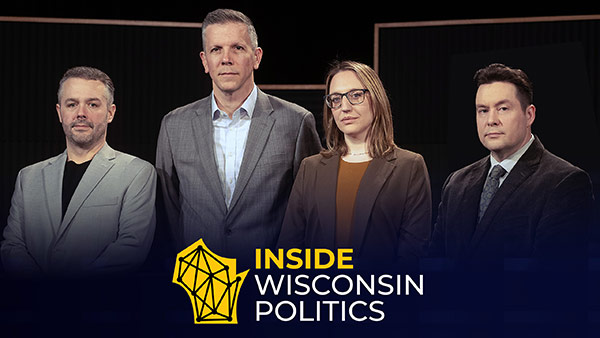
I’m Shawn Johnson here with my colleagues, Anya van Wagtendonk Zac Schultz and Rich Kremer in Eau Claire.
Hey, everyone.
Hello.
So let’s start with this call for changes to the school funding formula from the Department of Public Instruction.
We don’t always pay attention or too much attention to what DPI says, because ultimately, it’s going to be the governor and the legislature that write the school budget.
But, Rich, I feel like this one caught our attention.
What was it about this particular DPI budget request that kind of grabbed our attention this week?
Well, it was a couple of things.
First was the size of the ask.
We’re talking about nearly $3 billion in funding that DPI is requesting.
But also they tossed in language saying this would be a fundamental shift in how schools are funded.
So those two things definitely attention grabbing.
But the other is because we just had this election.
Democrats are in control.
You know, I’m looking to see if there are any signals from state agencies or really anyone that has to deal with the legislature that they think there might be a friendlier audience.
So in this case, DPI, could be going in that direction, thinking that, well, Republicans that that weren’t always open to their ideas, they’re gone.
They’re not in power anyway.
And maybe the Democrats will give it a second look.
And so big picture, like when it comes to what they’re calling for with the school funding formula, what do they want to do?
Well, first off, man alive.
Is it a complicated set of things when you’re starting to look through the the DPI budget for schools, but in short, what they’re looking to do is take a lot of money, maybe around $2 million or $2 billion.
Excuse me, in what are known as categorical Aids.
And those are Aids that are spread out evenly among all districts, regardless of the value of property in the district.
And they want to move that money into something called equalization aid formula.
What that is, is something that weights the value of property within a school district.
Moore.
And I was told that that would doing that with the money would essentially mean more for schools with lower, you know, property values and more poverty.
And essentially maybe less for districts with higher wealth.
So, Zac, what do you make of this request coming in the form that it did?
And, and at the time that it did with a week pass from the blue wave election.
There’s a cycle that occurs every two years.
There’s an election, and then the following year there’s the new budget.
And sandwiched in between.
In that time when the new legislature hasn’t come in, the agency sent out their their budget requests.
And sometimes it’s agencies under a governor that will no longer be in power like it is with this with Governor Evers exiting all of his agency heads from DOT and DAC cap and DNR will be gone.
So any request that they put out there are going out into the ether is trying to grab some attention.
One way to look at these is serious proposals of wish lists of what they would like to get done.
The other way to look at them is they’re kind of like Christmas lists.
There’s some fundamental things in there that make sense.
And at the end it’s I’d like a pony and I want a bicycle and I want a trip to Disneyland.
Some of those things that the family is going to say, we can’t afford to do all of those things.
They sound great on paper, but when it comes time to budget everything else, the state doesn’t have that much money.
And so for Democrats coming in especially, this is a chance for them to say, this is a really great ideas.
We’d love to be able to do all these, but we don’t know if we can afford them.
This may be more in the the pony category, as opposed to something that really can happen in the next budget.
So, Anya, to kind of use that terminology there, could this be the year, though, to ask for that pony and that bicycle?
If you are an agency with that, you see a like minded legislature.
And governor, is there any chance that David Crowley and this Democratic legislature might be open to wholesale changes and a big school funding shift?
I mean, you know, I feel like I’m repeating a similar answer week to week, which is we don’t really know because the legislature and the governor are not giving very clear or specific answers.
And so, you know, throughout his time on the trail, David Crowley talked a lot.
And actually, frankly, every Democrat talks about fully funding public schools.
What that actually means could be anything.
And so David Crowley has said in so many words that he’s open to rethinking the school funding formula.
How we don’t know.
He’s open to redoing shared revenue, which is how the state distributes money to different communities, which could then also parcel out to schools in some way.
How we don’t know.
So they are, I think, perhaps a more receptive audience in many ways, including for, you know, privileging public schools over voucher programs and things like this compared to Republicans.
But again, the exact details, we will wait to find out.
And it will take a long time because David Crowley will also unveil his budget, which will take some of this into consideration.
And then the Joint Finance Committee has to actually kind of dot the I’s and cross the T’s and make sure that the Christmas list, you know, there’s enough money in the bank for the for the Christmas list.
Shawn, how many times have you covered blue Ribbon commission ideas that have been released?
We know dating back to the Thompson era, there have been multiple.
I’ve covered a couple.
I’m sure you have as well.
How many of them become law.
I don’t know if this is quite in that category, though, because essentially what DPI is asking to do is get back to the way that the school formula used to be in terms of how we parcel out the money, move away from a system that was kind of built up a bit during the Walker years, during the Republican years.
Let’s get back to this.
This school funding formula that’s based on the idea of kind of equity.
And so maybe it’s something that Democrats would be open to.
I’m reminded that David Crowley’s chief of staff worked at the Department of Public Instruction for around a decade.
It might be the year for school funding changes if they’re open to it.
Also, Democrats have to know they could lose this majority, right?
I mean, they could lose it in a couple of years, potentially in the Assembly.
I want to know what factor does Cq10 play in all this?
If Democrats move to repeal act ten, the law that restricted public sector and especially teacher union bargaining rights, what does that do for school budgets around the state?
It depends on what they do, when or if they repeal act ten or how it’s done.
If it’s just restoring collective bargaining rights.
But it still requires contributions from teachers in the form of pensions and health care, then it doesn’t put as big of a fiscal hole for a lot of these districts to have to climb out of.
That was the entire justification in the Walker era behind act ten was requiring all these contributions to be made so that they didn’t have to be bargaining over all of them in the in the process of that, they wiped out the rest of the bargaining rights as well, just to make sure there were unions were completely neutered when it came to being able to lobby against Republicans and future elections.
But if acting comes back and keeps some of those things that says public employees have to pay 10% into pension and health care, well, then that limits the amount of fiscal impact where the state has to backfill some of that money or see property taxes skyrocket, both things of which would be difficult for politicians looking to run in two years and keep these majorities to justify to taxpayers.
And I know the other thing we should always look at for every one of these formulas, whenever they talk about it, one of the number one reasons why things have not changed is because there’s always winners and losers, as Rich described, wealthier districts would not get as much.
They would be the losers here.
And if you just want an election to represent an area that has a school district with a lot of money, well, those people vote.
What’s that going to mean in 2028?
Yeah.
If you want an election that was carried by Donald Trump in 2024 or won a suburban election, your constituents are going to have input on on these changes.
Let’s move to Medicaid.
Another big potential budget issue that’s brewing at the Capitol.
I mean, if you divvy it up, Medicaid and school funding, that’s a big part of the budget right there.
There has been for years calls by Democrats to take the federal expansion of Medicaid and bring in these dollars from the Affordable Care Act or Obamacare to Wisconsin.
Republicans kept saying, no, okay, Democrats are now in a place to do it.
Ana so where are we hearing some potential kind of cold feet here?
Well, you know, maybe Kelda we’re also hearing Kelda.
Roys say I told you so because throughout the entire primary campaign, she was basically the only Democrat saying that because of the one big beautiful Bill act, this was no longer feasible.
And it’s complicated.
There was a provision in there that essentially changed cost sharing.
And so it would put a huge onus on states for expanding Medicaid.
And so she kept saying, like, this is no longer financially feasible.
This is no longer something that we could afford to do.
Basically, every other Democrat kept saying expanding Medicaid remains a cornerstone of our platform, because that was and has been a popular call among Democrats for a decade, as you say.
But now, I think that it is that that reality of what it would actually take to expand Medicaid is sort of coming to the fore.
And so now David Crowley has kind of expressed the head of DHS has also expressed that that basically those same concerns that this would not be affordable legislative or incoming Democratic legislative leaders are saying there are other ways that we could expand, health insurance to kind of achieve the same ends.
So we could offer subsidies, we could have people be able to buy into BadgerCare kind of expand that.
But the actual expand Medicaid, that kind of slogan sounds really good on the campaign trail, maybe signals that you support some kind of public insurance or expanding health care in a way that will speak to not just Democratic voters, but a lot of people who have concerns about health insurance.
A question I have is whether this is one reason that Medicare for all has become a much more palatable political slogan that we are seeing.
It used to be a Bernie Sanders kind of socialist slogan, and now we are seeing, you know, voter sentiment really turn in favor of that, perhaps because the kind of bureaucracy around Medicaid expansion, Obamacare has become so complicated.
Zac, I’m curious when it comes to expanding Medicaid, what what’s the Democrat to do when for the past decade or so, it has been their message that we have to do this, and now circumstances have changed.
How are they going to adapt?
And are voters going to be okay with that?
started to see them send out the signals to their base that this may be the reality.
And as Arnie was saying, there’s only one politician during the primary that was making that noise.
And the rest of it, we’re really talking about it at all.
Francesca Hong was on Twitter or X recently talking to her supporters saying, hey, this may not happen for all these reasons.
And when you see someone like that who’s still trying to be a relevant force in Democratic and far left politics in Wisconsin, that’s an idea that she’s kind of signaled to her people, hey, if this doesn’t happen, you don’t have to be upset about it.
It’s a reality that even I may not have been able to do it, but that she went on to say, that doesn’t mean that we shouldn’t still fund additional expansions.
So those ideas that are out there of whether there’s a public option that David Crowley has floated for BadgerCare or just more subsidies in general for people.
So they’re trying to get the message out to the base that, hey, if it doesn’t happen, don’t be upset.
Don’t light the torches and pitchforks yet, because there’s a reason why it hasn’t happened.
It’s the expansion that literally every Democrat built their budget around for years got wiped out at the federal level.
It hasn’t had anything to do with whether they have the will to do it at the state level.
aside that with all these big federal changes coming to Medicaid and the potential that you could see people pushed off of eligibility because of that, is this going to create a real headache for David Crowley and Democrats as they craft this budget?
They have all these ideas they want to do.
They might have a serious problem to solve.
be short of money.
They’re already projections that they would need a few hundred million more Medicaid funds.
And where that money comes from, is it a one time thing?
They don’t expect a federal bailout anytime soon.
There is a possibility that if you see Democrats at the federal level work with Donald Trump as some sort of keep the government open funding kind of compromise, that maybe there’s more Obamacare subsidies that come in.
That’s certainly something they’ll be pushing at the federal level.
But whether any of that gets done by the time they’re crafting this budget in the next 4 to 6 months is a big question.
And rich Republicans kind of don’t have a say in this matter now.
But for years, you heard one prominent Republican anyway, Robin Vos, Assembly speaker, saying, we’re not going to do this expansion.
What are Republicans saying now?
Yeah, they don’t have a say, but they’re saying plenty.
They’re basically saying, we told you so.
And then Democrats are responding.
Yeah, but you guys made this happen.
You know, in terms of Republicans at the national level.
So there’s the debate is ongoing, even though we’ve got a new sheriff in town.
Sure.
So kind of sticking with Republicans here.
There is a race to be the next state party chair.
It’s coming at a time.
Just a couple of weeks after a disastrous election for Republicans that saw them lose the governor’s race, a couple seats in Congress, both chambers of the legislature, rich, what do we know about who’s running now?
It sounds like the candidates are kind of piling up.
They are piling up at least the names that are being floated as potential contenders are piling up.
But WisPolitics had a great story this week, laying out three names that we know are in Bryan Schimming.
He’s the current GOP chair.
He’s been there since 2022.
He’s running for reelection.
We’ve also got John Leiber, state treasurer, who lost his reelection, and we’ve got Howard Marklein state senator was on the Joint Finance Committee as a co-chair there.
He lost reelection as well.
So those are the three names that I’d say are more concrete than others.
But other names, Scott Allen, state representative and Waukesha County GOP Chair Terry Dietrich.
So it’s getting pretty crowded.
And you reached out to candidates you did hear back from John Leiber about his platform, which to me is.
I did a distinctly different from the others.
What’s he talking about?
He says it’s time to move on from Trump.
I mean, he’s he’s kind of one of the only Republicans that are technically still in office saying that that I know of in Wisconsin.
But he says we have to move on from Trump and the state GOP can’t just focus on getting the base out in elections, and especially off year elections.
They can’t just rely on trying to convince Trump voters that don’t normally vote unless he’s on the ballot to come out and vote for, say, a Tom Tiffany, because it clearly hasn’t worked.
I mean, the past decade, I think it’s been three conservatives or Republicans that have won statewide, aside from presidential elections.
But yeah, that’s where he is definitely standing out.
We do know, I mean, Bryan Schimming, despite having a rough election for Republicans, he is running again.
And he told WisPolitics he’s running again.
So he has the support of Republican Senator Ron Johnson.
Ana why is Bryan Schimming a real contender here, given, you know, what Republicans just went through in the November election?
Well, I think after however, many of the last elections, we’ve heard people calling for Bryan Schimming head, and he has stayed in nonetheless, you know, part of being the head of the GOP or the state, you know, Democratic Party is sort of to be a face and a voice of kind of the values and the priorities, but it’s also a fundraising position.
And so one of the big kind of concerns about him was, was he is strong enough fundraiser.
I think it’s interesting that Howard Marklein, he’s a CPA.
He oversaw joint finance.
John Leiber state Treasurer right.
These are money guys.
They are more stewards of money historically than necessarily fundraisers.
But I do wonder if that’s going to be one of the considerations is who can make sure that we’re not just going to, you know, a handful of billionaires to try to kind of get our guys over the finish line.
But how do we get people sort of more ordinary people to buy into the message that the GOP has, and hopefully kind of build that grassroots support for their movement as well?
Yeah.
I mean, Marklein has a reputation, at least on a smaller scale in a state Senate district, of being kind of a tireless campaigner.
So I could see him going after that money.
But we know that Bryan Schimming has an ear with the billionaires of Wisconsin who don’t always support the state party.
Zac, the Republicans, whoever it is leading the party, have reason to believe that things are going to get better here.
You have to look at it on the state level.
And what can they do in the face of national trends?
And John Leiber is right in one sense, and that until the Trump era ends, that will always overhang everything that happens down ballot in Wisconsin.
And the question is, will changing the management at the state level impact that in any significant way?
And that is the internal debate that they’re having right now is, you know, just because a national wave overtook them, does that mean Schimming needs to lose his job when he was the most prolific fundraiser in GOP history?
But it was on a very tight, narrow window.
Yeah.
And at least in the short term, we’ve got another election coming up in April.
It’s not officially partisan, but as of now, there’s no conservative candidate on the ballot for state Supreme Court.
So we’ll see if that changes.
That’s all the time we have for today.
A quick heads up.
We won’t have a show next week, but we will be back the week after Thanksgiving.
This has been inside Wisconsin politics.
Be sure to follow us on PBS, wisconsin.org.
Org, YouTube, or wherever you get your podcasts.
Search Episodes

Donate to sign up. Activate and sign in to Passport. It's that easy to help PBS Wisconsin serve your community through media that educates, inspires, and entertains.
Make your membership gift today
Only for new users: Activate Passport using your code or email address
Already a member?
Look up my account
Need some help? Go to FAQ or visit PBS Passport Help
Need help accessing PBS Wisconsin anywhere?

Online Access | Platform & Device Access | Cable or Satellite Access | Over-The-Air Access
Visit Access Guide
Need help accessing PBS Wisconsin anywhere?
Visit Our
Live TV Access Guide
Online AccessPlatform & Device Access
Cable or Satellite Access
Over-The-Air Access
Visit Access Guide


Follow Us