

 Passport








How will Wisconsin Democrats use their legislative majority?
11/12/26 | 18m 40s | Rating: NR
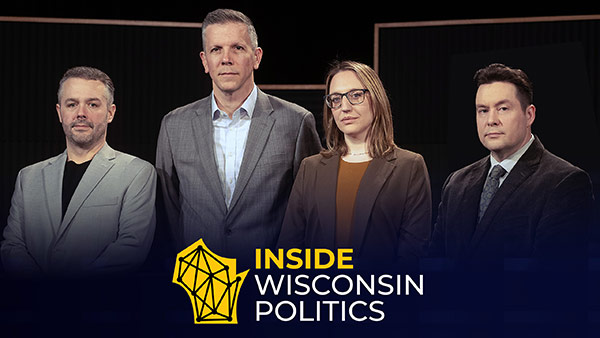
Democrats took control of the governor's seat and each chamber in the Legislature, and issues like Act 10, congressional maps and more loom — Inside Wisconsin Politics considers what's ahead for 2027.


Copy and Paste the Following Code to Embed this Video:
How will Wisconsin Democrats use their legislative majority?
Shawn Johnson:
In a couple months, Democrats will hold all the power in Wisconsin state government. What are they going to do with it? And what messages are they sending with the leadership jobs they filled so far? This is Inside Wisconsin Politics. I’m Shawn Johnson, here with my colleagues Anya van Wagtendonk, Zac Schultz and Rich Kremer in Eau Claire. Hey, everyone.
Anya van Wagtendonk:
Hey.
Zac Schultz:
Hello.
Shawn Johnson:
So plenty to talk about today. We have new leaders. We have new leadership in the governor-elect’s office. We have a lot of policy ideas being thrown around. Let’s start with the big one, though. Wisconsin Act 10 is back in the news. The Wisconsin Supreme Court says it will hear a lawsuit challenging Wisconsin Act 10. Zac, how big a deal is this and why now?
Zac Schultz:
Why now seems fairly coincidental that this just comes out after the election. There was a lot of speculation about whether the Supreme Court would weigh in on taking this case up again before the election, and whether that would impact how people might vote. There’s always a news dump that comes right after the election. We saw that with gubernatorial and Milwaukee County executive politics. With the Supreme Court, that’s no different. Act 10 is about to turn 16 years old, and, Shawn, you and I remember that we were there the entire time. It was a big deal. Democrats have been trying to repeal it ever since, and they haven’t been able to do it legislatively. They’ve never had the votes. And they’ve tried in the courts. They’ve tried in the Wisconsin Supreme Court, and they’ve tried in federal court, and they’ve lost both times. This is a third route. This is a lawsuit filed a couple of years ago. A Dane County judge overturned portions of the law. That was held in abeyance. And then a more conservative appellate court recently this summer ruled that, no, there was no reason to overturn the law. Now, the court’s going to hear the full decision. The reason it’s interesting is Democrats finally have the vote in the Legislature to overturn Act 10 if they want. So there’s a question of will the court get to this first? And will Democrats allow the court to go first? Or will the court just sit on this? Because they don’t have to move fast at all — in fact, they’re not going to — and wait to see what happens in the Capitol, which may render their entire case moot.
Shawn Johnson:
Anya, what kind of strikes me with this is that the Legislature could take this signal from the court and say: We’re just going to stand back and let the court do its thing. They could say, like: This lawsuit, I think, is important to work its way through. I don’t hear them saying that, actually. I hear Democratic leaders — Greta Neubauer — saying: We’re going to move forward on this quickly.
Anya van Wagtendonk:
Yeah.
Shawn Johnson:
Why?
Anya van Wagtendonk:
I mean, and they’ve kind of, it’s interesting — they’ve kind of danced around a lot of the potential issues that they might take up when they take power in January. This was not one of them. On the first day that Greta Neubauer was elected to leadership in the Assembly and Dianne Hesselbein in the Senate, they both talked about this being a really kind of important issue for them. And then after the court said it would hear this case, Greta Neubauer came back on our program on “Wisconsin Today” and reiterated that the Legislature is still going to take it up. So there could be several reasons for this. One thing is that Act 10 sounds like a very sort of neat, clean, discrete thing. Laws are very unwieldy and big. The court could rule very, very broadly or very narrowly. So depending on what happens there, they might want to do a whole lot of other things to kind of not just overturn what happened when Act 10 went into place, but then also kind of shore up union rights more broadly. And so we’ll see kind of what that actual package looks like. Is it just a: Oh, we want to undo exactly what Scott Walker did, and, as they say, kind of turn the page on the Walker era, or do we want to kind of affirmatively also put forward the Neubauer-Hesselbein agenda?
Shawn Johnson:
Yeah. You know, Rich, this was the landmark law, really, of Gov. Scott Walker’s era, and I think for a long time, it felt like it would be here forever, that he had kind of done away with this chapter of organized labor, and unions would have to do something else in Wisconsin. So what are Republicans saying now that they’re seeing this pillar of the Walker years kind of starting to crumble?
Rich Kremer:
Well, they see the writing on the wall. I mean, with the Democratic majorities talking about going in that direction and with the Supreme Court — you know, the liberal majority on the Supreme Court is just so big right now, and, like, could potentially go even bigger in April. So what they’re doing is they’re shouting from the rooftops, essentially, saying that this is going to cost a lot of money. Getting rid of Act 10, they estimate, they claim it’s going to cost $2 billion, and that’ll be borne by school districts and local governments, and there’s going to be budget holes all over the place. So they’ve also been pointing to the Wisconsin Institute for Law & Liberty that has done a study on this, and they’ve also got an online calculator where people can put in their information and it tells them an estimate of what they’ve saved because of that. So they’ve put, conservatives, WILL, all kinds of groups have put a lot of talk behind Act 10, but Republicans seem to understand that they can’t stop it from being kicked to the side by Democrats if they so choose to do that.
Shawn Johnson:
Yeah. I imagine one of their biggest negotiating tools might be all those nice seats you just won in the state Assembly. They’re going to be up for election in a couple of years on this, we presume conservative, competitive Assembly map. So that’s one thing that could be kind of hanging over Democrats for a while. I think one thing, though, that’s going to determine how this plays out is the personalities involved. And Anya, we had some big announcements this week from Gov.-elect David Crowley’s office in terms of who’s going to be his chief of staff, who’s going to lead the transition. This feels like inside baseball, but you would say it’s pretty important, right?
Anya van Wagtendonk:
Yeah, I don’t know that sort of your average Wisconsinite maybe needs to know the names of every single person on the transition team, for example, but kind of taken very broadly, these can be an early indication of just kind of his values, Gov.-elect Crowley’s values, and sort of what he might be looking for in agency heads, right? Like a governor appoints staff. That’s one of the kind of major things that they do to implement their administration. And so I think some of these names, where they come from, what they represent, those are the kinds of things, I think, that do matter to voters. And so what we’ve seen kind of so far is some geographical diversity, representatives from different sort of ethnic groups from across the country. So really kind of that focus on representing all of Wisconsin. There’s a Republican on the transition team, which again speaks to this kind of bipartisanship that David Crowley has talked about quite a bit. And then his chief of staff comes from a social services background, and I think that’s really interesting, but then also the Department of Public Instruction. And so if things like Medicare and Medicaid, Social Security, SNAP benefits, all of those are kind of in flux at a federal level, and if Democrats want to do something with the school funding formula, this could be a really interesting indicator of where David Crowley’s head is at with that.
Shawn Johnson:
Yeah, Jeff Pertl worked for 10 years in the Department of Public Instruction under former state Superintendent Tony Evers, who of course was very big in David Crowley making it to the governor’s office here. So what about the state Senate, Zac? Dianne Hesselbein we knew was going to be the leader there. She was formally elected leader by her colleagues. What do we know about her leadership style, and how she and Senate Democrats are going to play into this?
Zac Schultz:
Well, what’s interesting is she has been the, she was the minority leader for a couple of sessions, and that was as Democrats were kind of out in the wilderness. Then the new maps came in, it gave them a shot. They knew it would take two full sessions to flip the Senate. It’s pretty traditional that if a minority leader oversees the party caucus overtaking a chamber, they become the majority leader unless there’s some other weird political stuff going on. So her being the new majority leader makes absolute sense. She made her first announcement, though, of who was going to co-chair the Joint Finance Committee, That’s Sen. LaTonya Johnson from Milwaukee. And what’s important about that is it’s the most important committee in the Capitol. It helps write the budget. A lot of things go back through there, and who you appoint to lead it really shows where your priorities lie in terms of their membership. They have to have all sorts of skills to run this and communicate back to the caucus. But the fact that she’s from Milwaukee yet again shows that connection between that part of the state, Hesselbein’s from the Madison area. So we’re seeing a lot of people concentrated in those two big Democratic power broker areas. Now, Republicans are going to say: Hey, what about the rest of the state, you’re ignoring everywhere else? But if you’re going to have an exec come into the governor’s office from Milwaukee and a lot of leadership people coming from Milwaukee, having a co-chair of the Joint Finance Committee from Milwaukee is a big asset.
Shawn Johnson:
I guess one outstanding question I have is whether Senate Democrats would do what they did to Tony Evers earlier this year, when they stood unified against his budget surplus deal that he cut with Robin Vos, and whether Democrats — Senate Democrats — want to be their own entity and kind of drive things at the Capitol. How about Assembly Democrats? Anya, you were at the Capitol when Greta Neubauer was elected speaker. What do you, what kind of leader is she going to be, and how do they fit into this puzzle?
Anya van Wagtendonk:
Yeah, as Zac said, she was the minority leader, so it would have been really significant had she not been selected to be speaker. But there is this kind of historic aspect, which is that she is the first female speaker of the Assembly. And, you know, I was reflecting on this today. Your sort of average plugged-in Wisconsinite for the last 16 years has probably been able to name the speaker of the Assembly: Robin Vos, formerly. That’s really unusual. It’s really unusual for sort of those leadership positions to just be front of mind for people. But that, I think, indicates how powerful these positions can be. And so we are seeing a little bit of differentiation between Dianne and Greta in terms of just the specifics that they are getting into now. But I think, following in the footsteps of somebody like Robin Vos, who kept his caucus sort of so tightly together, it’ll be really interesting to see the ways that Greta Neubauer either kind of follows in his footsteps or wants to distinguish herself, as you can imagine, from a very powerful Republican who kind of really shaped the office over the last couple of years.
Zac Schultz:
And Shawn, we should mention that both Greta and Dianne say they have an excellent relationship. Dianne Hesselbein says that she actually went down to Greta Neubauer’s swearing-in when she was first elected. They say their friendship runs years long. That is important in the Capitol. We have seen past sessions where the speaker and the majority leader, even from the same party, do not get along and there’s dysfunction. We could say that in the last couple of years with Devin LeMahieu in the Senate and Robin Vos — they did not always see eye to eye, and legislation would go up in one chamber and die in the other. So having two people leading these caucuses that say: We like each other, we will work together. It says that they actually can achieve things, they won’t just fight it out amongst each other.
Shawn Johnson:
Yeah, it’s important to note relationships do go a long way. Rich, how about Republicans? They’ve been used to having all the power for 16 years now. They have new leaders, minority leaders in the Assembly and the Senate. What do we know about them?
Rich Kremer:
So in the Assembly, you’ve got a longtime ally and essentially foot soldier for Robin Vos. Tyler August is going to be the Republican minority leader in the state Assembly. And he’s well liked by Republicans that have been in there for a long time. He’s not very well liked by some of the MAGA, some of the younger Turning Point types. But that’s really because there’s some of this remaining anger toward Assembly Speaker Robin Vos. I mean, this wing of the Republican Party was upset with Vos for not trying to decertify the 2020 election results like President. Donald Trump wanted. They’re also upset that he didn’t impeach Meagan Wolfe or liberal Justice Janet Protasiewicz. All things that he said he couldn’t really do. So there’s some heartburn about Tyler August, but it’s from this minority within the GOP minority. Now in the Senate, we’ve got Sen. Julian Bradley. He was first elected in 2020 and doesn’t have the legislative experience in terms of longevity that Tyler August does, but he’s kind of risen through the ranks and he seems well-liked. He’s a former pro wrestler, I should mention. His name was Kris Krude in the WXW Wrestling Federation, I think it’s called. So that’s interesting. But he’s also — there’s a lot of firsts with Julian Bradley. He’s the first Black legislative leader in the legislative caucuses in the Assembly and Senate, I believe. And so some conservatives have been making hay about how media has focused on the historicalness of David Crowley being the first Black governor and not mentioning this part with Julian Bradley. So, Bradley says that the biggest thing that they’ve got going for them right now in the minority is their voices, because the Supreme Court is locked up with liberal control, and you’ve got majorities of Democrats in the Assembly and Senate. So he said their main goal is going to be letting people know what they think about various packages coming from the Democrats.
Zac Schultz:
Shawn, I want to get your reaction to the Senate specifically, because it’s, going into that Senate caucus election for the Republicans, Bradley’s name was not mentioned by anyone. He was not in leadership before. Of the people that had publicly said I’m running to be the leader of the party, his name was not out there. So for him to come out of that as the new leader really shows they’re wiping the slate clean. I spoke with one staffer of a Republican Senate senator, and I said: Did you know this was coming? And he said: I had no idea. So it’s fascinating. Well, what does that say to you that they’re starting over in the Senate, whereas in the Assembly, they’re kind of running the game back with Tyler August, who is the next version of Vos?
Shawn Johnson:
Oh, I guess I would throw back the relationship card to you, because when you think about it in the Senate, it’s 18 to 15 Democrats over Republicans. So there’s 15 Republicans who get to choose a leader, which means you just got to get eight people together to choose somebody. And he’s well liked in that caucus, as far as I know. And sometimes that is all you need to get elected to a thankless job like minority leader that he finds himself in now. The Senate can change quickly, you know. You can have new leaders real fast depending on how things go. It hasn’t gone that way recently, but there is a history of it there. We should talk about one thing that we do know that Democrats say they’re going to do. Of all the many things that they might do, congressional maps are something that you’ve now had Gov.-elect David Crowley say: I’ll sign. Democratic legislative leaders are talking about passing them. Rich, where did this come from, and what are the consequences if they pass it?
Rich Kremer:
So where it came from is Democrats have been trying to get rid of the current version of the congressional map with its eight districts for many years. I mean, I don’t think it’s a surprise that they want to get rid of it. It was a little surprising to hear that they’re considering legislation, they’re strongly considering it obviously, because we’ve got two lawsuits that seek to do the same thing — redraw the map — and those are currently working their way through the courts. So, you know, Democrats have been pretty clear that a bill is coming, And the overall argument is — you know, you might think, well, they just flipped two Republican seats and it’s now a 4-4 split among the eight districts in Wisconsin. But I’ve talked with analysts and real number cruncher types who said: Yeah, but we had a historic, you know, the biggest blue wave since Watergate, and that is what it took to get those 4-4 seats. Republicans have had six of the two seats for a while now. So that’s the argument for why the maps should change. But the consequence is Democrats who have in the past called for a redistricting commission that’s independent of the lawmakers, I’m told by John Johnson — he’s a researcher at Marquette University Law School — he’s like: Why would they stop at a 4-4 map? You know, he doesn’t see any reason that Democrats will stop. And there’s also this talk that, well, Democrats might want to react to the mid-decade redistricting we saw in all the Republican states. So they might try to maximize numbers for that.
Shawn Johnson:
Anya, as we kind of wrap up here, as we look at these myriad other issues, I think a lot has to do with what the governor thinks should be done at the end of the day. And sometimes, I, reading what David Crowley is saying, or the position he’s taking, I’m still like learning how he presents that. So on data centers, for example, he says: I like this Democratic bill that would regulate data centers, put up guardrails, pass it, send it to me. When it comes to the tax break for data centers, he says: Well, you know, that’s kind of up to the Legislature. It’s kind of, he’s kind of saying the same things, and yet he is not. They’re subtly different.
Anya van Wagtendonk:
Yeah, we’re not getting a ton of specifics again out of this new leadership, and so some of it is going to end up just being a bit of a surprise of what shows up on the floor in the first month of January. But I think the other thing about David Crowley is that he has really kind of built his career on being a consensus guy, and what that means is that he almost values the act of coming to consensus more than sort of the thing in and of itself. And so that’ll be really interesting, again, putting a little bit more power in the hands of Neubauer and Hesselbein, because they will be the ones sort of coming to the consensus, bringing the bills to his desk to sign. He doesn’t necessarily need to take a firm of a stand.
Shawn Johnson:
And coming from that legislative background, he knows how that works. That’s all the time we have for today. This has been Inside Wisconsin Politics. Be sure to follow us on pbswisconsin.org, wpr.org, YouTube or wherever you get your podcasts.
Search Episodes

Donate to sign up. Activate and sign in to Passport. It's that easy to help PBS Wisconsin serve your community through media that educates, inspires, and entertains.
Make your membership gift today
Only for new users: Activate Passport using your code or email address
Already a member?
Look up my account
Need some help? Go to FAQ or visit PBS Passport Help
Need help accessing PBS Wisconsin anywhere?

Online Access | Platform & Device Access | Cable or Satellite Access | Over-The-Air Access
Visit Access Guide
Need help accessing PBS Wisconsin anywhere?
Visit Our
Live TV Access Guide
Online AccessPlatform & Device Access
Cable or Satellite Access
Over-The-Air Access
Visit Access Guide


Follow Us