

 Passport



Closing pitches in Wisconsin's 2026 campaigns
10/29/26 | 18m 20s | Rating: NR
Candidates for governor and the state Legislature look to hit home their messages as a final round of polling is released — Inside Wisconsin Politics considers the races as Election Day arrives.


Copy and Paste the Following Code to Embed this Video:
Closing pitches in Wisconsin's 2026 campaigns
Shawn Johnson:
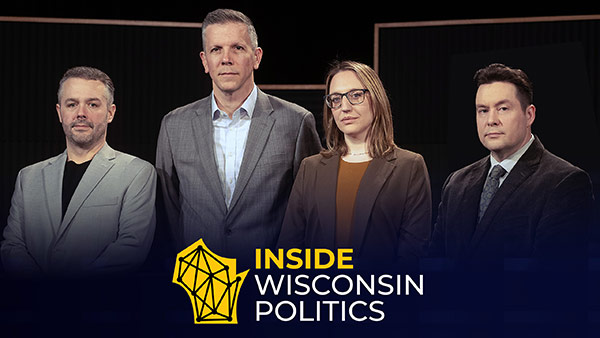
The 2026 election is days away. How are the candidates for governor closing out their campaigns? What does the latest polling say? And how is the race for the Legislature shaping up? This is inside Wisconsin Politics. I’m Shawn Johnson here with my colleagues Anya van Wagtendonk, Zac Schultz and Rich Kremer in Eau Claire. Hey, everyone.
Anya van Wagtendonk:
Hey.
Shawn Johnson:
Hello.
Shawn Johnson:
So guys, I have this great show prepared with all this polling and fundraising data. We’re going to look at legislative districts. I guess we should maybe mention that the Brewers won the World Series, but that can’t be political — can it, Zac? I mean, this is just something that we wouldn’t dare talk about in the world of politics.
Zac Schultz:
Yeah, everything’s political in Wisconsin, and this certainly, absolutely is. And all credit to the Brewers — amazing win. For someone like me that grew up in Wisconsin, this is a moment most of us never thought we would actually see. But for the politicians involved, this is actually a moment that they either want to neutralize or capitalize upon. And a lot of that has to come down to with why the Brewers are still in Wisconsin, and that has to do with the stadium in Milwaukee. Long time ago, when it was built, it was very political. There were recalls over the votes for that situation. And just a few years ago — so very modern history — there was another deal, a bipartisan deal at the Capitol, to extend the least to make sure that the Brewers would stay in Wisconsin and have the opportunity to do things like they’re about to do, which is have a victory parade through Milwaukee. But right in the middle of the election, David Crowley is the Milwaukee County executive, and he was part of the deal. He brought the county’s part of that deal to make sure that that happened. And the reason we know this is extraordinarily political is we have a tweet from a Republican saying: Let’s not politicize this. Just today, Tyler August, a Republican in the Assembly who is potentially in line to be in charge of that Republican caucus, tweeted: Don’t let any politician take credit for tonight’s Brewers World Series win. He wanted to say: Leave politicians out of it. Which is the clearest sign that their candidate can’t take advantage of this, because Tom Tiffany had nothing to do with that. He was in Congress at the time, and David Crowley absolutely can say: I was a part of keeping the Brewers here. The clearest sign that it’s political is when the politicians say: P lease don’t talk about this.
Shawn Johnson:
Sure. Anya, I mean David Crowley seems like he wants to talk about this one, does he not?
Anya van Wagtendonk:
Well, you know, he’s gotten a whole lot of sort of free, wonderful publicity for the place that he is the executive over, which is just wall-to-wall videos of people being in Milwaukee and having a great time, and feeling really happy and excited and wearing Milwaukee-branded shirts and hats and whatever. And so part of this campaign is also being run, you know, from the Tiffany side of things of: Don’t Milwaukee Our Wisconsin — Milwaukee is kind of this dark, crime-ridden cesspool, and you don’t want that kind of creeping into the rest of the state. And then for the last couple of weeks, depending on how long you’ve been following this team, you’ve been seeing people just seeming really happy and like they’re having a great time in Milwaukee. And so it also kind of puts a bit of a hole in that campaign narrative of this guy who runs Milwaukee has been running it into the ground and it’s a terrible place, because people sure seem to be enjoying themselves in Milwaukee this week.
Shawn Johnson:
Alright, Rich. You, like Zac, are born and raised in Wisconsin here. Going to ask you here: Can’t we have nice things here in Wisconsin? Can’t we just enjoy this Brewers thing altogether? Or what are you seeing?
Rich Kremer:
Well, we already have nice things. We are enjoying it. But yeah, sure, people are going to do what they’re going to do. Politicians are going to politic. I will say that I grew up in Superior. Our TV came from Minnesota. So honestly…
Shawn Johnson:
Ohh…
Rich Kremer:
Growing up, I was a Twins fan. I didn’t even really know about the Brewers. So, but, it’s been a lot of fun watching them. And in terms of people politicizing it, I’ve seen some conservatives say: Hey, this was a great win, the team worked hard, now it’s time for us to work hard, working those doors, and getting people to turn out to vote. So you can really make anything into a political post.
Shawn Johnson:
Let’s work in more and more sports metaphors in this entire episode — I think that’s the goal.
Rich Kremer:
Play ball.
Shawn Johnson:
Let us really — play ball, there we go. Let’s look at some numbers out this week. We actually got the last Marquette poll before the election. We always look at these pretty with a lot of anticipation. This one shows Democrat David Crowley with a 7 percentage point lead over Republican Tom Tiffany among likely voters, 4% were undecided. This was in the field from Oct. 14 through the 22. If you look at that poll, compared to others in this general election, it is the best one for David Crowley. Rich, that’s fairly unambiguous, right? I mean, Democrats have to look at this and feel pretty good.
Rich Kremer:
They are feeling very good, and I’ve heard rumblings from Democrats that this is matching up with internal polls, which, you know, I don’t know because I haven’t seen those. But it’s definitely wind in their sails, and especially with regard to independents and the way that they’re swinging towards Crowley and quite a bit.
Shawn Johnson:
Zac, I mean, polling has had its share of black eyes in recent elections. How much credence can we give to this poll when it comes to that closing margin?
Zac Schultz:
Well, as we say, every time we look at a poll, it’s a snapshot of time. You gave the dates of when this was in the field. That was a couple weeks ago.
Shawn Johnson:
It was.
Zac Schultz:
So the first question is, has the race materially changed since then? We have had a debate that wasn’t part of this, but it doesn’t really feel like the world has changed enough — other than the Brewers winning the World Series, honestly — to change anything of anyone’s feelings about the economy or these candidates. But I want to run through some numbers that I’ve been looking up about Marquette polls and their final poll released right before the election, because they have missed on some elections in the past, and so that gives people the free opportunity to say: Well, don’t trust those polls, they’re never accurate. What’s not accurate about some of these Marquette polls in ’24, ’22, 2018 and ’16 is that they’ve missed on the Republican side, and they’ve missed, notably with Donald Trump’s support or Republican support. For example, in ’16, Hillary Clinton looked like she was going to walk away with it. Same in ’20, there was a 5-point lead for Biden. Some of these impact the national atmosphere because people have pulled money out of the state because they thought it was in the bag for the Democrat at that time. But in each one of those cases, the Marquette poll nailed the Democrat number. The Democrats actually got the amount in which they were predicted according to polling. It was the Republicans who surged at the end. So that’s obviously a grain of really good news for Republicans in this poll. They say: Hey, that means there’s room for Tom Tiffany to improve. However, in the cases where they improved the most, it was with Donald Trump on the ballot. And in cases where there were these shy Trump voters who didn’t want to answer the phone and do, be a part of the polling, or they didn’t want to acknowledge that they supported Trump. And the time when that wasn’t the case was in 2024. The last poll showed 50 to 49 Harris over Trump — just by a point. So basically a tie — 50 to 49 in polling with a 4.3% margin of error is a statistical tie. And that actually got Trump’s number perfect. He was predicted at 49, he ended up with 49.6. Harris’s margin only dropped by a point. So the poll was very accurate and it’s been very accurate in these midterm elections as well. So that’s something for Democrats to to take a hold of when looking at these poll numbers.
Shawn Johnson:
And let’s look at one of the underlying reasons for the shift this time. It seems to be independent voters are moving toward David Crowley. More of the independent undecideds have broken for Crowley. He has a huge edge with them, 56% to 26% over Tom Tiffany, still 18% undecided among those independent voters. Anya, you know, we tend to pay a lot of attention to independent voters here, even though that’s not a huge slice of the pie among the entire electorate. Why is that significant?
Anya van Wagtendonk:
Well, one of the sort of grains of national wisdom is that independents are Republicans, and they tend to vote more conservatively. And so the fact that independents are now starting to break for David Crowley rather than for Tom Tiffany sort of goes against that conventional wisdom. And so, again, it’s perhaps a little bit of good news for the Tiffany camp. But of course, it’s still, you know, that 4% coupled with the margin of error in the poll, technically speaking — like if you take a chunk of the independents and then the entire margin of error — like that swings the poll for Tom Tiffany. So I think those independent voters who — you know, we talk about as just like the most important part of winning any statewide election is getting the middle voters in Wisconsin. Maybe they are swinging towards the Crowley camp, but I think they are a more sort of interesting bloc of voters than just sort of like they’re going to, you know, toss a coin. And so I think both camps can definitely still keep their eyes on getting them over.
Shawn Johnson:
Rich, you covered this poll for us. When Charles Franklin was presenting this, did he offer any caution or explanation? I feel like he’s the master of saying: Well, on the one hand, but on the other hand…
Rich Kremer:
Yeah.
Shawn Johnson:
…when it comes to information like this.
Rich Kremer:
Yeah, he did mention margins of error and said, basically indicated this is still a close race. And with independents, there’s a lot of them that are undecided. And we’ve seen a lot of movement within that group. I mean, the poll from Marquette last month showed that Crowley had lost like 11% of support among independents. He’s regained that. Tiffany has also gained some support with independents. But still, that gap is showing, it’s reading really large right now. And the other thing that Franklin said during the presentation that caught my ear is, you know, this independents moving towards Crowley in a significant way is reminiscent of their feelings about President Donald Trump and Republicans — the economy, essentially inflation. So they tend to be blaming that on the party in power, and he was saying that that’s reflected in this swing towards Crowley.
Shawn Johnson:
And last time we talked about a Marquette poll, President Donald Trump’s approval rating had hit a record low. It went a notch lower this time. So as you look at that over a long period of time, it’s been a downward arc. So for whoever wins this race for governor, there will be this huge open question of what kind of Legislature they’ll be working with, because both chambers are very much up for grabs this time. Let’s take a look at the state Senate, where Republicans have an 18 to 15 majority. That means if Democrats flip two seats, they’re in the majority. There are four seats that are widely considered to be the most competitive. Rich, where are those, and I guess why are we looking at those in particular?
Rich Kremer:
Yeah, Republicans are calling these the core four. We’re — it’s the 21st Senate District in southwestern Wisconsin, the 5th Senate District in southeastern Wisconsin, the 17th back in southwestern Wisconsin, and then the 31st, which is right here in Eau Claire, it’s western Wisconsin. So these ones are interesting because two of those seats, the 21st and the 5th, don’t have incumbents, and incumbents that have done pretty well and performed better than the top of the ticket. So a wide open race makes it a lot more gettable for Democrats. And in the 17th, you’ve also kind of got two incumbents running against each other. The Democrat Jenna Jacobson was an incumbent in the Assembly and is running for this Senate seat. Marklein is pretty powerful, though. Lot of money going into these things, so it’ll be pretty interesting. And the big story is that these districts are more competitive across the board, but in particular these ones because of the redraw of the map in 2024 after the redistricting lawsuit.
Shawn Johnson:
Yeah, I think if, another way to kind of chop up those four districts is you have the Marklein seat — the 17th, which you’ve covered Anya — which is very competitive. I don’t think people really know how that’s going to go. The Jeff Smith district is a Democratic-held district. But then if you just focus in on the suburbs, basically, you’ve got these two open seats. Kamala Harris won them, and it feels like Democrats are in a pretty good spot to take suburban seats in an election like this, are they not?
Anya van Wagtendonk:
Well, it is really interesting because one of the ways that sort of legislative races differ from further up, bigger, more statewide races is that people know their legislative candidates potentially on a more personal level. And so that can give you more of an advantage, even if your party doesn’t do as well in a certain district. If people recognize you from school pickup, from the grocery store, or because you’ve been really responsive on constituent services, or that kind of thing in your community, people might come out for you who otherwise might check a totally different box kind of elsewhere down the ballot. And so that can be good news for sort of either party in those places. So in the Bob Donovan seat, for example, he’s just a very well-known entity in his community. So Democrats, I think, will have their work cut out there, even if it is a wave election, because he’s just a person who is known and liked by his neighbors. And that’s a political advantage.
Shawn Johnson:
So let’s look at the state Assembly here. Republicans have 55 to, 54 to 45 seat majority, excuse me. That means if Democrats flip five seats and they hold their own, they’ll be in the majority. You just kind of look here at this map — it’s going to be hard to describe it too well for our listening audience — but I’ll tell you what stands out to me is, it’s a map of Wisconsin, of our 99 Assembly districts, and really the ones that are at play that are going to decide who runs state government for the next two years and possibly beyond. They’re just little specks, basically. They’re smaller districts because they’re attached to some kind of an urban area, you know, maybe a small city, but it gives Democrats a shot. Zac, what strikes you as you think about grouping these Assembly races this time around?
Zac Schultz:
Well, the first thing to look at is results from 2024. It’s perfect that you note that the Democrats need to flip five in order to take the majority, because five of these seats are held by Republicans, but Kamala Harris won them in ’24. It was down-ballot — what Anya was talking about, that incumbency advantage that Republicans held them. So these are the first five that Democrats are going to target. And actually, in a couple of these cases — two of them — the Republican incumbent decided not to run again, which makes it an open seat, a lot easier to flip in this environment. So those are the ones that they’re going to be looking at first. And then you think about expanding the map, having to play defense in a couple other places where they narrowly won. But this is where you have to take a look at the specifics of each one of these races are completely different because of those local things. Some of the people that they’re trying to knock off have been in those communities for decades. And so it’s much harder to convince them that: Oh, this is the bad guy, he’s responsible for all of these issues that you’re upset about. versus an open seat where it’s like: Hey, I’m just here to represent you in Madison. So it changes the ballgame completely.
Shawn Johnson:
Yeah. I mean, if Democrats don’t sweep those five districts where Kamala Harris won them and, you know, use that path to get to the majority, they’re going to have to win at least one seat that Donald Trump won a couple years ago. I would say those are not terribly easy for them, but I think they’re districts that you got to look at because, you know, you referenced Bob Donovan in that 61st Assembly District in southeast Wisconsin and Milwaukee. It’s not a given that he’s going to lose just because the numbers for his district say that. So then you could be looking at the 85th with Pat Snyder or the 30th over in the suburbs of the Twin Cities, places that Democrats have not won historically, but they might have to kind of do battle there this time. If you have a divided Legislature that’s 50-49 or something along those lines, what does that mean for policy making if you’re a Gov. Crowley or a Gov. Tiffany?
Zac Schultz:
Everyone’s a kingmaker. Every single vote will come down to, can you keep your majority perfectly in line? Or does someone want to make a name for themselves, maybe for a future run at a higher office, by standing up and saying: On principle, I can’t support this. So it makes everything so much more complicated, especially when we have new leadership. Robin Vos won’t be there to control the Republicans and keep them in line if he wins. And if there is one of these chambers held by the opposite party of the governor’s mansion, then absolutely it’ll be much harder to get anything done, because they will all be portraying themselves as holding the line on every single issue.
Anya van Wagtendonk:
Robin Vos always made sure he had wiggle room in his caucus so that he could lose a handful of votes and still get his policy priorities across the finish line. Because you say kingmaker, another word for that could be hostage-taker, right? That you can just say: Whatever I want to do, I’m going to hold up my entire caucus. And the difference between a, you know, a socialist-aligned Democrat in Milwaukee and like Steve Doyle, who wins by about two-and-a-half votes in western Wisconsin every time — they’re politically very different. So either one of them could kind of push for their priorities and hold everything up.
Shawn Johnson:
Yeah, I actually remember Robin Vos referring to some Republicans in the Senate who went against him on a deal as terrorists one time. He apologized for that pretty quickly, but these are the terms that get thrown around when you’re talking about legislative deal making on the margins. So we will have, we want to let you know before we go, we want to invite you to follow WPR and PBS’s coverage of the results on election night. Our live radio broadcast starts at 8 on Tuesday and so does our live video stream. That’s all the time we have for today. This has been inside Wisconsin Politics. Be sure to follow us on pbswisconsin.org, wpr.org, YouTube or wherever you get your podcasts.
Search Episodes

Donate to sign up. Activate and sign in to Passport. It's that easy to help PBS Wisconsin serve your community through media that educates, inspires, and entertains.
Make your membership gift today
Only for new users: Activate Passport using your code or email address
Already a member?
Look up my account
Need some help? Go to FAQ or visit PBS Passport Help
Need help accessing PBS Wisconsin anywhere?

Online Access | Platform & Device Access | Cable or Satellite Access | Over-The-Air Access
Visit Access Guide
Need help accessing PBS Wisconsin anywhere?
Visit Our
Live TV Access Guide
Online AccessPlatform & Device Access
Cable or Satellite Access
Over-The-Air Access
Visit Access Guide


Follow Us