










PBS Wisconsin Passport
Watch this video with
PBS Wisconsin Passport
Become a member of PBS Wisconsin, support your local community, and get extended access to PBS shows, films, and specials, like this one.
Hollywood Priest: The Story of Fr. "Bud" Kieser
05/01/24 | 56m 17s | Rating: TV-PG
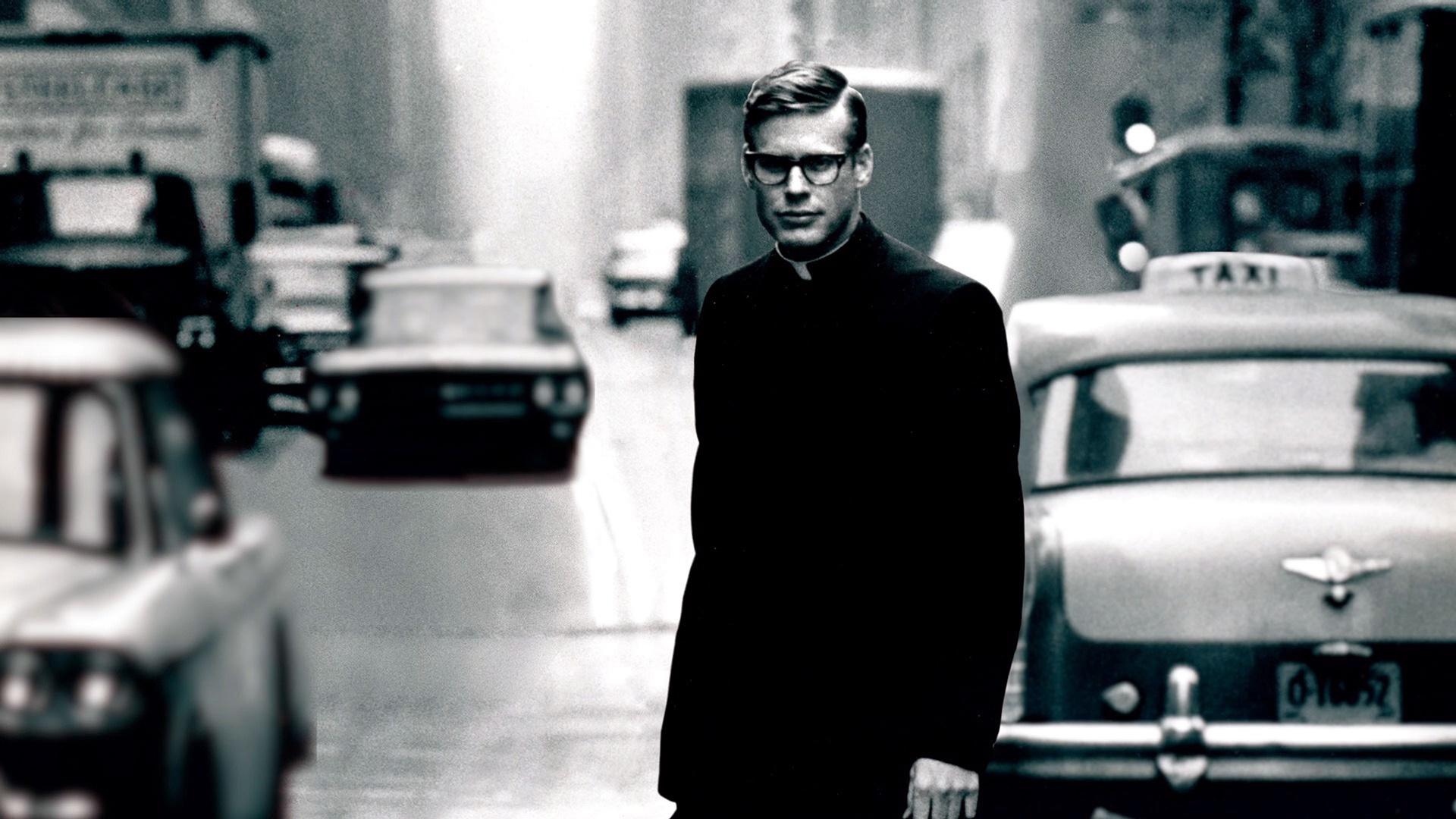
A devoted yet stubborn priest discovers the best way to reach a 1960s audience is with a fictional television series that launches the careers of many famous actors. But when he falls in love with a nun and his show gets cancelled, Fr. Bud Kieser engages with the suffering of the poor and his career turns in a new direction.


Copy and Paste the Following Code to Embed this Video:
Hollywood Priest: The Story of Fr. "Bud" Kieser
male announcer
This program was made possible in part by Retirement starts with a financial plan. Information at athene.com; The Thomas and Dorothy Leavey Foundation; The Sullivan Foundation; The Richard and Maude Ferry Foundation; The Thomas Healy Hambric Foundation dedicated to supporting and educating children who best learn outside the classroom. Additional support provided by-- John O'Groats Restaurant serving West Los Angeles for over 40 years. ♪♪♪
Steve Allen
Thank you, fellas. Right now, we're going to meet a most extraordinary clergyman who has succeeded in combining his roles as religious leader with his abilities as a very creative television producer. Welcome Father Ellwood Kieser.
Bob Newhart
I always called him Bud. How did he get the name Ellwood? ♪♪♪
narrator
When Father Ellwood "Bud" Kieser arrived in Los Angeles for his first assignment as a Catholic priest, it was still the golden age of Hollywood. Ellwood "Bud"
Kieser
The normal parish priest, he has his parishioners. Well, my parishioners were the people in show business.
Marion Ross
Huge big man. Big white hair, handsome, huge, and lovely.
narrator
Little did Father Bud realize that he was starting an adventure in which he would produce an Emmy Award-winning show featuring the biggest celebrities--
Martin Sheen
It wasn't like any of the other television shows. It was a moral theme but it was non-denominational.
narrator
--create one of the most prestigious awards in Hollywood--
Bud
And we run the Humanitas Prize and we challenge people to love in this industry and they responded.
narrator
--bring national attention to famine in Africa--
John Amos
He was a life-saver in a lot of respects.
narrator
--and begin a friendship that would make him question everything.
Rose Pacate
And that's what happened to Father Bud. He fell in love with a nun. ♪♪♪
Bud
How do you do? I'm Father Kieser. You achieve your destiny in the next world only by doing the will of God in this one. But how, and at what price?
These are the questions the hero of today's drama must wrestle with.
Eric Andrews
If you were a Catholic in the 1960s who was working in the entertainment business out in L.A., you'd probably find yourself at St. Paul the Apostle Church in Westwood. In the pews, you'd see people like Bob Newhart, Jerry Lewis, Jane Wyman, Brian Keith, Ricardo Montalban, Carroll O'Connor. People loved to go to Mass at St.
Paul's because they could see all their favorite celebrities in the pews next to them.
Bob
Everybody knew Father Kieser. It was almost the way you pictured in movies the voice of God.
Tim Matheson
The thing that was special about Father Bud Kieser, he didn't judge you whether we were religious or Jewish or Catholic or Protestant or whatever, we were all accepted.
Bud
To use Pope Pius XI's expression, we are spiritual Semites. Christian and Jew, God love and keep you all.
narrator
While he was not wearing a red cape, he quickly gained the nickname Superpriest.
Terry Sweeney
What is it, the Dodge Ram truck that goes, you know, over the terrain, up the terrain and down the hills and everything. Bud was a Dodge Ram truck at full drive.
Bob
He approached me if I wouldn't mind doing a show in Orange County. At that time we had a Thunderbird. Bud Kieser said, "Would you mind if I drove it?" You realized that he was in a state of grace by the way he drove. It was one of the most terrifying car trips I've ever taken in my life.
Eric
Father Bud was intense as a young priest. Some people said he was the Superpriest. He'd spend an hour in prayer, then he would say the morning Mass, go to the hospital. He was all over the place.
It was wearying just to think about all the things that he was doing.
narrator
Soon after arriving in Los Angeles, Father Bud started an adult education class to teach Catholics and non-Catholics more about the faith.
male
Most of the people who attend inquiry classes are not Catholics. Still others have no faith, want no faith, but are very curious about those who do. How about suffering and accidents and wars, Father? Why does God allow them?
female
Father, does everybody go to hell but you Catholics?
male
Well, what about the Renaissance, Father? You'll have to admit some of those Popes were swingers.
narrator
It turned out that Father Bud's teaching was as good as his preaching. So much so that his inquiry class attracted hundreds of people from all over the Los Angeles area. One of the people taking the class was the producer Joe Connelly, who thought that Bud's lectures might also work on TV.
Ed Begley
Joe Connelly is a big name in television. Joe Connelly was one of those great producers and writers who did "Leave It To Beaver" and "The Munsters." He was a legend in television.
John Geaney
And these guys in this parish who are so well versed in being producers, camera people, all kinds of stuff like that, stars, they said, "You can do a better job. We can do a better job with this. We can teach the same thing in their living room." How do you get to their living room? Television.
narrator
When broadcast television first started in the 1940s, it was understood that the airwaves were owned by the people so when the federal government allowed stations to broadcast across those airwaves, it essentially told the broadcasters, "Yes, you can make money from programming but you have to set aside some pray time every week for the public good."
Terry
People who had very serious concerns they wanted to communicate to the community could do so, whether those concerns were religious, whether they were educational. So Bud Kieser was able, through that ruling, to have programming put on stations as part of their public access responsibilities.
narrator
But before he moved forward, Father Bud wanted to get the script of his first televised lecture approved by the head of the Catholic Church in Los Angeles, Cardinal James McIntyre.
Rose
Cardinal McIntyre was a good man but he was a finance guy. He didn't understand art and there was this huge gap, I think, between where the cardinal was and how Father Bud saw what was going on among the people in the pew.
narrator
Cardinal McIntyre did turn the script down. Father Kieser, barely able to contain his disgust and anger, politely thanked the cardinal and left the room.
Rose
And so he just decided not to submit them anymore.
narrator
In 1960, a very nervous Father Bud entered a studio and filmed the very first episode of the new television program, "Insight."
Bud
How do you do? My name is Father Kieser. In a far corner of the universe there's a very remarkable planet. The planet, of course, is Earth; the inhabitants, the human race.
Today we're going to discuss the purpose of that race.
Our title
"A Reason to Live and a Reason to Die."
narrator
More episodes were filmed and distributed throughout southern California. With the help of the television producers in his parish, Father Bud used each half-hour to preach on diverse, if non-traditional, topics.
Bud
Why? Why am I alive? Where did I come from? Where am I going?
What is the meaning and purpose of this life of mine? Whether or not to marry? When to marry? Who to marry?
Some things are worth suffering for. The moral health of the community is one of these.
John
Bud did very well with "Insight." Good times for Bud would seem to be noontime on a Sunday.
Eric
But he wanted more. He was always ambitious for more.
narrator
And that "something more" was a slot on prime time television. Growing up in Philadelphia in the 1940s, young Ellwood Kieser was among the millions of Americans who tuned in regularly to hear Bishop Fulton Sheen on the radio, and then later on television.
Fulton Sheen
So the mother turned me on for the four-year-old Becky. She said, "I want to see that man that uses the chalk and blackboard and tells funny stories." What do you think I was talking about that night? Melancholy and sadness. Becky, forgive me.
Martin
He was spellbinding. For a half-hour, he held the country in his grasp with humor and theology and politics.
Fulton
Scripture says that the young men dream dreams, the young look forward. Those that start with this principle are concerned with values, with goals, with destinies and why we're living.
narrator
But one night, as he finished his bedtime prayers, Bud experienced what he later described as a quiet but deep realization as to why he was living.
Fulton
And the way to be happy is to know truth and to seek a life that is enduring and eternal. In other words, I am made for God.
narrator
A few weeks later, Bud confessed to his parents that he might have a calling to the priesthood. His mother, who was Catholic, was supportive but skeptical of the idea. His father who was raised a Lutheran did not quite understand.
John
The church was a very closed system at that time, was saying, "If you're not a Catholic, salvation's not happening for you."
Terry
The language of the Mass was in Latin. Catholicism was still an inward religion, not engaging in the world.
Martin
Well, you know, the church was very conservative, but loving and compassionate. It was about community, it was about doing the right thing, you know?
narrator
While he loved the compassionate side of the church, Bud was not sure that doing the right thing meant becoming a Catholic priest who was not permitted to marry. Concerned about the loneliness of religious life, Bud tried to push the idea of priesthood out of his head. He went on dates to the local dances. After school, he worked extra hours at his father's gas station.
There he learned the important skill of upselling customers.
Lee Purcell
He could sell anything to anybody. He was good. Telling ya, he would have been a great used-car salesman.
narrator
And like other youth, Bud was inspired by the heroism of soldiers fighting overseas in World War II, with a special place set aside for his hero, General George Patton.
An order of the day from Patton to his men
"Remember that we, as attackers, have the initiative. We must retain this tremendous advantage by always attacking, rapidly, ruthlessly, viciously, without rest. Keep punching. God is with us."
John Sacret Young
So Bud was a guy that, in many ways, was a general, and the general laid down the rules in a way that, I think, that these days you would have issues with.
narrator
But along the way, a new spiritual writer whose books presented a more expanded vision of God began to grab
Bud's attention
a Catholic monk named Thomas Merton.
Thomas Merton
The thing that we have to face is that life is
this simple
that God manifests himself everywhere, in everything, in people and in things and in nature. You cannot be without God.
Frank Desiderio
What made Thomas Merton such a powerful writer and spiritual director is he was honest about who he was.
John
Thomas Merton in some way touched Bud in a transformative way. I think led him partly out of his childhood set of beliefs, crossing into the man he became.
narrator
Inspired by Bishop Fulton Sheen's preaching, Thomas Merton's thoughtfulness, and General George Patton's drive to conquer the next hill, Bud Kieser joined the Paulist Fathers in 1950 after graduating from La Salle University in Philadelphia.
Eric
In the Catholic Church there are many religious communities of men and women. For instance, the Franciscans work a lot with the poor, the Jesuits are focused on education, and the Paulist Fathers really wanna make sure that the Word of God gets out to as many people as possible, especially people who aren't in the church.
male
You know, sometimes I think you fellas are more interested in us non-Catholics than you are the Catholics. Well, some priests spend most of their time serving those inside the church. I'm a Paulist. I spend most of my time serving those outside.
narrator
Bud's superiors commented during his theological training that, while he was intelligent, Bud tended to rely on his head more than his heart.
John
I mean, he loved dialogue. It could be about Catholicism or faith or what you believe in, about world events, or it could be about what you're reading.
narrator
So just as Father Bud's work in television was beginning in the 1960s, the Catholic Church as a whole was beginning to more fully embrace that expanded vision of God. And Ellwood Kieser would make sure that he would be in Rome to witness it.
male
The Vatican Ecumenical Council, the greatest assembly of Roman Catholic prelates in history has 3000 high Roman Catholic dignitaries attending, as well as a score of observers from Protestant faiths. This is the first ecumenical council in 92 years and only the 2nd in 400 years.
narrator
In the 2000-year history of the Catholic Church, there had only been 20 ecumenical councils. The 2nd Vatican council would be the 21st, and it was shaping up to be one of the biggest. Father Bud, wanting to be a part of the action, was able to fly out to Rome as a correspondent for "Variety" magazine.
John Geaney
It was an exciting time to recognize that changes were taking place and they were all the kind of changes that he wanted to see, that we all wanted to see.
Christine Avila
The big one, to me, was that the language of the Mass would be in the vernacular of the people. Nothing wrong with Latin, but if you hear the words in your own language, my goodness, what a big difference.
Catherine Hicks
Vatican II allowed the incorporation of societal happenings to come in to the liturgy, so the social justice permeated our Masses.
John
We're talking to the Jewish people and they are a part of this second Vatican council and we think, "Well, of course." No, not "of course." This was really new. We've got to talk to the Muslim people. We are saying that they, too, may be saved. Oh my goodness gracious me.
narrator
Father Bud, whose own father was of a different Christian denomination, could not be more excited about this expression of openness towards other faith traditions.
Bud
What is it which makes us one with other men? Nationality? Similar education? The same color skin?
What is the common bond? I think all men are brothers, simply and solely because they're human beings, made in the image and likeness of God.
narrator
As Father Bud toured Rome, he began to reflect on how the changes in the church could be reflected in his television ministry back in Los Angeles.
John Sacret Young
And I think it was a series of steps that led Bud not only to wanna be in "show business," if you will, but also sort of finding what that meant to him.
narrator
One of the many people Father Bud saw in Rome was Bishop Fulton Sheen. Every night, walking back to his hotel, Bud would see his childhood hero dining alone with a sad look on his face.
Eric
Father Bud saw Bishop Sheen, how his fame and his priesthood really got him isolated, and Father Bud really didn't want that for himself.
narrator
As he boarded his plane to head back to Los Angeles, Bud could not help but wonder what Bishop Sheen's path meant for his own creeping sense of solitude. ♪♪♪ ♪♪♪
male
What was it like to play God?
Bob
Well, I didn't really have to adjust that much.
laughing
narrator
Inspired by the Vatican II documents that asked the church to be more relevant in the modern era, Father Bud threw himself into the new format of "Insight." Dramas.
male
"Insight," exploring the meaning of human life. You started out, though, doing a program on religion that was not at all theater or drama.
Bud
I lectured for 28 minutes. It was terrible television.
narrator
"Insight," however, was going to be something new, an anthology series like "The Twilight Zone." But instead of different science fiction stories each week, each episode would focus on spirituality in the modern world.
Vin Di Bona
This became the Cadillac of religious programs. It was entertaining, yet it was spiritual.
Martin
He didn't beat people over the head with how they should react or how they ought to feel.
male
Watch "Insight."
Vin
Bud figured out that there was a timeframe when the studio, it went in hiatus, except that they had all their crew and their camera people 365 days a year. And so Bud said, "You're paying 'em, let's do shows." He captured all his free time.
narrator
And because television stations were required to give part of their airtime away for free, Father Bud was able to distribute "Insight" across the country.
Eric
Bud was a force to be reckoned with. He knew how to twist arms, he knew how to ask for things he had no business asking for. People were afraid when they saw his name on their call sheets in Hollywood every day.
Tom Fontana
Panic. I immediately panicked when I saw Father Kieser's name on the phone sheet. There was no opportunity for me to make excuses.
Vin
He was a force. When he walked into the room, he would sometimes suck the air out of the room.
Jim McGinn
Well, he was a big guy, 6'6, a deep voice. So if he got mad, you know, that's somebody formidable coming at you.
John
Bud would use that height to sort of lean over you until you sort of cowered a little bit behind-- underneath the authority.
Bud
Family, like every other human community, requires authority. Somebody has to concern themself with the common good and see that everybody's interests are protected. In most families, this authority is the father.
Terry
If you have a director who is later the president of director skills of America and then you have a producer, in this instance, Bud Kieser, standing over this director's shoulder, telling him which camera to go to and which take worked better than the other, a lot of directors do not appreciate that level of critique.
narrator
And not only did Father Bud approach the actors that went to his parish to perform on "Insight," he also solicited the top talent in town, regardless of their faith tradition.
Frank
He was seen as kind of a holy man in the entertainment industry and so he was able to get people to make sacrifices because they weren't doing it for Bud; they were doing it for God.
Ed Asner
Hello, it's God.
John Amos
Now, Ed Asner had forewarned me and I said, "I got a call from a guy named Father Bud Kieser," so "He's got you. He's got you. Did you talk to him?" I said, "A little bit." He says, "He got the hook in, didn't he?" I said, "Yeah, he got the hook in."
Lee
I got a call, "Hey, do you wanna do this show for this priest?" I'm like, "Wait a minute," ha, ha, ha. What? How can you say no to a priest who does television?
Bob
And he--he never said it in so many words, but you kind of knew if you didn't, you were going to hell.
Tom
Because if I did dare to say no to him, he would say, "I'll pray--I'll pray for you." I couldn't very well go to God and say, "Please, get me out of this," right?
Bud
By and large, people in the entertainment industry are loving people. And if they're not, we kick 'em in the fanny and tell 'em to get busy.
Bob
'Cause you knew if you were gonna do an "Insight" then you were gonna get quality of a director and quality writing and quality of a cast.
Jack Klugman
You're it?
Bob
I don't get you.
laughing
Bob
What's so funny?
Jack
Why, I pictured gates, big golden gates, a guy in a gown with a trumpet. Instead, I got a little room, a desk, a couple of chairs, and you.
Rue McClanahan
Great, you let him get you up here?
Lee
Is that what you think? Do you really think you are that irresistible?
Rue
It did occur to me.
Lee
The fact that you had been approached by Father Kieser to do an episode of "Insight," it was recognition that you were talented. There was no shame in working for practically nothing and usually nothing because you gave the check back.
Tim
He would actually give you the check when you finished the show and shake your hand with his right hand and he would not let go of either one until you did.
Marion
We'd had a lovely chat.
Ed Begley
Well, thank you, Father, I'm kind of--money's a little tight right now, I can't--
Marion
I kept that check.
Ed Asner
Why did you come back?
Tim
Because I thought living here again, we might be able to talk.
Ed
We talked all the time. What do you mean, "talk"?
Tim
Yeah, Dad, but it was a one-way conversation. The thing about "Insight," too, was it offered us a chance to play these roles that we would not normally play.
Bud
And that means you come up with a very creative script, that they can't do on commercial television, so the directors wanna do it and the actors wanna do it. And many actors have said we've given 'em the best parts they've ever had in their lives.
Marion
And it was an honor to be in one of those shows. Those were good scripts, good, excellent scripts. I mean, this isn't cheap stuff.
Robert Lansing
Are you in a condition to talk? Ally's pregnant.
Marion
Oh, Roger, I don't find that funny. You just keep your dirty jokes for your friends.
Robert
It's not a joke, for God's sake. Can you get that through your alcoholic haze? Your daughter is pregnant, lady.
male
Stay where you are! You clowns are under arrest.
Martin
That was always a welcome relief over all the other stuff you had to do on television back in the '60s, '70s, '80s, and the whole time I played where you had to rob somebody or kill somebody or do something awful.
Tim
Bud Kieser would just give you the benefit of the doubt and encourage you to stretch and to grow. And some of them won't accept me, and they'll turn away as if I didn't exist. But unless I go, there'll be no healing or fulfillment for them ever. Going from Jesus to playing Eric Stratton, Otter, in "Animal House."
We've gotta do something. male
Absolutely.
Tim
You know what we gotta do?
both
Toga party.
Tim
It's the same guy. You know, I mean--
Bud
What is the purpose of the church? To acquire money and influence and power? Or to serve God by serving people? And whom does the church serve?
Just its own members like an exclusive club? Or all men, especially those most in need?
Rose
The country was really on the brink of a--I don't wanna say a revolution, but a brink of great change, that also influenced the scripts that he produced. We were gearing up for the Vietnam War.
male
You wanna tell us now while--why you think it was not a criminal act to burn those draft records?
Carl Betz
'Cause the war is immoral. I felt obligated by conscience to try to stop it. I think all war is obscene and irrational.
Gene Hackman
What of the other presidents, four in all, who have committed us to Vietnam in the belief that the future of Asia, the United States, and indeed the world, depends upon our stopping aggression there? Don't you think they are all following their conscience?
Carl
If they are, I believe their consciences are wrong.
Gene
Isn't that presumptuous of you, Father?
Rose
There were civil rights, in particular the Civil Rights movement, that awareness of social justice.
James McEachin
I beg your pardon, but is this the Ashgrove Neighborhood Council?
Harvey Korman
Father McCarthy says you wanna buy a house over on Spruce Street?
James
Yes, I'm thinking about it, very seriously.
Harvey
I don't know what you want from us. The bank wants to sell, you got the money, so you got a house.
Ron Masak
Ah well, it just seems the more burning and looting goes on, the faster you guys move out, that's all.
James
I'm worn out. So if moving into this neighborhood means more trouble for me and my family, then I'm not buying the house.
Bud
This is an exciting time to be alive, but it's also a painful one, for our civilization is changing very rapidly. So rapidly, in fact, that sometimes we're left frightened and confused by it all.
narrator
One of the people particularly frightened by all of the change going on in the '60s was the head of the Catholic Church in Los Angeles, Cardinal McIntyre.
Rose
Cardinal McIntyre was extremely resistant to the changes of Vatican II. If you look at Cardinal McIntyre's voting record at the Vatican Council, he never voted yes on anything.
narrator
Cardinal McIntyre called Father Bud to complain about the content of an "Insight" episode, objecting to what he considered to be graphic language.
Vera Miles
The day I got to call it "High Life" I was in very good form indeed. Don't you think so, Jimmy?
Jeffrey Hunter
Except there's some people who think that "High Life" is not an appropriate name for the magazine.
I quote
"'Low Life' would be a more appropriate name for a magazine that specializes in dirty pictures and dirty stories," unquote.
narrator
Bud defended the episode, saying that it was meant to be a frank look at the adult industry and the misguided values it tries to advance. In order to make the point, the script could not be sugarcoated.
Vera
We simply appeal to the basic insecurity of a male ego. By telling him what he wants to hear about women, we instill in him a willingness to believe whatever we tell him. And to buy whatever we sell.
narrator
Nonetheless, the cardinal responded. He wanted it taken off the air. Father Bud agreed that he would not broadcast it again, in Los Angeles. He had no intention of removing it from syndication nationwide.
Before hanging up the phone, the cardinal remarked that he was not sure Vera Miles was the right actress for the lead role. It was an odd comment, considering Vera Miles had become one of Father Bud's regular performers. In one show in particular, Vera Miles played the lead written by someone to whom Father Bud was becoming very close. ♪♪♪
Rose
He was working on an "Insight" and he needed a writer for a specific episode. So Father Bud arranged a lunch at a convent and the sister said that they had this other nun that they'd like to invite, Sister Genevieve.
narrator
Sister Genevieve ended up writing the outline of an "Insight" episode about a nun who struggles with her vocation.
Vera
I have been teaching at one of our schools. I've been teaching drama. I found I had a flare for it. Mother Superior asked me to come to the university to get my master's in drama so I could teach at one of our colleges.
Rose
You know, we come to a certain point in our lives that maybe we reassess our vocational choice and that's what happened to Father Bud. He fell in love with a nun.
Jim
She was exceedingly bright, so they had extraordinary conversations. They could sit and talk for three hours.
Terry
Typically, he was not an emotional person, kept most of his emotions inwards and rarely cried. I mean, I don't think he even cried at his own dad's funeral.
Jim
There was nobody else in his life that he could be that sharing with, that open, that intimate, in a conversational way.
narrator
Genevieve was able to challenge Bud in ways that no one else could. She challenged him on how he ignored his emotions in favor of his own intellect, and she challenged him on the all-consuming focus of ministry.
He had only one concern
his work. He lives for it. He takes tremendous satisfaction from its accomplishment.
Kathleen Wright
So it wasn't that it started out as a romance. It started out as a friendship, as companionship. Genevieve understood him better than he probably understood himself.
Vera
He said he was lonely. His whole life has been a search for some reality beyond him.
narrator
As their friendship grew, so did their feelings for each other. For someone who had written off that side of his life when he joined the priesthood, Sister Genevieve was a welcome, if not confusing, addition. But for the time being, Father Bud Kieser decided that he would be able to have his cake and eat it too.
John Sacret Young
Is an emotional affair the equivalent of a literal affair? And is an emotional affair in some ways maybe even more divisive? I don't know.
John Amos
Father Bud Kieser, he always knew when he was gonna appear on television. We were about to do one talk show and before we went to the studio, he said, "Wait a minute, I gotta get my shoes." I said, "What shoes?" So he went to the car, he came back with a pair of shoes that had very distinct and obvious holes in the bottom of the soles. And I said, "What are they for?" He said, "So when I cross my legs and I put 'em up to the camera, they can see the holes in my shoes. They'll be more inclined to give us money."
John Geaney
Bud had the wisdom and the knowledge to recognize that he could do "Insight." But those were just short, small points. What could he do to influence Hollywood, to do the kind of things that made a difference?
Bud
The actual idea itself came 200 yards offshore. I was swimming up top of the coast. It came. I didn't finish the swim.
I ran right in, called a couple of my friends to see if they thought it was as good an idea as I did.
Terry
He walked in the office. He's standing there, his trunks dripping all over the floor and he had a towel around his neck and he said, "Terry, what if we finally came up with a prize that acknowledged the writers of prime time television whose scripts best embodied human values, Judeo-Christian values?"
Tom
Father Kieser wanted to kick the writers in Hollywood in the butt, to say to us, "You need to be more responsible for the episodes that you write."
Jane Pauley
There are Emmys, Oscars, Tonis, Pulitzer Prizes, and in the last few years there has been another prestigious award, this one for television writers whose programs, in the opinion of the judges, do the most to promote high ideals and understanding. They're the Humanitas Awards, which in prestige are much-coveted by TV writers.
Bud
And we just believe that man is made in the image and likeness of God and that this gives him a dignity that approaches the infinite.
Ray Bradbury
And I think we go back to Schweitzer here who said, "Set an example and let us live by it." And on a secret level, you'd begin to do better work because you have the example.
Bud
Because the value orientation of a script and of a show begins with the writer and our resources are limited so we have to start somewhere.
narrator
As time went on, Humanitas continued to grow in its influence among writers, becoming one of the most coveted awards in Hollywood. In later years, the award would expand to honor writing, promotion pictures, and other media platforms.
John Sacret Young
$25,000, what are you gonna do with it?
female
The 1996 Humanitas Prize and $25,000 is awarded to Tim Robbins, writer of "Dead Man Walking."
Bud
When you go before the judgment seat of God, whether you're an atheist or not,
he's gonna ask one big question
Did you love? And we challenge people to love in this industry and they responded.
John Geaney
Every day he would be in our chapel and he would spend an hour before we all came in to pray.
Thomas
Basically, I suppose, prayer should be as simple as breathing, as simple as living, 'cause breathing is neither sacred nor secular, you just breathe. So prayer, too, should be neither sacred nor secular. It is our life.
Bud
Meditation is, of course, a very, very important part of my life. I couldn't really live without it. It's like breathing, I have to do it.
narrator
As the 1970s progressed, Father Bud had a lot more to pray about as finding stations to broadcast "Insight" became a lot more difficult.
Margaret Loesch
Bud was frustrated, never giving up, still believing in his vision. But he had been frustrated by the processes of trying to get product on the air that Paulists was producing.
Bud
Broadcasting is schizophrenic, and people of great conscience in the industry, running stations, are caught in that schizophrenic pull. By law they have to serve the people, by whether they're hired or fired, they have to produce a colossal profit. And a show like "Insight" does not carry commercials.
narrator
In addition, Father Bud began to experience some heated competition from a new group who was willing to pay for the very same slots that Bud was getting for free. Independent preachers looking to develop congregations across the airwaves, otherwise known as televangelists. ♪ Oh, I'm so happy. ♪
male
It's been a great day, hasn't it?
Terry
Well, the televangelists began to pay for airtime and then they used airtime to solicit donations.
Bud
These guys are performers, and they're effective performers. I find that too often they confirm the values of the audience and tell them what they wanna hear, rather than tell them the full gospel, what they should hear but what they don't wanna hear.
Terry
The local broadcasters began to say, "Look, why should I put 'Insight' on the air for free, when I could get paid for it by the televangelists?"
narrator
Because changes allowed by the FCC were allowing stations to do away with their public access responsibilities, and because of increased competition from televangelists, Father Bud's program was being squeezed out of the market. When the 1970s began, 170 stations across the country were carrying "Insight," but by the end of the decade, the number had dropped to 101 and continued to fall.
Terry
In the late '70s, early '80s, and finally by '83, it was all over. The handwriting was on the wall.
John Sacret Young
You know, as I always thought of him as this great, sort of Don Quixote, tilting the windmills of Hollywood, well, if you've tilted them, can you tilt them again?
narrator
Not that all of Bud's frustrations during this time were professional.
Rose
Can you imagine the ferment going on in his own soul? The, you know, the pull towards maybe marriage and the pull towards the Paulist vocation.
narrator
Father Bud was confronted with the limitations of celibate life and he couldn't rationalize his way out of it.
Bud
Limitation is part of being human. We can't do everything we would like to do. We can't have everything we would like to have. If you marry one person, you can't marry somebody else.
If you take one job, you can't take another. That's just the way life is.
narrator
The more time Bud spent with Sister Genevieve, the more deeply he fell in love with her.
Jim
A decision had to be made. They either go off together or she goes off because, for whatever reason, she was finished with being a nun.
Vera
I've decided to ask Mother Superior to relieve me. I'm not doing a good job. I've obviously failed.
narrator
Genevieve and Bud met for a long-overdue discussion about their future. She told him that she wanted to get married.
Vera
You've reasoned it all out, searched your soul, talked it over with your confessor. What more could I possibly say?
narrator
Bud asked if he could perform the ceremony. It was not what she wanted to hear.
Kathleen
By offering to do the ceremony, it was Father Bud's way of closing the door to Genevieve and opening the door for Genevieve to marry someone else.
narrator
Genevieve did go off and marry another. Heartbroken over the loss of Genevieve and frustrated by his television show's decline, Father Bud began to wonder what, if anything, could be waiting around the corner. The memories Bud had of Fulton Sheen sitting alone at a Roman café now felt painfully close.
male
Our special segment tonight is about an unpleasant
subject but one which is quite important in human terms
starving millions of people. These are the parts of Africa where there is starvation today. Relief agencies are doing what they can, but thousands are dying.
Bud
I was invited to go by the Catholic Relief Services. They were having trouble getting media coverage in this country, so they called me up and said, "Hey, can you help us? Will you come over and then come back and try to make the American people aware of the problem?"
John Amos
And when I got the call, I drove out to his place. So I walked in and he says, "You wanna go to Africa with me?" And I said, "I don't mind." And he said, "Okay, drop your pants." I said, "Excuse me?" He says, "Drop your pants." He had a nurse behind the door with a full array of needles, all the shots I was gonna need to make me tsetse fly-proof and the rest of it. When we got to Somalia, what we were subjected to was the reality of the refugee camps.
Ken Hackett
Food stocks that were available in homes and households have just completely diminished to nothing. So more and more people are on the move in Ethiopia, looking for food.
John
It was a total attack on your senses, what you saw, what you smelt, what you felt. One camp we went to, there was an elderly gentleman and he had what must have been the most excruciating toothache that any human being could ever have, and he kept asking me, "Please, you have something, you have something." And I felt so helpless. If I had an aspirin, it would have made him feel-- but we had no medical supplies.
Margaret
So I think that was a pivotal journey for him, personally and emotionally. It impacted him tremendously. He took it very much to heart.
John
I could see a change come over him. It was like--it was like a football player who's got his uniform on now and saying, "This is the game. Everything else up until then was just practice, but this is serious."
Terry
It changed him in a sense that he renewed his commitment to being a priest.
Kathleen
That was the beginning of his true spiritual development, when he experienced the children of Africa. He was able to connect more to mysticism. Somehow, once he had experienced the poor, it opened up a window for him.
Fulton
When I first went to Europe to study, I was really lonesome, so I went to someone in the city of Louvain and asked for a list of the poor. I was never lonesome again.
Bud
And what they have to say I think is that things are not part of the happiness equation. The amazing paradox, but I have seldom experienced such joy as among those people. And they have joy because they're loving each other.
narrator
Father Bud would later remark that he saw more joy that week in the refugee camps than he had in ten years in Beverly Hills.
John Geaney
They took the best they had and they gave it to us when it should have been the other way around.
Kathleen
In pre-Vatican church, it was believed that there was no salvation outside the church, but Bud began to learn that there was no salvation outside the poor.
Martin
If you allow the poor enough time to crack open your heart, you have a chance for salvation. You really do.
narrator
After arriving back in Los Angeles, the man who was told during this studies that he focused more in his head than his heart, cried for ten straight days.
Bud
Do you know how a normal kid, you take in your arms when it cries, and hug 'em and say it's gonna be okay? These kids you would--they would cry sometimes, but you were so--they were so fragile, you were afraid to take 'em in your arms.
Catherine
He showed me starvation in Africa, and he educated me about how the hair turns orange, how the children die. But I felt he was giving me an assignment, but it was unspoken.
John Amos
I asked him pointedly, I said, "Is what I'm doing here gonna have any effect, a positive effect, on this at all?" And he said, "We can only try."
male
We all know that one of the world's biggest problems in many parts of the world is hunger. The problem these days is most severe in a part of Africa known as The Horn. Recently back from there is John Amos, who starred in, among other things, "Roots," and Father Ellwood "Bud" Kieser.
John
I think I speak for Bud, Father Kieser, when I say that it's an indelible impression.
Bud
The American people are a generous people, they're a compassionate people, and yet the policy of our government in terms of foreign aid to the third world has been incredibly stingy.
John
He was a life-saver in a lot of respects. He was the one that was responsible for really bringing the world's attention to that situation over there in Ethiopia and Somalia.
Martin
If he hadn't had personal experiences in Africa, not likely that he would have had interest in doing "Romero." ♪♪♪
John Sacret Young
I saw the article on the front page of the "L.A. Times" about Oscar Romero's assassination. So I called Bud up and said, "You say you wanna do movies of the week on television. This is a story."
male
Archbishop Romero was a defender of the poor and he opposed violence, but he was strongly critical of what he believed was a repressive government. Since his death, the Catholic Church in El Salvador has been in turmoil.
John
I don't know how he got 'em but we had these press credentials of "Rolling Stone." I mean, it's pretty funny to think about. Here's Father Bud Kieser, turned-around collar, 6'5, deaf, obviously, a correspondent for "Rolling Stone." And the next thing I know, we were on a plane down to El Salvador. It was a dangerous, dangerous time. Everybody had bulletproof vehicles and automatic weapons.
narrator
What they found when they arrived was a place where the Cold War was very much hot.
Kathleen
When he went to the insurance carrier, they told him it was the most dangerous piece of real estate on the planet.
Jim
He met some people that basically warned him, "Listen, you're playing with fire here," and we realized that it was gonna become a worldwide thing where this guy was a hero for taking a strong position against a corrupt government.
Ana Alicia
Archbishop Romero was a man who stood up for human rights. It didn't matter to him who was the abuser.
Martin
Anybody that stood up or questioned why there was such horrible suffering and clearly such wealth on a level unprecedented and such extremes between the rich and the poor, were called Communists and they were crushed.
John Geaney
Oscar Romero, he was supposed to be one of the good guys, but the government would look upon him and say, "Okay, he's safe. We can, you know, let him become a bishop."
male
He's a good compromise choice. He'll make no waves. He's a bookworm. The whole country could be running wild, he wouldn't even notice it.
John
And somewhere in there, Oscar Romero woke up and became a champion of the people.
John Sacret Young
I always thought it would be a little bit like a guy on a high diving board and, you know, he seems meek, he keeps backing up as he's pushed by events toward the edge of that diving board. At some point he realizes, "I'm going off." So he turns around and dives, rather than falling off backwards. And that, in a sense, is Oscar Romero's trajectory.
John Geaney
And Bud had the guts to go in and make the movie about the guy who stood up, who was not supposed to do that.
John Sacret Young
So we went to a cocktail party where the guy who was thought to be behind Romero's assassination was running for office. So, let's go up to Roberto D'Aubuisson who's smoking a cigarette, we'll talk to him, and, you know, he's a pathological killer. Because there was a hubris sometimes about Bud where I'm an American, I'm a priest, I'm safe. It wasn't that safe a place.
In El Playón, this body dump, was a lava bed and it was all black and it was where bodies were dumped of campesinos, people who were fighting the government. You go there in the morning and what they call-- see the "fresh kill."
narrator
During Bud's trip to El Salvador, he encountered a community of religious sisters and asked if they were afraid. They replied, "No more than any other Salvadoran."
Terry
Nuns were getting killed, priests were getting killed. Thousands of peasants were getting killed.
Bud
When everybody is giving you adulation, when you're a star, that doesn't take radical Christianity. That doesn't take the 100% commitment. The people working in the slums and the people dying in El Salvador, they're 100% committed.
narrator
Bud returned from El Salvador even more determined to tell Romero's story.
Margaret
Really, it was almost out of defeat. Bud and his team weren't succeeding with "Insight," so they had to do other things and they decided to go into movies and, at the time, theatrical movies.
Raul Julia
It's not a Catholic film. It's a film about a human being, a human being that developed from an ordinary timid man into a champion of the people.
narrator
Archbishop Romero was a short, introverted man. Actor Raul Julia was a tall, extroverted man, but Father Kieser saw something that made him reach out to the accomplished actor.
John
You know, it's, "Well, what's his fee?" "Well, he gets, like, $100,000 a week." "Well, we want him for 8 weeks so we'll pay him $100,000." "Well, wait a minute, wait a minute." "Yeah, we're gonna pay him for one week." "But he's gonna work for eight weeks." "Yeah, that's right." He gets for--he gets paid for one week, yeah.
Raul
He's really a producer. He's really a producer, and the priest stayed at home or wherever he left him.
Ana
I got a call from my agent and she said, "They're doing a movie, a legitimate movie, but you'll get scale." So, "Who's in it?" And she said, "Raul Julia." And I said, "Okay, where do I go? How fast can I get there?"
John
Raul had a fantastic spirit. He became an introvert but you could feel the rising, sort of, Raulness in this sort of Thomas Moore man for all seasons character.
Raul
You're a priest? You believe in God and the power of love?
Tony Plana
How do we continue to speak against violence when they keep killing the people that we love?
Raul
You're not defending! You're attacking!
John
The power and strength and size of Oscar Romero led the makers of the film to find a humility including Bud.
narrator
The night before filming began, Father Bud gathered the entire cast and crew to celebrate the Mass.
Terry
It was a deeply, deeply moving experience for everyone there. He was acknowledging their talents as giving them, like, a higher calling. You have the opportunity to do something great here. And they did.
Ana
You couldn't help but feel a, I guess exactly what Father Kieser would want you to feel, that there's a huge humanity around you and you can't forget that.
Rose
Would Father Bud have been able to make "Romero" if he'd never gone to Africa? I'm not sure. I think all these things played into the inspiration that was motivating him and pushing him ahead to do what he was going to do with a film like "Romero."
John
Without Bud Kieser, this movie wouldn't have been made. There was no money but he got it made. No studio wanted to make it, but he got it made. You know, he cobbled together stuff and he eventually, you know, he went down to Mexico with basically no money.
Raul
I think he saw the essential truth that God is present in a unique way in the poor, that in the struggle to help the poor live with dignity and to acquire justice, that the affluent and the rich of the world will save their souls.
narrator
"Romero" was released in theaters in 1989. It went on to become a classic that was shown all over the world, with particular praise set aside for Raul Julia's performance as the archbishop. And after a few years, "Romero" was even broadcast on prime time television.
Bud
Well, the picture played an important part in the world consciousness, I think, of the problems in El Salvador. Yes, there are still problems but I think we will have peace.
Rose
All these years later, it remains so relevant and so fresh.
John Geaney
It was a wonderful script. I frankly think "Romero" is the best thing that Bud ever did. ♪♪♪
narrator
Throughout the 1990s, Father Bud Kieser continued to develop programming that created a conversation between the sacred and the secular, including a film on Dorothy Day and documentaries for cable television.
Bud
There's an old Chinese proverb that says it's better to light one candle than to curse the darkness. I just don't find the criticism, the strident attacks, do anything but reinforce people's negative self-image. Just doesn't do any good. Love 'em.
Affirm 'em. And then challenge them to be more than they are.
narrator
And in later years, Bud and Genevieve would reconnect, supporting each other as friends as he lived his priestly life and she lived her married life.
John
I think, like any of us, when we get older we start to, you know, loosen up a little bit. So, and I think Bud did that.
Christine
Paulist Productions had a place off Pacific Coast Highway. I met him, I think, there and he was just gracious and lovely and the first thing he said to me is that "you don't have to give the check back," so--
John Sacret Young
At least his last years he would talk about walking the beach outside of the offices in the Pacific Palisades and he was always dressed in a sort of down and dirty casual way as if he were walking around in biblical lands, if you will.
Terry
Bud came back from his annual retreat and he was sick. Bud rarely got sick.
John Geaney
We didn't know what it was and it turned out that it was, as I understand it anyway, a colon disease.
John Sacret Young
And so I called him and he was in the hospital, serious.
Martin
I saw him in the hospital but he was already sedated and in a coma. I remember gathering with some few actors and friends and--around his bed, and praying and singing.
John Geaney
And all of a sudden, he was gone.
John Sacret Young
So I think it was a real shock, almost a sense of disbelief that he was suddenly gone.
Tom
One of the hardest things was knowing that I would never see his name on my phone sheet again. It was like, in a way, like losing my conscience.
Martin
You know, he just seemed so young and vital to have died when he did and yet there was that sense that, you know, he would never die. And I remember doing a scene in "The West Wing" years, years later, in an episode called "Two Cathedrals" where I raged at God in the National Cathedral in Latin and all. And I thought of Bud. He told me one time that every now and then he would do that.
He would lock up the church and he'd have it out with God Almighty. Yeah, he would let him know how he felt and why, and when it was over he would unlock the doors again and go about his business.
John
We're sitting here almost two decades later and I'm still talking about him if he's still alive. So I think that's the character, that's the size of this man, literally and figuratively.
Eric
A lot of people think that Father Bud's legacy was his film and television producing. But his heart and soul was with serving the poor.
Margaret
Really, what his skill was, was conversion. He would convert the person sitting across from him to where we believed in him. We believed in the mission.
Bud
All we're asking people to do is tell the truth. Get inside people, illumine the human situation. And we're trying to enrich people. We're trying to change the world.
♪♪♪ ♪♪♪ ♪♪♪ ♪♪♪ ♪♪♪
announcer
This program was made possible in part by Retirement starts with a financial plan. Information at athene.com; The Thomas and Dorothy Leavey Foundation; The Sullivan Foundation; The Richard and Maude Ferry Foundation; The Thomas Healy Hambric Foundation dedicated to supporting and educating children who best learn outside the classroom. Additional support provided by-- John O'Groats Restaurant serving West Los Angeles for over 40 years.
Search Episodes

Donate to sign up. Activate and sign in to Passport. It's that easy to help PBS Wisconsin serve your community through media that educates, inspires, and entertains.
Make your membership gift today
Only for new users: Activate Passport using your code or email address
Already a member?
Look up my account
Need some help? Go to FAQ or visit PBS Passport Help
Need help accessing PBS Wisconsin anywhere?

Online Access | Platform & Device Access | Cable or Satellite Access | Over-The-Air Access
Visit Access Guide
Need help accessing PBS Wisconsin anywhere?
Visit Our
Live TV Access Guide
Online AccessPlatform & Device Access
Cable or Satellite Access
Over-The-Air Access
Visit Access Guide




Follow Us