

 Passport
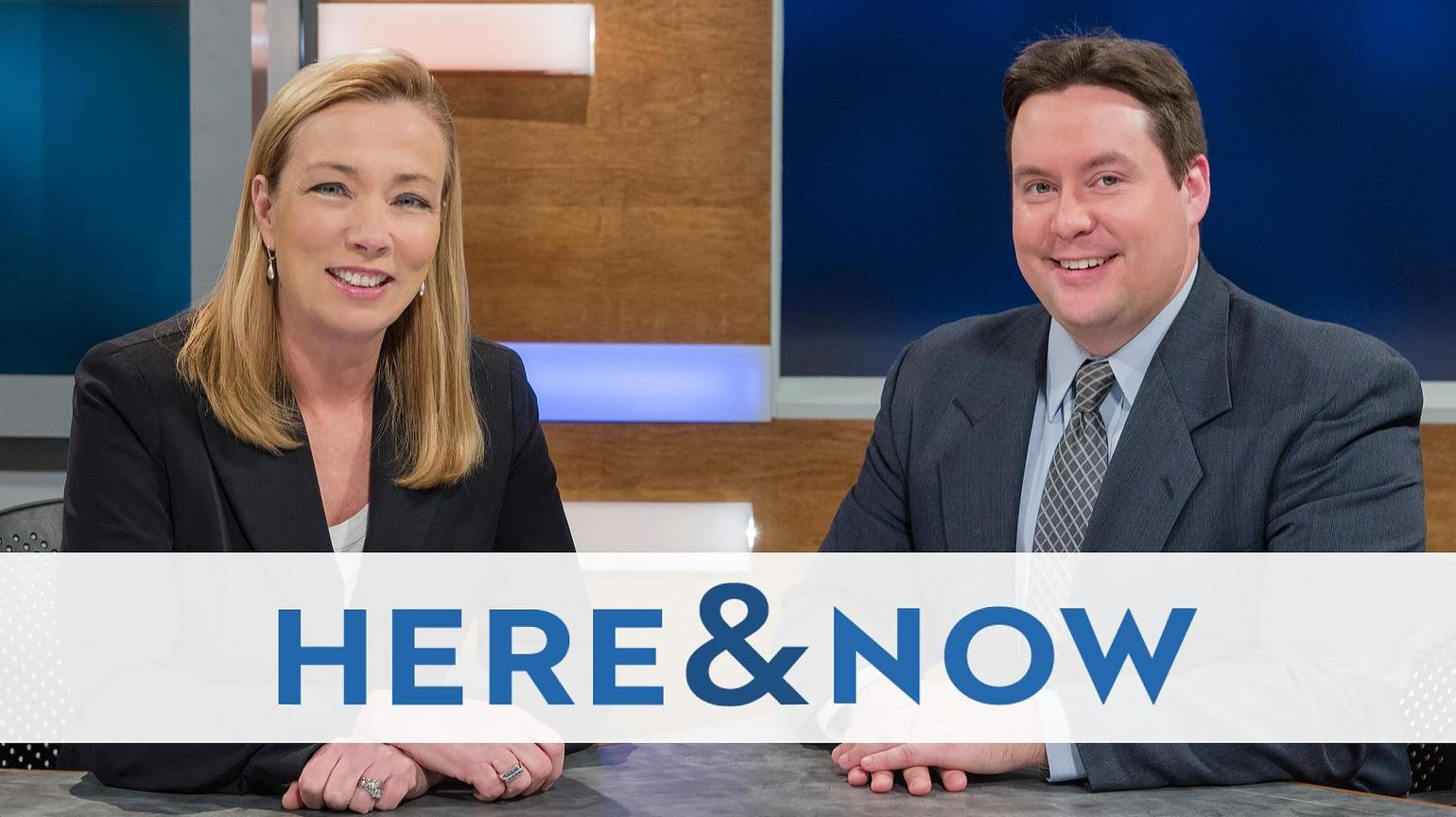






Here & Now for November 13, 2026
Announcer:
The following program is a PBS Wisconsin original production.
Frederica Freyberg:
Measles makes a strong foothold in Wisconsin with a second child death raising new alarm. And Democrats solidify their leadership at the Capitol.
Greta Neubauer:
I will be serving as the speaker in the upcoming session.
Frederica Freyberg:
A first step toward a blue agenda in the new year.
I’m Frederica Freyberg. Tonight on “Here & Now,” chief medical officer Dr. Ryan Westergaard on the landscape of the measles outbreak. What action we can expect at the State House heading into a budget year, the possible overturning of Wisconsin Act 10 and how school districts are coping with fewer referenda dollars. Plus, a new formula proposal. It’s “Here & Now” for November 13.
Announcer:
Funding for “Here & Now” is provided by the Focus Fund for Journalism and Friends of PBS Wisconsin.
Frederica Freyberg:
The number of measles cases in Wisconsin continues to rise, sitting at nearly 650 as of today. There have been two child deaths caused by the disease. These numbers put Wisconsin in the top three for measles cases in the U.S. and the highest across the state in more than 35 years. Plus, public health officials say it’s almost certainly an undercount. With new vaccine guidance and for more information, we turn to Dr. Ryan Westergaard, chief medical officer and state epidemiologist for communicable diseases for the Wisconsin Department of Health Services. And, doctor, thanks very much for being here.
Ryan Westergaard:
You’re welcome.
Frederica Freyberg:
So the number of cases is going up fast and spreading. And now with these two deaths, how alarming is this?
Ryan Westergaard:
It’s not alarming in the sense that it’s unexpected because we know that when measles gets into a community that has low rates of vaccination, this is what it does. It spreads pretty quickly. But as you said, we’ve been used to having very low cases every year. Zero is the number that we prefer to have. And in the decade before the pandemic, it was 0 to 2 cases most years. So this is really something that we haven’t seen in our careers. And we fear we’re not quite through it. It’s likely to continue to get worse.
Frederica Freyberg:
Why is measles so dangerous for young children and infants in particular?
Ryan Westergaard:
Measles is dangerous for anyone but infants under 12 months are too young to get vaccinated. Their immune systems haven’t been fully developed yet, and they have vulnerability to severe infections like pneumonia and meningitis or encephalitis. So we want to protect the youngest children by protecting everyone and trying to stop measles from spreading in the community.
Frederica Freyberg:
And you have new guidance around vaccinations for the youngest of children.
Ryan Westergaard:
Yeah. So it’s a tradeoff. We know from a lot of research that the measles vaccine is very effective and very safe, but it works best when the first dose is given around the first birthday. It doesn’t work as well. It doesn’t offer as much protection when it’s given earlier than that. But now that the measles is not — is not eliminated from the community that it’s spreading, that leaves a significant number of children under the age of one year old who are vulnerable. So it’s a tradeoff between getting a vaccine that isn’t as effective as it would be later, versus having no protection at all. So for those 6- to 12-month-olds, it’s really important to get that extra early dose now.
Frederica Freyberg:
So epidemiologists say that out of every 1,000 unvaccinated children, between 1 and 3 will die from measles, saying that the deaths of two children in Wisconsin suggests a far higher number of cases. How high?
Ryan Westergaard:
Yeah. We talk about this and of course, we don’t know. Is it a factor of 2, 3 or 4 that we’re undercounting? What we do know is that when we investigate cases in the community, we hear about families saying that there are other families that we don’t know about. And we know that with all of our conditions that are reportable to public health, they don’t all get reported. Some people don’t get tested. Some people don’t come to get medical attention. So I think it’s a safe assumption that we have well over a thousand cases in the state. And how much more than that is difficult to tell.
Frederica Freyberg:
Was it known to public health officials in Wisconsin that there were so many unvaccinated people?
Ryan Westergaard:
Yeah, we’ve known about this for years unfortunately. We track the number of and the percentage of children who are up to date on their recommended vaccines by the time they start kindergarten. We actually put this on a map on our website. And we’ve known for years that there are counties in Wisconsin that are well below 80%, some not much higher than 50%. So this is what we unfortunately expect to see in a situation where too many parents have chosen to not vaccinate their children for too many years. We have not only children who are vulnerable, but we have whole families who have no protection against this infection.
Frederica Freyberg:
Experts say that the U.S. is on the brink of losing its measles elimination status. What’s your reaction to that?
Ryan Westergaard:
I think that that is obviously true, given what if we’ve been paying attention, the current measles outbreak in the country started early in 2025 in Texas, and there have been outbreaks in states that have started and then have ended. But there’s been transmission around the country. New outbreaks popping up going on two years. And the public health definition for elimination is that we have no ongoing transmission for 12 months. We’ve clearly surpassed that. So it’s really a formality that the World Health Organization would change that status. But it’s a sobering reminder of how much we’ve lost, because it was a tremendous accomplishment. A public health triumph to eliminate a measles — a disease that’s as infectious as measles from a whole population for so many years.
Frederica Freyberg:
All right. Dr. Ryan Westergaard, thanks very much.
Ryan Westergaard:
Thanks for having me.
Frederica Freyberg:
Wisconsin Democrats still have seven weeks until they are sworn in and officially take control of the state Legislature. But they are already starting to plan what they are calling a “transformative agenda.” That started this week when the Democratic caucus met for the first time and elected new leadership. “Here & Now” senior political reporter Zac Schultz has the story.
Zac Schultz:
The sign high above the Assembly floor welcomes visitors in the name of Assembly Speaker Robin Vos. But that will change with the new year as the incoming Democratic majority elected representative, Greta Neubauer, to be the new Assembly Speaker.
Greta Neubauer:
I would like to introduce you all to the amazing group of people standing with and behind me are incoming Assembly Democratic Majority caucus.
Zac Schultz:
Speaker-elect Neubauer promised they would hit the ground running in January, ready to address a long list of issues.
Greta Neubauer:
We are going to lower costs, build great schools and protect people’s rights. We will strengthen our democracy, make our state more just, safer and more welcoming, create good jobs, hold big corporations accountable and protect our environment.
Zac Schultz:
Incoming Senate President Mark Spreitzer has a similar list.
Mark Spreitzer:
Healthcare, housing, childcare, college.
Zac Schultz:
What is missing from the lists are details. What will come first? Will they be standalone bills or in the budget? How are they paid for?
Dianne Hesselbein:
I understand everyone has a sense of urgency knowing what that’s going to be.
Zac Schultz:
Senator Dianne Hesselbein is the new Senate majority leader and says they will need to meet with their new members, colleagues in the other chamber and Governor-elect David Crowley to set the agenda.
Dianne Hesselbein:
We’re going to be working on this. Stay tuned. We’re hoping to come together. We’re going to be having caucuses all through November and December.
Zac Schultz:
Democrats and their supporters have waited a long time to see new leadership in the Legislature. And Neubauer says they feel the same impatience when it comes to seeing change.
Greta Neubauer:
I think they share that with our caucus. Our members have been waiting for this moment for a long time. We are not going to be patient. We are going to work hard and work quickly and pass as much good policy as we can for the people of Wisconsin.
Zac Schultz:
Reporting from Madison. I’m Zac Schultz for “Here & Now.”
Frederica Freyberg:
With Democrats now looking ahead to governing with their majorities, what will it take to turn pent up priorities into law? We’re joined by UW-La Crosse political science professor Anthony Chergosky. And professor, thanks a lot for being here.
Anthony Chergosky:
Thank you.
Frederica Freyberg:
So we heard the broad brush of kind of what the new Democratic majority would like to do going forward, but what kind of discipline will Democrats have to have to effectuate their policy priorities?
Anthony Chergosky:
They are going to need discipline because although they have majorities, they do not have massive majorities. The better-than-expected outcomes for Democrats in state legislative races gave them a little bit of a cushion in both the state Senate and state Assembly, but not a lot of a cushion. And that means that party unity will be key for Democrats as they try to advance their policy agenda.
Frederica Freyberg:
So we’ve seen at the national level that notwithstanding initial messaging from President Trump that he would like to work with Democrats or could work with Democrats, his actions seemed to belie that in the days following Election Day. What can voters expect coming out of Washington do you suppose?
Anthony Chergosky:
I think voters are going to see gridlock and brinksmanship in Washington. And we have seen both sides buckle down for a contentious final two years of the Trump administration with Trump, for example, appointing Stephen Miller as his chief of staff is a clear sign that he is preparing for battle with Democrats and for their part, Democrats are prepared to use the oversight power of Congress to call attention to what they perceive as the excesses and corruption of the Trump administration. So I would expect lots of gridlock and partisanship in Washington.
Frederica Freyberg:
In your neck of the woods in the 3rd Congressional District, Congressman Derrick Van Orden, who lost the election to Democrat Rebecca Cooke, has already filed to run again in two years. What do you make of that?
Anthony Chergosky:
I think it’s a signal to the party that he intends to be a candidate and wants to be the party’s nominee. That type of early signal can be very valuable to the party, because it could dissuade other Republicans in western Wisconsin from launching a campaign. I’m not surprised that we’re going to see a rematch, because we’ve already seen Cooke versus Van Orden twice now, so why not a third time? But there is that question about what this district is going to look like. And if Democrats in the Legislature are going to redraw it.
Frederica Freyberg:
Yeah, that’s a big point there at the state Legislature. How weird do you think it will be for Republicans not to be led by Robin Vos?
Anthony Chergosky:
It’s going to be a big change because we’re seeing all kinds of leadership turnover in the Capitol. It means that lots of people are going to be playing roles that they are not used to be playing. For Democrats being the majority party, setting the agenda and having to maintain unity to pass legislation, determining priorities and turning those broad visions that they have into concrete policies. For Republicans, they find themselves in the unusual position of being in the minority party. And believe me, that could be a harsh reality for them. It is a rather miserable experience to be the minority party. So both parts of the Capitol, both parties, are going to be in a much different situation than they are used to being in.
Frederica Freyberg:
So there is a budget surplus, as we know, in Wisconsin, and that long wish list for Democrats. How delicious are the possibilities for Democrats with that surplus?
Anthony Chergosky:
Oh, enormously, Fred. When we think back about the last time that Democrats had a trifecta, it was the final years of Jim Doyle’s administration. And that came right in the heart of the financial crisis. That was a miserable time to be the majority party or to be anyone in state government because of the horrific budget problems that the financial crisis brought with it. Now, it’s a completely different picture with a budget surplus rather than a budget deficit. It means that Democrats have some wiggle room when it comes to new spending and new policies that they might pass. And with 16 years in the minority party, believe me, there’s some pent-up demand among Democratic Party voters and Democratic Party constituencies for new policies. And so that surplus is absolutely crucial to Democrats in the Legislature.
Frederica Freyberg:
But also, what kind of caution should they be expected to exercise with that surplus and their pent-up demand?
Anthony Chergosky:
Yeah, not going too far with the budget surplus so as to lead to a deficit going forward. Not going too far with how that money is spent. I think that there’s going to be pressure in both directions. Pressure to use the surplus responsibly, but also pressure to take advantage of what is a once in a generation opportunity for Democrats. Not only do they have majority control, but they’ve got that big surplus, and I’m sure they’re going to want to swing for the fences when it comes to this budget process and their broader policy agenda.
Frederica Freyberg:
Speaking of swinging for the fences, the state Supreme Court has accepted an Act 10 lawsuit, and Democrats are now looking to kind of seal the fate of Act 10 that stripped most government employees of union protections. But I have this question for you. Do you think the Legislature could kind of create a hybrid, keeping the employee contributions but restoring union rights?
Anthony Chergosky:
It speaks to the dilemma that Democrats have, not just with unions and Act 10, but in a lot of situations, Fred. They agree on the principle, but the devil is in the details. Democrats across the board agree on repealing Act 10 and repealing right to work. But what does that look like in practice? And what if the Supreme Court does it for them? So the politics surrounding Act 10 and organized labor are going to be fascinating to watch, because you’ve got Democrats trying to figure out what a post Act 10 Wisconsin looks like. And oh yeah, you’ve got the Supreme Court that might take care of it before the Legislature even gets to it.
Frederica Freyberg:
All right. Anthony Chergosky, thanks very much.
Anthony Chergosky:
Thank you.
Frederica Freyberg:
Governor Scott Walker enacted his signature Act 10 in 2011, bringing massive protests to the state Capitol on the part of as many as 100,000 public employees. The law stripped union protections and demanded employee contributions to pensions and health care. Here’s what our colleagues at “Inside Wisconsin Politics” had to say about it.
Shawn Johnson:
Wisconsin Act 10 is back in the news. The Wisconsin Supreme Court says it will hear a lawsuit challenging Wisconsin Act 10. Zac, how big a deal is this and why now?
Zac Schultz:
Why now seems fairly coincidental that this just comes out after the election. There was a lot of speculation about whether the Supreme Court would weigh in on taking this case up again before the election, and whether that would impact how people might vote. There’s always a news dump that comes right after the election. We saw that with gubernatorial and Milwaukee County executive politics. With the Supreme Court, that’s no different. Act 10 is about to turn 16 years old. And, Shawn, you and I remember that we were there the entire time. It was a big deal. Democrats have been trying to repeal it ever since, and they haven’t been able to do it legislatively. They’ve never had the votes. They’ve tried in the courts. They’ve tried in the Wisconsin Supreme Court. They’ve tried in federal court, and they’ve lost both times. This is a third route. This is a lawsuit filed a couple of years ago. A Dane County judge overturned portions of the law. That was held in abeyance. And then a more conservative appellate court recently this summer ruled that, no, there was no reason to overturn the law. Now, the court’s going to hear the full decision. The reason it’s interesting is Democrats finally have the vote in the Legislature to overturn Act 10 if they want. So there’s a question of will the court get to this first and will Democrats allow the court to go first, or will the court just sit on this because they don’t have to move fast at all? In fact, they’re not going to and wait to see what happens in the Capitol, which may render their entire case moot.
Shawn Johnson:
Anya, what kind of strikes me with this is that the Legislature could take this signal from the court and say, we’re just going to stand back and let the court do its thing. They could say, like, you know, this lawsuit, I think is important to work its way through. I don’t hear them saying that, actually. I hear Democratic leaders, Greta Neubauer saying, we’re going to move forward on this quickly. Why?
Anya van Wagtendonk:
I mean, and they’ve kind of — it’s interesting they’ve kind of danced around a lot of the potential issues that they might take up when they take power in January. This was not one of them. On the first day that Greta Neubauer was elected to leadership in the Assembly and Dianne Hesselbein in the Senate, they both talked about this being a really kind of important issue for them. And then after the court said it would hear this case, Greta Neubauer came back on our program on “Wisconsin Today” and reiterated that the Legislature is still going to take it up. So there could be several reasons for this. You know, one thing is that Act 10 sounds like a very sort of like neat, clean, discrete thing. Laws are very unwieldy and big. The court could rule very, very broadly or very narrowly. So depending on what happens there. They might want to do a whole lot of other things to kind of not just overturn what happened when Act 10 went into place, but then also kind of shore up union rights more broadly. And so we’ll see kind of what that actual package looks like. Is it just a, oh, we want to undo exactly what Scott Walker did. And, you know, as they say, kind of turn the page on the Walker era or do we want to kind of affirmatively also put forward, you know, the Neubauer-Hesselbein agenda?
Shawn Johnson:
Yeah, you know, Rich, this was the landmark law, really, of Governor Scott Walker’s era. And I think for a long time, it felt like it would be here forever. That he had kind of done away with this chapter of organized labor and unions would have to do something else in Wisconsin. So what are Republicans saying now that they’re seeing this pillar of the Walker years kind of starting to crumble?
Rich Kremer:
Well, they see the writing on the wall. I mean, with the Democratic majorities talking about going in that direction and with the Supreme Court. You know, the liberal majority on the Supreme Court is just so big right now. And, you know, could potentially go even bigger in April. So what they’re doing is they’re shouting from the rooftops, essentially saying that this is going to cost a lot of money, getting rid of Act 10. They estimate they claim it’s going to cost $2 billion, and that’ll be borne by school districts and local governments. And there’s going to be budget holes all over the place. So they’ve also been pointing to the Wisconsin Institute for Law and Liberty that has done a study on this. And they’ve also got an online calculator where people can put in their information and it tells them, you know, an estimate of what they’ve saved because of that.
Frederica Freyberg:
Along with statewide ballot questions, voters in nearly 80 districts were asked whether to pass school funding referenda. Forty-five of them passed for more than $1.3 billion in new funding. The state superintendent today released the Department of Public Instruction’s budget request, asking for $2.75 billion in new funding. It’s designed to provide predictable funding and end these operational referendums. We turn to the Wisconsin Public Education Network and its executive director, Heather DuBois Bourenane. And thanks very much for being here.
Heather DuBois Bourenane:
Thanks for having me.
Frederica Freyberg:
So should this DPI budget be adopted, how welcome would that be for schools always scrambling for new money?
Heather DuBois Bourenane:
I don’t think our districts have seen a more welcome proposal in a very long time. The budget that we just saw – hot off the presses from DPI this afternoon – looks like it’s doing something that public school advocates and school and district leaders and educators have been asking them to do for decades, which is really take a deep look at some structural fixes to how we fund our public schools that will align the spending more with what students actually need and what districts are already required to spend and move away from this outdated model that’s really based on property values and has led to this endless cycle of needing to fund by referenda, which ultimately just has made our gaps wider and wider across the state.
Frederica Freyberg:
Does this request anticipate a lot more state allocated funds to achieve its goals? For example, these increases for special education, state reimbursements up to 60% in year two.
Heather DuBois Bourenane:
My understanding is that these are some structural tweaks that reallocate some of the dollars that currently look like they’re going to school, public schools, but actually don’t fund them at all. Things like the school levy tax credit. And by moving some of these things to actual school aides, the DPI was able to make some really significant tweaks without increasing how much folks are going to have to spend locally in property taxes. And so this is very critically important. And I think what folks need to know is these aren’t new costs. Special education is already being paid for at the local level as districts have to take money out of their general funds to cover these unreimbursed costs. And that’s one of the significant reasons why we see so many referenda, because that gap is so wide. That gap itself is almost $2 billion every biennium. So this is really a huge and potentially transformative proposal. And I think districts are going to welcome it with open arms, because it’s exactly what they’ve been asking for. It’s worth noting, too, that it’s not just what districts have been asking for. It’s what’s been proposed. It was among the recommendations of the Blue-Ribbon Commission on school funding, which was a bipartisan group that studied these challenges and put forward a great proposal a few years back that haven’t been implemented yet. It’s also included in the proposals of the No Time to Lose report from the National Conference of State Legislatures, which is now experiencing its 10th anniversary. So ten years after they said there wasn’t any time to lose, we’re finally seeing a proposal that makes a lot of sense for Wisconsin kids. And I hope our lawmakers and our newly electeds embrace it with open arms.
Frederica Freyberg:
Why was this kind of change to the school funding formula — why has it taken so long?
Heather DuBois Bourenane:
That’s a really good question, because as far as I can tell, it’s not because there wasn’t a plan. It’s not because we didn’t know how to fix it. It’s not because we didn’t know what was wrong. It’s because there wasn’t any political will. And for the last 18 years, our lawmakers have moved forward budgets that didn’t even keep pace with inflation for public schools for prior year spending. And at this point, we’re roughly $3,100 per pupil behind where we would be if we were still funding at 2009 levels. And so that’s a significant gap to be filled. This budget, from what I’ve seen today, takes a huge step forward in starting to fill that gap and could put Wisconsin on a path towards adequately funding its public schools for the first time in decades.
Frederica Freyberg:
Do you feel optimistic that the new legislature and governor will adopt these changes?
Heather DuBois Bourenane:
I do, I do. I think what we saw in the stumping that folks were making as they led up to the election cycle is that folks on both sides of the aisle realize that Wisconsin taxpayers cannot be expected to bear these costs at the local level, and that decades of underfunding have meant, ultimately, that our kids are the ones who are paying the price. They’re paying the price by not having equal access to the same kind of resources across our districts. And they’re paying the price in their performance overall as districts struggle to meet basic needs. And so this budget, I think, solves the moral dilemma as well as the fiscal dilemma that we have. But how is it — how can we keep the constitutional promise we’ve made to our kids to provide an adequate public education? We start by fixing the funding formula and aligning it with student needs.
Frederica Freyberg:
All right. We leave it there. Heather DuBois Bourenane, thanks so much.
Heather DuBois Bourenane:
Thanks for having me.
Frederica Freyberg:
For more on this and other issues facing Wisconsin, visit our website at PBSWisconsin.org and then click on the news tab. That’s our program for tonight. I’m Frederica Freyberg. Have a good weekend.
Announcer:
Funding for “Here & Now” is provided by the Focus Fund for Journalism and Friends of PBS Wisconsin.
Search Episodes

Donate to sign up. Activate and sign in to Passport. It's that easy to help PBS Wisconsin serve your community through media that educates, inspires, and entertains.
Make your membership gift today
Only for new users: Activate Passport using your code or email address
Already a member?
Look up my account
Need some help? Go to FAQ or visit PBS Passport Help
Need help accessing PBS Wisconsin anywhere?

Online Access | Platform & Device Access | Cable or Satellite Access | Over-The-Air Access
Visit Access Guide
Need help accessing PBS Wisconsin anywhere?
Visit Our
Live TV Access Guide
Online AccessPlatform & Device Access
Cable or Satellite Access
Over-The-Air Access
Visit Access Guide


Follow Us