








PBS Wisconsin Passport
Watch this video with
PBS Wisconsin Passport
Become a member of PBS Wisconsin, support your local community, and get extended access to PBS shows, films, and specials, like this one.
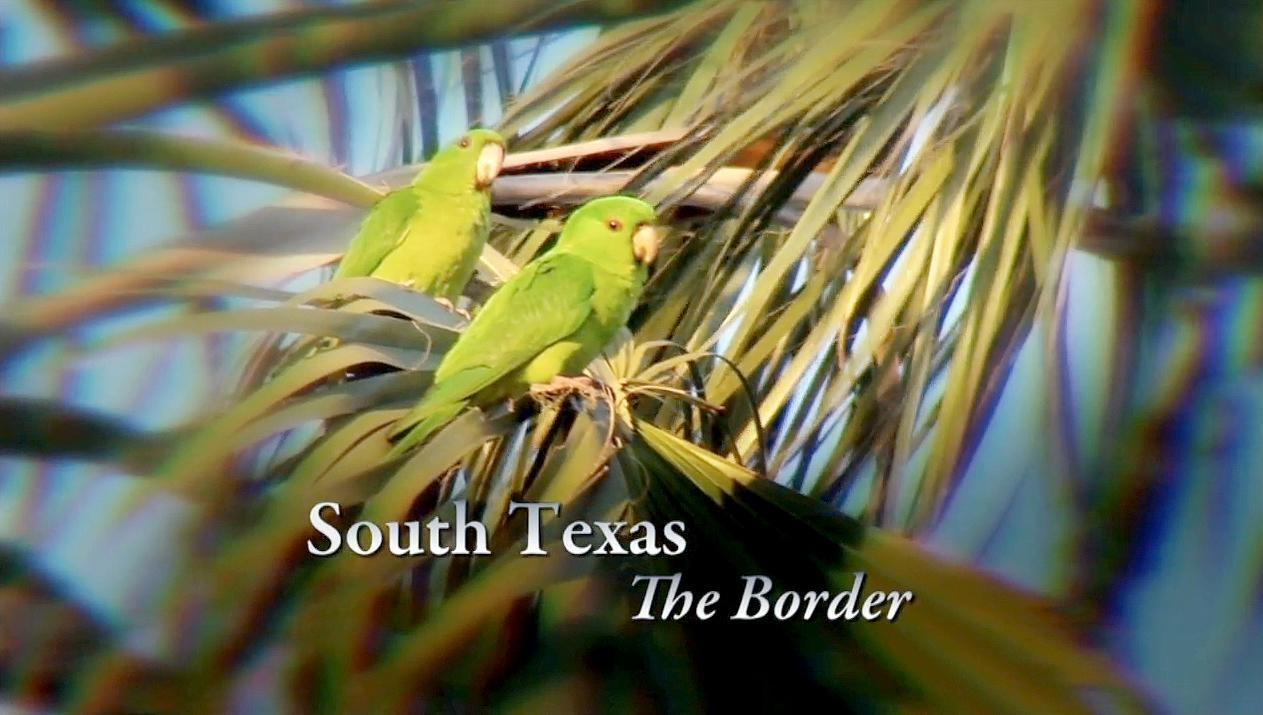
South Texas – The Border
05/07/16 | 26m 49s | Rating: TV-G
How important is the border region to the ebb and flow of life in your backyard? How important is it to our natural heritage? Do the birds you enjoy or the waterfowl you pursue need this place to survive? Join Patrick as he explores the connections to your backyard on the volatile border region of South Texas.


Copy and Paste the Following Code to Embed this Video:
South Texas – The Border
>>
Patrick
South Texas, the border region. How important is this place to the ebb and flow of life in the United States? How is the wildlife in your state dependent on what happens here? Join me on today's "Expedition" as we explore the connections to your backyard here on the border. South Texas is both a unique place where tropical connections exist and a land that's incredibly important to the conservation of our natural heritage, no matter where you live in the United States. We begin our morning moving from South Padre Island towards one of the coolest habitats in south Texas, but on the way, we have to stop and marvel at a spectacle of birds. What a great way to wake up and start the day. It's raw out here. I mean, it's really cold, just barely above freezing, and the wind's whipping, it's blowing rain, but these birds have hunkered down in this little wet pocket here in the salt marsh. And if I didn't know better, I'd think I was down in south Florida because this is the kind of scene we associate with places like Sanibel Island. But here we are, South Padre Island, southernmost Texas, and we're encountering roseate spoonbills with that big spoon-shaped bill made to sweep back and forth in the shallow, muddy water and snatch up little invertebrates, their pink coloration largely caused from the little crustaceans they depend on for food. And you look at the birds that are in here. We've got spoonbills, we've got reddish egrets, two beautiful males that we've been watching, all decked out in that beautiful, long breeding plumage. Look at that crest on that bird. And here in south Texas, we see the typical phase, the reddish phase of the reddish egret, but we also have this beautiful pure white phase, and they're accompanied by white ibis, great egrets, snowy egrets, great blue herons, and we see lots and lots of shorebirds, too, a bunch of yellowlegs and one of my favorite shorebirds in this part of Texas, what I think is the most smartly patterned and sharp-looking shorebird in North American, the black-necked stilt. That's a bird that you can find all times of year here in south Texas, but they're always seeming to be on the move. It's migratory. It's amazing to get this close to this many birds. Most people don't think about south Texas as being great wading bird habitat if you haven't been here. but this place, equally as good as the best sites in Florida. Only minutes away, and we enter a landscape that is very familiar-looking to me, but not one I'd expect to see on the Texas coastline. I love open, windy, spacious places, and this is one of them. This is an incredibly rare habitat. In fact, this is probably the rarest natural community in Texas, maybe one of the rarest in the world. I'm standing in the middle of what we call a southern Gulf coastal prairie, and this habitat, down to 1% of its total former acreage, and almost all of that 1% that remains is right here at Bahia Grande, part of Laguna Atascosa National Wildlife Refuge. And if you close your eyes actually here and just feel the wind and the cold and listen to the sounds of the birds around us, you're almost transported to places like South Dakota or Oklahoma because around us are singing things like horned larks, lark buntings, and eastern meadowlarks, species we associate with prairie habitats much farther to the north. This prairie habitat does have a lot of grass, a lot of sedge component, but also a lot of salt marsh components because we're close to the ocean. It's not terribly dry here in southeastern Texas, but it's dry enough and saline enough here that we have a lot of drought specialist species. So in this part of Texas, you can ride through miles of habitat like this that is dominated by these huge succulents, things like the Spanish dagger yucca or Don Quixote's lace, and I love that name because it refers to the beautiful flowers, and this plant flowers in the wintertime or early spring, so right now, as you drive down the road, we see these beautiful, creamy white flowers on these yuccas. But it's not just yuccas that occur in this habitat. There's a lot of cacti, species that you'd typically think of being in true desert, things that look like pincushion, hedgehog cactus, and tiny barrel cactus, here, growing among salt marsh plants. One of the reasons that this area is grassy instead of turning into scrubby habitats is because it depends on fire. That's the ecological process that keeps prairielike habitat like this prairie. On the wildlife refuge, there's huge areas that are burned using controlled burns to maintain this incredibly rare community. Laguna Atascosa contains almost all of the coastal prairie that's left, and it's the most reliable place to find one of the most beautiful raptors in North America. I don't know how we get so lucky when we're filming "Expeditions," but we usually find exactly what we're looking for, and it's something that you just can't come out here and see in general, and that's what we're doing here. Aplomado falcons, and we've been watching these falcons for several minutes now. This is a bird that is only here in the United States along the Mexican border, and in fact, it may have even disappeared from here before massive conservation efforts brought it back. And barely did we get in the gate when we spotted these guys sitting there, a male and a female. Aplomado falcons love this habitat, broad, open prairie. They love open areas for hunting. It's a falcon that acts a lot more like a raptor, like a hawk. It spends most of its time perched, looking for prey, and it's not just taking birds, although they take a lot of meadowlarks and grackles that are out here feeding. Much of their prey are also things like insects, lizards, snakes, reptiles, and small mammals. Aplomado falcons were almost gone in the 1980's when we started reintroduction efforts here. Aplomado falcons have done very well in Central America. Where we've been clearing rainforests, we've actually been creating habitat for them because as you clear rainforest and put it into cattle pasture and open habitat that simulate these prairies, you're adding habitat for Aplomado falcons. But here on the northern end of the range, they need this natural habitat to do well. The goal in south Texas is to establish 35 breeding pairs, and to date, they've released well over 450 birds, mostly on Padre Island, and they continually seem to fly over here to places that are really their prime habitat, these wide-open areas like this. And what a morning, getting to see one of the most beautiful falcons, a true south Texas specialty. This place is called Bahia Grande for a reason, and we finally make it to the shallow body of water that gives this tract its name. And here, we find one of the largest flying birds on the planet. If your idea of a pelican is the brown pelican, you'll be shocked when you get a good, close look at the American white pelican. You'll notice some big differences right away between this pelican and the brown pelican. Number one, they're white, but secondly, they're huge! Wingspans on these things can be 9 feet wide. These birds can weigh over 15 pound, and when you see them flying over, it's like a bunch of bombers coming in. Another difference that we notice with white pelicans is the way in which they feed. Brown pelicans dive-bomb for their food and come crashing into the water after small fish. This birds feeds cooperatively, in groups, just slowly herding fish while they're swimming into tight concentrations and then dipping their bills into the water, scooping up those fish. You'll notice that some of these birds have a strange-looking crest on the beak, and that crest is a breeding protuberance that rises on the end of the bill there. It actually falls off after the breeding season. Well, another thing about American white pelicans is, they're long-distance migrants, and this is a bird that was doing very poorly just a few short years ago. Today, it's made a pretty rapid rebound, and that's in large part due to the fact that we've started to keep people away from the breeding areas. White pelicans are really sensitive to disturbance, so on the breeding areas, which, in general in this species are way up in the Midwest, way up in places like North Dakota, Minnesota, southern Canada. They breed on little islands out in the middle of large lakes or even smaller lakes out in the prairies, away from disturbance. If people go out to those islands, disturb those pelicans, they'll abandon the site. Today, in protected places like this, we're seeing a resurgence in both the winter population and the breeding population. And just like a lot of other species here, this one, even though most of the population is long-distance migrant, some populations here in Texas decide to stay, they decide to breed here, and you can find white pelicans somewhere along the Texas coast all year long. The prairies, salt marshes, and wetlands are tightly connected to the life found across the continent. The most poignant example is the waterfowl. These salt marshes and brackish marshes along the Texas coast are incredibly productive wetlands, providing a critical home to millions of migratory waterfowl along the Central Flyway, and we've been watching a ton of them right here. Behind me, we've had baldpates, my old favorite name for the American widgeon, this beautiful bird with a bright green sheen on the head and a bright white cap. That's why it's given the name baldpate a lot of times by old hunters. And also even mergansers out here, a few pintails, and even some lesser scaup. But by far, the bird that outnumbers all others out here in these estuaries and bays are these guys right here, redheads, one of the most handsome ducks in North America. With that beautiful, glossy, russet-colored head and that beautifully sharply contrasting blue and black bill, the redhead looks very similar to a canvasback, but has a nice, brown, rounded head instead of having that sloping forehead that we see on canvasbacks. The vast majority of all redheads in North America winter right here along the Texas coast, and it's one of a couple of species that are really Texas specialists. We're seeing flocks that number in the thousands. These birds pair up here on the wintering grounds, and that's one of the reasons why all of these waterfowl are decked out in full breeding plumage here in the wintertime. They actually form their pair bonds here, and so they choose their mates here, fly to their breeding homes up in the prairie potholes, even up into Canada, and when they get there, they're already paired up. They don't have to waste time finding mates. The short breeding season is ready to go right on the spot. And redheads are a little unusual for most ducks in that they practice something called brood parasitism. Brood parasitism is laying your eggs in somebody else's nest, letting somebody else have the job of incubating and taking care of your young. Now, they don't have to do that. Redheads have the choice of either raising their own young, which a lot of them do, laying your eggs in the nest of another redhead, or, unique for them, laying their eggs in the nest of another duck species. Incredible to see flocks that number into the thousands, maybe tens of thousands, wintering in a great place, south Texas. It's not only the northern ducks that call this place home. To find one of the most charismatic, you don't even have to leave town. Well, I wanted to see black-bellied whistling-ducks in Texas, and I think we did. We've got an enormous flock here at an urban park right in Harlingen, Texas. And not only are there black-bellied whistling-ducks out there, but there's also a pair of fulvous whistling-ducks that just came flying in, and apparently they roost here overnight before they make their forays out. And here, when it's not the breeding season, in the wintertime, sometimes they will form these large aggregations. They're making use of a lake, a nice roosting site, a lot of trees, and just taking advantage of the things that human beings have done in the landscape here, a real survivor. The black-bellied whistling-ducks are sometimes also called black-bellied tree ducks. If you look behind me, up in the trees, you'll see ducks flying into and out of the trees. We don't think about ducks using perches, and you could not mistake that tropical duck for any other species in North America because those bright, weird, orangish red bills and legs and feet and the black, brown, and white markings are truly distinctive among our ducks. And they spend a lot of time perched. I've even seen these right along streams in rainforests, perched way up high in the trees. They're an incredible tropical duck that's actually doing very well. It used to be restricted to just the lower Rio Grande Valley, but it's expanded its range, its breeding range, all the way up into places like South Carolina today. And as we've changed the habitat here, as we've gotten rid of a lot of the forests, the thickets, the thornscrub, and the taller trees that are located along resacas and along the Rio Grande and other bodies of water, these birds have tried to survive by moving out, moving north, and today, they're much more common outside of the Rio Grande Valley than they are within the Rio Grande Valley. Well, the other species of whistling-duck here, the fulvous whistling-duck, is really not that closely related to the black-bellied. They're both called whistling ducks because of that incessant, high-pitched whistling that they're doing. When you look at these two species interacting, you get the feeling that the fulvous whistling-duck and the black-bellied whistling-duck wouldn't really like to share the same territory. We've actually seen the fulvous out here being bullied. The fulvous whistling-duck breeds in rice paddies, so as the rice industry and agriculture, especially wetland agriculture, has extended and expanded in places like Louisiana and eastern Texas, this bird has extended its range from the heart of its range in the tropics, far outside of the lower Rio Grande Valley and all the way up into the Gulf Coast states. So it's just kind of neat to see our two specialist tropical birds making use of a habitat you just wouldn't expect. It isn't just saltwater habitats that are incredibly important to migratory waterfowl here in Texas. Freshwater wetlands like this one here at Estero Llano Grande State Park are incredibly important to a huge number of migratory waterfowl in North America. The species that we're looking at here are great examples of that. A few of the ducks that are out there behind me right now are gadwall. They're rather plain ducks, especially when you're viewing them from afar, but the majority of the gadwall in the United States depend upon Texas for their winter migratory habitat. And gadwall really aren't as plain as they look from afar. If you get a pair of binoculars on them or you get up close, you're gonna see that they are incredibly intricately patterned on those feathers. Especially the breast feathers of the male are just exquisite when you get a really close look at them. The females, well, they do look like a female mallard. They're not the most beautiful waterfowl. Incredibly elegant bird, but the ones that are patterned like mallards, with a little more white on them and an incredibly large, flattened bill, those are shovelers, northern shovelers, and shovelers are really easy to identify because of that big, flat bill. That's where they get the name from, and those bills are built to strain tiny organisms and seeds from the water. In fact, it takes the smallest bits of food of any of the dabbling ducks that are out there. And because of that, it often feeds in shallow water, sometimes stagnant water. So one of the issues that this bird has is botulism toxicity from feeding in stagnant waters during bad years up in the north. So we see populations of those fluctuate wildly. It's just really cool to get this close to a lot of these species because you usually can't do that. In most places, they're used to getting shot at, and they're not as confiding as these birds are here in the state park. Also out here we have some much smaller ducks, and those are one of the most beautifully colored of any in North America and the smallest of the migratory waterfowl we have here. Those are green-winged teal. It's hard to see how they get their name until they show you that green spot on their wing. And right now, the female out there is giving us a really good look at that green spot. Another beautiful species that's out here and small in numbers is a ring-necked duck. And when you look at them, they're really distinctive, bright white ring around the bill. You'd think they'd be called ring-billed ducks. They're named ring-necked ducks because they actually have a little chestnut collar around the neck. Most of these species out here are migratory. They come a long way, some from as far away as northern Canada to be here in south Texas, and the neat part about these wetlands and about south Texas is that it connects the continent. This place may not be on your mind in terms of important wildlife habitat, but no matter where you live in the United States, something relies on Texas part of the year. Estero Llano Grande provides habitat for much more than just waterfowl. This is the most reliable place to see one of the best camouflaged birds in America. Why in the world would I be staring into this brush pile? You have to take a really close look. This animal is incredibly well camouflaged. That's common pauraque. Pauraque is a name that is probably derived from the Spanish para que, and that is what we call an onomatopoeic name. It's something that is mimicking the sound that this bird makes. It's one of the most common sounds that you hear in Central and South America during the night. This animal is a nightjar. It's related to whip-poor-wills, poorwills, chuck-wills, widows, and nighthawks. And you never get a chance to see those other birds up close and personal like these. It's a very rare event to see one of those in the daytime, but they all have one thing in common. They tend to be cryptic. These are nocturnal birds that are colored just like the substrate that they spend their days sleeping in, and that's exactly what this bird is doing. They have what appears to be a tiny beak. The beak is really short, but when it opens up its mouth to preen, you realize that the vibrissae, all those little bristles in the feathers, are covering up a large part of the mouth of this creature, and that big, gaping mouth is there to capture insects. This animal hunts in a very different way than a nighthawk. It's not flying around all the time. They actually just sort of walk around the ground and make short hops up, fluttering their wings. They look like an injured bird, but what they're doing is, they're hopping up off the ground to capture flying insects on the wing. An incredibly cool bird, and just like most of these birds, that one, a nonmigrant, extending its range, even though it's very common in the tropics, only to this little, tiny corner of south Texas here in the United States. Perhaps the most famous winter resident of south Texas is found in and around Port Aransas. We arrive too late in the afternoon for cranes, but just in time for quite a show in the marsh. We've been having way too much fun here in Port Aransas. We're at this beautiful little birding center right in the middle of town, and on one side, open water completely full of ducks, just about every species that would be in a freshwater wetland. I know Katie's been enthralled with this little guy. >>
Katie
The pied-billed grebe. Not only is it really cute, it's doing all this diving in and out of the water, and I guess it's looking for food like crustaceans and fish. >>
Patrick
And fish, yeah. It's a very common species that's really--it's hard not to like that bird. >>
Katie
It's really cute. >>
Patrick
But what's really amazing is in the actual cattail marsh. Sometimes if you just sit still, life comes to you. Some of my favorite birds of the songbirds have come out that are specialists of these wetlands, and we've had the best looks at common yellowthroats and marsh wrens here, birds that are really skulking and you usually don't get a good look at. But also soras. >>
Katie
That was my first sora that I've seen, and it was blending in really, really well. So you could see it for a second, and then it disappeared. >>
Patrick
Right. Soras are a type of rail. They're highly migratory, so once again, even this habitat is providing habitat for these long-distance migrants coming through here. But then not only that, but green herons in here which, again, cryptically colored camouflage, but also bitterns. >>
Katie
American bittern? >>
Patrick
American bittern and the least bittern. Least bitterns are normally migrating out of this area, but each year, a few stick around here in south Texas. Even up in South Carolina, some years we get a few. But mostly we think of that as being a bird that migrates way to the south and then is here to breed, but the American bittern-- >>
Katie
Oh, wow. >>
Patrick
We spent a long, long time watching them. >>
Katie
We were watching the American bittern, and it had its own cheering section. It was trying to hunt, and we were cheering it on, hoping that it would catch something. >>
Patrick
Finally did. Really cool cryptic creature that comes up and bobs near the water, looking like swaying reeds, and hard to see unless it comes out into the open. Just incredible group of animals, and then it's hard to miss probably the best thing we saw. >>
Katie
The best thing we saw was a group of nutria, and they were eating, searching for food, diving in and out of the water, stumbling in and out of the reeds. >>
Patrick
And two males meeting each other and not liking each other. >>
Katie
They did not like each other. There was a standoff. >>
Patrick
Pretty much in a standoff. That's really a kind of interesting animal because it's actually an invasive exotic here. It's an herbivore. It's out here consuming roots and vegetation, not very cryptic, pretty clumsy, but something that's really taken over these wetlands, and it belongs in southern South America. >>
Katie
Yeah, that was the first comment I made. Oh, it looks like a capybara. And they're related. >>
Patrick
So next time you're looking at ducks, take a look on the other side of the boardwalk because some really cool stuff goes on there too. A last chilly morning in Texas provides us with a perfect opportunity to see the cranes. I've seen these many times, but this is Katie's first experience. >>
Katie
This is absolutely breathtaking. When I first saw these cranes, I just started jumping up and down. Your heart starts beating really fast and you get so super excited because you're seeing something that you read about and you talk about. The birds behind me are whooping cranes, and they are one of the rarest crane species and one of the most rare birds in the United States, in North America, really. These whooping cranes are part of the Aransas- Wood Buffalo population. There's only about 280 cranes in this flock. They spend part of the year in Canada in the Wood Buffalo National Park, and then they migrate to this rich, abundant habitat here at Aransas National Wildlife Refuge. It's not an innate thing that they're born with. They learn this migration route from their parents, and they make this trip every single year. Whooping cranes are an endangered species, and right now, this is the only self-sustaining wild population anywhere. This is it. There are other populations of whooping cranes found in the United States, but they're captive-reared or they're nonmigratory. And in 1941, there were only 15 cranes, and they were here in Aransas National Wildlife Refuge. This endangered species is today on its way to recovery. Those 15 cranes have become a population of about 600 cranes, and it's because of intense conservation efforts. Every bit of land between Canada, all the way down here to Texas is critical to their survival. These birds travel 2,500 miles for their seafood buffet of blue crabs. It's been noted that these guys can eat up to 80 crabs in one day. Talk about all you can eat! This is a really important food source for them, and it provides energy so they can make that migration back up north and start their nesting season. The habitat here in Aransas is extremely important for the blue crabs to survive, so the quality of the habitat and the water is really important to the whooping cranes because that's where they're gonna find the most blue crabs. Whooping cranes have faced some pretty big hurdles throughout their history, but there are still
some threats that remain
the habitat loss, human development. A late hurricane coming through this area could really decimate the numbers in this population. Other threats that they face are drought, oil spills, chemical spills. These guys live right on the shipping lanes to and from oil refineries here in Texas. Conservation efforts have been intense, and we've got scientists and researchers, volunteers from all over working together. And one thing that we need to keep in mind is that we need to preserve their habitat, which is our habitat too. >>
Patrick
This "Expedition" to southern Texas has just been astounding. I never thought we'd see so many different kinds of plants and animals in such a short period of time. And it really goes to show you just how immense the biodiversity of this little corner of America is. Some of the species have adapted to and even benefited from the activities of man here, but others are really struggling to maintain a foothold here in America. With any luck-- and a lot of hard work-- species like the ocelot, the green jay, and the plain chachalaca will continue to delight visitors and residents for generations to come. I'm Patrick McMillan, wishing you your own exciting "Expedition." CompuScripts Captioning ccaptioning.com >>
Female announcer
To purchase a copy of "Expeditions with
Search Episodes

Donate to sign up. Activate and sign in to Passport. It's that easy to help PBS Wisconsin serve your community through media that educates, inspires, and entertains.
Make your membership gift today
Only for new users: Activate Passport using your code or email address
Already a member?
Look up my account
Need some help? Go to FAQ or visit PBS Passport Help
Need help accessing PBS Wisconsin anywhere?

Online Access | Platform & Device Access | Cable or Satellite Access | Over-The-Air Access
Visit Access Guide
Need help accessing PBS Wisconsin anywhere?
Visit Our
Live TV Access Guide
Online AccessPlatform & Device Access
Cable or Satellite Access
Over-The-Air Access
Visit Access Guide




Follow Us