








PBS Wisconsin Passport
Watch this video with
PBS Wisconsin Passport
Become a member of PBS Wisconsin, support your local community, and get extended access to PBS shows, films, and specials, like this one.
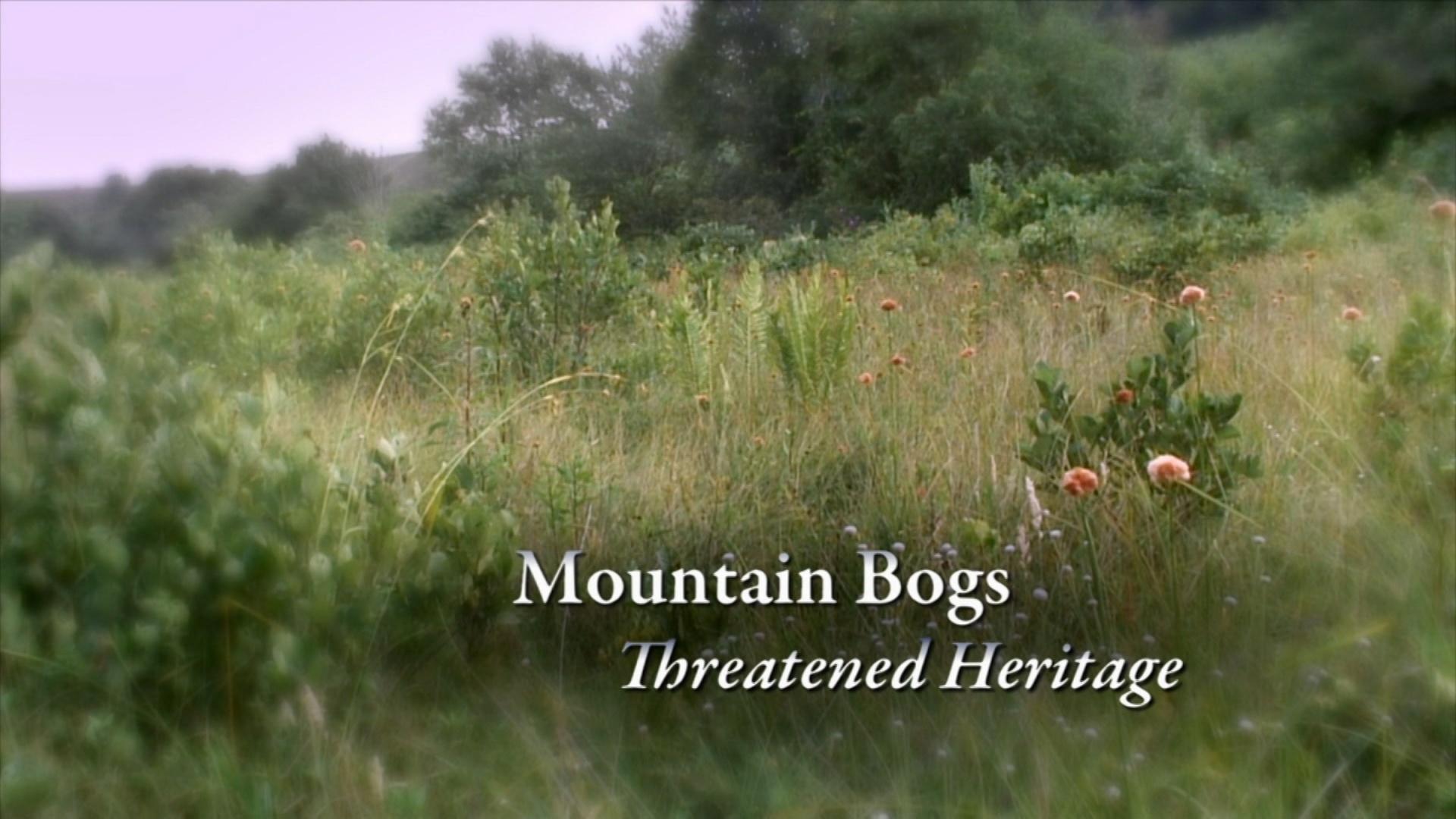
Mountain Bogs – Threatened Heritage
01/07/19 | 26m 48s | Rating: TV-G
One of the most threatened ecosystems in the United States are the Southern Appalachian Mountain Bogs. These small wetlands support many unique and threatened species. The survival of these rare creatures rely on our management and understanding of these systems which are still very poorly understood. Join Patrick as he explores our mountain bogs in a race to understand this ecosystem on the edge.


Copy and Paste the Following Code to Embed this Video:
Mountain Bogs – Threatened Heritage
Our southern Appalachian mountain wetlands. Provide us with one of the most unique natural habitats anywhere in the southeastern United States. Some of the coolest and the rarest species occur right here. They also present us with one of the greatest conservation challenges we face because you see. We're losing them. And we're not exactly sure how to get them back. Join me on today's expedition. As we see if there's a future for southern Appalachian Mountain bogs. A land of cotton grass and cranberries. Well it's almost turkey time here in north western North Carolina and what would Turkey time be without cranberries. When we think about cranberries you're probably thinking about someplace like Massachusetts or Maine but in fact we have cranberries here in the southeastern United States but there declining and there the declining rapidly because this is the habitat they grow in. They grow in open sunny mountain wetlands, Mountian bogs we usually call them. And this habitat is declining. So the future of the cranberry really is at stake right now in the southeastern United States. This is my favorite mountain bog. It's one that I grew up wondering in when I was a little kid and it's a place that I've watch change over a period of about forty years. And one of the great things about having a television show that's been on the air for thirteen years. Is that we can actually visit places over time and this mountain bog is a place that we've done just that. So we're going to go back in time and to a different time of year. To really begin our exploration for understanding if these sites are natural. How they were maintained in the past. And how we might be able to save them looking into the future. Welcome to a open southern Appalachians bog. This is one of the rarest plant communities that we have in the Carolinas. And it's one of the most magnificent. To be a bog you have to be saturated with water. We think of bogs as sort of open spongy wet places and they generally are dominated down at the ground. By particular species the moss or a particular type of moss. And that's sphagnum moss. You might know it as just is peat moss. and peat defines these systems. Well sphagnum has a number of properties that make it unique and one is its capacity for holding water. This plant can hold many times its weight in water and when it's dry and droughty out. You still come in the bog and squeeze the sphagnum and actually make your hand wet. A lot of times water ring right off of it. Well a bog in a true sense is actually what we call an ombrotrophic wetland. It receives all of its nutrients and water from the atmosphere, from rain. The bogs in the southern Appalachians are fed by springs. There's seepage Boggs. Usually they're found on slopes. Just like right here. The Seepage water in the ground actually hits bedrock and comes forward laterally and builds a wetland here. Now a wetland that receives minerals and nutrients from ground water is actually called a fen. And southern Appalachian bogs are actually. What we should term, "poor fens" because they do receive much of their water from the ground water. These boogs are dominated by plants here that can tolerate acidic situations. Some of the plants that we have here that are in flower in may. Are sticky honeysuckle or clammy honeysuckle. Which is actually rhododendron. Rhododendrons viscosum and gets the name sticky because those buds and the flowers are just covered with little glandular hairs. Another beautiful plant that resembles mountian laurel. Is a plant that's called Wicky. Each one of those little hot pink flowers. Has those spring loaded stamens. Just like a mountain laurel that require touching to actually trip the anther to pollinate the flower. Its a beautiful plant. This one, Kalmia Carolina is limited to the southern Appalachians and the coastal plain. But a close relative occurs in the northern bogs. True Boggs. Two other plants that we have growing right here that also indicate a close relationship with northern Boggs are cottongrass. which is a eriophorum and if you visit true Boggs up in Maine, Canada even as far up as Alaska. You will see species of eriophorum cottongrass. Up there in those boggs. Its a magnificent thing. It's not a true grass. Its actually a sedge. This one is eriophorum virginicum the only species that is found in the Carolinas. Another plant that we all recognize and we all eat around Turkey time is cranberry. Its a relative of blueberries believe it or not. Vaccinium and it grows as a little trailing shrub here, in amongst all the stagnum. Cranberries at one time were extremely plentiful up here northwestern North Carolina. There's a number of place names. There's a town of cranberry, over in Ash county. There several cranberry creeks. But cranberries have nearly disappeared just like most of the plants that occur in the southern Appalachian Boggs because so many southern Appalachian boggs have been drained and converted to other uses. we've dramaticlly altered these landscpaes. Drainage and development in the past century has reduced the open wetlands and mountians from an estimated five thousand acres to less than seven hundred and fifty acres today. Our boggs occur in bottom lands and here thats usually agricultural land. So the hand of humans and has been felt in many ways. It's hard to miss these giant cabbage like leafs which you see growing all of the bog. in fact, cabbage is part of the name of this species. I wish we could do a scratch and sniff episode of this because when you crush the leaves of this plant and smell it. You get the other part of the name and thats skunk. This is skunk cabbage. Now it's not a true cabbage it's actually related to Jack in the pulpit. Now being the young adventurous kid that I was. I thought that with the name cabbage. You should be able to eat it raw. Trust me you don't want to do that it burns your mouth. But the skunk cabbage is unique for many reasons. It's common in these open mountain Boggs and if you look at the flower down here. It gives away its relationship. This flower actually this is the fruiting cluster but the flower itself has a spade. Which is this leaf. That sort of sub tens and folds over the flower. And the flowers are produced on a spadix right here. And these flowers come up so early in the spring. That most of the time there's snow on the ground. They grow so fast and they actually produce a chemical reaction that it melts the snow right around the flower. So you come out here in late February early March and snow is on the ground and it will be melted around these deep Burgundy flowers of the skunk cabbage. Just a really neat species. Common in open mountain Boggs but really characteristic of a different type of bog. A closed canopy system that we call Skunk cabbage bogs. Our bogs are home to approximately twenty percent of the rare species in this region but they occupy less than one percent of the land area. Open mountian boggs are what we term early successional communities. This means they're dominated by grasses and sedges not trees. when forests are removed either by cutting or naturally. The first plants to invade are those that thrive in open sunny conditions. If the conditions are good for trees they soon start to take over. You no longer have a bog. You have a swamp forest. So why do open boggs exist. And do they naturally always turn into forests. Or are their forces that have acted historically to keep them open. One thing we know for sure is that left alone most if not all boggs will slowly turn into forest. So this is the final stage in the succession of open mountain Boggs. What I mean by succession is the transformation of an open sunny habitat. Like we were just in. Into a closed canopy forest and this particular habitat is were skunk cabbage does the best. This is often termed a skunk cabbage bog here in this part of North Carolina but it's actually a small stream swamp forest. It's got a closed canopy here. It's hard to imagine a site like this ever really was an open mountain bog but when I was a little kid. I just come here all the time and I'd find wicky azalea and all those other species we see out in the open Boggs. Still holding on here. There wasn't a mature canopy over this particular site at that time. Well very quickly it grew up into as a closed canopy forest and those species disappeared. Now succession isn't always a really bad thing. I mean this is for skunk cabbage thrives and there's other very rare and actually limited species that are found along the margins of these bogs and them proper. One of the neatest of these is actually called Bog Jack in the pulpit and this species actually has very fluted accordion like ribbing on the spade, that hood like portion that covers the flowers in Jack and the pulpit. It also blooms about a month later than regular Jack in the pulpit. Its a neat plant you only find here. Some others that you predictably find in this habitat. A robin runaway. A very northern species, usually found in boreal forests. Which is often accompanied by a very small flowered form of heart leaf or wild ginger, hexastylus memmingeri. Those species are predictable. One species that couldn't possibly have been predicted. That I found here when I was in college. Actually a freshman in college was goldthread. This plant is known south only to about West Virginia and in northern Virginia. It's highly disjunct to Allegheny county here where we are at today. Many of the plants in our boggs are more typical far to the north. The animals are no exception. Red squirrels are found here. They're much smaller and with a more northerly range then the gray squirrel. Another good example is the ruffed grouse. It's a very protective mother and chicks are everywhere this time of year. Common species like box turtles are bound but there are also much less obvious ones. To understand why so many northern plants and animals are here and how they got here. We have to head north. I'm headed to the north woods of Maine. Just north of Millinocket in the shadow of the majestic Mt. Katahdin. You have to travel quite a bit north to find a true bog. Where In the north woods of Maine right now and we are in a definitely a true bog. A place where you're likely to sink or even bounce. So what is a true bog and hows it different from the boggs that we have in the Carolinas. Well a true bog is what we call in a little traffic or even on the traffic what one means that the receiving most of the water in their nutrients from rain rather than from ground water. And the true northern Boggs have a lot of similarities to what we've seen in the southern Appalachians. Some species of the same. We've got grasspink here. That's the same species that we saw up in Allegheny county. Same species wee see in the coastal plain of the Carolinas. There's cranberry here. This is a different species. A northern and smaller cranberry. There's cottongrass here. In fact we have the same cottongrass but we also have two three other species that aren't found in the Carolinas. Some really beautiful plants that are typical. These cotton grasses Boreal habitats and Boreal bogs. Even on the north slope of Alaska and Canada. Truly gorgeous things. There's even a wicky here and this is a different species of wicky. Actually was separated out really relatively recently. This is northern wicky Kalmia angustifolia. Our wicky is Kalmia Carolina. Their sister species and they share the same preference for this deep acidic peat that occupies Boggs and the poor fens in the Carolinas. The bog we are at right now is actually a perfect example of what we call a pothole or cattle hole bog. And we call them that because there's a little hole of water in the center these blogs but the outside surface. The fringe all the way up to the edge is covered with a floating mate of peat. This is the neatest thing. You can actually walk right out to the edge of the water on these things and as you walk the entire edge of the bog starts to tremble under your feet. What were walking on is not solid ground. This was actually a divot or a hole in the landscape. That was created by a glacier twelve thousand eighteen thousand years ago. This area was covered with almost two kilometers of ice. When that ice retreated it left little divot and holes in landscape. dDvots and holes like the Great Lakes for instance but here this divot much smaller and slowly. Little by little it's filling in with vegetation. This is the interface where water becomes bog and it actually develops these floating islands of peat and some of those floating islands like the one im standing on right now. Actually buoyant enough to support me. Others aren't but they will support loons. So loons a lot of times will build nests on these little floating mats of peat. It sorta just float from side to side out here in these small kettle hole ponds blown back and forth by the wind. its just amazing. The process of eutrophication. The filling in of this pond begins right here. Begins with the development of these little vegetated mats. The vegetated mats coalesce and we get plants like the pitcher plant sundew and then a few woody plants growing in there on the stagnum and woody plants begin to accumulate deeper deeper peat. You get the trees. It's just an amazing system to see right here at the interface where water becomes land in the northeast. Deep acidic peat makes these boggs a perfect place for carnivorous plants. You might be surprised by the diversity here. Includes Rodunleaf Sundew an the taller spoonleaf Sundew. There's a beautiful display of flowering bladderwort with subterranean traps. And even a pitcher plant. Southerners are oftentimes surprised to find out their are pitcher plants in these Northwoods bogs. But really there's one species of pitcher plant and thats this one. The common purple pitcherplant Sarracenia purpurea and this species is really truly a northern pitcher plant. It's a beautiful plant looks very similar to one we have in the coastal plain of the Carolinas. It's just nice to see a familiar face so far away from home. Gets us to thinking about how these plants got here. Now twelve thousand eighteen thousand years ago this was covered with ice. When the ice retreated acidic conditions like this built up and plants from the coastal plain like the purple pitcher plant were able to invade successfully and apparently the purple was either the only when they got here or the only one I can tolerate these really really cold winters. That Maine has to deal out. There lots of other neat plants to take a look at here and lots of other neat things to see here that will remind us of home. The connections between the north woods and the Carolinas are everywhere we look. all these wetlands mean good habitats for frogs. The northernmost frog, the woodfrog thrives in these brutally cold wetlands. While the familiar bullfrog is near its northern limit but their abundance allows the American bittern to grab a meal. These waiters are winter residents in the Carolinas. Their declining throughout their range and dwindling frog populations worldwide threatens the food supply for this rarely seen bird. flowing water Now this is much more familiar looking. This is a poor fen were still in northern Maine in fact we're not very far at all from the last bog we just looked at. But here in this wetland we're standing in a poor fen that's dominated by grasses and sedges. Many of which, we also have in the mountains of North Carolina and there's plenty of big cranberry around. And this fen is probably similar to what existed in north Carolina's mountains back during the ice age. During plasticine around eighteen thousand years ago we would have systems that look pretty much the same as this. Poor fens bordering streams and surrounded by a very northern type woodland. Here dominated by Jack pine, black spruce on young sites and white pine and red spruce on sites it has been allowed to grow for a long period of time. Well these forests. This type of habitat pushed all the way down in North Carolina during that the height of the ice age and what we see today in terms of many of these northern species being trapped in those bog systems at lower elevations in North Carolina are probably the shadows or the remnants of what life was like during the ice age in North Carolina. The Carolinas Would have been a very different place during the ice ages. But as late as the seventeen hundreds. We still had large grazers and browsers like Elk and Bison. What effect do these giant plant eating animals have on the environment. Weill take a look at the moose wallow, where we are at right now. I mean the moose have come in here and definitely stirred up this habitat and reduced almost all the vegetation. But they're coming down here to eat during the summertime. Primarily on these aquatic plants that grow along the margin of this pond and up into this nice grassy fen. In the winter time however, they'll switch to browsing on woody plants. When they browse on woody plants just like Elk browse on woody plants. They are reducing the amount of woody plants that occur here in these Fen and open bog communities. Bison are primarily grass eaters, so they would have been down here grazing on grasses but in the meantime the been wallowing and they actually might also help to to keep woody plants from an invading this habitat. And who knows what effect something like an elephant because we had mastodons. What effect would an elephant have on reducing the amount of woody vegetation in the Carolinas. These are questions we can't really answer today but we actually have things like Elk being reintroduced right now in the Carolinas. We traveled back to the Carolinas in search of a little shy turtle. That may be able to shed some light on the role of megaherbivores in our own mountian boggs. The bog turtle is a tiny species that spends much of its life down in the muck. You rarely encounter one above ground. It's almost never seen even by people that live here. There only found in the reminit boggs and wet meadows in our mountians. We visit with Dennis Herman leader of the project bog turte to find out more about the connection between turtles and grazers. I understand so little about open mountain Boggs and the bog turtle can provide us with a very good clue about how these boggs were maintained in the past and the bog turtle apparently likes open sedgy habitats like we're in right here. Generally little rivulets meadow trails but they're open areas. They're not wooded and that's important for bog turtles. Just like many of these plants that we've seen here in the boggs and are they natural? Well bog turtles are found no where else right? They're found in these open wetlands one of the theories is that they originated as a wet prairie species out of the upper Midwest. And during the last glaciation they made two dispersals. One to the northeast one the southeast and there were these habitats left behind probably created by large grazers. absolutely megaherbivores. Megaherbivores one of the neatest things it back eighteen twenty thousand years ago. We think that that some of these areas there in bottom land, so they should have trees but if you have large grazers and large browsers. Things like elk, bison which were here until the seventeen hundreds and even larger things like elephants, mastodons mammoths, wooly boson. Amazing huge Megaherbivores out here. The research I did in ninety nine. I found that ninety six percent of all the bog turtle sites in the southeast that have greater than twenty turtles known in the population. Are in currently graced or formally graced wetlands and there's a definite correlation between the bog turtle and grazers. A decade after visiting with Dennis these little turtles are still hanging on but their habitat continues to dwindle. Today the next generation of conservation scientists. Like Mike Knoerr are working tirelessly to secure a future for the bog turtle. This is one of our intensive research areas were we are actively trying to exclude predators. The reason for that is because this is really kind of ground zero for bog turtle nesting. So about a month ago. If you were to come out here in the evenings. You would have seen females up on these hummocks and tussocks laying their eggs amongst the sphagnum. Essentially what you're doing is kinda of like we do for sea turtles on several projects on the coast here. Obviously not solely doing this on your own accord you get some partners. Sure do. A lot of people who believe in this and support this work including the nature Conservancy. As well as, the United States fish and Wildlife Service, North Carolina wildlife resource commission, as well as, the zoo Knoxville's Bern Tryon grant. Which we been getting support last couple years and I know you knew Bern. Yeah I worked and Bern for years with bog turtles. That's incredible and its incredible to see what you're doing here. We just talked about the age structure this population that died in two thousand eighteen as we are going to try to reverse the trend and get some recruitment for this population. Were trying to grow this population. Mike an his students and partners are out here. Actively doing this. And its pretty cool. Everything you're doing here. You've got a fence Obviously. Your main predator here you said is skunks. Skunks in this bog but we also have a possums and raccoons, as well so it's to keep the skunks out and to get a good solid recruitment here. I want to come in here in ten years and say those are the two thousand eighteen babies and we do this periodically and we'd address some of my vegetative and hydrological issues that we have here as well. We can keep those turtles in the bog keep happier and collectively I think those efforts can go a long way toward stabilizing populations and growing them. Yeah so fencing out predators and physically keeping predators away from the nest and down in here is a a bog turtle nest. Mostly lying these eggs in June. Middle of June is kind of the peak but it'll begin June all the way to about the first of July. An these youngsters are in here until they hatch which is the last of August. Yeah exactly and it'll start at end of August and run through the end of September for these higher elevations sites. And it's not just these small areas but it's also a lot of habitat management you doing here sort of trying to restore the traditional look and you were talking about how these bog turtles have such spatial memory. So when they these places grow up into poor habitat and also probably messes with their daily routine. Yeah they they move on and we've seen rogue mortality as a consequence. It's a problem when you have that many adults dying or leaving the population and from our data we've been able to estimate rates of decline by stage class. More of them are dying then are being replaced in the population. We know that this population doesn't have is a robust of a juvenile class as Many of our other large populations. And a population as large as this at producing a lot of turtles would also provide you with a a pool that could be used to supplement other populations or possibly even reintroducing to new sites right. Absolutely, yeah historic sites. Sure and I think you know this site behaves as a source for meta population dynamics, you know a lot of our other populations or other wetlands that were formerly occupied or have low numbers today are probably being seeded by this population. So it's important from that standpoint but I think if down the road people were considering augmenting other populations. starting at robust sites where we have growth would be a reasonable way to do it. I've been working with southern Appalachian mountain Boggs my entire life. like I grew up in these system and you know you get the periods of seeing myself lose hope in maintaining any of these bogs and in any species in them and then I see people like you and I it gives me hope that there's a future for these things that are such a part really of what this area is, the history and the diversity it's amazing. Thank you so much for showing us your incredible work. I imagine you guys are out here every day right. Sure are. You know this is the fun part like I said it's much bigger than me but I enjoy actually getting muddy and doing vegetation management and playing with the turtles. Yep yep. Awesome thanks Mike. Well this is the fate of most of our southern Appalachian mountain Boggs. Their very rapidly turning into shrubland and then forest. Just over the decade or so that we've been watching this bog. So much of it is transformed into patches of alder and red maple. Its changed to the point that most of it is unrecognizable. The red maple and the alder are encroaching into these bog systems because there's nothing to keep them out. It's a natural process. The question we have to ask ourselves is. Is the historical management that we've provided in modern times. That was provided by native Americans for thousands of years before that. That was provided by the megaherbivores even before that. Is that history. Is that process worth putting back onto the landscape. It's my sincere hope that the preservation and those that argue for active management can find common ground so that there's a place left for cranberries, cottongrass and wicky not just in these boggs but in the southeastern United States. I'm Patrick McMillan wishing you your own exciting expedition To purchase a copy of expeditions with Patrick McMillan call toll free one eight hundred five five three seven seven five two or order online at ETVstore.org.
Search Episodes

Donate to sign up. Activate and sign in to Passport. It's that easy to help PBS Wisconsin serve your community through media that educates, inspires, and entertains.
Make your membership gift today
Only for new users: Activate Passport using your code or email address
Already a member?
Look up my account
Need some help? Go to FAQ or visit PBS Passport Help
Need help accessing PBS Wisconsin anywhere?

Online Access | Platform & Device Access | Cable or Satellite Access | Over-The-Air Access
Visit Access Guide
Need help accessing PBS Wisconsin anywhere?
Visit Our
Live TV Access Guide
Online AccessPlatform & Device Access
Cable or Satellite Access
Over-The-Air Access
Visit Access Guide




Follow Us