








PBS Wisconsin Passport
Watch this video with
PBS Wisconsin Passport
Become a member of PBS Wisconsin, support your local community, and get extended access to PBS shows, films, and specials, like this one.
South Texas – A Hint of the Tropics
05/07/16 | 26m 46s | Rating: TV-G
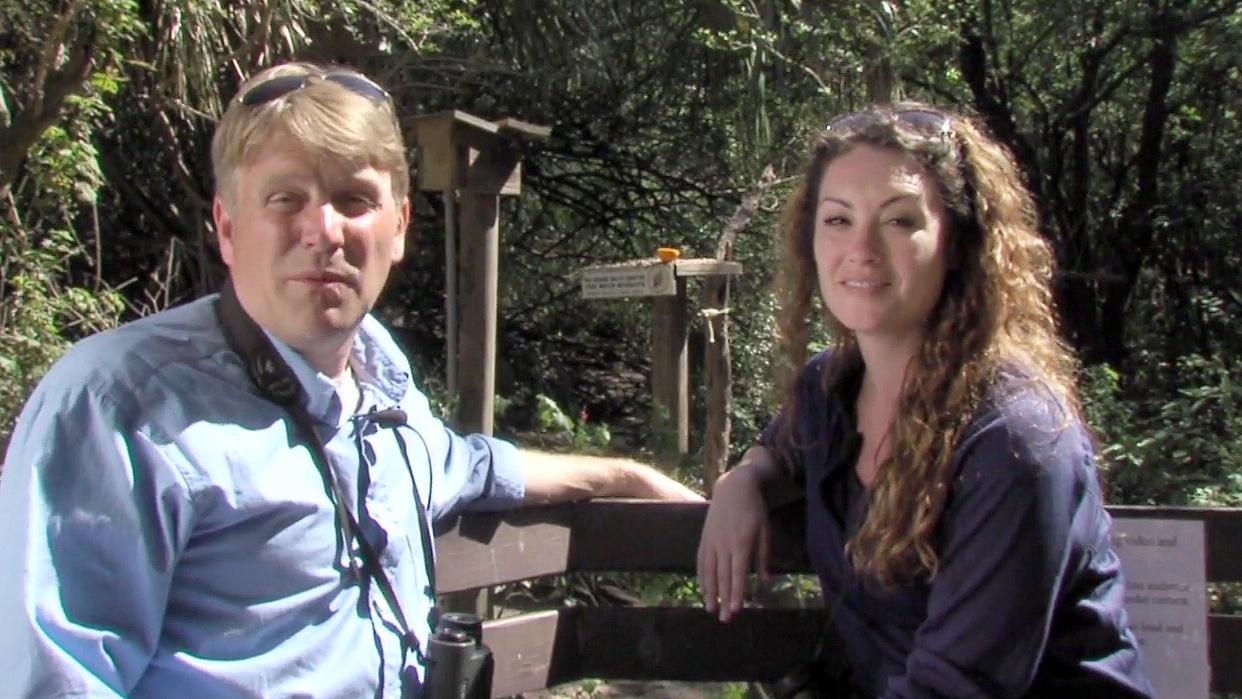
This is a place that few of us will ever visit. It’s packed with biodiversity. Many of the plants and animals that are found here can be found no place else in the United States and their future is tied to a connection with Mexico, here on the border. Join Patrick as he explores a land of Green Jays and Plain Chachalacas in South Texas.


Copy and Paste the Following Code to Embed this Video:
South Texas – A Hint of the Tropics
>> This is a place that few of us that aren't serious bird-watchers or naturalists will ever visit. It's a land that's really outside the realm of understanding for most of us Americans, but this place is packed with biodiversity. Many of the plants and animals that are found here can be found nowhere else in the United States. This is a land of green jays and plain chachalacas. Join me on today's "Expedition" as we explore a hint of the tropics here in south Texas. You may be surprised, but birding is big business. According to the U.S. Fish and Wildlife Service, it generates over $40 billion a year. South Texas attracts tens of thousands of birders and natural history enthusiasts each year. The reason is the connection
to points south
Mexico. The border region is in the news continuously these days as the debate over immigration continues. It turns out, however, that people may not be the only species moving north in search of better opportunities. You would never expect, in the United States, to see four or five species of parrot just completely covering trees, but we came here to this park in Brownsville specifically to see the roosting of these birds, huge numbers of red-crowned parrots, red-lored parrots, yellow-headed parrots. Not too many years ago, there was a pretty dramatic freeze in southeast Texas, and when that happened, a lot of these Washingtonia palms died. And when they died, woodpeckers came and made nests, and these amazingly raucous birds pair up and make their nests in the holes that are made by woodpeckers, and there's a good suspicion that some of these species, like these red-crowned parrots and the green parakeets, actually moved themselves from Mexico when all this great nesting habitat showed up. And look at that. Even more parrots coming in to this roost, and it's a great example of how changes humans have made here in the landscape have actually been taken advantage of by some of the most amazing species of wildlife and the ones that really make you think we are in the tropics. South Texas is a highly fragmented landscape. One of the most interesting and best remaining subtropical habitats left is nearby. But much to our surprise, to reach the preserve, you have to cross the wall. Well, sometimes when we're preparing a shot or we come to an area and scope it out to figure out what we're gonna talk about, we're confronted with things that we just can't ignore. We've talked about the border fence in programs before, but until you really step up to it-- >>
Katie
You can hear about it on the news for years, you can read articles about it, you can even see pictures, but until you're face-to-face with it-- it takes your breath away. It's bigger than I could have imagined. It looks so drastically different from the habitat that we're in. >>
Patrick
Yeah, and the amazing thing here, this fence is in the American side of the border, and the place we're headed to, Sabal Palm Preserve, is actually on the other side of the fence. It's been fenced out of the United States. But you have to wonder how some wildlife get through this, and this is a barrier for wildlife moving back and forth. Discontinuous through Texas, but this thing is planned to run continuously from here all the way to the Pacific Ocean. We're doing things without knowing! >>
Katie
We don't know what it's gonna effect. >>
Patrick
It's the American way! >>> You probably don't associate a really lush forest like this one with your idea of Texas, but we're in Texas, and this is a great example of a little chunk of tropical forest right here along the Lower Rio Grande Valley, and it provides habitat for a lot of species that you can find in no other habitat in the United States. This is Sabal Palm Sanctuary, named for the palms. And these are called Mexican palmetto, but here in Texas, they like to call 'em Texas palmetto. The grove that we're in is about 30 acres, and we're looking at what is almost half of all the remaining native Texas palmettos left. Only 50, 60 years ago, there was upwards of 60,000 acres of palm forest like this, and today, due to agricultural conversion and other conversions of the land, it's now down to a mere 60 acres. This grove is probably the best known, and along with a grove that's owned by the Nature Conservancy, that represents all of the sabal palm forest that's left in the United States. A lot of species are limited to these moist forests, and one of the ones that's pretty common here is the speckled racer, an incredibly beautiful, multi-colored snake that you find here in the understory. Even the cactus that's here, one of my favorite cacti, in Texas they call it barbed-wire cactus, and it's not hard to see why. You don't want to walk into this stuff with all of these thorns coming out in these areoles. And when you look at this cactus, look at those stems that bend over just like a pile of barbed wire. It's mostly confined to these moist forests, especially sabal palm groves, and today, not much of that habitat left, and this species is suffering here in Texas as a result, as well. Incredible place because it truly is a little chunk of tropical forest that's stuck down here in the Lower Rio Grande Valley, and in this forest, we still find abundant wildlife and some of the most incredible tropical birds that barely make it into our country. The green jay is emblematic of the region and one of the most commonly seen birds here. It's among the most colorful and attractive birds on the planet. You don't have to look hard to find great birds here at the preserve. In fact, the feeder is a great place to start. We've had an incredible morning here, just watching backyard birds, birds at a bird feeder here at the Audubon Sabal Palm Sanctuary. And to see backyard birds here is a little different than the backyard birds we see at home, and actually, this place is very different because it's surrounded by some really great natural habitat. We've seen northern cardinals, gray catbirds, even Carolina wrens around this feeder, but we're seeing a lot of other stuff too. >>
Katie
We are. We're seeing what we'd like to call an ecological equivalent, or a replacement, for those birds that we would see in our backyard, so they fill the same niche, and sometimes they even look very similar, like the black-crested titmouse. >>
Patrick
Which is a really common bird here, very similar to the tufted titmouse we see at home. It has that beautiful black crest. >>
Katie
and we've seen the white-tipped doves here, which are like mourning doves we would recognize in your neighborhoods. >>
Patrick
Right, and we do have some mourning doves here in this part of Texas, but these guys are really easy to recognize, but only if you're really close to it. That white tip to the tail. >>
Katie
If you can get close enough to see, give it away. >>
Patrick
Feeders are great places to see those birds and other birds too. We've seen long-billed thrashers, which is essentially replacing the brown thrasher that we have at home. And we have specialist sparrows, the olive sparrow, one that really only pushes into the United States right here along the Lower Rio Grande Valley. Even one of the rarest robins that we have in the United States, but very common in the tropics, the clay-colored thrush or clay-colored robin. >>
Katie
Seen a lot in Costa Rica, and it's actually the national bird of Costa Rica. >>
Patrick
You can really see that strong tropical connection, but also, given that tropical connection, you expect things that we see in our backyards at home in the summertime to come here to spend the winter, and that's the case. We've seen, just today, the yellow-throated warbler. >>
Katie
Getting right up close to us! They're on the feeders, on the tree branches, and when you get a chance to see the bright yellow feathers, it is gorgeous! >>
Patrick
And a few will winter as far north as the Carolinas, but really this is home to them. They've been joined by things like orange-crowned warblers and of course the old butter butt, the yellow-rumped warbler. Attracted to suet, and even the woodpecker come in here. We have seen one that's come all the way down to the feeders, and that's the golden-fronted woodpecker. It's a very close relative of the red-bellied woodpecker. The golden-fronted is actually taking that role that the red-bellied does, replacing it as we move down into southern Texas and into Mexico, and just a gorgeous bird. One more bird that we've seen here skulking along the ground with its tail up is the ovenbird. That's not a bird that we usually see in scrubby, open sites like we're in here. It's a bird at home that we think of being in large tracts of older-growth forest. But just like a lot of these birds, on the wintering range, they can switch up and use different habitats. >>
Katie
They change behaviors. It's fun to come to a new habitat for you and see some trees you don't recognize, but then see animals that you do, and so it makes you feel at home but then also in the tropics as well. >>
Patrick
Yeah, and I think that familiarity is great here in south Texas because we do see a lot of these replacement species. You may not know 'em when you see 'em, but they're pretty easy to find in a bird book because you know something that looks pretty similar. This is a land of extremes. You can leave a moist, subtropical palm forest and, in a matter of only minutes, be back in cactus country. Here in south Texas, you can move from a lush forest full of palms into an area that looks like this in just a matter of feet! And this is one of the coolest places I've seen for cacti. One of my favorites is right here, Mammillaria heyderi. A lot of times it's called Heyder's pincushion cactus or Heyder's nipple cactus. It's not just flowering right now, but it's fruiting. These little fruits are produced almost like a little package. They're out away from the spines so that they can be easily taken out by birds, mammals, other things that would want to get at that fruit. Red fruits attract birds, so birds pick 'em up, eat 'em, carry 'em away, and drop the seeds. Birds aren't the only things that like these fruits. I like 'em too. Excellent fruit on these species, and they have been very important as a food for indigenous people for many, many hundreds of years. And it's not just this species that produce a lot of fruit. The one that's all around me that's the aspect dominant, the thing you notice here, is this enormous species called tall Texas prickly pear. The fruits of this plant, just like the little Heyder's pincushion cactus, are also edible, and these fruits will stain you, stain your mouth bright purple, but they're delicious. Sweet, little fruits, tart, almost flavored like strawberries. Now, this forest is dry, and as desertlike as it seems, there's something really weird also going on in it because south Texas isn't quite as dry as southwest Texas, not a desert, and there are snail shells everywhere here. These are actually tree snails. They live up here in the mesquite trees, and this is the reason why we're in this little patch of thorn scrub. This little patch of thorn scrub has lately been home to one of the coolest raptors in North America, and it's here for the snails. Talk about a bird that barely makes it into the United States, and it's not consistently here. Those are hook-billed kites. It doesn't look much like the other kites that we're familiar with in the United States, and it is a tropical bird. A hook-billed kite will feed on a tree full of snails, walking along the branches till every single snail on that tree is consumed, and you can tell where a hook-billed kite's been working simply by looking at the base of the tree. It's littered with piles of dead snails. And hook-billed kites, all the way from way down in the neotropics to here, have separate populations that are tied to the size and shape and biology of the snails that they eat. So this one has one of the most massive, powerful hook bills of any population of hook-billed kites because they're out here grabbing and crushing these great, big white tree snails, getting in there and getting at the soft meat inside. So you have to live in a place where you have snails out in the trees to have an animal like this, and so you have to come here to find him. Distinctively un-kitelike if you think about swallow-tailed kites up hovering, same with the Mississippi kite. This guy, not really that closely related to them. Still a kite, but this one, always skulking along, working its way through trees, picking through branches after snails. An incredible bird, a huge kite, very un-kitelike, and wow! It doesn't take long to realize just how little of any kind of natural habitat still exists in south Texas. Even the thorn scrub here is 95% gone. Forests are even rarer. One of my favorite places to explore this habitat is Bentsen-Rio Grande Valley State Park. Tropical plants here work hard to prevent being eaten. They employ spines and even poisons. Leaves here contain lots of secondary compounds to keep herbivores from eating them. But one animal has found a unique way around this dilemma. When you think about tropics, you think about ants, and in the neotropics, it's leaf-cutter ants that are really an engine that moves the forest. These amazing ants have found a really unique way to get around those nasty secondary compounds, things like tannins and cyanogenic glycosides that are in these leaves. All of these leaves that these worker ants are taking off of the trees around here are being carried hundreds of feet along a green trail back to a burrow that connects up with the main mounds of this particular colony of Texas leaf-cutter ant. And in that mound, they're growing fungus, and that fungus is having to deal with those secondary compounds. And as it grows the fungus, it's growing food for itself because these ants eat only the fungus, not the leaves. So really a genius way to get around all of the toxins that these plants are providing in their leaves to protect them against just this, getting picked apart and carried away. Texas leaf-cutter ants are the northernmost species of leaf-cutter ant, and these ants have extraordinarily complex social systems. All of these ants are sisters. There are no males currently in this colony, and the colony may have a million or more individuals in it. Their mounds can be immense and can look almost like a prairie dog town. One of the common names for this ant in Texas is actually the town ant because of the mounds that it makes. And you see lots of different size classes of ants along this trail, and those little ones aren't gonna grow up to be the big ones. The largest of these ants that are out here along patrolling this trail are what we call soldiers. They have a great, big, thick head, and their main job is to protect trails from things like me, something that's gonna go in and disturb the trail. There's smaller ants that are only slightly smaller, still with big powerful heads and long legs, and those are the worker ants. Those are out here cutting the leaves, and they're basically the lumberjacks in this social system. And then all through this trail are little, tiny ants. Those are keeping the trail clean, helping to move some of the smaller leaves, but it's a different size worker. And if we go back to the nest itself, you'll see those small ants are also responsible for cleaning the mound, caring for the fungus, and building and moving around the soil inside that mound. And then, of course, deep down inside the mound is the queen, who's laid all the eggs, one queen for up to 1 million ants that are in this colony. Another really interesting thing about this ant is that its northern limit isn't determined by the climate that the ant itself can tolerate. It's determined by the climate that the fungus can tolerate, and that fungus is a tropical fungus. So where they can't keep that mound really nice and warm even in the wintertime determines how far north they can go. An incredible little farmer, really a Texas specialty, and you see most of them right here in the Lower Rio Grande Valley. Well, we've had a couple more green jays and some beautiful Altamira orioles come in to this feeder, but the real reason that I'm here is because of a very plain-colored bird, the plain chachalaca. It's an incredible, chicken-sized bird that looks like a little turkey. It's the northernmost member of the guan family and essentially replaces turkeys and pheasant-type birds down in the tropics. But in the tropics, this bird, just like turkeys here in North America, has been heavily hunted traditionally. And so when you visit the tropics, finding guans is really tough where people are still hunting. The plain chachalaca is lucky because it does push into the United States, and it's a bird that's doing really well over large parts of its range. It has been decimated in others because of hunting, but in places like this, they're everywhere, and they've learned to adapt to people. And they really had to. Not much of this habit left. The plain chachalaca, they travel around in large family groups, and they'll congregate up in bushes and trees, and they'll start singing the song for which they received their name. That call is a loud, raucousy cha-cha-la-ca, cha-cha-la-ca, cha-cha-la-ca! To me, when I hear that in south Texas, it transports me to Belize because I'm so used to hearing that sound in the tropics. The chachalacas' real challenge is the amount of habitat it has left. They're very well-adapted to living around people, and they'll even live in neighborhoods, but they like cover. And with 95% of the Tamaulipan thorn scrub gone, chachalacas are really limited to small populations in these small parks and sections of wildlife refuges, and really tying together this whole Lower Rio Grande Valley area is super important for keeping the really charismatic and really characteristic tropical species of birds and wildlife that depend on south Texas for their existence here in the United States. They may be plain, but to me, the comical and incredibly cool-looking plain chachalacas, they transport me right back to the tropics. >>> Do you still need more convincing that the connection to Mexico is what makes this place important? Well, perhaps the most surprising of all the inhabitants here makes its home in one of the toughest of habitats. >>> Well, this incredibly thick habitat is called the thorn scrub, and with good reason. Absolutely everything is covered with spines and thorns, and it's incredibly thick too! But this habitat happens to be the preferred habitat for one of the most charismatic creatures in all of North America. >>> We arrive at Laguna Atascosa National Wildlife Refuge to visit with Hillary Swarts, who is monitoring the endangered ocelot population of south Texas. >>
Hillary
So this is one of the guzzlers that we established for the tough drought conditions that the ocelots face. And since 2010-- that was a wet year, and then it has been dry, dry, dry. All the water around has been dried up, so in that that might be a limiting factor, these guzzlers help by providing a water source year-round, permanent. >>
Patrick
That's a great name for these things! So basically just a little birdbath for an ocelot. >>
Hillary
It's basically a birdbath, right, and it's fed by a rain-filled cistern that's over there, which luckily is a big enough tank that even in dry times-- >>
Patrick
Oh, that's cool! So you're catching the rainwater. >>
Hillary
It comes down, collects in there, and it stays automatically filled to about this level. And not just the ocelots use it. We have armadillos in here, snakes in here, raccoons in here. The fencing around is to prevent the hogs from coming in because the hogs will really, with the mud and everything, they'll just tear it up. So the hog fencing got put in to prevent that. >>
Patrick
And so given that you've got this limited resource, you know that ocelots are gonna use it, so it makes it a perfect place to throw out a game cam, and hopefully you're gonna get a shot from over here that shows-- >>
Hillary
Yeah, it's a perfect situation because it's a super-limited resource. It's almost like a funnel to get 'em in, and then they're standing there. The camera's coming right on them, and each of their spot patterns is unique, so kind of like a human fingerprint, we use the patterns with a key that we have of all the identified ocelots to say, "Oh, okay, Ocelot Male 270 is there," because we know he has a little butterfly shape on his right side and the picture matches up with what we have. So we use that in our censusing and monitoring to keep track of how many are here. >>
Patrick
And so the camera really is the way to remotely census the population here. >>
Hillary
Totally uninvasive. We have 'em all over the refuge in places we know there's ocelot activity, and a lot of times, we'll actually have a camera on both sides because the sides aren't symmetrical, so we want to be able to say--and surprisingly enough, they don't behave and stand there and go like this for you! Sometimes you just get the tail or a haunch or something. You're trying to use that key to match up, so the more info you have, the better able you're gonna be to identify that one where there's like a teeny, little piece of it heading off into the brush. And we use those pictures that are collected. About once a month
go through
Do we have who we have where we think they are? And then they're also really good because they help us strategize for trapping. We know this individual comes here frequently. If we want to trap that individual, let's put our traps in this area. And we do the trapping so that we can collar them and either use radio telemetry or GPS collars that shoot the locations out. >>
Patrick
Right, and it's just another example of the Lower Rio Grande Valley providing a refuge for yet another population. Formerly more widespread, today this is its last stronghold, and with 95% of this habitat cleared, it's a tough job. >>
Hillary
And they're a natural predator in the area. I think that's something that, especially in North America, we forget the value of the predator in the ecosystem overall. Everybody's freaking out, Oh, we're overrun with deer! Oh, we're overrun with rabbits! But let's make sure we don't have any coyotes. Let's make sure we don't have any ocelots. Let's make sure we don't have anything that would take care of them. Whether or not it's realistic to think you're gonna assume the natural order again, which is always a kind of elusive prospect, having a predator in your system is healthy for your system overall. >>
Patrick
Why do you care about ocelots? >>
Hillary
I think they have--I mean, it's corny. They're beautiful! I mean, they're drop-dead gorgeous! They're strong. They're graceful. They're solitary, and they're elusive, which make them really hard to study, but I think make them really mysterious and interesting for people too. And I guess it's the unexpected aspect. It's like, "My gosh, that's here; that's amazing!" You don't expect it to be here, and I've gotten to work in places where these more exotic animals are expected, and it doesn't make 'em any less cool. But to see this in south Texas, it makes you really want it to stay. It really makes you want to conserve. >>
Patrick
Most of the astounding wildlife here is much more obvious. It's in your face. And watching what professionals do to attract them can be helpful at home. Here at Bentsen-Rio Grande Valley State Park, some of the most beautiful birds are not necessarily attracted to seeds. A few of the most beautiful ones are actually attracted to fruits, and you can actually attract some of the most beautiful songbirds right into your own backyard by offering them fruit in a fruit feeder just like this one. All you really need is a feeder with a couple of pegs on there that you can slide an orange slice into or even apples. And different birds come to fruit feeders than come to seed feeders, and you may have to have 'em up for a while, but eventually they're gonna find them. And one of my favorite birds that come to these feeders are orioles, orioles like you've seen nowhere else because, here in south Texas, we have Altamira orioles. They're the most vibrant orange you can imagine and one of the largest orioles in North America. They're huge, like a Baltimore oriole, but much bigger. These birds are the orangest of orange birds that I know of anywhere in the world. Incredible to see 'em coming up to fruit feeders here. Well, the Altamira oriole, it's related to blackbirds, and a lot of people don't realize that orioles are in the blackbird family. And I was lucky enough to have Javier, the assistant director here, give me one of these nests. Have a look at that thing! I mean, you think about bird nests, you usually don't think about a great, big, hollow sack like this that you're gonna raise your young in, and the Altamira oriole builds one of these every single year! It looks like it's just constructed out of strips of grass, but it's not. Each one of these little fibers that's in here is a piece of bark that's been stripped off of a young piece of wood and woven together into this intricate nest that, down at the bottom, is gonna hold the eggs, the young, and they're gonna fledge right out of the top, and then it's abandoned, and they start the process all over the next year. Another incredibly beautiful bird that's a flycatcher, great kiskadees have been coming to these feeders all day! Great kiskadees are generalists, and that's one of the reasons why they're so awfully successful in the tropics, along the edges of forests, in backyards, in open areas and scrubby areas, and mature forests all throughout the neotropics. But in the United States, they push up just to here. We think that black across the eye is actually to reduce glare when they are actually fly-catching. But this bird, being a generalist, takes everything from fruit to flies. An incredible place to see that diversity that pushes up from Mexico and learn something you can do at home. Baltimore orioles will come to a feeder just like that one. >>> The importance of the connection to the south for maintaining the biodiversity of this region of America is obvious. The special species of wildlife here are stunning. Join us next time as we explore the vital connection that south Texas plays to the biodiversity of the rest of this great country. CompuScripts Captioning ccaptioning.com >>
Female announcer
To purchase a copy of "Expeditions with Patrick McMillan"...
Search Episodes

Donate to sign up. Activate and sign in to Passport. It's that easy to help PBS Wisconsin serve your community through media that educates, inspires, and entertains.
Make your membership gift today
Only for new users: Activate Passport using your code or email address
Already a member?
Look up my account
Need some help? Go to FAQ or visit PBS Passport Help
Need help accessing PBS Wisconsin anywhere?

Online Access | Platform & Device Access | Cable or Satellite Access | Over-The-Air Access
Visit Access Guide
Need help accessing PBS Wisconsin anywhere?
Visit Our
Live TV Access Guide
Online AccessPlatform & Device Access
Cable or Satellite Access
Over-The-Air Access
Visit Access Guide




Follow Us