








PBS Wisconsin Passport
Watch this video with
PBS Wisconsin Passport
Become a member of PBS Wisconsin, support your local community, and get extended access to PBS shows, films, and specials, like this one.
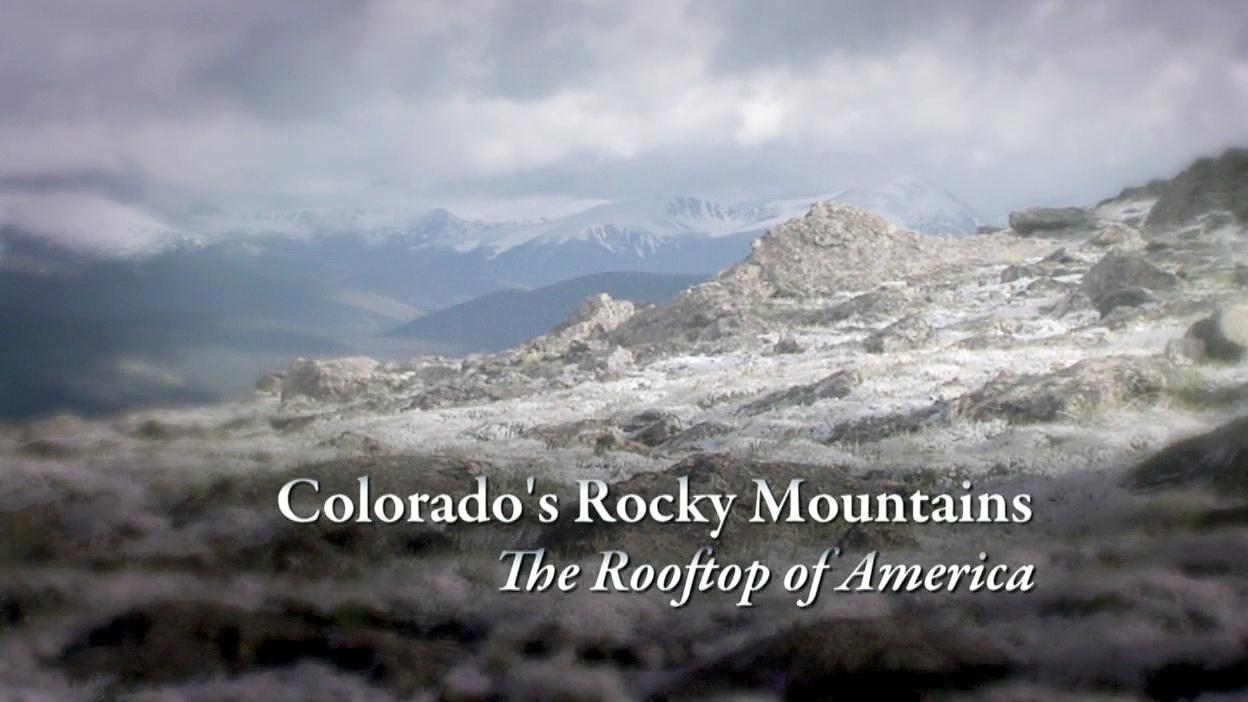
Colorado's Rocky Mountains
05/07/16 | 26m 46s | Rating: TV-G
Life in the alpine exists on the fringe. It’s hard to believe that life could persist here, let alone flourish. From beautiful alpine flowers to mountain goats and the shy pika, life is abundant. Join Patrick as he explores just how life thrives in the Colorado Rockies, the rooftop of America.


Copy and Paste the Following Code to Embed this Video:
Colorado's Rocky Mountains
trumpeting
>>
Patrick
Life at these elevations is existing on the fringe. It's hard to believe that life could even persist here, let alone thrive beautifully. Join me on today's "Expedition" as we find out just how they do it here on the rooftop of America, the Colorado Rockies. Colorado is America's rooftop. It holds the vast majority of summits over 14,000 feet outside of Alaska, with 53 peaks. These elevations aren't just barren rocky crags, but hold vast areas of verdant alpine tundra and are home to some of the largest and most charismatic of America's fauna. We begin our exploration in the vast parks. That's a term for valley grasslands. These grasslands are maintained by their fine-textured soils and by the browsing and grazing of large animals. Just above the grasslands here on the eastern front is one of the most charismatic of woodlands in the West. As you move up from those parks, those grasslands down below, on hot dry slopes that are open to the sun, you find a really unique type of forest, one that is really characteristic of the West where you have scattered Ponderosa pine. This is a Ponderosa pine woodland, one of the most amazing habitats that you'll find in the West. Wildlife is everywhere here. All those major large species that migrate up in elevation like the bighorn sheep, the elk, they're all here, too, at different times of the year. And this habitat is one of the best places to bird watch in this part of the country. We see violet-green swallows. Violet-green is very descriptive because of that beautiful coloration of this bird, bright white, almost clownlike face with a brilliant green cap, green back, and in the lower parts of the wings and the lower part of the tail is this iridescent shining violet when it catches the light. It's probably the most beautiful swallow in North America, maybe the world. And a bird you won't miss is the black-billed magpie, relative of jays, much larger species though. Makes a lot of noise. Even mountain bluebirds, the bluebird that I feel is the most beautiful of all blue birds. And we've been watching a pair trading off feeding young at the nest right here. They're cavity nesters, just like all of our bluebirds here in North America. And of course, the bird you can't miss, the one that's singing all around us, the western tanager, an incredibly beautiful, two-toned bird. This bird, with its bright orange head, yellow body, but related to the scarlet tanager and the summer tanager that we have back home. But also chipmunks, squirrels, all kinds of wildlife in this habitat, and one of the chipmunks that we've seen here, possibly the least chipmunk. We have at least three species that occur in this zone of these mountains, so they're hard to tell apart, but I think the little guys we've been watching here are least chipmunks. Another cute little squirrel that you might mistake for a small prairie dog is the Wyoming ground squirrel. They make their burrows in these beautiful, large grassy areas between the pines. This open structure of this forest, widely scattered trees, is primarily because this is an area that's exposed to fire. And unlike some of the forests higher above us here, fires that burn through the Ponderosa pine forest, they'll kill small trees, but they burn right under the large trees. Beautiful birds, beautiful animals, and you can't miss the plants, an incredible show of wildflowers if you're here in late spring, early summer. The Ponderosa pine woodland just doesn't get the respect it deserves. Next time you're here, take some time to explore this habitat. As we move up the mountain in even higher altitudes, here on really droughty, oftentimes south-facing, dry, shallow soils, we enter one of the most characteristic communities of the Rocky Mountains, and that's this. This is lodgepole pine forest, and it's dominated by really a single species of tree. It's not the world's most diverse habitat, but ecologically, it's really cool because fire is absolutely necessary for the reproduction of lodgepole pine forest. Everything about this tree is made to burn. It has branches that hang way down close to the ground, trying to catch fire really and push it up into the canopy where we get these horrible, huge conflagrations like we saw in Yellowstone back in the '80's that was reported as destroying thousands upon thousands of acres. What it was doing was regenerating lodgepole pine forests. You see, when the fire burns up into the canopy, it heats up the cones. They pop open, they release seed, and there's no place better for a lodgepole pine to get a start than in the bare mineral soil that's left after a fire. So if you look behind me, right here, you'll notice a young stand of even-aged lodgepole pines. There was probably a small fire that pushed up in here maybe a decade or two ago and regenerated the lodgepole pine stand. So we're standing in an older stand, a younger stand here, and you can really kind of tell where fires have burned, based upon where the different-aged stands of lodgepole pine are. It's not that different looking than a lot of habitats across the Rockies and across much of the US. As we move up even further and into slightly moister habitats, I think you'll find things get even more familiar. As we move higher, you'll notice some of the most characteristic and familiar wildlife. The raucous Steller's jay is a Western specialist, as is the mountain cottontail, whose small ears and stocky body are great adaptations for the cold climate. The snowshoe hare, by contrast, is widespread and also quite common in the Northeast. Along water courses, if you're patient, you'll encounter the frequently heard but seldom seen Lincoln's sparrow. And if you're lucky, you may even spot the largest of America's deer. When you get into moister situations, along streams, away from those hot, dry, south-facing slopes that are exposed to not just heat and drought, but fire, it looks even more familiar. You would have a hard time telling where I was if you didn't know what tree species these were because we're essentially in a spruce-fir forest. We've got a fir, and in this case, the fir is subalpine fir, a Rocky Mountain species, and the highest elevation spruce species in Colorado, Engelmann spruce. It looks like a balsam fir and a red spruce or a balsam fir and a white spruce, but different species, endemic species, ones that are only found here in the Rocky Mountains. But they're joined by some very familiar plants. One of my favorite plants of this habitat is quaking aspen. That species is called quaking aspen because of the unique architecture of the leaf. It's incredible. It has a flattened petiole. That's what we call the stem to a leaf blade, and this flattened petiole provides some aerodynamic features to it, and then you have this flat blade so that wind can blow through the petiole without too much resistance. It hits that blade and starts quaking all over the place. Nobody's quite sure why quaking aspen has quaking leaves, but you've got to admit, that's pretty doggone cool. Well, familiar sights, familiar sounds, and this place becomes even more familiar when you start to look at the herbs that cover the ground.
stream babbling
Patrick
I love the wildflowers that you can discover here in these subalpine forests. One of the most beautiful and dainty of all orchids is right here. This is calypso, or fairy slipper. Now, you don't have to come to Colorado to see this little orchid. The first time I saw this orchid was in Maine, but the plants that are in this habitat in these spruce-fir subalpine forests, a lot of them have distributions that don't just cover the spruce-fir forest of the Rocky Mountains but they envelope the whole boreal region of the world, and calypso is one of those. You can find them where spruce-fir forests occur at high latitudes all the way across the globe. This is a great habitat for orchids. Right here in this patch of forest, I've seen four or five species, things like the small northern bog orchid and the northern coralroot, two very tiny flowered orchids. And it's not just orchids that we find here. You can look at any patch of ground here and see plants like twinflower, plants that we think of growing in this habitat throughout the boreal regions of North America. And believe it or not, I never knew this until today, but there are so many calypso flowers here, I've stuck my nose into them. They're fragrant, too, like good cheap perfume, and I've never seen so many. We're talking hundreds, maybe thousands, just in this little patch of spruce-fir forest. At the base of the trees here, you'll often find deep piles of broken cones. What on earth would do this? A squirrel, the American red squirrel. This is yet another species that's found throughout North America where spruce and fir occur. The spruce seeds form a large portion of the diet of the squirrel. It's often conspicuous because of its loud voice.
chattering
Patrick
We spend the night near a tree line to allow ourselves a few more hours to acclimate to the elevation. The morning brought quite a surprise.
dramatic windflaw noise
dramatic windflaw noise
Patrick
Life's a little different at 12,000 feet. It only gets more ridiculous as you go up to the mountains. It's June 30th. >>
Katie
It's the end of June. It's almost July. We wake up this morning, and we see snow! It snowed last night! >>
Patrick
A lot of times, we don't show you the rigors that we have to go through to bring you what you see on television. This is it. I mean, we're out here in wind chills down in the teens. >>
Katie
It's freezing! >>
Patrick
And we only go up from here. Flowers are blooming everywhere, but last night, frozen solid, temperatures in the 20's, maybe even in the teens up top, and it's still just barely
above freezing now at 8
00
or 9
00 in the morning. So imagine what these things have to go through. It's a really neat story to show the adaptations of these plants, but believe it or not, we've got to wait till the snow melts off of them. >>
Katie
We're struggling just to stand here and talk to one another and stay warm, but there's life thriving here in alpine and subalpine habitats. >>
Patrick
You got it. >>
Katie
I can't wait to see more of it. >>
Patrick
Yeah, and we had to find a sheltered place from the wind because the wind up here, 40, 50 miles an hour, it's brutal. >>
Katie
Your nose is red. >>
Patrick
We need to get in the warm. A few hours later, the temperature and strong sunlight have allowed the snow to melt and reveal the true beauty of the alpine flowers. It's hard to believe this is the same little alpine bluebell that we saw covered with snow and frozen this morning. It's only a couple of hours later, and it just goes to show you how resilient these plants have to be to withstand intense cold, even during summer. You know, all tundra's not the same everywhere in the world, and this is a great place to look at the different types of tundra that we see and what leads to diversity in these tundra systems. This is very different from Arctic tundra, and there's a lot of differences between truly Arctic tundra plants and the plants of the tundra here in the alpine regions. One of the main differences is it gets cold at night here. It gets frigid. It freezes many nights during the summer here. The minute that sun goes down, it's bitterly cold. That's different than the Arctic because in the Arctic, at high latitudes, the sun's just going around and around. It's light 24 hours a day and not much difference between nighttime temperatures and daytime temperatures during the growing season. If you grow here, you have to be able to withstand that incredible cold that comes every time the sun goes down. There's more than just one type of alpine tundra. In fact, every single one is slightly different on every single mountaintop. And the tundra that exists here in the alpine zones of Colorado is very different from alpine tundra that you find in Montana or New Mexico, up in Canada, or even in Alaska. They're each different because they each have regional climatic differences. There's latitudinal differences that impact them and even moisture differences. But there's also differences on the sites themselves. The side of the hill you're on can make a huge difference in what plants can survive. You can be on the leeward side or the windward side of a hill, and that makes a huge difference because on a windward side, all the snow's gonna be blown off, and you're gonna be just absolutely pounded in the wintertime with bitterly cold winds and negative 30-degree Fahrenheit temperatures that desiccate everything. On the leeward side, on the side of the mountain that the wind isn't blowing predominantly on in the wintertime, you get snowfields, and snow provides a cushion, a blanket that will protect those plants from the damaging winds until it melts during the summer. And many plants grow under snow that don't grow in exposed fell-fields. And then there's the local conditions. Something as small as this rock can make all the difference in where on this slope an alpine bluebell can grow. That rock, during the wintertime, you will actually have a little mini snowdrift that will form behind that rock, and it, just like the snowfields that develop on the leeward sides of the hills, will protect the plants that are here from the bitter cold. If you look just on the other side of the rock, there's nothing but cushion-forming plants because right over there, it's exposed to the brunt of the wind. But here, there's a little warm and still pocket where something as beautiful as this little bluebell is able to survive. Lots of topographical and microtopographical variation on a site all work together to create the incredibly biodiverse, structurally diverse tundra that we see in the alpine zones of Colorado. That little guy is a young yellow-bellied marmot. If you think it looks a lot like a groundhog, it's because groundhogs are marmots. We just don't call them marmots in the East. Here in Colorado, we have yellow-bellied marmots, and they're very conspicuous, this large, lumbering woodchuck on these alpine tundra areas. And just like groundhogs, they're consuming a lot of above-ground vegetation. So they're feeding on grasses and herbs, broadleaf forbs our here. They don't stray far from their burrows, and these yellow-bellied marmots have a very cool way that they deal with living in this extremely harsh habitat. They hibernate, and if you're gonna hibernate during the harsh times of the year here, during wintertime, you have to hibernate for up to eight months because that's how long winter lasts here. And an animal that has to hibernate for eight months either needs to have a food reserve, or they need to have a reserve of energy, and that reserve of energy for this animal is fat. So a young guy like this is going to have to double his weight just to survive the winter because they they consume 50% of their body weight, and that's fat that they're using, metabolizing, to have energy to survive the winter. Hibernation isn't exactly what you think it is. They don't just lower their metabolism down and go to sleep all winter long. They wake up from time to time. Even though their body temperature has dropped lower, even though their metabolic rate has gone way down, they're still using energy, so you have to store it up, and this animal does it with fat. Yellow-bellied marmots may look like they're not the most intelligent things up here, but this incredibly cute little animal is actually very sophisticated, socially and vocally. They make a number of different calls, and they communicate back and forth about predators, about what's going on, and for territoriality. So the sharp chirps that you hear in the alpine zone, a lot of times they're made by this very cool and very beautiful marmot. Finally, we're able to drive all the way to the top of the highest paved road in America. Well, here we are. We made it up to near the summit. Actually, we're at 14,130 feet, right near the summit of Mount Evans at the top of the road. Throngs of people come up here because it's an easy place to achieve 14,000 feet, and you get to experience just how difficult it is for the plants and animals that eke out a living up here. They're not even eking out a living. They're thriving up here. How do they do it? What do they have to deal with? Here, you've got to deal with the elevation. The sunlight that's beating down on us, it'll burn us in a heartbeat because there's not as much atmosphere between us and the sun. You don't think about how powerful the radiation is up here, and plants and animals have to deal with that. In addition to the sunlight, the windy conditions out here expose these plants to dryness. It blows 40, 50 mile an hour regularly, sustained up here, and winds can achieve speeds of well over 100 miles an hour. Think about what it's like in the winter at 35 below zero in 100-mile-an-hour winds. So windy conditions, the cold, the sun, and the oxygen. You've probably heard people talk about the fact that, when you get up to these elevations, there's thin air up there or there's no oxygen. The truth is, there's exactly the same percentage of oxygen in the atmosphere here as there is at sea level, still around 21% oxygen. But the barometric pressure is much lower up here, and that means that the gas molecules are much farther apart, and when you get up to these elevations, your blood-oxygen saturation goes way down, and you'll get dizzy. You'll get a headache. You'll suffer from altitude sickness if you don't take it easy when you get up here. The partial pressure of oxygen in your lungs is what's driving down the ability of the oxygen to be absorbed into your bloodstream effectively. You'll acclimate to that in a week or so, but it was kind of fun to use this meter that we brought with us to test our oxygen saturation. Coming from sea level up to here, we ranged anywhere from around 68 to 70% saturated up to 90, 91, 92% saturated, and that is what it's all about up here. Less oxygen in your bloodstream means you can't do things nearly as rigorously as you can at sea level. There's a whole different set of challenges here than Arctic plants and animals face, and it's just amazing to me that these creatures can adapt to all the challenges that are posed by a place like this. What's more interesting is the fact that they don't just adapt here. They don't just survive. They thrive. Mount Evans is definitely the easiest place in North America to observe mountain goats. They'll just walk right up to you, almost oblivious that you're even there. These guys are just choosing to come close to us. You've got the little young goat and one that's maybe a year or two old coming up behind and then the female here. And when you think about an animal that's well adapted to living in these harsh climates, there's very few that are better adapted than a mountain goat. This time of year, the coat on these animals is shedding, and they're getting a little bit shaggy. Mountain goats have that incredibly dense, thick fur that protects them against the wind and the cold. It's frigid up here today. They're not feeling it. They're also perfectly adapted to living in these rocky habitats. They specialize in grazing in areas that are sheer cliffs where they're looking to browse on herbs and grasses. Even their hooves are made for climbing up here precariously on high rocky ledges. The sole of their feet is rubbery to give it traction. An incredible animal that's made for these kind of habitats. We oftentimes think of these as being true goats. They're not true goats. They're in a group of animals called goat antelopes, related to similar creatures that live in Asia. I think they're down here in this old roadbed licking salts, minerals out of the rocks and the soils that are here, and that's very important because they don't get enough in their diet. Mount Evans may be the easiest place to see these goats, but they may not belong here. There's very little evidence that mountain goats ever occurred naturally in Colorado, and these goats here were absolutely introduced by people. So that action may be changing the tundra. We leave the craggy summit behind because we need to descend a bit to get to the real showplace of alpines. So how do these alpine plants do it? How do they put up with all the sun, the wind, the rain, the incredible dryness because of the blowing wind, the solar radiation, and the cold, especially at night? There are syndromes that we see in the alpine plants. Even completely unrelated species will fit a pattern just to survive here in this harsh climate. One of the ones that has the largest flowers in the Colorado alpine is this plant right here, and it illustrates very well some of the adaptations and the syndromes that we see in alpine plants. This is old man of the mountain. It's an incredibly huge flower that this plant has, and that is something that transcends almost all of the barriers out here, almost all of the families of plants. Big flowers are the rule up here on plants that aren't cushion forming in the alpine habitat, and it's all about attracting pollinators. You have to stick out in a short window of time, so these big flowers are real cues for those pollinators to hone in on. And when we take a close look at old man of the mountain, what we see is that all portions of this plant are completely covered with gray silky hairs. A lot of plants up here have hairy leaves and stems and buds, and we think that's probably to be able to withstand the dramatic shifts in temperature up here. Remember, it freezes at night, and if it's gonna freeze most nights or some nights here at this elevation, you have to be able to withstand that, and having those trichomes, plant hairs, if you will, all along the stem means that you're increasing the boundary layer around the tissue, kind of the same way a mountain goat's coat, or my coat, for that matter, blocks the wind, holds in the warmth. Those trichomes will do the same thing. The wind out here, even though it can be cold, it's incredibly drying, and that's the real challenge for plants up here. Those hairs will help to increase the boundary layer and to increase the humidity right around the stem and keep the wind from beating right up against the plant's leaves and stem tissue. It keeps it safe from the drying winds, so an incredible adaptation. Even the sky pilot right beside me with these blue flowers has leaves that are covered with little tiny hairs and highly compound leaves that stick straight up in the air. They fall into a syndrome. This is one strategy, but a very common strategy, the one that occurs on the most exposed slopes, is just as interesting but very different. It's hard to imagine a more exposed location than this, a ridgetop where the wind is continually just ripping through, drying things out, and even blowing away the snow in the wintertime. And this gravelly and sort of rocky community where all the snow gets blow away is generally called a fell-field. To grow in such a precarious location as this, you have to really take advantage of the ground, and that's exactly what this incredibly low-growing sandwort is doing right here. This plant is barely 2 millimeters tall and forms this huge cushion around this rock. It may be ancient, maybe hundreds of years old, an excellent example of a cushion-forming plant. Staying that low will get you out of the wind, and that's key here, staying out of the drying effect of the wind and, of course, the desiccation and the cold in the wintertime, but it's more than just that. This low-growing habit also takes advantage of the heat that's provided naturally by the ground. This is a plant that actually takes advantage of natural geothermal energy. All day long when it's sunny out, the sun is beating down on the ground and warming it, so much so that if we look at the temperature of the ground today, when it's in the lower to mid 40's, and check the ground, we're gonna see 82 degrees. When we look at the temperature of the plant itself, 67 degrees. So the plant is actually absorbing a lot of heat from the sun. That's warming the plant, and it's warming the ground, and at night, when that temperature plummets, this plant takes advantage of the heat of the ground to survive those cold nights. A plant that's only 2 millimeters tall isn't going to produce a giant flower, no matter how hard it tries, and these plants make up for not producing a giant flower to attract pollinators by producing lots of them. These cushions just become a field of snowy white when they're in flower to grab the pollinators' attention, incredible adaptation, and taking advantage of geothermal heat. Surviving the rigors of an average year here is hard enough for the life that makes its home in the Rockies. Join me next time as we delve even deeper into the ecology and into the challenges that life here faces. I'm Patrick McMillan, wishing you your own exciting "Expedition." CompuScripts Captioning ccaptioning.com >>
Female announcer
To purchase a copy of "Expeditions with Patrick McMillan"...
Search Episodes

Donate to sign up. Activate and sign in to Passport. It's that easy to help PBS Wisconsin serve your community through media that educates, inspires, and entertains.
Make your membership gift today
Only for new users: Activate Passport using your code or email address
Already a member?
Look up my account
Need some help? Go to FAQ or visit PBS Passport Help
Need help accessing PBS Wisconsin anywhere?

Online Access | Platform & Device Access | Cable or Satellite Access | Over-The-Air Access
Visit Access Guide
Need help accessing PBS Wisconsin anywhere?
Visit Our
Live TV Access Guide
Online AccessPlatform & Device Access
Cable or Satellite Access
Over-The-Air Access
Visit Access Guide




Follow Us