








PBS Wisconsin Passport
Watch this video with
PBS Wisconsin Passport
Become a member of PBS Wisconsin, support your local community, and get extended access to PBS shows, films, and specials, like this one.
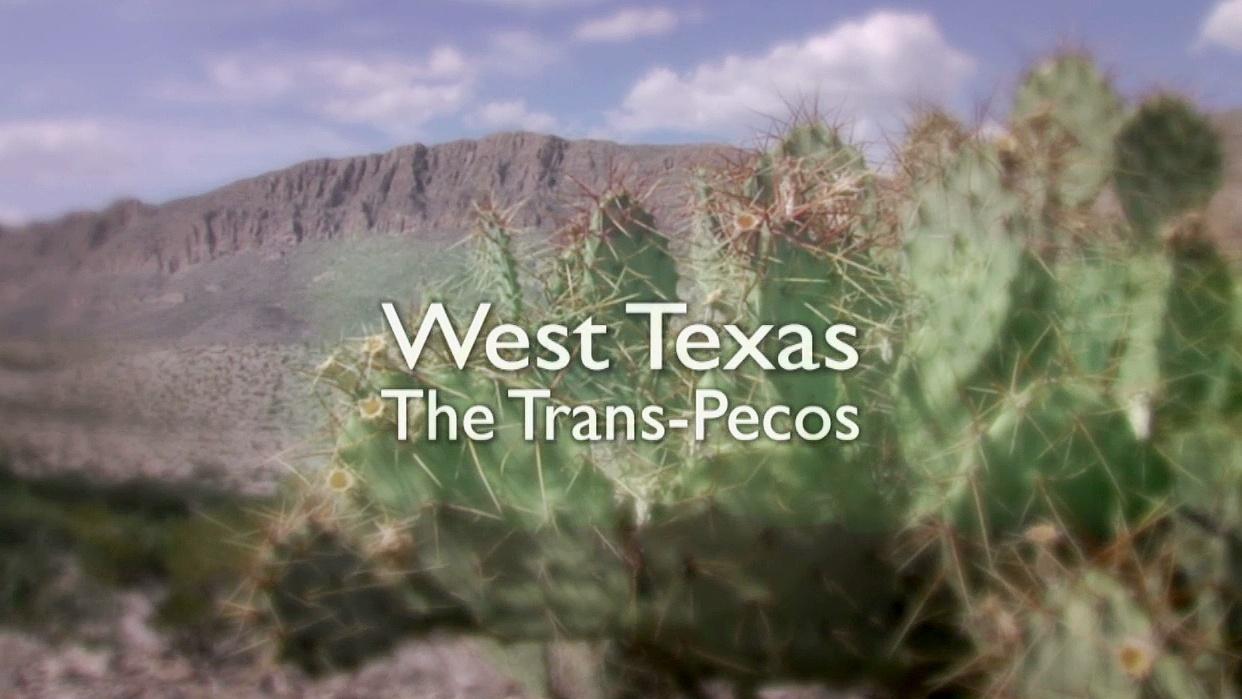
West Texas – Trans Pecos
05/07/16 | 26m 46s | Rating: TV-G
When I first visited this corner of the U.S., I was astounded by the beauty and biodiversity that grace this part of Texas, from prairie dogs and antelopes to tarantulas and horned lizards. The Trans Pecos is big, roughly the same size as Maine and stuck right on the border with Mexico. Join Patrick as he explores the strange and exotic life of the Chihuahuan Desert.


Copy and Paste the Following Code to Embed this Video:
West Texas – Trans Pecos
>>
Patrick
This is what most people think of when they think of west Texas. But few of us realize that this is also west Texas. Join me on today's "Expedition" as we explore one of the most diverse corners of America, the Trans-Pecos. When I first came here, I was astounded at what I saw. This is a corner of the United States that is dramatically underappreciated, and the beauty and biodiversity that grace this corner of Texas makes it one of my favorite spots on planet Earth. The Trans-Pecos, like everything in Texas, is big. In fact, it's roughly the same size as the state of Maine. I think most people my age know about the stereotype of west of the Pecos. You know what I'm talking about, the one perpetuated by old movies, a flat, dry desert. Well, this region is part of the Chihuahuan Desert Ecoregion and what I typically refer to as America's forgotten desert. The Chihuahuan is the second-largest desert region in North America after the massive Great Basin, and it's much larger than the better known Mojave or Sonoran. Most of it lies across the border in Mexico, but it extends into southeastern Arizona, southern New Mexico, and here in west Texas. We'll begin our exploration of this incredible area in the dramatic Davis Mountains near Alpine, Texas.
yipping
Patrick
You just don't expect to see prairie dogs here in Trans-Pecos, Texas, but they're here, right in this beautiful little mountain basin grassland, and these grasslands occur when we move up just a little bit in elevation above the desert and we have these fine-textured soils that are perfect for growing grass, but they're also perfect for the burrowing of prairie dogs. And it's just amazing to think how these prairie dogs got here. When we look at this from space, we can actually see that this mountain basin of grass is isolated by rocky slopes and desert on all sides, very inhospitable habitat to black-tailed prairie dogs, the same prairie dogs we see in the northern Great Plains in large colonies. And we think, probably, these prairie dogs migrated into these basin grasslands during times of cooler climate. And we know that prairie dogs can travel pretty far, but they have to be somewhat connected. You can't be isolated by 100 miles of inhospitable desert. So who knows how long these prairie dogs have been living right here in this one grassland? Well, these grasslands are incredibly diverse. They are a little bit different from the grasslands that we see in the Great Plains. Some of the species are the same. We have sideoats grama, blue grama, hairy grama, but they're joined with many other species of grama grass. There's buffalo grass here, but there's also specialties of this region. These grasslands are far more diverse than the grasslands we see in the northern Great Plains. And out in the distance even, pronghorn antelope... pronghorns and prairie dogs in west Texas. It's just incredible, the diversity we see in one small region of one great state. We actually moved uphill into this kind of wonderful Chihuahuan grassland that still has a lot of characteristics of deserts to it, and we did that because it was getting pretty hot. But even here, as you rise up in elevation to 4,000, 5,000 feet, the woody lilies are still everywhere, lots of succulents, even cactus. So right where we're at right now, we have the three incredible groups of this high Chihuahuan plain. We have the bear grass, Nolinas; the Dasylirions, the sotols;
and of course yuccas
soaptree yuccas and the incredibly stout and rigid Torrey's yucca, or Spanish dagger, with those beautiful, long filaments coming off the leaves. We came up here because it's getting really, really hot, in the mid-90s by about noon today. And we came up here thinking we'd escape the heat, but it turns out, we might have escaped the heat anyway because what's going on behind me is what happens this time of year. The clouds are building, and that's because this is the monsoon season. As the winds shift and the predominant patterns shift, it starts to pull moisture out of the Gulf of Mexico and the Gulf of California here into west Texas through the Chihuahuan region and all the way over into the Sonoran, and it starts to rain-- July, August, September-- and you transform an incredibly parched, dry landscape into a beautiful, green landscape. And so, believe it or not, we only have a few minutes, I think, before rain will overtake us, and we'll probably get about a 30-degree drop in temperature. And when that happens here, life blossoms, and not just plants... animals too.
thunder rumbling
rainfall pattering
pattering
bird trilling
and of course yuccas
I think this is one of the features of the desert Southwest that a lot of people could do without, and, I got to tell you, I am terrified of spiders, but I can't help but to admire this incredible animal. This is a tarantula, and we are not in the desert. I usually think of tarantulas as being a species that we find low in the desert, but we're up around 6,000-feet elevation in a really nice alligator juniper-pinyon woodland. This is the largest spider that's found in North America and huge fangs up on the front of this spider. But I'm not so worried about it because, unlike a black widow or a recluse spider, this spider doesn't have very potent venom. It's large, it has a lot of it, but they're very reluctant to bite. A lot more frequently, what'll happen with this spider is you'll see it actually use it's back legs to spin little hairs off of its abdomen into the air, and they irritate your eyes and make your eyes water. Those little irritating hairs are one of the defenses that this enormous spider has to keep it safe against a lot of things. Birds, lizards, all kinds of things will eat these. But believe it or not, as large as this spider is, there is a wasp that is probably the main predator of this spider that's just as large. This huge wasp actually specializes on feeding on these incredible spiders. And why is it out around today? Because it rained. This is a monsoon species. We see them crossing roads in the desert at night and during the day after rains during the monsoon season and through the fall. So we're gonna let him get on his way back out into the pinyon-juniper woodland to hunt more insects and out of the road. The road causes a lot of mortality not just on tarantulas, but on a lot of this really unique southwestern life.
insects chirping
birds calling
low-pitched trilling
and of course yuccas
Here in the transition zone in the lower slopes of the Davis Mountains, we've got a lot of the typical desert birds mixing with a lot of canyon and mountain birds, and this morning is an incredible morning of birding right here in this little canyon for desert birds, and there's no more typical bird that you think of for deserts than the roadrunner. This large, charismatic bird is related to cuckoos, and we've been watching and listening to this male calling from the tree and from the rocks right up high on the tops of ridges, advertising his territory. And hard to believe that that is a cuckoo, but it is, and it's a ground-dwelling-- most of the time-- cuckoo, and it's a runner, for sure. It runs downs lizards, large insects. Pretty much anything it can catch is prey for a roadrunner. An incredible animal, typical of the desert, but that's not the only thing we've seen this morning all around us here. One of the most charismatic and typical birds that you find whenever you have desertlike habitat, especially when you have cholla cactus, is the cactus wren, and this bundle of sticks that we see packed into these densely spiny, tall cholla cactus, that's the nest of the cactus wren, a beautiful animal with a very distinctive voice that's joined by a relative that lives on the rocks and the boulders here with this weird descending call. That belongs to the canyon wren. Add to that a sparrow, a sparrow that's actually pretty attractive with this bright black throat that gives us its name, black-throated sparrow. That's a species that's in decline across much of its range, but still very typical of desert scrub habitat. An incredible morning of birding, and it's only the beginning of our day exploring the Davis Mountains. The incredible Davis Mountains, they're so much more than most small sky islands that we're used to seeing here in the Southwestern United States. This is a pretty serious mountain range, and a lot of it is at pretty high elevations. Matter of fact, Mount Livermore gets to over 8,000 feet. This huge area of high elevation provides a large habitat for oak-pinyon-juniper woodlands, similar to what we're in right now. It gets even more lush and more diverse as you go farther upslope in this woodland community, and this is a place that's full of surprises. There are more ferns here than in most places in the Eastern United States, just in this mountain range. Incredible forests, incredible woodlands in the canyons and the slopes here in the Davis Mountains, my favorite of the sky islands of the Southwest. There are very few plants in these hills that are more important to people, or at least were more important to people, than this one right here. This is an agave. You've probably seen something like this at least, if you've ever been to the desert Southwest or if you've ever been, say, to a beach in Florida because, in the Southeastern United States, we plant a relative of this plant, Agave americana. Agaves only flower once and can take 20, 30, 40 years to flower, and then the whole plant dies. And that's one of the reasons why some of the common names for these species are things like century plant, because it seems to take 100 years for one to actually produce a bloom. This species of agave is an endemic to just this region of Texas. This is Agave havardiana, and this one is the largest individual I know of anywhere. These plants are covered with spines not just at the tip of the leaf, but all along the margin, incredible sawlike teeth that are really hard, and, in fact, there are saponins and other chemicals here in the spine that cause a lot of pain if they become embedded in your skin. This plant was one of the most important plants to the native peoples of Mexico and the Southwestern United States. The plant was so important to the Aztecs that one of the most important goddesses, Mayahuel, was portrayed as rising from the crown of the agave. The group of Native Americans that were here prior to European colonization were called the Mescalero Apache. Mescalero refers to the fact that they were consuming mescal, this plant, agave. Now, this plant is useful for lots of things, but it's edible. It's a great source of starch, a great source of carbohydrates, and it kept people healthy and alive for a long time. But it has another quality too. That heart of the agave is so rich in carbohydrates and sugars that it ferments very easily. The fermented wine from agave is called pulque. And if you distill pulque, you make mezcal. And if you distill pulque in the town of Tequila in Mexico made from Agave tequilana, you get tequila. So a plant that was a source of alcoholic beverages a long time ago, but also extremely important as a food crop, important for the fibers in the leaves. If you soak the leaves in water and beat the fleshy parts out, it leaves behind a fiber that you can make shoes and clothing out of, and today, Agave sisalana, a relative of this Agave havardiana, is still the most important fiber plant on earth for making rope, cordage. So an incredibly useful plant in the past, incredibly useful still today, and I just love 'em, agaves.
quail chirping
and of course yuccas
These are the most cooperative scaled quail that I've ever come into contact with! This is the quail you think of being in the Southwestern United States. They prefer this sort of semidesert, scrubby habitat that we're in, and normally I see these quail bolting away from me, or running as fast as they can away from me, through grasslands like this. It is abundant in this type of habitat, these semidesert grasslands, and even in just cactus scrub and desert proper and up into the mountains a little bit, but not into the high, high elevations. We call these scaled quail because of that really beautiful pattern that's really apparent on the chest of the male up here, where you can see the feathers of the breast are outlined with a dark ring, so scaled quail. The old hunters' name for this bird, though, oftentimes is cotton top because of that kind of whitish or buff-colored top notch these birds have, Not quite as extreme as the Gambel's quail or other desert Southwest species, but a really beautiful bird that I just feel fortunate to get this close to. But it's not the only quail here, and the other one is even more bizarre. Perhaps the most beautiful of all quail, and certainly the most striking of the U.S. species, is the Montezuma quail. It's limited to this border region and perhaps most abundant right here in the Trans-Pecos. This bird, like so many species, is dependent upon larger populations across the border in Mexico for its long-term persistence here. You can't overestimate the importance of a biologically porous border.
wings fluttering
and of course yuccas
Well, this is Momo, and Momo is a javelina, which we've seen in the early morning/late afternoon screaming across the prairies and such up here. But this is one of the charismatic and really characteristic species of the border region with Mexico, and though Momo may look like a pig, Momo is not a pig. And matter of fact, he's not even in the same family. He's not related to pigs. Momo is a javelina, and javelinas are their own lineage. It's uniquely American and really invaded North America from the south. Javelinas are found in the border region of the United States from south Texas all the way through into Arizona, and javelinas depend on a porous connection with our southern neighbor, with Mexico, really for their long-term survival. This is an animal that's found all throughout Central America, down into South America for the group of javelinas, and an animal that we really owe to that connection, that porous connection with Mexico.
Momo snuffling
and of course yuccas
Really cool. The first ever pet javelina I've encountered. West Texas is a reptile lover's dream. Perhaps no other reptile here is as recognizable as the Texas horned lizard. This slow and shy lizard eats ants, but has become increasingly rare in recent years, and today, it's considered a protected species. The diversity of snakes here is daunting. Many are harmless and nonvenomous. However, Texas is probably most renowned for rattlesnakes. As the evening approaches, the first to move out of their daytime retreats and across roads is the black-tailed rattler, a rather docile and large species, which is a good thing as its venom is extremely dangerous, being a cocktail of hemotoxin and neurotoxin, and that makes treatment very difficult. As darkness falls, we encounter one of the iconic species of the American West.
rattling
and of course yuccas
Southwest Texas is one of my favorite places to come to look for rattlesnakes, and it's because there's a lot of 'em here, not just a good diversity. We have about five species that can regularly be encountered here in this part of Texas, but it's also the sheer numbers, especially at this time of year, during the monsoon season. And what we see with rattlesnakes is shifts in diurnal movements-- in other words, are they active during the day, or are they active during the night or right at dusk-- and we also see seasonal shifts in their activity. And at this time of year, these snakes, like this beautiful, small, but gorgeous western diamondback rattlesnake, become extremely active again. They've been active in the spring, and then a lot of these snake species will go through a period of, more or less, dormancy during the heat of the summer, and then when it starts to cool off with all the rains that we get, they start to become active again. And this time of year, when we have temperatures up in the 90s or 100, 110 degrees even sometimes during the day in early August, most of their activity is right at dusk or at night. And we have three very similar species of snakes here-- the prairie rattlesnake, the Mojave rattlesnake, and the western diamondback-- and the surefire way to tell the difference means you have to be kind of close because it's these stripes that run down from his eye here. He has this dark stripe that's bordered by white, and the angle of that stripe coming down from his eye is really sharp. A prairie rattlesnake and a Mojave are gonna have stripes that run more horizontal along the edge of the head. Now, you know you can't age a rattlesnake based on the number of rattles, but he's adding a rattle every single time he sheds. And when you look at the rattles, the number of rattles that are on this snake, it's easy to see that this incredibly long rattle belongs to a snake that's not just a couple years old. He's probably five or six years old. The western diamondback, an incredible and really just the typical rattlesnake that you think of when you think of the West. And this little guy, obviously ferocious. What am I, 3 feet away? He hasn't rattled. He hasn't tried to strike me. He's not out to get me. It's docile. It's really just trying to hide and hopes that I go away, and that's exactly what I'm gonna do because, even though I love western diamondbacks, this is a really widespread snake, you find it all over the Southwest, and in this part of Texas, we find some snakes that you have to come here to see. Some of my favorite rattlesnakes are right here around us in these hills. So this snake is quite possibly the most dangerous snake in all of North America, one of the most dangerous in the world. Lurking in the shadows here in the middle of the road is a Mojave rattler, and what makes this snake so incredibly dangerous is the fact that this snake has, in this area and in many areas, both hemotoxins and neurotoxins, and he is not like that diamondback at all and definitely not like a black-tailed. This snake is fast, and he will strike. This is pretty typical for what I see with Mojave rattlesnakes, is that they are pretty bad customers. And, again, you might confuse this snake with the diamondback, but if you look at the pattern, they're not quite diamonds. They're more just like cross bands across the back. And take a look at the eye there. Look at the stripe coming down from the eye. It's not nearly so sharp an angle. It runs more elongate along the edge of the head. And look at the tail. Look at the width of the white bands versus the narrow black bands. Very different than what we see in the diamondback, and of course the size. This is a relatively small species of rattlesnake, but this animal does have the potential to be lethal. It is very dangerous. I'm staying 4, 5 feet away from this snake, and he is giving me an amazing amount of warning. He's puffing up. He's displaying. He's rattling. He's doing everything he can just to get me to leave him alone. And, really, that's all they want. We've seen three Mojave rattlesnakes now, and only one of them has been alive. The other two, squished flat in the road. And so I'm gonna respect this guy, and I'm gonna do what's right. I'm gonna move him over to the side of the road, where he was headed, give him the respect he deserves, and thank goodness, at least one Mojave made it across the road tonight. Six species of rattlesnake call the Trans-Pecos home. Aside from the four larger species we encountered on the road,
there are two dwarfs
the desert massasauga and the incredibly variable and beautiful mottled rock rattler. You might find it surprising that we don't know exactly how many species of dwarf rattlesnakes there really are in the desert Southwest. We're still learning. The striking banded rock rattler from New Mexico and Arizona is considered by some to be the same species as the mottled rock rattler that we have here, despite the fact they have different markings and each population is confined to mountainous, isolated areas that rise above the desert, meaning each population is stuck where it is and has been for some time. This has allowed them to each adapt and change to their local conditions. Student Bret Welch and professor Martin Terry have been trying to figure out just how isolated and just how different these populations are and if there's one, two, or many species. >>
Bret
These two rattlesnakes are a member of the lepidus family. There's four subspecies. This one is Crotalus lepidus lepidus. That's the mottled rock rattler, which is native to west Texas. This green and gold one, that's the banded rock rattlesnake. The one that's native to Texas tends to be white and silver. This is from New Mexico. These are the ones that you find on the U.S. side of the border. The other two are exclusively Mexican. They are subspecies currently, and my task has been trying to prove 'em out to be a true species of one another. Essentially, when we started out, we were working with morphology, which is the physical characteristics that you see on them, and unfortunately, there's just too many variables even in one mountain range. So we went to the next step, which is using acoustic variables, which is their rattle, and it turns out that there is a tremendous difference of speed between the two subspecies that we have on the United States side. Lepidus lepidus has a slower rattle speed, at about 160 megahertz. The klauberi can generate all the way up to 260, and it's very consistent. We did over 69 different mountain ranges from Texas all the way into Arizona and klauberi really blew the doors off. It was a very fast-paced snake. With lepidus lepidus, the one that's native here, it takes a great deal of effort to get 'em to rattle. The only way I can find them out here is I have to typically hunt 'em at night or walk the road cuts and stuff like that. They don't rattle, so it's strictly visual. On klauberi, you literally have to stomp around in talus slopes, and they'll give off a very fast, high-pitched audible buzz, and that's the only way you're gonna find that snake. Ninety-nine percent of the time, klaubs just won't be on the surface where you can see 'em. So behavior-wise, one's extremely nervous. That would be the banded rock. They rattle almost immediately with any kind of vibration that comes into the talus. Lepidus, as you can see with this little girl, they don't seem to rattle too much. People do underestimate the bites on these because of the size of them. People often think that you have to be a large snake to inject a large amount of venom, et cetera. Well, it turns out that a lot of these snakes, especially in the southern populations, there's very few lizard species that actually survive the summer, hardly no rodents at all, so the venom has evolved into taking on things like cicadas and centipedes and, unfortunately, each other. So basically what's happening is, in northern populations of klauberi and lepidus, where they have lots of mice, the venom doesn't have to be as potent. When they get down around the southern ranges, it's extremely potent, and it's a high neurotoxin, and it can quite literally shut a human heart down in 7 minutes. It's that bad. Unfortunately, I've been bit, and we had some very quick reactions to neurotoxins, and, yeah, within 7 minutes, I was unconscious. I was still breathing, but it knocked me out quickly. >>
Patrick
So it appears that there may be at least two species distinguished by pattern, rattle, and perhaps also venom. Each of these isolated populations has the potential to be recognized as distinct. The diversity here is mind-boggling, and we've only scratched the surface of the stunning life that makes its home here. Join me next time as I continue to explore the incredible Trans-Pecos. CompuScripts Captioning ccaptioning.com >>
Female announcer
To purchase a copy of "Expeditions with Patrick McMillan"...
Search Episodes

Donate to sign up. Activate and sign in to Passport. It's that easy to help PBS Wisconsin serve your community through media that educates, inspires, and entertains.
Make your membership gift today
Only for new users: Activate Passport using your code or email address
Already a member?
Look up my account
Need some help? Go to FAQ or visit PBS Passport Help
Need help accessing PBS Wisconsin anywhere?

Online Access | Platform & Device Access | Cable or Satellite Access | Over-The-Air Access
Visit Access Guide
Need help accessing PBS Wisconsin anywhere?
Visit Our
Live TV Access Guide
Online AccessPlatform & Device Access
Cable or Satellite Access
Over-The-Air Access
Visit Access Guide




Follow Us