








PBS Wisconsin Passport
Watch this video with
PBS Wisconsin Passport
Become a member of PBS Wisconsin, support your local community, and get extended access to PBS shows, films, and specials, like this one.
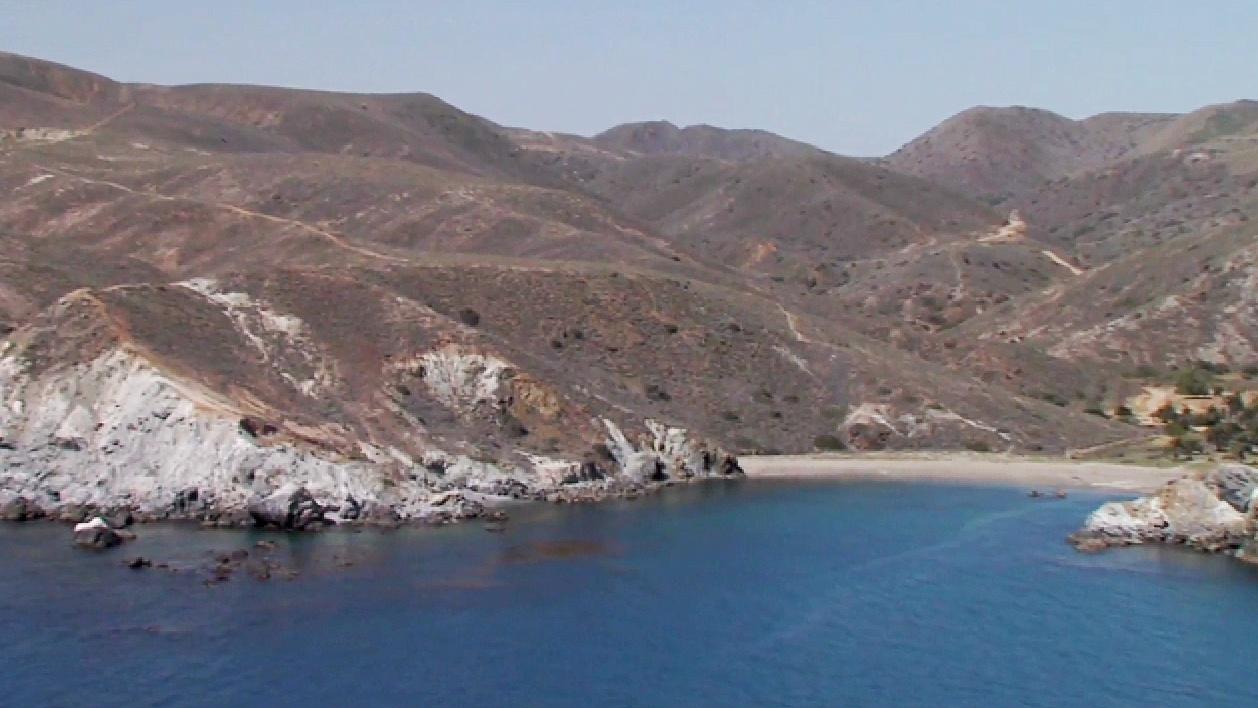
Catalina Island – The Jewel of the Pacific
05/07/16 | 26m 46s | Rating: TV-G
Every island is unique. The same characteristics that lead to the special and often bizarre wildlife and plants here also make them extremely vulnerable to loss. There may be a place where man and island can exist to the benefit of all. Catalina Island is that jewel of the Pacific. Join Patrick as he continues to explore this land where man and island coexist.


Copy and Paste the Following Code to Embed this Video:
Catalina Island – The Jewel of the Pacific
>>
Patrick McMillan
Every island is unique. The same characteristics that lead to the special and often bizarre life that develops on islands also makes them incredibly fragile and easily unraveled by man. We've seen the story over and over again, from Hawaii's loss of native birds and plants to the decline and struggle to save life on the incredible Galapagos. But there may be a place where man and island can coexist
to the benefit of all
Catalina, the jewel of the Pacific. Is it possible to preserve the unique life on islands and accommodate people too? People have been a part of Catalina for thousands of years, shaping the environment, changing, adding, and subtracting from the diversity. The mission of the Catalina Island Conservancy, which manages around 88% of the land here, is to be a responsible steward of its land through a balance of conservation, education, and recreation. The impact these managers and researchers are having on the island appears to be making a profound impact on the health of the island's specialness. To begin our look at man's influence here, we meet up with John Mack, the chief of conservation for the Catalina Island Conservancy. >>
John
This is a really interesting spot, Patrick, right here, where we see all these shell flecks on the soil surface. This was what's called a midden site of the native peoples that were living here for millennia, and this is basically sort of their garbage dump. There was house sites right up here, so sort of like we might do, they were just sort of throwing stuff over the side of the hill here, and this is built up in this, probably a meter or more of material. >>
Patrick
Easily a meter here, and I don't even think we are close to the bottom of this midden. It's eroded away along the path here. >>
John
Yeah, and so you see all these fragments of abalone shell. This was a main protein base of their economy, but then they would supplement this with a lot of plant material and vegetable matter from upland areas. The other thing is they used this a lot, so I happen to have just a smaller shell here. This is actually a small abalone. They had this amazing culture where they would drill holes and use it for jewelry. But more importantly, they would make fishhooks out of this, J-shaped fishhooks that they would carve out of these using the patterning of the shell. >>
Patrick
Oh, wow, that's so cool! So you look at the height of this midden. It's incredible. But also it's the fact that this is basically all we have for knowing that there were people here, and you threw out a number that was like how many people in this little stretch of coastline right here? >>
John
Well, I mean, it's hard to pin it down, but some of the archaeologists that I deal with think upwards of a thousand people were in this mile from that ridge there, maybe a mile this way on all these flattop ridges. They loved this area, and as you know, on Catalina there's not a lot of flat ground. And so almost all these flat ridges would have had houses on them and a lot of activity going on as they sort of managed this landscape. We sort of have used that term in the past year or so, what they called the "lived landscape" of Catalina because we are still embracing people in this landscape today, and there's 4,000 people that live on the island year-round, and there was, we think, upwards of that many for 10,000 years even. >>
Patrick
So, yeah, we're talking somewhere between 9,000 and 12,000 years, or maybe more, of habitation. >>
John
Yeah, I think our oldest dates are about 8 here, but we think that it was longer. And so they were managing this landscape
to produce foods
acorns and bulb plants, toyon berries and the Catalina cherry groves. They were managing those to have reliable production that was sustainable and healthy and was there year after year, and similarly, they were extracting the marine resources with this really sophisticated maritime culture. They were, in a lot of ways, working with all the natural processes and harvesting things when they came into fruit and then moving to the next thing after that and not saying I need this like 12 months out of the year; you know, kind of a way of approaching it. >>
Patrick
And these were people that were really tied to the sea. >>
John
Especially here in the coastal tribes. There was a really extensive trading culture here. Catalina was the premier soapstone deposit of North America, and they were quarrying soapstone, shipping blanks and finished material across to the mainland, and probably trading for things they didn't have, like deerskins. >>
Patrick
Right, and it's kind of that idea that these people were living, that you and I always talk about, is this idea of man being here and nature being there when, in fact, they're one and the same. >>
John
Exactly. It's just a myth that we're separated in any way, shape or form. >>
Patrick
Yeah, and our choices matter, and they last a long time. >>> The impact of people has perhaps even led to the arrival of some of the now endemic species. I spent the late afternoon sitting patiently and quietly along a fence line near biologist Julie King's house waiting for what she promised would come my way. And just before I gave up, there they were. What I just saw here was not one, not two, but three endemic island fox. And this animal has an incredible story of recovery, but it's also one of the most interesting biologically here. You see, the Catalina island fox is much smaller than the common gray fox, which we think was the ancestral species to this peculiar, little, and very trusting fox that's found here on this island. It isn't just a predator. It's omnivorous, eating both meat and fruit, but it's the most herbivorous of all foxes. It spends a lot of its time eating fruits and nuts and digging around in the leaf litter looking for things that have fallen from the trees, but it even can climb trees. It has partially retractable claws, just like a gray fox, and can go way up a tree after berries, fruits, nuts, food resources that other animals couldn't get to, and that's important here on an island where there's not a tremendous number of prey items for a predator. What's most interesting to me, though, about this incredibly tiny fox is how we think it got here. You see, people and foxes arrived just about the same time throughout the Channel Islands, and this tiny, little fox may have been a semi-pet to the people who settled these islands. And their transport of those animals onto this island may be where the island fox we see today came from. It's a valid species today. It's endemic to these islands. It's incredibly endangered, but it has a great future here on Catalina. >>> So Julie, not only does this fox have just such a spectacular story of how it got to the island maybe and the biology behind it, but it also has this incredible story of recovery. Could you tell us a little bit about what happened to the foxes here and then the process of bringing this incredible species back? >>
Julie
In 1999, there were approximately 1400 foxes on the island, and at some point during that year, canine distemper virus was introduced into the island. Within less than a year's time, over 95% of the population had contracted the disease and had perished. We were down to less than 100 foxes in under a year's time, so they were going through a critical crash. In response to that, the Conservancy contracted with the Institute for Wildlife Studies to do an initial survey to see what foxes were remaining on the island and how we could go about recovering them. We were very fortunate that the shape of the island goes to a very narrow isthmus there at the town of Two Harbors. The West End population remained intact. We almost had two separate islands, and so we brought in healthy animals from that West End population that were still very healthy and active. We put those in captivity to start breeding them. We had a vaccination program, which involves vaccinating both those captives and then any animal that's out in the wild, and also a translocation program. So the young of the year from the West End we started moving over to the East End to fill in those gaps. >>
Patrick
And the result of all this work is that, in just a few short years-- '99 wasn't that long ago-- how many foxes are on the island today? >>
Julie
Now the estimate is just over 1800. >>
Patrick
That's incredible! >>
Julie
That is an amazing and fast recovery program. >>
Patrick
We just don't hear about recovery stories like this very often, especially when you're dealing with a predator, and carnivore recoveries are usually painfully slow. >>
Julie
Their primary threat hasn't gone away, and that's disease introduction. In this case, it was a stowaway raccoon that climbed onto someone's boat unexpectedly and swam ashore, and it was sick. Since we can't always control what comes to the island, we can at least control what's on the island, so we continue to vaccinate and monitor, and we'll probably have to do that in perpetuity. >>
Katie Mixon
Wow, I'm really shocked at what I'm looking at! >>
Patrick
Yeah, not exactly what you expect to see on an island off the coast of California, bison. It's not a native California mammal. It's hard enough for a squirrel or a fox to get to this island. Imagine a bison! >>
Katie
Yeah, how did they get here, right? >>
Patrick
They had to have a little help, and you probably already know. >>
Katie
I happen to have studied and found out the real story about how the bison got here, but what in the world would a huge animal like that, what kind of impact could they have on this island? >>
Patrick
Right, and that's something to think about, the challenges that face animals even the size of squirrels and foxes when you have a limited amount of space, and 42,000 acres is a lot of space, but there's still limits on that. And so you have to think about how many bison this island can support and have healthy, but also the health of the ecosystem, and they've done it here in such a thoughtful way. I'm just amazed and impressed by the project they have going on here, so I'm gonna send you to talk to Calvin Duncan, and I think you'll be impressed, too, to find out just how much of an impact they're having here on this island, really setting a model not just other islands should be using, but land managers that work on populations like this throughout the world. >>
Katie
One of the biggest surprises in Catalina is the bison. What are bison doing here on an island off the coast of Los Angeles? I'm here talking to Calvin, who is a wildlife biologist with the Conservancy. Calvin, where in the world did these bison come from? >>
Calvin
Catalina has a great Hollywood or film-based production history. In 1924, 14 bison were introduced to the island specifically to support a backdrop for film production. >>
Katie
To be in a movie? >>
Calvin
Exactly! As far as I know, they didn't really end up on film, but they remained behind. Catalina is a huge tourist destination, and when you have something this novel on the island, it draws attention. So even before the Conservancy was here, the bison had become really ingrained with the culture of the island and have been a huge part of that tourism draw. >>
Katie
Bison are not native here, so what kind of effect does this essentially nonnative animal have on an island? >>
Calvin
Anytime you have a nonnative animal in an area, they can obviously change the ecology of the island, especially something this large. Bison, by biology, they tend to maintain grassland, so they will keep other plants--shrubs and stuff-- from taking over. That's not something we necessarily want on the island. They do help us manage some of our nonnative grasses. But ideally, we want to have only a small group of bison on the island and keeping just the grasslands we have. By 1986, one of the surveys that we had done had the population upwards of near 600. A research project that the Conservancy commissioned back in 2001, 2003, we were specifically looking at the ecology of bison on the island and how many we could sustain. At the end of that study, we determined that approximately 150 could be maintained without having severe adverse issues or impacts on our native vegetation and allowing for enough habitat to remain for our native species. >>
Katie
So how many bison do you have on the island today? >>
Calvin
Currently, we have approximately 138. We've had extreme success using a contraceptive, a vaccine called porcine zona pellucida. We initiated the process in late 2009, early 2010, and through the contraceptive, we've actually been able to reduce the population, and now we're actually backing off on our application of the vaccine and allowing the population to continue producing calves. >>
Katie
What sort of operation is it to give a contraceptive to such a large animal? How does that work? >>
Calvin
Well, PZP specifically requires two small doses of the vaccine delivered to the females only. The beauty of this is we don't actually have to capture the animals or hold them. We can deliver the vaccine remotely, and how we do that, we'll track them down, and we use a dart rifle and a small vaccine dart. The vaccine can be delivered in a very small dose. This is the whole dart. One milliliter of the vaccine, we load it into a CO2-powered dart gun, and we generally get between 35 and 40 yards, administer the vaccine. The dart falls out, we pick it up, and we just record which individual is given the vaccine. The island ends up being a really great place. We've kind of coined it the "living laboratory." So anything that's out here, it's in kind of a controlled atmosphere, being on an island. We can approach things very scientifically and within a controlled environment to allow us to do research and study that's gonna be applicable elsewhere. And anywhere that's planning on using this particular approach, we're gonna have a lot of the answers that they're gonna need to determine if this is something that they want to use. >>
Katie
So bison were introduced to Catalina by people, and people have made them a part of their home and of their culture, and now people's choices are keeping them here and healthy, and that's something we can see all over the island. >>
Patrick
Those species that are now living here on the island that displaced natives, brought here intentionally or unintentionally by man, have greatly altered the natural functioning of this island. Here on Catalina, there's a plan in place to reverse the harmful impacts of these species. >>
Grant
All right, Patrick, one of the biggest problems we face here and in California and, in a broader context, the whole world, really, is invasive plants. Here you can see one of the invasive plants we have on the island, Harding grass. This is an area where it's been allowed to kind of become a monoculture. It was planted here for forage, actually, for cattle when they did cattle ranching out here, and so we're kind of living with the legacy of that right now. >>
Patrick
Oftentimes quoted as being the second-largest threat to biodiversity on the planet are things growing where they're not supposed to grow, so invasive, exotic, for those people who don't know, and exotic means it's not local. It's something that came from elsewhere. And invasive refers to the fact that it actually can displace local plants and really alter local communities and the dynamics of them. >>
Grant
Exactly, and when they get here, they don't have those forces that would hold them in check, such as predators or diseases, so they're able to just take advantage of that, and you can kind of see the results of that here. >>
Patrick
A lot of people would look at this and say, "Too late; write it off; this area's not worth saving." You guys are taking a different approach. >>
Grant
Yeah, we've put quite a bit of work into this species. If you come with me, we can see some areas that we've worked on and made some progress. >>
Patrick
Excellent, lead on. >>
Grant
All right. So you can see here, this is one of our areas that's been a heavier infestation of Harding grass, or Phalaris aquatica. You can see we've done a lot of treatment on this for about four or five years and then done some of this here. >>
Patrick
A good kill. >>
Grant
Yeah, right in here, we've gotten some good kill. But in an area that is as invaded as this, we've found that we need to give Mother Nature a little boost. We do that by turning to our native plant nursery and doing some active out plantings. >>
Patrick
And it's pretty obvious on the landscape, the stuff you've got planted up, because they're all armored with these little tubes here. >>
Grant
Exactly, yeah. >>
Patrick
Inside the tube, it looks like golden lotus. Can I take this off? >>
Grant
Sure, yeah. >>
Patrick
So the tubes are there to protect the plants, and it's been horribly dry the past couple of years in this part of California, but one of the tubes there is for protecting the plant, right? >>
Grant
Right. This tube here is because we have a couple species of introduced browsers here. We have mule deer and then also the bison. >>
Patrick
This golden lotus, which is a Channel Island endemic, also looks fresh and green, and I guess that's 'cause of your smaller tube here. >>
Grant
We have the smaller tube to help channel water down into the root system, either when we water or any rain. We try to help get that down as far as we can. >>
Patrick
And I'll tell you, it's amazing to see something working. So often when we look at a problem with infestation of those species that are real problems, we look at them and say, "Oh, there's nothing we can do about it; the problem's too large." And you guys are doing something and not just on a small scale. Your coverage is 42,000 acres. >>
Grant
Yeah, out of the whole island, we work on 89% of it. It's a big task. >>
Patrick
And you've already achieved some eradication of some species. >>
Grant
Yeah, we have. We're achieved a few eradications. Yellow star-thistle, that's been eradicated for quite a while now, and then cape ivy. And then we're coming very close with a few species, such as tamarisk, or salt cedar, which is a big problem. Also, we're doing quite well on the pampas grass and fig trees in the backcountry. >>
Patrick
For somebody like me that's been involved in this kind of thing, I've just got to ask you, 'cause to have a successful program like you do, what does it take to have something succeed of this size? >>
Grant
It takes a lot of work. Right now, we're two full-time employees. We have four interns right now and a lot of volunteers. >>
Patrick
A serious commitment. >>
Grant
It is a serious commitment. The rewards to it are not always obvious. >>
Patrick
But it's one that pays off. >>
Grant
It is one that pays off. >>
Patrick
I'm blown away. I've rarely encountered anything of this scale and especially something that's sustainable and when you have the commitment to go through the future. It's incredible. >>> To be able to do this type of restoration, you have to have the native stock to restore it, and this is perhaps the most challenging part of the entire project. >>> This is incredible. It's like every native endemic on the island is here, so it's really neat to see so many of these things. And the purpose of this incredible nursery, why is this needed? >>
Grant
This is an example of one of our rarest shrubs, or sometimes it's called a tree. This is a Catalina mahogany, and it's an example of a rare, endangered species. >>
Patrick
When we're talking rare, we're talking very rare, like seven known individuals. >>
Grant
That's right. Last that we've recorded, there were six or seven pure individuals. At the turn of the century, there were, I think, about 400 plants at one point, and now they're coming back. Species like this will go as out plantings into other restoration sites where they have kind of a hedge against extinction if something was to happen to the wild population. Other plants have a lot of ornamental characteristics. Catalina silver lace, or Constancea nevinii, is endemic just to three of the southern
Channel Islands
Catalina, Santa Barbara, and San Clemente Islands. >>
Patrick
There's a beautiful example of this in Avalon, and it's growing on a cliff side with-- I didn't see anything else native. It was like this issue of all of these invasives and exotics that have been brought to a place like Avalon for so many years. You have a project going there too, don't you, in town? >>
Grant
In Avalon, we do native landscaping, and we try to encourage island stakeholders to use our Catalina native plants. One, they're drought-tolerant. They have a lot of relationships with pollinators and wildlife on the island. And they also can be beautiful and functional in your garden. So it's a small community, but that's one of our outreach efforts. >>
Patrick
So some of these plants are going out to restoration areas. You're trying to put back these incredibly rare, cool endemics. How successful has this been, taking plants generated here? >>
Grant
It varies widely, depending on the species. All these plants have different strategies for dealing with the drought that we have here in the Mediterranean climate in California, and depending on the species, some will do really well planted as a container plant; others, very unsuccessful, would be better planted as seed. It's an emerging science, and within Southern California, there's the growing need for restoration in these really endangered habitats and also an increasing understanding of how they function as systems. You really have to kind of mimic what nature would do to recover these landscapes, and we rely on a lot of volunteers. We have various conservation corps. The American Conservation Experience is one that we work closely with, and AmeriCorps, and then also a troop of local volunteers that we work closely with that keep us going. In addition to our living collections here and plants that will be planted out for restoration, we also have a seed conservation facility, a seed bank, and in that seed conservation facility, we house about half of the native flora. We've been collected seeds for 20 years. >>
Patrick
I'd love to take a look at it. That's something we're trying to do too. >>
Grant
Let's go. So our seed conservation program has focused on seed collection and conservation of two plant groups. One is rare plant species, and then the other is bulk collection for restoration. Here in our seed facility, we have over 20 years' of collections representing 243 native plant species from Catalina Island. And the last count we did with our database, we had about 240 million seeds in conservation here in this facility. >>
Patrick
So you really have two layers of backup here for plants. You've got your living plants, and then you have this long-term storage. >>
Grant
Yeah, that's right. >>
Patrick
Not all of the diversity on the island is endemic. Some are emblematic and wide-ranging with a long history here. But that's often a history of loss. Some of the most charismatic are well on their way back. While I'm visiting restoration sites, Katie is spending time with Peter Sharpe and some of the eagles of Catalina. >>
Peter
We are in our eagle aviary. It's where we keep our educational bald eagle Pimu and golden eagle Heidi and also where we bring birds temporarily, such as K-28 up there, who was pulled from the ocean a few days ago. >>
Katie
I see the bright orange tag. What do you use that for? >>
Peter
Each bird gets a unique number, and that allows us and others to identify the birds from a distance. By the late 1950s, early 1960s, all the bald eagles were gone from the Channel Islands. >>
Katie
Tell us why that happened. >>
Peter
The bald eagles were wiped out primarily because of DDT pollution. There was a manufacturing plant on the mainland, and thousands of tons of DDT were dumped into the ocean. And what that does to the eagles, it impacts how the females lay down the eggshell, and basically the eggs would break before the chicks could hatch. Starting in the late '40s, we probably had no reproduction, and with no young, the adults just died out, and there were no more eagles on the Channel Islands. The organization I work for, Institute for Wildlife Studies, was created initially for the bald eagle restoration. Our initial restoration work was here on Catalina. We brought 33 young bald eagles down here between 1980 and 1986 and put them in large what we call hacking towers. They're about an 8-by-8-foot cage, 15 to 20 feet up in the air on stilts. And so we'd get 8-week-old birds, bring 'em down, put 'em in these towers for a month, feed 'em through shoots so they can't see us, and then when they're ready to fly, at about 12 weeks of age, we open a front door. They're free to go out on the front stoop there and get some more exercise until they get the courage to fly. Each breeding season, which is essentially January through June/July, I have employees that are monitoring the eagles, finding out when they lay their eggs, if the chicks hatch. >>
Katie
Were you going in and checking the eggs to see if they still had DDT in them, if they were harder than they were before? >>
Peter
Initially, on Catalina, the first eggs all broke in the nest. So what we started doing is we got artificial eggs, and as soon as they would lay, we would go into the nests, take the fragile real eggs, place these artificial eggs in there, and the adults would just come back and incubate those. We would take the real eggs for artificial incubation, mostly at the San Francisco Zoo. And then when the chicks hatched, we would bring 'em back down, take the fake eggs out, put the chicks in, and from that point, the adults would just raise the chicks on their own. And in 2006, two birds, which were actually from Catalina but breeding on Santa Cruz, successfully hatched a chick for the first time in 50 years or so. >>
Katie
Wow! You went from absolutely no eagles to-- do you feel it's a solid population now on Catalina? >>
Peter
Catalina, yes. We have eight breeding pairs here, which is probably what it was historically before they were wiped out. Having them breeding on their own, it's a relief for me, and it's really a testament to the work that we've been able to do here and to maintain the population to the point where they could start hatching their own eggs. >> A lot of people come to Catalina because they think it's a place where they can see California the way it was. Whether it's the charm of Avalon or the hills that are not developed or the crystal-clear water around the island, it harkens back to a simpler, less complicated time. What I love about Catalina and what the Conservancy stands for is that it represents what California and the world can be, how we can work together to reverse damage that we've done, to welcome people onto the land, to give them meaningful, fun, exciting experiences with nature, provide lovely amenities, which the town of Avalon does, how you can live in a small footprint community, which Avalon is, a smart community, and how we can even make that better. So it has, all in one place, a major university, a major conservation organization, a community that is open and receptive to people, and how you bring those together to model what our state and our nation can be is what, to me, is so very exciting about Catalina. >>
Patrick
The lessons that can be learned here are poignant and lasting. Human choice is important. Your choices are important. This place is a shining example of what dedication and investment in the natural world can do. For now, it seems that Catalina will remain California's jewel of the Pacific. I'm Patrick McMillan wishing you your own exciting "Expedition." CompuScripts Captioning www.ccaptioning.com. >>
Female announcer
To purchase a copy of "Expeditions with Patrick McMillan"...
Search Episodes

Donate to sign up. Activate and sign in to Passport. It's that easy to help PBS Wisconsin serve your community through media that educates, inspires, and entertains.
Make your membership gift today
Only for new users: Activate Passport using your code or email address
Already a member?
Look up my account
Need some help? Go to FAQ or visit PBS Passport Help
Need help accessing PBS Wisconsin anywhere?

Online Access | Platform & Device Access | Cable or Satellite Access | Over-The-Air Access
Visit Access Guide
Need help accessing PBS Wisconsin anywhere?
Visit Our
Live TV Access Guide
Online AccessPlatform & Device Access
Cable or Satellite Access
Over-The-Air Access
Visit Access Guide




Follow Us