










PBS Wisconsin Passport
Watch this video with
PBS Wisconsin Passport
Become a member of PBS Wisconsin, support your local community, and get extended access to PBS shows, films, and specials, like this one.
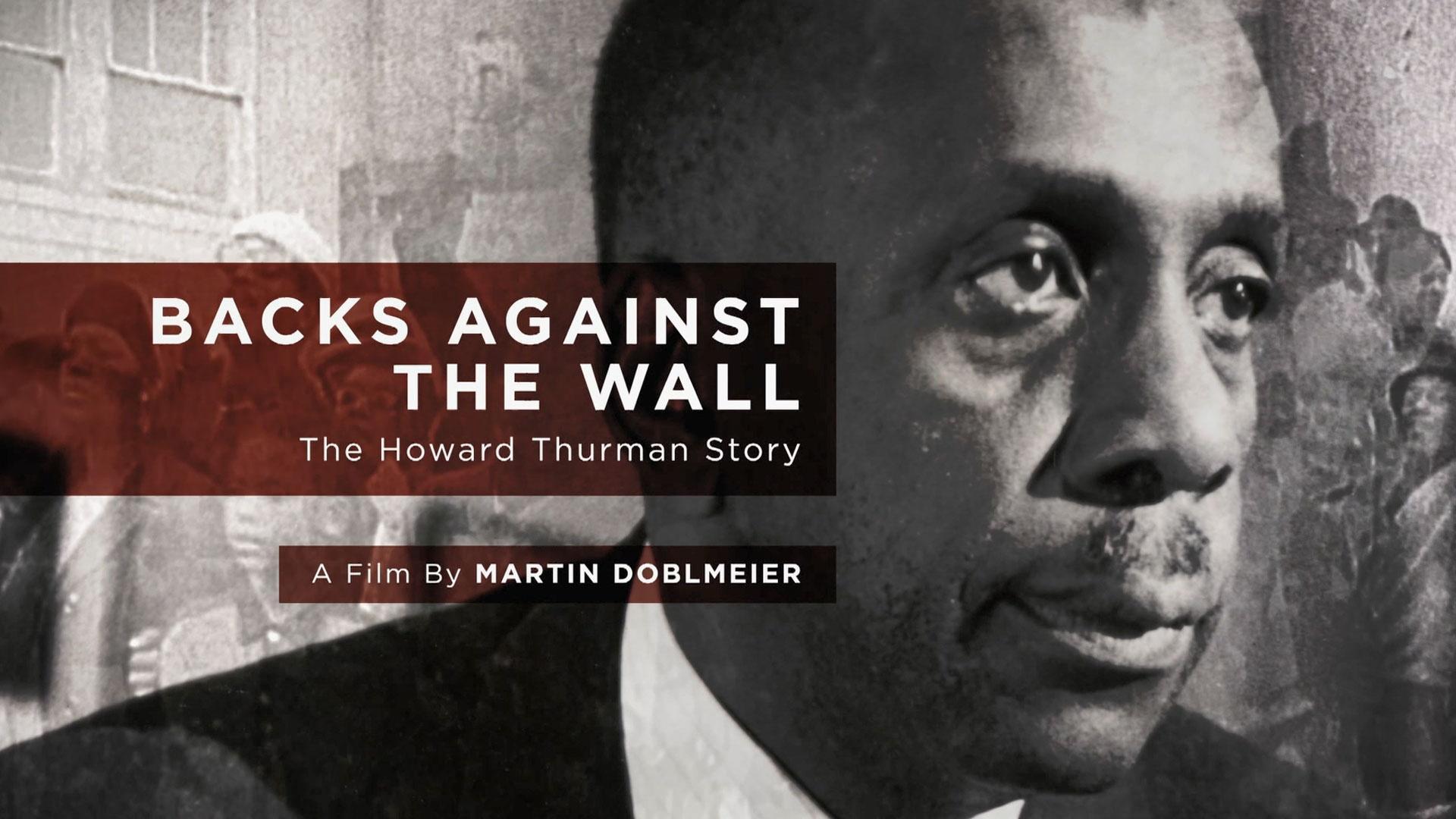
Backs Against the Wall: The Howard Thurman Story
02/01/19 | 56m 46s | Rating: TV-PG
This film explores the extraordinary life of Howard Thurman, a teacher, poet and in his heart a “mystic,” and proponent of the non-violent struggle for social change. Jesse Jackson, Otis Moss, Jr and others speak about Thurman’s “spirit” being foundational in their lives. Congressman John Lewis calls him the “patron saint” of the Civil Rights Movement. Actor Keith David voices Thurman’s words.


Copy and Paste the Following Code to Embed this Video:
Backs Against the Wall: The Howard Thurman Story
NARRATOR
He was born the grandson of slaves, yet, Howard Thurman would become one of the most celebrated religious figures of the 20th century. A spiritual mentor to Martin Luther King, Jr... MARTIN LUTHER KING,
JR
Whether, we want it that way or not, we all tied together.
NARRATOR
And a moral anchor for the civil rights movement.
JOHN LEWIS
Martin Luther King, Jr would quote Howard Thurman on many, many occasions.
WALTER FLUKER
I think Howard Thurman, for many leaders in that movement, King included, played the role of pastor.
NARRATOR
In the 1930s, after an historic meeting with Mahatma Gandhi, Thurman becomes one of the early voices for non-violent resistance for a people who over centuries experienced unimaginable violence.
JESSE JACKSON
He helped establish the philosophical framework of how to struggle. OTIS MOSS,
JR
He saw himself as a spiritual activist.
VERNON JORDAN
Because he was fundamentally a teacher.
ANTON WONG
He had this combination of being kind and being strong and I think that was a very rare combination.
NARRATOR
While, Sunday morning was often considered the most segregated hour in the week, Thurman helped pioneer a church where people of different races and religions could worship together.
BARBARA BROWN TAYLOR
He's suspicious of denomination and dogma and creed. He would never identify himself as a theologian because he thought theologians boxed God.
NARRATOR
And he was called a "mystic" because he believed religious experience was best explored within.
LERITA COLEMAN BROWN
Howard Thurman was actually, practicing contemplative spirituality before we actually started calling it "contemplative spirituality."
PETER EISENSTADT
At his heart he was a nature mystic.
FLUKER
Thurman is talking to trees... Trees!
Laughs
NARRATOR
Yet, this mystic was also an outspoken critic of Christianity for its part in the nation's deep racial divides, and he countered with a shocking new work that offered a revolutionary new way of understanding the life of Jesus Christ and how it speaks directly to the oppressed and disinherited.
JACKSON
I carried the book with me, "Jesus and the Disinherited," every day.
OTIS MOSS III
And he gives an Africanity to the interpretation of Jesus.
LUTHER SMITH
He provided a spiritual perspective that was empowering.
GREG ELLISON II
There were people encountering Thurman's work and being shaken at their core.
HOWARD THURMAN
I would have to find out what was the word that the religion of Jesus had to say to the man with his back against the wall.
ANNOUNCER
Major funding for this program was provided by Lilly Endowment.
OPRAH WINFREY
You will find true success and happiness if you have only one goal. There is only one and that is this, to fulfill the highest, most truthful expression of yourself. Theologian Howard Thurman said it best. He said, "Don't ask yourself what the world needs.
Ask yourself what makes you come alive and then go do that. Because what the world needs is people who have come alive."
APPLAUSE
PEOPLE SINGING & CLAPPING, DOGS BARKING, SIRENS...
NARRATOR
The 1960s and the Civil Rights Movement is exploding across America. A century after a Civil War was fought to end slavery, deeply-rooted segregation and blatant racism are still legal in many parts of the nation. Now, they are being met head on.
I may be poor... AUDIENCE
I may be poor...
JACKSON
But I am...somebody!
AUDIENCE
But I am...somebody!
I may be uneducated... AUDIENCE
I may be uneducated...
JACKSON
But I am...somebody!
AUDIENCE
But I am...somebody!
NARRATOR
Jesse Jackson, Martin Luther King, Jr, John Lewis, Otis Moss, Jr, Vernon Jordan, and other Civil Rights leaders are convinced the moment for resistance has come. And no matter how they are treated, they are committed to non-violence.
THURMAN
The spirit in man is not easily vanquished. It is fragile and tough. You may fail again, and again, and yet something will not let you give up. Something keeps you from accepting "No" as a final answer.
It is this quality that makes for survival of values when the circumstances of one's life are most against decency, goodness and right.
SMITH
They were given the power and the authority to respond to the realities of injustice in ways that could be true to their faith and in ways that did not require them to compromise the integrity of who they were.
NARRATOR
Many feel it is Howard Thurman, through his insights and early commitment to non-violence, who evokes a spirit felt across the entire movement. MARTIN LUTHER KING,
JR
Whether, we want it that way or not we are all tied together. Every Negro in America is a little white, every white man in America is a little Negro. The Negro needs the white man to save him from his fears and the white man needs the Negro to save him from his guilt. We need each other.
ALTON POLLARD
People sometimes seem to think that non-violence was endemic to the African American community as a way of life when in fact it was not. And even Thurman was very clear that non-violence was kind of a cultivated experience for most rank and file people, including leadership.
LEWIS
I would agree that Howard Thurman was a saint of the movement. MOSS,
JR
He gave us the basis for the march, that we know why we march, the principles upon which we march, how we march, and what we do after the march.
JACKSON
He helped establish the philosophical framework of how to struggle. You cannot let the oppressor break your spirit. They may break your bones, or your arms, but not your spirit. That's the stuff of Howard Thurman.
MOSS III
Dr. King was not completely committed to non-violence. When I say not committed, he saw it first as a tactic until he was fully converted to it as a lifestyle. And my father helped me with that, to understand that early on people saw things as a tactic, this is the best way.
Dr. King then moves to
this is a lifestyle. And that is a direct connection to Thurman's conversion. And here is a non-violent revolutionary.
NARRATOR
One of the foundational works for the movement is a book by Thurman; "Jesus and The Disinherited." MOSS,
JR
I have been told that Dr. King carried "Jesus and the Disinherited" with him most of the time when he traveled.
SMITH
It's a book that really describes what it means to be involved in such a struggle as a spiritual matter, as a matter of faith and not just the effort to change laws for the gaining of civil rights.
FLUKER
He says, "That the African Americans didn't have any rights, just like Jesus. But they could choose to ground themselves in their own inherent dignity and worth." And if one were to choose this, it would have a lot to do with how they would deal with the question of, "What do you do when your back is against the wall?"
NARRATOR
The paradox is that Thurman who has wide impact on the movement is himself not first a social reformer. He's much more a spiritual contemplative, what some would even call a "mystic."
BROWN
Howard Thurman is a great example of making a connection between contemplation and social justice.
NARRATOR
But the mystic himself is not out on the front lines during many of the marches and for that he's often criticized.
MOSS III
He was the teacher, he was the mentor, and he was the spiritual sage. He was not the one who was on the front line, but he was the one where people would retreat to, to be refilled. MOSS,
JR
They were praying for a great freedom fighter, a liberator. One of them said, "You know we thought we had a Moses, and we ended up with a mystic."
JORDAN
Howard Thurman determined his role as opposed to having people telling him what to do with it. To be independent, to be free, to be available.
NARRATOR
For Thurman, one of the great tragedies is that too often, on both sides of the racial front lines are Christians. Historically,many church's, and denominations suffered deep, and painful division over issues of race, and Sunday morning is described as the most segregated hour in America.
QUOTING THURMAN
"It is one of the great spiritual problems of Christianity in America that it has tolerated such injustices between Negroes and Whites. It is for this reason that many people all over the world feel that Christianity is weakest, when it is brought face to face with the color bar."
NARRATOR
The spirituals are a key part of the Civil Rights Movement, and many have their roots in early slave songs. Those songs are now, are uniting people across generations. Thurman writes one of the first books about the importance of those original spirituals for a people who had been reduced to property as slaves.
THURMAN
Something had made it possible for the slave, cut off from all of his roots, to survive, to hold himself in some vast immunity against the violence's of his environment.
EILEEN GUENTHER
I think spirituals are the most powerful music ever created. Spirituals were music of resistance in the slave era. There are original spirituals that are sung the way they were sung in the slave era, but then they retext them, they contextualize them. So you have "Ain't gonna let nobody turn me around." But then they put in "Ain't gonna let Sheriff Clark turn me around, Ain't gonna let your dog's turn me around, Ain't gonna let your hoses turn me around." And it gives them faith, and motivation, and courage in a situation that facing dogs and hoses, you need the courage if you're going to do it.
MOSS,
JR
Songs like "Oh, freedom, oh, freedom... Freedom over me. * And before I'll be a slave. * I'll be buried in my grave.
NARRATOR
Wisdom passed down from the slaves, a sense of creating that inner sanctuary, are all part of Howard Thurman, going back to his earliest days.
BROWN
So, he's basically saying, "Don't let other people's violence, or degrading words, or whatever invade your inner sanctuary." That can only happen if you allow that. That's a real difficult and psychologically, if in fact you've been hearing this over and over again, but he's saying, your strength is this connection to the eternal. *
NARRATOR
Howard Thurman grows up at the beginning of the 1900s in Daytona Beach, Florida.
EISENSTADT
It was booming; a railroad had just gone through. The citrus groves were operating and it became known as a place for oranges. It also became a winter community for wealthy Northerners.
NARRATOR
In Daytona, Blacks and Whites are nearly equal in population. And while Daytona could be more racially tolerant than other parts of the South, there is still legal segregation and each community knows painfully little about the other.
THURMAN
In my kind of Christianity, the ethic, the Christian ethic was binding on me in relation to other Negro's, other Black people, but it had no meaning as far as the White world was concerned, just...just nothing. So they were not part of my magnetic field of awareness.
FLUKER
You could go to the beach, during the day, you could work there. But at night, you needed to get home.
SMITH
When you're going through a period where you have the Ku Klux Klan identifying itself as a Christian organization, and a period in which people are leaving congregations on a Sunday morning to participate in lynching's, where you have Christian clergy and laity who are either refusing to say something about the kind of discrimination and the kind of violence that is occurring or are rather tepid in whatever they have to say.
JORDAN
I knew when my parents would take me downtown, that I would sit in the back of the bus. I knew that when we got downtown, that if I wanted water, it would be colored water or if I wanted to go to the bathroom that I would go to the colored bathroom. I understood the rules. But also had parents who would say, as we sat in the back, "Because you are having to sit here does not mean that the people sitting up there are better than you."
NARRATOR
Thurman's father worked on the railroad. It's a good job but took him away often. Yet, it provides a home and a respectable living for the family. Thurman's father dies when Howard was seven, leaving behind Howard and his two sisters.
SMITH
His mother, being a primary provider for the home, worked doing laundry for persons in the community... White persons in the community.
NARRATOR
But it is Thurman's grandmother, Nancy Ambrose, who has the greatest impact on his life. Born in the 1840s, she spent her first 20 years as a slave on a large Florida plantation. She rarely speaks about those early years but one story stays with Thurman throughout his life.
THURMAN
She said, that when she was a young woman on this plantation, once a year, a minister who was a slave on a neighboring plantation was permitted to have a religious service for the slaves. And always, it didn't matter what his subject was, he ended his sermon in the same way. She said, he would stand and look at them and he would say, "You are not slaves, you are not niggas, you're God's children." We would all wait for that moment because a far-away look would come in her eyes, and just a slight stiffening of her spine. And there was a contagion which came to us as little children that the Creator of existence also created me, and therefore, with that sort of backing, I could absorb all the violence's of life.
BROWN
She wanted that to be his primary identity, for him to know that first and foremost, he was a holy child of God, before he learned anything else about himself that people might have said to him as a result of him being a young colored boy in Daytona Beach in the early 1900s.
EISENSTADT
Thurman describes his childhood as being very lonely. He...I think, always found God in nature. He loved the beach.
QUOTING THURMAN
"I was a very sensitive child who suffered much from the violence of racial conflict. I found that the more I turned to prayer, to what I discovered in later years to be meditation, the more time I spent alone in the woods or on the beach, the freer became my own spirit, and the more realistic became my ambitions to get an education."
BROWN
In many places, people feel like you experience the presence of God at church and Howard Thurman did not believe that, that was the only place that you could experience God.
NARRATOR
Behind their home a mighty oak tree became the young Thurman's companion.
QUOTING THURMAN
"I discovered that the oak tree and I had a unique relationship. I could sit, with my back against its trunk. I could reach down into the quiet places of my spirit, take out my bruises and my joys, and unfold them. I could talk aloud to the oak tree and know that I was understood."
FLUKER
Thurman is talking to trees... Trees!
Laughs
NARRATOR
Florida in the early 1900s provided almost no options for Black students after eighth grade. But Thurman is already beginning to excel.
FLUKER
This was part of this early brilliance that one sees and incredible work ethic. Brilliance, yes. But a work ethic. So he graduates, being the very first African American to complete the eighth grade in Daytona schools, and he goes on to Jacksonville to the Florida Baptist Academy.
NARRATOR
He graduates valedictorian. And as a world war rages in Europe, Thurman writes a personal letter to Mordecai Wyatt Johnson, who will become both president of Howard University and a mentor for Thurman.
ELLISON
There's a piece in this letter that continually inspirits me about the life of young people who are committed to service and the importance of mentors who can affirm them. He says, "I want to be a minister of the Gospel." This is an 18-year-old. "I am patriotic, I am willing to fight for democracy, but my friend, Reverend Johnson, my people need me." But he says, "Please pray for me, because almost on every hand I am discouraged in my choice of ministry. Sometimes, I think nobody cares."
FLUKER
And he's actually asking Mordecai Wyatt Johnson to become his father.
NARRATOR
Johnson encourages Thurman to further his studies and Thurman heads to Morehouse College in Atlanta, Georgia. Morehouse was founded after the Civil War to educate freed slaves. One of Thurman's classmates is Martin Luther King, Sr.
LAWRENCE CARTER
Howard Thurman said that when he walked into Sale Hall Chapel in 1919 as a freshman, President John Hope went to the lectern and the first thing he said was, "Young gentlemen." Thurman said the words startled the young men because they were not accustomed, as members of the disinherited community, to being so affirmed. Receiving such esteem. And that affirmation, he said, was like pouring iron into their spine.
FLUKER
Thurman was not the most attractive guy in the world. He says this in an unpublished manuscript, so I'm not calling him, I think he's beautiful. But he says, his company was not welcome by the girls. And the guys didn't choose him for the games they were playing.
NARRATOR
At Morehouse, Thurman becomes active in the Young Men's Christian Association, the YMCA, as well as the Fellowship of Reconciliation where he explores ideas about non-violence.
EISENSTADT
It was how could he as a black man survive in a world of hatred and oppression. Pacifism was a spiritual resource for him to give him the strength not to hate these people, not to fear these people, but to deal with them as equals.
NARRATOR
Before he leaves Morehouse he reads every book in the library, again becomes valedictorian, and now sets his sights on ministry at Rochester Theological Seminary in upstate New York. He is one of only two Black students accepted each year.
SMITH
I believe Rochester is a place that Thurman begins to be aware of how the Christian faith is more than the way in which a particular denomination gives expression. And to have a vision of, of who are our sisters and brothers beyond even the Christian family.
NARRATOR
While, studying at Rochester, Thurman receives invitations to speak in White churches where he's often monitored by the Ku Klux Klan. But he's also doing something more.
SMITH
He's traveling through Rochester late at night. He is teaching Black maids and male servants the very things that he's learning in the seminary, because he has felt indebted that what he is gaining needs to be available to those who do not have the opportunities to be part of this stimulating experience in which he finds himself.
NARRATOR
Thurman completes his work at Rochester but there's one more piece to his education. Thurman stumbles upon a book by a Quaker mystic, Rufus Jones, and not long after, Thurman leaves for Haverford College outside Philadelphia to study under Jones.
TAYLOR
It would be impossible to discount Rufus Jones's influence on Howard Thurman. I think the Quaker tradition not only of honoring silence, and solitude, and interior experience of the Divine, but also the recognition of the inner light in everyone, and also the emphasis on social justice, made that a perfect match for Howard Thurman.
NARRATOR
In 1926 Howard Thurman marries Katie Kelley.
SMITH
Just a young woman who is deeply committed to caring for those who are less fortunate.
NARRATOR
In October 1927, their daughter Olive is born. But by 1929, tragedy sets in.
FLUKER
Katie contracted tuberculosis from her work as a social worker.
NARRATOR
A year later, Katie dies. Thurman is devastated. He returns to Morehouse College to settle in as a single parent and teacher. In 1932, during the height of the Great Depression, Thurman is teaching at Morehouse College and the all-women's sister school, Spelman.
He courts a pastor's daughter, Sue Bailey. And they marry.
FLUKER
They became a team of equals. She was an intellectual in her own right, deeply spiritual, and an activist.
NARRATOR
Together the Thurman's leave for Howard University in Washington, DC, where Thurman will teach theology. Under President Mordecai Wyatt Johnson, Howard University has become one of the nation's premiere schools for Black students.
EISENSTADT
Howard University in the '30s, attracted this amazing array of talent. Ralph Bunche, who was one of Thurman's best friends. Benjamin Mays, another lifelong friend was teaching there as well.
SMITH
At Howard University, Thurman is working on this question of how to overcome barriers that divide people; barriers of race, barriers of ethnicity, barriers of denominational identity.
NARRATOR
One of the projects initiated by Thurman was an exchange of Howard University students with students from Vassar College, an elite school for women in Poughkeepsie, New York.
SMITH
He's very interested in these experiments and this very matter of having students to cross boundaries that they would not normally be crossing is Thurman's own way of fighting the status quo. And his belief that individuals do make a difference.
NARRATOR
When Thurman is named Dean of Howard's Rankin Chapel, he seizes an opportunity to cross boundaries through creative worship, using experimental forms of music, theater, and dance.
FLUKER
It's an incredible place and Thurman sees his mission again in this space, is to create religious life which also gives substance to this notion of community. Thurman sees himself as a scientist almost, in a lab coat you should picture him, experimenting with religious experience and ecclesiology. The ways we understand church and worship. Some folks thought it was pagan.
But he did it.
NARRATOR
Thurman can now combine a traditional approach to theological education with his own understanding of the importance of an individual religious experience.
MOSS III
The European strand is very strict doctrinal. That in order for you to have access to God it must come through these very specific steps. That you have to accept Christ, you have to be in this church community, you have to accept this doctrine. Here is Thurman who is influenced by nature.
He's talking about the fact that you can encounter God in these different ways, and that you must look not only into someone's eyes but into the experiences of other people to witness God working. And that fits with this kind of Southern Black tradition. These stories about, if you want to connect with God, go...go sit down by the riverside. MOSS,
JR
Dr. Thurman said, "You are never under obligation to preach a great sermon, but you are eternally obligated to grapple with great ideas. And if you grapple with great ideas, you might occasionally in a lifetime, preach a great sermon.
NARRATOR
Thurman incorporates silence into his services as he continues to grow in his appreciation for mysticism.
TAYLOR
So I do think that mystical is a troublesome kind of label. What I think it means is a person who relies on a direct experience of the Divine as being central, and true, and real in ways that institutional reception of the Divine or even intellectual reception of the Divine are inferior by comparison.
THURMAN
What are we doing with our lives? What are the motives that order our days? Where are we trying to go? Where is my treasure?
ANTON WONG
This deep voice and he would take these long pauses, and he'd throw his head back and his eyes would be closed. And as he made the pause, it would kind of draw you in.
BROWN
The fact that he learned to live from silence, learned to listen for what he was being called to do was unusual for the time. And oftentimes, he was not well received by other black preachers.
THURMAN
What do I want? What do I want, really?
SMITH
But these long periods of silence that suggested this was not a rhetorical question, this was a question for our engagement. It was a question in which Thurman himself was engaged.
NARRATOR
Crossing the racial and religious divides will now take on a new dimension for Thurman, when in the fall of 1935 he, his wife Sue Bailey, and another couple accept an extraordinary invitation. They travel by ship to the other side of the globe, to what is now Sri Lanka, Myanmar, and India. *
FLUKER
Both the YMCA and the YWCA are very interested in seeing a kind of Negro delegation in India.
THURMAN
All the people who had been there before, missionaries, other people, were all White. And they wanted to find out what was there in our experience in American society that could contribute to their whole struggle.
NARRATOR
The struggle was over British colonial rule that has been in place since 1858. But now, its future is being challenged.
EISENSTADT
He was horrified by what he saw. He was appalled by the way he saw Indians being treated. He was horrified by Imperialism, he was amazed that such a small group of people in India, and it's remarkable how small the Indian Civil Service, and its soldiers were able to keep a country of hundreds of millions of people under control.
NARRATOR
Throughout India, millions of people, the poor and often most destitute, came to be known as "Untouchables."
WALTER
Thurman caught this as a major concern. Not only was a person despised and was aware of being despised, but they had somehow incorporated this into their very identity. And he made a correlation between that and the struggle of African Americans.
NARRATOR
Sue Bailey is a leading figure for the national YWCA. She takes on a leading role for the visiting delegation.
WONG
She was one of the most intelligent, graceful people that you are ever going to meet. She carried herself with such dignity. There was never any question about him not feeling that she was an equal.
FLUKER
Sue Bailey Thurman looked like she was from India. She could have easily passed as a woman living in India. She lectured on the history of African Americans from slavery to their present context, and especially the role of women.
NARRATOR
Over the next months, Thurman travels hundreds of miles across India, delivers more than 100 talks. More importantly for him, his horizons for religious expression are being opened.
QUOTING THURMAN
"In India everything was foreign and new; the smells, the altars, the flowers, the chanting, all of it was completely outside my universe. I had to find my way to the place where I could stand side by side with a Hindu, a Buddhist, a Muslim, and know that the authenticity of their experience was identical with the essence and authenticity of my own."
NARRATOR
During one presentation, Thurman is confronted by a lawyer who challenges him in a way he would never forget.
FLUKER
The lawyer is shocked that an African American would come to India, a place colonized by the British, and a person who represents folks who have been former slaves, and who are still segregated in the United States of America, would come as a representative of Christianity. I suspect he thought Thurman was just another missionary, the kinds that had come before, who were proselytizing and trying to get Indians to convert to Christianity. And he gets a surprise, because Thurman says, "I'm not here representing the religion about Jesus, that's the religion that oppressed me and also had a lot to do with the domination and subjugation of your people," The religion "OF" Jesus though, is a liberating religion. And it's a religion that the oppressed can own because Jesus was oppressed.
JACKSON
Good news to the poor, heal the broken heart to set the captive free. That's the character of the religion. Now, some characters within the religion don't accept the mission statement, they're just using the name of. But the character of the religion is defend the poor, deliver the needy, set the captive free.
NARRATOR
But an historic encounter is about to unfold, as the delegation is invited to meet privately with the man who has become India's most remarkable figure, Mahatma Gandhi.
EISENSTADT
African Americans from the early '20s were writing about Gandhi, calling him the greatest man in the world, the greatest man of color in the world. Speculating about how Gandhi's non-violent crusade could be translated to an American context.
THURMAN
He began asking questions, all kinds of questions about Negro life, about democracy in the United States, about education, public education, private education, churches, and the whole gamut.
SMITH
And for Thurman, I think there's a profound reverence for Gandhi. That here is someone who is leading a movement of social transformation, committed to the philosophy of non-violence as a spiritual expression. And when Gandhi says to Thurman that it's perhaps through the Negro that non-violence will be a force of transformation for the world, I think Thurman received that as more than a blessing but also an obligation.
THURMAN
And he said, "Now just before you go I want to ask you to do me a favor." He said, "Will you sing, Were You There When They Crucified My Lord, because he said, "I think that song in essence provides the meeting place where all of the human suffering and misery is touched by something that lifts it, and redeems it." And we sang this song. *
NARRATOR
Thurman's earlier notions of non-violence are given new meaning. He leaves India with a deeper appreciation for the spiritual grounding for any non-violent movement and a commitment to see it realized for his own people in America.
LEWIS
He came back speaking and talking about the philosophy and the discipline of non-violence. And he would preach and teach at colleges and universities; would give these unbelievable lectures. And so, it did influence Dr. King a great deal.
He painted a picture. He made it real.
NARRATOR
The 1940s, an America is drawn into yet, another world war, this time in Europe, and the Pacific. The horrible atrocities as well as the all-out commitment to war pose a challenge to any notion of non-violent resistance.
FLUKER
Thurman remains a pacifist, but not an absolutist.
SMITH
He is not saying that violence has no role whatsoever in addressing the threats of community or the threats upon an individual. Are there exceptions to a non-violent response? Possibly so.
FLUKER
So, he's writing letters, especially to African American military people, men, and women, and he's also providing pastoral support. It's a very interesting place, isn't it?
NARRATOR
In 1944, Thurman receives an invitation to leave Howard University and come with his family to San Francisco, California. To help co-found a pioneering venture, The Fellowship Church For All People. Many believe Fellowship is the nation's first intentionally multiracial, interfaith church. It is exactly what Thurman has been dreaming about for many years.
THURMAN
Whether, I am Black, White, Presbyterian, Baptist, Buddhist, Hindu, Muslim, that in the presence of God all these categories by which we relate to each other fade away.
WONG
My parents met in the Fellowship Church. It was intended for people from different cultures and different denominations to meet. And that is where they met.
NARRATOR
Fellowship has two well-known at-large members, First Lady Eleanor Roosevelt and Mary McLeod Bethune, who...like Thurman has roots in central Florida.
FLUKER
You see folks in Native American dress, you see a lot of Filipinos. You certainly see different kinds of ethnic groups gather. African Americans among them. I call it a hodge-podge of people.
TAYLOR
He believed human community flourishes best when the borders are always giving way, when they're always opening to the unknown, and the undiscovered brothers, and sisters. And that's huge in terms of any kind of global community that admits more people than those who fit strictly in the borders or boundaries of one tradition.
FLUKER
When you see these pictures where the children gather and the teachers or instructors standing above them, they are engaged in intercultural conversations out of their own traditions, there are retreats and they spend time in intercultural exchange. Always pushing beyond what Thurman thought were the artificial barriers of race, tradition, ethnicity, heritage.
THURMAN
We discovered that the experiences of unity among peoples are more important and crucial than all the concepts, prejudices, ideologies, faiths that may divide.
SMITH
Fellowship Church is significant historically, in terms of the kind of attention it received nationally and internationally as a church that is bearing witness to the possibilities of overcoming the barrier of race. It became a sign; it became a symbol of what is possible.
NARRATOR
But in 1949, as Fellowship is thriving, Thurman releases what becomes his most influential book, "Jesus and The Disinherited." A work that connects the life of Jesus directly to the African American experience.
JACKSON
I carried the book with me, "Jesus and the Disinherited," every day just as a reference.
ELLISON II
Jesus was a Jew, right, that was his first point. Jesus was poor; he was a poor Jew. Jesus was a poor Jew from a minority group, right? And Thurman makes the point that if Jesus were kicked into the dirt by a Roman soldier he would be just another Jew in a ditch.
At that point? Wow, he's human. And what Thurman is very subtly doing is he's connecting Jesus' experiences to the lives of other poor people, to the lives of other minority groups, to the lives of other people who think and believe differently.
MOSS III
There's this view that Christianity is completely beholden to Europe. And all of a sudden here comes Howard Thurman writing from a perspective where the Christian view is not sequestered by the European view. And he gives an Africanity to the interpretation of Jesus that is bottom-up. That he speaks to those who have their backs against the wall.
CARTER
An oppressed people really believe that a religion that doesn't work for you is useless. Well, Thurman would be in that camp also.
NARRATOR
Yet, as Thurman anchored Jesus in the Black experience, he also presented a challenging perspective as to who Jesus was.
CARTER
Dr. Thurman accepted the idea Jesus did not want to be worshipped. That he wanted to be followed, he wanted to be believed. Howard Thurman believed that everybody should emulate the historical Jesus.
It's probably not an accident that Black Americans talk more about Jesus. White Americans talk more about the Christ. One is abstract. One is very concrete.
TAYLOR
His focus on the human historical Jesus both got him in trouble, because he didn't say enough about virgin birth, and physical resurrection, and miracles, he didn't. But what he said more than enough about is what it is to live an exemplary life of, of attending to that deep, constant connection with God. So, if people have trouble with Howard Thurman's Christology, welcome to the long line of Christians who have had a lot of trouble with that.
FLUKER
After Jesus and the Disinherited is published, a young Martin Luther King Jr. writes a term paper, quoting Thurman verbatim with this story.
Laughs
FLUKER
"You're not slaves, you're not niggas, you're God's children." And this sense of dignity and worth of the person is...is a fundamental theme for Thurman.
NARRATOR
Howard Thurman breaks yet another barrier when he's named Dean of Marsh Chapel at the predominately White Boston University. The position affords him national visibility and a chance to expand what he began at Fellowship.
FLUKER
His major project was... How do we bring three different religious traditions together here at BU? You have Jewish traditions located here, Catholic traditions, and Protestant.
NARRATOR
Life Magazine and Ebony name Thurman among the great preachers in America. He releases "Meditations of The Heart?" that positions him in the forefront of contemplative spirituality. And he again takes weekly worship in a bold new direction with the introduction of theater, non-traditional music, and modern dance. All, he believes, will deepen the religious experience.
SMITH
Thurman experiences the arts as deepening his own religious experience. So, it's not for Thurman just a speculative matter or a theoretical matter regarding the arts; his personal experience of the arts is that they transcend that which divides us, but they also deepen the sense of the experience of God.
NARRATOR
And again, he incorporates silence into the weekly services.
LEWIS
Some thought that Howard Thurman was almost a saint and others thought there was something almost mystic about him.
BROWN
And I think a lot of people just don't understand the power of silence and he certainly is the one to encourage it with his meditations, how good it is to "center down" or "in quietness and confidence." He felt that each of us has our own particular connection with spirit or the spirit within. Listen to your own inner voice.
ELLISON II
The sound of the genuine, there is something within you that, that rests within you that only you have, but can you hear that unique sound?
NARRATOR
In Boston Sue Bailey continues to make her own mark.
FLUKER
This is a place where Sue Bailey Thurman just shined. She developed the international student program, developed scholarships for international students.
NARRATOR
When Thurman arrives at Boston University a young Martin Luther King, Jr is completing his doctoral work in theology. The two would get together informally, often to cheer their common hero, Jackie Robinson.
CARTER
King would visit Dr. Thurman on a Sunday afternoon, and they would watch baseball, and would talk.
SMITH
King was very interested in hearing Thurman in chapel services. He would be taking these voluminous notes on Thurman's preaching and felt that Thurman was saying things that were important.
NARRATOR
Over the next years, King is more and more on the front lines of a movement that would bring together a people and ultimately change a nation. But in 1958, all that nearly comes to a tragic end when the 29 year old King is in Harlem signing copies of his book "Stride Toward Freedom," when a woman stabs him with a letter opener.
LEWIS
When Dr. King would come sometime and tell his story after he was stabbed that the doctor said, "It's good that you didn't sneeze." He said, "That if I would have sneezed, I probably would have died."
NARRATOR
As King recovers, Thurman travels to Harlem Hospital to visit him, offering a different kind of advice.
BROWN
You have started a movement that has taken on a life of its own, and I would really strongly encourage you to take some time off, and to spend some time in silence and solitude, and just you know, begin to listen for what it's going to be your role in this movement.
FLUKER
I think Howard Thurman is emphatically interested in the spiritual well-being of Martin Luther King, Jr. Mainly because he senses, again, the tragic dimensions of this struggle, and the danger that awaits one who dares to stand publicly and speak the truth to America.
SMITH
In one of those correspondences King said to Thurman, " I will continue to be thinking about your question to me... Where do I go from here?" Which is also the title of the last published book of Martin Luther King, Jr, "Where Do We Go From Here?" Probably, one of the only extended periods of King being off the trail in terms of the Civil Rights Movement, followed Thurman's counsel regarding that matter.
FLUKER
In the next few months, King is on his way to the land of India, but when he returns after February 1959, he is a fully devoted follower of non-violent resistance.
NARRATOR
When Thurman retires from Boston University he, Sue Bailey, and their two daughters leave for San Francisco to begin a new chapter of life. He launches a trust fund for needy Black students, and often guest lectures.
TAYLOR
A man in a three-piece suit sitting on a desk, absolutely delighted. Students know when you love them and I think he loved his students and it came right back at him.
NARRATOR
And during this time they travel to the Middle East where Thurman explores the ancient world and to Africa where reconnects to his slave ancestry.
FLUKER
He writes this most moving meditation on viewing the coast of Africa.
QUOTING THURMAN
"Across these same waters how many years ago they came....In the deep, heavy darkness of the foul smelling hole of the ship where they could not see the sky, nor hear the night noises, nor feel the warm compassion of the tribe, they held their breath against the agony. How does the human spirit accommodate itself to desolation?"
NARRATOR
Back home the non-violent Civil Rights struggle is gaining ground, but it is comes at a great cost. MOSS,
JR
The quality of your movement will be defined by what you inject into the principles upon which you stand. And that's where I think, Howard Thurman is so critical.
NARRATOR
Then, in the early evening of April 4, 1968 the man who has been the face of non-violent resistance meets his own violent fate.
JACKSON
So, around 10 minutes to six we came out to the courtyard, he was coming out of the door. And reached his head, pow! Hit him right here and severed his tie. * It was an eerie scene.
Reverend Abernathy came out and said, "Get back, that's my dearest friend. Martin you can't leave us, we...we...we need you now." * Well, the irony is, the man who invited so much love was killed by hate. The apostle of non-violence, killed by violence.
NARRATOR
As the nation grieves and many take to the streets in rage, Thurman is invited to eulogize the man he helped guide into the non-violence movement.
THURMAN
Martin Luther King was the living epitome of a way of life that rejected physical violence as the lifestyle of a morally responsible people. He was able to put at the center of his own personal religious experience, a searching ethical awareness. Thus, organized religion as we know it in our society, found itself with its back against the wall. May we harness the energy of our bitterness.
And make it available to the unfinished work which Martin has left behind.
NARRATOR
The 1970s in San Francisco afforded the Thurman's more time for family and friends.
WONG
When I was in high school, I was having a difficult time, and I had considered maybe moving to another school. And he said to me, very important, to not let difficult people or difficult situations control you. And that this was something you're going to have for the rest of your life that you have to deal with the rest of your life. So that was a very, kind of down to earth advice that has resonated with me my entire life.
JORDAN
In my many conversations with him there was no concentration on saving my soul or preparing me for the next life. We were dealing with what was in front of us.
NARRATOR
That life, which had been so rich and left a legacy for generations to come, ended April 10th, 1981. Howard Thurman was 81 years old.
EISENSTADT
I think he is one of the unacknowledged shapers of 20th century America and in shaping American religion. MOSS,
JR
If you are a serious person about your own journey, especially if you are in the struggle for human rights, you've got to meet Howard Thurman.
TAYLOR
When I learned that as a young boy an oak tree was his favorite conversation partner, he had me at hello.
POLLARD
Thurman was very clear that if you do not have that sense of internal or interior commitment, then social change is always doomed to failure.
JORDAN
I am eternally grateful that he was a friend of mine.
FLUKER
Even now, I see his big grin, and eyes piercing deeply, and he says, "All social issues are temporary and brief. Go deep." * Oh freedom, Oh freedom... *
THURMAN
The idea that God is the God of the darkness and the light. This is the ground it seems to me, of my own transcendent religious experience that gives to me courage even in the presence of the most acute contradictions of life and this is the basis of my hope.
ANNOUNCER
Major funding for this program was provided by Lilly Endowment.
A DVD of Backs Against the Wall
The Howard Thurman Story including bonus materials is available online at mpt.org/shop or call the phone number on-screen. For more information about this program or the educational materials available about Howard Thurman, visit journeyfilms.com.
Search Episodes

Donate to sign up. Activate and sign in to Passport. It's that easy to help PBS Wisconsin serve your community through media that educates, inspires, and entertains.
Make your membership gift today
Only for new users: Activate Passport using your code or email address
Already a member?
Look up my account
Need some help? Go to FAQ or visit PBS Passport Help
Need help accessing PBS Wisconsin anywhere?

Online Access | Platform & Device Access | Cable or Satellite Access | Over-The-Air Access
Visit Access Guide
Need help accessing PBS Wisconsin anywhere?
Visit Our
Live TV Access Guide
Online AccessPlatform & Device Access
Cable or Satellite Access
Over-The-Air Access
Visit Access Guide




Follow Us