








PBS Wisconsin Passport
Watch this video with
PBS Wisconsin Passport
Become a member of PBS Wisconsin, support your local community, and get extended access to PBS shows, films, and specials, like this one.
Viroqua
02/08/18 | 26m 46s | Rating: NR
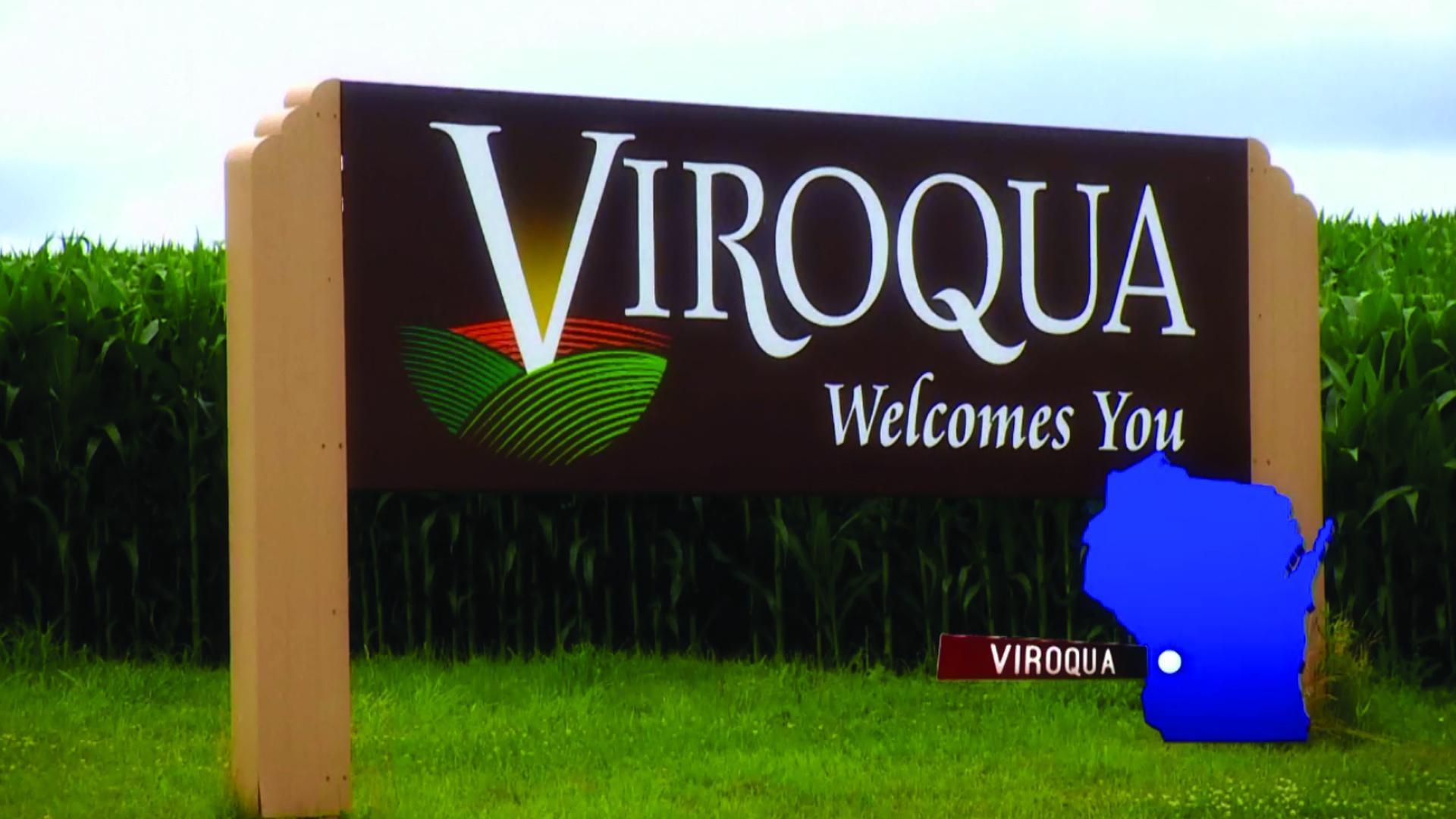
Everything about Viroqua feels welcoming, community oriented, interconnected and organic! Lots of driftlessness in this area -- Driftless Café, Driftless Books, Driftless Angler -- But we were more than happy to drift in and out of some great places in and around Viroqua. John has been begging that we feature Viroqua for years. We should have trusted him sooner because we loved every minute.


Copy and Paste the Following Code to Embed this Video:
Viroqua
We are in the center of the Driftless region on the western edge of the Kickapoo Valley. This is Viroqua. (light plucky strings) I'm excited. Six years ago when we started this show, I said, "We're going to the Kickapoo Valley." We're finally here six years later. We're in Viroqua, which is Vernon County. This is the Vernon County Courthouse. Hey John. - Hey John. How are ya? - Pretty good. We're in the Kickapoo Valley. We finally made it. I'm thrilled, I love Viroqua. How did this place start? -
Biker John
It's kind of a puzzle, John. Viroqua had no stream to drive mills and no railroad until probably years after the first whites arrived. So, what it did have was a great location going for it. It's kinda an island, flat open fertile land kinda surrounded by this very, very hilly Driftless region. So, it was kind of a promised land for a lotta farmers from the east. One of those was a guy named Moses Decker who arrived back in 1846 and five years later Vernon County is formed and Decker said, "I will give you 40 acres "if you make my settlement the county seat." So voters said, "Sure." And it happened. - So, here we are, Vernon County Courthouse and right on Decker Street. So, he did okay. -
John M.
Who lived here? -
John G.
Early on it was Yankees, and then a lotta Norwegians, and they together made Vernon County one of the most intensely farming districts in the entire state. Back in the 19th century, Viroqua was the biggest settlement and never had more than 2,000 people until after 1900. But it prospered, it was a trading cneter for a farm region that grew first wheat, then dairy products, and finally tobacco. -
John M.
Tobacco? Tobacco actually. - Here we go, let's hear that story. They grew lots of it, for both cigars and chewing tobacco. And Norwegians seemed to have a knack for growing the stuff, including my grandfather, John Johnson, who had a farm not too far away from here in Coon Valley. It was lotsa work but it made lotsa money and Viroqua was really the center for this entire region. Couple of big tobacco warehouses are still here and one of the major events, the Vernon County Fair, was always the tobacco spitting contest. (laughing) No more. - No more. (laughing) No more. That's all done. But farming is still very much the main event here in Vernon County and Viroqua, but the big shift has been toward organics. Vernon County now has the largest number of certified organic farms in the entire state and is the home of Organic Valley, which is the largest farmer-owned organic co-op in the entire country. -
John M.
When did the organic movement start? -
John G.
1970s. I had a lotta younger families from various cities to the Driftless area because you had this gorgeous countryside and the rural lifestyle. And Viroqua became one of the major centers. And back in 1980, they opened the Waldorf School called Pleasant Ridge, and that became kind of a magnet energy center for others to come here, including some professionals. So you had a taste for alternatives and that provided very fertile soil for the organic movement to grow and grow and grow. Same time, you had Amish farmers here who were very different kind of alternative. -
John M.
So you talked a lot about farming, what about the town itself? -
John G.
A lotta reinvention here too, John. Back in 1986, Walmart opened a store on the north side and that's always kind of a challenge for small-town merchants. And Viroqua responded by sprucing up the downtown, attracting specialty shops, and offering things that the big boxes couldn't. So, they've done just fine. They even raised $1.6 million to restore the old Temple Theater. -
John M.
For a town of this size, that's great. Really, for 4,000 people, that's doing very well. So you have kind of this mix of alternative commerce, alternative education, alternative farming, all grafted onto what is still very much a classic American small town. And the result is you have kind of a cosmopolitan flavor you don't often see in a community this size. -
John M.
The population? -
John G.
About 4,400 and about a third still Norwegian. -
John M.
Yeah, and boundaries? -
John G.
Very compact. About four square miles bisected by Highway 14. And this is the roots of your family history? Yeah, my dad's side's from Milwaukee and my mom's side's all from Vernon and La Crosse Counties, so this is kinda home too. And so you're bi-coastal, is that right? I am bicoastal. Mississippi on one side, Lake Michigan on the other. And good bike riding? Yeah, the hills here are pretty fierce. Even for you? Even for me. (laughing) There we go. Thanks, John. - See ya, John. Okay, you're gonna be surprised by this. If I weren't an actor, I would be working in a place exactly like this because I'm a grease monkey from way, okay, I'm lying out loud. This would make me so nervous of getting dirty that I would hate it. My dad would love it. You have three dealerships. -
Man
Right. -
John
How many dealerships in town? Well, there's three. (laughing) -
John
You sell Chevys, Buicks. -
Spanky
Chevys, Fords, and Dodges. -
John
And Dodges? Yep. - What sells the most? Yeah, the good ones sell the most. (laughing) That is a double cab. -
John
It's good-lookin' isn't it? And here you can, there's a washing machine. How many vehicles are on this lot right now? Probably 687. I really don't know. Is there, is there that many? There's about 700 probably. -
John
And is that typical? -
Spanky
Yeah. -
John
And who's Gerald Felton? -
Spanky
That is my grandfather. Your grandfather started this thing? No, my grandfather milked Guernseys. Oh, he did? Not far from here. Our farm was Sleepy Hollow Dairy Farm and we started selling some cars down at the end of the driveway at the farm. And we said, "This is better than milking cows." One thing led to another and-- -
John
Now you have a couple dealerships, don't you? -
Spanky
Yeah, three! It's perfect now. We're here in July. Is this a busy time for you guys? -
Spanky
July, August, September. Usually, I think it's the best time rebate-wise. January's tough. But we plow snow. -
John
You do? Yeah. -
John
You are, I'm telling ya. And we, (laughing) and then we do truck beds, dump boxes, snow plows. We have our own fabrication shop across the street. -
John
This is what else we heard about you, that you guys play cards together. -
Spanky
We do.
30 to 12
30 every day, we play cards. Every day. And I do farming, and I play in a band. (laughing) -
John
30 to 12
Do you really? -
Spanky
30 to 12
I'm a drummer, yeah. Oh you are? - Yeah. Do you nap at all ever? Yes. -
John
30 to 12
Orthopedic surgeon? -
Man
30 to 12
Yes. -
John
30 to 12
How did you end up in Viroqua? -
Man
30 to 12
Well, we were practicing in Chicago and really we just decided we wanted to raise our kids somewhere else, and it turned out to be the best thing we ever did. We found that it's a much bigger area than 4,000 people. So the draw area they say is closer to 20,000 or somewhere in that area. And we've had people routinely come in from three, four hours away. We do mostly hip and knee replacements and then revision hip and knee replacements. -
John
30 to 12
Which means what? Revision, when the first operation wears out and needs to be redone, and that's a little bit more complicated. And there's generally, every time you redo the joint, there's less bone to work with and it's a little bit more challenging. -
John
30 to 12
Is there a typical patient? Is there an age of a patient that you usually have? Most of our patients are in their 30s and on up. -
John
30 to 12
Okay. -
Jeff
30 to 12
The oldest patient that I've done a hip replacement on was 102. 102, that was her decision? Yes. - She said let's do it? Right. Yeah, super, super active 102-year-old was just miserable, in pain. -
John
30 to 12
Good for her. Interestingly, one of the biggest advancements in what I do is pain control. Now. with a lot of the modalities that we use, and the techniques that we use, and the medications that we use, we can preempt the pain so that the chemicals that are released that cause pain can be avoided to some degree. You can rehab patients faster, they can recover faster. So that might one of the biggest changes I've seen in my career. Hey we're in the Valley. It's the Kickapoo Valley. We are at the Kickapoo Valley Ranch with my friends Cowboy Joe and Cowboy David. They moved here 10 years ago to open up this ranch. And just so you know, I don't know if I would have ever done this. -
Man
30 to 12
We opened in May of 2003. -
John
30 to 12
How many acres? -
Man #2
30 to 12
35. 35? - Yeah. -
John
30 to 12
Was there anything like this in Wisconsin? -
Man
30 to 12
There really wasn't. In five states in the Midwest, there was not an authentic Western guest accommodation experience anywhere. -
John
30 to 12
The horseback riding is not the focus today? -
David
30 to 12
No. -
John
30 to 12
No. There are eight incredible cabins you have. I mean, people love this experience. -
Joe
30 to 12
One of the things that we focused on from the start was that it's quiet. I mean, right now you can hear so much nature it's like almost deafening. We're surrounded by a forest preserve that'll never be anything else except a beautiful gorgeous forest preserve. And you read the guestbooks and that's the repeated sentiment is that it's quiet, it's rejuvenating, and people just decompress. You know, the horses, the great outdoors, riding. -
John
30 to 12
What I love about your operation is that, like you're five-star. We were mentioning, just saying, the crew and I, that most of the signs say Cowboy David. -
Joe
30 to 12
Yeah. -
John
30 to 12
Why is your name not on a lot of the signs? Ask me about that 'cause I'm not sure. (laughing) We thought because Cowboy David makes the signs. I'm kinda loving it. But it started with the cookies and the cabins. -
Joe
30 to 12
Yeah. -
John
30 to 12
You do most of the baking? -
David
30 to 12
Not anymore, we have a staff. -
John
30 to 12
Here's the commercial bakery. -
Joe
30 to 12
It is. -
John
30 to 12
Not only is this is a place for accommodations, but there's a bakery business going on here as well. Where do these cakes go? -
David
30 to 12
One of them for the Driftless Cafe, and we're gonna have one of 'em in the case at the shop. -
John
30 to 12
The name of the shop? -
Joe
30 to 12
Cowboy David's Coffee and Bakeshop. If we've heard it once, we've heard it a dozen times. Are you going to the Driftless Cafe? This is what we've heard. (laughing) If we didn't do this, people would have a fit. (laughing) We appreciate that, good to see you. This is Luke. You're the owner, founder, this is your place? I'm the owner and chef of the Driftless Cafe. Oh good, you're the chef as well. Yes. - Of course you are. How did this happen? -
Luke
30 to 12
So I grew up actually in Vernon County. I grew up in La Farge, Wisconsin. The highest concentration of organic farms anywhere in the United States is right here. So, being a farm-to-table chef, being a person who really loves the experience of pulling in the best ingredients to put on your plate, we decided to come back home and give it a shot, and here we are. Come see the back door. 85% of the cafe's food budget was spent within a 30-mile radius of Viroqua right here. Every single day, we have different farmers dropping off different goods that they're producing here. -
John
30 to 12
This really is your second room, right? -
Luke
30 to 12
This is the second room. We bought it and my college roommate, he remodeled it. He milled most of it himself. So, this is about as farm-to-table as it gets when the table's actually been farmed as well. Between 88 farms is where we source the majority of our food throughout the course of the seasons. You won't come here and find food without a story, which is exactly the way we like it. -
John
30 to 12
And that story is based on a relationship. Based on a relationship, exactly. Let's build our small towns back. Let's reset this thing a little bit. Through our own economic tribe and impetus, we can supersede the things that people feel are the ails of the American food system. And this is, this is a big project. It's a good one. We're trying. - Good for you. -
Jake
30 to 12
Thanks. You've heard the saying, "Knee high by the fourth of July"? It's July 10th. Corn thinks it's September, I guess. Good year for corn in Viroqua. We are at a place called Second Cloud on the Left. So, how long have you been a farmer? Six years. I believe it's a calling and I believe a lotta people come to the Driftless and the Viroqua area because they're called to for so many reasons. The area is very unique. The topography, the coulees and the valleys and the ridge tops, has lent itself to small farms functioning very well in these nooks and crannies that we call the Organic Valley. A lotta large machinery can't get in here, and so that's kind of how it began. You have to be small in order to be able to navigate. Some of the time, most of the time, here on our farm, we do our stuff by hand. We specialize in unique, rare, and endangered varieties of crops and heirloom crops. This is something called salad burnet. What are you tasting? Cucumber? Watermelon? How does that happen? Isn't that wonderful? And when we talk about endangered things, usually we think about an animal and we don't think about seed. -
John
30 to 12
You're right. 90% of the seed that was here when we colonized this country is gone, is extinct, and so we had to carve out a little niche. Not only did we do the heirloom rare and endangered varieties, but we really specialize in the greens. -
John
30 to 12
You do. And some of this food, when it comes off and it's processed, it's like six hours old and somebody's eating it. Our farm-to-table restaurants love it. We're basically custom farmers for them. -
Toril
30 to 12
We succeed because they succeed and they succeed because we succeed. Eric and I both have generations of family farms and we knew we wanted to farm. -
John
30 to 12
How many acres? -
Man
30 to 12
It's about 124 acres of trees, 5,500 trees. -
John
30 to 12
5,500 trees have this tubing? -
Man
30 to 12
Yep. The way our woods is set up is that we have tubing that flows downhill. It's 350 feet vertical to the sugar house. -
John
30 to 12
And how long have you guys been doing this? -
Woman
30 to 12
We started the farm in 2011. So, you have to keep up with this daily. Pretty much. - So you take the route? But we had a big thunderstorm last night. -
John
30 to 12
We did. -
Man
30 to 12
We had some trees come down on our tubing, so our sap can no longer get to the bottom of the valley. And we try to stay on top of maintenance all year round so that when the season is here we can actually concentrate on collecting maple sap and boiling it down into the best maple syrup possible. Why do you need a bourbon barrel if you're doing maple syrup? We age the maple syrup in a bourbon barrel for about a year, and that year in the bourbon barrel, the maple soaks up a lot of the vanillan compounds that are naturally found in American white oak. Since they're charred bourbon barrels, there's some caramels that also come out of the wood. -
Bree
30 to 12
This is the Food Enterprise Center. -
Eric
30 to 12
We do our bottling, our labeling, wax dipping, but we also are currently doing our bourbon barrel aging here at the Food Enterprise Center. So, and without this building, would you business be in business? We wouldn't have had the capital to build our own infrastructure when we started. And so, without what the Vernon Economic Development Association has done here, we wouldn't have had the facilities. Yeah. I love the fact that we're standing on your property in front of this incredible barn. It's a round barn. -
Angie
30 to 12
Correct. -
John
30 to 12
This looks like a one-story barn, but it's built on the side of this hill. -
Angie
30 to 12
On the top part of the barn is the haymow or hayloft. And then down here is where the cows would be milked. -
John
30 to 12
Did you ever live on this property when this barn was used? -
Angie
30 to 12
No, no, this was where my mother grew up, my late mother grew up here. I became owner in 2001. I've been a steward ever since and I'm pretty proud to be able to be one of the owners of a round barn here in Vernon County. They're not very common. In Vernon County, there are 10 left standing, according to the Vernon County Historical Society, and there might be approximately a hundred in Wisconsin. -
John
30 to 12
Why round? What was the concept basically? -
Angie
30 to 12
Well, land-grant colleges in the early-1900s promoted round barns as a labor-saving thing for farmers. And then, too, some people think that round barns weather storms better. I don't know, some say they are warmer in the winter and cooler in the summer. -
John
30 to 12
This is not brick, is it? No, it's tile. - It's tile. -
Angie
30 to 12
With a silo in the center of that. -
John
30 to 12
And the other 10 in this county, are they all tile? No, no, just mine. Mine is the only tile barn in Vernon County. We talked to Angie. She not only owns a round barn, she is the editor of the Vernon County Broadcaster, a newspaper that comes out once a week. I love this; I'm gonna go to Section B because that's human interest. Let's see, just a second. Wasn't in Section B. Maybe A, which is the hard news, maybe. Miss America contestant to visit Westby, but guest of TV show is not news! Okay, okay, I know we're in La Farge and it's not Viroqua, but Viroqua's not so far. And the reason we're here is because this is the fiber mill for Ewetopia. That store in downtown Viroqua, this is their fiber mill. I know people who knit. Where they get their wool is usually a store. But your wool starts at your home, which is where the sheep are, right? -
Woman
30 to 12
Yes, yes. We have a flock of sheep, about 50. We shear them in April and then we bring all the wool here to the mill. Isn't that soft? -
John
30 to 12
Yeah. -
Woman
30 to 12
And that's where we start washing it and carding it and spinning it. Dyeing we do over here. So, it starts out white or gray and then you make it a beautiful color. So, are all sheep either white or gray? Well, no, they can come in all different colors. They can't. Not red and blue and purple, but-- (laughing) Colors of nature, right? But brown, black. -
John
30 to 12
See, this is gorgeous. -
Lisa
30 to 12
Yeah, so these are yarns and rovings that we've made here in the mill. -
John
30 to 12
Yeah, what happens is that you shear your sheep, you process your wool, and you bring it then to your store to sell to who? And what are they buying there? To our customers, who come from all over the place. We get a lot of people from Madison, Chicago, Minneapolis, Milwaukee who come through to come just for our shop, which is really amazing. -
John
30 to 12
That's nice for Viroqua as well. We're just so excited about that. Okay, did you know that each sheep can yield anywhere from five to 10 pounds of wool a year? And outta that five to 10 pounds in a year, you can make four sweaters. And sometimes it takes somebody a full year to make one sweater, so it would take... This is quite a process, this knitting stuff, isn't it? Yeah. Michael, 138ers, the Legion. American Legion baseball. In Viroqua. In Viroqua. So, no high school? Kind of. - Kind of. You know what, they play high school baseball in the spring, we're here in the summer and they're playing for the 138ers, American Legion Post 138. If I thought of somebody playing for the Legion, is it usually older guys? It's not. It's high school and depending on their age when they're a freshman in college, they can come back and play. And what's cool about American Legion ball, John, here is it doesn't cost the kids anything. They do some fundraisers, they play Bingo at an American Legion hall to support the team. -
John
30 to 12
And so, they play other Legion posts? -
Mike
30 to 12
They do. -
John
30 to 12
And do they beat 'em all? Last year, they won the national championship-- They did? - Which is great. And one of the reasons we're talking about this team and Pete Swanson, the head coach, 45 years he's been coaching here in Viroqua. High school 45 years, American Legion ball 43 years. -
John
30 to 12
Once a week you guys play? No, we give 'em Tuesday's off. Every day? -
Mike
30 to 12
They play a lot. -
John
30 to 12
Keeps 'em busy. -
Pete
30 to 12
Yeah, it does. And the parents know where they are. -
Mike
30 to 12
That's good. -
John
30 to 12
That's good, and so do you. (laughing) Yes, (laughing) I do. I'm on Main Street in front of Bluedog Cycle and guess what I found? I found a new bike for John Gurda. Yeah, yeah. No, that's not it. No, that's not it either. Look, I found it! There we go! Bluedog Cycle, an institution in Viroqua. Another really cool thing in town, Vernon Trails, which is a not-for-profit in town, has built on seven different properties 50 miles of shared use trails. It's very cool. What do they need when they come into your shop? What are they looking for usually? -
Woman
30 to 12
Typically flies. Flies. - Yeah. We sell gear, we sell apparel, we sell pretty much everything you need for fly fishing, but, this is called the Hippie Stomper, they come in here mainly for flies 'cause we do have different water than, say, in Milwaukee or Minnesota or Iowa or the other parts of the Driftless. Our fish respond to color. -
John
30 to 12
And what is the water you have here that's nowhere else? -
Geri
30 to 12
Well, they're little spring creeks. They're little limestone spring-fed creeks. Pink Squirrel, that's it. - That's it. -
Geri
30 to 12
There's a pink squirrel. Just in Vernon, there's over 200 miles of classified trout streams. - Is that right? -
Geri
30 to 12
Yeah. And that's also a Pink Squirrel. (laughing) It's really creepy. So, there's a certain fly that'll work here that wouldn't work in Iowa or Minnesota. So, coming here, they get the flies that work here. -
John
30 to 12
Because what we're doing when we're fly fishing is we're trying to get the fish to believe that that is what they're used to, so that's why the flies are different. -
Geri
30 to 12
We're trying to fool a fish, mm-hmm. -
John
30 to 12
This is big in this town. -
Geri
30 to 12
It is. -
John
30 to 12
What's the trick to being a good fly fisherperson? Not taking yourself too seriously. I mean, the learning curve is steep. It's kinda like golf. It can be really frustrating. But once you get it, it's such a lovely sport. I mean, it is such a relaxing sport. There's just something mystical about it. -
John
30 to 12
What an adorable shop you have. -
Woman
30 to 12
Thank you. -
John
30 to 12
Yeah, let's talk about these dollies. I see penguins, they so adorb. (laughing) I love this. -
Woman
30 to 12
Yep. -
John
30 to 12
I see things that I recognize. This is an otter, and look at him. And then I see creatures. -
Woman
30 to 12
Yeah, can you see, he's not even done yet. -
John
30 to 12
These aren't real teeth? No, they're made out of resin. Okay, thank you. -
Woman
30 to 12
(laughing) I've always loved making dolls. What's the trick? What are we making? - We're gonna make a penguin. Oh good. -
Jaali
30 to 12
I love stuffed animals. It's really making it a solid instead of-- And there are different gauges of needles. And you can shape it with this too, right? Oh, yeah. And I was nine years old when I started, I got into needle felting. And so, I consider them soft sculptures, soft sculpture dolls. Some of them definitely just plush, but yeah. -
John
30 to 12
For display or for use? -
Jaali
30 to 12
I mean, they're still delicate, you know? And I have kids who buy them and play with them, I'm sure. And I have a couple kids that come in, need a little repair, and I love when I see a doll come in that's been well-worn, you know? I shaped everything with the needles. -
John
30 to 12
With this guy? Which is why I call it soft sculpture, because I'm sculpting the wool. -
John
30 to 12
Oh yeah, yeah. It's a tiny little beautiful shop on Main Street. And size-wise, this is perfect. I love small things, so having a tiny little shop is like a dream come true. And you're here in your hometown. Yeah. - Wow. And is it easier or harder to make a tiny thing? -
Jaali
30 to 12
It's so hard. -
John
30 to 12
It's so hard. -
Jaali
30 to 12
It's so hard. -
John
30 to 12
I would like a collection of these. It's a incredible building. This is an old tobacco-- -
Man
30 to 12
Tobacco warehouse. It was built in 1890 or 1910, I guess, so we're 111 years into this building. And most of it's life, probably 90 years, was doing tobacco. -
John
30 to 12
And now it's not. -
Man
30 to 12
Now it's not, no. -
John
30 to 12
When did the first book show up? 14 years ago, I went to buy a warehouse full of books in Connecticut, sight unseen. -
John
30 to 12
You didn't, Eddy. (laughing) That was, (laughing) that was gonna be torn down into a condo. And the guys, instead of dumpstering 'em, God bless 'em, said, "Let's see if anyone wants to buy these," and then that was the beginning of it. Westerns and mysteries. French, German, Russian, Italian. More history. I think there's an upsurge right now because people are appreciating slow media, this tactile thing. And this is a place where you can learn to detoxify. -
John
30 to 12
Great to have a place like this then. I guess. - Yeah. And this isn't all the books either. I love that all of this is on wheels, and all of this-- Yeah, almost everything in the store. Pushes to the side and you can set up 200 seats? Right, we've done 200-- And there's a stage at the far end? -
Eddy
30 to 12
Yeah. Musically, we have almost a hundred shows this year. We close down for the winter, but every two or three days there's either an open mic or a show. I think people literally desire a nice intimate listening room with an appreciative audience. -
John
30 to 12
How many books you got? -
Eddy
30 to 12
There's gotta be like a half-a-million, I think. -
John
This place has a great name
The Bon Ton Millinery Apartments. What is this? It's the first business that was at this address in 1903. Two sisters, Kate and Myrtle Wise, they had a millinery. We have no idea where the apartments came in, unless they rented out the back room. It's a single-story building. Jessica makes hats and we went with a historical nutty name. Confuses people all the time, we love it. This is-- - This is faux? -
Jessica
This place has a great name
Faux fur. These are all found ties. I think the original inspiration was that there's a lot of fur coats around here that nobody wanted to touch. What do you think? I wonder if this isn't better? (laughing) So, this would be-- - It's really hot! If you're really, really cold, and then you would flip it. So, I started taking these vintage fur coats and making hats of them, and people loved them. -
John
This place has a great name
Can we talk about this? This is all found. So, this is a quilt, these are quilt pieces made into pockets. So, these are some of the things that I've also done. I love the process of finding the companionship of things, and they don't have to necessarily make sense. And you're not gonna find anyone else carrying this. No, (laughing) ever. If you come in and say, "This one's mine," this is it. Just to walk through is a treat. Very much, very much. I don't make things, Jessica makes incredible things, and we both do sort of everything. -
John
This place has a great name
There's a lotta stuff here. -
Randy
This place has a great name
There is a lotta stuff. If people are like, "I'm not looking for a hat "and I don't know much about vintage," who cares? You need to come in because this is really, it's a showcase of display. The city banner reads "Viroqua, abundant life," and let me tell you, it is abundant in so many ways. Here's the drill, Mayor, you have to 30 seconds to tell us why Viroqua, Wisconsin, is the best place in the world to live, work, and play. And Mayor Larry Fanta, you can start now. (clock ticking) Well, as you know, it doesn't matter what direction you come from, we have some of the most beautiful countryside around here. We have biking, we have swimming, we have hiking, and I'm so proud of this downtown area. We have a beautiful downtown and Viroqua has so many great things on the horizon right now. I just couldn't be more proud of this city. Two, one, good job, Mayor! Thank you so much. Can we talk the big small small? (laughing) In Vernon County, in front of the Vernon County Courthouse-- Whoa. (laughing) Put on those brakes. (laughing) -
Woman
This place has a great name
Sounded like you were talking to a horse! This season of Around the Corner with John McGivern would not be possible without the generous financial support of the following underwriters. (soft acoustic guitar music) -
Announcer
This place has a great name
The Greater Milwaukee Foundation's Ernest C. and Florence M. Schocke Fund. And by the David A. and Nancy E. Putz Fund.
The Greater Milwaukee Foundation
inspiring philanthropy, serving donors, and strengthening communities, now and for the future. And by... (light upbeat music) -
Announcer
The Greater Milwaukee Foundation
What Goodwill can do with your donations is pretty amazing. -
Announcer
The Greater Milwaukee Foundation
And by... -
Announcer
The Greater Milwaukee Foundation
The We Energies Foundation is proud to support Milwaukee PBS. Together, we create a brighter future for the communities we serve.
Search Episodes

Donate to sign up. Activate and sign in to Passport. It's that easy to help PBS Wisconsin serve your community through media that educates, inspires, and entertains.
Make your membership gift today
Only for new users: Activate Passport using your code or email address
Already a member?
Look up my account
Need some help? Go to FAQ or visit PBS Passport Help
Need help accessing PBS Wisconsin anywhere?

Online Access | Platform & Device Access | Cable or Satellite Access | Over-The-Air Access
Visit Access Guide
Need help accessing PBS Wisconsin anywhere?
Visit Our
Live TV Access Guide
Online AccessPlatform & Device Access
Cable or Satellite Access
Over-The-Air Access
Visit Access Guide




Follow Us