








PBS Wisconsin Passport
Watch this video with
PBS Wisconsin Passport
Become a member of PBS Wisconsin, support your local community, and get extended access to PBS shows, films, and specials, like this one.
Shawano
03/18/20 | 26m 46s | Rating: NR
Shawano wins the “didn’t expect that!” award this season. We anticipated beautiful scenery and friendly people, but exotic animals – in two private zoos? Turtles by the thousands? A national-level motorway race track and a global, cattle genetics company? A few things we did expect because you can’t mention Shawano without someone saying, “Are you going to Twigs? or Doc’s Harley-Davidson?


Copy and Paste the Following Code to Embed this Video:
Shawano
(gentle music) I am northwest of Green Bay on a main street between a river and a lake. This is Shawano. (gentle music) We are in Shawano County. We're on a bridge that's on the channel. The channel is between the Wolf River (bell dinging) and Shawano Lake. Hey, John. - Hey, John, how are you? Pretty good. So, you've been studying Shawano? Uh-huh. Okay, so what tribe was here first? Menominee. Okay. - Without any question. They were the major tribe in Northeast Wisconsin for centuries, but year by year, their land got whittled down to a reservation just north of Shawano. Shawano, in fact, is said to mean south, because every fall, the tribe would come south to Shawano Lake to harvest wild rice. -
John M
Mm. So the wild rice is long gone, but the Menominee are still just up the road. So how did the city of Shawano start? I think of Shawano, John, as a river town became a lake city. This is the channel, as you said, between the river and the lake. The Wolf River was the lifeline in those early years. North of here, up in Menominee land, it's just wild. It's full of waterfalls and rapids, making it great for whitewater rafting. Here, it's wider and slower. It was used for transporting just whole forests of white pine logs that were cut north of here, and a lot of those were cut on Shawano Lake and drifted down, floated down the channel here, and a lot of them ended up in Oshkosh, which was so full of sawmills it was called Sawdust City. I remember that. - Remember that from a couple years ago? - Yeah, I do. But the fist sawmill in this area was built right on this island back in 1844. -
John M
Wow. And the mill pond is right here, the dam was right about here. So they sawed logs here as well, but the main business was supplying all those logging camps farther north, so that's what put Shawano on the map. -
John M
And how did Shawano become a lake city? -
John G
By the 1800s, late 1800s, the pine were pretty much playing out, and it needed a new economic base, so here you have trains are arriving here by then, the first back in 1884, so on the edge of town, you've got Shawano Lake, this lake that covers 10 square miles, so pretty soon it became a destination for vacationers. - Yeah. -
John G
The first resort goes back to 1889, and they served what they called summer boarders. By the early 1900s, you had excursion boats making the rounds of the lake every single day in the summer, and downtown merchants would commute to their stores by boat from lake houses. That's cool. - It is. -
John M
Yeah, and what else was going on in the area? Farming, absolutely. - Farming? The area around Menominee reservation were still very heavily wooded. Shawano County became farmland after the pine were gone. A lot of Germans settled in the area, and a lot of them became dairy farmers. I found a couple of cool numbers during my research. Sometimes you just sort of trip on things. Back in 1874, there were 100 logging camps on the Wolf River and its tributaries. By 1925, 50 years later, the camps are gone, and Shawano County has 50 cheese factories. So you really see the transition. They began by serving loggers, and then served the farmers who replaced all those loggers, became a trading center with the surrounding area. A lot of those Germans subscribed to a Shawano weekly newspaper called The Wochenblatt. Wochenblatt? - Yep. Yeah. - Know what that means? I have no idea. It means weekly newspaper. That makes sense, doesn't it? What about Shawano today? A lot of things, John, still a resort town, still a trading center for the rural area around it, still a gateway to the Menominee Reservation, and also an industrial center. Some big employers here, including a paper mill just around the bend here that goes back to 1894. -
John M
Population? -
John G
About 9,000, and they reflect the area's history. Nearly half are German by ancestry, and about 15% are Menominee. -
John M
Mm, location? -
John G
Shawano is between Shawano Lake and the Wolf River, about 40 miles northwest of Green Bay. -
John M
And good biking? Yeah, the Mountain Bay Trail runs right through town. Mountain Bay? - Yep. I haven't seen the mountain yet, but I hope to soon. Thanks, John! -
John G
See you, John. We're in downtown Shawano. I love the fact that they pay homage to their history, like on this corner, look. It's the lumberjacks, who really began this community. And right across the street, let me show you what they pay homage to. The German farmer walking his cow. To be honest, I'd rather have this job. I would. (gentle music) This is a straw for a Holstein. This will be filled with semen, and this will turn into a calf. GENEX, let's first talk about what GENEX is. -
Terri Dallas
So we are an artificial insemination company for cattle. We sell semen, we sell products all over the US, all over the world. What I'm doing is looking at morphology. We actually sell our product to 65 countries around the world. This is the worldwide headquarters. Of GENEX? - Yes it is. In Shawano, Wisconsin? - Shawano, Wisconsin. How great is that? Who would have thought? - Right? And it's filling them up right now and closing them up? - They're filling them up. They're filling them up and sealing them. -
Terri
We started about 1940. It was started by the extension program in the state of Wisconsin. Three counties came together and decided they needed a better way of breeding cattle. It takes about one and a half straws to have a cow conceive. We have seven million units of semen stored here in the distribution center. This is a typical storage tank. -
Terri
We are a cooperative, so we are owned by our farmer members. We have about 11,000 members and customers in the US. -
John
Why do you need to do what you guys do? Why can't it just be done naturally? Number one would be safety. Those bulls are big, strong, and they have been known to hurt people. Next would be the disease factor. The other thing, the genetic factor. They're genomically tested, and they have very high genetics. You can just feel very safe with our bulls, so safety comes both ways, because you're using a good genetic product, and you're safe not having a bull on the farm. -
John
How many of these ship out a day? We probably ship about 25 to 30 tanks a day, smaller tanks. -
John
How many people work in here? -
Male Employee
In this section here, I think 16 people that work here. -
John
In Shawano, how many employees? -
Terri
80 to 100 in Shawano. -
John
That's great. -
Terri
And about 400 throughout the US. -
John
It's amazing. We're at Menominee Tribal Enterprises. Let's talk about what this enterprise does. The enterprise itself is the arm of the tribe that handles the forestry management and operates the mill as well. Our forest management practices are world-renowned. As you're looking at sustainability, we take the dead and dying trees and leave the best timber standing. This is what we call a kiln. Some hardwoods, like red oak, we said 28 days it takes to pull the moisture out. We're preparing to put a package together for the Olympics in 2020 in Tokyo, and hopefully all those floors will be our wood. Last year we sold, just in basketball courts alone, almost one and a half million board feet. We ran out. We're a sustainable forest. - Yeah. -
Nels
Whatever we get from our forestry department, that's all we can harvest, and when we're done, you can go on a waiting list, or you can go find it someplace else. -
Marshall Pecore
Menominee kind of represents that middle ground between do nothing and total abuse towards the forest resource. They're in the middle. - Huh. And they've shown society how to do that. Most people don't realize that the Menominee Forest is the oldest managed tract of land in the United States. -
John
Is that the truth? -
Marshall
The gross acreage is 234,000 acres. The forest is 220,000 acres, so 95% is forested. -
John
Wow. Right here we have about 770 feet of beech. -
Nels
The beauty that we have here is we've got a fabulous story to tell. This is a all-sustainable forest. -
John
Yeah. -
Nels
One of the best in the world. People around the world come here to get tours of it. -
Marshall
We're standing in a mill yard that's been here 130 years. So the mill produces lumber. We also have a Mill Works division where we do cabinets, molding, things like that. And then some of the pulpwood and bulks get sold to the paper mills and things like that as well. A lot of it in this department, you're seeing stuff end up as cabinets. Kitchen cabinets, vanities, stuff like that. The cabinets over here are for Crossroads Community Church in New Berlin. - Okay. -
Nels
So when they're watching the Milwaukee Bucks playing on that floor at the Fiserv Forum, that's our floor. - Yeah. (gentle music) What year was this building built? -
Aaron Gilling
1914-1915. 1914-1915. We are at what will soon be Stubborn Brothers Brewery, and I believe that I was in this theater when I was a kid. That's right. So we're at the downtown theater that, what did this theater used to be called? - Used to be called the Crescent Theater. - The Crescent Theater? -
Aaron
Yeah. -
John
There was a balcony to this theater? Yeah, so actually, it used to be box seating back in the day. It sat vacant for three years. For three years? - Yeah. So it sat vacant, it was foreclosed upon, so as a result, we came here, and we intended, initially, to just do this building. We were originally gonna brew down in the orchestra pit right there. - Uh-huh. But instead, we build this giant building to our side. -
John
So that's where you'll be brewing? -
Aaron
Yep, our tanks are over there right now, yeah. -
John
Do you have any idea how many this'll seat? -
Aaron
Yeah, this'll seat about 100 people. -
John
This is where people will enjoy that. -
Aaron
Yes. -
John
And you own property next door as well. -
Aaron
Yes, we're building out our coolers. We own a building next door, that's where we're installing a full-service farm-to-table kitchen, and then we also own the building next to it, where we're going to be doing a bed and breakfast. And you run a farm? -
Aaron
Yes, we run a 2,000-cow dairy farm. -
John
And these tin ceilings, how gorgeous are they? -
Aaron
Oh yeah, they're original 1914-1915. -
John
So the concept here is that you are the beginning, you're the middle and the end of all of it. That's the goal. - There's not many people that you're gonna have to go to for anything. We know that we're gonna hold a high standard. So initially it'll be about 10 to 15 employees in here. The brewing area's just Eric and I and my wife, Amanda. - Oh, nice. Yep, who went to UC Davis School for brewing. Most of our meat, we will raise ourselves and have USDA certified and processed. -
John
And instead of a theater, it'll be Stubborn Brothers. -
Aaron
It'll be Stubborn Brothers Brewery. Yep. - Yeah. Aaron, you need a nap! (both laughing) What do you get for $.40 anymore? Sun Drop! -
Dan Hartwig
My dad was the first bottler in the state of Wisconsin to bottle Sun Drop, around 1953, 54, for a guy in Oshkosh, Bender Beverage. -
John
We are at Twig's, and your dad started this? -
Dan
Yep. He started back in 1951. He was in the Korean War then, and he came home and started it right away. So this is a business that you've known your entire life? Yep, I've been in here all my life, and I've been working here since I was 12 years old. When I got out of little league, I started working. -
John
Black Cherry, Blue Raspberry, Cream Soda. Now these are specialty sodas. Rhu-berry, what's rhu-berry? -
Dan
It's kind of a combination of rhubarb and berries, and sour. -
John
This is really lemony, like a carbonated lemonade. Right. - This is delicious. How many days with Twig's a week, and how many days with Sun Drop? -
Worker
It all depends on the orders. -
Dan
So we use only granulated sugar. Which is different. - Yeah. We don't use the corn syrup. - Isn't it? -
Dan
We believe it tastes better. -
John
So you bottle it here? -
Dan
We bottle it here. We do it only in glass bottles. -
John
Okay, you have great museum. -
Dan
Yep. You can learn a lot about soft drinks, about sugar, sweeteners, how glass bottles are made, but the big hit is the taste-testing bar, where people can come to this and test all of our sodas, and it's all no charge. I'd like to try that butterscotch one. The butterscotch, okay. -
John
Let's see the bottle. Is that the bottling plant? -
Dan
That is the original place that my dad started in 1951. - Oh, nice. -
Dan
And it's still standing. -
John
And it's a destination spot, isn't it? - Yep. -
John
People come to town for this. -
Dan
People, yep, that's right. People actually, they like to come and watch the bottling. -
John
What are you working on right now? -
Employee
We're working on Sun Drop this morning. -
Dan
Sun Drop is the original gold citrus soda. That's our bread and butter. -
John
It's a good soda. Thank you. - Yeah, it's a good soda. I always say I was raised on Milwaukee's east side, closer to the river than to the lake on Bartlett. Well, we're in Shawano on Bartlett, which is on the river, the Wolf River. I guess being on Bartlett in Shawano is so different than Milwaukee because that's not a duplex. Nice. (gentle music) Bartlett. We're in a channel right now. Legend Lake is one big lake, but-- -
Kristin Allen
It's made up of eight lakes dredged together to then create just Legend Lake. We're on the Menominee Indian Reservation. -
John
We are. -
Kristin
So probably about 80% of it is non-native owned. Okay. And then there's probably 20% of the properties on the lake are still native-owned. It's 1,300 acres. 1,300 acres? - Yep. -
John
But there all part of an association? -
Kristin
Yep, we're all part of the Legend Lake Property Association. -
John
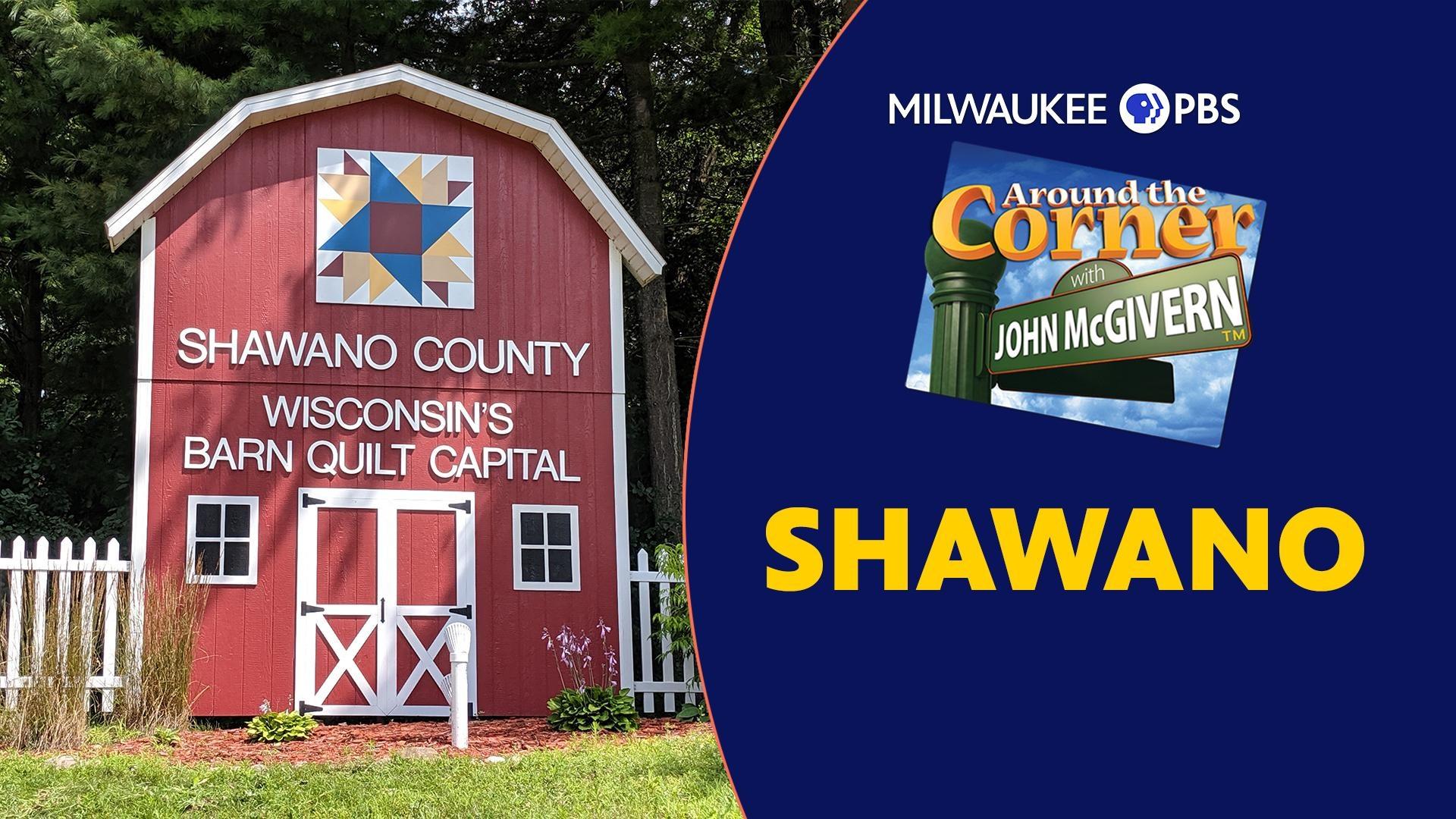
And do you know how many property owners there are in that? A million? I'm kidding. - Thousands. Are there thousands? There's quite a few. - There are? Yeah. - Yeah. There's a lot of properties on the lake. When I take people out, I wanna take them out on a boat to see the lake. It's lined with the tall pines, and there's eagles everywhere. Right. - You know, loons everywhere. There's black bear, there's everything here. We call Legend Lake hauntingly beautiful. Yeah. And there we have it. Look at this here. Yeah. - Yeah. And it's a good-kept secret. Oh. Well, not anymore. - Should we shut up anymore? (Kristen laughing) Is that what we should do? Just be quiet? Let's talk about Shawano County and its relationship to barn quilts and how it all began. I had seen barn quilts in a lot of other areas of Wisconsin, other states, so I came home one day in June of 2010 and told my wife I thought I was gonna try and get a barn quilt project started in Shawano County, and talked to the chamber, and I talked to other people, people where I thought a barn quilt would look nice, and I got just amazing acceptance to it. We just finished up the 352nd barn quilt just in Shawano County. -
John
You had three the first year? -
Jim
We had three the first year. -
John
That's pretty amazing. -
Jim
It is amazing to me. And the people come from all over the place to come and see these crazy quilts. It's just-- - Yeah. -
Jim
It's incredible. And we have bus tours in the spring and the fall specifically to come up here to see the quilts. -
John
It really is something to get to the top of the hill in the middle of the country, and off in the distance is a barn quilt. They're magical is what they are. -
Jim
And any time of the year, they're just as pretty in the winter time. - Oh, nice. -
Jim
We like to drive around, my wife and I, just to look at them in different seasons. I think we've been on just about every county road in Shawano County now. - That's in your county? Yeah, and there's a map. I actually put together a book that has a picture and a description of every single quilt that we have in the county. And also in the Shawano Annual Visitor Guide, we put a map that shows the address and location of every single one, so people can stop at the chamber, pick up a visitor guide, and drive around to their heart's content to look at whatever. -
John
As far as counties go, do you have the largest amount of barn quilts? -
Jim
Yes, we have more eight foot by eight foot barn quilts on barns in Shawano County than any county in the United States. People are proud of these things in this county. Every single one has its own little story. We're in Sturgeon Park here in Shawano, and I wish it was the middle of April or first of May. Why? Because that's spawning season. They come up the river to spawn, and the water is just full, teeming with sturgeons. The legend has that it is so thick with sturgeons that you could walk across the river. I wish I was here to see that. There's one, two-- -
Bonnie
This is Turtle Joe. -
John
Turtle Joe? And how did you get that name? -
Joe
I caught a turtle one time when we were bullhead fishing, and it was delicious. And so right there, we got hooked on turtle soup. This is my hatchery. I just finally woke up, and I guess now... How many eggs you think there's in everything you've got here. -
Bonnie Splitt
There came a point in time when it was time to give back. I don't do it anymore. - Right, yeah. 4,056 eggs in there. - No there aren't! Yes there is. You'd better get out here when it's time to hatch, because they're coming out by the hundreds. You've got them little heads crawling. Sometimes three, four of them come out of the same hole and they're climbing over one another. -
John
The turtles lay there eggs where and when, and what do you do then? -
Joe
Well, they'll lay them late May, and usually May, June, and July. When I get them eggs, I bring 'em home, and I bury 'em, because they're threatened, and they're losing their habitat like everything else. Right. - And helping nature, it needs all the help it can get. We've got 11 species of turtles in Wisconsin. -
John
We do? -
Joe
Eleven different species. There's painted turtles in here. -
John
And the rest are snapping turtles? And is there a typical number that she'll lay? -
Joe
A painted turtle like we've got here, and a mud turtle, I'd say between eight and 11 eggs. Snapping turtles, 35, 40. I had one-- Last year. - Last year, I had over 100 eggs down there. -
John
It's three months that they have to be buried, usually? -
Joe
It takes about three months, 90 days, something like that. Yeah. - 85, 90 days, in that range. But the sad part about this is that most of these, once they hatch and we release them-- -
Joe
They've still got the predators. They won't survive. -
John
They won't? Because there are so many predators. -
John
So has anybody come up here-- I don't keep, I can't, I don't sell them, I don't do nothing. I'm not getting paid for this. - Right. I don't care about that. - Right. It's just a hobby, more or less. Yeah. - But we're putting back what we took out. That's nice. - Plus. Maybe somebody'll give 'em a helping hand. Everything needs it, especially these guys. (whistle tweets) - So Mike, we're in Shawano. We're talking about the Shawano Hawks today. We are-- - And track and field. Track and field. - Great. And really excited to talk about it. Dave Hanssen, who's their coach, 35 years as the head track and field coach at Watertown High School. Two at Oconomowoc and three here. 41 years of doing this, recently retired. -
John
Oh. Whoever takes over is taking over a way better program. He talks to these kids that track and field does not have to be your number one sport, not even your top two, but if you join track and field, we'll make you better athletes. The other thing, John, that he did that I think is really cool, when he got here, they didn't have records for track and field-- -
John
What? -
Mike
In the school, they didn't know who was the top ten in any of this. - Yeah. And he reached out to the community and said, "Look, I wanna have this, so my kids "can look at the top ten in the history of the school--" -
John
That's cool. -
Mike
"And try to be "on that board." - Yeah. They have to have something as a goal to go after, and how many of those kids I've heard 'em during the seasons go, "My goal was to get on "to the top ten, my goal is this," and if they're making the top ten, they're also helping the school district or our track team by placing higher in the conference and then for also sectionals. -
John
You bet. How many kids in the school? -
Mike
900 kids. -
John
And how many kids involved? -
Mike
Around 50 in the whole program-- Nice. - But it's growing. Thanks, Mike. - Thanks, John. It's a gorgeous morning in Shawano, Wisconsin. We haven't begun work yet, and I wondered where to get a really good Pershing. I found one. Fannita's. I am standing in front of a very popular place in town called The Stock Market, and it's run by two sisters, and guess what there last name is. No, not Market. Stock. I'm in front of Dreier's Pharmacy on Main St. There has been a pharmacy here since 1884. The Dreiers came here in 1967. I call this a small box store, because there's everything in there. There's the pharmacy, there's women's fashions, there's a koi pond in here. It's cool. I'm still on Main St. Now it's lunch time, so I thought I'd have a hotdog at J Doggs, and thank the lord it's between May and October, because in October, they pick that thing up and move it out. Yeah. We're at USAir Motorsports. (car engine revving) Raceway. - Raceway. This is your track? Yep, and it's a very exciting place. Yeah. It's on 39 acres, and the track length is 1.1 miles. We have all different venues here, drift cars, motorcycles, go karts, autocross, and we have legend cars. (engine revving) (tires screeching) -
John
What's drifting? -
Bob
Well, a good way to explain drifting is they take the car to the point of wrecking and do a controlled drive, so the car's at the limit that it can go before it's-- - Speed-wise? -
Bob
Speed-wise is about 60, 65 miles an hour. -
John
Wow, what?! -
Bob
That's drifting. People come from all over the country, and from Japan, the UK, Germany. They come to spectate, and they come to participate. Can I see your license, please? Yeah. (laughing) -
John
Let's talk tires on these things. -
Bob
Sam's car can take a brand new set of tires and in six laps, they're pretty much gone. -
John
What?! (laughs) How long before you were that comfortable doing it? -
Sam
I think I'd been driving for about four years. For four years? - Yep. (tires screeching) -
John
And the first, like, six months? Pretty much a total disaster, yeah. Oh, was it? - Nothing like that, no. Yeah. (engine revving) (tires screeching) -
Bob
This track is pretty high speed. Motorcycles are close to 100 miles an hour, the go karts that race here, that's 100 miles an hour. The go karts go 100 miles an hour? Those aren't the go karts we know, are they? No, the rental karts that we have, we do bachelor parties, we do corporate parties. Those are 45 miles an hour, but it is fast when you're that low to the ground. -
John
Oh, sure. -
Bob
It's exciting. This is one of the top five tracks in the nation. -
John
We're at Torch Lite, which is a fine dining establishment. It's a gorgeous room. -
Rita Mondus
I know, it's a beautiful place. -
John
How long have you been in this establishment? 39 years. - 39 years? And what do people know it for? -
Rita
Great atmosphere, wonderful food. -
Chef
This is New Zealand orange roughy stuffed with king crab. I feature a catch-of-the-day every week. -
John
You do? -
Chef
It changes weekly. Friendliness, I hope. - Yeah. -
Rita
I know we have the biggest menu in the area. - Yeah. And probably one of the biggest menus in the state, so it doesn't matter if you want chicken nuggets or if you're lobster, spaghetti. You cannot beat our Italian food. -
Server
These are the appetizers. -
Rita
And everything is made from scratch. Your chef-- - Yes? -
John
He does a great job. That's delicious. -
Rita
He does a great job. With every entree comes a soup and salad bar, and all his soups are homemade. That is the heartbeat of the house. Yeah. - Yeah. And he happens to be my son, also. -
John
Oh, you're kidding. Yeah, so he's bribed a lot. (John laughing) -
John
So when we were on our way to Shawano, I was reading our notes, so I was like, "Oh, a great restaurant, "a fine dining restaurant." -
Rita
Let's go in and see 'em. -
John
With a petting zoo. -
Rita
We have, yes. You have? - Yeah. There's the Patagonian cavy. -
John
Is it your doing? -
Rita
Yeah. Then we have Humphrey. It's a fetish. But watch, you think she's so little? She is not so little. -
John
What?! -
Rita
She's really not big, it's just she's all legs. Some of these are rescue. For instance, that little pony, they come from all over. We're USDA approved, so we are literally a licensed zoo, and DNR, also, so we have also a skunk and things like that. So everything here is tame, which is kind of fun, because you go to zoos and you see from a distance and go-- - Right. -
Rita
There's a camel, but not here, or a coatimundi, or a kangaroo, or-- -
John
And besides all of this, you have a really good restaurant. It's really something. - Thanks, appreciate that! -
John
This is your dealership? Yes, it is. - Yeah. How long have you been out here? -
Steve Hopkins
Well, we moved here in 1998, but I started April 1st of 1979. We moved to a different location in Shawano and outgrew that three times, adding more buildings on, then in '97, we bought 72 acres out here on the highway, 'cause it's far more than just Harleys. Yeah. - This General Lee is one of the first two ever made. You know, we have museums here full of '60s muscle cars and antique motorcycles, and there's a wooly mammoth tusk back here that's eight foot seven inches long and weighs 88 pounds. Oh, I just love muscle cars, and old motorcycles, and strange things. This is a motorcycle I built here, but on the exhaust pipe, I built an elaborate coffee pot. Here's my Harley pogo stick made out of a Harley front fork and two Harley connecting rods. Let's get down to the restaurant next door. This is a fan I made. It's 40 feet long, it's all Harley parts. And I love to cook, so I brought the restaurant. So I brought all my homemade recipes next door as well. It's mainly a barbecue house. Out back is the smokehouse. I built my own rib cooking machine in there. It weighs 5,000 pounds. Hey, come here, buddy. And then we also have a 128-animal zoo here with birds, and snakes, and tortoises, and iguanas, and alligators, and buffaloes, and camels, and kangaroos. We have 10-foot alligators, and I jump in the pen every Saturday morning and feed 'em meat with the six-inch tongs. Ah-hah! These are the stars of Jackass Flats over here. (John laughing) It's a therapeutic donkey experience. That's a 5,000-pound granite boulder that I wrapped with iron and put trailer hitch balls on the outside. Just a fun thing for people, I don't know. I just enjoy it, you know. It's got mechanicals in it. He blow flames out his mouth every 30 minutes. Doing fun things, and building fun things, and challenging myself to do them. Yeah, this whole place is really a culmination of everything I love and enjoy. -
John
Good. I wanna share it all with the public, and-- Good. - We have fun with life, and that's really what life's all about. Once in awhile, in the middle of a great season, comes a place that's incredibly memorable. Shawano. This is the routine, you have 30 seconds to tell us why Shawano, Wisconsin is the best place in the world to live, work, and play, and Mayor Ed, you can start now. Spring, summer, winter, fall, it's all here. We're close to Milwaukee, we're close to Appleton, Green Bay, the whole populated area. You can come on up. We've got stuff going on... Did I mention fishing? - Mm-mm. Fishing, great fishing here. The rivers, kayaking, snowmobiling, you name it, it's here for you to do. Great parks. We want you to come and find your wild side. I hope you're gonna eat these. I'm allergic to fish. No, I'm really not. (John laughing) I lied about that. (woman laughing) (John laughing) (gentle music) From Heritage Park in Shawano-- Thank you, underwriters, for making this possible. Thanks. (gentle music) -
Announcer
The Greater Milwaukee Foundation's Ernest C. & Florence M. Schocke Fund, and by the David A. & Nancy E. Putz Fund. The Greater Milwaukee Foundation, inspiring philanthropy, serving donors, and strengthening communities, now and for the future. -
Announcer
Michels Corporation, serving the energy, transportation, telecommunications, and utility industries. Michels, constructing North America's infrastructure for our future. -
Announcer
We Energies Foundation and Wisconsin Public Service Foundation are proud to support public television. Together we create a brighter future for the communities we serve. ATC moves electricity from where it's generated to communities where it's needed. American Transmission Company, helping to keep the lights on, businesses running, and communities strong. (birds chirping)
Search Episodes

Donate to sign up. Activate and sign in to Passport. It's that easy to help PBS Wisconsin serve your community through media that educates, inspires, and entertains.
Make your membership gift today
Only for new users: Activate Passport using your code or email address
Already a member?
Look up my account
Need some help? Go to FAQ or visit PBS Passport Help
Need help accessing PBS Wisconsin anywhere?

Online Access | Platform & Device Access | Cable or Satellite Access | Over-The-Air Access
Visit Access Guide
Need help accessing PBS Wisconsin anywhere?
Visit Our
Live TV Access Guide
Online AccessPlatform & Device Access
Cable or Satellite Access
Over-The-Air Access
Visit Access Guide




Follow Us