





PBS Wisconsin Passport
Watch this video with
PBS Wisconsin Passport
Become a member of PBS Wisconsin, support your local community, and get extended access to PBS shows, films, and specials, like this one.
Platteville
04/05/18 | 26m 46s | Rating: NR
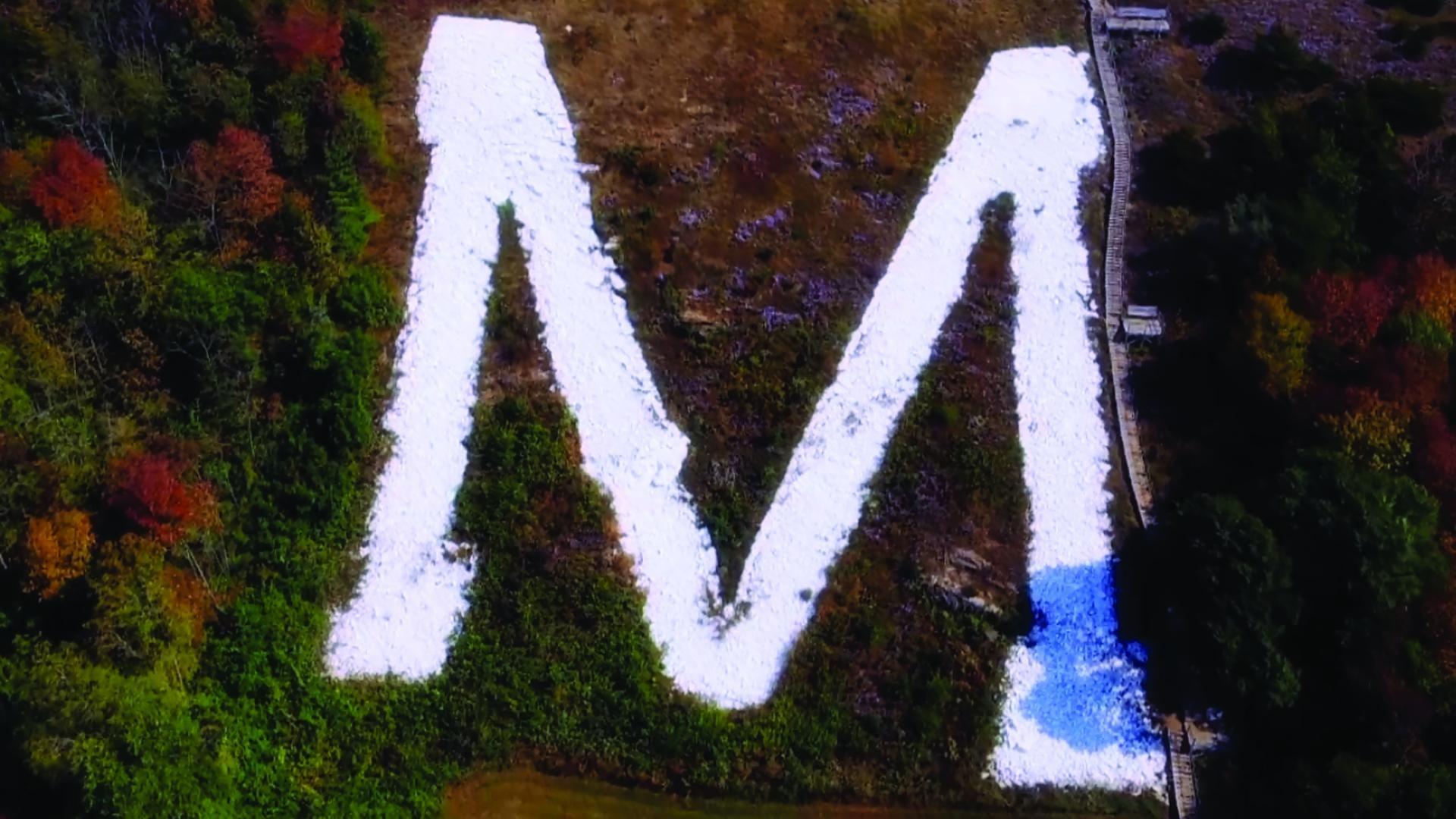
In southwestern Wisconsin you'll find a city that is symbolized with the largest "M" in the world -- Platteville! Huh? Why not a big P? Turns out that the M is for "mining" which is how this city came to be. Platteville's past is interesting, but its present made memories for John. By the time we left, John gave the "M" his stamp of approval. Platteville: Approved (and loved) by McGivern!


Copy and Paste the Following Code to Embed this Video:
Platteville
We're in the most southwest county in Wisconsin, Grant County, in it's largest city, Platteville. (upbeat, curious music) (clinking) (laughing) And I want you to know I'm crying my blues away (mournful saw music) I told John to meet me at the M and I don't-- Hey, John, did you say, "Meet me at the M?" I did, John. I presumed it was gonna be the top of the M. I can't get a bike up there.
- Which was fine. Yeah come on, let's go, take take the bike up there like you did in Whitefish Bay. A little arduous. So I want to know, are we in Michigan or Minnesota?
You might think so but it's neither. We're at the foot of the largest M in the whole wide world, this thing is more than 240 feet high. The M stands for mining and that is the heart of the Platteville story. We're in the Rufus area, never glaciated, and in the southwest corner here you had the huge deposits of lead that have been lying undisturbed for millions of years.
The Indians mined that, then the whites who displaced them, and America needed lead for everything from bullets to pipes to printer's type to paint, and this area was the biggest source in the country. So you had a lead rush beginning back in the 1820s and people came here in large numbers to prospect for what they called gray gold. -
Host John
Gray hold. So the white population in the lead region, it went from 20 people to 10,000 in the 1820s. 10,000, well where did the people come from? -
John G
Mostly south of here because the Mississippi is kind of the pipeline bringing people up-- - Sure. -
John G
So a lot of miners came from Kentucky and Tennessee. So Grant and Lafayette counties had a real strong southern flavor. And not long after you had immigrants coming from Cornwall, England who knew how to mine. So they really ramped up the region's game.
-
John
And what about Platteville itself? They discovered lead in Platteville back in 1827, and a Kentuckian named John Roundtree founded the town along the Platte River which is where the name comes from. What you have to remember is that back in 1827, Milwaukee's just a fur trading post. So the population begins in this corner, the white population, which is why the first Wisconsin capital is just a few miles away from here in Belmont.
-
John
And when did the lead rush end? The easy diggings were pretty much gone by 1850 and a lot of miners were leaving for the gold rush in California, so the Platteville area traded the pick for the plow. A lot of the farmland around here was cultivated and Platteville became a trading center for a very busy farming region. But mining had a very important second act.
Underneath the lead layer there was a lot of zinc which was hard to mine but demand for that mineral really created a new boom beginning late 1800's. Peaked in 1915 and there were still active zinc mines around here in the 1970s. -
John
If they weren't mining, what was going on? They're starting schools. - Is that right? That was really a Platteville specialty.
Back in 1866, the first public teacher's college in the state was founded in Platteville, which is why they're called the Pioneers. And then 1908 the Wisconsin School of Mining began, which is where the M comes from. Those students put this up here back in 1937 for the first time. And those two schools were just cat and dog rivals until they merged back in 1959 to form what's now UW Platville.
And the student body is roughly 9,000 and they've got everything from engineering to criminal justice, strong programs. So population of the school is 9,000, population of Platteville altogether? -
John G
A little under 12,000. You know, this is a college town. -
John
And the borders? -
John G
City of Plattville's around five and a half square miles, kind of tucked up against Highway 151. We are not even 20 miles from Dubuque, Iowa and the Illinois border so we are a tri-state region. It's hilly and beautiful here, isn't it? And a little arduous for biking.
It is but you're doing it, aren't you, John? (chuckles) I am and I have. Well, keep continuing, I'll get in the car and watch you. (chuckles) Okay.
- Thanks, John! -
John G
See you, John. Steps all the way to the top. This is number one, there's number four, number at the top? I have no idea, just so you know.
You can check it out. (train horn honking) This train is what? -
Woman
It's a 1931 Whitcomb Locomotive that was in a mine down by Shullsburg. -
John
This is quite a story for Platteville, isn't it? -
Woman
Yeah, this is really what Platteville's all about. We were founded for the mining. The lead miners came here as early as the 1830s but the Native Americans were mining in this region as early as the 1600s. -
John
Yeah, when did the museum start? -
Woman
The museum started in the 1960s. -
John
Talk to me about lead and zinc because that's what people know the region for, right? Yup, and the lead mining came first. Two million pounds of lead came out of our mine in about a year. -
John
And would be used for what? Would be used for a lot of different things. Lead paint is one thing, lead bullets. -
John
Yeah, and zinc was used for what? Oh, this is like a test. (John laughs) Zinc was used for a lot of different things, zinc oxides-- Don't you love it so far? (laughs) Yes.
I'm trying. Zinc is used a lot, it's mixed with other metals to make other stuff. In the zinc mines, they often had railroad tracks in them to haul the core cans. -
John
Can you talk about a lead, zinc miner? -
Diana
You'd go down a huge shaft and then you would work with really simple tools like a gad which is like a little pry bar, and a shovel, and you'd get paid per bucket. -
John
And is this the size of the bucket? Yup, that's the one. - This is it. A thousand pounds of lead, when this mine was open, was worth about $25.00.
-
John
Oh is that-- (chuckles) who comes to take a look at this? -
Diana
Everybody. We get about 10,000 people a year that come to the site including a couple thousand school kids. We get lots and lots of fourth graders who are studying local history. We also learned about James Williams as an African American man who owned his own lead mine.
-
John
So there really better be a museum here. -
Diana
We need a museum here, yeah. We're in front of Rountree Hall which is home of the first teacher's college in the state of Wisconsin. Then it became part of the mining school. This is here.
We're not sure if this is part of the teacher's college or the mining school. Hopefully, this was here to teach miners, not to mine teachers. We're at L&M Corrugated Container Company, I'm presuming L&M is Lopes and - It's Me. So every employee is part of L&M.
Lopes and Me? - Lopes and Me. That's what that is, really? -
Steven
The employees are responsible for taking care of the equipment, taking care of the customers, taking care of the products, and having Me as part of that makes them feel a little bit more empowered. -
John
Oh, I think it's great. Why do people need corrugated? -
Steven
Everything is shipped in a box. So this is a box that we're currently running. -
John
Yeah, and why does it have to be a corrugated box? Clean for the environment, it's very safe to work with, and it gets to your house you can usually break it down, you know, it's easy to work with. What we're called is a sheet plant, so we're actually buying flat sheets that has the corrugation in them and then we're converting them in to something. So we always tell our customers, if you love our first box, you'll get it the same way every time.
If you don't love our fist box, let us know what we need to change, because we're measuring to the point one millimeter. Because right now the 4,520th box is going through. Right. That's amazing.
Is it cutting it? -
Steven
Our minimum order is one. -
John
Oh, really? So-- - I only need one? I only need one. - Is that right?
-
John
And you can get it done? -
Steven
We can get it done. There we have it, you just made that. (chuckling) Thanks. Platteville downtown, free WiFi.
They should have this in every town is what I think. I love Platteville. And I love WiFi. How did this place start?
Did you start it? No, my parents did in 1958. All of us kids, there's seven of us, and we all had our jobs. What was your first job, do you remember?
Well, me see. Dishes. -
Man
In high school I worked in here for my grandparents. -
John
And it was your grandparents who started it in this location? -
Man
Yup, and then mom and I bought it. -
John
What's your job now? Oh, still dishes. (laughing) -
John
It's an institution here, and iconic in this town, isn't it? -
Peggy
Well, we've been here a long time. Fries? - Yup. -
John
A lot of regular customers? Very much a lot of regulars. Ivan's sitting over there, he's 93. He's been coming in here for years, too.
(chuckling) Did you hear that? He's one of the best lookin' guys in town. Aw, that looks good. Talk about the menu.
-
Son
Typical American-style breakfast. -
John
You serve a lot of burgers? -
Son
Yes, I patty my own hamburgers. This was my grandparents'. -
John
Do you change menu much? We have a different special every day. Different soups, different deserts. I do the pies.
-
John
And how often do you bake? Every day. That guy over there, he likes gooseberry pie, I've got a couple other ones that prefer apples. -
John
I don't know gooseberry. What is that? Gooseberries are tart. It is tart.
It's delicious, though, and good crust. How did it come to be known as The Owl? -
Peggy
This was The Owl Meat Market back in the 30s, and then nextdoor it was The Owl cafe, and my mother worked there after the war. -
John
I love the fact that this shop is on your main street. You never find a grocery store on Main Street. -
Grocer
We are a full service grocery. -
John
Full service meaning-- -
Grocer
Any product you need at a grocery store you can get here. We have less of it. We're not have 50 types of cereal, but we'll have four. This is not a co-op, it actually is owned by four owners.
We do local produce, we have organic items. -
John
And that green area is where everything you source comes from, right? - Mm-hmm, yeah. We try to bring in local products like maple syrup-- Sun flower oil created by University of Wisconsin Platteville students. We make our own jellies here, and then the meat, we get locally sourced as well.
So just to give people access to good food. We just want people to eat well. And isn't it fun to know those people, to know those sources that in come in-- I've been to their farms. - You have been.
The eggplants and the jalapenos are local. We have some local apples. - Yeah. -
Cena
The produce is either local or organic. It's hard to get local avocadoes. We don't grow those. So if I were a daily shopper, this is where I would end up.
Why? Take a look. I love a prepared food section. -
Cena
We focus on vegetarian and vegan first, but we do have meat products, and they're always sourced locally. -
John
So do you teach as well? Cooking lessons. - I do, I do. What're you gonna show 'em today?
A wheat berry salsa. - Wheat berry. Wheat berries. - I have no idea what that is.
Nobody does. You know what flour is, right? - Sure. Before flour is milled, it comes in a kernel of wheat.
It's intimidating, so we'll try to make sure that they have access to these ingredients, and then know what to with 'em when they take 'em home. Yeah, looks good, and then you just dump in your vinegarette. And it's pretty. And how gorgeous is this?
- Right, yeah. -
John
Oh my Lord. -
Woman
Like summer. It's really delicious, I'm gonna double (stammers)-- Double dip? Now the rest is mine, I guess. That's fine.
(laughing) We're right outside the stadium, The Ralph E. Davis Pioneer stadium, and it looks brand new to me. You know why? In 2014, a tornado came through here.
So since 2014, they have brand new turf, brand new lighting, it looks like a brand new stadium Sorry for the tornado, but what a great stadium. So the building is your restaurant and your grocery store. - Yes. -
John
And how many apartments are upstairs? Five. - How long have you been here? Eight years?
- Yes. But the business has 14 year, 14 and a half actually. And was it family members that opened this? It was my husband's.
-
John
Did it start off as a restaurant and then a grocery store, or was it-- -
Carolina
He opened the restaurant, and then he opened the grocery store, I'm pretty sure two or three year after the restaurant. We have a lot of produce from Mexico. We have a lot of Mexican customer here, but we also have customer from Central America. The diversity of this town is growing, so now we have a lot of customer from south Arabia, and Middle East customer.
Middle Eastern customers. - Yes. And do you have products here from the Middle East? Yes.
- You do? -
Carolina
People just started coming and-- And asking for it. - Yes. And talk about what these are. Most of our customer, they drive 30 minutes, 40 minutes, an hour for be here.
They came here with cash check, and they send money to their countries. So that's pretty much what it is. That's what this does? - You pick the phone-- Yes.
You know, a lot of people from everywhere, they came here for help and support their families in their country, so that's what they do. And that's what they're used for. Yeah. We have a lot of customer, actually, they come here just for chips and salsa.
To get taco (speaks in foreign language). That is the most popular one. - Mexican style. Yes.
- They are. -
John
(speaks in foreign language) this is delicioso? (speaks in foreign language) Delicioso? - Mm! We are in City Park.
It's in the middle of Platteville, and it still functions as a meeting place and an open green space just as it did in the original Platte of 1835. I guess if something works, why change it? We're in front of your incredible home here in downtown Platteville. (man mumbles) Yeah.
How long have you lived here? (bird squawks) (man mumbles) Is the bird gonna answer? (laughing) This is Holly, right? This is Holly.
- She speaks for all of us. This is Holly, she does. We've been here about 10 years. 10 years.
- Yeah. What is that bird saying? That bird just said, "I love your show, John McGivern." (laughing) Yeah. I heard it.
- Did you hear it? Thank you, Paul. Is this the parlor? -
Jen
This is the parlor. -
John
Can you talk history of this house? -
Jen
This was a dance hall, you guys. -
Paul
The original owners would have a live band here. Built in 1908 by a clothier, Frank Berg and his wife Julia. - Okay. -
Paul
Lived here with three children. It has 18 rooms. (singing) -
John
What was it when you got it? Was it in good shape? -
Jen
It was so ugly orange, and we bought it actually on a foreclosure, yeah? Right. - Yeah. -
Jen
And it was just all gutted out. It was a long search to find a plasterer who knows how to do full plaster walls. -
Jen
I mean, the walls were showing through. Is that real? -
Paul
Floors had to be redone, the plumbing, electricity. We're gonna toast with alcohol-free champagne. Welcome to Platteville. And how great that you took it back to what it was.
-
Paul
We participate in home tours. -
John
Is it a full-time job, this house? -
Paul
Pretty much, yeah. It's fun. It's our hobby. -
John
Yeah. You have a car hobby as well, don't ya? -
John
Yes. We'll take you around the block. I love this car. -
Jen
This is so fun. I didn't know there was an Amish community in Platteville. First time in even years that we are on an Amish farm. They shared the farm with us.
You won't meet the farmer or hear his voice, but through his friend, we'll hear all about it. -
Woman
They don't want publicity, and they don't want their picture taken. At all. - Their reason is-- -
Woman
It's partly a religious thing. Yeah. - It's also just tradition. -
Woman
This is a tobacco barn. -
John
How long have you been friends with this family? -
Woman
Hmm, probably 15, 20 years. 15, 20 years? - Yeah, since I moved here. They take the stems out of the middle of every leaf.
They need a cash crop, because their farms are small, and they have large families they have to support. -
John
How many kids do they have? 13. - They have 13. Yeah.
Tobacco's a very hard crop to grow, because it's all handwork. It has to be planted by hand, it has to be cultivated by hand, hoed, weeded all by hand. They grow tobacco-- - Yes. Brown eggs-- - Yes.
Pumpkins. - Multi-colored pumpkins. -
John
Multi-colored pumpkins. And how many acres are we talking? -
Alin
I don't know how many acres they have for sure, but these farms are small. -
John
There's other Amish farms in the area? -
Alin
Yes, the two older sons of this family have those two farms. And then there's some on the other side of the mound, too. -
John
So on this property, there's a couple barns. You just pointed out a school that's on this property? - Yes. -
John
That's the Amish school for the community? Yeah. - How many kids are in there? -
Alin
Uh, probably 25 to 30. -
John
And they're all ages. All the way from first grade to eighth grade. To eighth grade. - Yeah.
They quit school at eighth grade. -
John
And they stay in the family business most usually? -
Alin
Yeah, they prefer to be farmers. -
John
And it's all done by hand. -
Alin
They get up early. They do? - They do. I'd be good Amish is what I'd be.
I love gettin' up early, just so you know. I've been driving on Airport Road outside of Platteville looking for that tree. You know which tree I'm talking about. That crooked burr oak tree and that book That Tree.
And I think that-- I have a picture of it right here, hold on. I think-- no, that's not it. Maybe-- I think-- I found it. I found That Tree.
And where else but in the Platteville public library? And guess who else I found. What a project. Let's talk about how this happened.
Well, it happened because of some adversity in my life. I had a bad car accident. While I'm recovering from my car accident, I bought an iPhone. It was a January snow storm, and I drove by that tree, at that point I had driven by for 19 years, never made a picture of it.
And that day, I pulled over, pulled out my iPhone, made half a dozen frames, and the rest is history. -
John
This is a burr oak tree, right? -
Mark
It is a burr oak tree. -
John
And how old? -
Mark
185 to 200 years old. -
John
And you celebrated a year in the life of that tree. I did celebrate a year in the life of that tree, and so did many other people. It was an incredible year of learning a new perspective on life, a new vision. I spent 20 years as a photojournalist, I was not a landscape photographer.
But here I was acting as a landscape photographer making pictures of a tree. -
Mark
This came from your 4S. -
Mark
My 4S. -
John
Is there a second tree in the works? -
Mark
There is. And the book-- - With your updated iPhone. With my updated iPhone. I don't now, I haven't decided if I'm brave enough to do it with my iPhone.
Oh, really? I may do it with my real camera. Well, wait for the 10 or the X, whatever you want to call it. (chuckles) (whistle blows) Michael, we're in Plattefield, and that's, uh, Hillman?
- Hillman. A long time ago, a coach here at Platteville, last name was Hill. The paper, they won a football game, said, "The Hill men won the game." And the Hillmen stuck. We're talking cross country.
Rob Sirus, the head coach here, 35 years. Prior to him, there was other coach, 1967. They've been to state 34 of the 35 years, John. Either individual or the team has made it to state.
-
John
What's the population of this school? -
Mike
440. -
John
And how many kids? There's gotta be 100 kids out here. -
Mike
78 kids. -
John
78 kids are runnin'. -
Mike
Right, and he coaches both the boys and girls, and it's kind of a social thing. -
John
Cross country is how many miles? Three miles. - Three miles. -
Kids
Super human Hillmen! (cheering) -
Mark
97% of these kids more than just run cross country or track. They play volleyball, they play soccer, they play basketball. They're athletes. - They're athletes.
Competing. - They compete. Yeah. As you drive up Main Street in downtown Platteville, you'll see a mural.
But park your car and walk to it, because you realize it's a trivia game. I got one right. Bo Ryan. -
Man
Well, this is Carol Anne, this is Colleen, and that's Mike. This is Lou Anna, this is Fritz. Do you come here very often, Fritz? We do, and I'd like to point out that this is the finest bar in the city of Platteville as you can plainly see by looking at the clientele.
That's Dale. Hey, Dale. Hi. Oh!
- Dale! -
John
And do you guys come here every Thursday? -
Fritz
Every Thursday, every Thursday. -
John
And you come here to play Sheepshead. -
Fritz
That's right. -
John
Can you explain the game to me? Well, it's a game of points, you have to earn points, and each card has a point value. For example, a 10 is worth 10, an ace is worth 11. -
John
So the Badger Bar, do you know when it opened? -
Fritz
In 1907. -
John
And was it because of the Wisconsin badgers? Miners. - The miners. -
Lou Anna
They were called badgers because they would burrow into the hills. -
John
It's interesting, 'cause this bar stays open 'til eight o'clock at night. -
Fritz
It does. -
John
It doesn't depend on university crowd. It's a steady, regular crowd? -
Fritz
No, if we stay past eight o'clock, we're afraid they'll come from the home and pick us up. (laughing) That's, that's the problem. Watch this. Now you see those?
You see those divots? They were made by a miner who road his horse into the Badger Bar. That's the reason there are no minors allowed in here. (laughing) Is he a hall of famer?
He is a hall of famer. (metal clinks) -
Beard Man
I actually started when I was about age eight. Age eight? - Yeah. -
John
Oh, show off! -
Beard Man
Been pitching competitively for about 34 years now. -
John
And that's what you call it. Pitching. Pitching, horse shoe pitching, yep. This is the Platteville horseshoe pitching association.
We run leagues mid-May through mid-August. We've got 32 players this year. State wide and nation wide, there is sanctioned pitching. We ran the first state tournament here that we had run in 2004, and then again in 2009 and 2015 most recently.
We're in a city park right? - Correct. -
John
And the city completely supports this. How long has this court been here? -
Mark M
The club was founded in 1981 with six courts that you see here. Lot of these older guys here, I used to pitch with them when I was a kid. Is that right? - Yeah.
-
John
When did you start playin'? -
Blonde
I think about five years ago, we started up here. I started pitchin' back in 90, and I pitched for about, uh, 15 years I guess. It's fun, isn't it? I love it.
- Yeah. -
John
So what's the trick to being good at it? Natural talent. Is that what it-- crap! (laughing) Should I try?
-
Blonde
They really get into it up here. -
Mark M
If we had good clay, that would have been a point. -
John
They're serious and competitive. Oops. (clanging) (laughing) That's the producer, it's okay! It's got some big wheels.
Do you sell these in your shop? Yes, I do. Well, first of all, it's a trek. It's a trek?
- Yeah, of course it's a trek. -
John
Big tire bikes, they're really meant to be used for what kind of biking? -
Bike Man
Initially, it's snow and sand. Primarily more snow than sand. But since then, everybody's just fallen in love with them, and consider them more of a four season bike now, so I don't even have a regular mountain bike anymore. I just have a fat bike.
I ride it year 'round. -
John
Where do you bike? We live in a very beautiful area, and Platteville's kind of right in the of three counties. We're in Grant, we're next to Lafayette and Iowa. I can do a 50 mile bike ride on a Sunday and hit all three counties.
Maybe have three or four cars pass me. And honestly, I do a lot of my riding just in town. -
John
Where are we? We're at the David Canning Rountree Branch Trail. And it's a beautiful trail. It's not just recreationally, I'm gonna go out and get a walk in or a bike ride in, but it's become a corridor for people to get to like Wal-Mart, Manar's, McDonald's, so-- -
John
The other side of town. -
Ian
Yes, it kinda goes from one end of town to the other end of town. It's black top, it's lighted. I see all kinds of people using it. It's very nice.
-
John
Yeah, it's like you're not on the highway doing it. -
Ian
No, no. -
John
But you do sell electric bikes. -
Ian
Yes, we do. You have to peddle. It has a German Bosch motor that sense your torque, and once you start to peddle, it kicks in. 83 miles per hour.
-
Ian
You don't peddle, it's not going. He won't be back now. (chuckles) Okay, this is a little side not to John Gurda. I know you're a purist when it comes to bike riding, but the electric bike.
You turn 70 this year, it's the bike of your future, and the bike of my now. This is Kip Schreck, and we're talking about a PPC, right? Correct. - Power parachute.
Correct. - Powered parachute. You steer with your feet. - What is it?
Well, it's a three-wheeled cart with a Rotax engine, so kinda like the old snow mobile engines. And you have a parachute. When you first take off, the chute kites up behind you. And the cells inflate, you wanna make sure all the cells are inflated, and it actually becomes a wing then.
At that point, you get lift from that wing. Your air speed is constant, 30 miles an hour. And I think it's the safest way to fly. Your chute's already deployed, you fly in low wind conditions.
Seating in a roll cage, too, you're in a four point harness, they have shocks on it. You can see the shocks on the wheels, so, yeah. The safest way to fly for me. -
John
How long you been doin' it? -
Kip
Since 2005. -
John
What's the view like? -
Kip
It's gorgeous. When I fly over the the Wisconsin river a lot, and around here, the rolling hills just give you beautiful scenery. -
John
This Tripolis region's kind of remarkable. -
Kip
It is, it is, yes. You got the rolling hills all around, and it's beautiful. -
John
How high do you go? -
Kip
Well, you can go up to 10,000. After 4,000, it's really, really chilly, so-- It's cold up there. - It's cold, yes. -
John
Snow mobile suit cold, right? -
Kip
Right, right, right, right. Yeah, I have skis for it, but I've never flown it in the winter. But I'll do it sometime-- (cross-talking) Yeah, maybe, maybe, yeah. Ooh, this smells good.
-
Man
Just Wun-Doe-Mus. -
John
You know everything about Platteville, you've been here a while, you're a sign painter, you're in a band. Shake Wun-Doe-Mus, shake Wun-Doe-Mus Shake Wun-Doe-Mus -
John
You're a spice maker. Wun-Doe-Mus -
Spice Man
So what do you want to talk about first? -
John
Let's talk about Tud. Tud. - Is it short for somethin'? It's turd without the R or stud without the S.
(laughs) Which is short for what? Anything? It was my dad's nickname, his name was Lawrence. I sit around here, twiddle my thumbs -
Tud
And it lasted his lifetime, and then I ended up with the nickname passin' it on down the line. Cryin' my blues away -
John
Let's talk about the band, it's called-- -
Tud
The Wun-Does. We played a lot this summer. - You did. -
Tud
A lot of like community in the park festivals. (mournful saw and guitar music) Play several bars in Glenne and Platville. -
John
And what do you play usually? -
Tud
Oh, a variety of music. Everything from rock and roll classics to Frank Sinatra. -
John
That's amazing! I want to play that. Lesson number one. Okay.
Don't you ever play the saw. Okay! (laughing) I got it! (laughing) All week I've been saying that that M stands for McGivern.
You know why? Because I am claiming Platteville. Plattecille's mine! You have 30 seconds to tell us why Platteville, Wisconsin is the best place in the world to live, work and play.
And city manager Karen, you can start now. All right, well first, I just want to say 30 seconds is not enough time John. But ever. All right, but I'm gonna start with the Driftless Region.
I mean, just the beautiful phsysical environment that we're in here. And I think one of the things that makes Platteville unique is its mining history. And you can see that reflected throughout our historic downtown, how the streets are laid out, some of the local food that's available. You add on more local food, because of course, there's wonderful agriculture here.
- Five, four-- We've got cheese, we've got beer, we've got-- -
John
And you're done, Karen, that's it. Okay, we got it, we got it, thank you. Wun-Doe-Mus, Wun-Doe-Mus (slaps) Shake on a Wun-Doe-Mus (slaps) Look what I found in Platteville. Look at that guy.
- Praying Mantis. -
John G
Look at those eyes. -
John
It's like, "Oh my God, let me go." (awful violin music) (laughing) This episode of Around the Corner with John McGivern would not be possible without the generous financial support of all of our under riders. Under riders, thank you. -
Announcer
The Greater Milwaukee Foundation's Ernest C. And Florence M. Schocke Fund, and by the David A. And Nancy E.
Putz Fund. The Greater Milwaukee foundation. Inspiring philanthropy, serving donors, and strengthening communities now and for the future. And by-- (upbeat music) -
Narrator
What Goodwill can do with your donations is pretty amazing. -
Announcer
And by-- -
Man
The We Energies Foundation is proud to support Milwaukee PBS. Together, we create a brighter future for the communities we serve. (birds chirp)
Search Episodes

Donate to sign up. Activate and sign in to Passport. It's that easy to help PBS Wisconsin serve your community through media that educates, inspires, and entertains.
Make your membership gift today
Only for new users: Activate Passport using your code or email address
Already a member?
Look up my account
Need some help? Go to FAQ or visit PBS Passport Help
Need help accessing PBS Wisconsin anywhere?

Online Access | Platform & Device Access | Cable or Satellite Access | Over-The-Air Access
Visit Access Guide
Need help accessing PBS Wisconsin anywhere?
Visit Our
Live TV Access Guide
Online AccessPlatform & Device Access
Cable or Satellite Access
Over-The-Air Access
Visit Access Guide




Follow Us