








PBS Wisconsin Passport
Watch this video with
PBS Wisconsin Passport
Become a member of PBS Wisconsin, support your local community, and get extended access to PBS shows, films, and specials, like this one.
New Glarus
01/31/19 | 26m 46s | Rating: NR
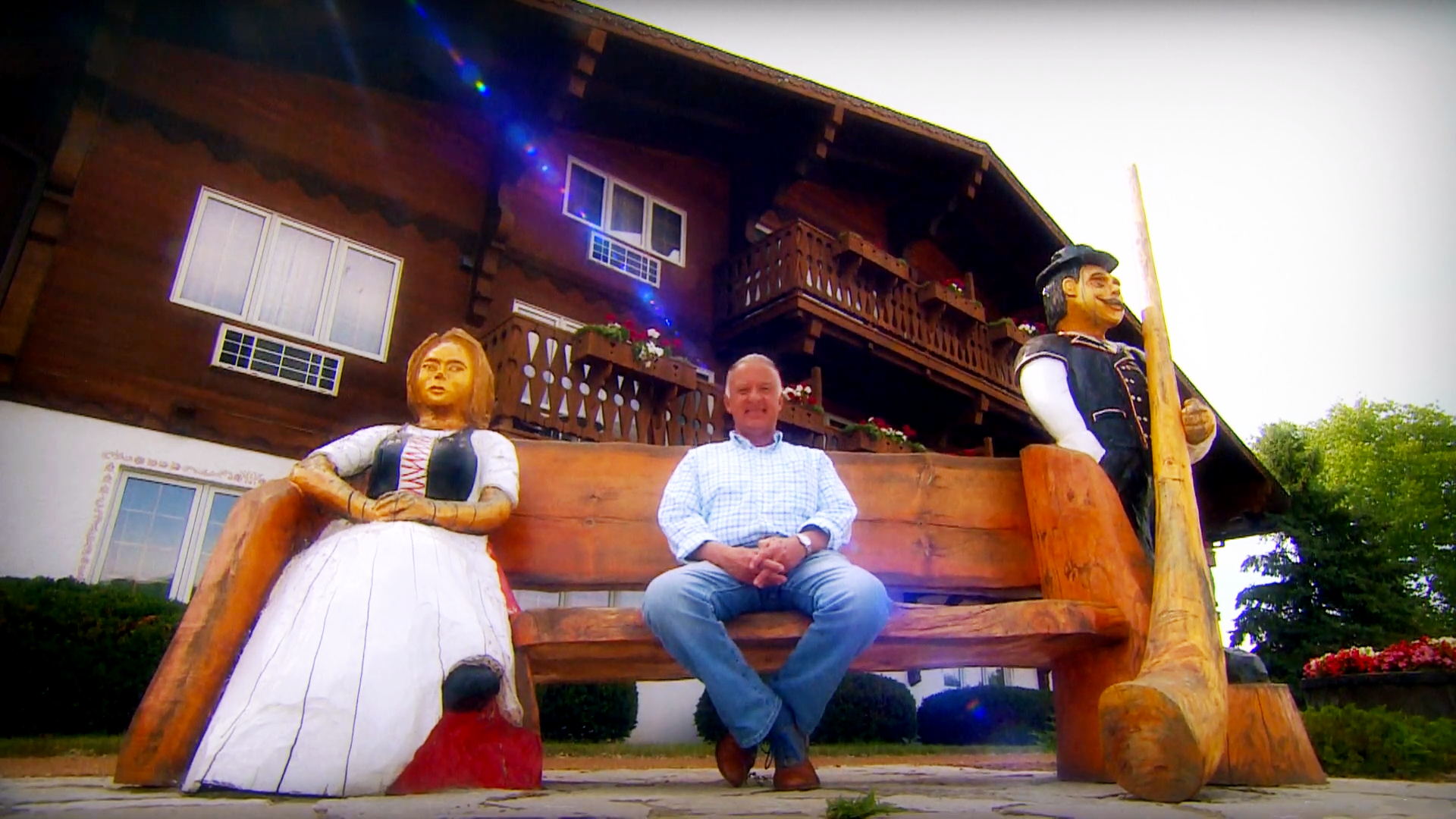
It doesn’t take long to figure out the heritage of New Glarus. If the Swiss flags or the edelweiss at Brenda’s Blumenladen don’t give it away, the Alpine architecture and the brown Swiss cows all over town sure will! You know that people are proud when they name their organizations after the city.


Copy and Paste the Following Code to Embed this Video:
New Glarus
I am in Zurich. No I'm not. I'm in Little Switzerland of America. This is New Glarus, Wisconsin. (upbeat music) We're in Green County. Can you name the other community that we've shot in Green County? Monroe. See you were right. We're in New Glarus this week. Here's John he's coming out of the church. I came to see the statue of the founders of New Glarus. Yeah this is New Glarus. Where is Old Glarus, John? As you might guess it's in Switzerland. Is it? It's a very mountainous Canton or state in Eastern Switzerland. And that Glarus is where the New Glarus came from. Why did they come here? The main reason was over population. As you might guess there's not a whole lot of farm land in the Alps. So in the 1840s to relieve that pressure, the Canton actually bought out a lot of its families and subsidized their move to America as a group. -
John M
So subsidized to America but how did they choose Wisconsin? -
John G
Took a while. They had a couple agents who kind of went ahead to scout for land. They explored Illinois, Iowa, and Missouri. And ended up buying about 1200 acres of hilly prairie right here in Green County, Wisconsin. That became the promised land for about 200 people who left on a journey that lasted almost four months. All kinds of hardships. Storms at sea, and sickness, and swindlers, and deaths and defections. By the time they got here in August of 1845 they were down to a little over a hundred people. But they put down really deep roots. And in 1915 their descendants put up that statue as a monument to their forebearers. -
John M
So these were pioneers really. -
John G
They sure were. -
John M
And when they ended up here, what did they end up doing? -
John G
They probably scratched their heads at first and wondered where the mountains were. -
John M
Help us! -
John G
But they adjusted. They built the usual churches like Swiss reformed, shops, a mill. In 1867 a guy named Bloomer opened the first brewery. A nice precedent for today's New Glarus Brewery. But they were largely farmers. And their main crop was wheat. And that didn't last too long. They burned out the soil, they had problems with low prices and low yields. So by 1870 they were turning pretty much as a group to dairying, especially cheese making. Within 15 years there were 18 cheese factories in New Glarus township alone. Their combined output was 400 tons. And that was just to start. I presume a Swiss cheese? Little Swiss. But I was surprised. Limburger was actually more popular in those years. And has kind of a famously ripe odor. But to the cheese makers here it smelled like money. So by 1911 there were nearly 200 cheese factories just in Green County. So we were in Monroe and I know that we went Limburger cheesing is what we did. So I'm presuming they still make a lot of cheese here? They still do but not in New Glarus. Green County certainly but not New Glarus. What happened is a big condensed milk plant opened back in 1910 and that kind of soaked up the milk supply. For years and years it was the major employer. And when Pet Milk closed back in 1962, the town was really in crisis. All these years New Glarus had kept up its Swiss traditions from yodeling to Swiss making to the William Tell pageant that goes back to 1938. So what they did was they turned to tourism as their bread and butter. So the town was Swissified. Swiss architecture, Swiss food, Swiss themed events. So New Glarus branded itself as America's Little Switzerland. The identity is still going strong today. -
John M
People know it as that don't they? -
John G
They sure did. -
John M
Our population here? -
John G
Interesting John. 2200 and about a quarter have some Swiss roots. But they're outnumbered by people of German and Norwegian backgrounds. So the brand is Swiss but the identity is a little more complex. -
John M
And the location? -
John G
We're about a mile and a half square in the village itself. On the Sugar River about 30 miles southwest of Madison. Beautiful hilly topography isn't it? It's gorgeous. And are you biking it? Yeah you've got the old North Milwaukee Road Depot is the headquarters of the trail, the Sugar River trail, and it goes down to Brodhead. -
John M
Good, thanks John. -
John G
See you John. These are baby bottles. These are for the calves out in the huts. Ooh sorry. Oh (beeping) So sorry. You've done this your whole life? Yeah I'm the fifth generation. Son's the sixth. Yeah 164 years we've been here. So you just set it on the rack. Look at that. He's hired. -
Bryan
They're born white. You know if she bucks, just be aware of your bottle placement. Hey, come here. -
Bryan
This one's about three days old. So we feed our calves twice a day. There's always a lot of work to do. You're a part time around? I'm a part time at about 40 hours a week. Maybe just open the gate and we'll let him in. -
John
How many people does it take on a daily basis to run this? Five full time, 12 part time people. My mom is still here. She's retiring now at 87. We only make our milk about seven, eight days a week. -
John
How many cows all together? -
Bryan
We have 260 head total. We milk about 225. John you're gonna do your magic and dip 'em. -
John
Whoops, sorry. Kinda new here. You're in her personal space actually. Sorry. -
Bryan
You can hook up the rear two teats. -
John
Okay okay. How much are you expecting? Probably 35 or 40 pounds out of her tonight. The most we've ever gotten a year's lactation was about 46,000 pounds. But what makes the Swiss milk so unique it's very high in protein. capacasines, everything, the milk quality is really good. High butter fat. It's great to make cheese, it's great to make yogurt. That's why the Swiss are so popular at making all their great products. -
John
And do you make your own cheese and yogurts? -
Bryan
No we're part of a co-op that's called Chalet Cheese. -
John
How would I know if I'm eating your cheese? Our milk is made into the only Limburger cheese factory in the United States. In Monroe? Yeah so you'll know that one. That's yours. Oh yeah. -
Bryan
This is a Swiss yogurt. So it's actually drinkable. -
John
Oh it's drinkable. How good is that? 164 years. Your family. -
Bryan
Yeah I'm proud of that. Yeah you should be. We're at New Glarus Welding. This is Al and his grandson Brock. This is your shop. Yes sir. And it used to be yours. Used to be mine. Let's talk about this. -
Al
He come along when he was about five years old. We had an old wooden stool and we put him up. And then he stand on that stool and then that's how he learned how to cut and weld. Something like that yeah. So we had to go find little bitty gloves for him. Yeah. (phone ringing) -
John
Is that your phone? -
Al
Yeah that's the phone. -
John
Do you want to get it?
Brock
New Glarus Welding. -
Al
He's a natural at it. Like when we come in and something gets busted, you look at it, you already know how you're gonna fix it. -
John
You do. -
Al
Yeah. Are you ready? -
John
Are there many shops like this? -
Al
No there aren't. Every town used to have a shop like this. Blanchardville, Argyle, all of them had a little welding shop but not anymore. We are pretty much what you call farm welders. We weld for strength. It's gotta hold. -
John
It has to. -
Al
It has to hold. Every day. Whatever comes in the door we try to fix. If we can't find the parts we try to make 'em. -
John
What happened here? -
Brock
Just vibration over the years, this fender broke loose. -
John
Do you have a lot of return customers? -
Al
Oh yeah. That's our business. -
John
That's your business. -
Al
That's our business. -
Brock
That one's done. -
Al
We will always have something to do. Always something breaks down. -
John
What's he going to be charged for this? Well that's probably about a $10 job. That's a what? Probably about a $10 job. Okay. I have some work that I need done. No problem at all bring it down. -
John
It starts here. And the smell here is great. Yeah it's like making cookies or bread. Pretty much the same ingredients. Yeast and grain. So we basically make a liquid bread. We make about 3,000 gallons at a time and we do 10 to 11 brews per day. And all the beer we make is sold in Wisconsin. Historically beer was always a local product. If you go to Germany even today most small villages still have one or two breweries in them. So the traditional way of selling beer is fresh and local. Every brewery started as a small family run brewery that grew up and kept growing and became what they are today. I think often people assume that we started the brewery and we had this vision and we didn't have this vision. The vision we had then is the same vision we have today which is to make world class beer for our friends in Wisconsin. We've made over 200 different varieties of beer. -
Daniel
And we got to the point where we couldn't make enough beer so we had to build a new brewery. -
Deb
And we built this and moved into it in 2007. -
Daniel
And we tried to make it so people could walk through the brewery which is somewhat unique. We were one of the first people to really build a brewery where you could take a self guided tour. This is our pilot brewery. So it's a mini version of our normal brewery. It makes about a quarter barrel at a time. So if we want to test a new ingredient or a new process. What do you blame your success on? Well I blame Dan. The thing is that he makes really incredible beer and it's very consistent and it's true to style. So people trust us. We make beers that are meant for everybody. Spotted Cow and Moon Man. Then there are beers that are sort of in the middle. But then we do very experimental beers. And the really far out crazy stuff is the R&D beers that you can only get at the brewery. That's Goldstein the cow. It's a Holstein but they call it Goldstein. It's one of 15 cows. That's the Cow Parade here in New Glarus. It's been here for 10 to 15 years. Fiberglass cows from Switzerland and then local artists painted them. And you can find all of these cows on the Cow Parade tour. And if you can't really find them, get the brochure. That's what we had to do. I love these cows. We are where right now? -
Holly
We are at the (in a foreign language) or the Shooting Park. They used to have archery tournaments here. You ready to sing? But now it's more of an event space. Volksfest the Swiss Independence Day will be celebrated here. -
John
And what happens there? Flag throwing. History, it's the celebration of all things Swiss culture. (group singing) A lot of music. -
John
Let's talk about Kinderchor, what is it? -
Holly
It's a children's choir. It's open really to any kids who want to join. -
John
And Kinderchor I thought it was kinder choir. Most people do. It was started by two Swiss ladies who grew up singing the songs at home. And they noticed people weren't really singing them anymore so they wanted to share it with the next generations. (singing in foreign language) You know our town was a time capsule for a while. With this dialect of Swiss that wasn't spoken back in Switzerland anymore. And as the older generation is dying off we're losing it. So this is one attempt to kind of preserve some of it and here we are 20 years later. -
John
It's important to do that though? To make sure that lasts. -
Holly
It's a rich heritage. It's a rich culture and the kids are so excited about it. You know that makes it fun. And a big bow. -
John
Did you know these songs growing up? Oh! I should know. I am born and raised New Glarus. You know Glarner. A New Glarus resident. A New Glarner. Born and raised as a Glarner? A Glarner yeah. Nice. Just trying to make friends. They just arrived from Switzerland. They don't speak English. They don't speak at all. -
Esther
Switzerland is a third of Wisconsin. -
John
A third of Wisconsin. -
Esther
And we have four languages. -
John
That's amazing. -
Esther
We both grew up in Switzerland. -
John
You met in New Glarus? -
Esther
Yes what a coincidence. -
John
Oh this is beautiful. So New Glarus has been your home for how long? -
Tony
37 years. -
John
37 years? -
Esther
35 years. -
John
35 years. And we could be in another country couldn't we? That's right. -
John
By the style of your house. We decided actually quite a long time ago that at some point we would love to build our own home. We just wanted to incorporate our homeland. And we're very happy, we love it. -
John
What makes this Swiss chalet wise? -
Esther
A lot of wood. -
John
A lot of wood. -
Esther
Yes and then the stucco bottom. The windows sit back and then the roof has a way bigger overhang that people build here normally. -
John
Oh this is beautiful. And is this how homes are always open like this? Chalet homes? -
Tony
Not really. -
John
Not really. -
Tony
But that's what we wanted to incorporate. -
John
Is this a painting of home? -
Esther
Yes it is. -
John
That's what it looks like. A local gentleman Ernst Shockey painted that. -
John
You kind of feel out in the country but you're really close to town. You have a shop in town as well. -
Esther
Yes I do. -
John
Called European Imports? -
Esther
Esther's European Imports. -
John
What do you sell out of your import shop? -
Esther
A big variety of things. Definitely the cow bells. This is something people like. Fondue sets, Raclette grills. I have some cuckoo clocks. -
John
And your Swiss army knives. -
Esther
Victorinox yes. -
John
What are they called? -
Esther
Victorinox. -
John
Victorinox? -
Esther
Yes. Swiss music. I have a very broad variety and of course Swiss chocolate. -
John
Of course. (laughing) And do you like Swiss chocolate? Yes I do I love it. Chocolate and cheese you know. Tony just rubbed his gut. (laughing) This is Choco the cow. Because it's in front of the Cheese and Chocolate Haus. But if I were to rename her, I would name her I think Eve. 'Cause doesn't she look like she's in the Garden of Eden? Okay that one? It says help name our cow cow. It doesn't have a name. I've gotta name for it. I'm gonna call that one One Step and I'm Ground Beef. That's a good one. -
LeAnn
So have you ever milked before? Never. Hold the milk there and then squeeze it out let more in. -
John
How long you been here you guys? -
LeAnn
Eight years. -
John
And now you're farmers. -
LeAnn
It's beautiful here. We needed some place that had a natural beauty. -
John
My hand is getting wet. -
LeAnn
That will be cheese in the morning. It's a soft cheese. -
John
Soft cheese. -
Lori
And we were really passionate about where our food comes from. -
LeAnn
We have laying hens right now. So we get eggs. -
John
Not broiler hens. -
LeAnn
Right. We're lucky in that we're using it to sustain ourselves and share with our friends. Look at that gorgeous stuff. So this is raw milk. So it hasn't been pasteurized. People pay a lot of money for this. I mean we can't sell it but we've got a freezer full of it. So we knew that our next step was going to be. We can always come and visit. That's right, there you go. Share with other people by opening a Bed and Breakfast. Generally speaking people that come here have sought it out. They're just like oh let's go stay on a farm. And you know we get a lot of kids. They want to be hands on. They want to learn to milk. They want to help with the chores. I mean it's just a really good experience and then you know it also puts youngsters in touch with where their food really comes from. -
John
You guys have a presence downtown in New Glarus. You have a store. -
Lori
Restaurant. -
John
Talk about that. What's it called? -
Lori
Cow and Quince. We are wholly locally sourced. -
John
You know everybody that brings anything. We know everybody that brings anything. 94% of the food that we purchase comes from within 50 miles of where we're standing. I think people are just surprised at the flavor. I mean the food is amazing because it's coming from so close. So we're starting with ingredients that are amazing. -
John
And how many of these guys are there? -
LeAnn
23 hens and the one rooster now. He's never had a doodle. He just cocka doos. (laughing) -
LeAnn
No cock-a-doodle-doo. We're in New Glarus it's the home of the Knights Home of the Knights. We're doing basketball? We are doing basketball. John this city, this town, they love high school sports. Whether it's football, basketball, baseball, they all come out. I like the basketball program 'cause their coach Travis Sysko, been here 16 years. And he's done a great job. John they've won back to back Capital South conferences. -
John
What division is that? They're division four when they get to the tournament time. Division four. They've got in the sectionals the last two years and got knocked out. I think this year they get it. -
John
You do. I do. -
John
Why's that? I think that you'll see them at the Kohl center. They've four starters back. And four really good players. There's one grade school. One middle school. And one high school. So these kids if they want to play basketball when they're in third grade, they all play in the same grade school in the same youth program. And they all play together and it's really worked for him. -
John
What is eight miles away? -
Mike
Belleville. -
John
And what's Belleville? Their biggest rivalry. In fact last year come playoff time, each school gets half of the tickets. And the game was here at New Glarus. Well Belleville had tickets left, New Glarus sold them out quick. So they had to find friends in Belleville to go buy 'em tickets. -
John
Secretively! It was you know what? That is the mark of a good rivalry right there. So the first instrument I ever played as a kid was a piano. And then I tried playing the church organ. That's difficult to take on the road when you're out so I was thinking maybe I should try to find something I could take on the road. I found it. Can I try it? (horn tooting, people laughing) It's not bad! I'm a natural? You have potential. I wouldn't go that far but you have potential. You wouldn't say a natural. (Horns playing) -
John
These are called alphorns? -
Man
Alphorns yeah. Of the Swiss Alps. -
John
And how do I know these? Well that's the Ricola commercial. That's what it is isn't it? Yes yes yes. -
John
Where are these usually played? -
Man
Well every Friday and Sunday we're up at the New Glarus Brewery for about a couple hours. -
John
They're never in a symphony orchestra are they? Some. They can be very very rarely. You know an alphorn is mostly played in the mountains. It's an outdoor instrument you know. Do you get dizzy? Does it sound good, you guys? Sound's perfect huh? I love that this is number one historic. The New Glarus historical landmarks. How many do you have here? Do you know? 15 or 20 I'm not sure. This is number one because it's the oldest. Chalet of the Golden Fleece is just a fanciful name that Mister Barlow took. And he just called it that. This is a Bernice Chalet style. Chalet style. So is this usually in the mountains? Well usually. It is a museum that was built in 1937 by Mister Barlow. And Mister Barlow gave it to the village of New Glarus with all his collections of Swiss materials that he collected over the years - 60 years. Because he wanted to celebrate the Swiss heritage. Because otherwise you lose it. -
John
You do. -
Peter
We are the Swissiest place. -
John
Swissiest? The Swissiest. Is that a word? We're in the most Swiss place in America. -
John
It is. So we are 4445 miles from Switzerland. And we are standing in front of what? We are in front of the Swiss Center of North America. Authentic Switzerland. They have all the old records. -
John
Now we're going to go over to the village. -
Peter
We're going to the Swiss cemetery now. These were the pioneers of New Glarus. We put the stones here. There are no bodies here. Kserei means cheese factory. -
John
Oh this is good. Is that a school house? -
Peter
That's my favorite building. -
John
It is? -
Peter
That's where I learned English. Let's look at the bells. Swiss cow bells. They put these on their cows. So when they know when they're coming back from the mountains. -
Peter
Every spring the Swiss take the cows and the goats up to the mountains. Why do they do that? Because the grass is free. I didn't know that. See now you know. Okay well thank you for teaching. You're teaching me quite a bit today. Stick with me you'll learn all kinds of stuff you don't really need to know. (laughing) I'm in front of a tavern that everybody knows in town. It's called Puempel's. It's been around since the turn of the century. And there's something in there that I have to do. (fun piano music) -
Man
Nice straight up. -
John
I think it's a bad dollar. -
Woman
Bad dollar. -
John
This is Chef Roland Furst. Furst, Roland Furst. -
John
You are the chef and the owner of the New Glarus Hotel restaurant. Where are you from originally? -
Roland
Central part of Switzerland. -
John
Okay and how did you make it to New Glarus? -
Roland
The previous owner was as well from Switzerland and he always looked for young Swiss chefs. -
John
But this is your place. -
Roland
This is now my place and Mike Nevil's place. Three years ago we took over. -
John
Is it all Swiss food? No we of course we have steaks. That's gonna be your Jgerschnitzel. We are a melting pot just like the United States. So we have a little Austrian, we have a little bit German. I would say we take the best from each country. -
John
Nice, yeah. Of course we cannot forget about the cheese fondue. I'm gonna show you how to make our Swiss national dish and that's the cheese fondue. The cheese fondue. And I can help you do that? Oh please do yeah. You're gonna cut a little bread. Because you always want to make sure you have bite sized pieces. -
John
Oh I get it. -
Roland
So now it's the cheese. -
John
Swiss, Gruyere. It's actually a (in a foreign language). Say that again for me. (in a foreign language) This is from Emmi Roth Kserei in Monroe. -
John
Is that what you always use? Yes always. It has a nice flavor. It's not too strong. It's a little bit butter. Garlic here. So then you can go to the wine. More, more, don't be shy. And now we gonna add some in. Just like that. So now I always use fresh dill. White pepper, ground nutmeg. Little pinch. Little pinch. This here is cornstarch. To thicken it up. Okay super. You're almost done. Kirsch. What is that? Kirsch, kirschwasser. It's a clear cherry brandy. But then of course we're gonna have to taste it right? See and if you have a good fondue, it doesn't drip that much. Have it like that. Look at that. Perfect. That's just from the (in a foreign langauge) of the wine. Okay I'll take it from here. (laughing) This is so good. And it's so good. This is the old railway station for New Glarus built in 1887. It's now the home of the New Glarus Chamber of Commerce. This is also where the Sugar River trail, 23 miles of bike trail begins right here. And if you take a look, Gurda should be coming any moment. He left yesterday. Gurda! We're at Brenda's Blumenladen. And Blumenladen means what in German? -
Brenda
Floral shop. -
John
And it's an incredible shop. -
Brenda
I feel like my heart is in small towns. And I love to see small towns work. And I like to see them complete and I like to have a store that people don't have to leave town to find a gift or get fresh flowers or buy their garden plants or their bug spray. And so we've tried to make it as complete as possible. -
John
It's really nice. -
Brenda
People love to walk through here. Even at night. The store will be closed and people will walk through and they'll say do you mind if we just walk through your garden? And we say absolutely not. It's fine. I love these. -
Brenda
Yeah those are peace poles. -
John
Peace poles. One of the things we try to find at our garden center are things that you don't see everywhere else. We go through a ton of edelweiss. We sell edelweiss plants. You know even with the Kinderladen, our toy store that we opened five years ago, we definitely love to please our customers. -
John
What's your new store? -
Brenda
That's called Railroad Street Boutique. It's a ladies' clothing and fashion store. -
John
Oh good. -
Brenda
So jewelry, handbags, clothing. And it's really nice. It's been really well received. It's a year old. -
John
Can you talk about the flower pots that are all over the street? Yeah I'm pretty passionate about flowers and having a town that's welcoming and inviting. And so I approached the chamber about doing some flower pots around town. And we started with 12. And we change them out four times a year. And now we have 47 pots that we maintain. It's really neat that the chamber you know believes in that. That's part of our marketing. It's like when people come to town, we want them to feel welcome and we want it to be beautiful and just like if you were having a party at your house, you would prepare for the guests. -
John
It's nice. -
Brenda
It's like this town is magic. It's just amazing, I love it. After four days in this community I have one thing to say. (in a foreign language) See I can speak Swiss. Or German. Or French. Whatever that is. Here's the deal you have 30 seconds to tell us why New Glarus, Wisconsin is the best place in the world to live, work and play. And Roger you can start now. Okay we have award winning schools. We have many unique shops. We are very proud of our Swiss heritage. We have a lot of gemuetlichkeit here in New Glarus. We have a brewery, a winery, two wineries, and a sausage processing snack foods operation. We have two museums and a park where all the kids can go and play. -
John
That's it Roger you got it. Thank you very much. He's gonna show you how to do it. Hey not that. Yeah yeah whoops sorry, whoops sorry. No come here. Please do not touch the cow. This is also where the um, the Sugar Ray Leonard trail began. But I'm going to rename this cow the John McGivern cow. Why? 'Cause it loves to eat. I know what he's thinking. I didn't know it was so sunny here.! I need some sunglasses! -
Woman
The Greater Milwaukee Foundation's Ernest C & Florence M Schocke Fund. And by the David A & Nancy E Putz Fund. The Greater Milwaukee Foundation. Inspiring philanthropy, serving donors, and strengthening communities now and for the future. -
Man
Michels Corporation. Serving the energy, transportation, telecommunications, and utility industries. Michels, constructing North America's infrastructure for our future. -
Woman
We Energies Foundation and Wisconsin Public Service Foundation are proud to support public television. Together we create a brighter future for the communities we serve. ATC moves electricity from where it's generated to communities where it's needed. American Transmission Company. Helping to keep the lights on, businesses running, and communities strong.
Search Episodes

Donate to sign up. Activate and sign in to Passport. It's that easy to help PBS Wisconsin serve your community through media that educates, inspires, and entertains.
Make your membership gift today
Only for new users: Activate Passport using your code or email address
Already a member?
Look up my account
Need some help? Go to FAQ or visit PBS Passport Help
Need help accessing PBS Wisconsin anywhere?

Online Access | Platform & Device Access | Cable or Satellite Access | Over-The-Air Access
Visit Access Guide
Need help accessing PBS Wisconsin anywhere?
Visit Our
Live TV Access Guide
Online AccessPlatform & Device Access
Cable or Satellite Access
Over-The-Air Access
Visit Access Guide




Follow Us